Cusco in 3 days: short itinerary with altitude-smart planning
Cusco: Half-Day City Tour with Sacsayhuaman and Q’enco
Three days is not much — here is how to use them well
Three days in Cusco is tight. You will not reach Machu Picchu — fitting the train journey, citadel visit and return into a three-day stay with proper acclimatisation is logistically difficult and physically unwise. What you can do in three days is cover the Sacred Valley properly, explore Cusco city at a decent depth, and leave with a genuine sense of the Inca world rather than a blurred succession of ruins seen from a window.
The central challenge of a short Cusco trip is altitude. At 3,400 m, the city will slow most visitors down for at least 24 hours after arrival. This itinerary is built around that reality: night one is in the Sacred Valley (2,800 m), giving you the essential acclimatisation benefit before the city. If you must sleep in Cusco on night one, rest completely that afternoon and do nothing strenuous until morning.
If you can extend to four days: The 4-day itinerary adds Machu Picchu and is far more satisfying. Three days is the absolute minimum for Cusco alone.
| Where | Sacred Valley (night 1) + Cusco (nights 2–3) |
| Cost | around S/1,170–2,070 mid-range, excl. flights |
| Time needed | 3 full days minimum, no Machu Picchu |
| Getting there | Fly into Cusco Airport (CUZ), transfer to the valley |
| Best time | Dry season (May–September) for clearer valley views |
Why three days means skipping Machu Picchu, not rushing it
A common temptation is to squeeze a same-day Machu Picchu dash into three days — an early train, a few rushed hours at the citadel, and a late return. It is possible in theory, but it means arriving at 3,400 m, sleeping badly, then attempting a 90-minute train journey and a demanding archaeological site the very next morning, all while still altitude-impaired.
Most travellers who try this arrive at the Sun Gate viewpoint tired, mildly nauseated, and unable to appreciate what they are looking at. The honest recommendation for three days is to leave Machu Picchu for a return trip and instead do the Sacred Valley and Cusco properly — see how many days you actually need in Cusco for the fuller reasoning behind this trade-off.
Comparing the three-day route to extending
| Option | Duration | What you get | What you miss |
|---|---|---|---|
| This 3-day plan | 3 days | Sacred Valley + Cusco city in depth | Machu Picchu entirely |
| 4-day itinerary | 4 days | Same as above + Machu Picchu | Rainbow Mountain, second Sacred Valley day |
| 5-day itinerary | 5 days | Machu Picchu + Rainbow Mountain | Time for a rest day |
Day 1: Arrive — Sacred Valley first night
Altitude: 2,800 m
Fly into Cusco Airport (CUZ) and transfer immediately to the Sacred Valley, aiming for Ollantaytambo or Urubamba. Shared shuttles cost S/25–35 per person; a private taxi is S/80–120. The drive takes 45–60 minutes.
The valley at 2,800 m is significantly easier on your body than Cusco’s 3,400 m. The extra 600 metres makes a measurable difference to sleep quality and morning energy levels. There is good scientific consensus on this; it is not folk wisdom.
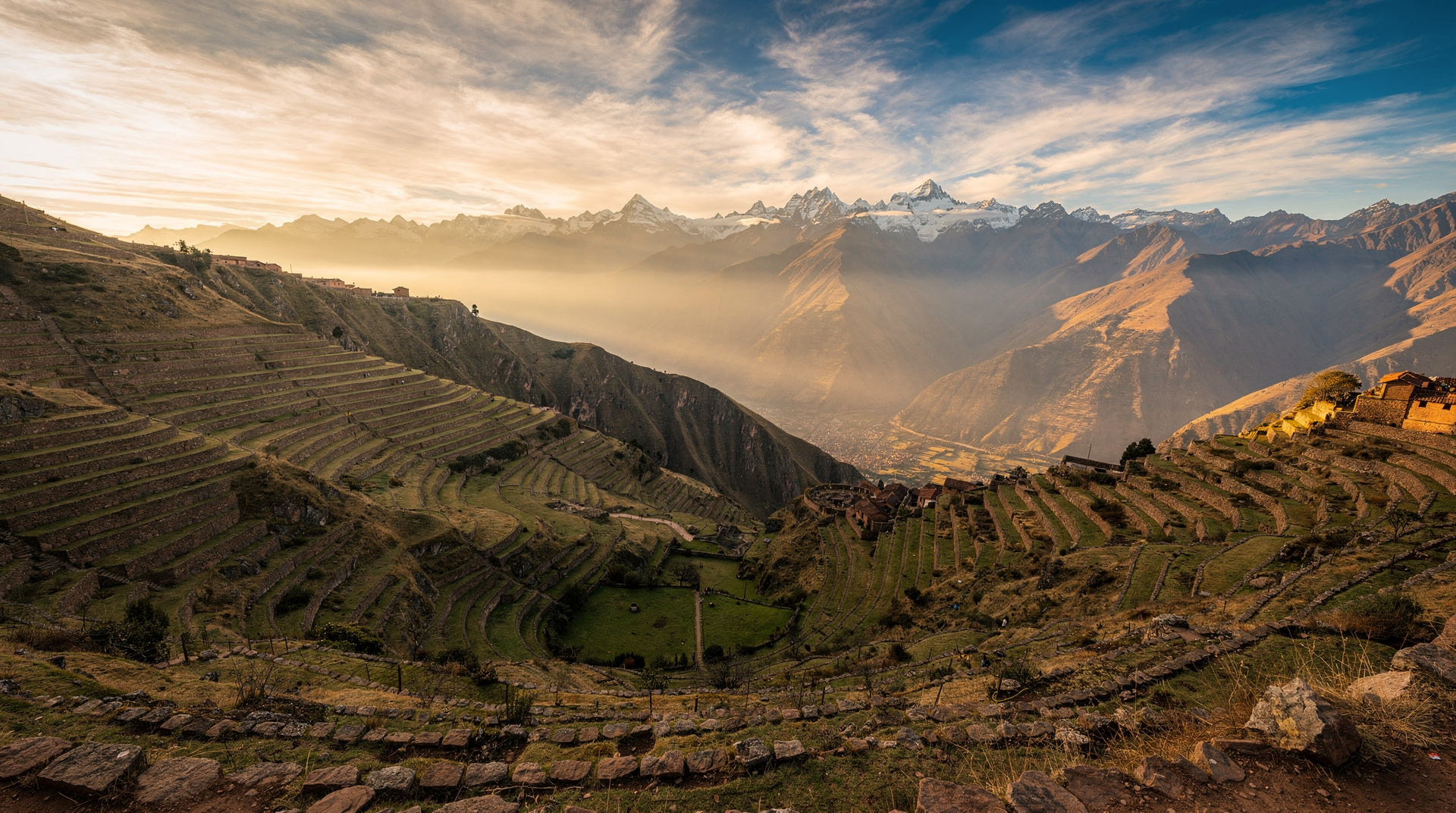
In the afternoon, walk around Ollantaytambo’s Inca street grid — the only town in the Americas still using its original Inca urban layout. The water channels running through the cobbled streets are functioning, not decorative. The terraced fortress above the town looks magnificent from the plaza; you will climb it tomorrow morning. Eat dinner early, drink plenty of water, avoid alcohol, and sleep.
Where to stay: El Albergue (next to the train station, S/300–500), KB Tambo (S/200–350), or budget guesthouses around the plaza (S/80–150).
Day 2: Ollantaytambo ruins — Pisac — transfer to Cusco
Altitude: 2,800–3,350 m rising to 3,400 m
Morning at Ollantaytambo fortress. The ceremonial terraces and the Temple of the Sun at the summit — six monolithic granite slabs transported from across the valley — are among the finest Inca stonework in the region. Allow two hours for a proper visit. The site opens at 7 a.m. and is covered by the Boleto Turístico (full pass, or the S/70 partial pass for Circuit III: Pisac, Ollantaytambo, Chinchero, Moray).
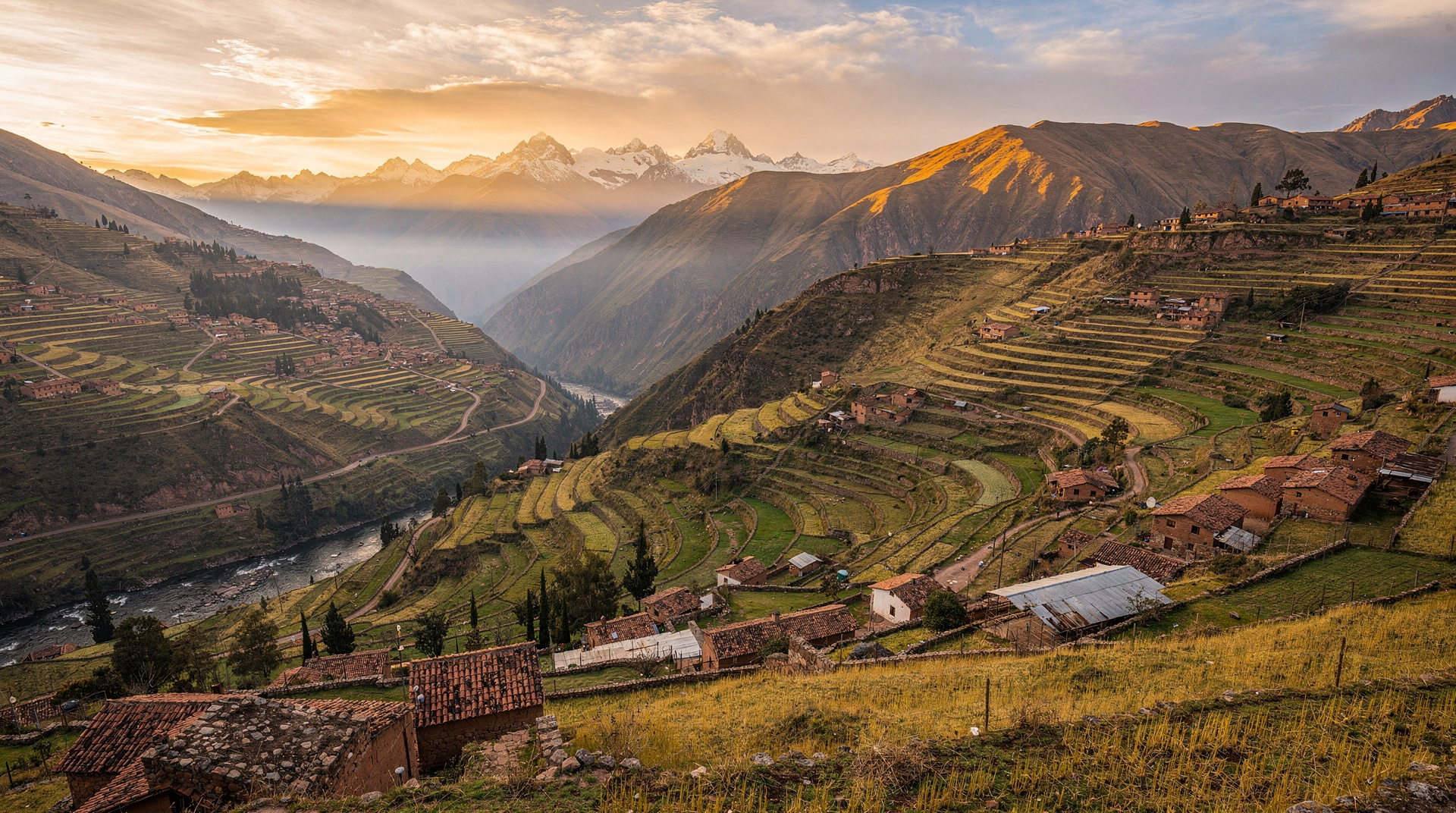
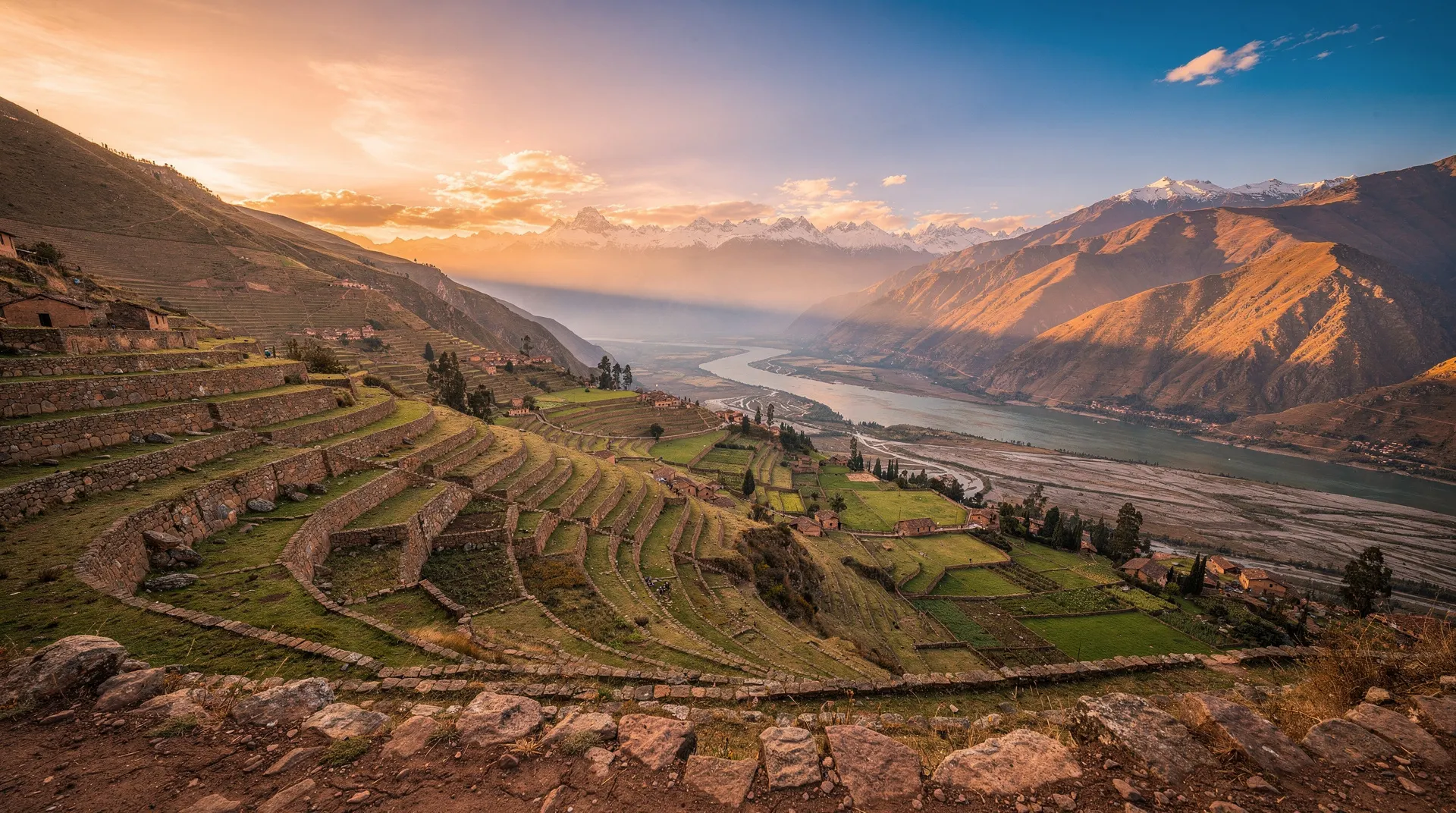
After Ollantaytambo, take a taxi east along the valley to Pisac — around 40 minutes. If it is a market day (Tuesday, Thursday or Sunday), spend an hour at the market, focusing on the inner agricultural section rather than the tourist-facing outer stalls. Then take the taxi road up to the Pisac ruins on the ridge above the town. The views down the Urubamba Valley are spectacular; the site’s solar observatory and the vast agricultural terraces are worth 90 minutes.
Late afternoon, transfer to Cusco. The drive from Pisac is about 35 minutes. Check in, have a light dinner in the historic centre, and walk off the valley altitude by exploring the streets around the Plaza de Armas at dusk — the Cathedral and La Compañía de Jesús church are dramatically lit at night. Keep the evening easy; tomorrow is your main Cusco day.
Where to stay: San Blas or historic centre hotels. S/200–400 mid-range. The streets around Cuesta San Blas have some of the best small hotels in the city.
Day 3: Cusco city — Qorikancha, San Blas, Sacsayhuamán, food
Altitude: 3,400 m
By day three you are acclimatised enough to enjoy the city properly. Start early at Qorikancha (Temple of the Sun; check current prices and opening hours on the official Qorikancha website). The Convent of Santo Domingo built directly on top of the Inca temple makes the history of the Spanish conquest viscerally legible — you can see exactly where the stones change character.
From Qorikancha, walk uphill through the historic centre — narrow streets with original Inca stone bases and colonial buildings above. The Cathedral on the Plaza de Armas (S/25) is excellent; the interior is vast and the “Last Supper” painting in the Sala Capitular is worth hunting for. Continue up to San Blas: the carved wooden pulpit in the small church there is one of the most technically accomplished pieces of colonial woodwork in Peru. Give the artisan quarter 45–60 minutes of wandering.
For lunch, the market tour and cooking class is the best midday option if you have three hours available — it combines a guided visit to San Pedro Market with cooking lunch from the ingredients you choose. The class runs mid-morning and typically finishes by 1:30 p.m. If you prefer to eat out, the streets around Plazoleta Regocijo have restaurants serving contemporary Andean food at mid-range prices.
Afternoon: the half-day guided ruins tour covers Sacsayhuamán, Q’enqo, Puca Pucara and Tambomachay. Sacsayhuamán alone — the zigzagging limestone walls, the sheer scale of the stones — is worth the afternoon. A guide is genuinely valuable here. All four sites make up Circuit I of the Boleto Turístico (S/130 full pass, or S/70 partial pass for this one circuit). The tour typically ends around 6 p.m.
Final evening: the streets around the Plaza have excellent pisco sour bars (S/20–30 a glass) and restaurants for a proper send-off dinner. Cusco has good ceviche despite being landlocked — highland trout ceviche (ceviche de trucha) is the local version and outstanding.
Practical notes for a three-day visit
Skip: Rainbow Mountain on a three-day trip. The 3 a.m. pickup, three-hour drive, high-altitude hike and return would consume an entire day, leaving no recovery time. See Rainbow Mountain complete guide to assess whether it fits your trip better as a day trip extension.
Boleto Turístico: On a three-day itinerary covering Pisac, Ollantaytambo and the Cusco ruins, the S/70 partial pass covers only one circuit (Circuit I: Sacsayhuamán, Q’enqo, Puka Pukara, Tambomachay; Circuit III: Pisac, Ollantaytambo, Chinchero, Moray). Since you visit sites in two circuits, the full S/130 pass (16 sites, valid 10 days) is the logical choice. There are no single-site tickets. Buy it at the COSITUC central office, Av. El Sol 103 (Galerías Turísticas), open daily 7:30 a.m.–6 p.m., or at the covered sites. See Boleto Turístico explained.
Altitude medication: On a short trip, Diamox (acetazolamide, 125 mg twice daily) starting the day before arrival is genuinely worth taking. You simply do not have the luxury of a slow acclimatisation on three days. It is available at Cusco pharmacies without prescription. Read altitude sickness in Cusco before deciding.
Getting to the airport: Allow 20–30 minutes from the historic centre to Cusco Airport (CUZ). Taxis cost S/20–30; agree the fare before getting in or use Cabify or InDriver. Morning flights to Lima (LATAM, Sky, Avianca) leave from around 6 a.m. — if your flight is very early, arrange airport transfer with your hotel the night before.
If Machu Picchu is non-negotiable: Adding one night turns this into the 4-day itinerary. That is the minimum viable trip for Cusco plus Machu Picchu. Three days for both is too compressed — you would be visiting the citadel altitude-impaired and exhausted, and it is not worth it.
Budget summary
| Category | Budget (S/) | Mid-range (S/) |
|---|---|---|
| Accommodation (2 nights) | 160–300 | 400–800 |
| Boleto Turístico (full) | 130 | 130 |
| Guided tours | 0 | 200–350 |
| Meals (3 days) | 150–200 | 350–600 |
| Transport (taxis, shuttles) | 100–150 | 150–250 |
Three days in Cusco at mid-range runs approximately S/1,170–2,070 (roughly $315–560 USD) per person excluding flights. Budget travellers can cut this to S/480–650 by eating set lunches (S/15–20 at local restaurants), skipping guided tours and using shared shuttles.
Frequently asked questions about Cusco in 3 days
Can I really not fit Machu Picchu into three days? Technically yes with a punishing same-day dash, but it is not recommended. You would need to arrive in Cusco, sleep one night, then do the full train-and-citadel round trip the next day while still acclimatising — a recipe for altitude sickness and a rushed, joyless visit. See how many days you actually need in Cusco for the honest breakdown.
Is the Sacred Valley worth prioritising over the city on a short trip? Yes, largely because of altitude — the valley’s 2,800 m gives your body an easier first night than Cusco’s 3,400 m, and Ollantaytambo and Pisac are among the region’s finest Inca sites in their own right, not just a warm-up act for the city.
Making three days work
Skip: Rainbow Mountain and Machu Picchu on a three-day trip. Both require either a very early start or an overnight commitment that this itinerary does not have room for.
Top experiences
Bookable activities with verified prices and instant confirmation on GetYourGuide.