Sacred Valley in one day: a practical itinerary for 2026
From Cusco: Sacred Valley of the Incas Full-Day Tour
Can you do the Sacred Valley in one day?
Yes. A well-organised day starting at 7–8 am from Cusco can cover Pisac market, Chinchero's weaving cooperatives, Maras salt pans, Moray terraces and Ollantaytambo fortress before returning to Cusco by 7–8 pm. A guided day tour handles the logistics between the plateau sites; self-guided is feasible but requires advance planning.
What a well-used day in the valley looks like
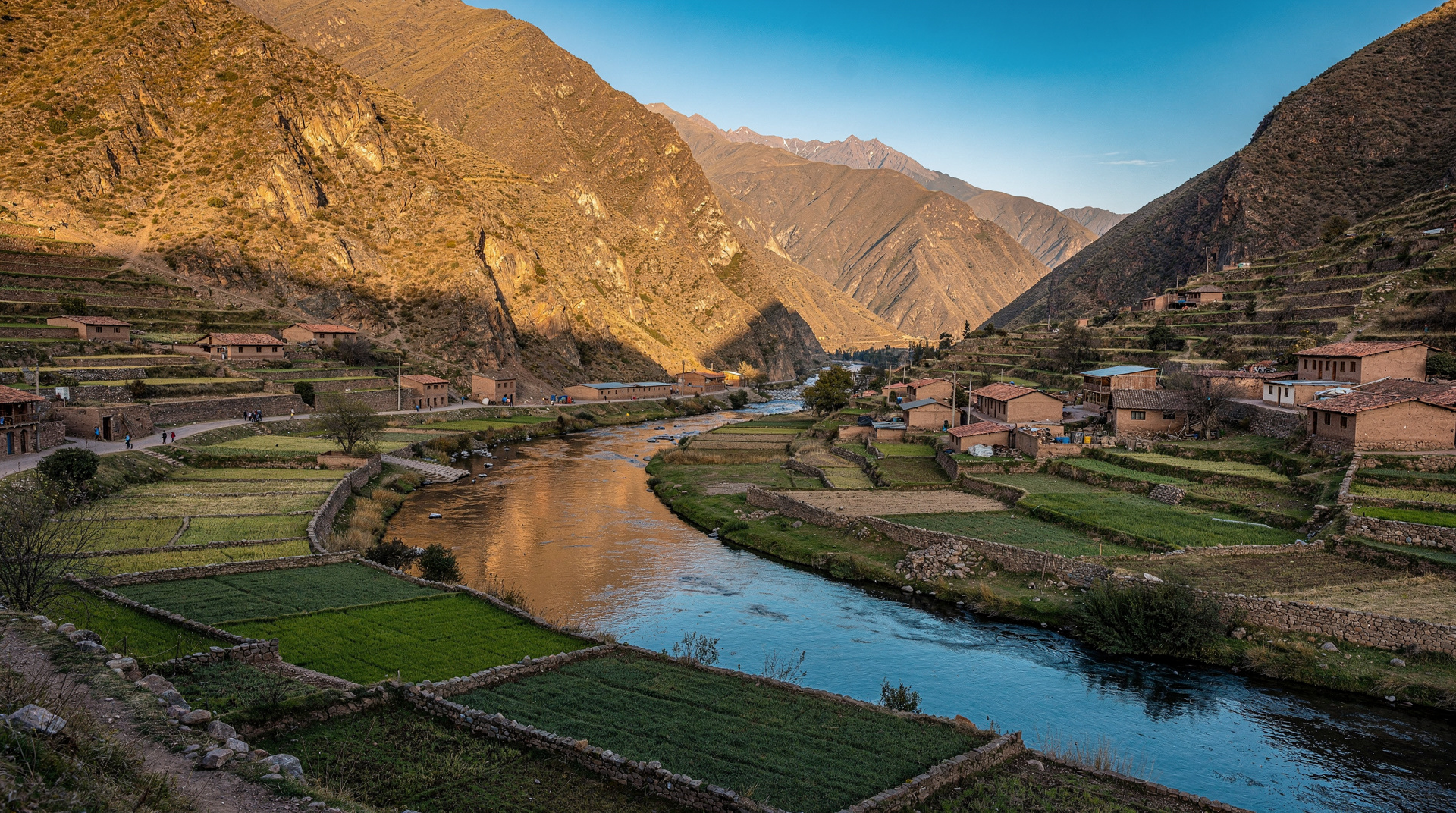
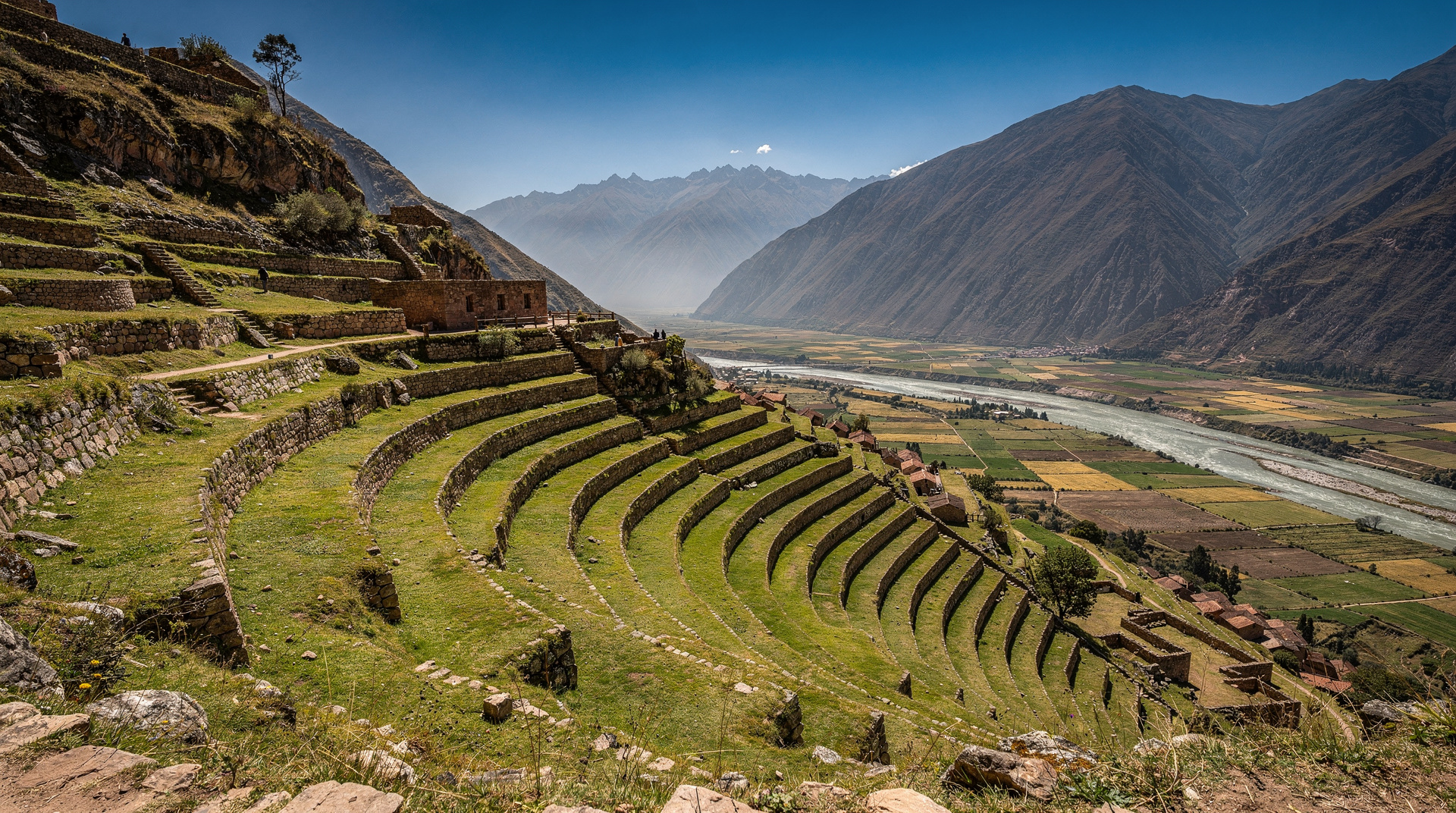
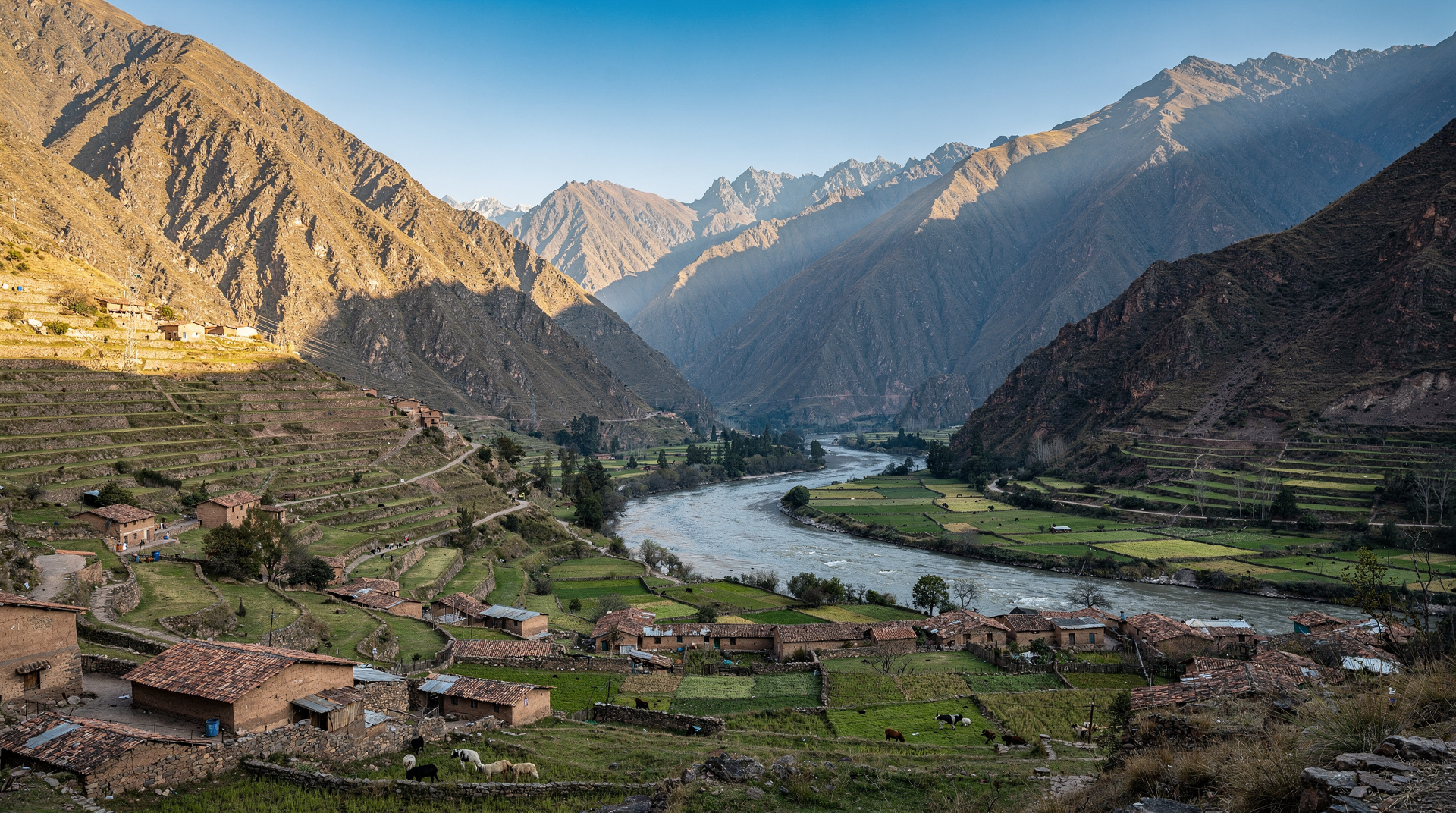
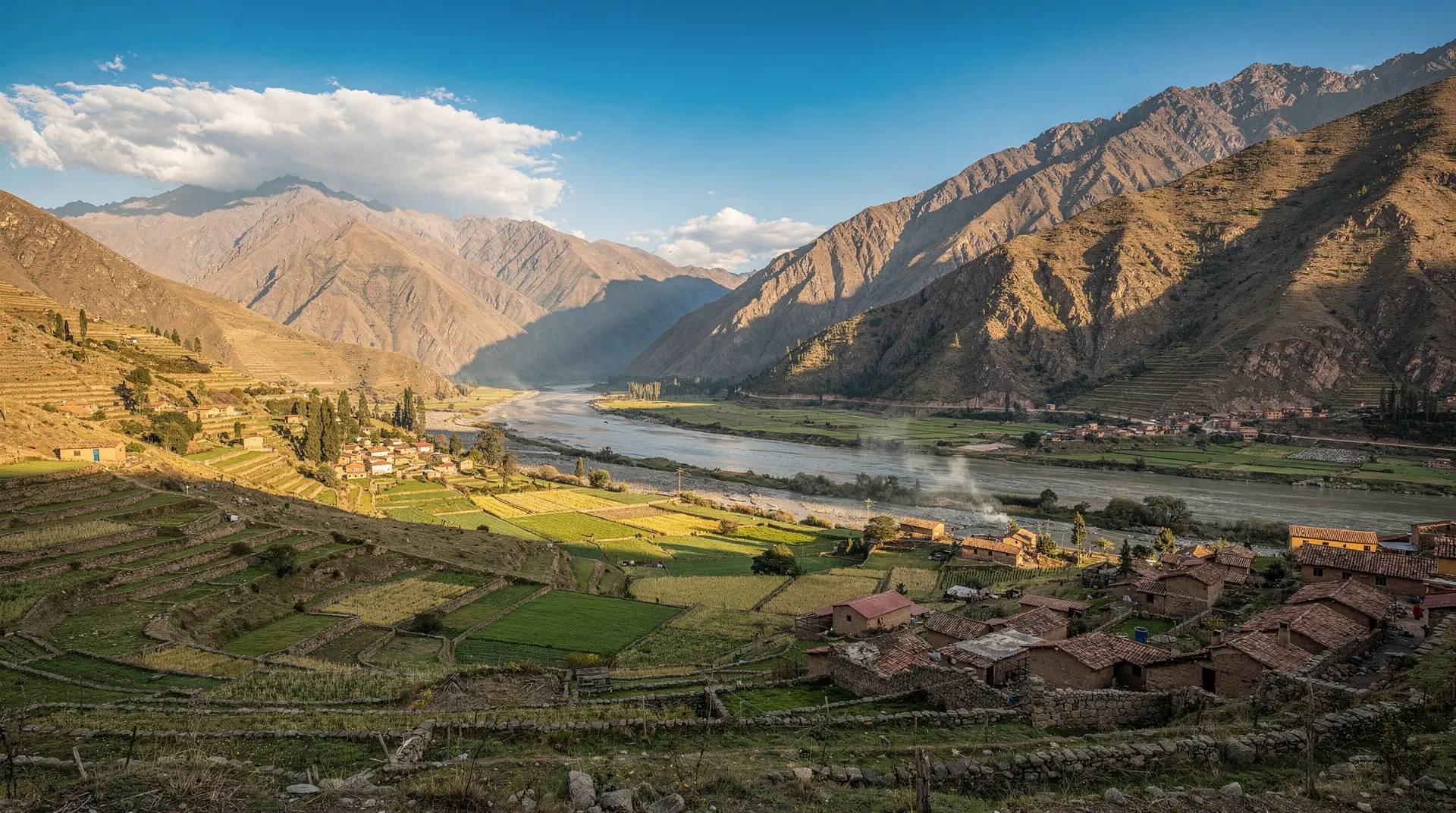
A single full day in the Sacred Valley is enough time to see its five main sites — Pisac, Chinchero, Maras, Moray and Ollantaytambo — and return to Cusco by evening with a genuine sense of what the valley contains. It is not a relaxed day. Each stop will feel slightly shorter than you would like. You will be making trade-offs — the Pisac ruins versus the Pisac market, extra time at Moray versus arriving in Ollantaytambo while the light is still good. But with the right sequence and an early start, you will cover an extraordinary amount of ground and history in 11–12 hours.
This itinerary is written for someone departing from Cusco at 7–8 am and returning by 7–8 pm. It works as a guided group tour, a private guided day or a self-organised day with a hired driver. The differences between those three options are detailed at the end.
| Where | Pisac, Chinchero, Maras, Moray, Ollantaytambo — the Sacred Valley loop |
| Cost | S/60–100 pp guided group tour; S/350–550 total for a private driver-guide |
| Time needed | Full day, 7–8 am to 7–8 pm (11–12 hours) |
| Getting there | Guided tour pickup, private driver-guide, or self-guided collectivos plus a hired taxi on the plateau |
| Best time | May–September dry season; start early regardless of the month |
Before you leave Cusco: the Boleto Turístico
If you have not already bought your Boleto Turístico, do it at the COSITUC office (Av. El Sol 103, Cusco, open daily 7:30 am–6 pm). The Boleto is required for entry to Pisac ruins, Chinchero, Moray and Ollantaytambo fortress. It is also sold at the covered sites. The full circuit is S/130; the Sacred Valley partial circuit is S/70 and covers all the valley sites on this itinerary. Carry your passport with it throughout the day.
Maras requires a separate S/10 cash admission at the gate. Bring small-denomination notes.
The itinerary, stop by stop
7:30 am — Leave Cusco
Set off early. The Pisac Sunday market is at its best before 10 am; tour coaches from Cusco typically arrive from 11 am onwards, after which the market atmosphere shifts from genuinely local to primarily tourist-facing. Arrange pickup from your hotel if you are on a guided tour. For a self-organised day, you need to have pre-arranged your driver the evening before — road conditions in the valley are fine but departure time coordination is not something to leave to the morning.
8:15 am — Pisac market (60–75 minutes)
Arrive at Pisac’s Plaza de Armas while the market is still at its best. The finest weaving stalls are in the side streets off the main square, not the plaza itself — walk past the first ring of tourist-oriented stalls toward the interior. Look for backstrap-loom alpaca pieces with the slight colour irregularity of natural dye; avoid mass-produced acrylic items even when offered at similar prices to the genuine article. Bargaining is expected. Prices for genuine handwoven scarves start around S/40–60.
Have breakfast at one of the cafés on the square — eggs, bread, fresh juice for S/12–18. Eating before the ruins walk matters.
Skip the Pisac Inca citadel today if you want to cover all five sites. The ridge circuit takes 2–3 hours and would consume your entire morning. If Inca ruins rather than the market are your priority, reverse the priority and plan to spend your morning at the citadel instead — the Pisac market and ruins guide shows how to do both well.
9:30 am — Drive to Chinchero (35 minutes)
The road climbs steeply from the valley floor to the Chinchero plateau, gaining 800 m in vertical height over 23 km. The views back down the valley gorge from the switchbacks are excellent.
10:15 am — Chinchero weaving and church (60 minutes)
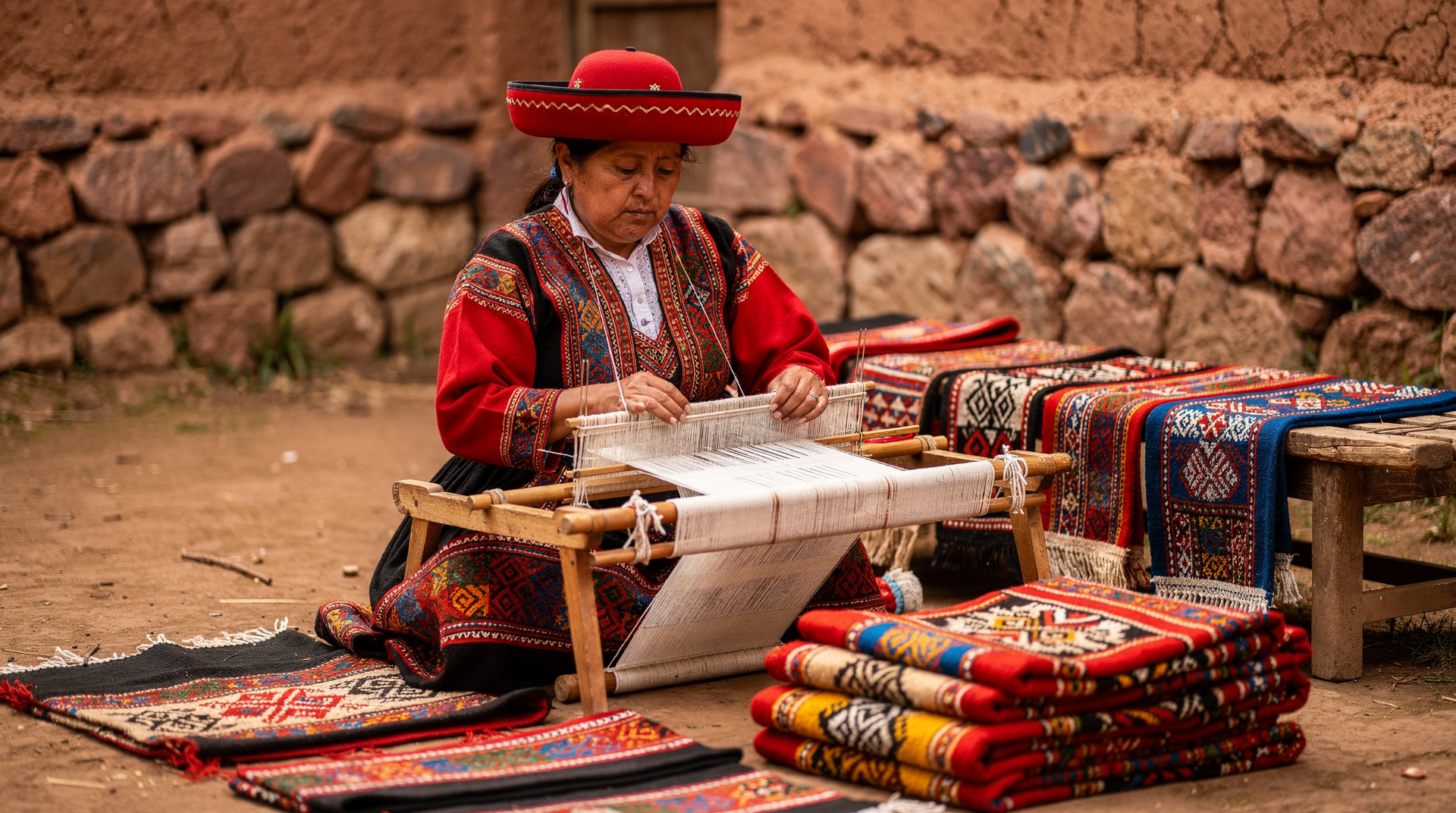
The weaving cooperative demonstration — covering spinning, natural dyeing and backstrap-loom weaving — takes 45–60 minutes and is one of the most genuinely informative half-hours in the valley. A small purchase of finished textiles is expected. The colonial church on Inca foundations is adjacent and takes 20 minutes to absorb properly; the visible superimposition of Spanish construction on Inca stonework is one of the clearest examples of this architectural collision anywhere in the region. You need the Boleto for the church. Full background in the Chinchero weaving guide.
11:30 am — Drive to Maras (25 minutes)
Twenty-five minutes west across the plateau on an unpaved road brings you to the Maras brine-spring salt cooperative. The S/10 admission is collected at the gate.
11:55 am — Maras salt pans (50 minutes)
The midday light here is not ideal for photography (the best light is early morning or late afternoon) but the site itself is impressive at any time of day. More than three thousand hand-worked salt pools terraced down a hillside fed by a single brine spring. Walk the viewing paths along the upper edge of the site; allow 45–50 minutes for the main circuit. Small bags of Maras salt are sold at the entrance for around S/8–12 and make a lightweight, authentic souvenir.
Full visit context in the Maras salt mines guide.
12:45 pm — Moray (45 minutes)
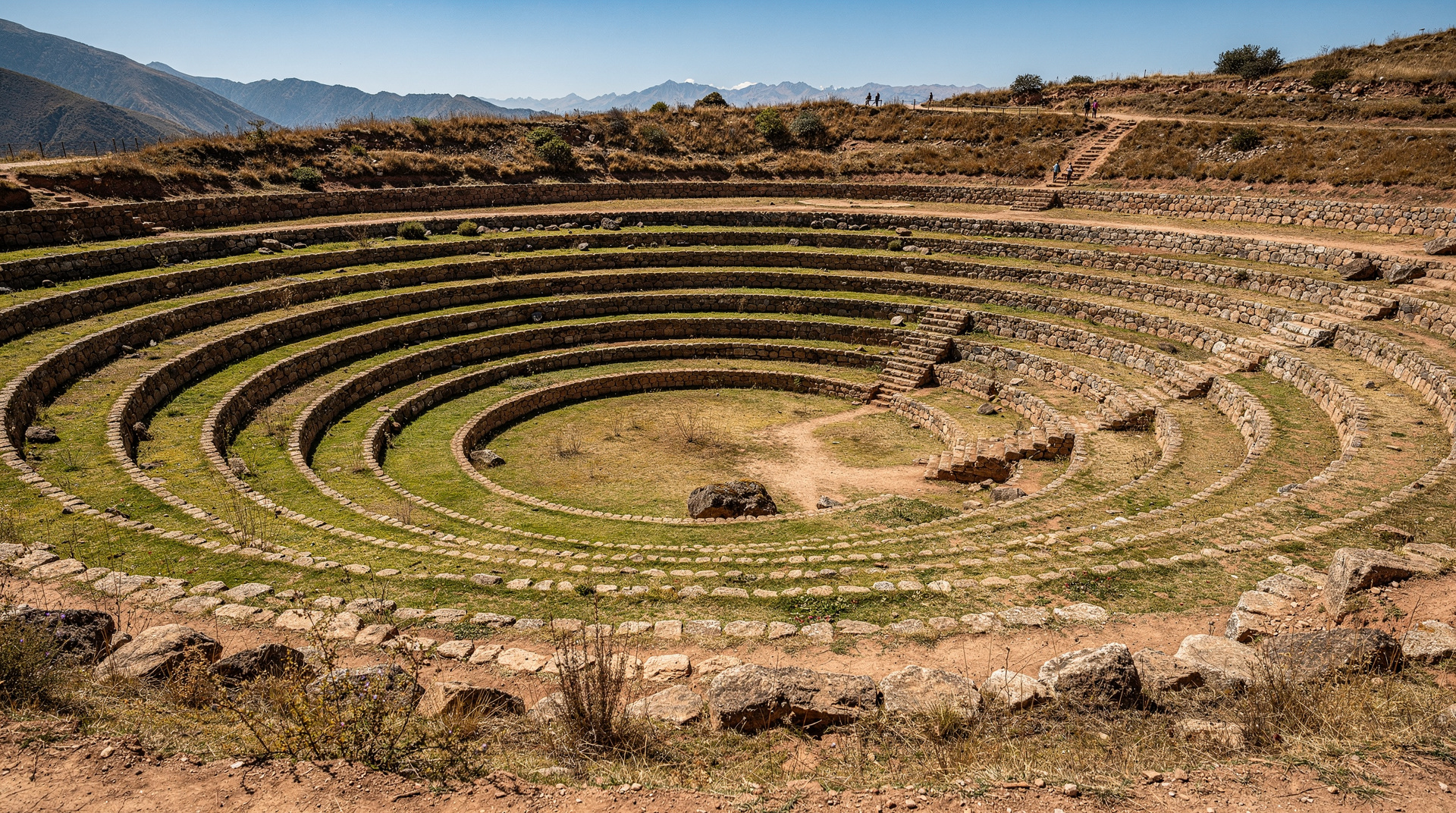
Six kilometres further on the plateau, the concentric circular terraces of Moray are a 20-minute walk from the site entrance. The largest depression drops 30 m from rim to centre; the measured microclimate differentials between the ring levels give weight to the interpretation of this as an Inca agricultural research station. There is nothing to buy or eat here — the site is simple and contemplative. Allow 30–45 minutes.
A combined Maras and Moray guided day tour focuses specifically on these two plateau sites with detailed guide commentary at both — the context about the cooperative history at Maras and the agricultural-research interpretation of Moray transforms both from visually interesting puzzles into coherent stories.
1:30 pm — Lunch in the valley (45 minutes)
After Moray the road descends to the valley floor. Several restaurants in Urubamba and Yucay (a village between Urubamba and Ollantaytambo) serve a reliable two-course set lunch for S/20–30. Soup, a main dish (usually trout, alpaca or chicken with rice and potatoes), and a fresh juice. This is exactly the right midday refuel before Ollantaytambo’s steep stairways.
If you are on a guided tour with a buffet lunch included, this is its standard slot. Buffets at dedicated tourist lunch restaurants are fine — standard Peruvian fare, unlimited serving, usually included in the tour price.
3:00 pm — Ollantaytambo fortress (2 hours)
Arriving in Ollantaytambo in the early afternoon puts you at the site when midday visitor numbers have thinned and before the late buses from Cusco arrive. The site entrance is a 10-minute walk from the town centre.
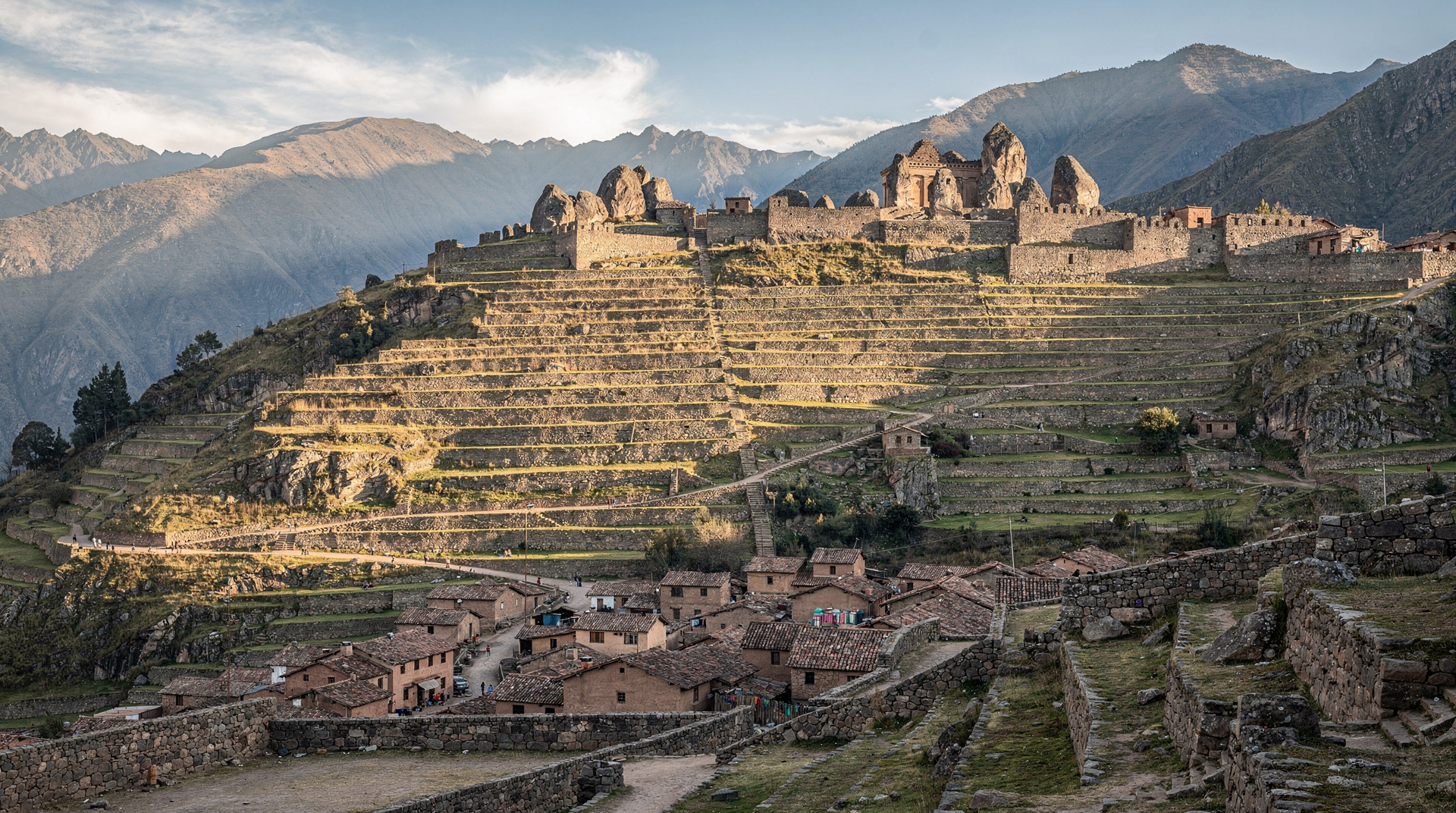
Allow 2–2.5 hours for the full site: the terraced lower platforms, the Temple of the Sun with its six monolithic granite blocks, the upper storehouse buildings, and a descent back through the site via the ceremonial water features near the entrance. The Inca town grid below the fortress deserves a 20-minute walk as well — the original cancha residential compounds still functioning as family housing in a street plan unchanged since the 15th century.
The Pisac, Maras and Moray guided tour that covers the eastern valley and plateau typically ends with a guided explanation of the Ollantaytambo fortress history — the 1537 military defeat of Hernando Pizarro’s cavalry, the transportation of the 50-tonne stone blocks, and the defensive logic of the terrace system. The guide commentary at this site adds substantially more than at most valley stops.
5:30 pm — Begin return to Cusco
The 72 km drive back to Cusco takes 1.5–2 hours. You will arrive around 7–7:30 pm, in time for dinner.
Altitude management on a full-day circuit
The one-day valley circuit touches three distinct altitude bands. The valley floor (Pisac, Urubamba, Ollantaytambo) runs at 2,800–2,950 m. The Chinchero plateau is at 3,760 m. Ollantaytambo, at the end of the day, is back at 2,792 m. This up-and-down altitude profile is manageable but worth noting.
If you are on your first or second day in the region, the Chinchero stop will be the most noticeable altitude moment — arriving from the valley floor and walking uphill on cobblestones at 3,760 m will produce a shortness of breath that is disproportionate to the physical effort. Take the market area and the walk to the church slowly, stop genuinely rather than just reducing speed, and drink water before you feel thirsty.
Moray, at about 3,480 m, is lower than Chinchero but still above the valley floor. The walk around the site is relatively flat once you are on the plateau; the challenge is the transfer from the valley to the plateau rather than the movement on the plateau itself.
By the time you reach Ollantaytambo in the afternoon at 2,792 m, you will feel noticeably more comfortable than on the Chinchero section of the day. The fortress stairways are steep but the lower altitude makes them more manageable. Late afternoon at the fortress — when the tour groups have departed and the light is warm on the granite blocks — is one of the better moments of the day.
Tour versus independent: the honest comparison
Guided group tour (~S/60–100 per person)
A full-day Sacred Valley group tour from Cusco covers the complete loop with bilingual guide and minibus transport. This is the most practical format for the plateau circuit: Chinchero, Maras and Moray cannot be efficiently linked by public transport without a private taxi, and taxis on the plateau are genuinely scarce. The guide commentary at Moray, the Pisac ruins context, and the Ollantaytambo fortress history are all substantially more informative than reading signage. Entrance fees are typically included; lunch may or may not be included depending on the specific tour.
The limitation: pace is fixed by the group. You cannot linger at Moray if your curiosity runs long or skip the market if it does not interest you.
Private driver-guide (S/350–550 total)
Hiring a private car and guide for the day splits well across 2–4 people and allows you to adjust timing. Ask your hotel to recommend a licensed guide-driver; the combination should be confirmed in writing. A private arrangement allows you to spend 90 minutes at Moray rather than 45, skip Chinchero if textiles do not interest you, and arrive at Ollantaytambo in time for a proper sunset visit to the upper fortress.
Self-guided with collectivos
Feasible for the Cusco–Pisac–Urubamba–Ollantaytambo axis. Collectivos run from Calle Puputi (Cusco) to Pisac (~S/5, 45 min) and continue to Urubamba (S/3–4) and Ollantaytambo (S/3–4 further). This covers three of the five sites.
Getting to Chinchero, Maras and Moray independently requires: a collectivo to Chinchero (~S/4–6 from Cusco, 35 min), then hiring a taxi at Chinchero for the Maras–Moray circuit (S/80–100 if you can find a willing driver), then descending to the valley. Taxis at Chinchero are available but not plentiful; build significant extra time into this approach.
What to bring for the day
Hat and sunscreen: essential. UV at 3,000 m is extreme regardless of cloud cover. Do not skip this. At least 1.5 litres of water per person — there is nothing to drink at Moray. Comfortable walking shoes with grip for the Ollantaytambo stairways and the Maras paths. A light jacket for Chinchero at 3,760 m. Cash in Peruvian soles: small notes for the Maras gate (S/10), market shopping at Pisac, and any collectivo transport. Your Boleto Turístico and passport.
If you only have half a day
For visitors who genuinely only have four to five hours for the Sacred Valley, the best compressed circuit is:
Morning (4 hours): Depart Cusco at 7:30 am, arrive Pisac market by 8:15 am (1 hour browsing), drive to Chinchero for the weaving cooperative demonstration (45 minutes), drive to Maras salt pans (45 minutes). Return to Cusco by 12:30–1 pm. This covers the market, one living-tradition demonstration and the most visually distinctive landscape site in the valley. You miss Moray and Ollantaytambo, which are the stronger archaeology sites, but the three stops covered are varied and satisfying.
Afternoon (4 hours): Depart Cusco at 1 pm, arrive Ollantaytambo by 2:30 pm, spend 2 hours at the fortress and town grid, depart for Cusco by 4:30 pm, arrive by 6 pm. This covers the best Inca archaeology in the valley without the market or plateau stops. If your primary interest is Inca history rather than craft traditions and landscapes, the afternoon-only option delivers more of the material you want.
Neither half-day approach is as satisfying as a full day. If the full-day version is remotely possible, it is worth the extra four hours.
What happens if the weather turns
The Sacred Valley’s afternoon rainy-season pattern (roughly November–March) can disrupt the plateau circuit. Rain in Chinchero and on the Maras–Moray road typically arrives in the afternoon, not the morning — another reason to start early and have the plateau section done by noon. If you arrive at Maras in the morning and the rain starts, the salt pans are still viewable from the upper paths but the ground can become slippery; the site remains open.
At Ollantaytambo in the afternoon, rain at 2,800 m is usually lighter than on the plateau above. The fortress stairways become slippery when wet; take extra care on descent.
The dry season (May–September) reduces weather-related uncertainty significantly. June and July are the busiest months and have the most reliable clear skies, but also the largest coach-tour groups at each site. May and September offer the dry-season weather with noticeably fewer tourists.
Honest timing reality check
The sequence described above — market at 8:15, Chinchero at 10:15, Maras at 11:55, Moray at 12:45, lunch at 1:30, Ollantaytambo from 3 pm — works on paper and is achievable in a guided tour format with a professional driver who knows the roads. In practice, add 15–20% slack at each transition: finding the right taxi at Chinchero, a longer queue than expected at the Maras gate, a slightly late lunch service.
The items most vulnerable to compression if the day runs long: Chinchero (skip the market, keep the church and weaving demonstration) and the town-grid walk in Ollantaytambo (keep the fortress, skip the residential alley walk if time is tight). The items worth protecting at any cost: the Pisac market early arrival (if you miss the morning window, the atmosphere for the day is already compromised) and sufficient time at Ollantaytambo fortress (the site requires at least 90 minutes to cover the main sections — rushing it produces a sense of having seen it without having understood it).
If you want two full days in the valley
Two days changes the experience completely. Day one can cover the eastern valley and plateau: Pisac ruins (morning, unhurried), lunch in the valley, Chinchero and Maras in the afternoon. Day two covers Moray in the morning (better light, no rush) and a full afternoon at Ollantaytambo — enough time to walk the fortress, explore the town grid, have a long lunch and still be at the station for an evening train toward Aguas Calientes.
Sleeping overnight in the valley — most conveniently in Ollantaytambo — also provides the altitude acclimatisation benefit that single-day visitors miss. The Sacred Valley versus Cusco base guide argues this case in full. The 7-day Sacred Valley and Machu Picchu itinerary incorporates two valley nights with the full site circuit and is the most complete version of how to use the valley well.
What the day actually costs beyond the tour price
The tour or driver fee is only part of the spend. Budget the following on top, in Peruvian soles:
| Item | Cost |
|---|---|
| Boleto Turístico (Sacred Valley partial circuit) | S/70 |
| Maras gate admission (cash only) | S/10 |
| Breakfast at Pisac | S/12–18 |
| Set lunch in Urubamba or Yucay | S/20–30 |
| Bag of Maras salt (souvenir) | S/8–12 |
| Market shopping at Pisac (a scarf, say) | S/40–60 |
| Total beyond the tour/driver fee | S/160–200 (~$48–60) |
Add this figure to whichever transport option you choose from the comparison above to get a realistic total for the day, not just the headline tour price.
Connectivity and cash along the route
Mobile signal (Claro and Movistar) is reasonable through Pisac, Urubamba and Ollantaytambo, since these are populated valley towns, but noticeably patchier across the plateau stretch between Chinchero, Maras and Moray — expect gaps of 20–30 minutes with no signal at all. This matters if you are self-organising and relying on a maps app or messaging your driver; download offline maps before leaving Cusco and agree pickup points verbally in advance rather than by text.
Cash is essential and card acceptance is unreliable outside Cusco city itself. Carry small-denomination soles for the Maras gate, market shopping and lunch — ATMs exist in Urubamba and Ollantaytambo but not reliably at the plateau stops, so withdraw what you need in Cusco before you leave.
Choosing between the eastern and western halves if you must cut the day short
If a delayed departure, a late-arriving flight the day before, or simple fatigue means the full loop is no longer realistic, decide early which half of the valley to protect rather than trying to compress both. The eastern half — Pisac and Chinchero — favours craft, market culture and living tradition: weaving cooperatives, natural dye demonstrations and the colonial church built directly on Inca foundations.
The western half — Maras, Moray and Ollantaytambo — favours engineering and archaeology: the salt cooperative, the agricultural research terraces, and the fortress that repelled a Spanish cavalry assault in 1537. Neither half is objectively better; the choice should follow your own interest rather than a generic recommendation. Whichever half you drop, note it clearly to your driver or guide the evening before so the day’s pacing is planned around the sites you actually want, not renegotiated on the road.
Frequently asked questions about Sacred Valley in one day: a practical itinerary for 2026
What is the best order to visit the Sacred Valley sites?
Is one day in the Sacred Valley enough?
Should I do a guided tour or go independently for a one-day visit?
How far is it between the main sites?
Is there phone signal along the Sacred Valley loop?
How much cash should I carry for the day?
Top experiences
Bookable activities with verified prices and instant confirmation on GetYourGuide.