Chinchero and Andean weaving: a practical guide for 2026
Cusco: Pisac, Maras, Moray, Ollantaytambo Small Group Tour
What is Chinchero known for?
Chinchero is best known for its weaving cooperatives, where women demonstrate the full Andean textile process from raw fleece to finished cloth on traditional backstrap looms. It also has a colonial church built directly on Inca foundations, and a Sunday market that is more local in character than Pisac's. Admission to the church and ruins is included in the Boleto Turístico.
Where the cloth remembers
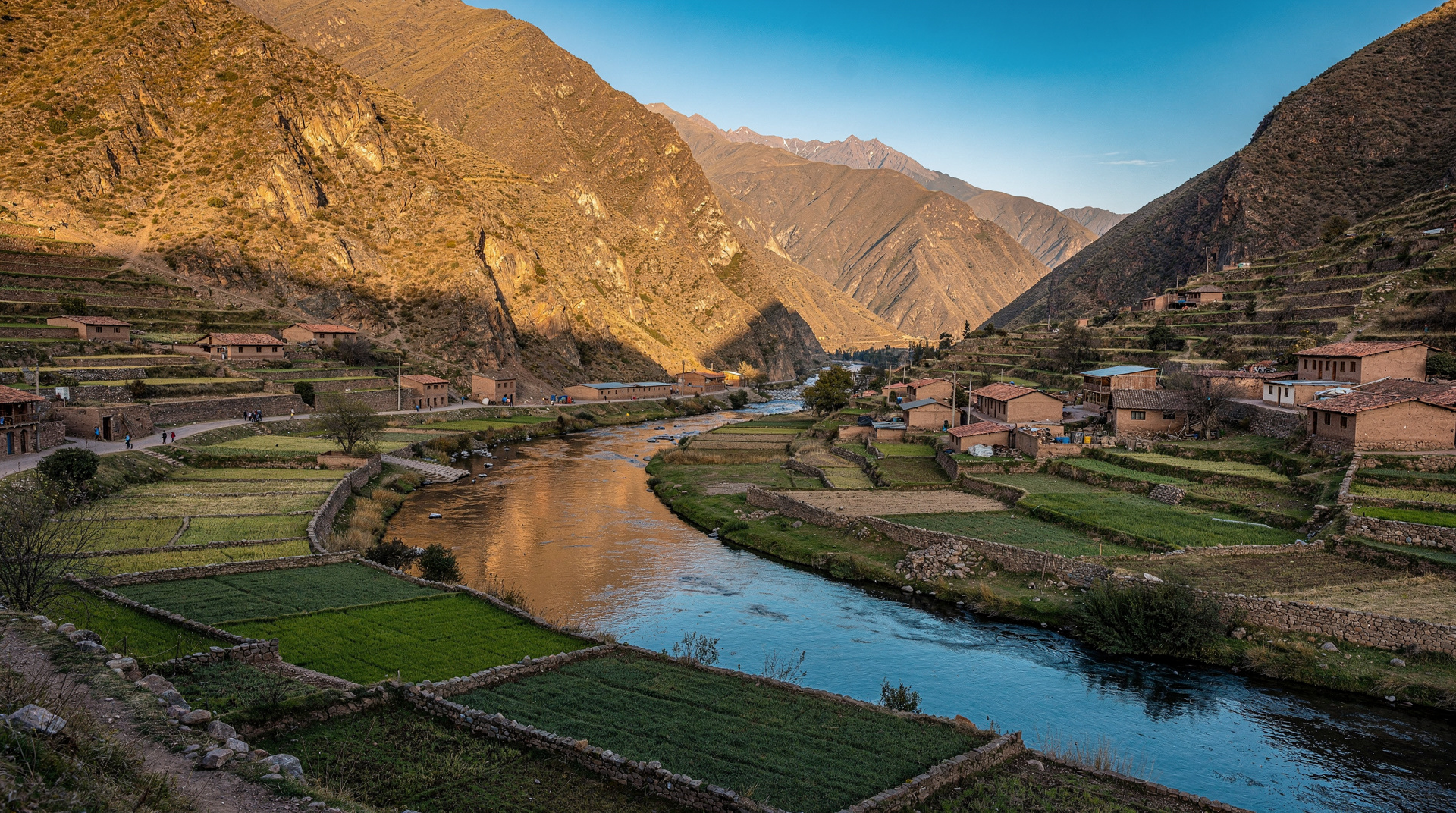
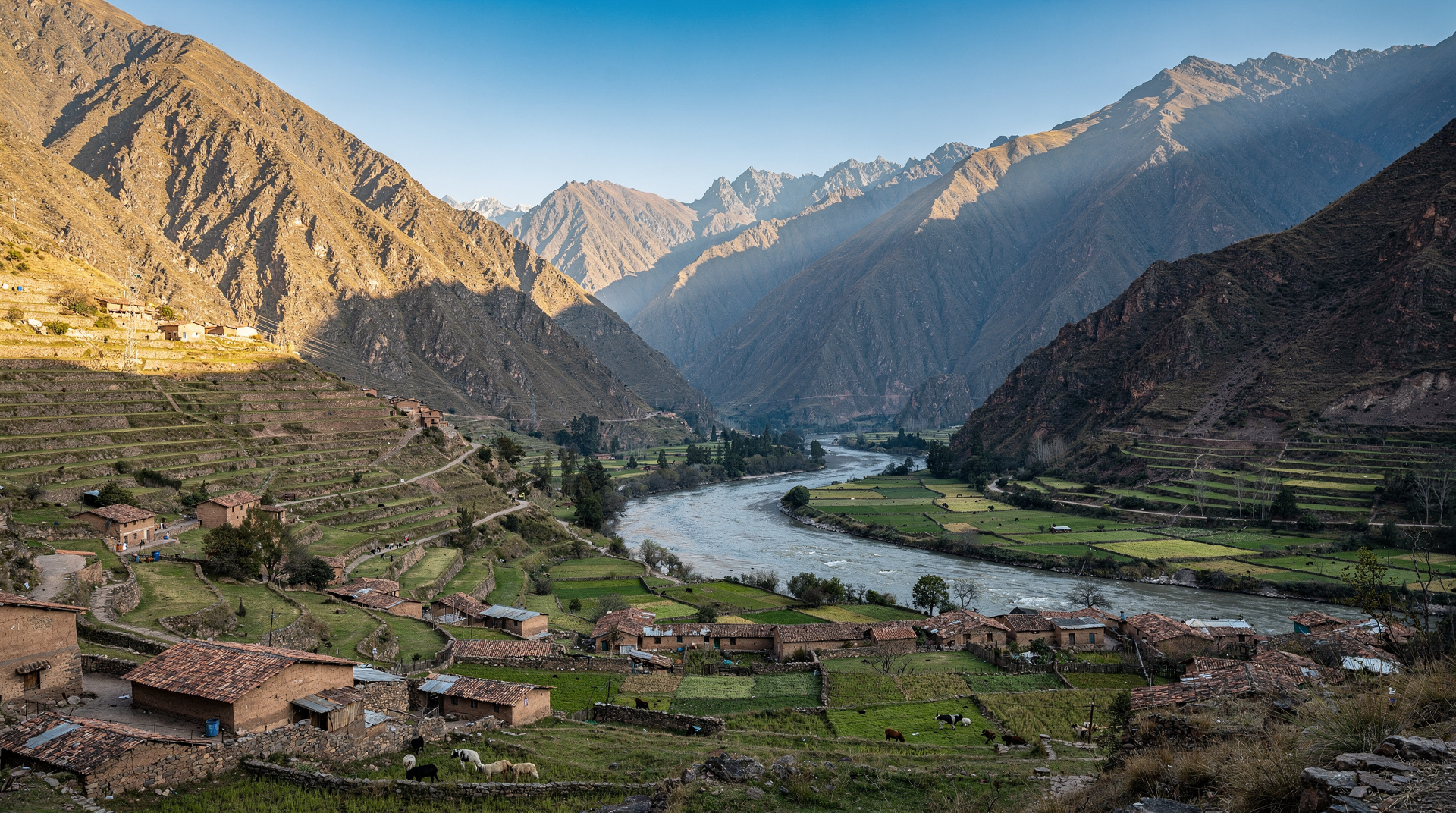
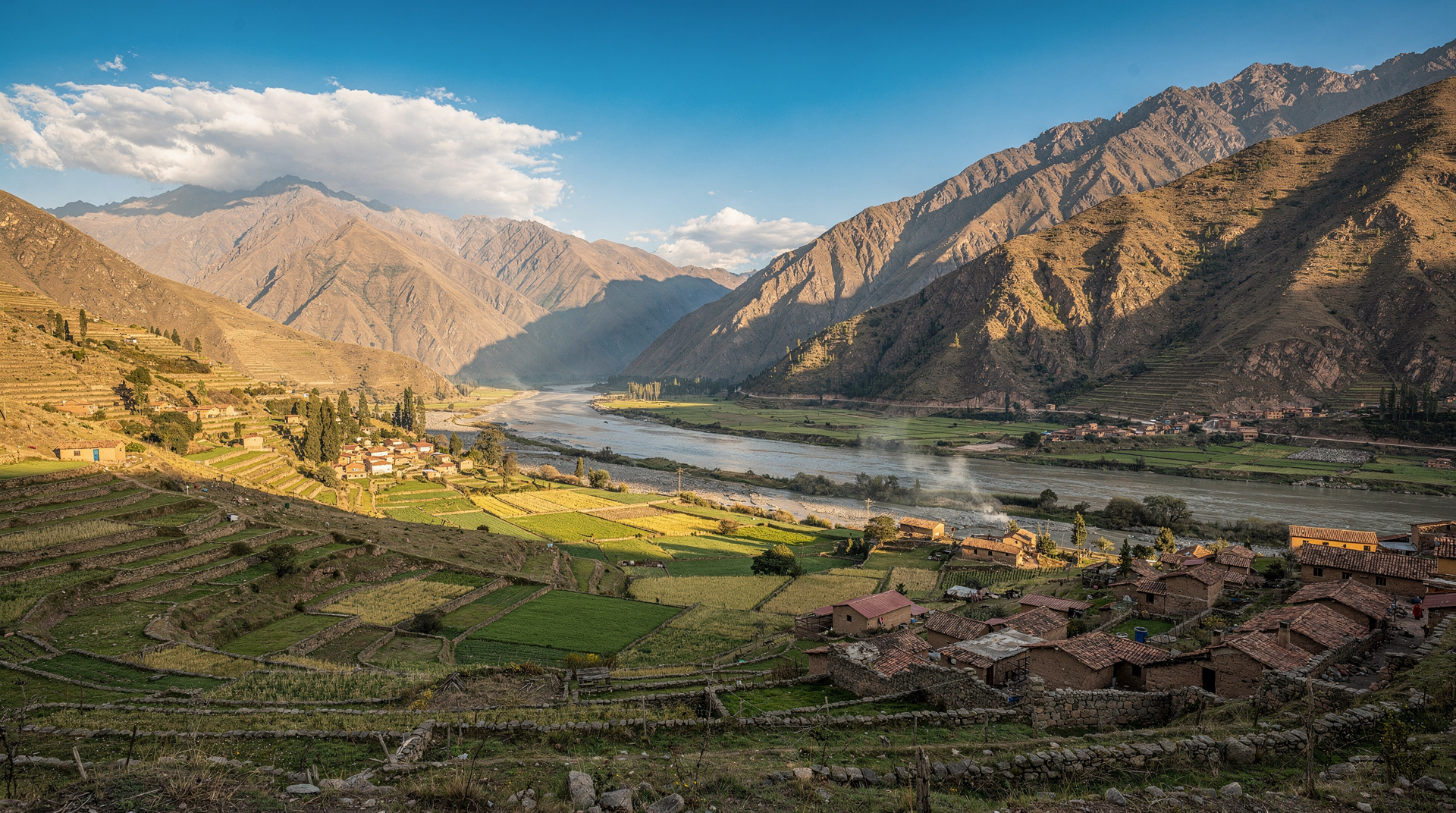
Chinchero sits on the high plateau between Cusco and the Sacred Valley at approximately 3,760 m — above the valley floor, roughly level with Cusco in altitude, and significantly cooler. Most Sacred Valley day tours stop here for 30–45 minutes. That is enough time to see the church and the ruins and watch a brief weaving demonstration. It is not enough time to actually understand what you are looking at.
Chinchero has two things that distinguish it from the other Sacred Valley stops. First, a colonial church that preserves one of the most visible and honest examples anywhere of the Inca–Spanish collision that defines Cusco-region architecture: Inca foundations and colonial construction in uncomfortable proximity, with neither fully obscuring the other. Second, weaving cooperatives where the full Andean textile tradition — from raw fleece to finished cloth — is practised daily by women who learned from their mothers and grandmothers and who are the current link in a knowledge chain that reaches back past the Inca to older Andean cultures. Neither of these things is theatrical. Both reward a slower pace than most tours provide.
| Where | Sacred Valley plateau, 3,760 m, above Cusco in altitude |
| Cost | Boleto Turístico (~S/130 full or ~S/70 partial) for church/ruins; cooperative visits free |
| Time needed | 90 minutes–2 hours for a proper visit |
| Getting there | Collectivo ~S/4–6 (30–40 min) or taxi ~S/30–50 from Cusco |
| Best time | Sunday morning for the market, any day for weaving cooperatives |
The church and Inca ruins
The Chinchero church was built in the early colonial period (approximately late 16th century) directly on the foundations of an Inca palace, using the standard Spanish colonial strategy of repurposing existing high-quality Inca stonework. The result is architecturally jarring and historically fascinating: the lower courses of the outer walls are precisely fitted Inca stone of the finest grade, while the upper sections switch to the Spanish colonial technique of rough-cut rubble set in adobe mortar. The join between the two construction systems is visible from the street and is impossible to mistake for anything other than what it is — a deliberate superimposition of one civilisation’s architecture onto another’s.
Inside, the colonial frescoes cover walls and ceiling in vivid ochres, reds and earth tones. The iconographic programme is syncretic in the way that characterised early colonial Andean religious art: Catholic saints share space with Andean solar symbols and plant motifs that the Spanish missionaries chose to incorporate rather than erase, presumably because they understood that total erasure was not achievable. The overall interior is visually rich in a way that more thoroughgoing colonial churches often are not.
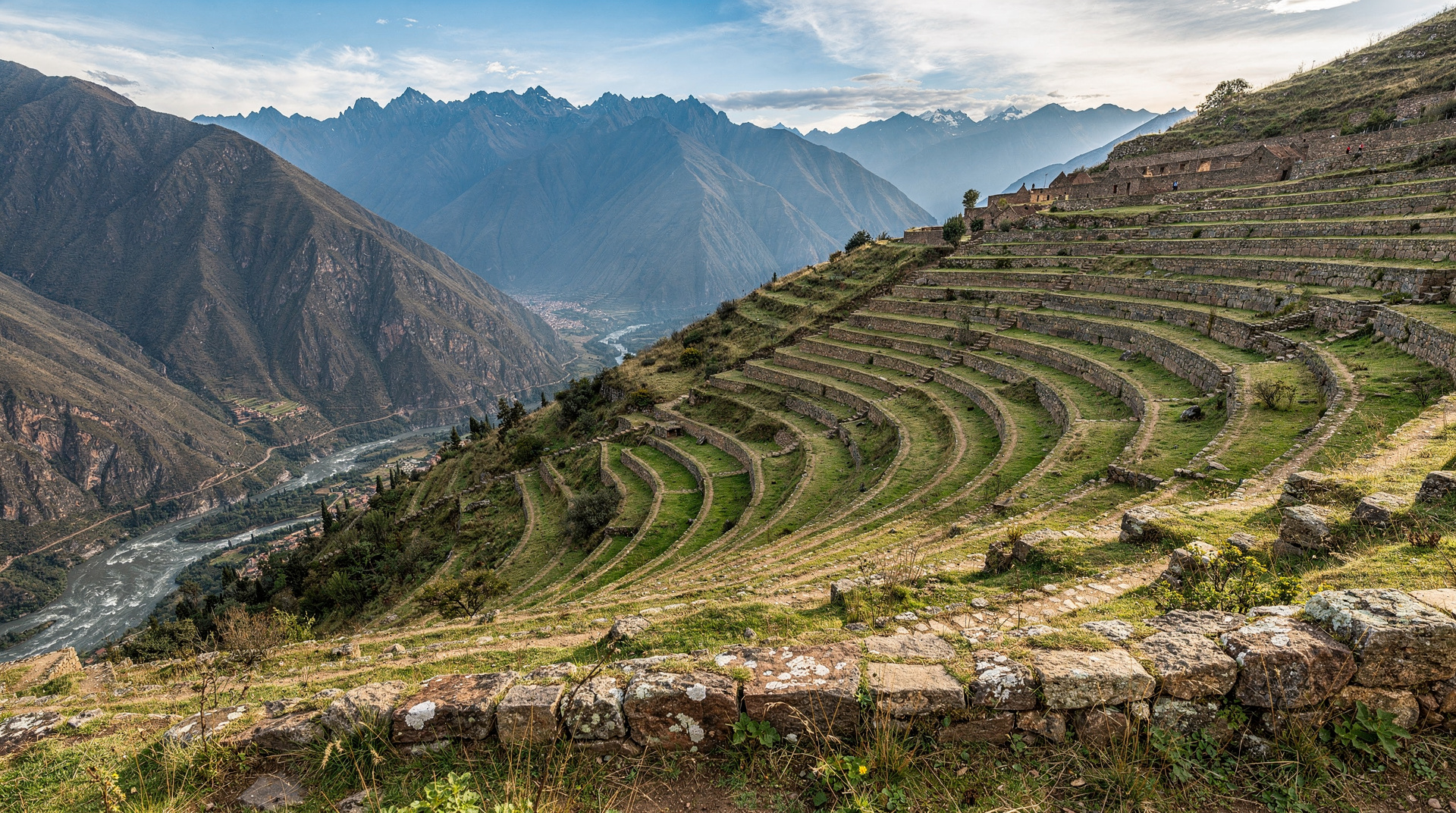
The adjacent Inca ruins — terracing, carved stones and the remnants of a royal palace associated with the Inca Tupac Yupanqui — are directly accessible from the church plaza. The Inca archaeological zone here is more modest than Pisac or Ollantaytambo, but the Inca stonework in the terraces and the carved niches and thrones cut into the rocky outcrops make it worth 20–30 minutes of attention. Admission to both the church and the archaeological zone requires the Cusco Boleto Turístico (~S/130 full; ~S/70 Sacred Valley partial). You can buy it at the COSITUC central counter (Av. El Sol 103, Cusco), or at the covered sites.
The Sunday market held on the plaza below the church is smaller and more local than Pisac’s — the proportion of agricultural produce (potatoes, dried chillies, grains, fresh vegetables) to tourist crafts is higher here than at Pisac, which makes it interesting in a different way. Vendors are local women selling primarily to local buyers, with a secondary tourist-facing craft section. The size and atmosphere are manageable in 30–45 minutes.
The weaving cooperatives: what actually happens
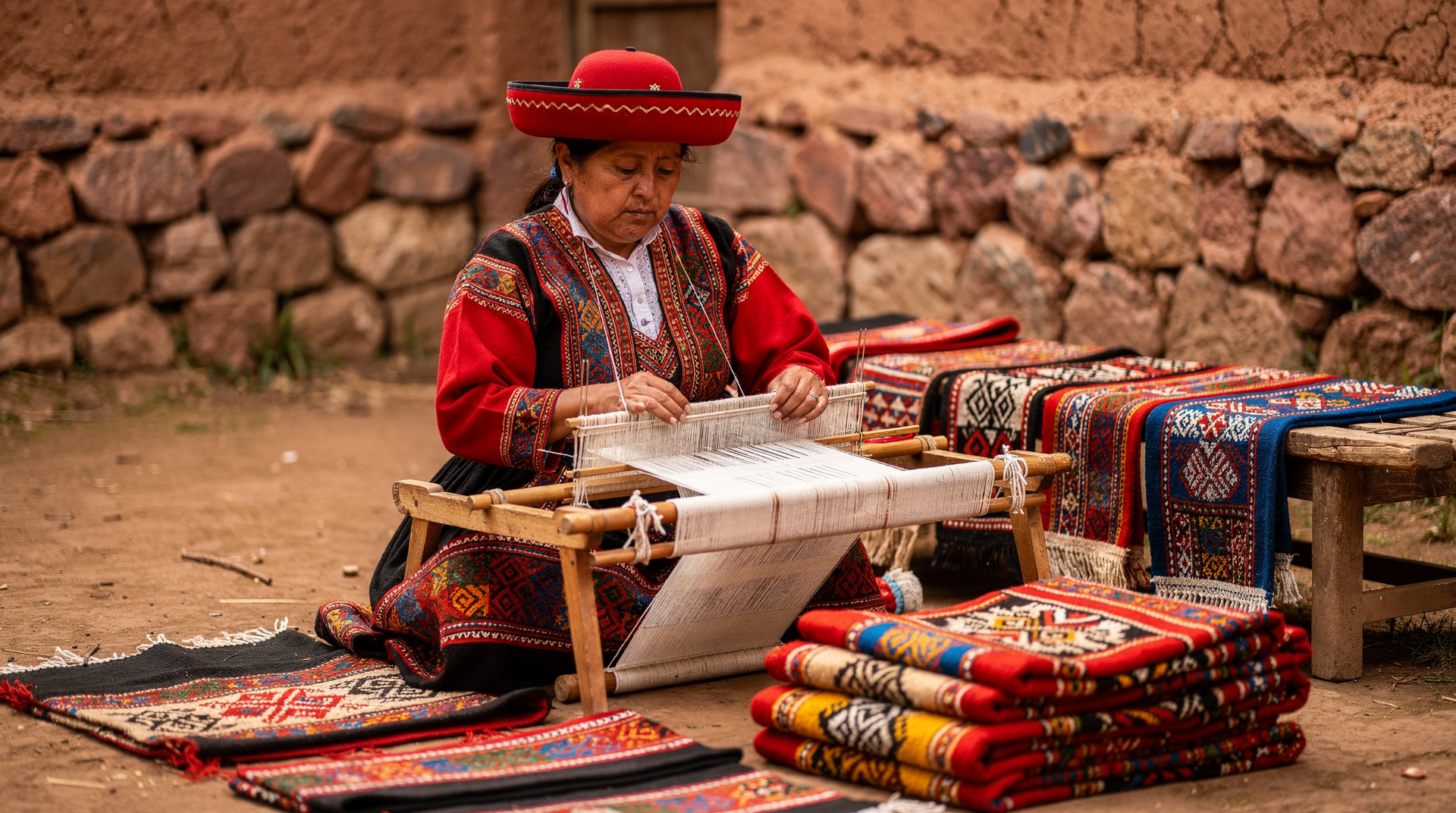
Several women’s cooperatives in Chinchero admit visitors to observe and participate in textile demonstrations. These are not staged shows — they are working sessions at which visitors happen to be present. The demonstrations cover the full textile production chain, usually in a courtyard or covered work area attached to the cooperative’s sales room:
Step one — raw fleece. Alpaca or sheep fleece is washed in a local water source, hand-teased to remove vegetable matter and dried in the sun. The cooperative may show both alpaca and sheep fibre side by side; alpaca is softer, finer, lacks lanolin and dyes to deeper colours; sheep wool has more structure and is used for heavier weaves. Most visitors underestimate how much of the production time is consumed before the weaving even begins.
Step two — spinning. Cleaned fibre is spun into thread on a hand-held drop spindle — a wooden shaft with a weighted disc that the spinner twirls and drops while drawing out the fibre with her other hand. Andean spinning produces a tightly twisted, durable yarn. Skilled spinners work at considerable speed with a fluid motion that looks deceptively casual; trying the spindle for 30 seconds will demonstrate that it is not.
Step three — natural dyeing. The cooperatives typically demonstrate several dye baths simultaneously. The standard demonstration shows: cochineal (dried scale insects from cacti, producing reds, oranges and purples depending on the mordant and pH used); indigo (producing blues and blue-greens); weld or onion skin (yellows and golds); iron-mordanted baths (grey-greens and blacks). The transformation from grey-white thread to vivid colour happens in minutes and is consistently the most visually dramatic part of the demonstration. The range of stable, lightfast colours achievable from purely natural sources is wider than most visitors expect.
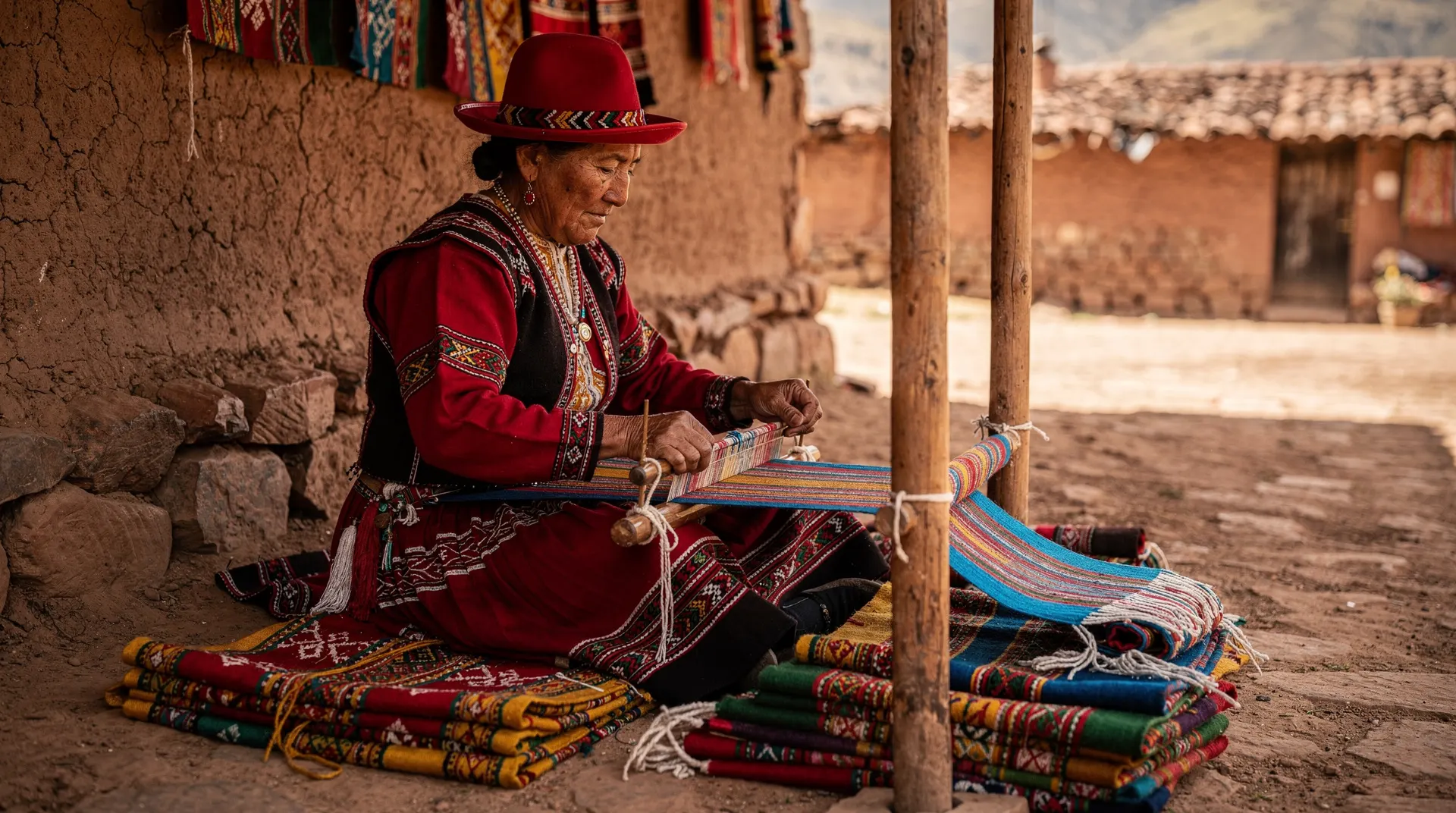
Step four — backstrap loom weaving. The dyed thread is warped onto a backstrap loom: a simple device consisting of two end-bars held apart by the warp threads, with one end attached to a fixed point (post, tree or wall bracket) and the other to a belt worn around the weaver’s lower back. Tension is adjusted by leaning back or forward. The weaver throws weft threads using a flat shuttle and beats them into place using a flat wooden beater.
Complex patterns are worked from memory — the design exists entirely in the weaver’s hands and eyes, not in any written or diagrammatic record. Watching a weaver reproduce a centuries-old geometric pattern from memory while maintaining an even tension across the entire warp is one of the more quietly extraordinary things you can observe in Peru.
A full cooperative demonstration takes 45–60 minutes. A small purchase of finished textiles is expected at the end; this is the economic basis of the programme and is not optional in the social sense even if it is technically voluntary. The cooperatives are well aware of this dynamic and do not apply pressure — the expectation is simply understood.
Buying textiles in Chinchero
The best pieces in Chinchero are sold by the cooperatives directly, not at market stalls. A genuinely handwoven alpaca scarf on a backstrap loom, using natural dyes and hand-spun thread, takes a skilled weaver 2–5 days to produce depending on the complexity of the pattern. Prices of S/60–120 for scarves reflect this honestly; pieces below this range at market stalls are almost certainly not what they are represented as.
Distinguishing marks of quality: the weave is dense and slightly irregular under close examination; the reverse side of the cloth shows the complementary colour pattern worked into the back (typical of Andean double-weave technique); the colour has depth and tonal variation under different light rather than the flat brightness of chemical dye; the fabric is substantial rather than thin. If a seller cannot tell you which community made the piece and by whom, it was probably not made locally.
The cooperative experience is also the best context for understanding what you are buying. Watching the full production process before purchasing transforms the scarf from a souvenir into an object you understand — the specific dye colour you are wearing, the type of loom on which it was woven, the approximate number of days it required.
Fitting Chinchero into your itinerary
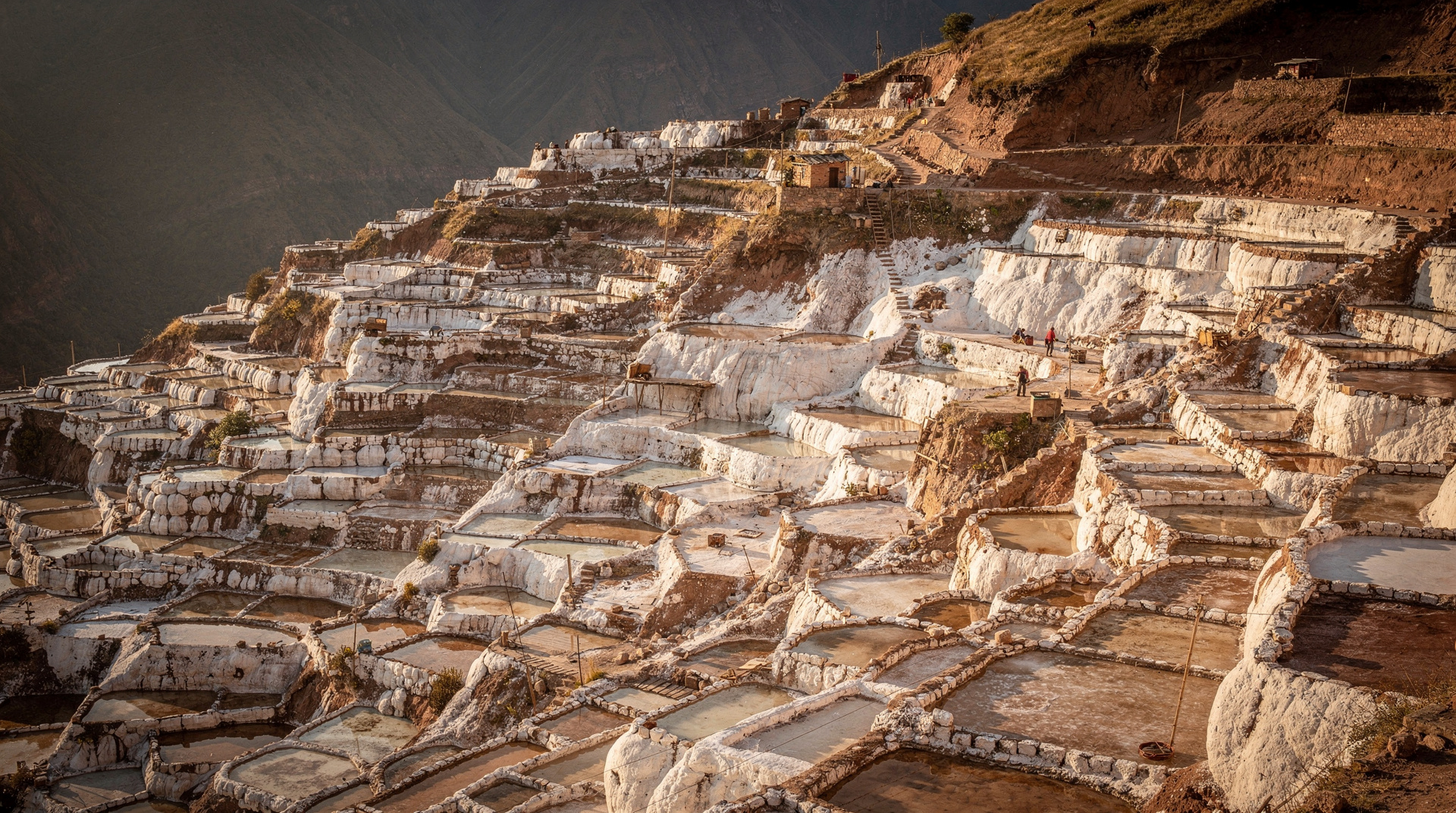
Chinchero works best as the second stop on a plateau-to-valley loop: start in Cusco, stop in Chinchero for the church, ruins and weaving demonstration (90 minutes to 2 hours), continue west to Maras salt pans (1 hour) and Moray (45 minutes), then descend to the valley to Urubamba or Ollantaytambo. This sequence follows the natural geographic logic of the plateau and gets you to the salt pans in the right light if you start early enough.
A guided Pisac, Maras and Moray tour typically includes Chinchero as an en-route stop and incorporates time at one of the weaving cooperatives. Ask when booking whether the Chinchero stop includes the cooperative demonstration or only the market — the two are different in value.
Independent visitors from Cusco can reach Chinchero by collectivo (~S/4–6, 30 minutes) and continue by hired taxi to Maras and Moray (~S/80–100 for the circuit). The taxi availability at Chinchero is better than on the plateau proper, making this a viable starting point for self-organised visitors.
Altitude and temperature
At 3,760 m, Chinchero is slightly higher than Cusco. The plateau temperature is several degrees cooler than the valley floor and can drop sharply if wind picks up or cloud comes in. Bring a jacket or fleece regardless of morning conditions in Cusco. The walk from the market area to the church is short but uphill on uneven paving; take it at altitude-appropriate pace.
Chinchero on the plateau does not offer the acclimatisation advantage of the valley floor. If you are on your first day in the region, the short walking distances here are fine — just move slowly and drink water.
What to buy and what to avoid at Chinchero
The best purchasing opportunity is at the cooperative after a demonstration — while you are still in the working space with full context for what you are looking at. The worst is at market stalls near the car park, where most textile stock is machine-made in Cusco using synthetic fibres and chemical dyes, sold as “traditional” without qualification.
A genuinely backstrap-loom woven alpaca scarf using natural dyes, sold by the weaver who made it, costs S/60–120. A similar-looking acrylic market stall piece costs S/15–30. The price difference reflects a fundamentally different product. Table runners, wall hangings and larger pieces represent better value per hour of weaving time than small accessories — a wall hanging that took five days to produce costs S/200–400 and will last decades.
If you want a specific pattern or colour, describe it to the cooperative leader. Several cooperatives specialise in different regional patterns; a piece woven in the pattern associated with the Chinchero community rather than a generic Andean geometric design is both more specific and more meaningful.
The broader context: why Andean textiles matter
The textiles produced in Chinchero are part of a continuous tradition documented from the Inca period through the colonial record to the present. The Inca were themselves heirs to much older textile cultures: the Wari (600–1000 CE) produced tapestry cloth of extraordinary technical complexity; the coastal Paracas culture (400 BCE – 200 CE) created embroidered funerary textiles among the most sophisticated ever made anywhere. The cooperatives at Chinchero sit within this long line — not as a museum recreation but as a living continuation. The specific patterns, dyes and loom techniques are transmitted from weaver to weaver within a knowledge chain that reaches back through documented Inca practice to pre-Inca tradition.
This historical depth makes the cooperative demonstration more significant than it might first appear. You are not watching a craft revival or a tourist-oriented performance. You are watching a practice that has continued, with refinements rather than ruptures, for at least a thousand years.
The Sunday market in context
Chinchero’s Sunday market is often described in passing as “less tourist-facing than Pisac” — which is accurate but slightly misses the point. The market is organised around local agricultural exchange rather than craft sales, which means most of the activity involves Quechua-speaking highland families buying and selling fresh produce, dried goods, livestock and household essentials for their own use. The tourist-craft section (textiles, carved gourds, silver items) is present but secondary.
For a visitor this translates into a more authentic-feeling market experience than Pisac’s — fewer people are there primarily to sell to you — but also a less curated one. The weaving quality at market stalls varies significantly, and the best textiles from Chinchero are, as noted above, at the cooperatives rather than the market. The market is worth 30–45 minutes as a social observation rather than as a shopping destination.
Arrive before 9 am to see the market at its most active. By 11 am the agricultural trading has largely concluded and the market thins to the craft stalls.
Practical logistics from Cusco
The collectivo from near Terminal Terrestre or Avenida Grau in Cusco to Chinchero (~S/4–6, 35–40 minutes) runs frequently throughout the morning and is the cheapest way to reach the site independently. The return journey — collectivos from Chinchero toward Cusco — runs until late afternoon.
For independent travellers planning the plateau circuit (Chinchero–Maras–Moray), the key logistical step is arranging transport onward from Chinchero. Taxis congregate near the main market area; hiring one for the Maras–Moray circuit with waiting time costs S/80–100. Negotiate before departing and confirm the total fare covers waiting time at both sites, not just the driving.
A full Sacred Valley tour from Cusco that covers Pisac, Chinchero, Maras, Moray and Ollantaytambo handles all the transport logistics and is genuinely more efficient than the self-organised version for the plateau circuit specifically. The guide commentary at all five sites is an additional benefit that independent travel on collectivos and hired taxis cannot replicate.
Honest summary
Chinchero works best as part of a Sacred Valley loop — spending a full day here as a standalone destination from Cusco would feel thin unless you have a specific research or craft interest. As the second stop on the Cusco–Chinchero–Maras–Moray–Ollantaytambo sequence, it adds a dimension that the purely archaeological sites cannot: a living tradition in active use, taught and practised by the community that holds it. That is not something most tourism offers, and it is worth the 90 minutes it takes to see it properly.
Who actually does the weaving, and why it matters
The cooperatives operating in Chinchero are organised and run by the weavers themselves — predominantly Quechua-speaking women who learned the craft from their mothers and grandmothers within their own families, rather than through any formal training programme aimed at tourism. This distinction matters for understanding what you are watching: the demonstrations exist because tourism provides an income stream that supports the continuation of a skill that would otherwise have far fewer economic incentives to persist against cheaper machine-made alternatives.
Many cooperatives reinvest a portion of sales income into training younger women in the community, explicitly framing the tourist-facing demonstration as a mechanism for cultural transmission rather than a performance disconnected from the community’s own priorities. Several cooperatives have also organised into formal associations that set shared pricing standards, partly to prevent a race to the bottom that would undercut the value of a genuinely time-intensive craft.
Comparing Chinchero to other Sacred Valley textile stops
Chinchero is not the only place in the region to see weaving, but it is the most developed for visitors. Some Pisac market stalls sell textiles from the same cooperative network, and a handful of smaller communities in the valley run similar but less visitor-oriented demonstrations. The advantage of Chinchero specifically is scale and consistency: several established cooperatives operate daily rather than only on market day, so a demonstration is available whenever a Sacred Valley tour passes through, rather than being tied to Pisac’s Sunday and Thursday market schedule.
Seasonal considerations for a Chinchero visit
Chinchero’s plateau setting means its weather follows Cusco’s broader seasonal pattern rather than the Sacred Valley floor’s slightly milder profile. In the dry season (May–September), mornings are cold but consistently clear, making early visits comfortable once the sun clears the surrounding hills. In the wet season, afternoon cloud and rain arrive on a similar schedule to Cusco itself, so a morning visit is the more reliable choice regardless of month. The Sunday market operates year-round unaffected by season, though wet-season Sundays can see the outdoor stalls thin out somewhat if rain arrives early.
Photographing the cooperatives respectfully
Photography inside a weaving cooperative is generally welcomed, but a few courtesies matter. Ask before photographing an individual weaver up close, particularly during a delicate stage like threading the loom, where a sudden flash or an intrusive lens can break concentration on work that requires precise tension control. Most cooperatives are entirely comfortable with photography of the general workspace, the dye baths and the finished textiles; the request is really about direct portraits of the women themselves. A small purchase, even if photography was not the primary reason for your visit, is the appropriate way to reciprocate the access you have been given to observe a working session that exists independently of tourism.
What a rushed 30-minute stop misses
Most standard Sacred Valley day tours allocate 30–45 minutes to Chinchero, which is enough to see the church exterior, glance at the ruins and watch a few minutes of a weaving demonstration — but not enough to see the full four-step process described above or to browse the cooperative’s finished pieces with any real understanding. If Chinchero and its textiles genuinely interest you, ask your tour operator in advance whether the itinerary allows extra time here, or consider hiring a taxi independently so you control the pace of this one stop.
Where to go next from Chinchero
Chinchero rarely stands alone, and the stops around it change how you experience it. The salt pans and terraces that usually follow are covered in the Maras salt mines guide and the Moray terraces guide; the destination page for Maras and Moray helps you decide how much time to give them. If you would rather see the textile theme from a wider angle first, the Andean textiles guide explains patterns and materials, and the Quechua culture guide gives the human context for the weavers you will meet.
For a full plan that strings the plateau and the valley together, the one-day Sacred Valley itinerary and the Sacred Valley day trip guide show how Chinchero fits the day. If you are choosing where to sleep, Sacred Valley vs Cusco as a base is worth reading before you commit. The Chinchero destination page collects the essentials on the town itself, and the Cusco acclimatization plan is the right companion if the plateau altitude concerns you.