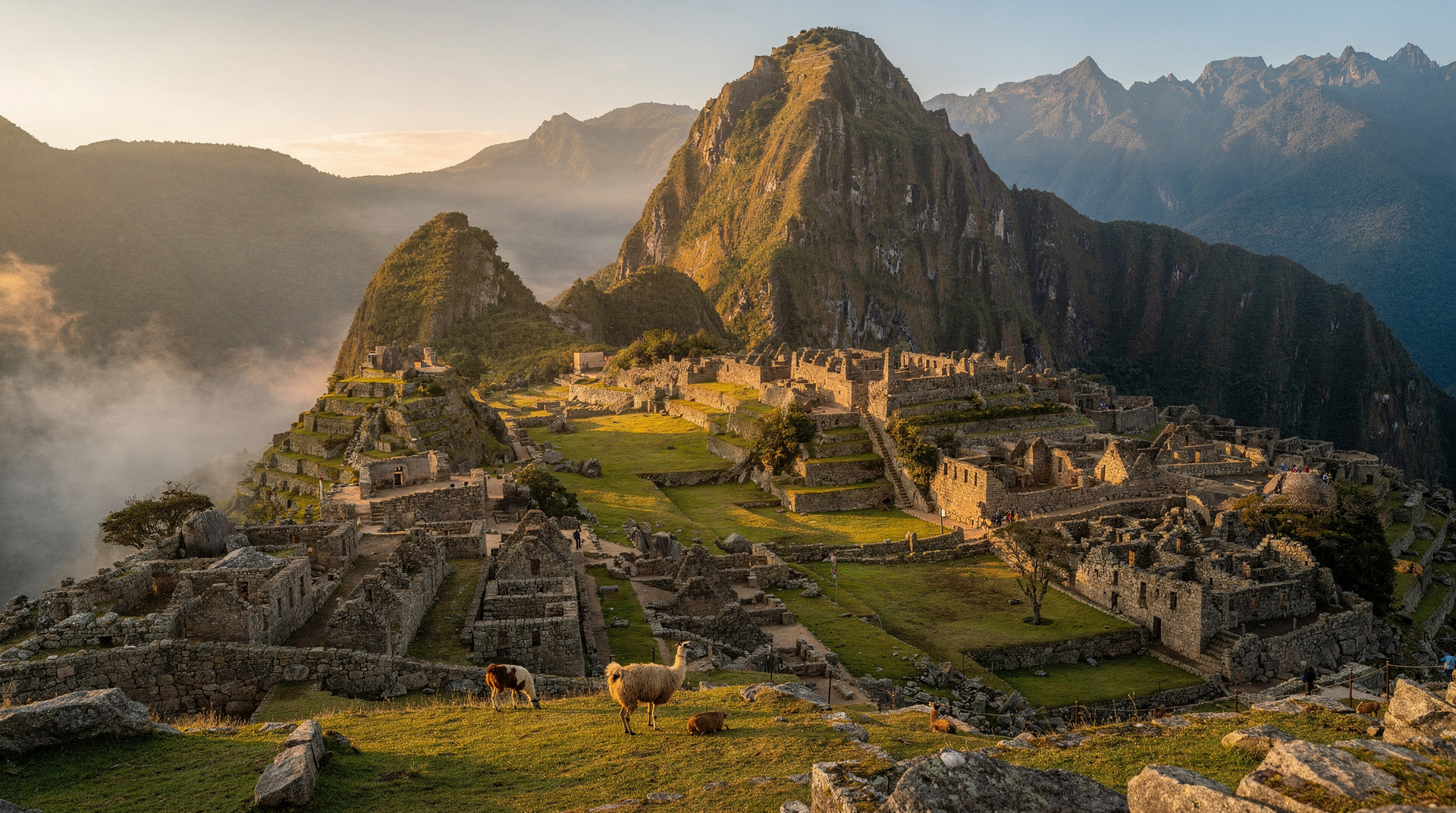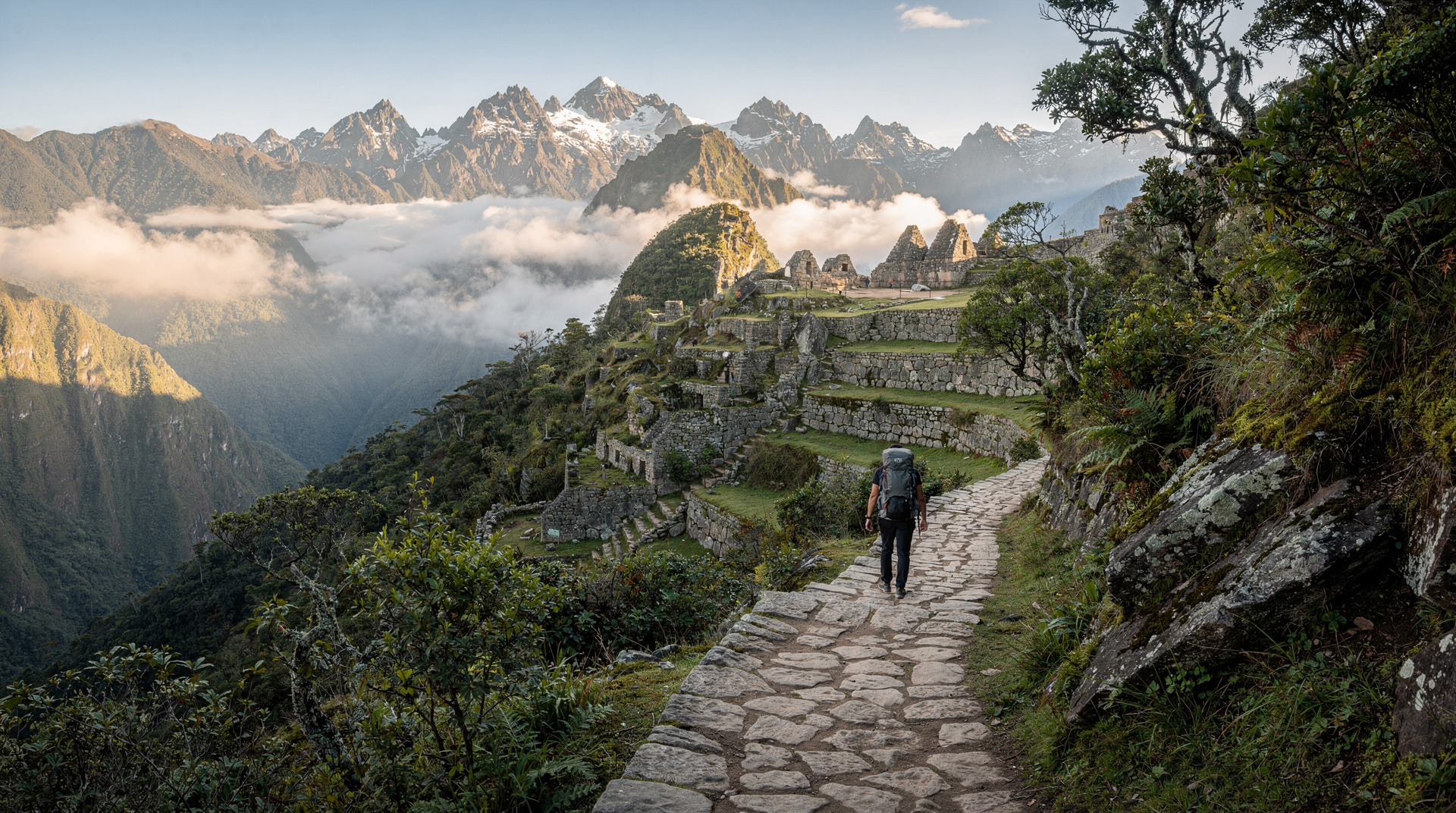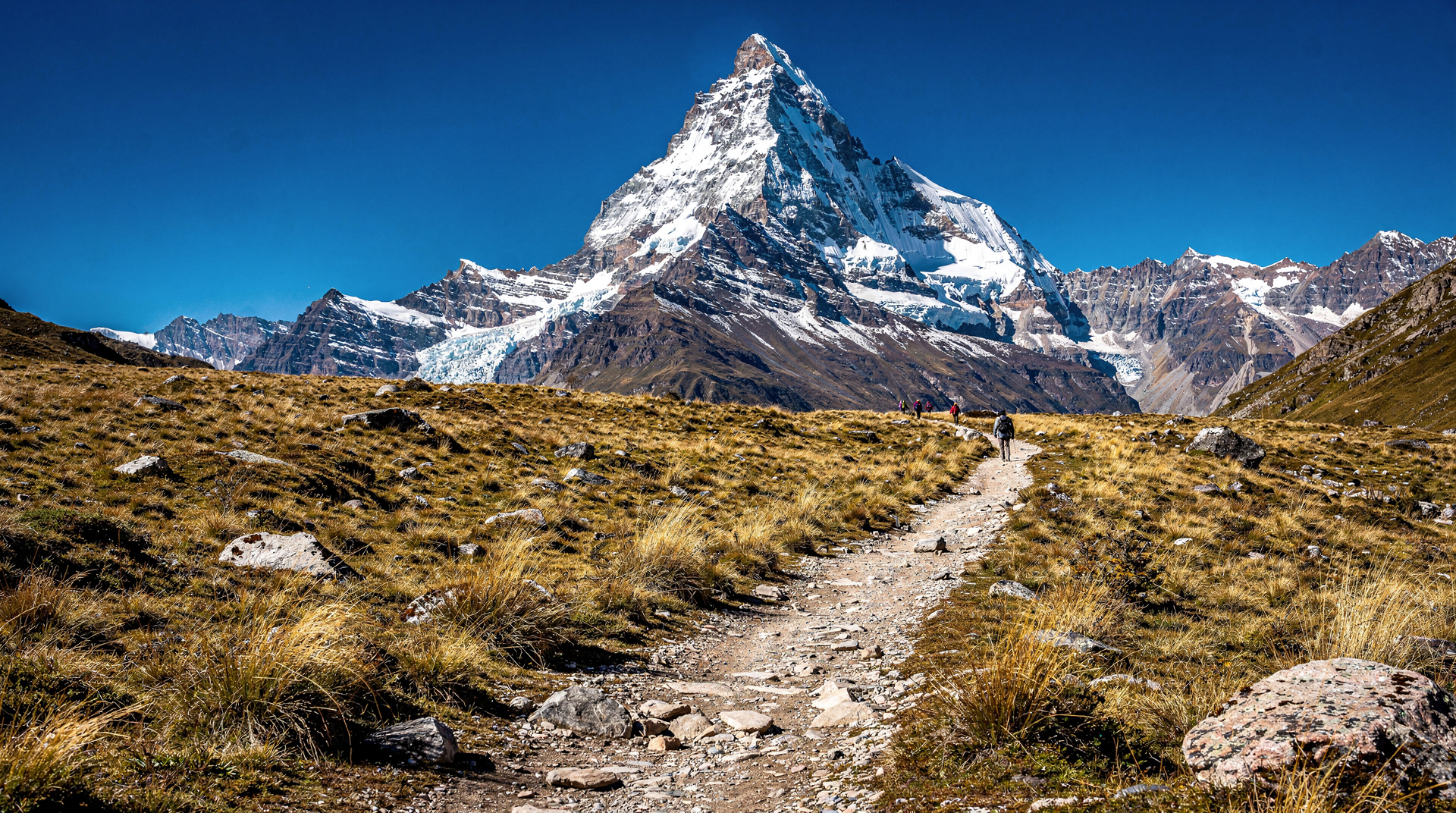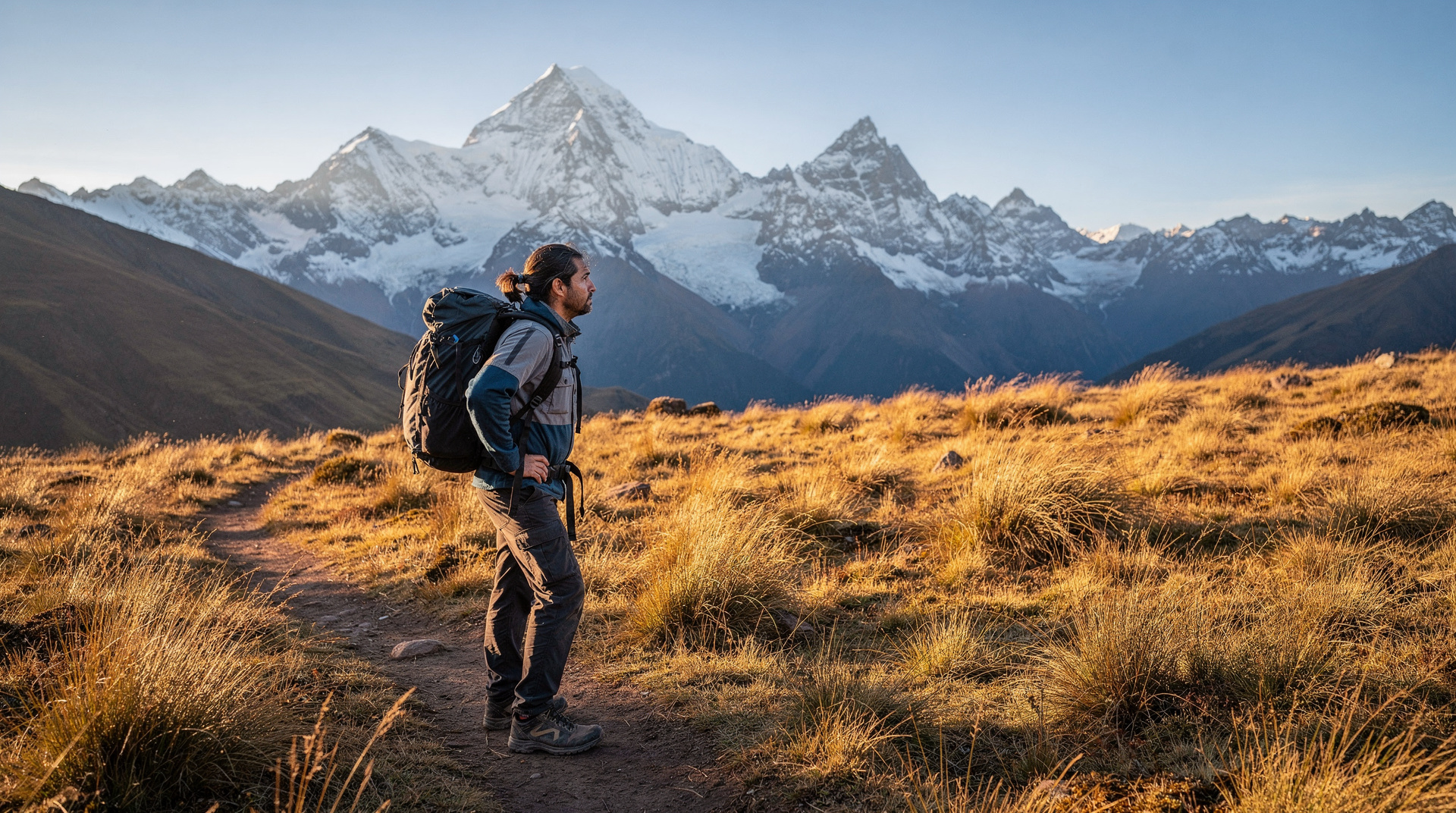
Lares trek guide: community, hot springs, and Machu Picchu
From Cusco: Salkantay Route and Machu Picchu – 4D/3N Tour
What is the Lares trek?
The Lares trek is a 4-day multi-day route through the highlands above the Sacred Valley, passing through remote Quechua villages, Andean weaving communities, and thermal hot springs, finishing with a train connection to Aguas Calientes and Machu Picchu. No permit required. The route's strength is cultural immersion, not archaeology or Sun Gate arrival.
| Distance / duration | approx. 30–35 km over 4 days |
| Max altitude | around 4,400–4,700 m (varies by route) |
| Cost | around $300–450/person, no permit fee |
| Permit | none required, no closure |
| Best season | May–September (dry season) |
The trek that takes you through living Andean culture
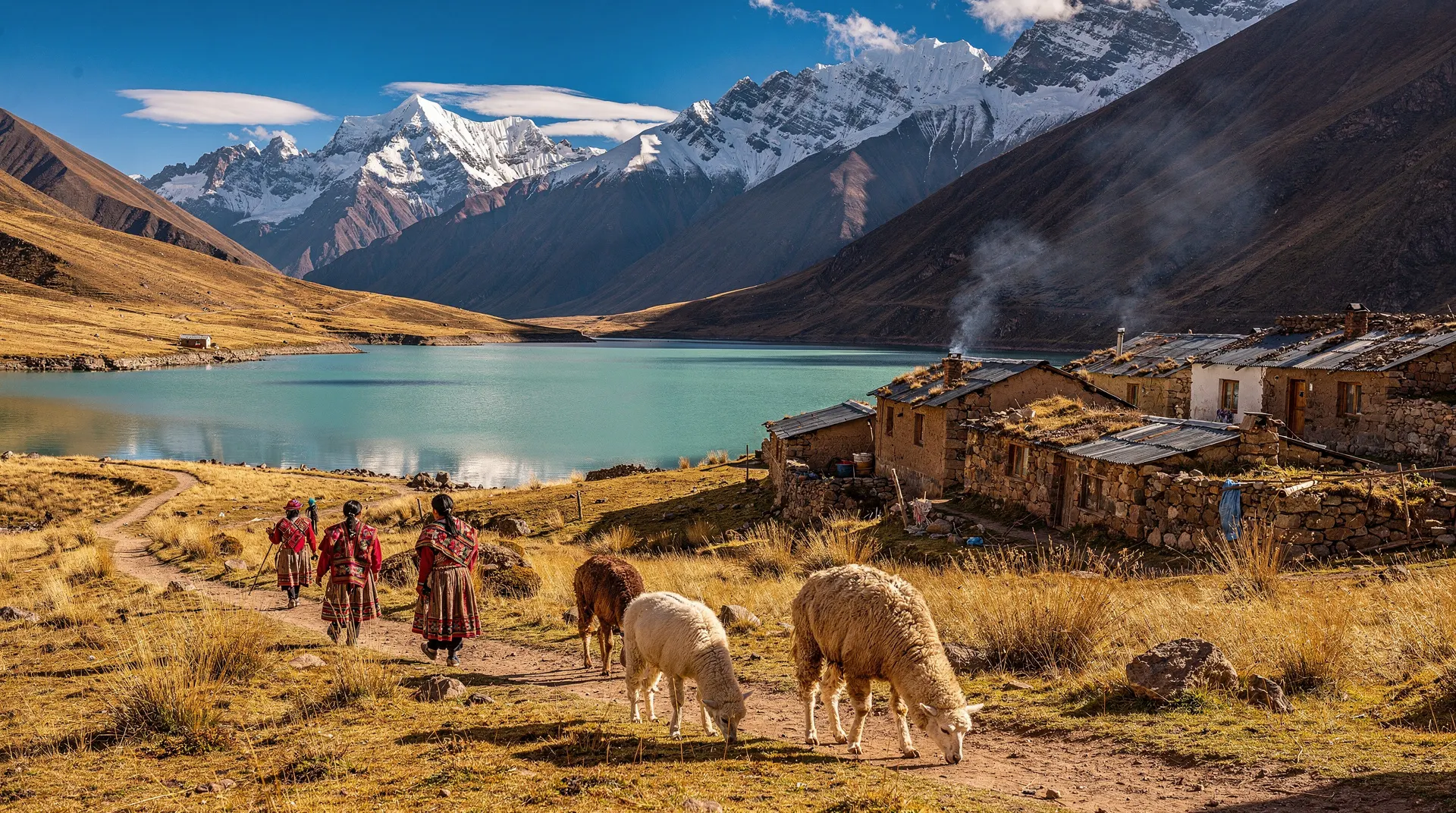
Most routes to Machu Picchu ask you to walk through the landscape of the Inca past: archaeological sites, ancient paved roads, and ceremonial complexes that are preserved precisely because they are no longer in daily use. The Lares trek is different. It passes through communities where Quechua is the primary language, where traditional textiles are woven by hand using techniques that predate the conquest, and where high-altitude alpaca herding and potato farming are still the economic foundations of village life.
The Lares is not the most dramatic route to Machu Picchu. The high passes are serious altitude. The trail conditions in wet season can be challenging. And the final connection to Machu Picchu is by train from Ollantaytambo or Aguas Calientes rather than on foot through the Sun Gate. For travellers who specifically want the Sun Gate arrival, the classic Inca Trail or the short Inca Trail are the relevant routes.
For travellers who want to understand the Andes as a living place — where the descendants of the Inca-era civilisation still practise a version of the daily life their ancestors did — the Lares trek is the strongest option in the Cusco circuit.
The route: highlands above the Sacred Valley
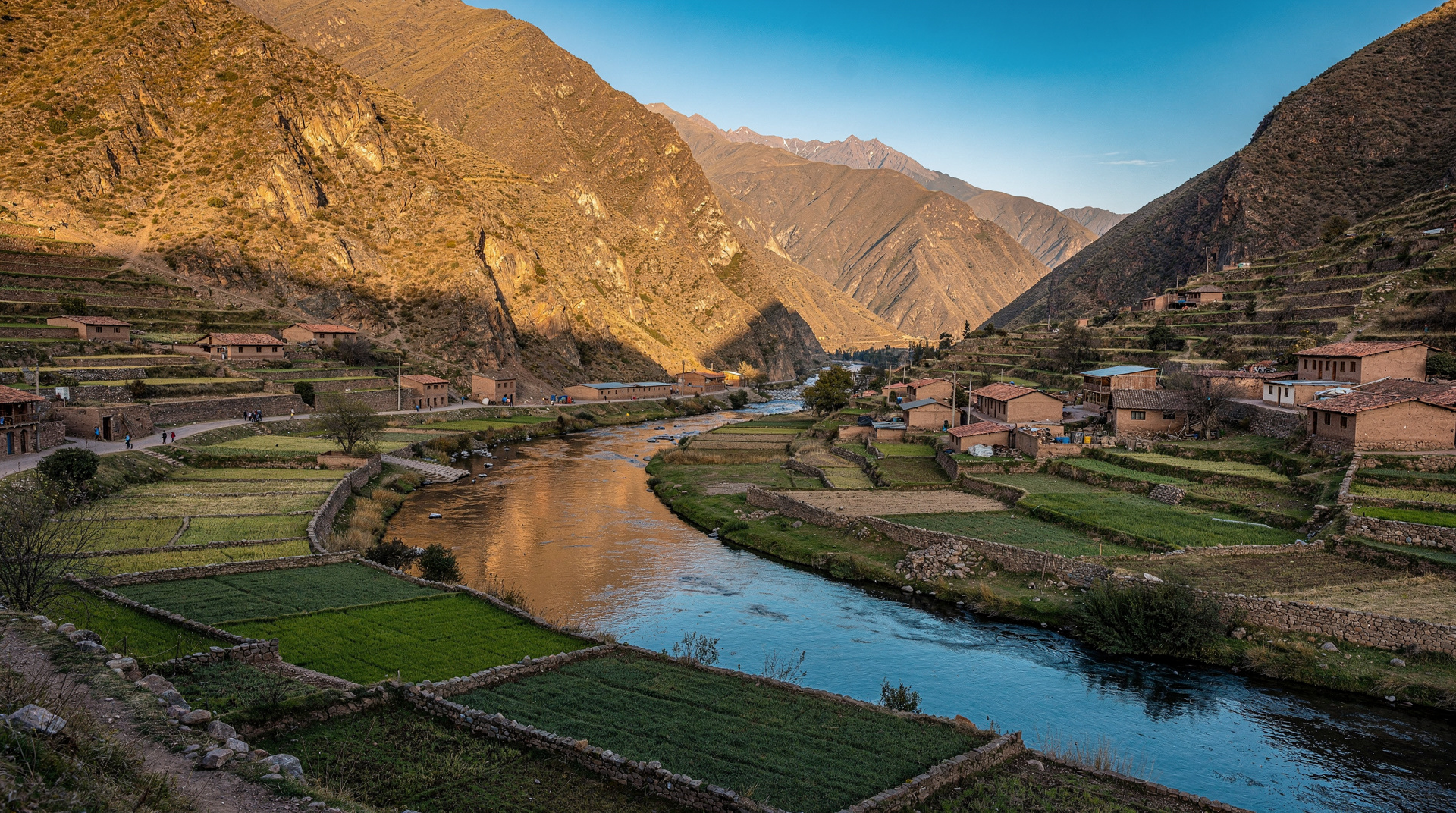
The Lares trek takes its name from the thermal baths at Lares village in the high valley above Ollantaytambo. Most four-day itineraries follow a route from Calca or Lares village through a series of high-altitude passes and Quechua villages, descending via the Sacred Valley and connecting to Machu Picchu by train.
The route is not as standardised as the Inca Trail — different operators use different variants, and the exact villages visited and passes crossed vary. The common thread is the community character: the route passes through inhabited places, not archaeological parks, and that changes the tenor of the walking entirely.
Day one — Calca to first camp (approximately 3,800 m)
Most itineraries begin in Calca, in the Sacred Valley between Cusco and Ollantaytambo. The first day involves a transfer to the trailhead and an afternoon walk through lower highland farming villages, gaining altitude toward the first high camp. The communities along the lower sections practice mixed agriculture — terraced potato and maize fields at different altitude bands, llama herding on the upper slopes.
The first night camp at around 3,800 m gives an early taste of the altitude that the passes will demand. Sleep slowly and eat well.
Day two — First pass crossing (up to 4,400–4,700 m)
Day two is the hardest day and the highest point of the route. The main pass crossing varies by itinerary — some routes cross at around 4,400 m, others at closer to 4,700 m, depending on the specific valley system used. At the top, the view across the Vilcanota range is expansive on clear days. The descent on the far side leads to the most remote and traditional communities on the route.
This is typically where the first significant community visit occurs: a village of 10–30 families, almost entirely Quechua-speaking, where the guide can translate and facilitate introductions. Textile demonstrations here — warp-weighted backstrap looms, natural dyeing with plant and mineral sources — give context to the Chinchero weaving traditions more usually associated with the Sacred Valley tourist circuit. Here, it is not a demonstration for tourists; it is how the village earns its income.
Day three — Hot springs at Lares (3,350 m)
Day three descends to the Lares thermal baths — naturally heated outdoor pools in the valley floor. After two days of cold camps and high passes, the hot springs are universally appreciated. Most itineraries allow an hour or two at the baths in the afternoon. Lares village has basic services and accommodation; some operators overnight here rather than camping.
The afternoon and evening in Lares is the most sociable part of the trek — local families, children, and other travellers from the village mix at the baths, and the atmosphere is relaxed in a way that a remote mountain camp cannot be.
Day four — Transfer to Ollantaytambo and train to Aguas Calientes
The final day is logistical. From Lares, the group transfers by minibus down through the valley to Ollantaytambo — a worthwhile stop in itself for the fortress and the best-preserved Inca town grid still inhabited today — and takes the afternoon train to Aguas Calientes. Overnight in Aguas Calientes.
Day five — Machu Picchu
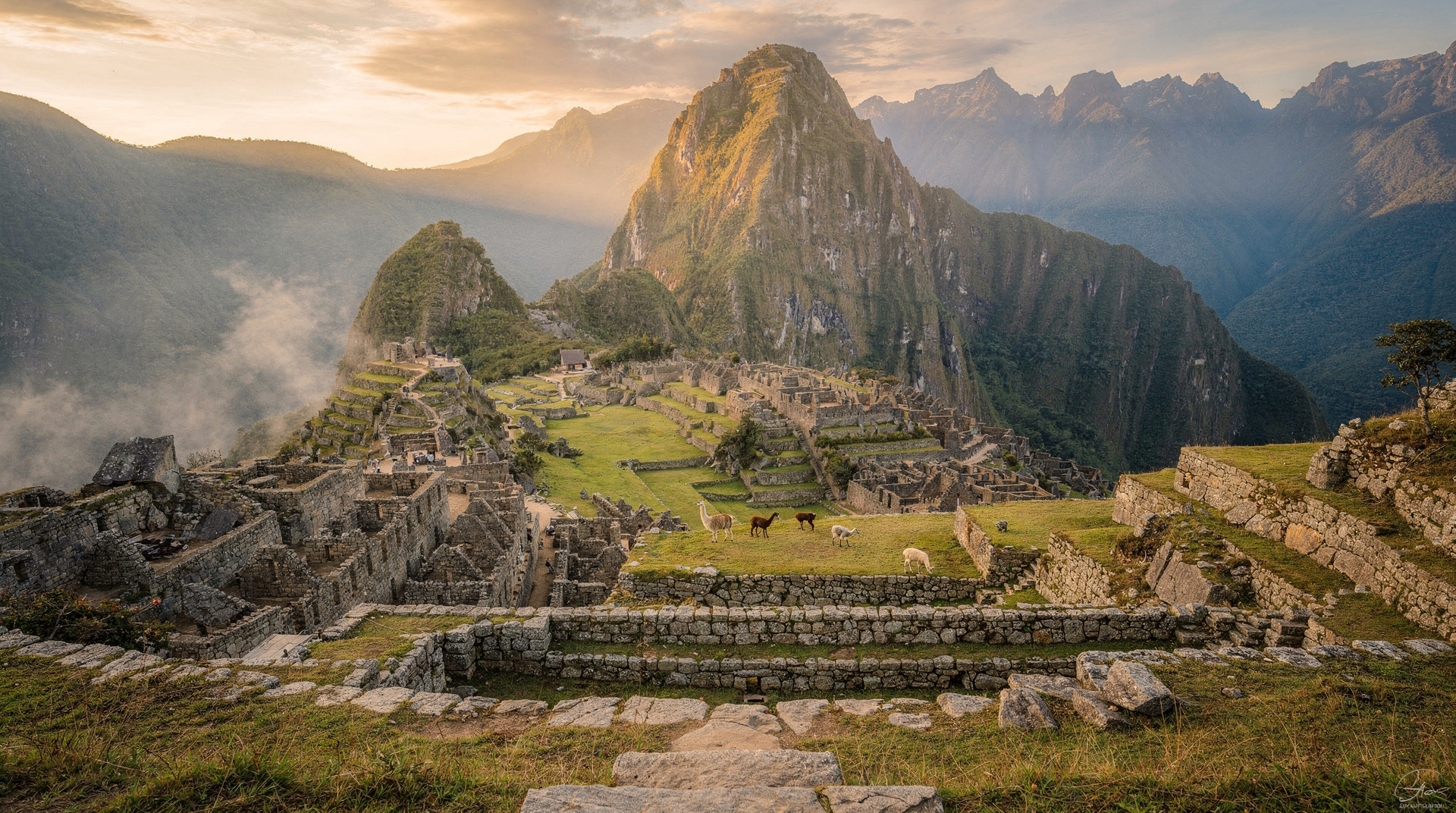
Early morning bus from Aguas Calientes to Machu Picchu, guided tour of the site, return to Cusco by afternoon train. Most operators offer a four-day main trek plus one Machu Picchu day in a five-day overall package.
For travellers who want to add the Salkantay route flavour to a Machu Picchu trek, the 4-day Salkantay trek variant offers a higher-altitude mountain experience that is more comparable to the Lares in permit-free logistics while providing the dramatic glacier pass that the Lares does not include.
Altitude on the Lares: serious and unavoidable
The Lares trek crosses passes that are comparable in altitude to the Inca Trail’s Dead Woman’s Pass, and some variants are higher. The same acclimatisation requirement applies: a minimum of three nights at altitude in Cusco (3,400 m) or the Sacred Valley before starting.
The important context for the Lares is that the trek begins at mid-altitude (Calca is around 2,900 m) and ascends quickly. Trekkers who arrive in Cusco and take a morning bus to the trailhead the same day are inadequately prepared for the day-two pass crossing. The altitude sickness guide covers how to structure acclimatisation days and what symptoms to watch for on the trail.
Coca leaves — offered at every village, in every tea form, in every hotel reception across the Sacred Valley — help with mild altitude symptoms. They are legal and traditional in Peru. They are not a substitute for adequate acclimatisation.
Cost breakdown
The Lares trek typically costs $300–450 per person for a 4-day guided route:
- Transport from Cusco to the trailhead and from Lares to Ollantaytambo
- Certified guide and support staff
- Accommodation (homestays or simple lodges) and meals
- Train from Ollantaytambo to Aguas Calientes and return to Cusco
The Machu Picchu entry ticket is typically additional (around $25–60 depending on circuit and timing). No government permit fee applies.
This is generally the cheapest multi-day trekking option to Machu Picchu after the Inca Jungle trek, reflecting the lower operational complexity.
When to go
May–September is the standard dry-season window and clearly best for the high pass crossing. The Sacred Valley section is pleasant year-round and the communities are active in all seasons.
October–April brings increasing rain. The pass crossing becomes muddier, colder, and less predictable in weather. The community visits, however, remain possible and can be rewarding even in wet season — the valley landscapes are greener, the terraced fields more visually dramatic, and the villages less visited by outsiders. For travellers prioritising cultural immersion over mountain views, a dry season window is less critical than for the Salkantay or Inca Trail.
Textile culture: what you will actually see
The Andean textile tradition is one of the most sophisticated in the world, predating the Inca by thousands of years. The weaving communities on the Lares route practice a form of backstrap loom weaving using hand-spun alpaca and sheep wool, dyed with plant materials — cochineal (red, from an insect on cactus), indigo (blue), and various local plants for greens, yellows, and blacks.
The complexity of Andean textile design encodes cultural information — community identity, family lineage, altitude band — in patterns that look decorative but are legible to those who know the visual language. A guide who understands the textile tradition can explain what you are looking at: not just “a colourful blanket” but a community map, a status marker, a story told in wool.
The Lares communities have engaged with tourism in a managed way — the women who demonstrate weaving are not performing for cameras but selling their work, and the prices paid go directly to the community. Buying a woven piece directly from a Lares community is a more straightforward ethical transaction than buying similar work in a Cusco tourist market. Ask your guide about the pricing context before purchasing.
Chinchero in the Sacred Valley is the most commonly visited weaving community from Cusco on a day-trip basis — the Chinchero weaving guide covers that in detail. The Lares communities sit further from the tourist circuit and see less daily visitor traffic, which changes the dynamic of the interaction.
Ollantaytambo: the connection point
The train connection to Aguas Calientes runs from Ollantaytambo, which is the standard Lares endpoint. Most four-day itineraries allow 1–2 hours in Ollantaytambo before the train — enough to walk the Inca fortress and street grid.
Ollantaytambo is one of the best-preserved Inca town grids still inhabited in South America. The original residential blocks and water channels from the 15th century are still in use as the urban infrastructure. The fortress above the town is the site of one of the few successful military engagements against Spanish forces during the conquest period (1536). A brief visit adds historical context to the archaeological dimension the Lares route otherwise lacks.
Combining the Lares with the Inca Trail
Some travellers use the Lares as the cultural warmup and then travel to Machu Picchu by train from Ollantaytambo, then attempt to secure a short Inca Trail permit for a separate two-day walk. This combination gives the community experience of the Lares and the Sun Gate arrival of the short trail in one trip, but requires two separate bookings and more days in the region.
Whether this extended sequence works depends on whether short Inca Trail permits are available for your dates — consult the Inca Trail permits guide for the availability picture.
Who the Lares is right for
The Lares trek is the right choice for:
- Travellers who want meaningful cultural engagement with Quechua communities, not just archaeology
- Those interested in traditional Andean textiles and their social context
- Travellers who find the Inca Trail’s permit and booking process too constraining
- Groups with mixed abilities who want altitude and scenery but with more flexibility than the fixed Inca Trail structure
- Anyone for whom the community visit and hot springs experience is as important as the summit views
The Lares is a less obvious choice for travellers whose primary goal is the Sun Gate arrival at Machu Picchu — for that, the short Inca Trail or the complete Inca Trail are the direct options. For a full comparison of all the Machu Picchu approach routes, see the best treks to Machu Picchu guide.
The Lares valley’s combination of high passes, thermal springs, and living communities makes it a distinctive Cusco trek — one that feels less like a bucket-list route and more like an actual journey through the Andes as people live in them today. That distinction is worth paying attention to when planning your time in Peru: the Inca period gets most of the attention, but the living Andean world around Cusco is just as remarkable and considerably less visited.
The Salkantay 4-day route remains the benchmark for permit-free high-altitude trekking to Machu Picchu, but for travellers who want something different — slower, more culturally grounded, less focused on peaks — the Lares is an honest and underrated alternative.
Choosing an operator for the Lares
Because the Lares route is less standardised than the Inca Trail, the operator you choose has a bigger effect on the actual experience than on more fixed routes. This lack of standardisation is not a flaw so much as a feature of a less commercialised trek: prices, distances and exact itineraries genuinely vary between agencies in a way that a prospective trekker should factor into their comparison shopping rather than assuming all quotes describe the same product. Ask specifically which villages and passes the itinerary visits, since “Lares trek” covers several genuinely different route variants with different maximum altitudes and different community stops.
Ask how the community visits are structured — whether the operator has an ongoing relationship with the village (income shared fairly, advance notice given) or whether it is a more transactional stop added to the tourist circuit. A guide with genuine Quechua fluency, not just Spanish, changes the quality of the community interactions substantially, since many older residents in the remoter villages are more comfortable in Quechua. Group size matters too: smaller groups (six or fewer) create a materially less intrusive dynamic when visiting a home or a weaving demonstration than a coach-sized tour group would.
Health and altitude preparation specific to the Lares
Because the Lares begins its ascent from a lower starting point (Calca at roughly 2,900 m) than the Inca Trail’s Km 82 trailhead, the single-day altitude gain on day two can feel more abrupt even though the absolute pass height is comparable. Trekkers who fly into Cusco and transfer directly to Calca without any acclimatisation nights are taking on a materially higher risk of altitude sickness than those who spend even one or two nights at altitude first. The altitude sickness guide covers the specific symptoms to monitor on day two, and coca tea, widely available in the villages en route, offers modest symptomatic relief without replacing proper acclimatisation.
Hydration matters more on the Lares than trekkers expect, precisely because the trek’s cultural pacing — stopping frequently for community visits and conversation — can mean less continuous walking than the Inca Trail, which paradoxically makes it easier to under-drink on a hot, high-altitude day. Carry at least two litres per person and refill at camp rather than relying solely on what you started the day with.