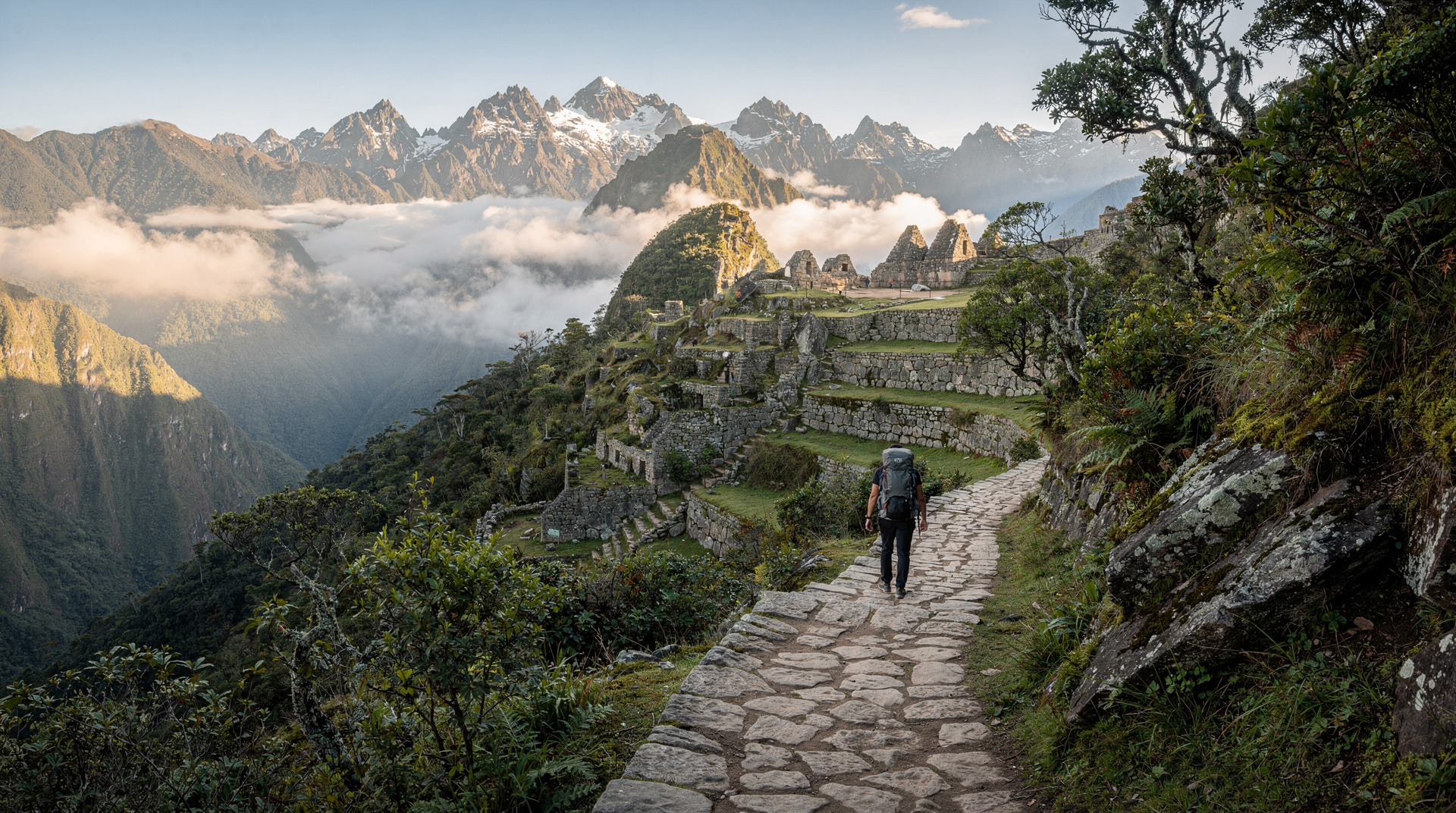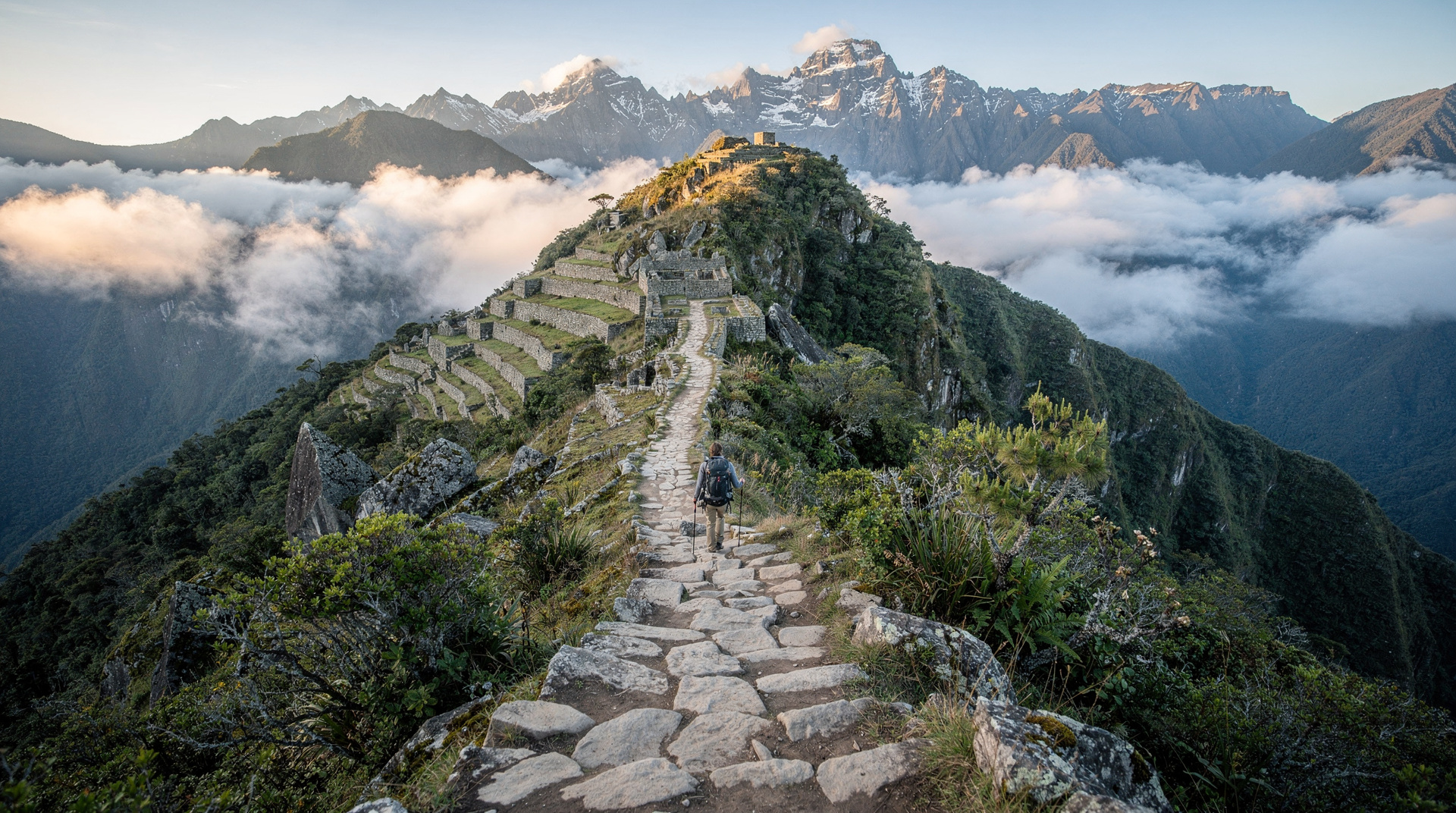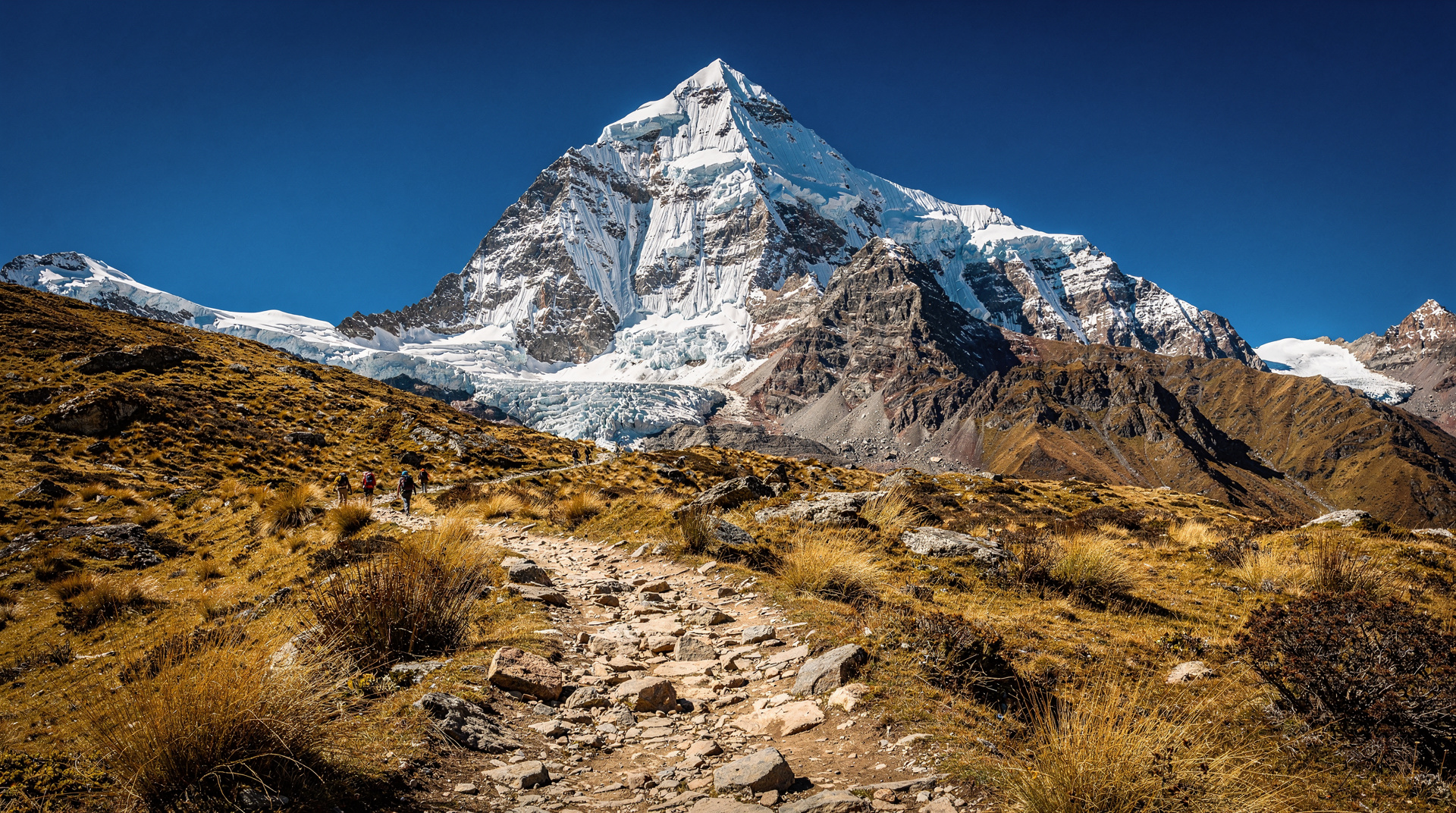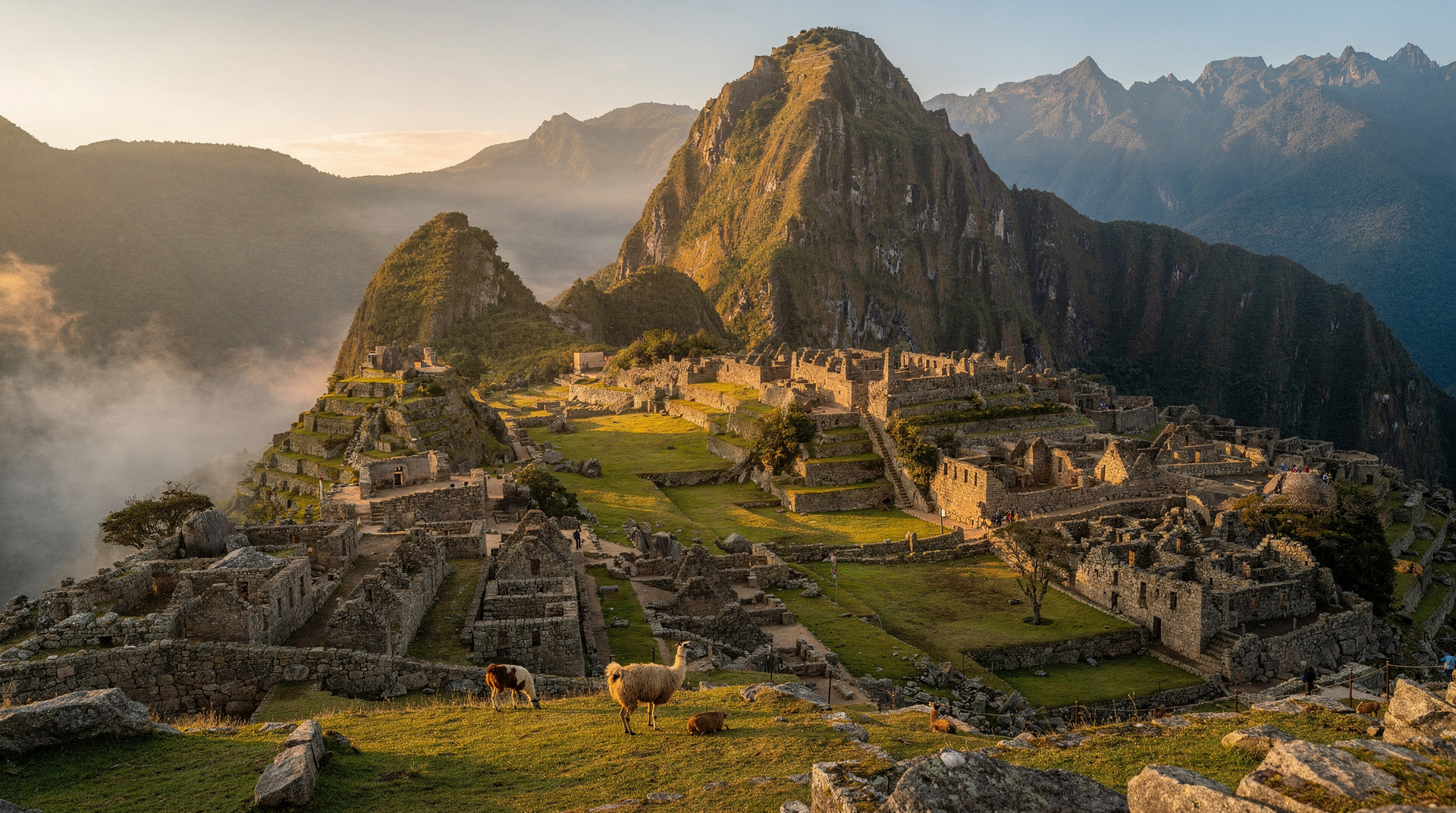
Inca Trail permits: how to get one, when to book, what to know
From Cusco: 4-Day Inca Trail Guided Trek to Machu Picchu
How do I get an Inca Trail permit?
You book through a licensed tour operator — individual permits are not issued. Sales for the following year open in autumn or early in the year (the 2026 permits went on sale on 17 November 2025): check the date on the official platform, tuboleto.cultura.pe, or with your operator. Peak-season dates (June–August) sell out quickly once sales open. You need your passport number at the time of booking. The trail is closed all February.
The permit is the most important logistics decision on the Inca Trail
Most Cusco travel planning follows a familiar sequence: choose dates, book flights, find accommodation, then figure out activities. For the Inca Trail, that sequence produces a specific and predictable problem. Travellers who book flights to Cusco for July, then go looking for an Inca Trail permit in April, find that the permits they want are sold out — sometimes entirely, sometimes for the particular dates they need.
| Sales open | Autumn or early in the year (2026 permits opened 17 Nov 2025); check tuboleto.cultura.pe or your operator |
| Who books | Only licensed operators, not individuals directly |
| Documents needed | Full name, passport number, nationality, date of birth |
| Fastest to sell out | June–August (sometimes within hours) |
| Closed month | February, no exceptions |
The correct sequence for Inca Trail planning is: secure the permit, then build everything else around it. This guide explains exactly how the permit system works, when to book, and what options exist when permits are not available.
How the permit system works
The Peruvian Ministry of Culture manages access to the Inca Trail through a daily limit on the number of places. The official figure confirmed for the whole network of Inca trails is 750 visitors per day.
There is no individual permit. You cannot book a permit as a solo traveller without simultaneously booking with a licensed tour operator registered with the Ministry of Culture. The operator manages the permit application; you provide the required documents.
The 2026 permits went on sale on 17 November 2025, following an announcement by the Ministry of Culture. For future years, sales open in autumn or early in the year: check the date on the official platform, tuboleto.cultura.pe, or with your operator. For high-demand months, permits go quickly once sales open.
The booking calendar: what sells out when
January–May: Generally available several weeks to months in advance. January and February have lighter demand (February is closed; January is cooler and sees fewer trekkers). March, April, and May benefit from lower demand than peak season but should still be booked 2–3 months ahead for popular dates.
June–August (peak season): This is the problem window. June, July, and August permit allocations for specific popular dates — particularly the days around the June solstice (Inti Raymi) and the core school-holiday weeks in July and August — can sell out quickly once sales open. If your travel falls in this period, booking the moment sales open for a June–August departure is not early, it is necessary.
September: Good weather, lighter demand than July–August. Still sells out; book three to four months ahead. A popular choice for travellers who discover in February that July permits are gone.
October–January: Shoulder and wet season. Permits are available with shorter lead times. October is a pleasant shoulder month with manageable permit availability. November onwards sees increasing rain; the trail is open but less comfortable.
February: Closed. The trail closes 1 February and reopens 1 March. No permits, no exceptions, for any part of February. This is a hard park regulation, not a guideline.
What you need to book
Your operator requires the following for each person in your group:
- Full name as it appears on the travel document
- Passport number (not national ID, not driver’s licence — the international passport)
- Passport nationality
- Date of birth
These details are entered into the government permit system at the time of booking and cannot be changed afterwards. A common source of problems: group members who have not yet confirmed their passport details, or who have recently renewed a passport with a different number. Get everyone’s passport numbers confirmed before starting the booking process.
The permit is tied to the passport number. Entry to the trailhead requires presenting the matching passport. A different document, even in the same name, is not accepted.
Licensed operators: what you are booking and what to check
The requirement to book through a licensed operator is a legal condition of trail access, not an optional convenience. The licensed operator:
- Holds the permit allocation in the government system on behalf of your group
- Provides a certified guide (mandatory on the trail)
- Employs and manages the porter team within the regulated wage and load limits
- Provides all camping equipment, meals, and group logistics
When comparing operators, the things worth checking beyond price:
Porter welfare: Peruvian law sets minimum porter wages and maximum load limits (25 kg total weight, including personal gear). Not all operators comply equally. Ask what the operator pays porters above the legal minimum and what rest and food provisions they include. A company that undercuts competitors significantly on price is often doing so through porter conditions.
Guide experience and language: A guide with detailed knowledge of the archaeological sites transforms day three. Ask specifically how many Inca Trail tours the guide has led and whether the guide is English-speaking if that matters to you.
Group size: Smaller groups (fewer than 10 trekkers) move more flexibly, have better guide interaction, and make less noise at the Sun Gate. Ask the maximum group size before booking.
The 4-day classic Inca Trail with permit and full logistics through a reputable operator handles the entire permit paperwork process as part of the package — the most practical approach for most travellers.
The Machu Picchu ticket: a separate booking
The Inca Trail permit covers the trail, the national park, and the camping. It does not cover Machu Picchu site entry. That is a separate timed-entry ticket, sold on tuboleto.cultura.pe with immediate payment (you have 15 minutes to pay), issued in the visitor’s name, and available up to a year in advance.
Most licensed Inca Trail operators include the Machu Picchu entry ticket in their package price — confirm this before booking. Machu Picchu tickets are also capacity-limited and sell out for peak dates; operators typically handle this booking alongside the trail permit. If your operator does not include it, the Machu Picchu guide covers the ticket booking process separately.
Short Inca Trail permits
The 2-day short Inca Trail is worth asking your operator about if 4-day permits are gone. It starts at Km 104 (rather than Km 82), walks from Chachabamba to Wiñay Wayna to the Sun Gate, and includes the emotionally significant final approach to Machu Picchu — just not the high-altitude passes of days one and two. Full details in the short Inca Trail guide.
If 4-day permits are sold out for your dates but 2-day permits remain, this is the most direct substitute that still delivers the Sun Gate arrival experience.
What to do when permits are not available
If Inca Trail permits are sold out for your dates, the main alternatives in order of similarity to the original route:
2-day short Inca Trail: Still the classic Sun Gate arrival, just without the high passes. Permit required; ask your operator about availability.
Salkantay trek: No permit required. Five days in the standard format, crosses a 4,630 m pass (higher than Dead Woman’s at 4,215 m), and approaches Machu Picchu via a different valley. Cost is $350–500 versus $650–800. Does not arrive through the Sun Gate. The Inca Trail vs Salkantay guide compares both honestly.
Lares trek: Community-focused route through Quechua villages in the Sacred Valley area, connecting to Machu Picchu by train. No permit required. Different character entirely — cultural rather than archaeological. Worth considering if the Inca archaeology was the primary draw of the trail, but you have a February window or sold-out permits.
Train to Aguas Calientes plus hike: The fastest way to reach Machu Picchu from Cusco — train to Aguas Calientes, bus up to the site, or hike the 400-step path. No permit, no multi-day commitment. Legitimate visit to the site; not the Inca Trail experience.
Cancellations: do permits free up?
Occasionally yes. Operators with allocated permits do sometimes release spaces when clients cancel. The most reliable approach to finding last-minute availability is to contact multiple licensed operators directly in the weeks before your target dates — some maintain cancellation waitlists. This is unpredictable and cannot be relied on for high-season dates, but for shoulder-season travel it sometimes works.
There is no government-managed waitlist or secondary permit market. Anyone claiming to sell Inca Trail permits outside the licensed operator system is operating illegally, and entry to the trail will be refused regardless of what document they provide.
Porter welfare: what the permit fee funds
A significant portion of the Inca Trail’s high cost relative to permit-free alternatives like the Salkantay stems directly from the government permit fee and the porter welfare regulations. The Peruvian Ministry of Culture enforces minimum porter wages and maximum load limits (25 kg total, including personal belongings) on the Inca Trail with more rigour than on unregulated alternatives. This matters to the porter workforce — approximately 8,000 people whose livelihoods depend on the trail.
When you book through a licensed operator, the permit fee you pay goes directly to the Peruvian government’s conservation and maintenance budget for the park. The archaeological sites along the route — Sayaqmarka, Phuyupatamarka, Wiñay Wayna — are maintained, partially, by that funding. It is a system worth understanding honestly: the Inca Trail’s high cost is not pure operator profit margin but includes genuine regulatory and conservation infrastructure.
Some operators voluntarily pay above the minimum wage. Asking an operator about their porter pay structure above the legal minimum is a legitimate and useful question. The answer tells you something about the company’s values and, indirectly, about the quality of the team that will carry your equipment over Dead Woman’s Pass.
The packing and practical preparation checklist
Once the permit is secured, the rest of the preparation sequence becomes manageable:
- Sleeping bag: -5°C minimum rating. Confirm whether your operator provides or rents bags and check the quality of rental gear before accepting.
- Trekking poles: Strongly recommended for the day-three stone step descent and the day-two Dead Woman’s Pass ascent. Bring collapsible poles or hire in Cusco.
- Boots: Broken-in waterproof hiking boots, not new footwear. Blisters are the most common trail medical issue and entirely preventable.
- Acclimatisation: Three nights in Cusco (3,400 m) or the Sacred Valley before starting the trail. Do not travel from sea level directly to the trailhead. The Cusco acclimatisation plan covers the specific approach.
- Machu Picchu ticket: Confirm your operator has booked this alongside the trail permit. The site ticket is capacity-limited and must be for a specific timed-entry slot. The most popular morning slots can sell out.
For the complete packing list — every layer, medication, and piece of gear that separates comfortable trekkers from cold and sore ones — the Inca Trail packing guide covers the specifics in detail.
Group bookings and mixed-nationality parties
Booking as a group adds a layer of coordination that solo travellers do not face. Every member’s passport details must be finalised before the operator submits the group’s permit application — a single missing or incorrect passport number can hold up the whole group’s booking, not just that person’s. For mixed-nationality groups, note that nationality itself has no bearing on permit allocation; the system treats all passport holders identically.
If your group is assembling gradually (some members confirmed, others still deciding), ask your operator whether they can hold a provisional allocation for a short window while stragglers confirm — some can, most cannot for peak-season dates given how quickly allocations move. The safest approach for any group larger than four is to set a hard internal deadline for passport confirmation at least a week before you intend to contact operators, so the booking itself is not the bottleneck.
What changes if your passport is renewed after booking
A specific and easily missed problem: if your passport is renewed between booking the permit and your trek date, the passport number on the permit no longer matches the document you will present at the trailhead. Rangers check the number, not just the name, and a mismatch can mean denied entry regardless of the booking being genuine.
If you know a renewal is coming before your trip, either delay the renewal until after your trek if the current passport remains valid for the travel dates, or notify your operator immediately so they can attempt an amendment with the Ministry of Culture — amendments are possible but not guaranteed and take time to process. This is a genuinely common and avoidable problem: check your passport’s expiry date against your trek date as soon as you book.
Practical permit checklist
- Confirm all group members’ passport numbers before contacting an operator
- Contact operators as soon as sales open for any June–August dates
- Confirm whether the package includes the Machu Picchu entry ticket
- Ask specifically about porter wages and welfare policy above the legal minimum
- Ensure the operator is registered with the Ministry of Culture (ask for their registration number if unsure)
- Book the 4-day Inca Trail permit package as early in the year as possible for peak-season dates
- Store your main luggage at your Cusco hotel and bring only your trail kit to the Km 82 trailhead
The permit system is the Inca Trail’s main planning hurdle. Get it resolved first and the rest of the logistics — packing, acclimatisation, transport — fall into a much more manageable sequence. The Inca Trail complete guide covers the route itself, the altitude preparation, and the day-by-day experience once the permit is in hand.