What to pack for the Inca Trail: the tested kit list
From Cusco: 4-Day Inca Trail Guided Trek to Machu Picchu
What do I need to pack for the Inca Trail?
Key items: -5°C rated sleeping bag (mandatory), trekking poles (stone steps on day three are hard on knees without them), waterproof jacket and trousers, warm mid-layer (nights at camp can drop to 0°C), sun protection, and broken-in boots with ankle support. Your daypack should be 5–8 kg. The operator's porters carry group equipment.
The difference between prepared and unprepared on the Inca Trail
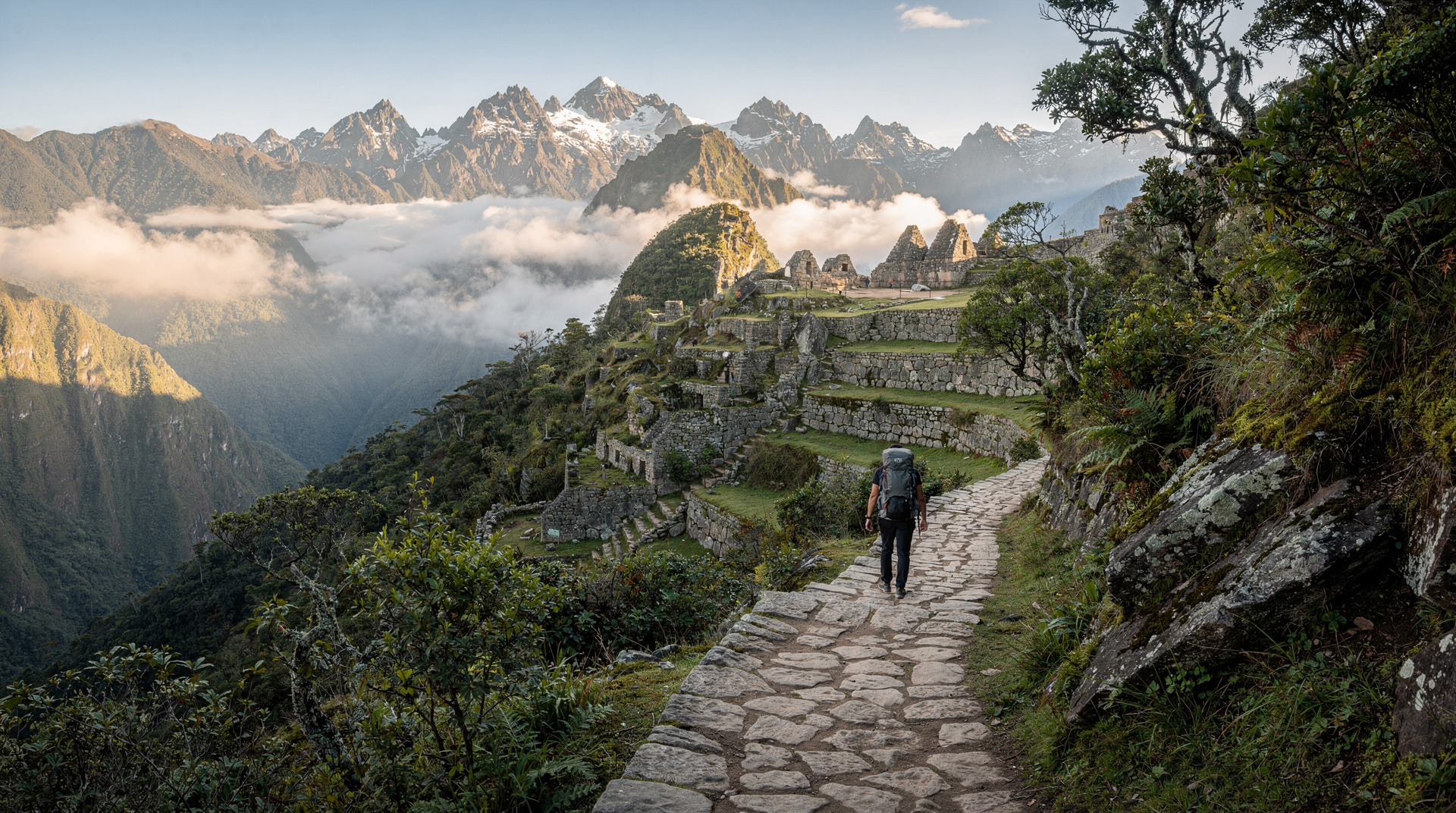
The Inca Trail is a physically managed experience — you are walking with a guide, supported by porters, eating meals someone else has cooked, sleeping in a tent someone else erected. The logistical weight has been removed. What remains is the walk itself and the gear you carry in your daypack.
The gap between comfortable and miserable on the Inca Trail is mostly gear. Cold and wet in a inadequate sleeping bag at Pacaymayo camp at 3,600 m after a hard day is not character-building — it is preventable. Sore knees on the stone step descent of day three without trekking poles is not an endurance test — it is a consequence of skipping a straightforward piece of equipment. Blisters from boots not broken in until the trailhead are the most common medical issue on the trail and are entirely avoidable.
This guide is the practical, tested list — what to bring, what rating to choose, and what not to bother with.
| Sleeping bag | -5°C minimum, -10°C if you run cold |
| Footwear | Waterproof boots with ankle support, broken in 3–4 weeks |
| Must-have | Trekking poles (day two ascent, day three descent) |
| Daypack weight | 5–8 kg |
| Porters carry | Group camping/cooking gear, sleeping bag, sleeping mat |
| Tips (baseline) | Porters S/50–80, guide S/80–150 |
The daypack: what you carry every day
Your personal daypack is the gear you carry for all four days, typically 5–8 kg. The operator’s porters carry the group camping and cooking equipment, your sleeping bag and sleeping mat, and the communal gear. You carry:
- 2 litres of water (or water filter — the streams on the trail are drinkable with filtration)
- Snacks for the day (the operator provides meals at camp, not on the move)
- Camera or phone
- Sunscreen (SPF 30 minimum — altitude makes UV more intense, and day two has long exposed sections)
- Sunglasses (polarised, wrap-around)
- Warm mid-layer (fleece or down, compressed into the pack)
- Waterproof jacket (lightweight packable; rain is always possible even in dry season)
- Waterproof trousers or gaiters if wet season
- Personal medications
- Toilet paper and a small bag for waste (the trail has latrines at camps; no toilets en route)
- Head torch with spare batteries (day four starts before dawn)
- Trekking poles (collapsible and packed or carried)
Keep the daypack honest. Every extra kilogram you carry is felt on day two’s 1,200 m ascent to Dead Woman’s Pass at 4,215 m.
Sleeping bag: do not compromise on this
Rating required: -5°C minimum. -10°C if you run cold.
Pacaymayo camp (day two) sits at approximately 3,600 m. Night temperatures can drop to 0°C or below at any time of year and significantly below zero in the colder months (June–August). Most trekkers find a -5°C rated bag comfortable in dry season. If you feel cold easily, use -10°C.
Sleeping bag liners add 3–5°C to a bag’s effective rating and compress small. They are worth bringing if you are near the edge of your bag’s rating or trekking in the shoulder season.
On renting versus bringing: Your operator likely offers sleeping bag rental. Before accepting, check:
- The actual temperature rating of the rental bag (not “warm enough” — the specific number)
- Whether the bag has been cleaned since its last use (this is a hygiene concern on shared rental bags)
- Whether it will fit your height
If the answers are uncertain, bring your own. A good four-season sleeping bag is a worthwhile investment for a trek at this altitude.
Sleeping mat
Most operators provide sleeping mats as part of the porter-carried group kit. Confirm this at booking. If it is not included, a lightweight foam mat adds minimal weight and is necessary for insulation from the cold ground.
Footwear: the single most important decision
Recommendation: waterproof hiking boots with ankle support, broken in for 3–4 weeks minimum before the trek.
The three footwear-related mistakes on the Inca Trail:
- New boots at the trailhead (blisters within 6 hours)
- Trail runners without ankle support on the day-three stone step descent (ankle rolls on the uneven Inca steps)
- Non-waterproof footwear in wet season or any morning when the cloud forest sections are damp
Trail runners are viable in dry season for experienced trail runners with strong ankles. They are lighter and faster-drying than boots. For most trekkers, the ankle support of boots is worth the weight on the day-three descent and the uneven Km 82 to Wayllabamba sections.
Sandals or camp shoes: bring a lightweight pair for camp use. After 8 hours in boots, getting out of them at camp is a genuine comfort upgrade.
Socks: Merino wool, multiple pairs. Wet socks cause blisters; spare dry socks at camp are the cheapest comfort item available. Bring four pairs minimum for four days.
Gaiters: Optional in dry season; worth bringing in shoulder season (May, September) when morning dew and occasional wet sections are common.
Trekking poles
Strongly recommended. Collapsible poles that pack to 30–35 cm are ideal for plane travel and can be carried in the daypack when not in use.
Where they earn their place:
- Day two ascending Dead Woman’s Pass: The rhythm of poles on a sustained multi-hour ascent is significant. They transfer some of the work from the legs to the arms and help maintain pace on the final 400 m of slow climbing.
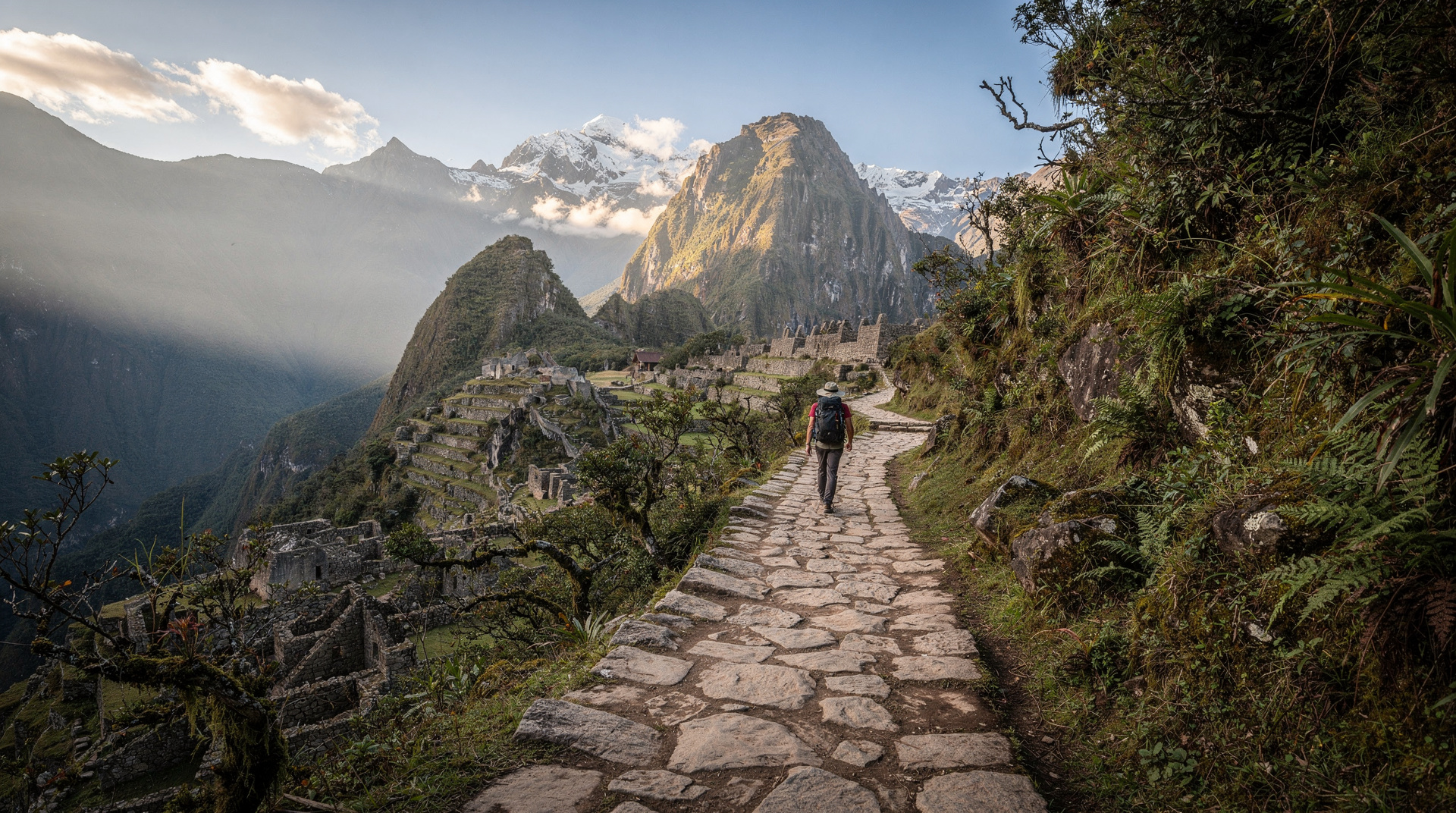
- Day three descending from Phuyupatamarka: The original Inca stone steps are steep, uneven, and frequently wet with morning condensation in the cloud forest. Trekking poles prevent the knee strain that ruins day four for many trekkers without them.
The stone steps are the specific poles justification. Travellers with healthy knees who trekked without poles on other routes often wish they had them for this descent.
Clothing layers: temperature swings are significant
The Inca Trail crosses three climate zones in four days. Temperature range from Wayllabamba camp (3,000 m) to Dead Woman’s Pass (4,215 m) to the cloud forest (2,650 m at Wiñay Wayna camp) to Machu Picchu (2,430 m) means dressing for a variety of conditions in the same day.
Base layer: Moisture-wicking, not cotton. Merino wool is the standard recommendation for the Inca Trail — it regulates temperature across the full range, manages odour over four days, and dries faster than synthetics in cloud forest humidity.
Mid-layer: Fleece or down. Down packs smaller but loses insulation when wet; fleece insulates when damp. For dry season, down is fine. For shoulder months, fleece is more reliable.
Waterproof shell: Lightweight, packable, and genuinely waterproof (not shower-resistant). The cloud forest sections on day three can be wet regardless of season. The morning of day four starts before dawn and can be cold and damp before the sun rises.
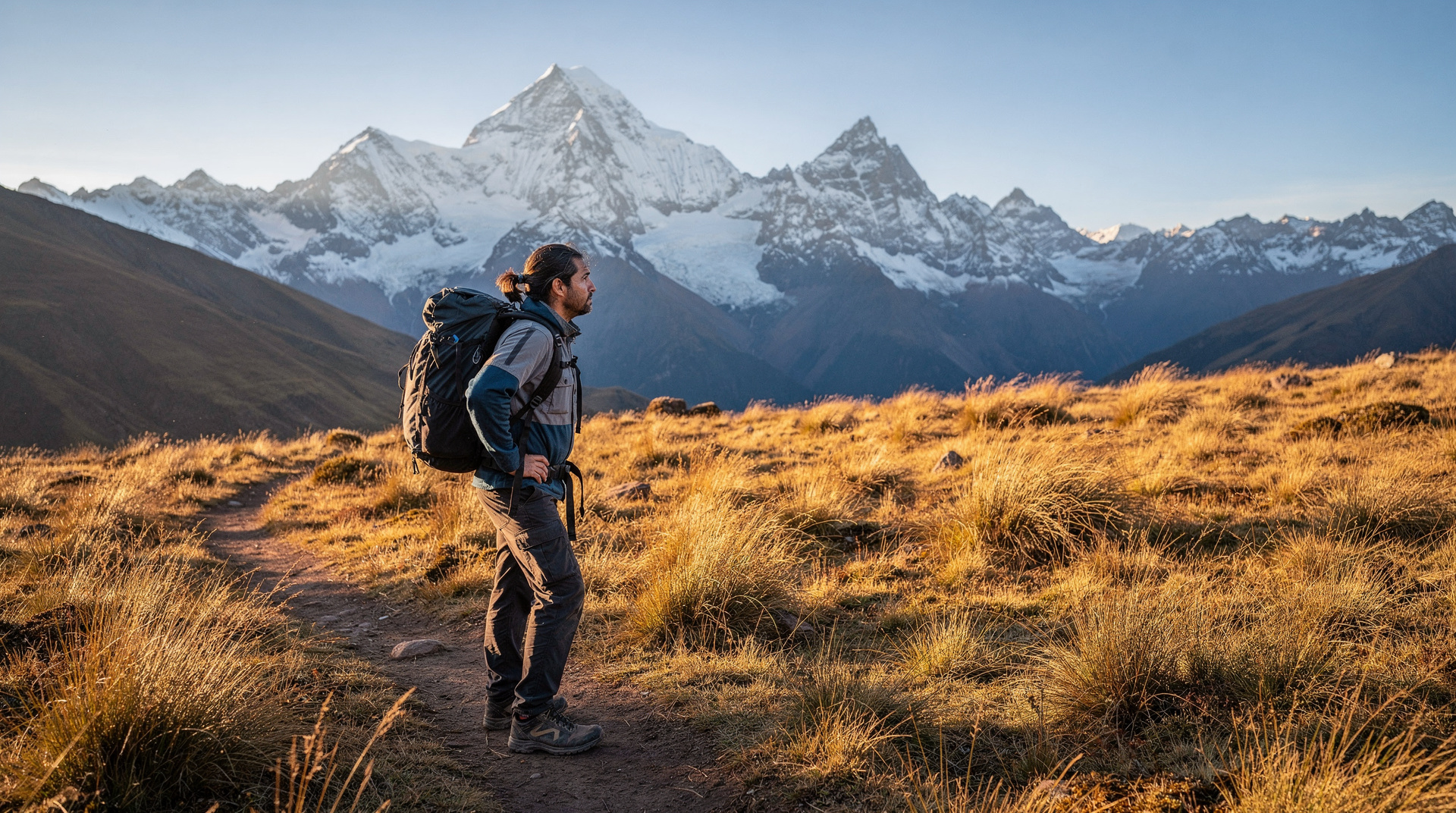
Hat and gloves: At the summit of Dead Woman’s Pass at 4,215 m, wind and cold are real even in high summer. A warm hat and light gloves for the pass crossing are important. They weigh almost nothing.
Sun protection: The exposed ascent on day two has several hours of direct sun at altitude. Long sleeves, sun hat, and SPF 30+ are not optional.
Medications and first aid
Personal medications: Bring enough for the full trip plus two extra days. Getting prescription medications in Aguas Calientes is not realistic.
Altitude medication: Acetazolamide (Diamox) is available in Cusco and is the standard prescription altitude medication. It helps with acclimatisation and reduces headache frequency. Consult a doctor before using it. The altitude sickness guide covers the full picture on altitude preparation and medication.
Ibuprofen or paracetamol: Headaches are common on day two. Having pain relief in your daypack is straightforward preparation.
Blister kit: Compeed blister plasters and athletic tape. The operator’s guide will have a first aid kit; having your own blister kit means you do not need to stop the group for a minor issue.
Antidiarrheal medication: Food on the trail is generally safe with a reputable operator. Prepared food in Aguas Calientes is variable. Having loperamide (Imodium) in your kit is standard preparation for any Peru travel.
Water purification: Either a filter (Sawyer Squeeze or similar) or purification tablets. The streams on the trail above Wayllabamba are generally clean and drinkable when filtered. Carrying 2 litres from camp and filtering from streams is the lightest approach.
Electronics and photography
The Inca Trail has limited phone signal for most of the route — some at camp sites, none on the high passes. Plan accordingly:
- Download offline maps (Machu Picchu and the trail area) before leaving Cusco
- Charge everything the night before the trailhead
- A small power bank (10,000 mAh) keeps camera and phone topped up over four days without power access
- Cold temperatures reduce lithium battery performance — keep camera batteries warm in an inner pocket on day two
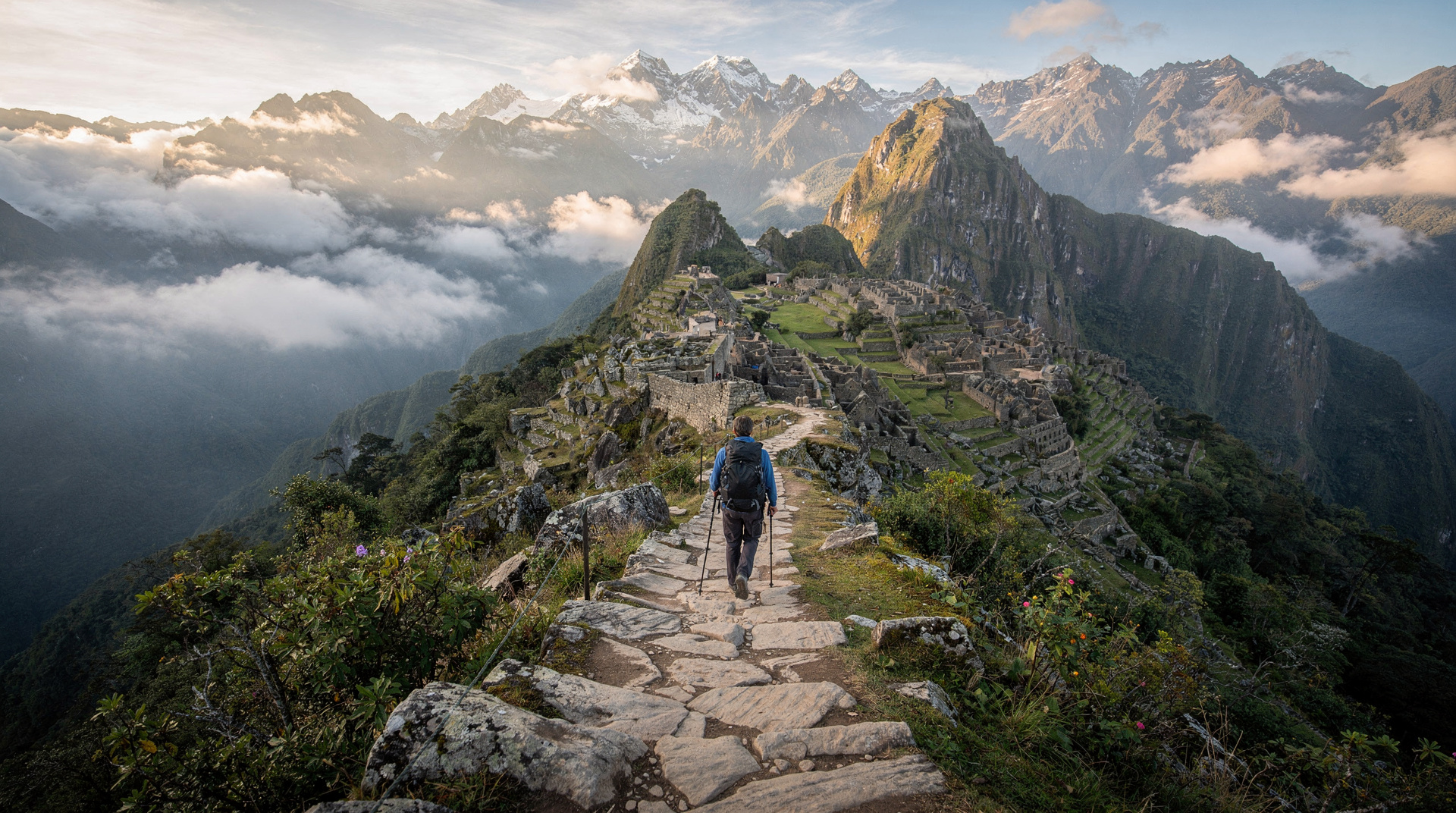
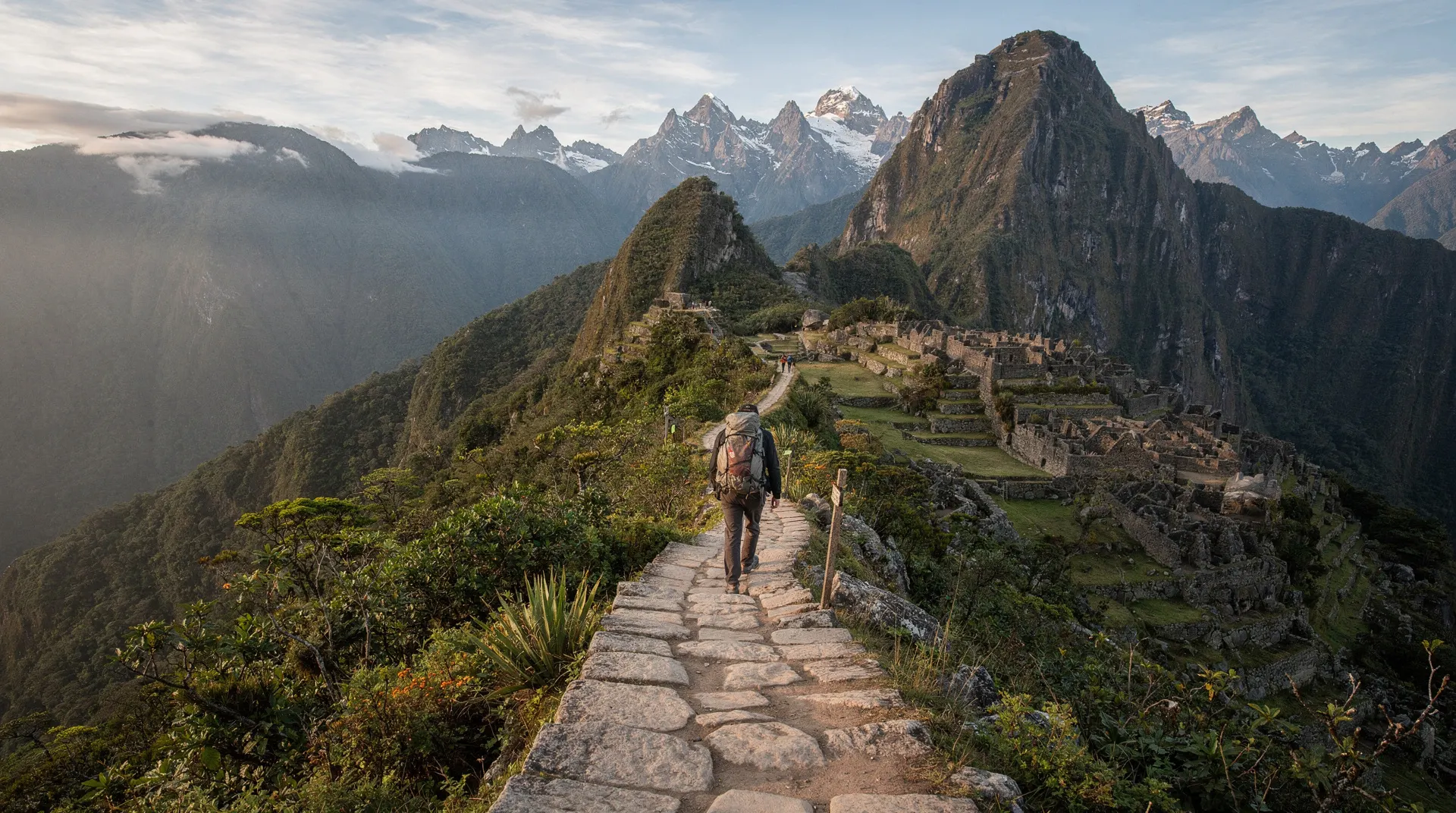
The morning of day four (before dawn, approaching the Sun Gate) is the key photography moment. Have the camera accessible in the daypack, not packed at the bottom.
What to leave behind
Items that trekkers carry that add weight without value:
- Full-size towels (the operator provides camp towels, and they weigh almost nothing)
- More than two sets of daytime clothing (the trail is four days; you do not need a different outfit per day)
- Valuables beyond a small amount of cash for tips
- Heavy books or entertainment electronics (the trail is engaging enough; the weight cost is real)
- Multiple pairs of shoes (boots for the trail, one pair of sandals for camp)
The morning of day four: the pre-dawn start
Day four deserves its own preparation note. The group leaves Wiñay Wayna camp between 4:30 and 5:30 am, in full darkness, to walk the final 6 km to the Sun Gate before dawn. The specific logistics:
- Head torch: Must be accessible without unpacking. Not buried in the bottom of your bag. Checked the night before with fresh batteries.
- Warm layers: The pre-dawn temperature at 2,650 m in dry season can be 8–12°C with some wind. Put on your fleece before leaving camp; you can remove it once the walking pace warms you.
- Camera ready: The Sun Gate approach and the first view of Machu Picchu happens quickly once you arrive at the gate. Have your camera accessible in the top of your daypack or a waist belt.
- Snacks: Breakfast at Wiñay Wayna is usually a pre-dawn meal. Carry something in your pocket for the first light hours — the morning is more enjoyable with something to eat at the Sun Gate.
- Machu Picchu ticket: Confirm with your guide the night before that the site entry is confirmed and that you know which timed slot you are booked into. Early arrival through the Sun Gate is your best chance of the emptier morning light at the site.
Renting versus buying gear in Cusco
For most of the items on this list, buying in advance is better than renting in Cusco. The exception is the sleeping bag — if you are not planning future high-altitude travel, renting a quality bag in Cusco rather than purchasing one is reasonable, provided you confirm the temperature rating and cleanliness of the rental gear.
Cusco has a good trekking gear market, particularly around the centre. Shops sell and rent trekking poles, sleeping bags, and waterproofs. The quality range is significant — budget gear at low prices tends to fail in cold and wet conditions. If you are buying rather than renting in Cusco, allow at least a day to try gear before the trailhead.
What Cusco does well: last-minute items, supplementary gear like gaiters and summit gloves, and altitude medications. The pharmacies in Cusco stock acetazolamide (Diamox) over the counter; UK and US travellers who are used to a prescription requirement should know it is available without one here.
After the trail: what to expect on day four in Aguas Calientes
After Machu Picchu on day four, the group descends to Aguas Calientes for the afternoon train back to Cusco or Ollantaytambo. You will have been in the same clothes and kit for four days. The practical suggestions:
- Pack a small change of clothes in your Cusco hotel bag that you left behind — something clean and comfortable for the train.
- The train from Aguas Calientes has luggage racks but is not a cargo service. Keep the return journey bag small.
- Tip your guide and porters before the train, not after. Once at the station, logistics move quickly. Have the cash envelope ready the day before.
Porter tip amount: S/50–80 ($13–22) per porter is a reasonable baseline for a 4-day trek. Guide tips: S/80–150 ($22–40) depending on quality of interpretation and care on the route. These are meaningful amounts to the people involved and are genuinely important — the Inca Trail at this price point is a significant logistical service, and the people who carry equipment over Dead Woman’s Pass deserve acknowledgement.
The 4-day classic Inca Trail package includes all group equipment and porter support. Your personal daypack is the only thing you need to get right. Get the sleeping bag, the boots, and the poles sorted, and the rest of the list manages itself.
For the full route detail — what happens on each of the four days and what the altitude experience is actually like — the Inca Trail complete guide is the companion to this packing list.
Packing differently for the short Inca Trail or Salkantay
If you are doing the 2-day short Inca Trail rather than the classic four-day route, the list above still applies but can be trimmed: one fewer set of base layers, less concern about multi-day boot comfort, and typically a night in a hotel rather than camping (check with your operator, as some short-trail itineraries still involve one night of camping near Wiñay Wayna).
Trekking poles and sun protection remain equally important regardless of trail length — the stone steps and altitude exposure are the same. For visitors doing Salkantay instead of the Inca Trail, the core list transfers directly, but add a warmer sleeping bag rating (-10°C or lower) — Salkantay’s high camp at around 4,200 m near the Salkantay Pass is colder overnight than any Inca Trail campsite.
Renting a full gear kit versus a la carte
Some Cusco operators offer a complete rental package — sleeping bag, sleeping mat, trekking poles, and a duffel bag — for a fixed daily fee, typically S/40–70 per day for the full set. This is worth considering if you are travelling with minimal luggage capacity or do not want to buy gear for a single trip. The trade-off is quality variability: ask specifically about the sleeping bag’s temperature rating and cleaning schedule, and inspect the poles and mat before the trailhead rather than trusting the description. For a first and only Inca Trail attempt, renting the sleeping bag while bringing your own broken-in boots is a reasonable middle ground — boots are too personal and fit-dependent to rent comfortably.