Planning a Cusco trip in 2026: the complete logistics guide
From Cusco: Machu Picchu Day Trip with Train Tickets
How do I plan a Cusco trip in 2026?
Start with Machu Picchu: book citadel tickets and trains before booking flights in dry season — they sell out. Then fix your arrival and departure. Add acclimatisation days (two minimum) and build your itinerary from there. Visas are not required for most nationalities for stays under 90 days. The best time to visit is May–September for reliable dry weather; April and October offer similar conditions with fewer crowds.
The planning order that actually works
Most people plan their Cusco trip in the wrong order: they book flights first, then start thinking about what they want to do, then discover that Machu Picchu tickets and trains in dry season are sold out for the dates they have fixed. The correct order is:
- Decide your dates and duration
- Check Machu Picchu ticket availability for those dates (tuboleto.cultura.pe)
- Book Machu Picchu tickets and trains
- Book your international flights
- Book first night’s accommodation
- Plan the rest of the itinerary
This guide follows that logic: starting with the fixed decisions and working outward to the flexible ones.
| Book first | Machu Picchu tickets + trains (tuboleto.cultura.pe) |
| Visa | Not required for most nationalities, stays under 90 days |
| Best time | May–September (dry season); May/Sept and April/Oct for fewer crowds |
| Getting there | Via Lima (CUZ has no direct long-haul flights) |
| Acclimatisation | Minimum 2 days before altitude above Cusco’s 3,400 m |
The fixed-date decision: Machu Picchu
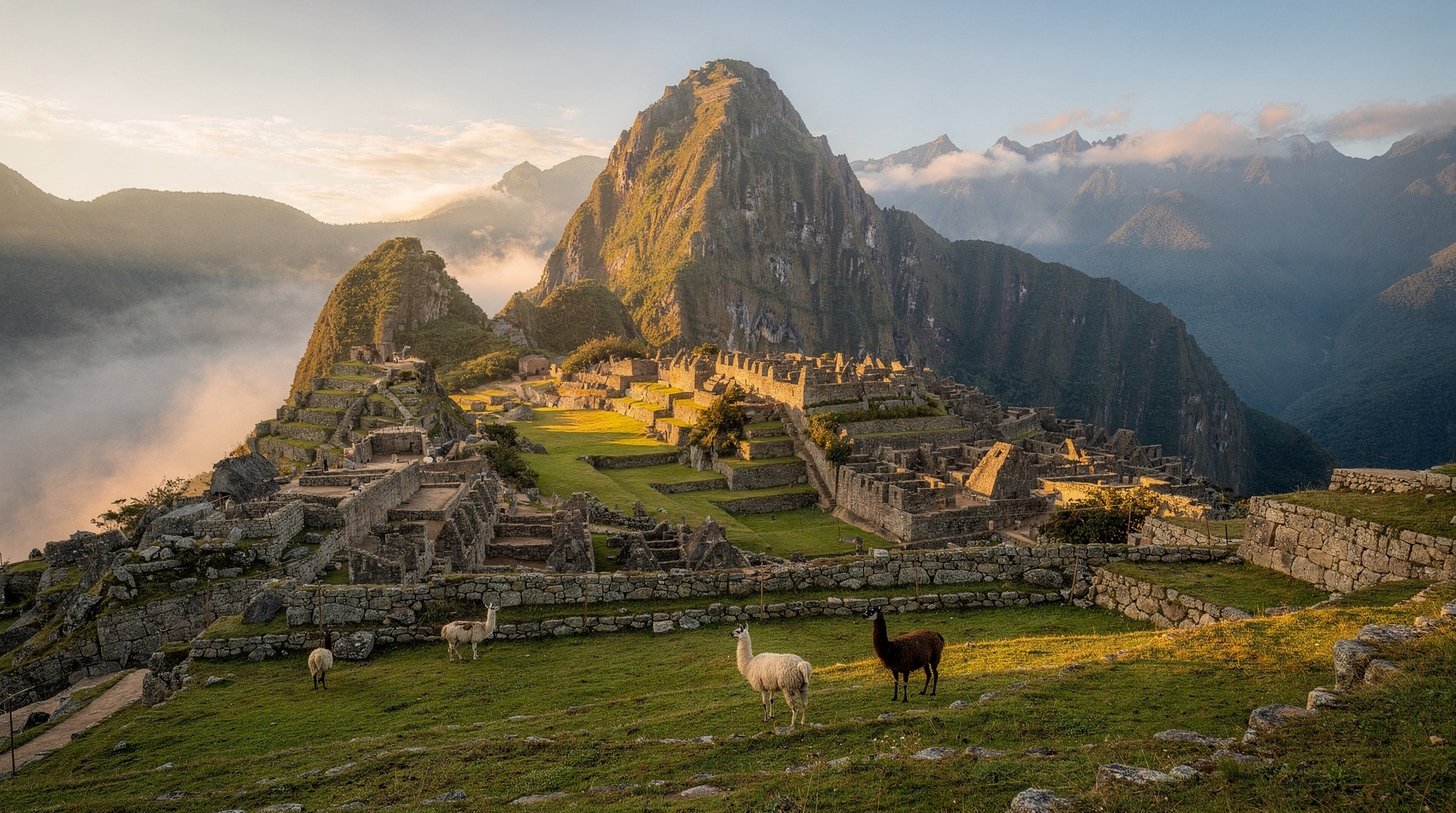
Machu Picchu operates on a timed-entry system that requires purchasing tickets in advance for a specific date and circuit. In dry season (May–September), particularly July and August, tickets sell out weeks to months ahead. Train seats sell out independently of citadel tickets and follow the same timeline.
The sequence to follow:
Step 1: Go to tuboleto.cultura.pe and check availability for the dates you are considering. If you see good availability, proceed with confidence. If the dates you want are already limited, either move your dates or accept the reduced choice of entry times.
Step 2: Choose your circuit and route (three circuits, ten routes in total) and your hourly entry time. First-time visitors who want to walk through the Inca city itself should pick a route from Circuit 2 (Clásico) or Circuit 3 (Realeza), since Circuit 1 (Panorámico) covers the upper parts without the urban sector; check on tuboleto.cultura.pe whether a given combination is offered in one booking. The Machu Picchu complete guide explains each circuit.
Step 3: Book the train. PeruRail and Inca Rail both serve the Ollantaytambo to Aguas Calientes route. Book the outbound train to arrive at Aguas Calientes the evening before your citadel entry, or by 6 am if doing a very early day trip. The trains guide compares classes and prices.
A day trip package with train, bus and citadel entry bundles all three bookings and is particularly useful for visitors managing this from abroad who want the logistics managed as a single transaction.
Visas: what you need (usually nothing)
Peru does not require a tourist visa for citizens of the UK, EU member states, the US, Canada, Australia, New Zealand, Japan, Mexico, Brazil, Argentina, and most other nationalities for stays up to 90 days. At immigration you will receive a stamp and may be asked for proof of onward travel and sufficient funds.
What to keep: On international flights to Peru, you will be given a white Tarjeta Andina de Migración (departure card) to complete. Keep this — it must be handed in when you leave the country. Losing it can cause problems at departure; a replacement can be obtained at DIGEMIN offices in Cusco or Lima, but it takes time.
Entry at Cusco airport: You can fly direct to Cusco (CUZ) from Lima on domestic services. If entering Peru for the first time at Cusco airport rather than Lima, you still complete immigration at Cusco. The process is straightforward and the queue is shorter than Lima.
Getting to Cusco: the practical routes
From the UK, Europe, and long-haul origins: All routes connect through Lima. The major options are via Madrid (Iberia/LATAM), Miami/Atlanta (American, Delta), or Amsterdam (KLM). From Lima, LATAM and Avianca (among others) operate frequent Cusco domestic services — the 1.5-hour flight departs from Lima’s domestic terminal (Terminal 2, same building as international). The Lima to Cusco flights guide covers booking strategy.
Spending time in Lima: Many visitors spend 1–2 nights in Lima either at the start or end of their trip. This is worthwhile — Lima’s Miraflores and Barranco neighbourhoods, and the coastal food scene, are genuinely good. It is not required if your priority is maximising time in the south.
Getting to Cusco specifically: Once you have arrived in Lima, the domestic leg to Cusco deserves its own attention — flight timing matters more here than on most short-haul routes, since afternoon winds over the Andes cause more turbulence and occasional delays than morning departures. The getting to Cusco guide and the Cusco airport guide cover booking strategy and what to expect on arrival, including the taxi and transfer options from the airport into the historic centre.
From other South American destinations: Direct flights to Cusco from Bogotá, Buenos Aires, São Paulo, and Santiago are available. Overland entry is possible from Puno (bus from Bolivia/Lake Titicaca) but adds 4–6 hours of travel time.
When to go: the honest seasonal breakdown
May and September are the best months for most visitors. Dry season conditions (reliable daytime sunshine, clear mountain views), lower demand and prices than the peak of July–August, and the green-tipped vegetation of the end-of-rains recovering landscape. May’s vegetation is particularly lush — the transition from rainy to dry season produces the most photogenic combination of colour and clarity.
June, July, August are peak season. Excellent weather, but Machu Picchu trains and tickets require 6–8 weeks minimum advance booking (Huayna Picchu add-ons 2–3 months). Accommodation prices at their highest. Inti Raymi (June 24th, the Festival of the Sun at Sacsayhuamán) is one of Peru’s most spectacular cultural events but requires Cusco to be booked months ahead.
April and October offer shoulder season value: near-dry-season conditions, thinner crowds, lower prices. April’s transition can bring occasional afternoon showers; October is reliably dry. Both are consistently recommended by experienced Peru travellers.
November–March (rainy season) is dramatically atmospheric, significantly cheaper, and less crowded except around Christmas and New Year. Afternoon rain is typical but mornings are often clear. Machu Picchu is open year-round; the Inca Trail closes entirely in February for maintenance. If you are visiting in rainy season, an early morning citadel entry catches the classic mist effect before rain arrives.
February specifically should be avoided for trekking — Inca Trail closed, Salkantay difficult, many mountain trails muddy and exposed. The rest of the year is viable with appropriate gear and expectations.
The booking sequence beyond Machu Picchu
Inca Trail permits: If the 4-day classic Inca Trail is on your list, permits must be booked 3–6 months ahead for dry season. The total number of daily permits is strictly limited by the Peruvian government. See the Inca Trail permits guide for the booking process.
Accommodation: Book your first night before you arrive. For a 7-day trip, book the Machu Picchu night (in Aguas Calientes or at Belmond Sanctuary Lodge) in advance. The remaining Cusco nights can often be finalised closer to travel, though a good mid-range hotel in July–August should be booked 4–6 weeks ahead.
City tours and day trips: These can be booked on arrival in Cusco without difficulty. The city has an enormous number of licensed tour operators. The Sacred Valley day trip and Rainbow Mountain tours depart daily with multiple operators; walk-in booking the day before is usually possible outside peak season.
Cooking classes: A Cusco cooking class at San Pedro Market with a local chef is best booked 2–3 days ahead. Not a high-demand item outside peak season.
The altitude preparation calendar
This is the most specific pre-departure preparation that makes the difference between a trip that starts smoothly and one that starts badly:
4–6 weeks before: Consult your GP or travel medicine clinic about acetazolamide if you are travelling from sea level directly to Cusco. Get any required prescriptions. Book travel health vaccinations if not current (hepatitis A, typhoid are standard recommendations for Peru).
2 weeks before: Download offline maps (Maps.me with Cusco region). Confirm all advance bookings. Ensure travel insurance covers high-altitude (above 4,500 m) medical evacuation — check the policy document specifically.
1 week before: Reduce alcohol consumption (alcohol at altitude is worse than at sea level; arriving with lower baseline consumption eases the first days). Begin increased hydration.
Day before departure: If taking acetazolamide, start today. Pack all altitude medication accessible rather than in checked luggage.
On arrival: Rest. Coca tea. Slow walking at most. No alcohol for the first 24 hours. Plan for a genuine rest day one.
The altitude sickness guide and the acclimatisation plan both provide more detailed protocols.
Structuring your itinerary: the principles
The how many days guide covers day counts by trip type. The principles that determine a good structure:
Altitude first. Spend the first two days at or near Cusco’s altitude before attempting anything higher. Do not go to Rainbow Mountain (5,200 m) on day three.
Go down before going up. The Sacred Valley at 2,800–3,000 m is lower than Cusco — a Sacred Valley day trip on day three continues acclimatisation rather than fighting it. Machu Picchu at 2,430 m is lower still.
Fix the Machu Picchu date, build around it. Put your Machu Picchu day as the anchor point and plan other activities relative to it. This prevents the most common itinerary problem: arriving at Machu Picchu before sufficient acclimatisation.
Leave a buffer. Build one flexible or recovery day into any itinerary of five or more days. Altitude adjustment is unpredictable; a buffer day means a bad altitude day does not cascade into missing everything.
Currency and practical money management
The Peruvian sol (PEN, S/) is the standard currency. In 2026, US dollars are also widely accepted at hotels, tour agencies, and many restaurants at roughly equivalent rates to ATM withdrawals. UK pounds, euros, and other major currencies can be exchanged at casas de cambio (exchange offices) in the city centre; rates are better here than at the airport.
ATMs: Available throughout the tourist centre on and around Plaza de Armas and Avenida del Sol. Most charge S/15–20 per withdrawal. Withdraw S/300–500 at a time rather than S/100 increments to reduce fee frequency. Carry your bank card in a separate location from your cash.
Tipping: Standard practice is S/5–10 per person for a tour guide on a half-day, S/15–20 for a full day. Restaurant tips are 10% in tourist restaurants; set-menu and market eating does not typically expect a tip. Trek porters have a socially important tipping culture — your operator will brief you on appropriate amounts.
What you can arrange in Cusco (not pre-book)
Beyond the fixed advance bookings, most of what makes a Cusco trip enjoyable can be sorted on arrival:
- Sacred Valley tours (daily departures, multiple operators)
- Rainbow Mountain and Humantay Lake tours
- Cooking classes
- City walking tours
- The Boleto Turístico (from the official COSITUC office or some sites themselves)
- Trekking poles, basic hiking gear
- Altitude medication from pharmacies
The Cusco on a budget guide covers where to book locally for best value. The Peru trip cost guide gives the full financial picture. With the Machu Picchu booking done, the rest of the planning falls into place around it.
Choosing a base and a trip shape
Once the fixed dates are in place, the next question is where to sleep. Some travellers prefer to stay in the historic centre and do everything as day trips; others move to the valley early. The Sacred Valley vs Cusco base guide and the altitude comparison of Cusco and the Sacred Valley explain the trade-offs, and the second one matters most if you are sensitive to altitude.
If you would rather start from a ready-made structure than from a blank page, the Cusco and Machu Picchu 5-day itinerary and the 3-day short itinerary show how the principles above translate into actual days. For a longer trip, the Peru 10-day Cusco and Titicaca itinerary adds a second region without rushing the acclimatisation.
For a first-hand view of how a plan like this plays out, the first time in Cusco diary and the 2026 planning notes are useful companions. The choice of season also shapes the rest of the plan, so the best time to visit Cusco guide is worth reading before you commit to dates.
Filling the flexible days once the anchors are set
With Machu Picchu fixed, the days around it are where a plan either breathes or gets cramped. The first two days in Cusco suit low-effort, low-altitude-stress activities: wandering the historic centre, the lanes of San Blas, and the stalls of San Pedro Market. A guided format helps if you like context with your orientation, and a walking tour of the city centre and San Blas is an easy way to get your bearings without pushing your body. The Cusco archaeological sites guide and the Sacsayhuamán guide help you decide which ruins deserve your slower, later days.
A cooking class is a good rest-day activity because it is seated, social and unhurried. The Cusco cooking classes compared guide explains the differences between formats, and the San Pedro Market food guide shows what you will be looking at when you shop for ingredients. If you prefer to book ahead from home, a Peruvian cooking class that starts with a market visit keeps the whole experience in one booking.
The high-altitude outing belongs at the far end of your acclimatisation window, not the start. If Rainbow Mountain is on your list, read the Rainbow Mountain complete guide and the Vinicunca vs Palccoyo comparison before choosing, since the quieter option changes both the crowd and the effort involved. Once you are comfortable at altitude, a Vinicunca day trip from Cusco is straightforward to arrange, and the early start is easier to handle when you have already slept several nights in the city.
Ticketing deserves one more careful pass before you travel. The Machu Picchu tickets explained guide and the where to buy tickets in Cusco guide cover the official channels, while the fake Machu Picchu tickets guide and the Cusco tourist traps guide describe what to avoid. If the Boleto Turístico is part of your plan, the Boleto Turístico explained guide tells you whether it fits your route. For the train choice, the PeruRail vs Inca Rail comparison is the quickest way to decide, and the Peru travel safety guide rounds out the practical basics.
Packing and insurance checklist
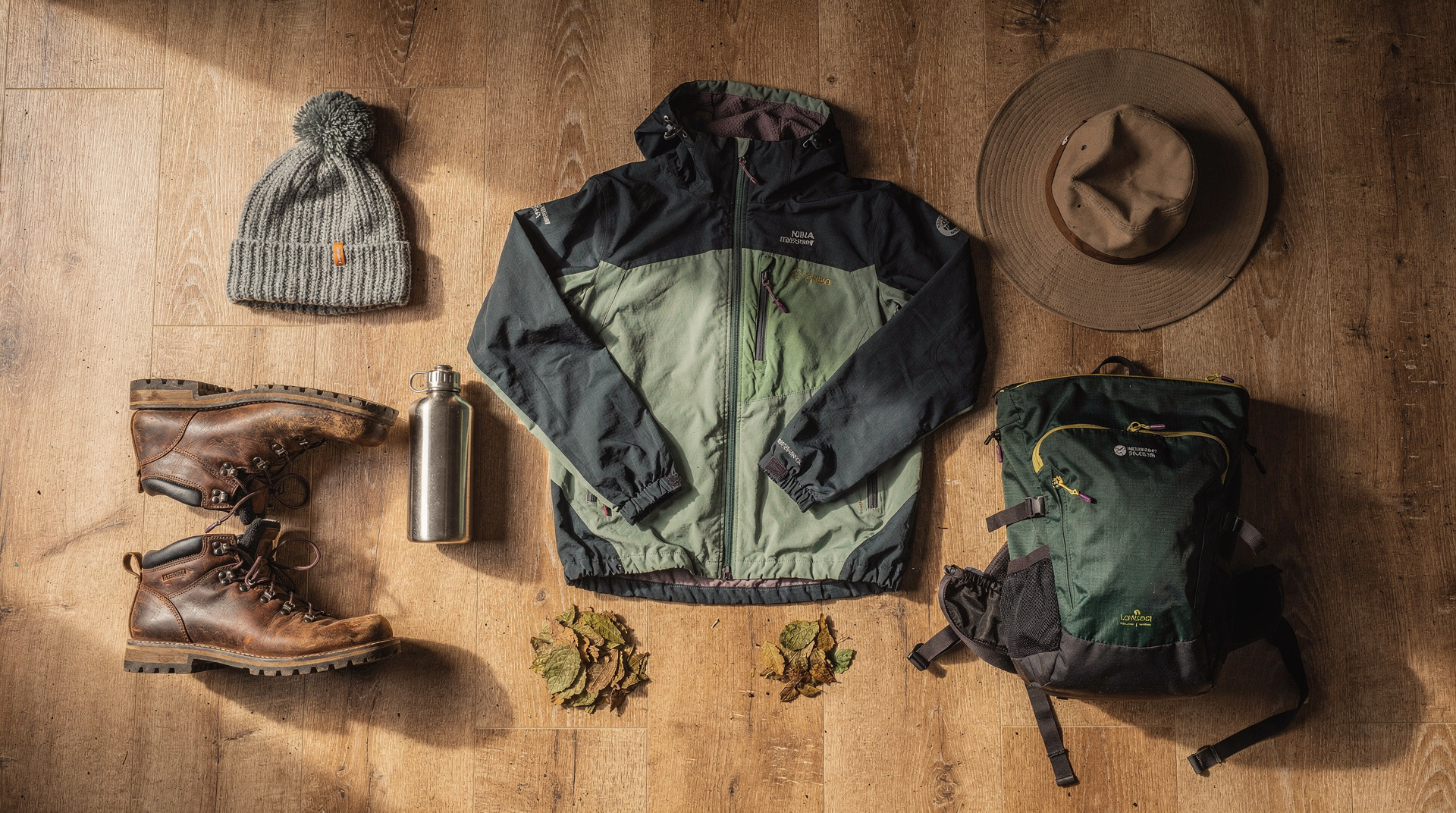
Beyond bookings, two practical items are worth sorting before departure rather than in Cusco. First, travel insurance: confirm your policy explicitly covers high-altitude activities and, if relevant, trekking above 4,500 m — some standard policies exclude this without an add-on. Second, packing: Cusco’s daily temperature swing (cold mornings and nights, warm midday sun) calls for a genuine layering system rather than a single heavy jacket. The what to pack for Cusco guide has the full list, and the what to pack for the Inca Trail guide covers the trekking-specific additions if that is part of your plan.
Safety and practical common sense
Cusco is a safe destination for the overwhelming majority of visitors, but it is also a mature tourism market with the usual pickpocketing and overcharging risks found in any heavily visited city. The Peru travel safety guide covers the general precautions, and the Cusco tourist traps guide covers the specific scams to watch for — fake tickets, unlicensed agencies, and taxi overcharging chief among them. Building five minutes of awareness of these into your planning avoids the vast majority of problems visitors actually encounter.