Vinicunca vs Palccoyo: which rainbow mountain?
From Cusco: Vinicunca Rainbow Mountain Day Trip
Vinicunca or Palccoyo?
Vinicunca (5,200 m) has the single dramatic rainbow face and greater visual impact but requires a 7 km, 900 m-altitude-gain hike at extreme altitude with peak-season crowds. Palccoyo (4,900 m) is 300 m lower, has a 3 km walk from vehicle drop-off, three separate rainbow mountains in one view, far fewer crowds, and lower cost. Most operators push Vinicunca regardless. Read this before booking.
The comparison most tour operators won’t make
Nearly every tour operator in Cusco sells Vinicunca. It is the famous one, the one with the iconic photograph, the one that most visitors ask for by name. Palccoyo exists, and a smaller number of operators offer it, but the economic incentive for operators is to sell the higher-priced, higher-demand Vinicunca trip.
This guide makes the comparison honestly: what each site actually offers, who each suits, and what the real trade-offs are. The goal is not to steer you one way or the other but to give you the information to make the right choice for your specific situation — fitness, altitude tolerance, sensitivity to crowds, budget, and photography priorities.
The very short version: if you are fit, well-acclimatised, and want the single most dramatic Andean landscape experience available on a day trip, choose Vinicunca. If you have any altitude concern, fitness concern, or aversion to large crowds, or if you simply want a more honest value-for-money calculation, Palccoyo is the right answer.
| Vinicunca | Palccoyo | |
|---|---|---|
| Max altitude | 5,200 m | 4,900 m |
| Walk | 3.5 km one way, 900 m gain | ~3 km, mostly flat |
| Time uphill | 2–2.5 hours | 45 min–1 hour to first viewpoint |
| Crowds (peak season) | Very high | Low |
| Cost | $30–50 per person | $20–35 per person |
| Best for | The iconic single peak | Value, quiet, easier walk |
Altitude: the critical difference
Vinicunca: Trailhead at 4,300 m; summit viewpoint at 5,200 m. The 900 m of altitude gain during the hike happens at an elevation where the air already contains only about 50% of sea-level oxygen. Most visitors need 2 to 2.5 hours to reach the summit regardless of fitness. The physical limitation is respiratory, not muscular — your lungs and cardiovascular system are working at significantly reduced capacity regardless of how fit you are at sea level.
Palccoyo: Vehicle drop-off at approximately 4,600 m; the highest viewing point at approximately 4,900 m. The walk gains about 300 m over 1.5 km and is mostly gradual. Total circuit is about 3 km. The starting elevation is already well above 4,000 m, so you still need genuine acclimatisation — but the difference between 4,900 m and 5,200 m is physiologically significant, and the shorter physical effort means less accumulated respiratory strain.
The honest practical implication: If you have been in Cusco for 2 nights and feel good — no headache, normal sleep, no breathlessness at rest — either site is accessible. If you have been in Cusco for less than 2 nights, feel slightly off from altitude, or have any cardiovascular or respiratory condition, Palccoyo is the safer and more enjoyable choice. Full acclimatisation guidance is in the altitude sickness guide and the dedicated Rainbow Mountain altitude tips guide.
The hike compared
Vinicunca hike:
- Trailhead to summit: 3.5 km one way, 900 m altitude gain
- Time uphill: 2–2.5 hours (slow, altitude-appropriate pace)
- Time downhill: 1.5 hours
- Trail character: Well-marked, broad path; steep in the final section
- Horse hire: Available at trailhead, S/30–50 one way
- Total exertion: Demanding, comparable to a strenuous hill day at sea level magnified by altitude
Palccoyo circuit:
- Vehicle drop-off to viewing points: 1.5 km to first viewpoint, 3 km total circuit
- Time to first viewpoint: 45 minutes to 1 hour
- Full circuit: 2–2.5 hours at an easy pace
- Trail character: Mostly flat-to-gradual plateau walking; one moderate incline to the high point
- Horse hire: Not typically available or necessary
- Total exertion: Moderate, suitable for most fitness levels after acclimatisation
The practical upshot: For many visitors — particularly those over 50, those travelling with children, those with any respiratory concern, or those simply prioritising enjoyment over achievement — Palccoyo is the more sensible choice on physical grounds alone. For visitors who are fit, well-acclimatised, and want the experience of reaching 5,200 m, Vinicunca delivers something that Palccoyo does not.
The visual comparison
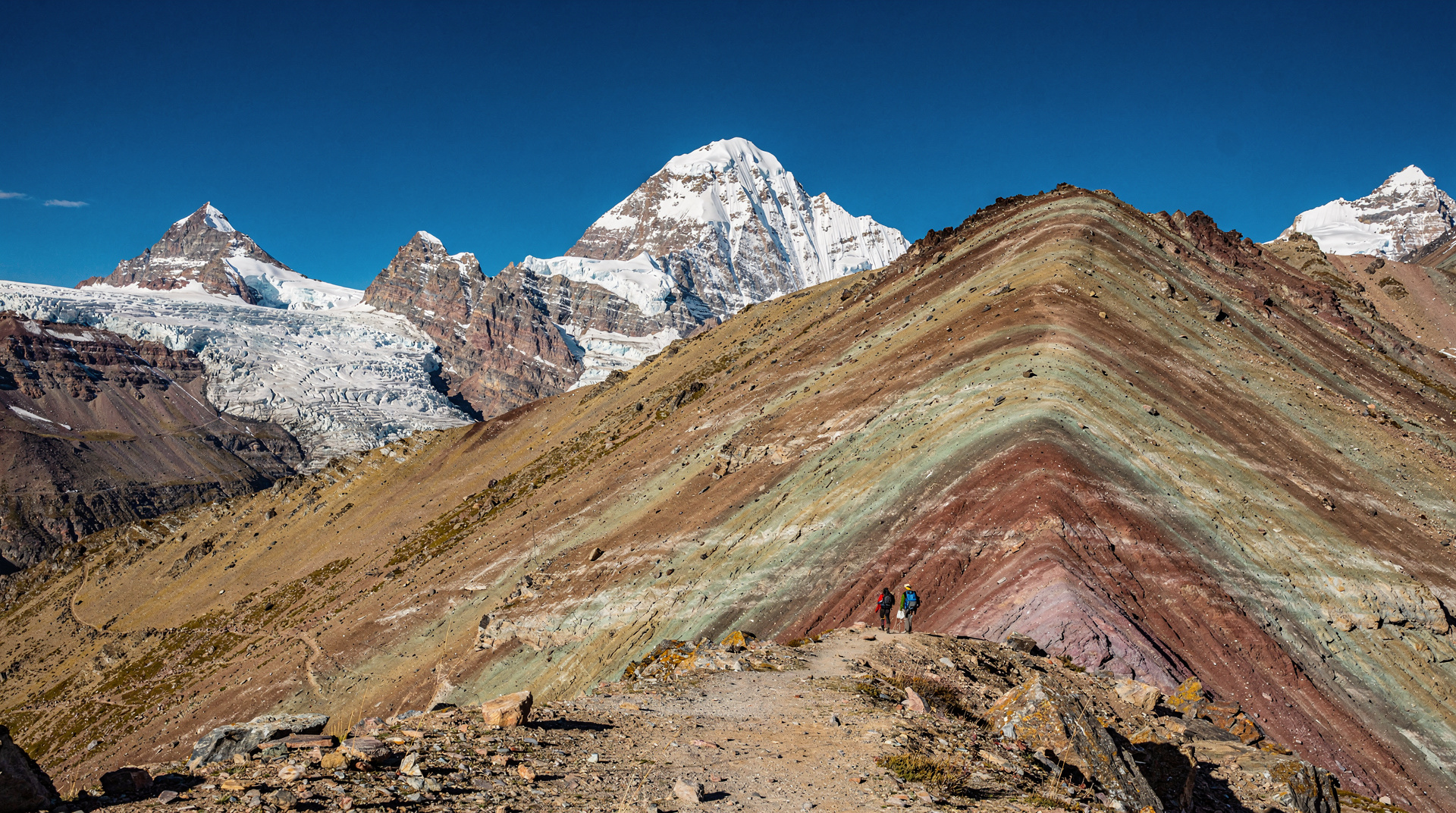
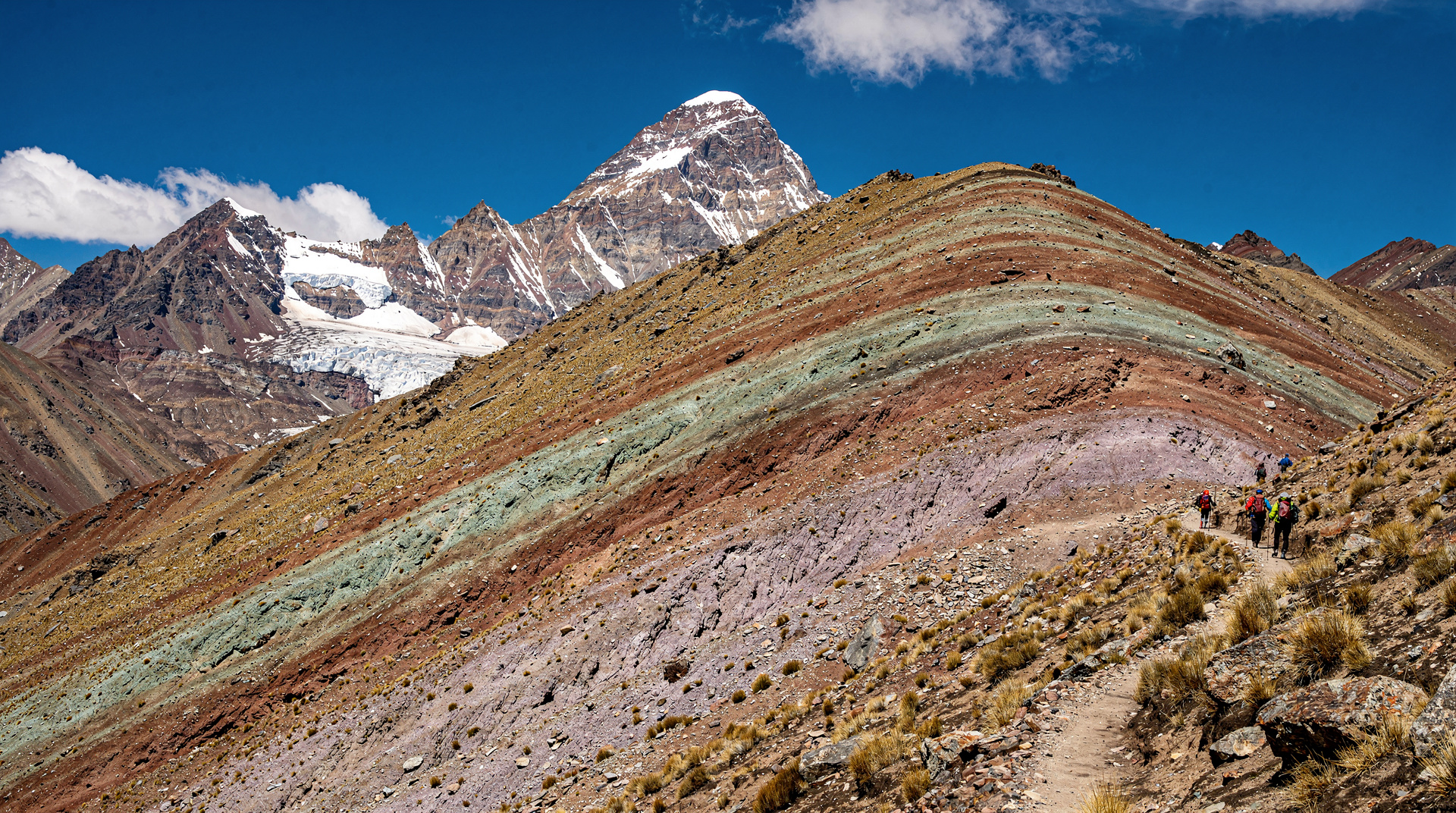
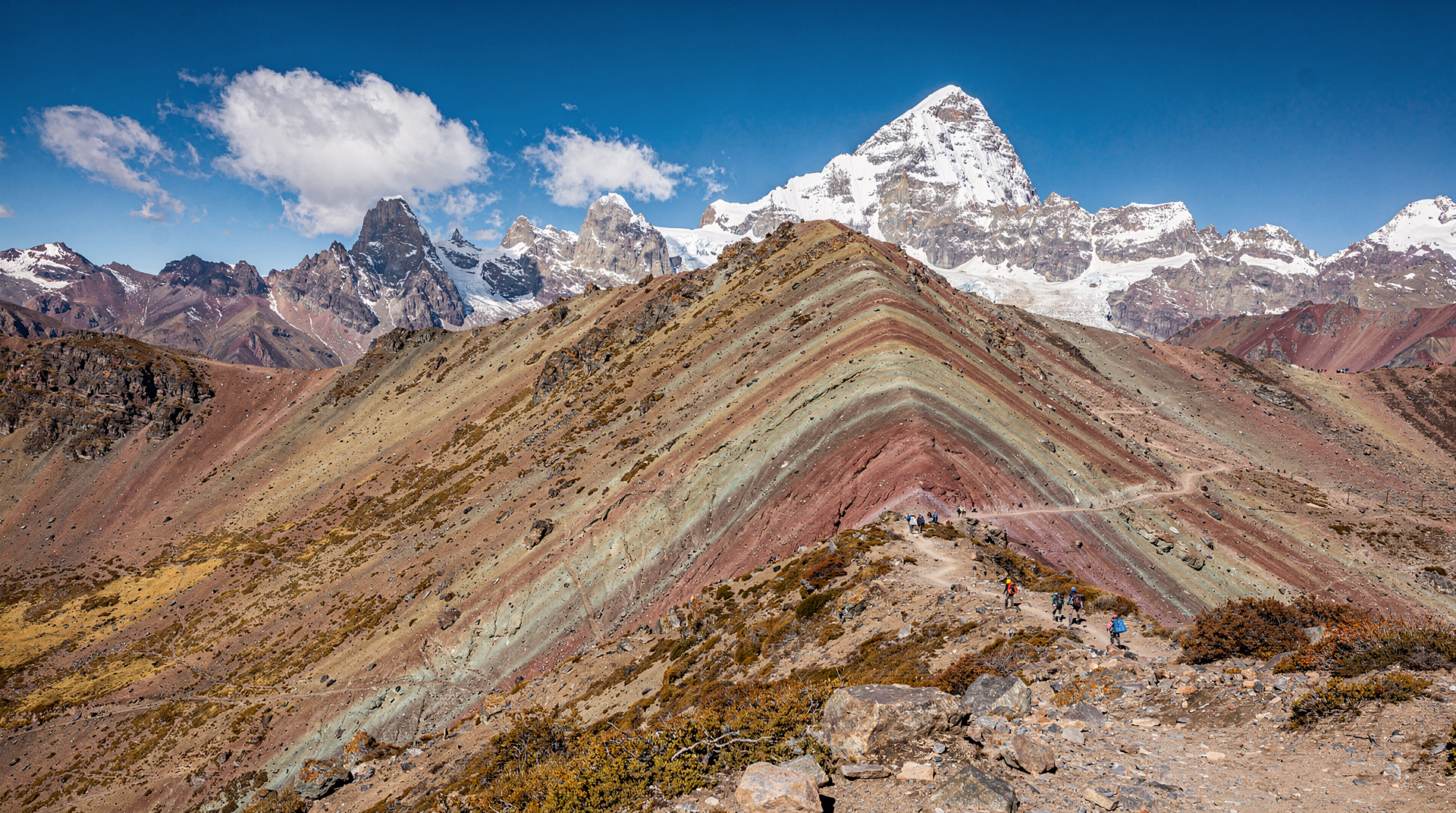
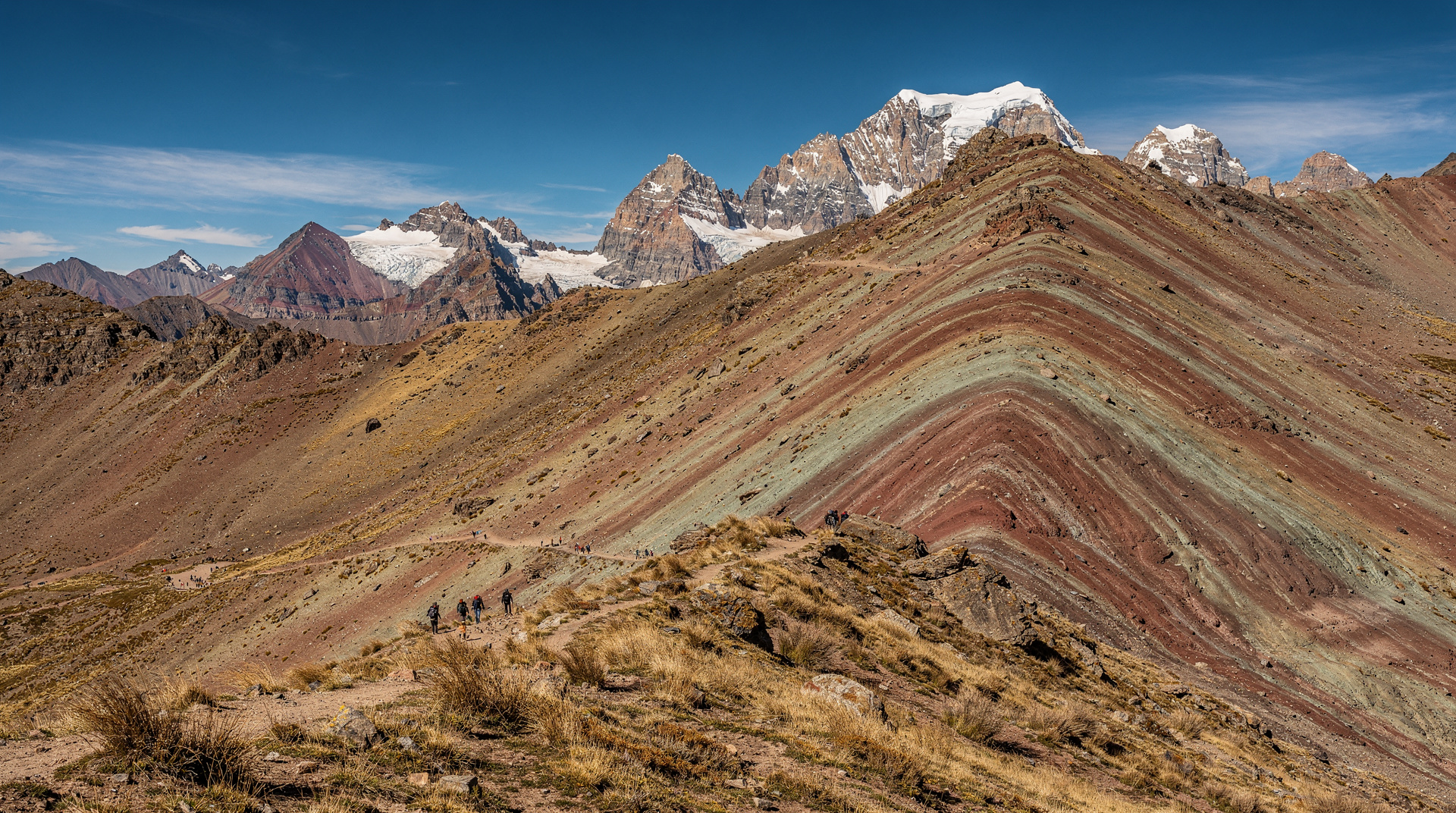
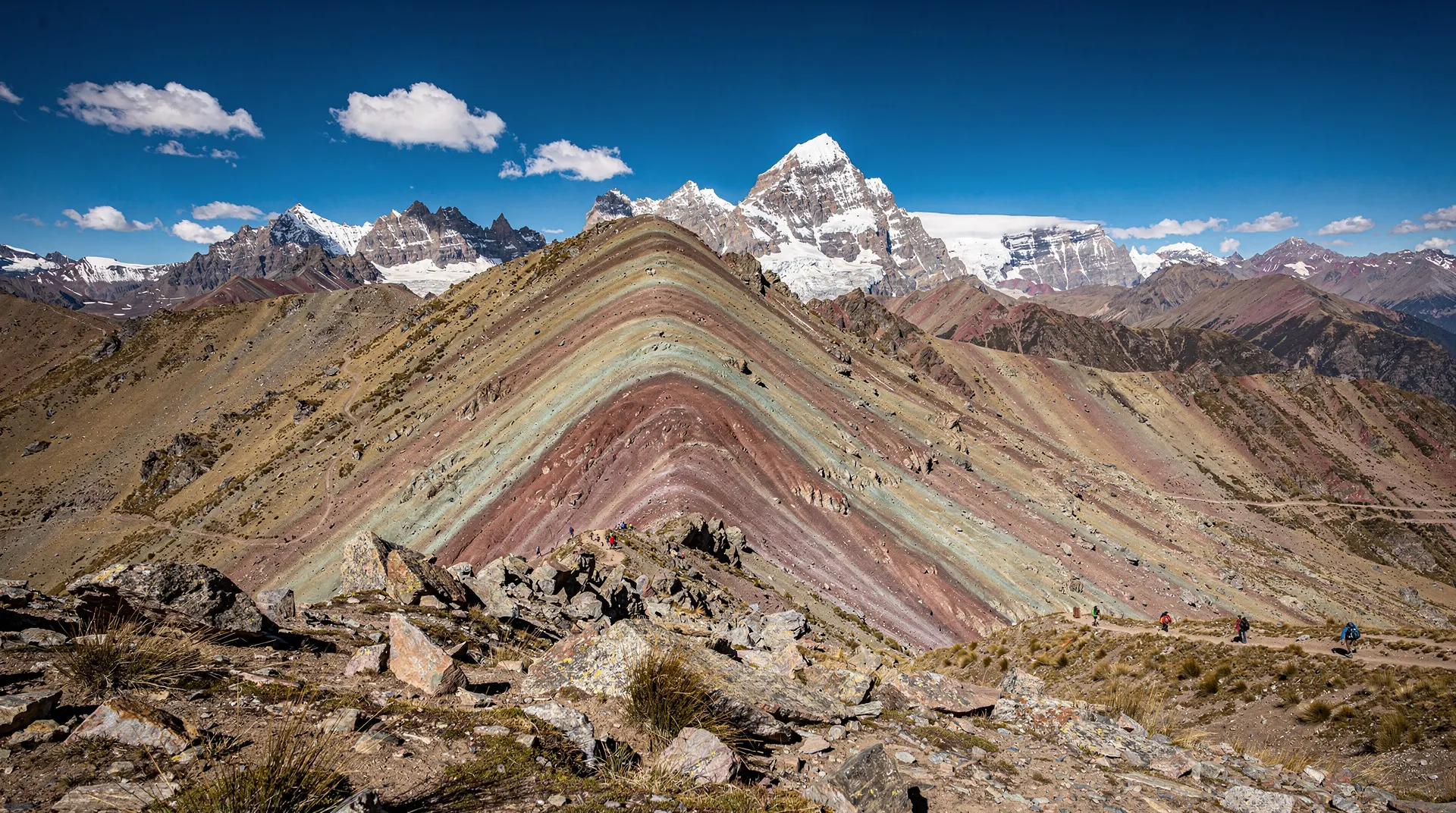
Vinicunca: One concentrated, dramatic face of striped mineral colours. The composition is photogenic because the single face dominates the frame. In ideal conditions the reds, yellows, and purples are vivid against the sky. The classic image — looking at the face with Ausangate in the background — is immediately recognisable and genuinely impressive in person.
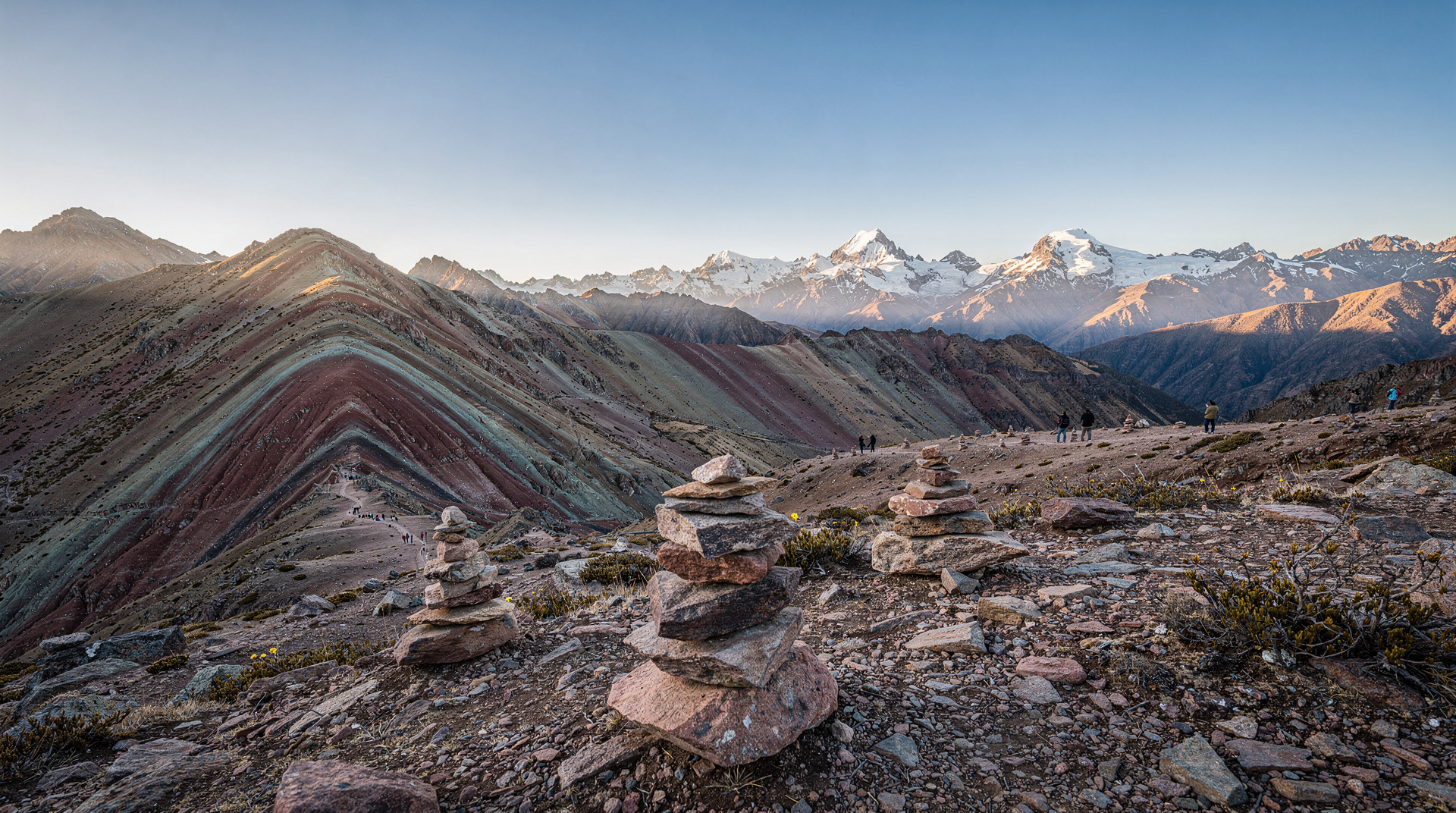
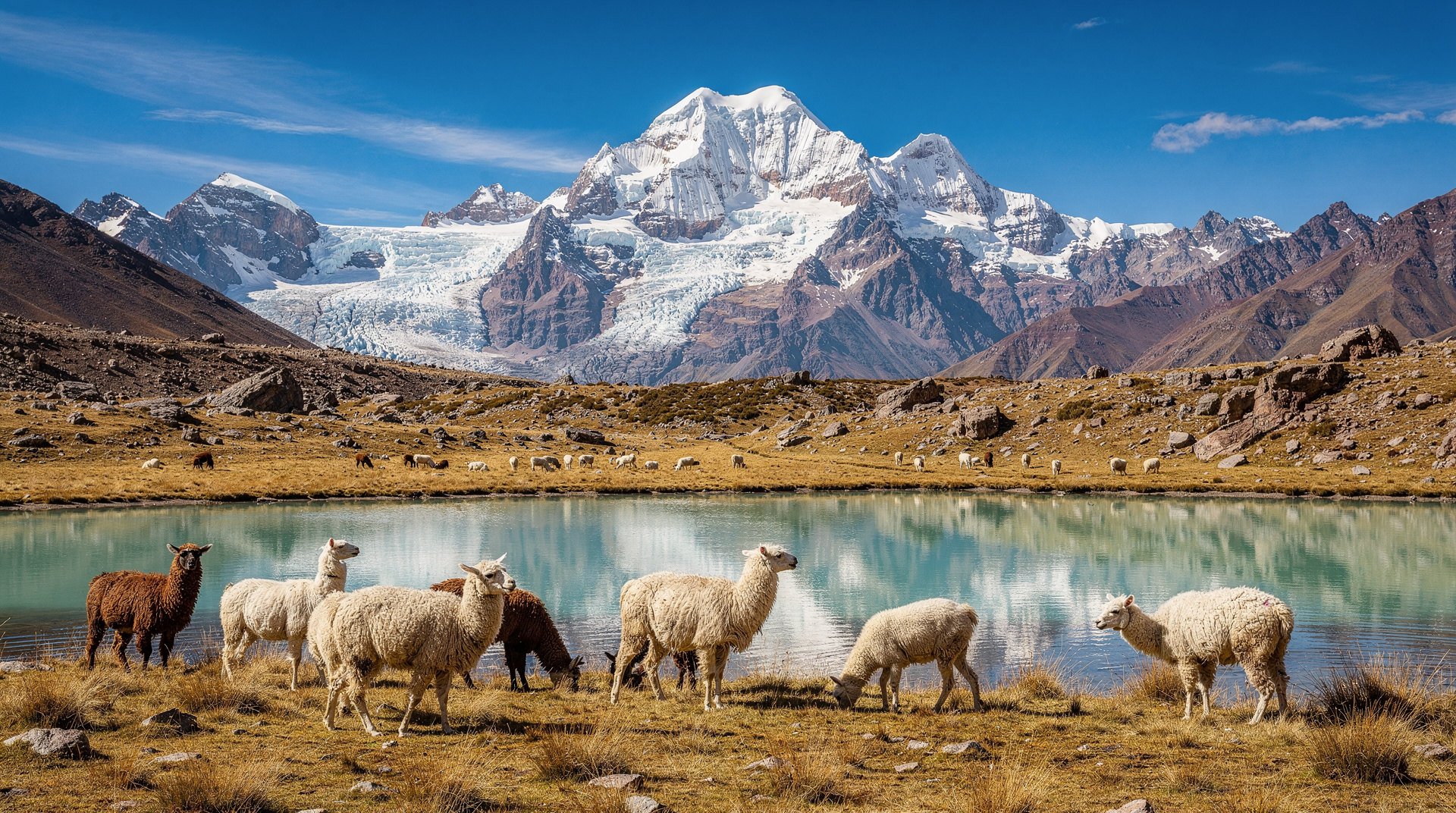
Palccoyo: Three separate coloured ridges visible in a single wide panorama, each with slightly different mineral signatures. The landscape is broader and less concentrated than Vinicunca. You can see multiple rainbow mountains simultaneously, which gives a different — some would say richer — sense of the geological phenomenon. Palccoyo also often has additional photogenic foreground elements: llamas grazing, wetland sections, and the Ausangate massif visible from the high point.
The editing reality: Vinicunca photographs tend to be more heavily edited in the images that circulate online — the saturation boost required to create the neon-bright images is larger because the contrast between expectation and reality is larger. Palccoyo photographs tend to represent the actual colours more accurately, partly because the site has less tourism-driven incentive to present an exaggerated version.
Crowds
Vinicunca in high season (June–August) is busy. Tour operators from across Cusco send vans to the same trailhead. Arriving at 7 am is sensible — by 10 am the trail holds several hundred people simultaneously and the summit ridge is genuinely congested. The visual impact of the mountain competes with the logistical reality of sharing the viewpoint with a crowd.
Palccoyo receives a fraction of the traffic. Even on a busy day in July, most visitors encounter tens rather than hundreds of people on the circuit. The quieter atmosphere is a significant advantage for photography, for the meditative quality of the landscape experience, and for the physical safety element — at nearly 5,000 m, having space to walk at your own pace rather than keeping up with a group is more than a preference.
Cost
Vinicunca day trip: Typically $30–50 (S/110–180) per person including transport, guide, and entry fee. Quality operators at the higher end; crowded vans and no altitude safety guidance at the lower end.
Palccoyo day trip: Typically $20–35 (S/75–130) per person. The route is shorter; demand is lower; the pricing reflects both.
A Rainbow Mountain day trip to Vinicunca at the mid-range ($40–50) typically includes a smaller group, a knowledgeable guide, and better altitude safety practices than the budget end.
A Palccoyo full-day tour gives you the three-ridge panorama, a significantly less crowded experience, and a physically accessible hike at a lower price point. For many visitors, this is the best combination of value and experience available in the Rainbow Mountain category.
Who should choose which
Choose Vinicunca if:
- You are well-acclimatised (3+ nights in Cusco at 3,400 m or Sacred Valley)
- You are fit and reasonably experienced with altitude or sustained hiking
- The single dramatic concentrated face is your primary visual goal
- The “5,200 m” achievement matters to you
- You are willing to tolerate crowds for the experience
Choose Palccoyo if:
- You have any altitude concern or are 50+
- You are travelling with children or less experienced hikers
- You have 2 nights of acclimatisation but want a margin of safety
- Crowds bother you significantly
- Value for money is a priority
- You want a panoramic view of multiple coloured ridges rather than one concentrated face
Consider Ausangate 7 lakes if:
- You want a multi-day experience in the same mountain range
- You are interested in trekking rather than a day trip
- The Ausangate massif (6,384 m) is your target rather than the coloured mountains specifically
The full Palccoyo guide covers what to expect on the Palccoyo circuit in detail. The Rainbow Mountain complete guide covers the Vinicunca experience comprehensively. The Red Valley guide covers an additional landscape option near Vinicunca that many visitors combine in the same day trip.
Seasonal considerations
One factor that sharpens the comparison between the two sites is how each performs in different weather conditions.
Vinicunca in the dry season (May–September): This is the site at its best. Clear skies, morning light on the striped face, the Ausangate massif visible behind the ridge. Trail conditions are stable. Crowds are at their peak — but the visual payoff is also at its peak.
Vinicunca in the wet season (November–March): Cloud frequently obscures the mountain face. The trail becomes muddy and can be slippery. January and February are the worst months. Some visitors make the journey and see almost nothing. If you have no choice but to visit in the wet season, Vinicunca is a gamble.
Palccoyo in the dry season: Also at its best, with the added advantage that the wetland sections on the circuit support more bird life and the plateau grasses are a vivid dry-season gold that contrasts well with the red and yellow mineral ridges.
Palccoyo in the wet season: Slightly more forgiving than Vinicunca because the three ridges are spread across a wider area and partial cloud coverage is less likely to obscure all of them simultaneously. The plateau can be wet and muddy, but the shorter circuit reduces exposure to bad conditions. Still best in dry season, but a more reliable experience than Vinicunca when conditions are uncertain.
The practical implication: If you are visiting between November and April and flexibility of dates is not possible, the reliability argument strengthens the case for Palccoyo. In the dry season, both sites deliver on clear days and both disappoint in cloud — but Palccoyo at least requires less physical investment if the weather lets you down.
Getting the booking right
One practical note on tour operators: the gap between a good operator and a poor one is larger for Rainbow Mountain trips than for most other Cusco excursions. The remote location, extreme altitude, and multi-hour drive mean that things like vehicle quality, guide altitude training, group size, and departure timing all have real consequences for the experience and for safety.
For Vinicunca, an established day trip operator with a track record of small groups and altitude-aware guides is worth paying the mid-range price for. The cheapest operators on the market save money primarily by packing more people into the vehicle and rushing the schedule — both of which worsen the experience at extreme altitude.
For Palccoyo, a dedicated Palccoyo full-day tour gives you a guide who knows the circuit, includes the necessary transport, and typically keeps group sizes smaller because demand is lower. The lower price point at Palccoyo should not be used to justify booking the absolute cheapest option — altitude safety is equally non-negotiable at 4,900 m.
Combining with the rest of your Cusco trip
Neither site needs a dedicated multi-day stay — both are single-day excursions from Cusco, which makes the choice easier to slot into a broader itinerary. If your schedule also includes the Inca Trail or Salkantay, doing Palccoyo rather than Vinicunca in the days immediately before a multi-day trek conserves energy without giving up the mineral-mountain experience entirely.
If Vinicunca is non-negotiable for you, schedule it on a day with nothing physically demanding before or after it — the altitude and early start are tiring even for well-acclimatised visitors. Either day trip pairs naturally with a rest day in Cusco or a gentler Sacred Valley day either side of it.
What locals and repeat visitors say
Cusco-based guides who run both routes regularly tend to describe Vinicunca as “the one everybody wants” and Palccoyo as “the one we’d choose for our own family.” That is not a knock on Vinicunca’s scenery — it reflects the practical reality that the same guides watch dozens of exhausted, altitude-affected visitors reach the Vinicunca summit each week, versus a comparatively relaxed circuit at Palccoyo. Repeat visitors to the Cusco region, who have already “done” Vinicunca on a previous trip, frequently choose Palccoyo on a second visit specifically for the quieter, easier experience — not as a downgrade, but as a considered second choice.
Frequently asked questions about Vinicunca vs Palccoyo: which rainbow mountain?
Which is harder — Vinicunca or Palccoyo?
Are the colours better at Vinicunca or Palccoyo?
How much do tours cost for each?
Which has fewer crowds?
Which should I choose if I am nervous about altitude?
Can I do both on the same trip?
Top experiences
Bookable activities with verified prices and instant confirmation on GetYourGuide.