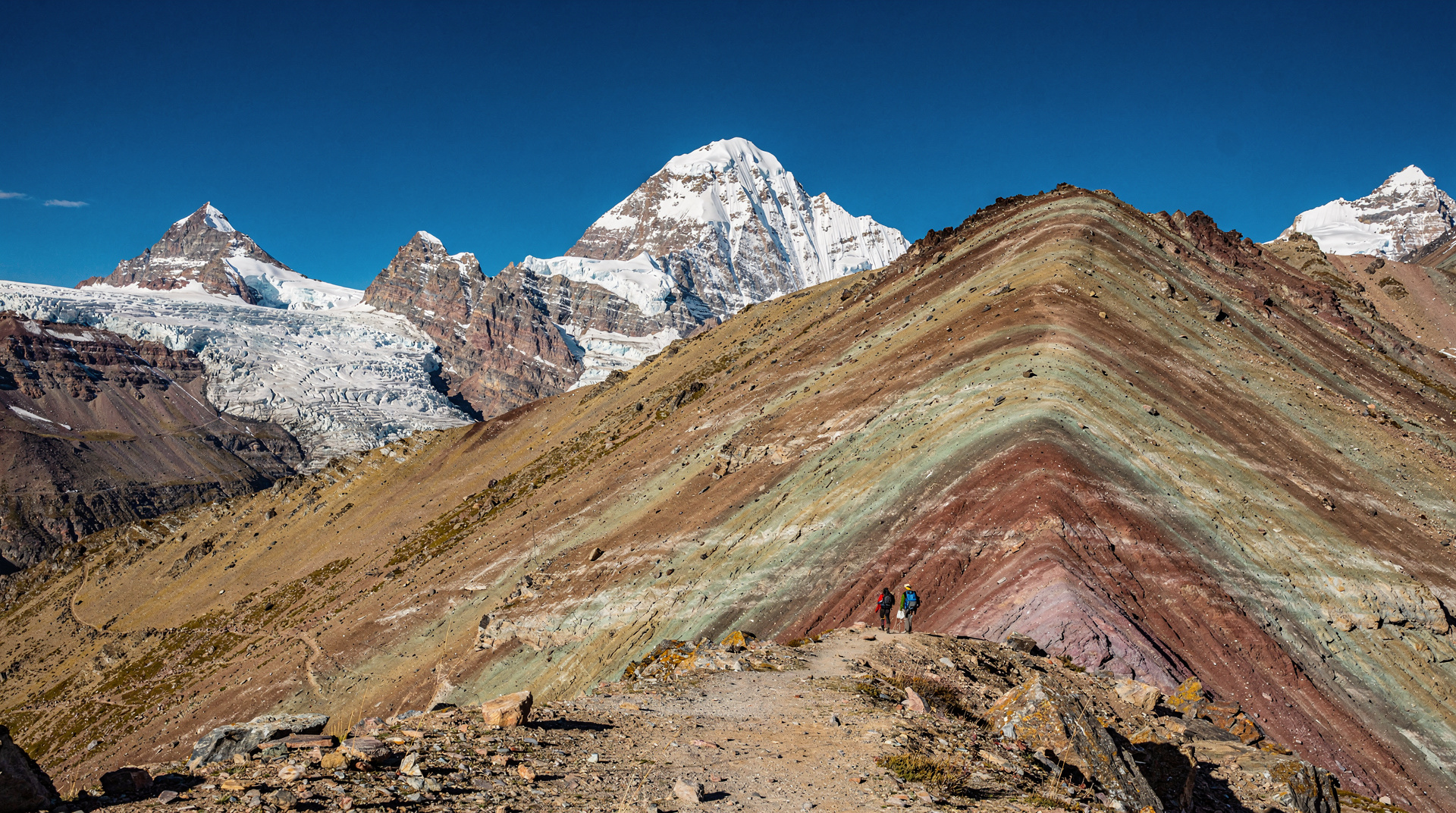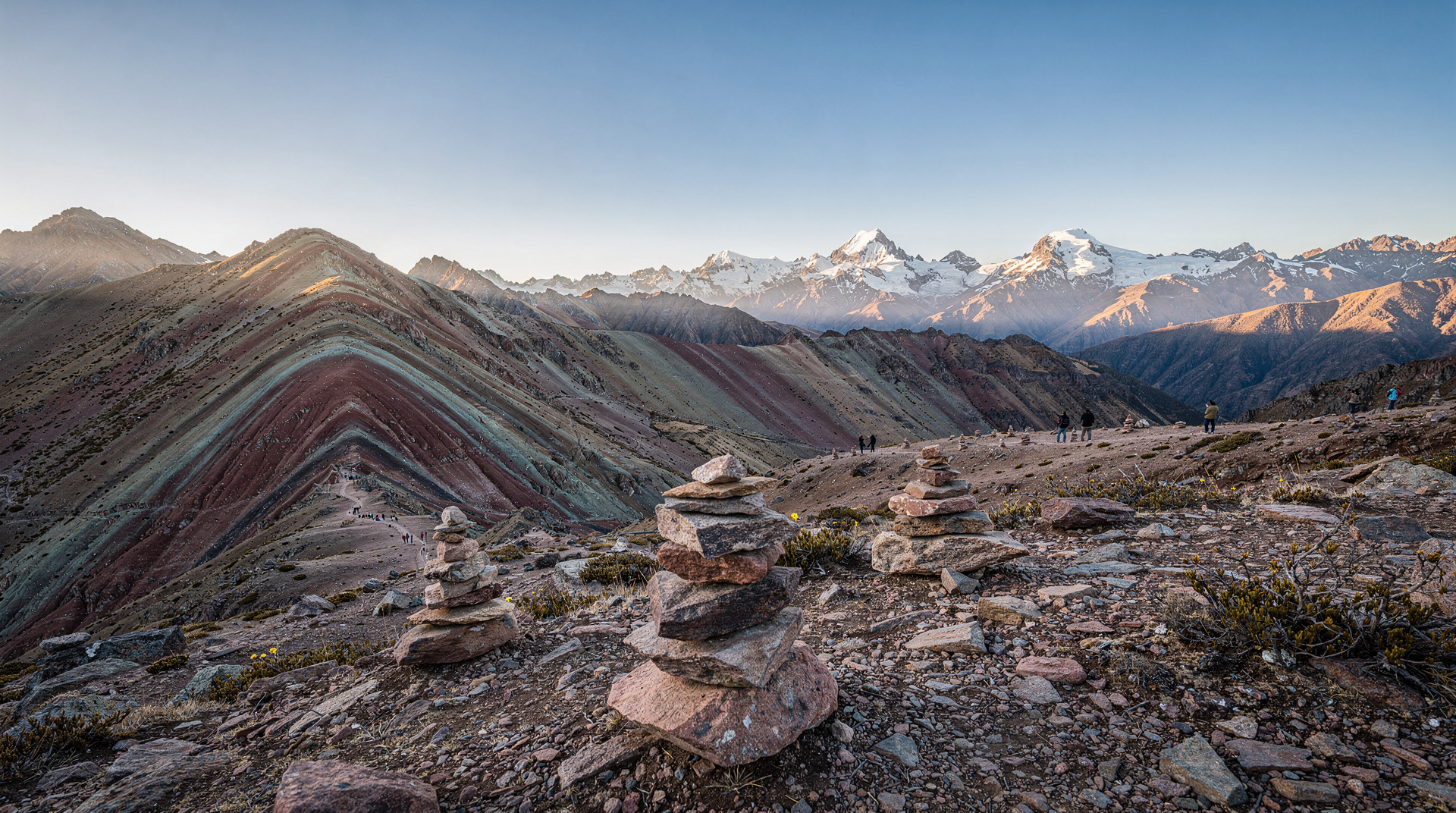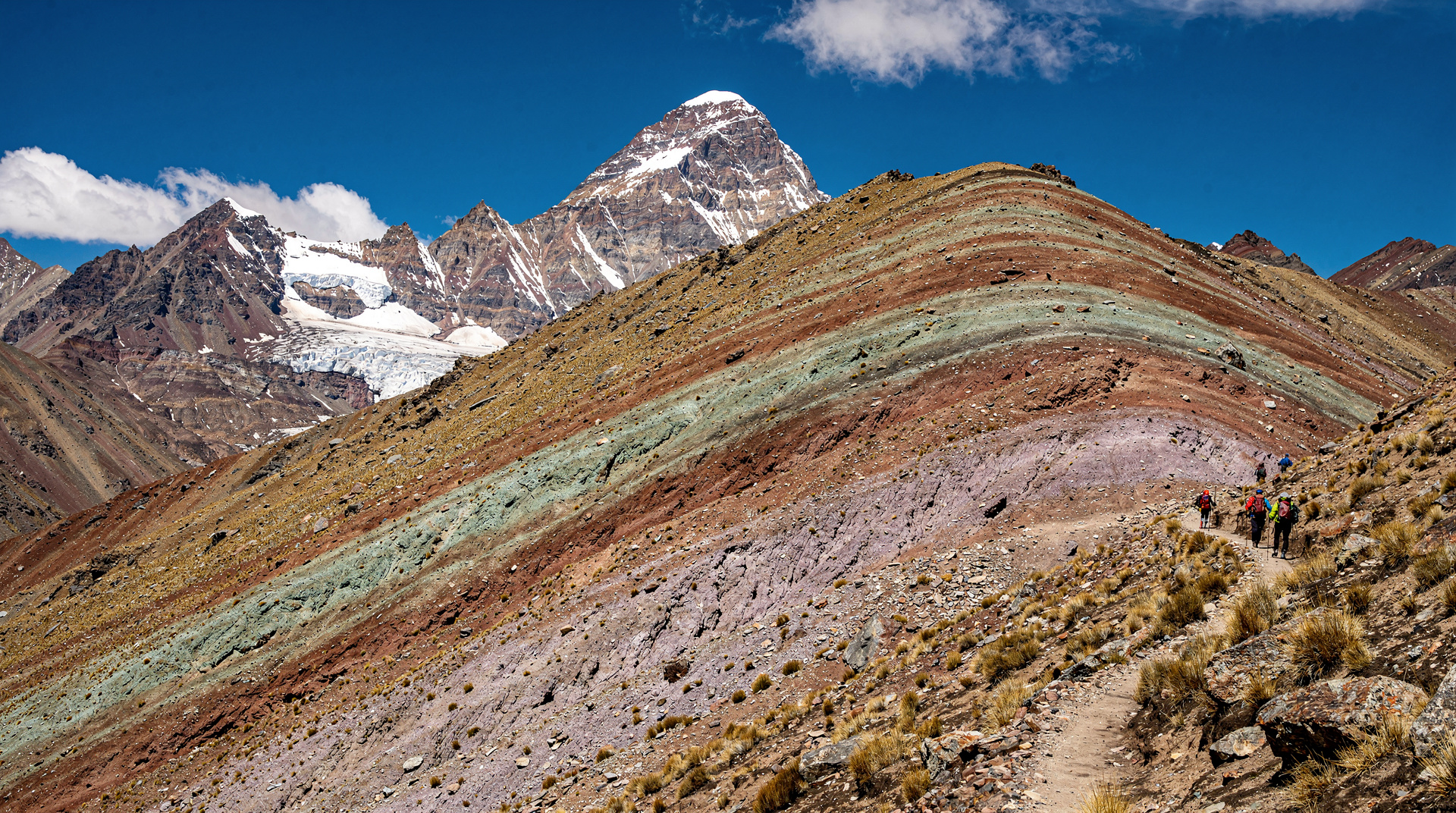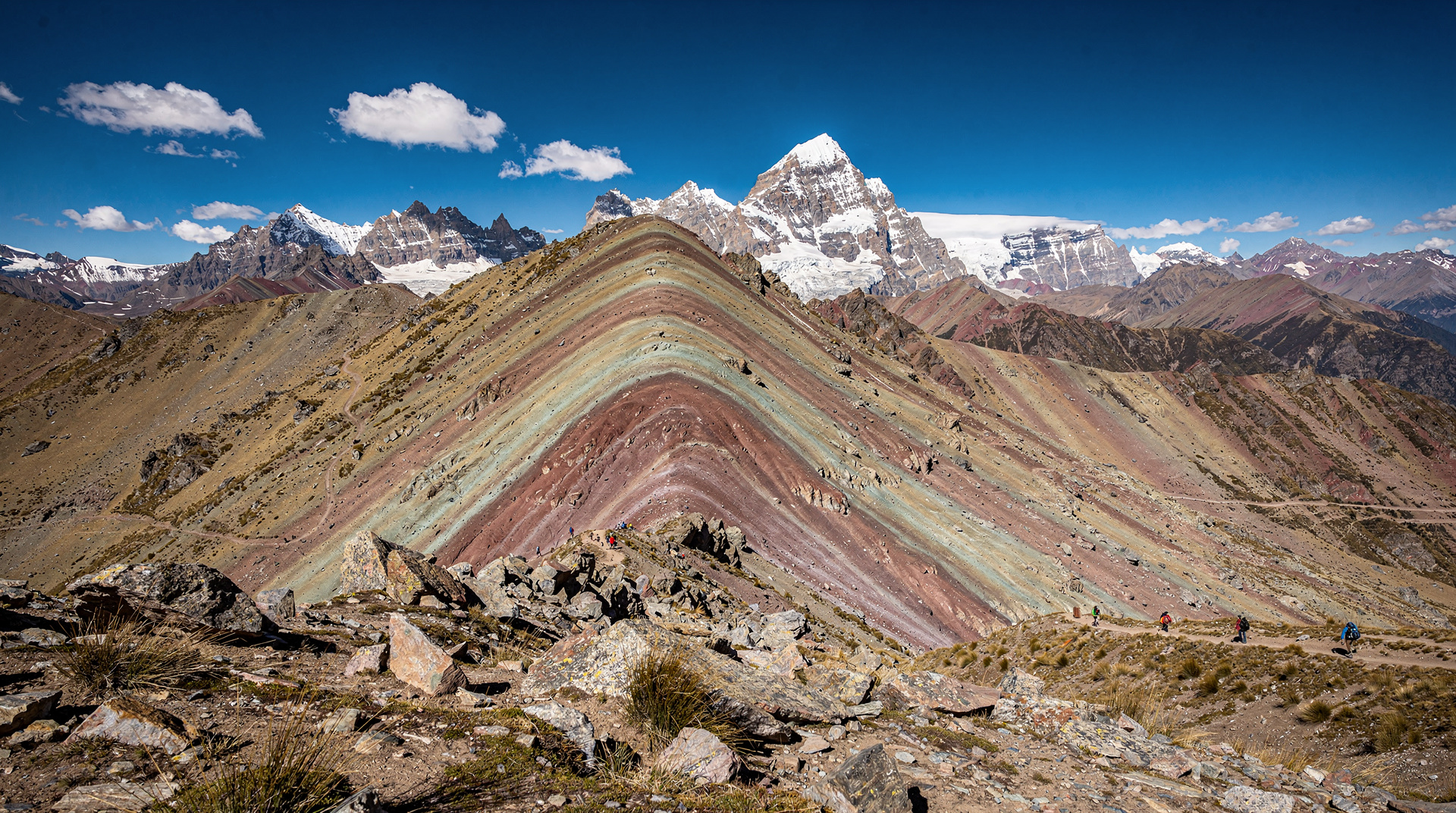
Surviving Rainbow Mountain at 5,200 m: altitude tips
From Cusco: Vinicunca Rainbow Mountain Day Trip
Surviving Rainbow Mountain at 5,200 m
Acclimatise for at least 2 nights in Cusco (3,400 m) before attempting Rainbow Mountain. Three nights is better. Drink 3 litres of water the day before. Move slowly uphill — there is no benefit from rushing. Consider Palccoyo (4,900 m, shorter walk) if you have experienced any altitude symptoms in Cusco. Diamox (acetazolamide) helps some people; coca tea helps with mild symptoms. Supplemental oxygen at the summit is available and not shameful to use.
The thing most Rainbow Mountain guides skip
Every tour operator in Cusco will happily book you onto a Rainbow Mountain day trip. Very few of them will tell you, clearly and directly, that you will be hiking at 4,300–5,200 m, that this is genuinely hard even for fit people, that inadequate acclimatisation is the single most common cause of a bad experience on this trip, and that approximately one in five first-time visitors to Cusco would have a more enjoyable and safer experience going to Palccoyo instead.
This guide covers the altitude reality of Rainbow Mountain honestly: what happens to your body above 4,000 m, what the warning signs of serious altitude sickness look like, what the acclimatisation timeline needs to be, what actually helps and what does not, and how to decide whether you are physically ready for the hike. None of this is intended to discourage you — the Rainbow Mountain experience is genuinely extraordinary in good conditions. The goal is to give you the information to get there safely and enjoy it when you arrive.
| Summit altitude | 5,200 m (trailhead 4,300 m) |
| Minimum prep | 2 nights in Cusco (3,400 m); 3 recommended |
| Cost of readiness | Free — hydration, pace and rest days, not gear |
| Oxygen at summit | ~50% of sea-level concentration |
| Alternative | Palccoyo (4,900 m) if in doubt about readiness |
What altitude does to your body
The air at 5,200 m contains approximately 50% of the oxygen present at sea level. This is not metaphor — it is the physical consequence of lower atmospheric pressure. Your lungs are drawing in the same volume of air as at sea level, but each breath delivers half the oxygen molecules.
Your body adapts to this through several mechanisms: increasing respiratory rate (you breathe faster), increasing heart rate (your heart pumps harder to distribute the available oxygen), producing more red blood cells over days and weeks, and increasing 2,3-DPG in red blood cells to allow more efficient oxygen unloading. These adaptations take time — the full acclimatisation process for extended stays at 4,000 m takes 2–3 weeks; for a single day trip, what you are doing is ensuring your body has had enough time at lower altitudes to begin the process before you push to 5,200 m.
The symptoms of inadequate acclimatisation range from uncomfortable to life-threatening:
Mild (Acute Mountain Sickness, AMS): Headache, fatigue, loss of appetite, nausea, dizziness, difficulty sleeping. These are normal responses to altitude arrival and typically resolve within 24–48 hours of staying at the same altitude. They become dangerous if you ascend further while experiencing them.
Severe (High Altitude Cerebral Oedema, HACE): Severe headache unresponsive to medication, confusion, loss of coordination, altered consciousness. This is a medical emergency requiring immediate descent and, if available, supplemental oxygen and dexamethasone.
Severe (High Altitude Pulmonary Oedema, HAPE): Breathlessness at rest, crackling sensation in the chest, blue lips or fingertips, cough producing frothy or pink fluid. Also a medical emergency. Both HACE and HAPE are rare in day-trippers who are already somewhat acclimatised — but rare is not zero, and the remote location of Rainbow Mountain means that descent is the only immediate treatment option.
The acclimatisation timeline
Arriving in Cusco: Cusco sits at 3,400 m. The first 12–24 hours in Cusco will give most visitors some degree of mild AMS symptoms — headache, some breathlessness on stairs, disturbed sleep. This is normal and not a reason for alarm. It is also not a state from which you want to immediately attempt 5,200 m.
Night 1 in Cusco (3,400 m): The worst night for most people — disrupted sleep, possible headache. Drink plenty of water, eat lightly, avoid alcohol, do not attempt strenuous activity.
Day 1 in Cusco: Stay below 3,500 m. Walk slowly. Visit Qorikancha or the historic centre rather than heading to Sacsayhuamán (3,700 m). Your body is beginning to adapt.
Night 2 in Cusco: Most visitors sleep significantly better. Headache typically resolves or becomes minimal. Breathlessness on stairs is reduced. This is the minimum acclimatisation point from which an experienced Andean traveller might attempt Rainbow Mountain.
Day 2 in Cusco: A day trip to Sacred Valley sites at 2,800–3,000 m (Pisac, Ollantaytambo) is excellent on this day — you continue acclimatising at Cusco altitude but spend several hours at lower elevation, which many people find helps the process.
Night 3 in Cusco / Day 3: The right day for Rainbow Mountain for most visitors. You have had two nights at 3,400 m, your body has begun producing additional red blood cells, and you have had time to assess how you are actually managing the altitude before attempting another 1,800 m above where you currently are.
The honest minimum: 2 nights in Cusco. The sensible recommendation: 3 nights. Visitors who attempt Rainbow Mountain on day one or two in Cusco (or having slept only at lower Sacred Valley altitudes) are the majority of the people who turn back before the summit or arrive in distress.
What helps at altitude
Hydration: Dehydration worsens every altitude symptom. Drink 3 litres of water the day before the trip and carry at least 2 litres for the hike. Avoid alcohol for at least 24 hours before the hike — alcohol dehydrates and disrupts sleep, both of which worsen altitude performance.
Pace: The single most controllable variable on the hike is speed. Go slowly. The Quechua term often repeated by local guides is “poco a poco” — little by little. A pace that keeps your breathing from becoming laboured is the right pace. If you are gasping, slow down. The summit will wait; the crowd behind you does not set your pace.
Diamox (acetazolamide): A prescription medication in most countries, available over the counter in Cusco pharmacies. Clinical evidence supports its effectiveness for AMS prevention. Start 24 hours before the ascent at 125–250 mg twice daily. The main side effects are increased urination (compensate by drinking more water) and tingling in extremities. Not everyone tolerates it; if you have had a bad reaction to sulfonamide antibiotics, discuss with a doctor before taking Diamox.
Coca leaves and coca tea: Traditional Andean remedy with genuine though modest pharmacological basis. The alkaloids in coca leaves are mild bronchodilators with some analgesic effect on altitude headache. Chewing a small amount of coca leaves or drinking coca tea before and during the hike may reduce mild symptoms. It is not a treatment for serious altitude illness and should not be used as a substitute for proper preparation. It is legal in Peru, freely available, and culturally significant — do not be shy about using it.
Supplemental oxygen: Available from many tour operators and at some points along the trail. Pure oxygen provides immediate but temporary relief of altitude symptoms. It does not prevent AMS from recurring when you stop breathing it, but it makes the summit time more comfortable and the descent safer if you are experiencing symptoms. Use it if it is offered and you are symptomatic. The social stigma around this is entirely misplaced.
Food: Eat a light breakfast before the early morning departure — something with carbohydrates but not heavy protein or fat. At altitude, digestion is impaired and a heavy pre-hike meal tends to cause nausea rather than energy.
Am I ready? The honest self-assessment
Before booking a Rainbow Mountain day trip, ask yourself:
- Have I spent at least 2 full nights sleeping at 3,400 m in Cusco? If not, wait.
- Am I currently free of altitude headache? A persistent headache at 3,400 m that is not improving is a warning sign — do not attempt 5,200 m while experiencing it.
- Can I climb three or four flights of stairs in Cusco without becoming significantly breathless? If you cannot do this comfortably, the 900 m altitude gain at Rainbow Mountain will be very hard.
- Do I have any cardiovascular or respiratory condition? If yes, consult a doctor about altitude limits before booking.
- Am I over 60 or otherwise in a population with higher altitude risk? The Rainbow Mountain hike at 5,200 m is one of the most physically demanding accessible day trips in South America. If any doubt exists, Palccoyo at 4,900 m with its short circuit is the honest and genuinely enjoyable alternative.
A Rainbow Mountain day trip with an operator who is honest about altitude safety — who maintains a slow pace, carries supplemental oxygen, and guides people back if they are not managing — is meaningfully different from a budget operator who packs 20 people into a van and races to the summit. Price is not the only signal of quality, but operators at the lower end of the price range tend to cut corners on exactly the safety elements that matter most at 5,200 m.
The Palccoyo alternative
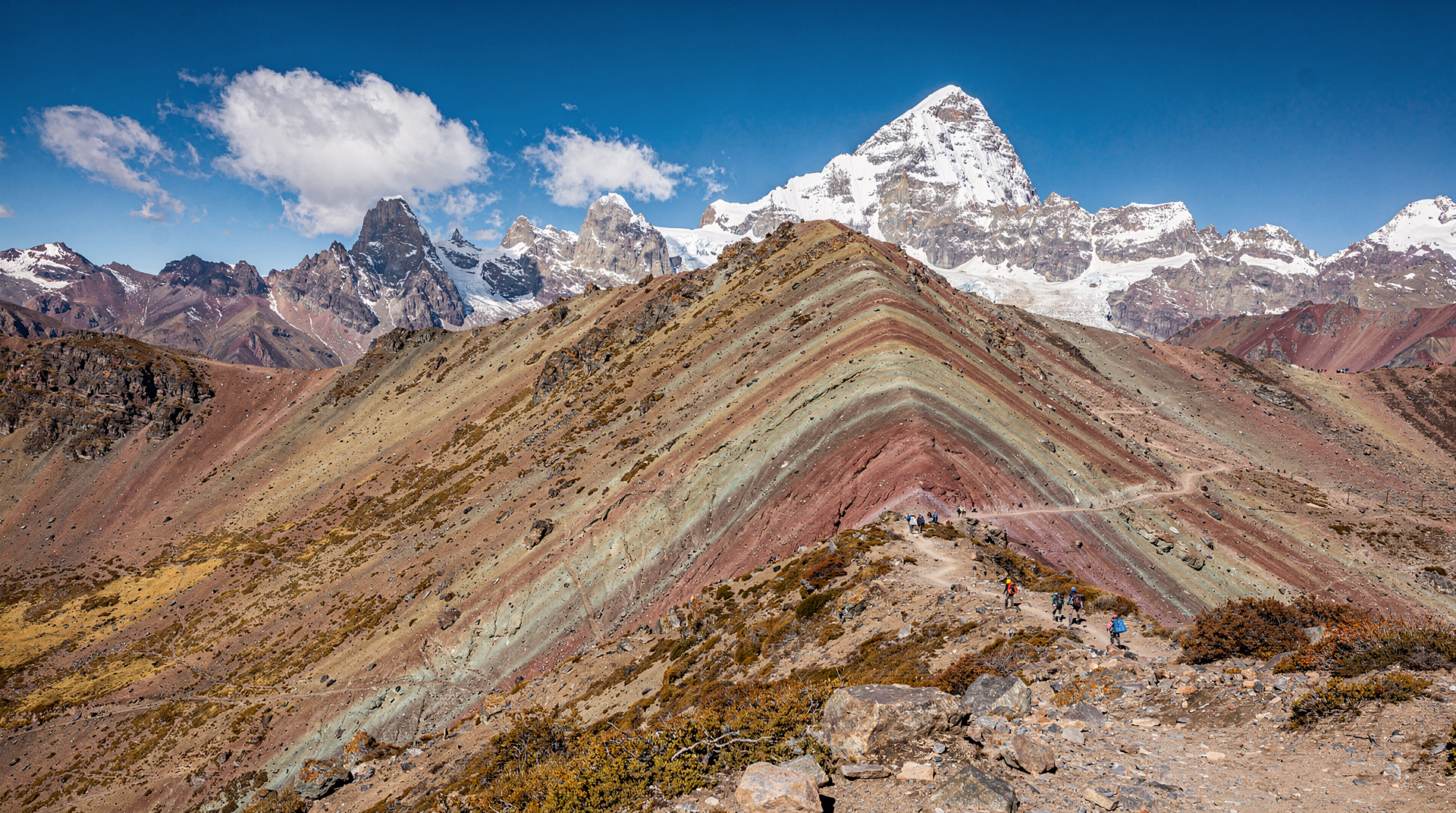
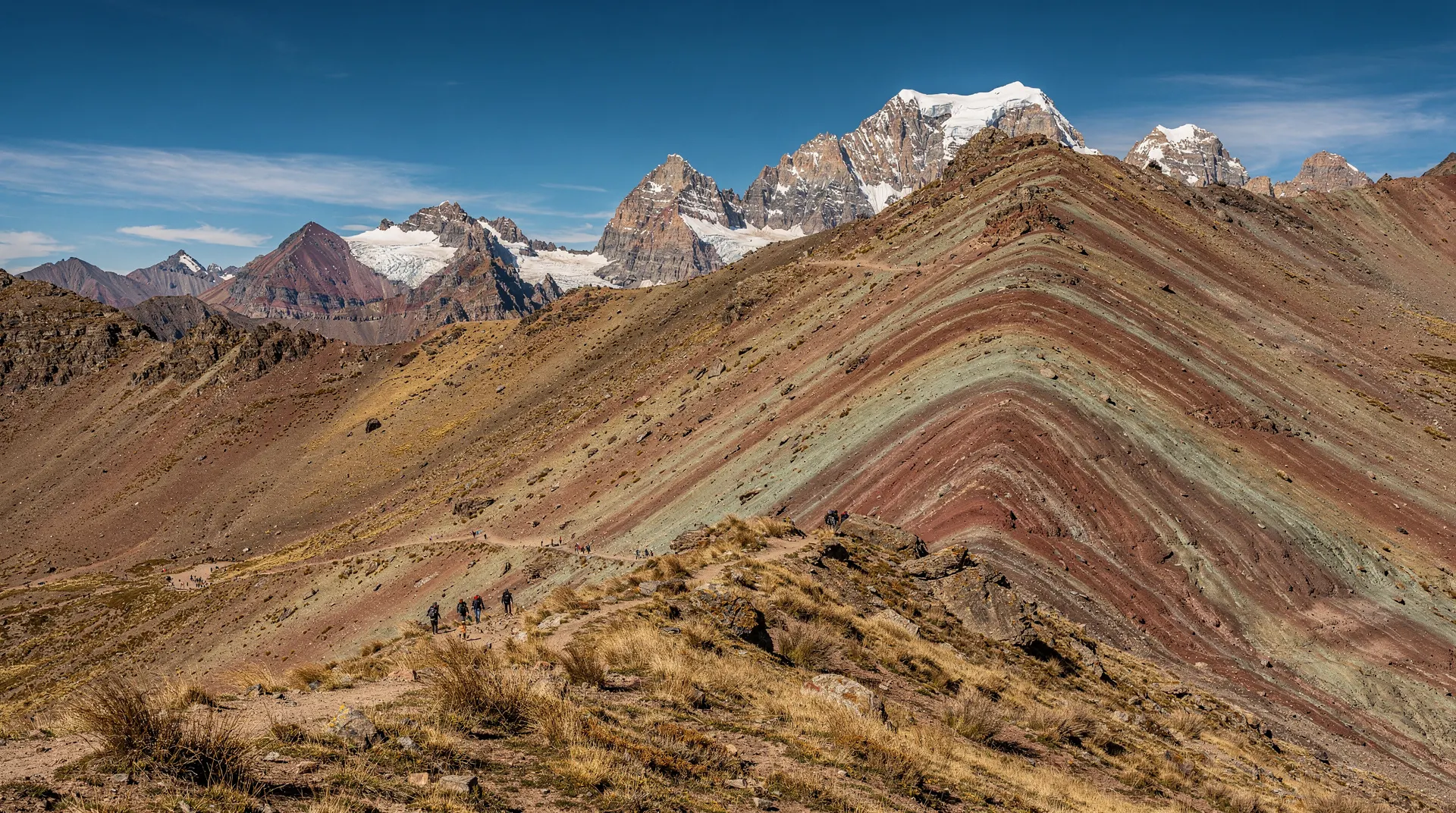
For any visitor who after reading this has genuine doubts about their readiness for Vinicunca, the Palccoyo circuit deserves serious consideration. At 4,900 m (versus 5,200 m) with a 3 km walk from the vehicle drop-off, Palccoyo gives you the rainbow mountain landscape experience — three separate coloured ridges in a panoramic view — with substantially lower altitude stress. The Vinicunca vs Palccoyo comparison covers both options honestly.
The altitude reality of Rainbow Mountain is manageable with proper preparation. The preparation is not complicated: time at altitude before you go, water, a slow pace, and honest self-assessment. These are within every visitor’s control. Everything else — the weather, the colours, the clouds — is not.
Acclimatisation checklist:
- 2 nights minimum in Cusco (3,400 m) before the trip — 3 nights recommended
- No active altitude headache or nausea on the morning of departure
- 3 litres water the day before; 2 litres carried on the hike
- No alcohol 24 hours before
- Light breakfast on departure morning
- Diamox: start 24 hours before if using
- Warm layers for the summit: temperature at 5,200 m is typically 0–8°C even in dry season
- Sunscreen SPF 50+: UV at 5,200 m is extreme, snow and mineral surfaces reflect it
Sleep and rest days before the hike
Sleep quality at altitude is often worse than at sea level even after several nights, and poor sleep compounds altitude symptoms rather than existing separately from them. If your Cusco nights have been genuinely disrupted — repeated waking, a racing heart, persistent headache on waking — treat that as a signal to add an extra acclimatisation day rather than push ahead on schedule.
A single day spent at a lower elevation, such as a relaxed morning in the Sacred Valley at 2,800–3,000 m, often improves the following night’s sleep in Cusco more than an extra night spent entirely at 3,400 m. Building one flexible buffer day into your itinerary before Rainbow Mountain — rather than a fixed back-to-back schedule — is one of the simplest ways to reduce the chance of attempting the hike while still poorly acclimatised.
Special cases: children, older travellers and pre-existing conditions
Altitude tolerance varies enormously between individuals and does not correlate cleanly with age or fitness — some very fit young travellers struggle badly at 5,200 m while some older travellers with good acclimatisation habits manage it comfortably. That said, a few groups warrant extra caution. Children under about 12 are not usually recommended for the Rainbow Mountain hike specifically because of the combination of extreme altitude and a multi-hour uphill walk with limited ability to communicate symptoms clearly; Palccoyo at 4,900 m with its shorter walk is a considerably safer family option.
Travellers over 60, or with any history of cardiovascular or respiratory illness, should have a conversation with a doctor about altitude limits before booking — not because age itself is disqualifying, but because underlying conditions can behave unpredictably above 5,000 m and the remote location limits how quickly medical help can reach you. Pregnant travellers are generally advised against extreme-altitude excursions above 4,000–4,500 m; Rainbow Mountain’s 5,200 m summit falls well into the range where medical guidance typically recommends against attempting it.
What a responsible tour operator does differently
Not all Rainbow Mountain operators manage altitude risk equally, and the differences are usually visible before you even book if you ask the right questions. A responsible operator will ask about your acclimatisation schedule when you book, not just take your payment; will genuinely support a slower pace at the back of the group rather than leaving stragglers behind; will carry a basic first-aid kit and, ideally, a pulse oximeter to check oxygen saturation if someone appears unwell; and will have a clear protocol for turning a struggling client back before the summit rather than pushing everyone to complete the itinerary regardless of condition.
Asking directly “what do you do if someone in the group is struggling with altitude” before booking is a legitimate and useful question — a vague or dismissive answer is itself useful information about the operator’s priorities.
Planning the days around the hike
Altitude preparation works best when it is part of the whole itinerary rather than an afterthought. The Cusco acclimatisation plan lays out how to sequence your first days, and the altitude sickness guide for Cusco explains the symptoms you are likely to meet on arrival. If you want to understand why sleeping lower first helps, Cusco altitude versus the Sacred Valley and the Sacred Valley versus Cusco base comparison both cover the trade-offs.
Several traditional remedies are discussed in more detail in the coca tea and altitude remedies guide, and the altitude medicine and scams guide is worth a read before you buy anything from a stranger near the main square. For a first-person account of what it feels like, Altitude sickness: my story and the Rainbow Mountain reality check are honest reading.
If you are still deciding whether the hike is for you, is Rainbow Mountain worth it weighs the effort against the reward, and the Rainbow Mountain day trip from Cusco guide walks through how the day unfolds. Travellers who want a longer build-up can look at the three-day Cusco and Rainbow Mountain itinerary, which leaves room for acclimatisation, and the Vinicunca, Palccoyo and Ausangate comparison covers the quieter options. Finally, what to pack for Cusco helps you bring the right layers for a cold, exposed summit.
On the day itself: pacing and decisions
Most altitude problems on the hike are decided in the first hour, not at the summit. Start slowly, take short pauses before you feel you need them, and keep sipping water rather than drinking in large gulps at rest stops. Check in with yourself at regular intervals: how is the headache, how is your appetite, can you still hold a conversation while walking? If the answers are getting worse as you climb, that is the moment to slow down further or stop, not to push on for the photo.
Agree a plan with your guide before you set off. Knowing in advance that you can turn back, wait at a viewpoint, or ride part of the way if that is offered takes the pressure off and makes it far easier to make a sensible call when you are tired. Travelling with a friend or partner helps too, because symptoms such as confusion are often noticed by the people around you before the person affected notices them.
If you decide Vinicunca is too much for this trip, a full-day Palccoyo tour with a shorter walk and a lower high point still gives you the coloured-ridge landscapes without the same altitude stress. The Palccoyo destination page, the Palccoyo day trip guide and the Rainbow Mountain destination page will help you choose between the two.
After the hike: recovery and what comes next
Descending usually brings quick relief, because every hundred metres you lose gives your body more oxygen to work with. Even so, expect to feel tired in the evening and sleep deeply. Drink water, eat something warm, and skip alcohol that night. If a headache or nausea persists after you are back at lower elevation, or gets worse, treat it seriously and speak to a doctor in Cusco rather than waiting it out.
Plan something gentle for the following day. The Sacred Valley guide and the Machu Picchu complete guide are good starting points for lower-altitude days, and the Ausangate lakes day trip is a reminder that the high Andes around Cusco reward careful planning. For general logistics, the how many days in Cusco guide helps you leave room for a buffer day, and the Cusco dry season guide covers when conditions on the mountain tend to be most comfortable.