The Red Valley near Rainbow Mountain: what to know
From Cusco: Rainbow Mountain and Red Valley ATV Tour
The Red Valley near Rainbow Mountain
The Red Valley (Valle Rojo) sits on the back side of the Vinicunca ridge at about 5,050 m — an iron-oxide red landscape that most Rainbow Mountain visitors never see because it requires crossing the main ridge. It can be reached on foot from the Vinicunca summit (add 30–45 min) or by ATV from the trailhead. At 5,000+ m the effort and altitude are serious. Stunning in clear conditions; only for well-acclimatised visitors.
Beyond the ridge
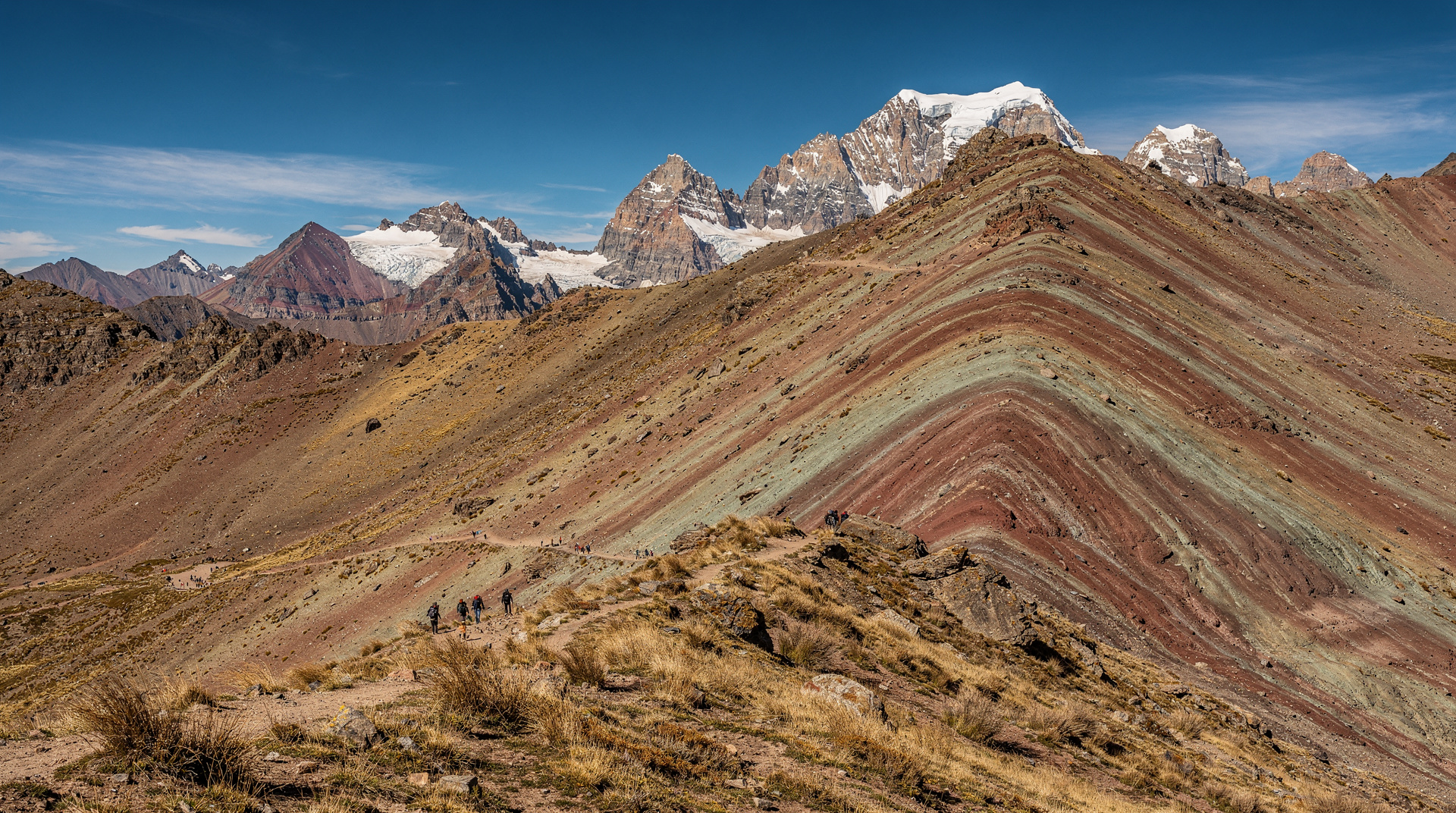
Most visitors to Rainbow Mountain Vinicunca arrive, photograph the striped face, rest for 30 minutes at the summit viewpoint at 5,200 m, and descend. What almost no one mentions — and what most standard tours do not include — is what lies on the other side of the ridge.
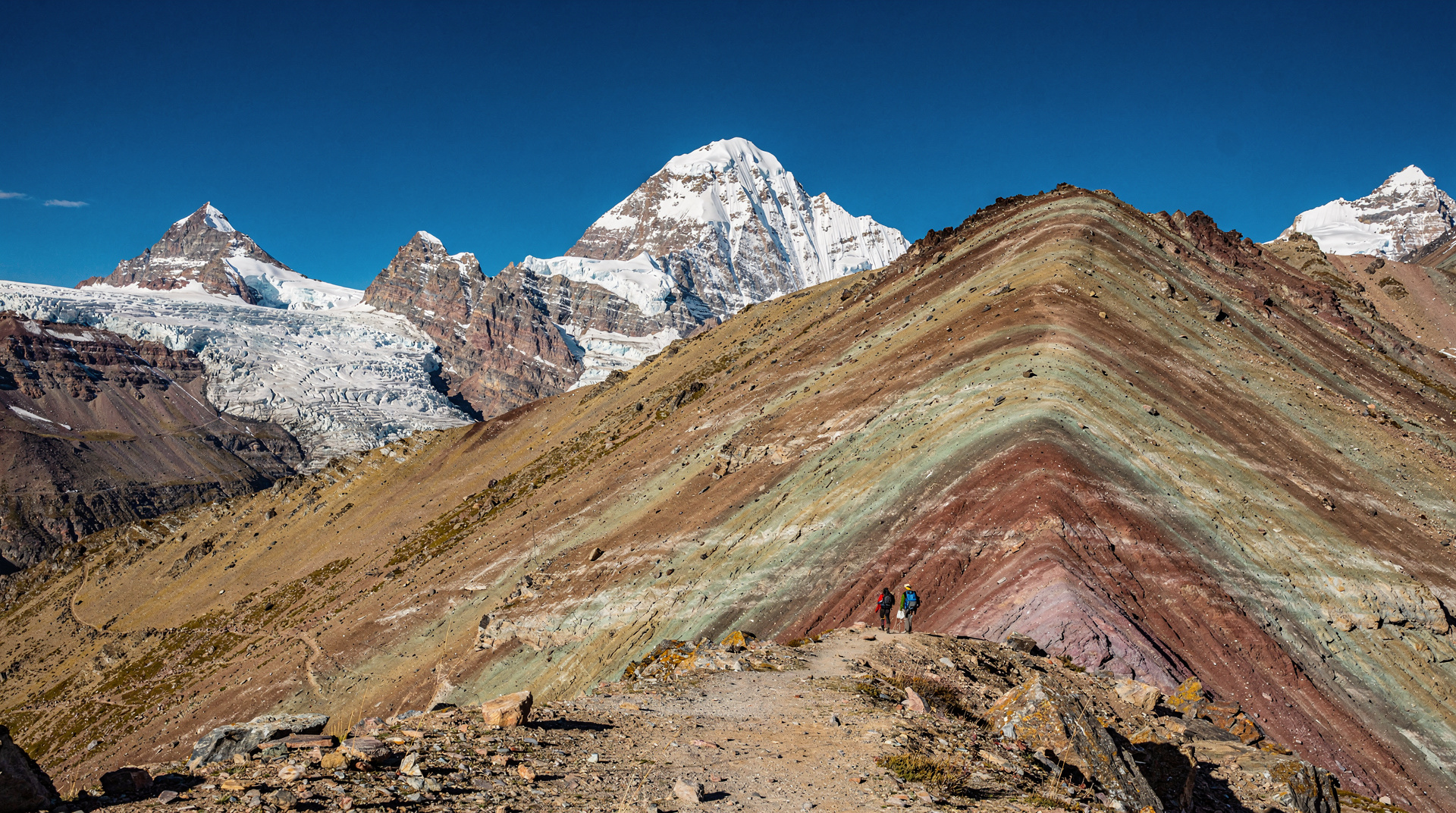
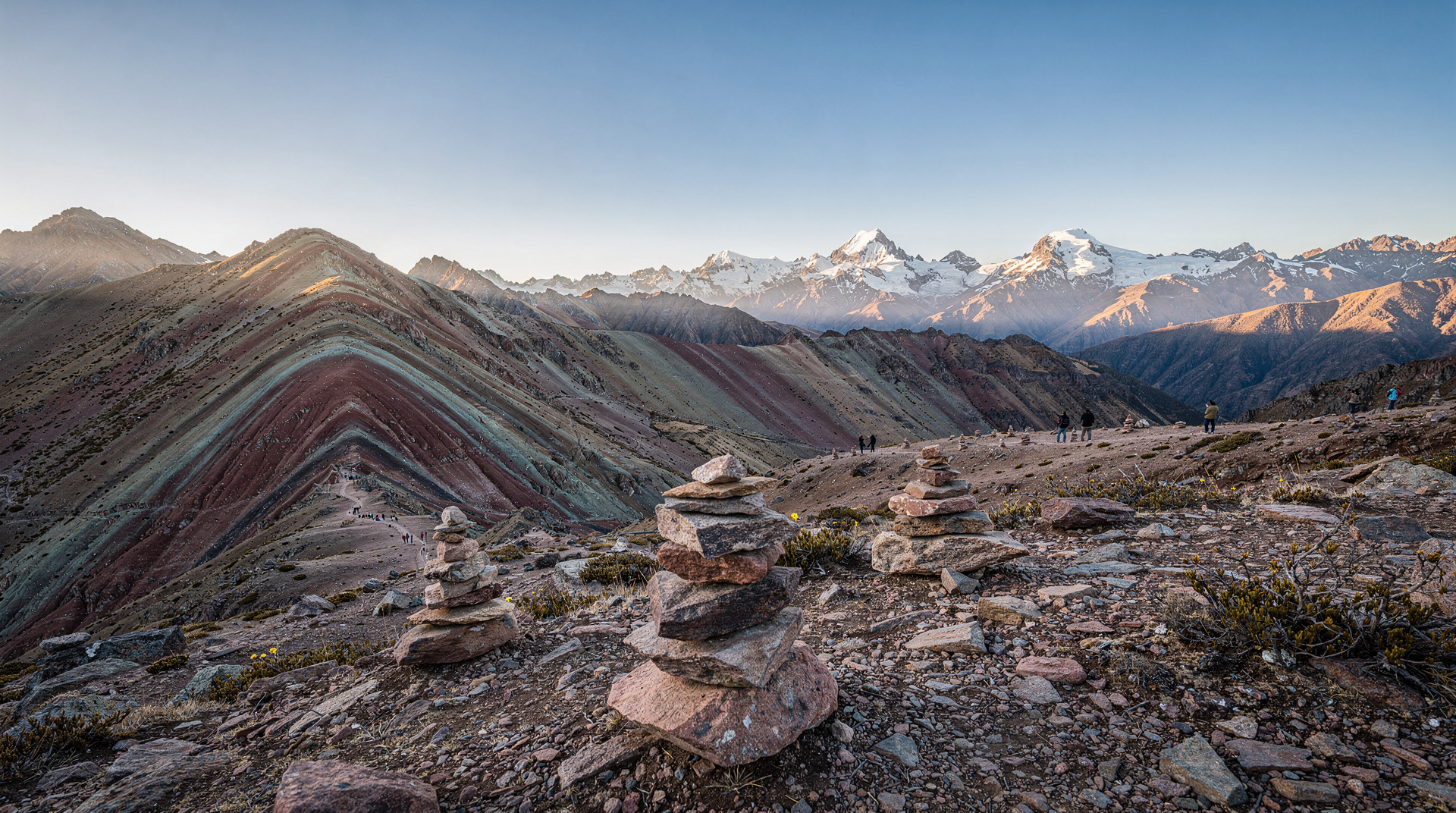
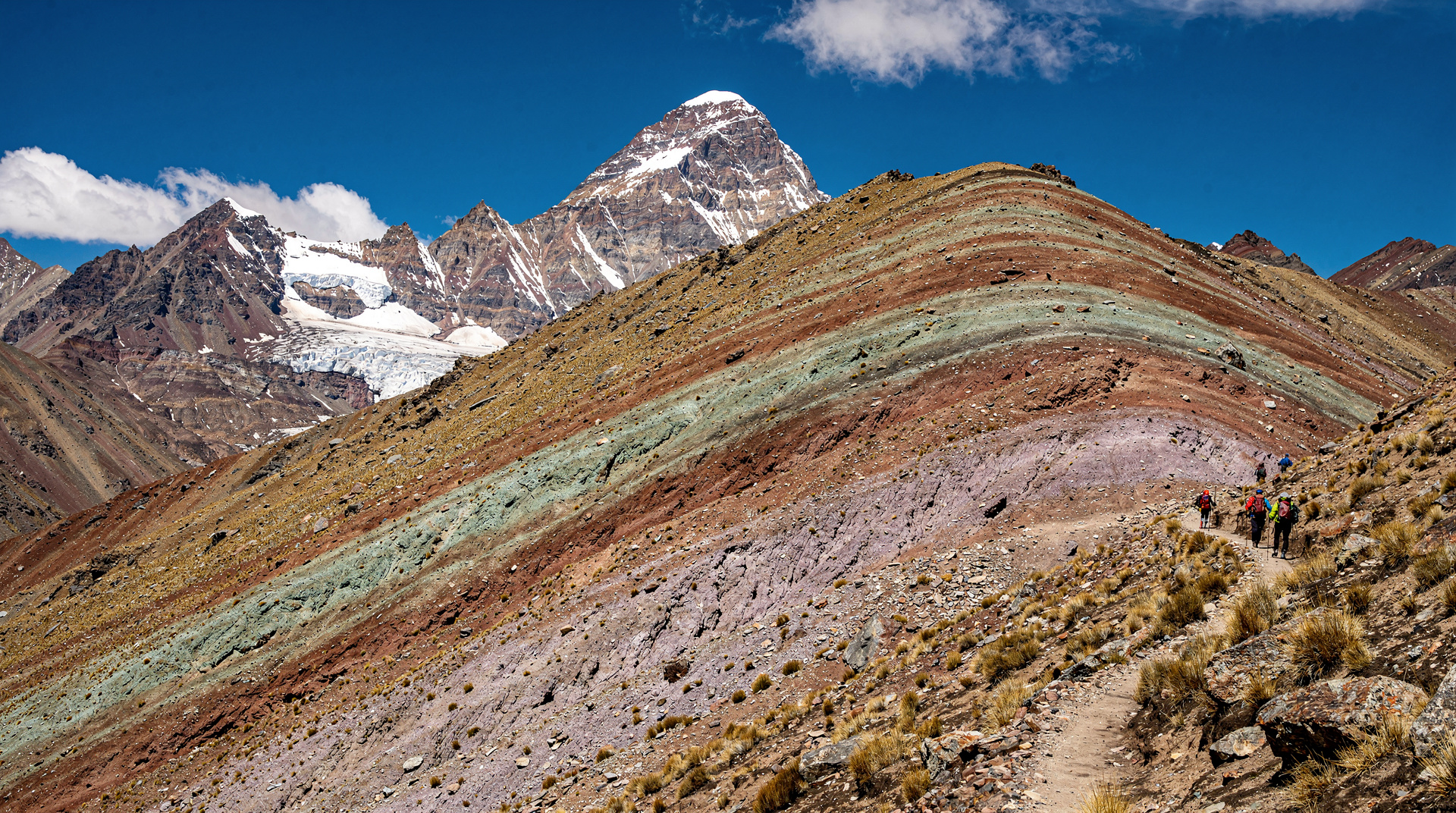
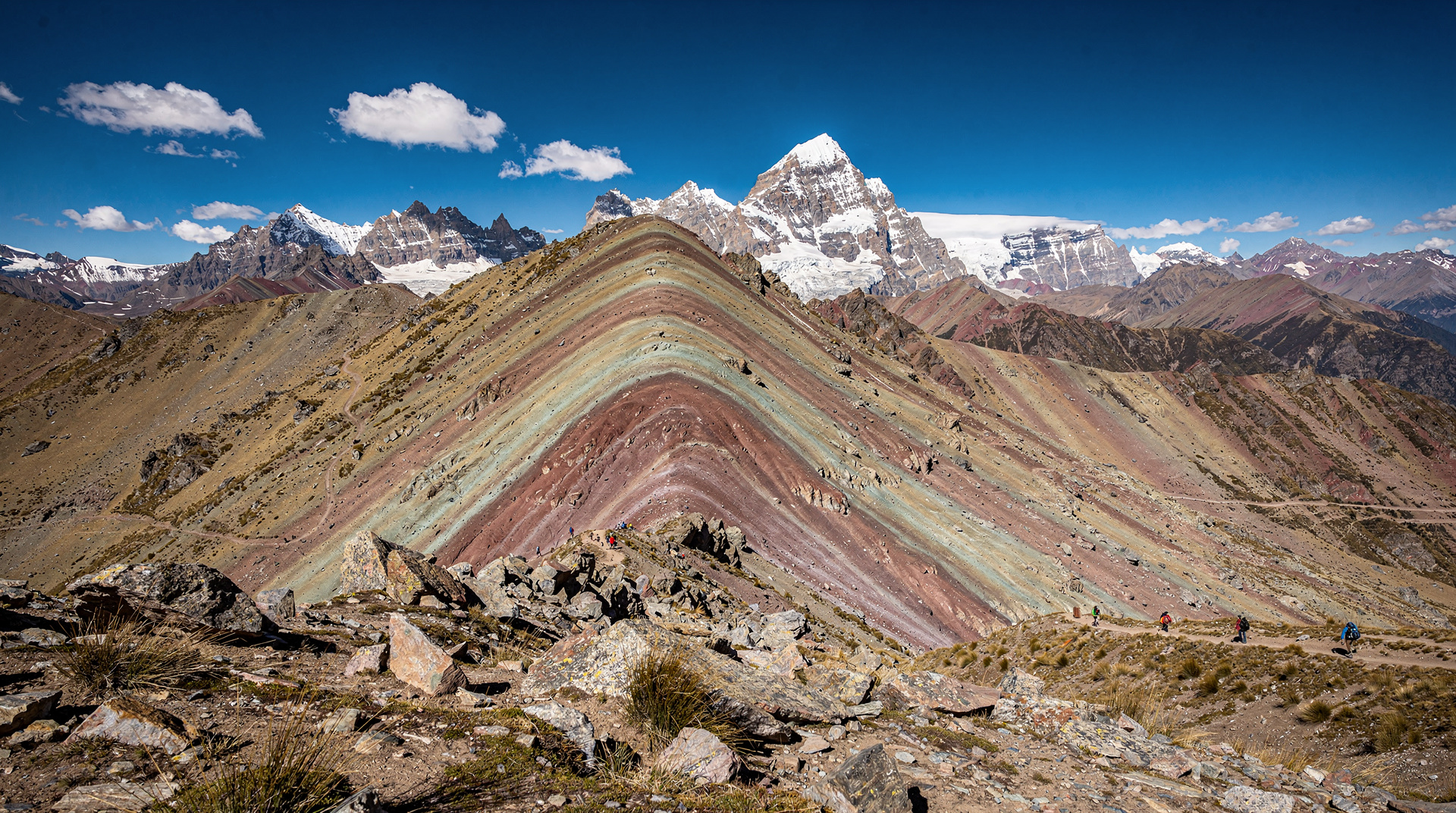
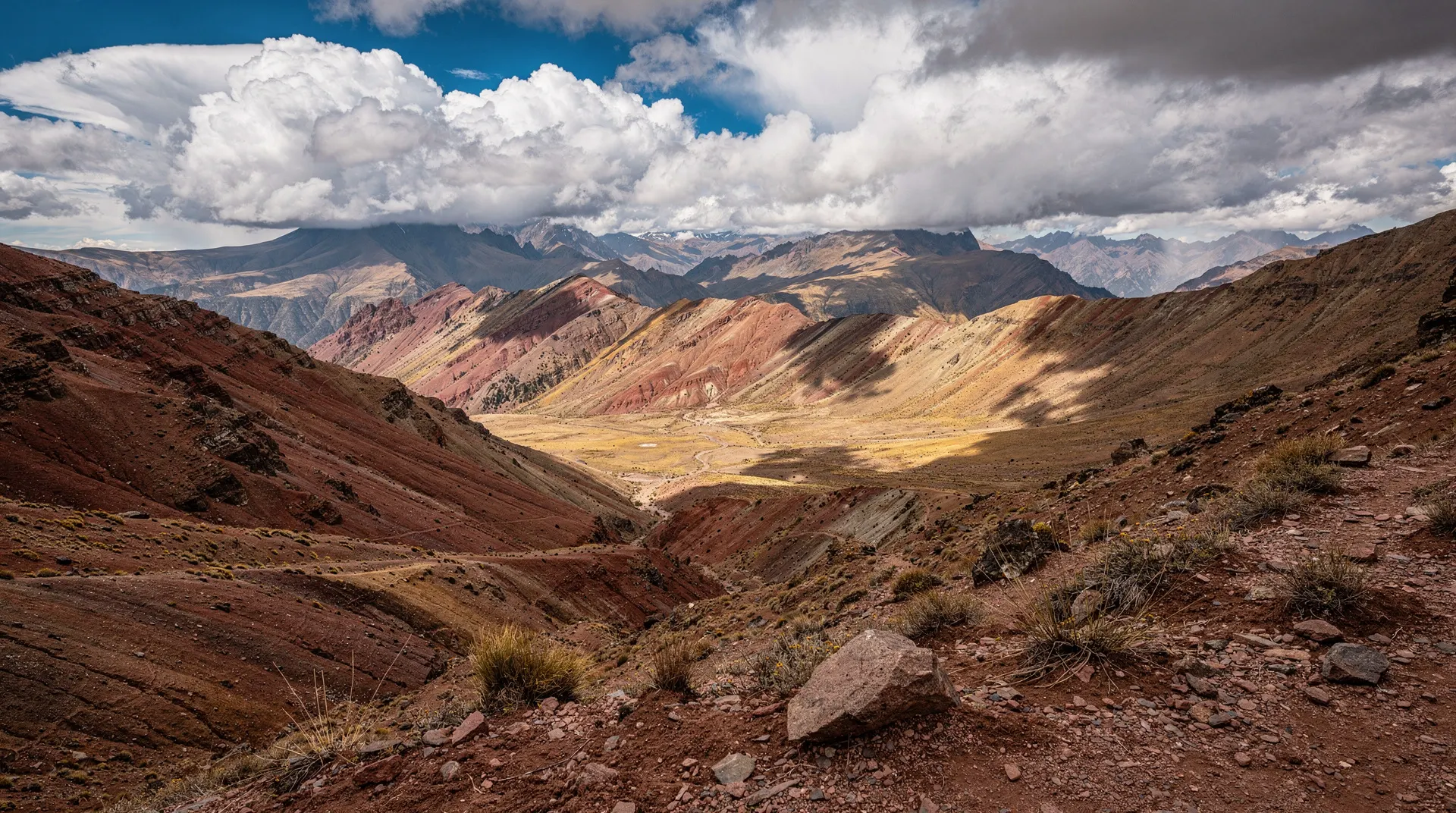
The Red Valley (Valle Rojo) sits in a shallow depression on the far side of the Vinicunca ridge at approximately 5,050 m. Its floor and slopes are coloured deep iron-oxide red from mineral deposits, creating a monochrome crimson landscape that looks almost Martian in quality. In clear conditions with morning light, the combination of the multi-coloured Vinicunca face on one side of the ridge and the stark red valley on the other is among the most visually striking landscapes in the Cusco region.
This guide explains how to reach the Red Valley, the physical requirements for doing so, and whether the ATV alternative makes the experience accessible to a wider range of visitors.
| Where | Far side of the Vinicunca ridge, ~5,050 m |
| Getting there | On foot from the Vinicunca summit (30–45 min) or by ATV from the trailhead |
| Time needed | +1.5–2 hrs on foot; ~1.5–2 hrs by ATV round trip |
| Acclimatisation | 3 nights minimum in Cusco (more conservative than Vinicunca alone) |
| Best time | Dry season (May–Sept), morning light |
What the Red Valley looks like
The geological mechanism is the same as at Vinicunca: different minerals exposed in the high-altitude Andean landscape create visible colour bands. The Red Valley’s dominant mineral is iron oxide — the same rust-red compound that colours everything from Peruvian terracotta to the canyons of the American Southwest. Here it covers the valley floor, the surrounding slopes, and several hundred metres of ridgeline with an almost uniform deep red that has only minor variations from orange-red to burgundy depending on the specific mineral composition at each point.
There is no vegetation at 5,050 m — the altitude is too high and the temperatures too extreme for most plant life beyond occasional tough grasses and lichen. The absence of green creates a starkly monochrome landscape that many visitors find more dramatically beautiful than the multi-coloured Vinicunca face: simpler, more concentrated, and more alien-looking.
The contrast in a single day — ascending to the Vinicunca viewpoint with its bands of colour, then crossing the ridge into the red monochromy of the valley — is the primary appeal of the combined experience.
Reaching the Red Valley on foot
From the main Vinicunca summit viewpoint at 5,200 m, a trail continues southward over the ridgeline and descends into the Red Valley. The crossing gains about 50–100 m over the ridge before dropping to the valley floor at approximately 5,050 m. One way from the summit takes about 30–45 minutes depending on pace and altitude state.
Important: This extension is not part of the standard Rainbow Mountain day trip. Most operators schedule their Vinicunca visits with barely enough time for the main viewpoint — the vehicles typically wait below and the group has a fixed return time. If you want to include the Red Valley on foot, you must:
- Confirm with your operator before booking that Red Valley time is included in the schedule.
- Verify that the guide knows the Red Valley route and is willing to extend.
- Be genuinely honest with yourself about your physical state at the Vinicunca summit — if you are already exhausted or experiencing more than mild altitude symptoms at 5,200 m, the Red Valley extension is too much. Getting down is more important than seeing more.
For a combined Vinicunca + Red Valley hiking day, allow at least 5–6 hours total on the mountain (versus the standard 3–4 hours for Vinicunca alone). This is a genuinely demanding day above 5,000 m.
The ATV option
A Rainbow Mountain and Red Valley ATV tour offers an alternative way to reach both viewpoints. Quad bikes (ATVs) depart from the Cusco Punku trailhead at approximately 4,300 m and ride up a track along the Vinicunca ridge, with stops at viewpoints that cover both the main Vinicunca face and the Red Valley.
The ATV route covers approximately 10–12 km round trip and takes 1.5–2 hours including stops. No prior experience with ATVs is required; the guides ride ahead and set the pace. The bikes are typically well-maintained Chinese-manufactured ATVs suitable for the terrain; the track is rough and the altitude means reduced engine performance.
Who this suits: Visitors who want to see both landscapes but whose fitness or altitude tolerance makes the full hiking extension impractical. The ATV approach means you spend less time walking at 5,000+ m while still reaching viewpoints that overlook the Red Valley. It also suits visitors who want the physical experience of riding through a high-altitude Andean landscape as part of the experience itself.
Honest limitations: The ATV viewpoints are not the same as standing in the Red Valley on foot — you see it from above rather than from within. The riding is bumpy; if you have back problems or are susceptible to motion sickness, the combination of altitude and rough track can be uncomfortable. The engine noise and group logistics of an ATV tour are a different experience from the quiet of the hiking trail.
Altitude at the Red Valley
The Red Valley floor and approaches are at approximately 5,000–5,100 m. This places the entire Red Valley experience in a category where even experienced high-altitude travellers are operating at reduced capacity. At 5,000 m, the available oxygen is approximately 53% of sea-level concentration.
Minimum acclimatisation for the Red Valley: At least 3 nights in Cusco (3,400 m) before attempting any Red Valley route. This is more conservative than the 2-night minimum for the standard Vinicunca hike, because the Red Valley extension adds additional time and effort above 5,000 m.
Altitude symptoms at this elevation can escalate more rapidly than at 4,000–4,500 m. Watch carefully for: worsening headache that does not improve with rest and water, nausea, dizziness, or any loss of coordination or clarity of thought. Any of these beyond mild should prompt immediate descent rather than continuation.
The full altitude sickness guide and the Rainbow Mountain altitude tips guide both apply directly to the Red Valley.
Photography in the Red Valley
The Red Valley photographs most dramatically with:
Morning light (8–10 am): The low-angle sun from the east creates shadows that enhance the texture of the red mineral landscape. In flat midday light, the valley looks pale and washed out; in directional morning light the red is deep and vivid.
Clear sky: The monochrome red landscape benefits enormously from the contrast of a blue sky. In cloud, the valley loses much of its visual impact.
Wide angle and panoramic compositions: Unlike Vinicunca, where the single concentrated face demands a telephoto or standard focal length, the Red Valley works better with wide-angle coverage that shows the full extent of the red bowl and ridgeline.
No editing required: Unlike Vinicunca images which are routinely heavily edited for saturation, the Red Valley’s natural iron-oxide red is vivid enough in ideal conditions to photograph accurately without significant post-processing. This is not a small thing — returning home with photographs that represent what you actually saw is more satisfying than edited versions that surprise you later.
Combining the Red Valley with the rest of the trip
The Red Valley makes most sense as part of an extended Vinicunca day for visitors who are well-acclimatised and specifically want the full landscape experience. For the majority of visitors, the standard Vinicunca rainbow mountain day trip without the Red Valley extension is the right balance of effort and experience.
Those with more time and altitude tolerance might consider: Palccoyo on day one (easier introduction to the high-altitude rainbow mountain landscape), a rest day, then Vinicunca with Red Valley extension on day three. This structure allows genuine acclimatisation between the two high-altitude days and gives you both the panoramic three-ridge view and the concentrated face-plus-valley combination across two separate experiences.
If you prefer to go on foot and keep the logistics simple, a guided day trip to the striped mountain from Cusco is the usual starting point; ask the operator about the Red Valley extension before you pay. For the gentler first day described above, a full-day outing to the quieter Palccoyo ridges is an easy way to meet the high-altitude landscape before committing to the harder route.
For a full understanding of the choices in the Rainbow Mountain region, the Vinicunca vs Palccoyo comparison guide covers the main decision point and the Ausangate trek guide covers the multi-day extension if you want to go deeper into this part of the Andes.
Practical summary:
- Red Valley altitude: ~5,050 m
- Route from Vinicunca summit: 30–45 min each way; trail continues over ridge
- ATV option: ~1.5–2 hours from trailhead, includes Red Valley viewpoints
- Acclimatisation: minimum 3 nights in Cusco before attempting
- Best conditions: dry season (May–September), morning light, clear sky
- Physical requirement: well-acclimatised, no active altitude symptoms at Vinicunca summit
The colour science in plain language
It is worth spending a moment on why the Red Valley is red — not because the geology is complicated, but because understanding it makes the landscape more interesting rather than just more photogenic.
The dominant colouring agent at the Red Valley is iron(III) oxide, commonly known as haematite or rust. When iron-containing rocks are exposed to oxygen and water — the same process that turns a car body brown — they produce iron oxide as a weathering product. In the high-altitude, high-UV environment of the Vilcanota range, this process has been occurring across exposed rock faces for millennia. The Andean geological uplift — which has been raising these mountains at a rate of several centimetres per century — continuously exposes fresh rock to weathering, which continuously produces new iron oxide colouring.
The particular intensity of the red at the valley site reflects the high iron content of the local geology: these rocks were formed in conditions that concentrated iron minerals before the uplift began. The colour is not a surface coating but runs through the rock to depth — the cliff faces show the same deep red where erosion has cut fresh cross-sections.
At Vinicunca, multiple minerals create multiple colours — the yellow from iron sulphide (pyrite weathering to goethite), the purple from manganese oxides, the green from chlorite. The Red Valley’s dominance by a single mineral gives it its monochrome character. Two landscapes created by the same geological process — Andean uplift exposing ancient mineral deposits — but producing completely different visual effects depending on which minerals dominate at that specific location. The planet making art, without any particular intention of doing so.
One last practical note on departure timing
For anyone adding the Red Valley as a hiking extension to the Vinicunca summit, the departure time from Cusco matters more than for the standard Vinicunca day trip. You will need at least 30–45 minutes extra on the mountain above the Vinicunca viewpoint. The group vehicle typically has a fixed return departure time — if you do not communicate clearly with your guide that you intend the Red Valley extension and confirm it is feasible within the day’s schedule, you risk either rushing the Red Valley visit uncomfortably or missing the vehicle back.
Confirm the Red Valley extension is included in the schedule before you book. The best operators build it in explicitly; others can accommodate it with advance notice; some simply do not run long enough days for the extension to be possible safely. This is a booking question, not an on-the-day negotiation.
Group size and pacing on the extension
Because the Red Valley extension is not part of the fixed schedule most tours run, the group dynamics are worth thinking about before you commit. If several members of your tour group want to continue while others prefer to descend directly, a good guide will split responsibly — one assistant guide or the main guide continuing with the extension group while the rest descend with clear instructions to the vehicle.
Confirm with the operator in advance that this split is possible rather than assuming it; some smaller operators run with a single guide and cannot safely divide the group at 5,200 m. Solo travellers and couples generally find it easier to arrange the extension informally with a guide on the day, since there is no need to coordinate a larger group’s preferences.
Who should skip the Red Valley extension
Not every visitor who reaches the Vinicunca summit should continue to the Red Valley, and being honest about this matters more than the appeal of “seeing more.” If you have any active altitude symptoms at the Vinicunca viewpoint — headache beyond mild, nausea, dizziness, or noticeable difficulty catching your breath at rest — the correct decision is to descend with the group, not to push another 30–45 minutes further and 100 m higher across the ridge.
First-time visitors to altitudes above 4,500 m, visitors who have not slept at least three nights in Cusco, and anyone travelling with young children or older relatives with unknown altitude tolerance are all better served skipping the extension and enjoying the Vinicunca summit fully rather than rushing an add-on that adds real risk for a still-uncertain reward. The Red Valley is not going anywhere; a future, better-acclimatised trip is a perfectly reasonable way to see it.
What the ATV alternative feels like in practice
For visitors who choose the ATV route over hiking, a few practical notes make the experience less surprising. The vehicles are automatic and simple to operate, but the track surface — loose gravel and rock at altitude — transmits considerably more vibration and bump than a paved road would suggest; a full face of dust is common if you ride behind another vehicle, so a buff or scarf over the nose and mouth is a genuinely useful addition beyond what most packing lists mention.
Riding gloves are provided by most operators but bringing your own thin gloves is more comfortable, since the cold at 4,300 m-plus makes bare-hand throttle control unpleasant within minutes. The guides typically stop every 20–30 minutes at viewpoints, which gives time to warm up hands and take photographs without the engine noise — worth using deliberately rather than rushing through, since the ATV format can otherwise feel like a series of brief stops between loud rides rather than time actually spent absorbing the landscape.
Planning around the Red Valley
The Red Valley works best when it sits inside a sensible acclimatisation plan rather than being squeezed into the first days of a trip. The Cusco acclimatisation plan lays out how to spend your first days at altitude, and the guide to Cusco altitude versus the Sacred Valley explains why sleeping lower first can make the high days easier. If you are still deciding how long to stay, how many days in Cusco helps you leave room for a rest day before a high-altitude outing.
If you are weighing the different rainbow-coloured destinations, the Rainbow Mountain complete guide and the Vinicunca vs Palccoyo vs Ausangate comparison put the Red Valley in context. Visitors who like the idea of quieter terrain may also enjoy the Palccoyo rainbow mountain guide, which suits a gentler first day.
Cold, dry air and strong sun are part of the experience here, so the what to pack for Cusco checklist is worth reading before departure. Coca tea and other traditional remedies are covered in coca tea and altitude remedies, and for the wider picture of a full itinerary, the three-day Rainbow Mountain itinerary shows one way to pace the days.