A week in Cusco: my honest trip report, day by day
Seven days is the amount of time I’d recommend to almost anyone doing Cusco, the Sacred Valley and Machu Picchu properly, without the rushed feel of a 3- or 4-day version. Here’s exactly how the week unfolded, day by day, including the parts I got wrong.
| Where | Cusco city, Sacred Valley, Machu Picchu, Rainbow Mountain |
| Time needed | 7 days, 6 nights minimum |
| Cost | Around S/4,000–4,500 all-in (excl. international flights) |
| Best time | May–September for the driest trails |
| Pace | 2 acclimatisation days, then one major activity per day |
Day zero: land, eat nothing, sleep
I had read every acclimatisation article I could find in the weeks before the trip. All of them said the same thing: arrive slowly, drink water, rest the first day. None of them quite prepared me for how concrete the altitude feels when you step off the plane at Alejandro Velasco Astete Airport and your legs seem to belong to someone else.
Cusco sits at 3,400 metres above sea level. That is not abstract. It is roughly twice the height of the highest peak in the Alps that most British walkers have ever climbed. The air pressure is noticeably lower, and your lungs, which have spent their entire lives at sea level, are confused.
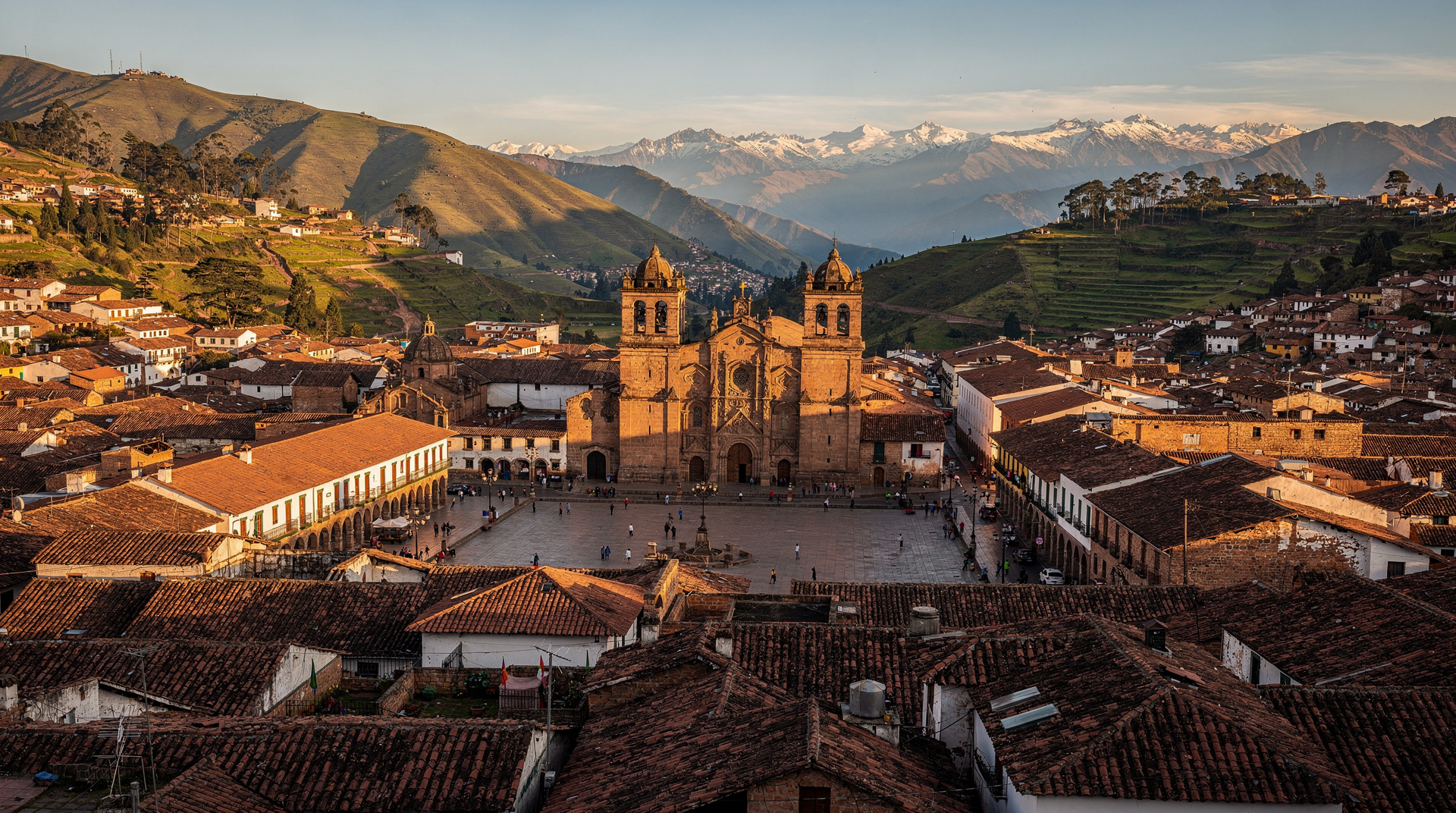
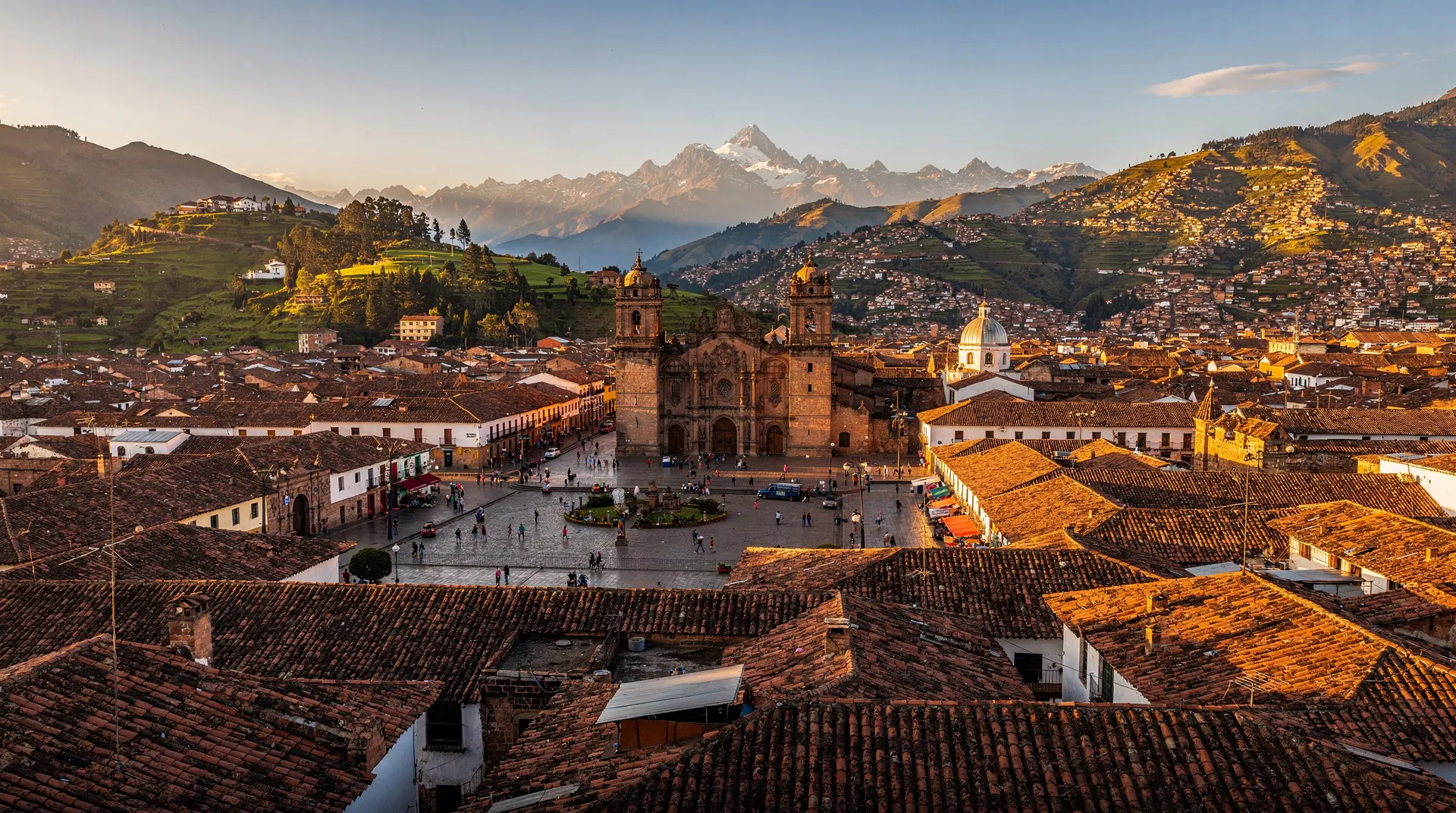
I took a taxi to my hotel in San Blas — negotiated to 20 PEN from the rank outside arrivals, which felt fine — and lay on my bed staring at the ceiling for an hour. Then I went out for a bowl of soup, drank two mugs of coca tea, walked slowly around the Plaza de Armas for twenty minutes, and went to bed at nine in the evening. It was, objectively, a very dull day. It was also the right call.
Day one: the city, slowly
The headache had gone by morning. I walked from San Blas down to the centre — a gentle downhill that nonetheless left me breathing harder than it should — and spent the morning getting oriented rather than ticking sites.
The historic centre of Cusco repays this kind of wandering. Hatunrumiyoc Street, a few minutes from the Plaza, has the famous 12-angled Inca stone fitted into the wall of what is now the Archbishop’s Palace. Tourists line up to photograph it, and I confess I did too, but what stays with me is the stretch of Inca wall that runs for a hundred metres before and after it — precise, unmortered, entirely without modern equivalents.
I found the Qorikancha temple in the afternoon. The colonial church of Santo Domingo was built directly on top of it in the 17th century, and the surviving Inca walls beneath the cloister are extraordinary — curved gold-plastered stone that was once sheathed in actual gold sheet, pried off by the Spanish. The 15 PEN entry fee is the best value in the city.
Dinner at a restaurant on Plateros Street: lomo saltado and a pisco sour. The altitude means one drink has the effect of two. I was in bed by ten.
Day two: Sacsayhuamán and the smaller sites
By day two I felt genuinely acclimatised, or at least competently functional. The Boleto Turístico — the combined ticket that covers most Inca sites around the city — costs around 130 PEN for the partial circuit. It covers Sacsayhuamán and the three smaller sites along the road to Pisac: Tambomachay, Qenqo, and Puca Pucara.
Sacsayhuamán is fifteen minutes uphill from the Plaza. The walk from the city to the site gains about 200 metres of altitude and I took it slowly, stopping twice. The site itself — zigzag battlements of monolithic limestone blocks, the largest weighing around 300 tonnes — is on a different scale from anything in the city. Stand on the upper platform on a clear September morning and you have the entire city of Cusco below you and the Andes above.
The three smaller sites are easier reached by taxi (around 5 PEN to the first, then walk between them). Tambomachay, the ritual water complex, is genuinely beautiful. Qenqo, the carved limestone outcrop used for ceremonial purposes that are still debated by archaeologists, is the strangest. I spent a long time there and had it almost entirely to myself.
A half-day city tour covers these sites with a guide who can explain what you are actually looking at — which, if Inca history is new to you, makes a significant difference to how much you take in.
Day three: Sacred Valley
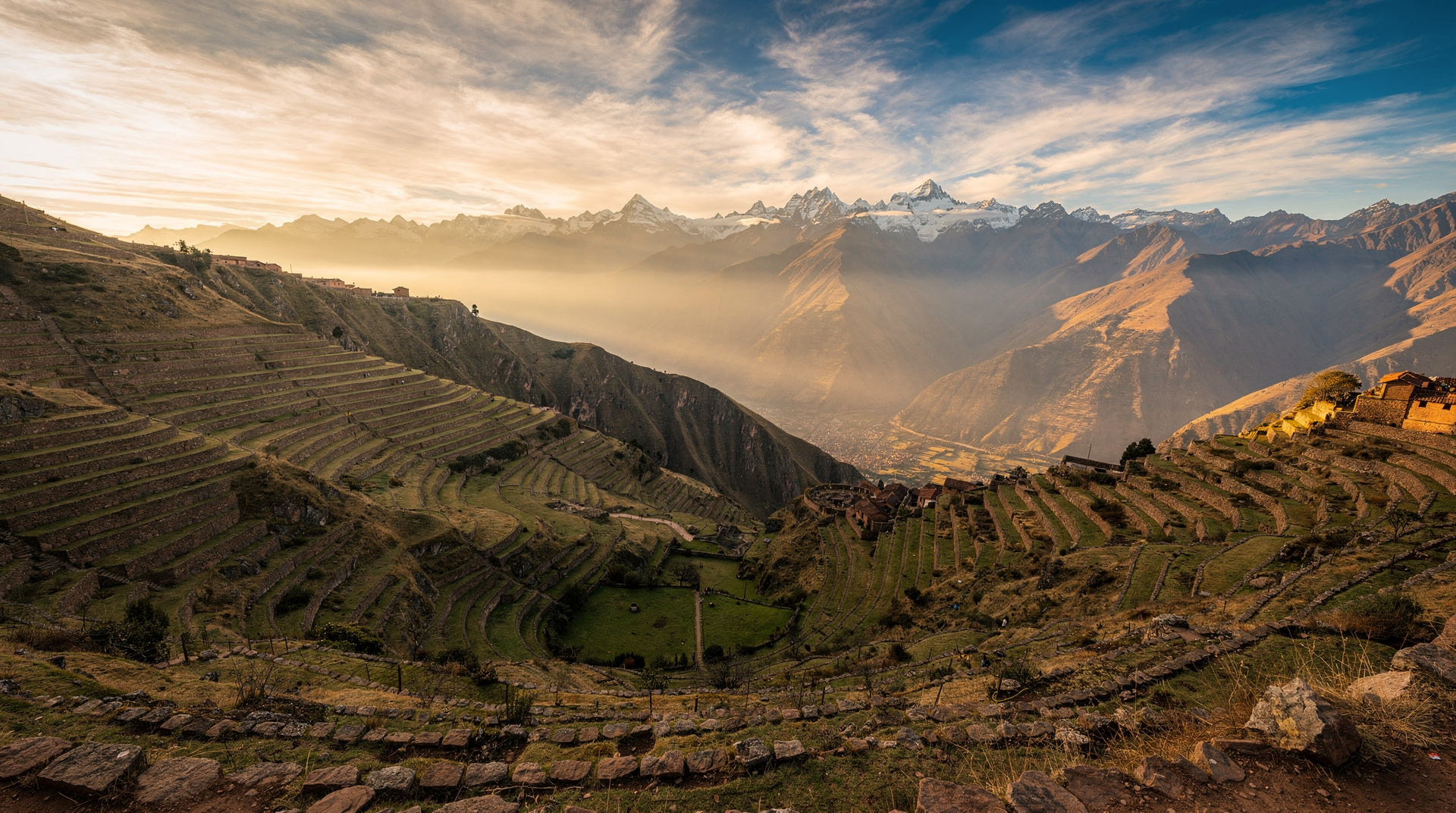
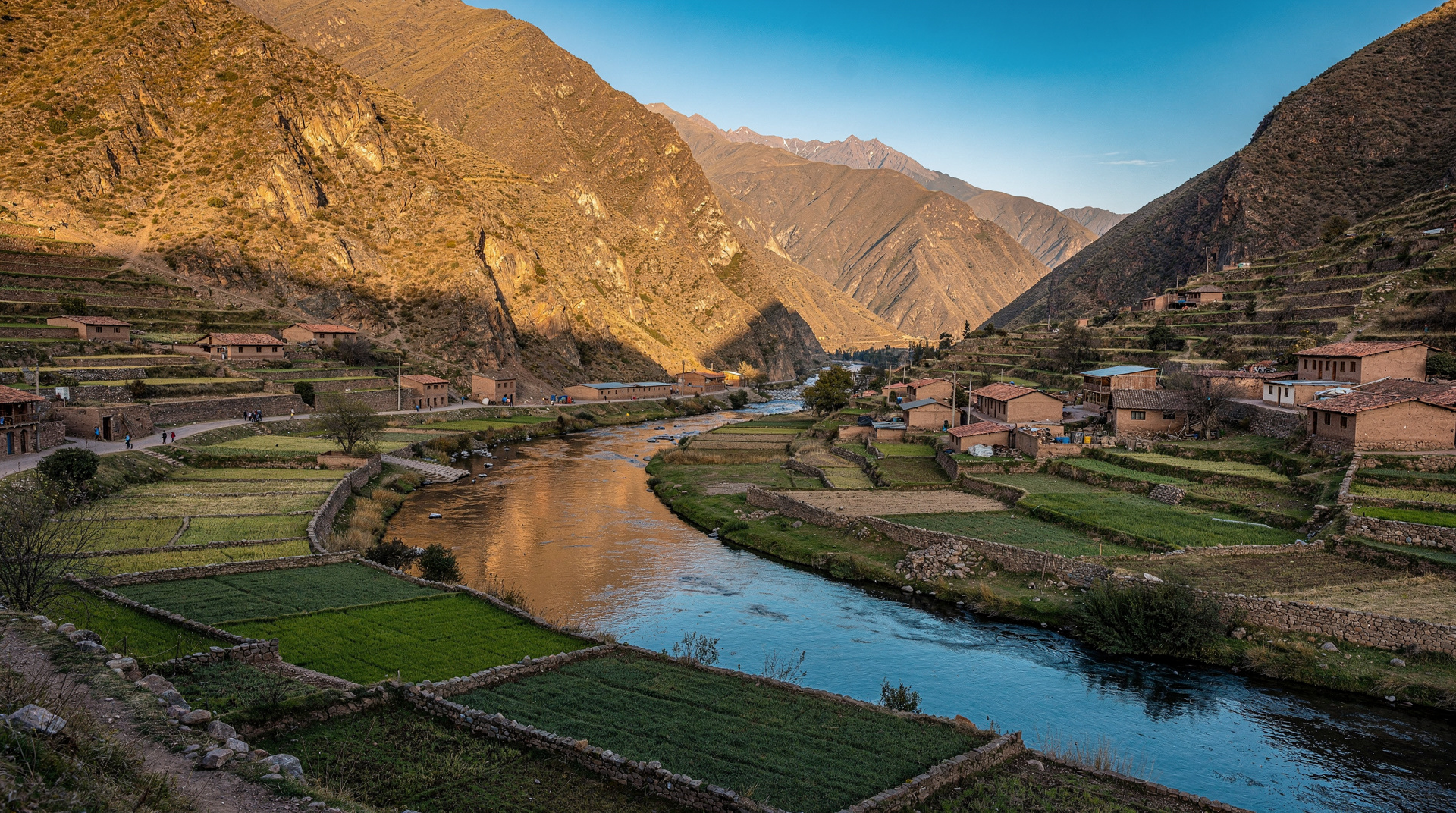
On day three I joined a day trip into the Sacred Valley — the river valley that runs northwest from Cusco towards Ollantaytambo, at altitudes between 2,800 and 3,000 metres. The extra 400 metres of altitude drop is not incidental: you breathe more easily, you sleep better, and the landscape opens into something wider and less immediately urban.
The tour picked up at 8 a.m. and went first to Pisac, where the Sunday market was in full swing — a mixture of genuine local commerce in the lower section and the expected tourist textiles higher up. The terraced Inca ruins above the village are dramatic and almost always underestimated by visitors who stay at market level.
After Pisac the route continued to Maras (the salt pans that have been producing salt since before the Inca, running down a hillside in white-pink terraces), then Moray (the circular agricultural terracing, thought to be an Inca crop laboratory taking advantage of temperature gradients between levels). Both are worth the time.
The day ended in Ollantaytambo, where the fortress terraces rise in near-vertical steps above the town and the living Inca town grid below them is still inhabited. I had a beer at a café overlooking the ruins at dusk and briefly considered abandoning my life and staying permanently.
Day four: Machu Picchu
I had booked the train ticket and entrance separately, in advance — booking the train the week before the trip was already tight for September, which is high season. The train from Ollantaytambo to Aguas Calientes takes about an hour and forty minutes through increasingly dramatic river gorge scenery, and arrives into what is effectively a tourist town at the base of the site.
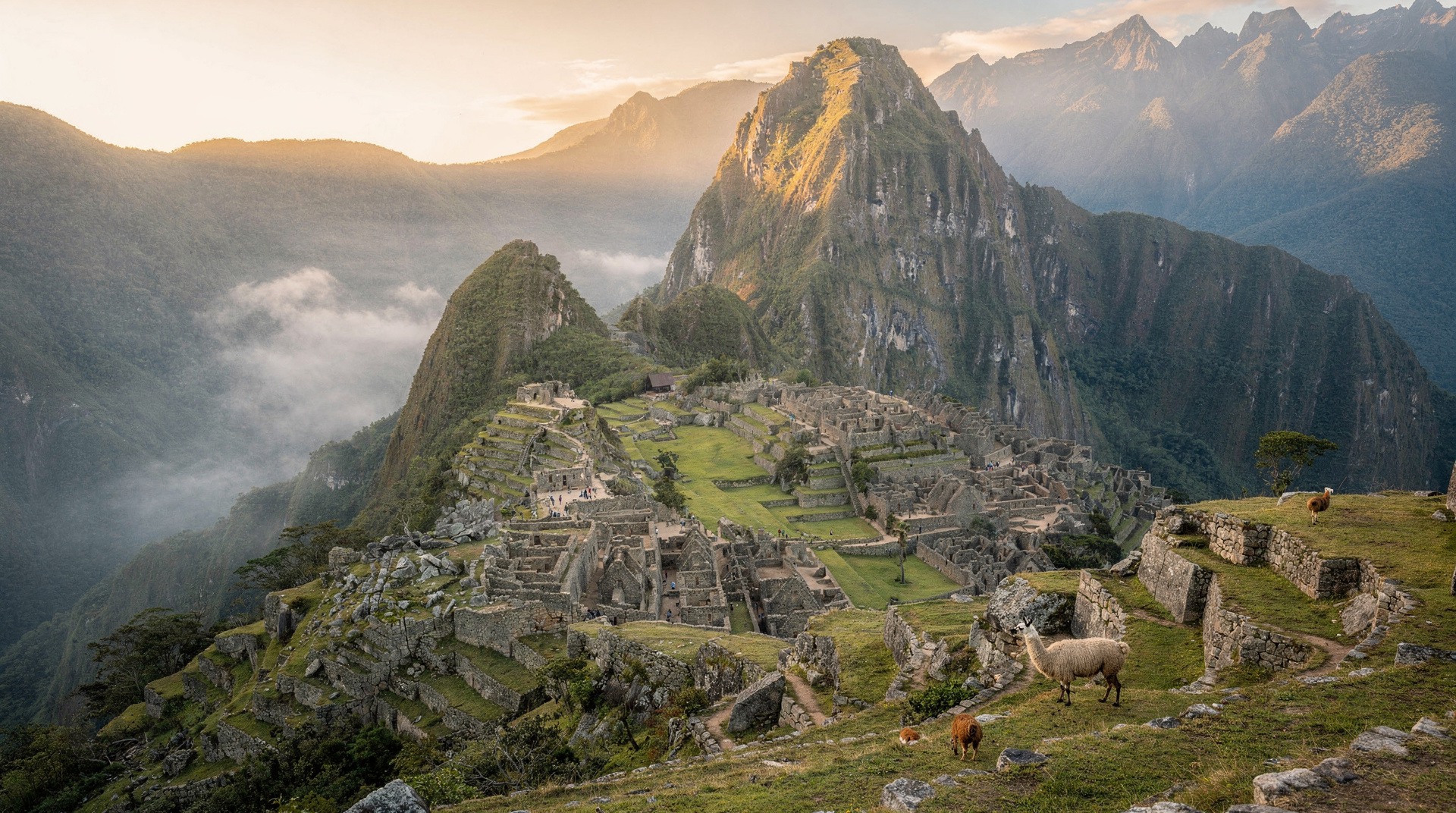
The bus from Aguas Calientes up to the ruins takes twenty-five minutes on a switchbacking road. At the entrance gate, in the first light of a clear morning, the site opened before me and I stood there for what must have been two minutes without moving, which is not my usual mode of operation.
Machu Picchu at 2,430 metres feels like sea level after Cusco. The air is easier, the vegetation is tropical rather than high Andean. I walked Circuit 3 — the lower route that takes in the main architectural features — and then looped back for a second pass through the Temple of the Sun and the Intihuatana stone.
The site fills up between 10 a.m. and 2 p.m. I arrived on the first bus and left on the 1 p.m. train back to Ollantaytambo. The day trip by train from Cusco is genuinely one of the great day trips in world travel; I say this as someone who has now done it twice.
Days five and six: the city in depth
I used days five and six to fill in what I had skipped in the first half of the week.
Day five was devoted to San Blas, the artisan neighbourhood above the Plaza, and the Museo Inka on Huaynabamba Street, which has the most comprehensive collection of Inca artefacts in the city including the famous wooden qero drinking vessels and a dizzying array of textiles. Entry costs around 15 PEN.
Day six I spent at San Pedro market for two hours in the morning — eating breakfast at one of the counters inside, working through the fresh produce stalls and trying to identify native potato varieties by colour alone. I then walked through the neighbourhood behind the market and up towards the Almudena cemetery, which tourists almost never visit and which has an extraordinary layered quality — colonial baroque at the centre, modern niches on the periphery, the whole thing backed by Andean hills.
Day seven: Rainbow Mountain, honestly
I will not pretend the Rainbow Mountain day trip was a comfortable experience. The guided minibus departs Cusco at around 4 a.m. to reach the trailhead at Vinicunca (the mountain itself) before the crowds. The trailhead sits at roughly 4,900 metres and the summit at 5,200 metres — nearly 1,800 metres above Cusco.
I felt the altitude on the ascent in a way I had not felt it all week. My pace slowed to something that an elderly tortoise would have found sympathetic. But the mountain, when the clouds cleared at the top, justifies the discomfort: the mineral-stained slopes in layers of red, ochre, white and green are unlike anything I have seen elsewhere. It looks like a geological sample blown up to the size of a mountain.
I was back in Cusco by 3 p.m. and horizontal on my bed by 3:15. It was the right way to end the week.
What I would do differently
Two things. First, I would have based myself in Ollantaytambo for the first two nights rather than Cusco — sleeping at 2,800 metres rather than 3,400 metres makes the acclimatisation gentler and the first Cusco visit, at day three, feels much easier. Second, I would have bought the Machu Picchu ticket at least three weeks in advance rather than one, especially for any date in the May-September dry season.
For full planning detail, see the how many days in Cusco guide and the 5-day Cusco and Machu Picchu itinerary. A week is the right amount of time to do this properly without rushing.
What the week actually cost
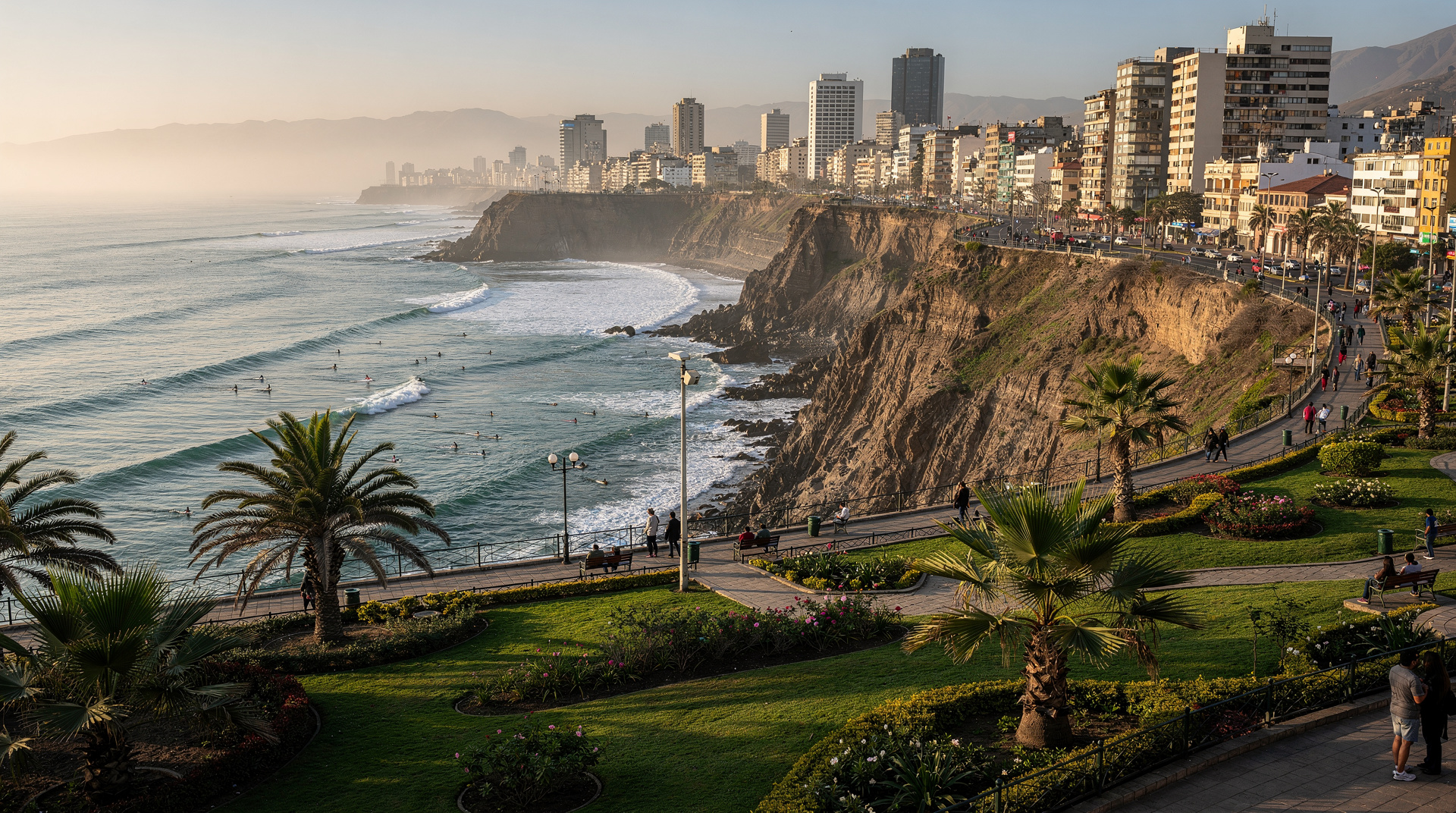
I did not track every sol obsessively, but the broad shape was: accommodation across San Blas, Ollantaytambo and Aguas Calientes averaged around S/100/night; the Machu Picchu day (train, entrance, bus) came to roughly S/550 on its own; the Boleto Turístico partial circuit was S/130; Rainbow Mountain was S/90 for the guided day trip; food across the week ran about S/500 eating well but not extravagantly. The Cusco on a budget guide breaks this down further if you want to trim it, and the Peru trip cost guide is useful if you’re combining Cusco with Lima or Arequipa.
What I’d pack differently next time
Layers mattered more than I expected — mornings in San Blas were cold enough for a fleece, afternoons at Machu Picchu were warm enough for a t-shirt, and Rainbow Mountain at 5,200 metres needed a proper windproof shell. I underpacked sun protection and paid for it with a burnt neck by day three; the sun at altitude is stronger than it feels. The what to pack for Cusco guide has the full list — I’d add “more sunscreen than feels necessary” as the one line I’d underline twice.