Cusco with kids: site by site guide for families
From Cusco: Sacred Valley of the Incas Full-Day Tour
Is Cusco good for families with children?
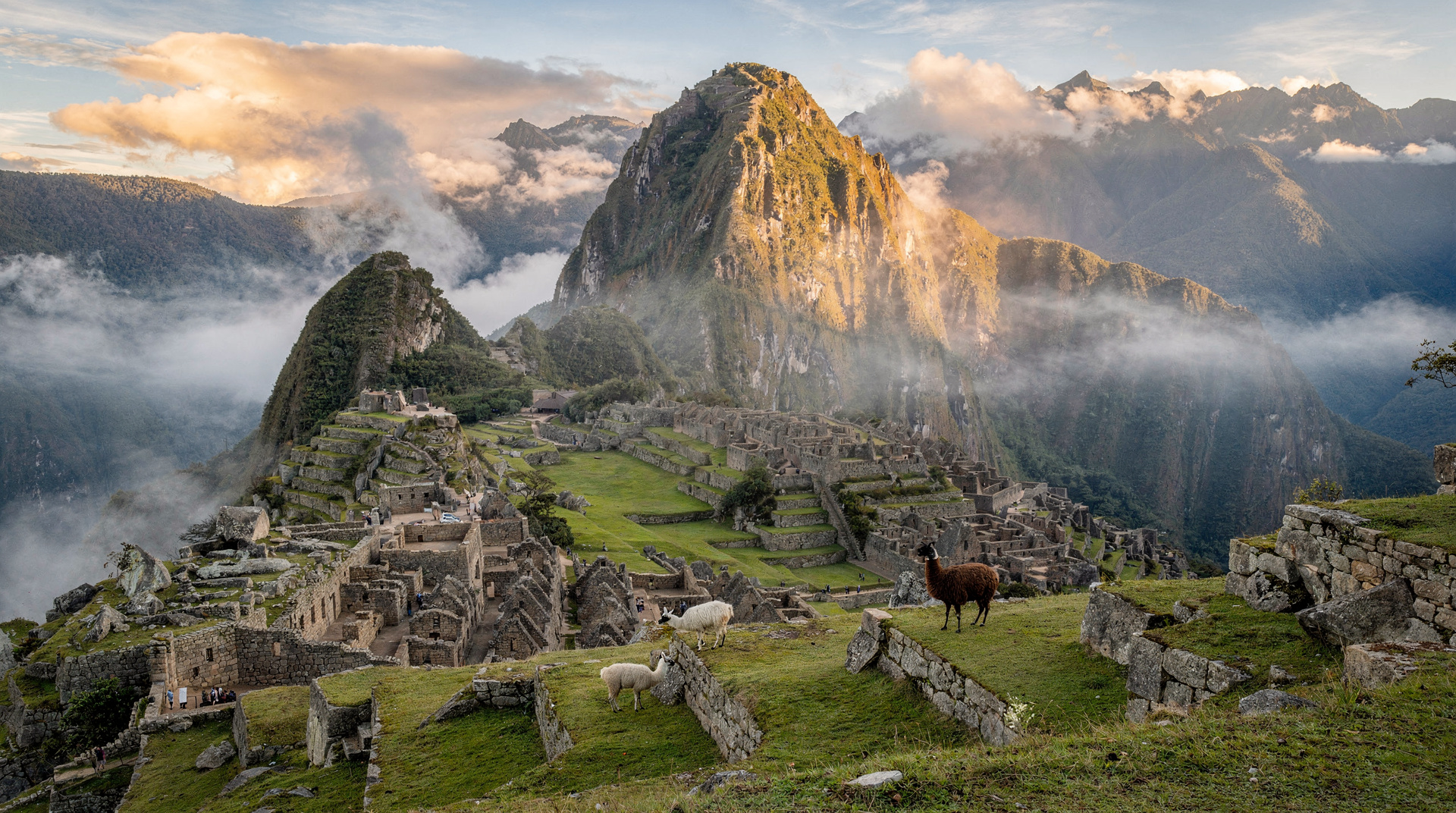
Yes — for children aged 8 and over with proper altitude preparation. The archaeological sites are visually dramatic and age-appropriate; Machu Picchu's llamas reliably enchant younger visitors; and the city's markets, cooking activities, and open-air ruins give children things to do rather than just look at. Under-8s are manageable with extended acclimatisation; under-5s require medical consultation before any trip above 2,500 m.
What family travel in Cusco looks like in practice
The framing question for most parents considering Cusco is not whether the sites are extraordinary — they clearly are — but whether children will actually engage with them, or whether the trip will be a succession of beautiful ruins that adults find enthralling and children find interminable.
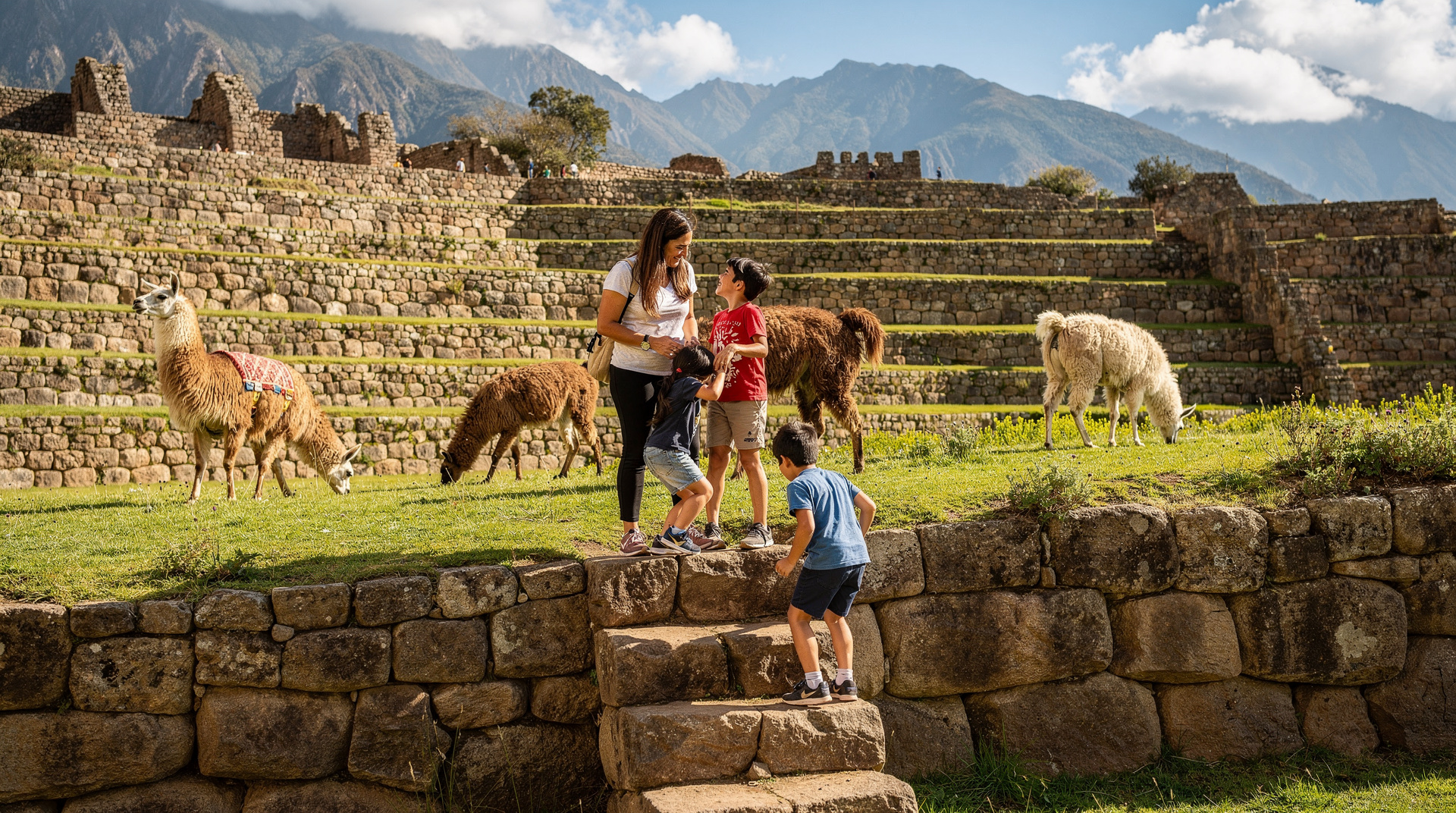
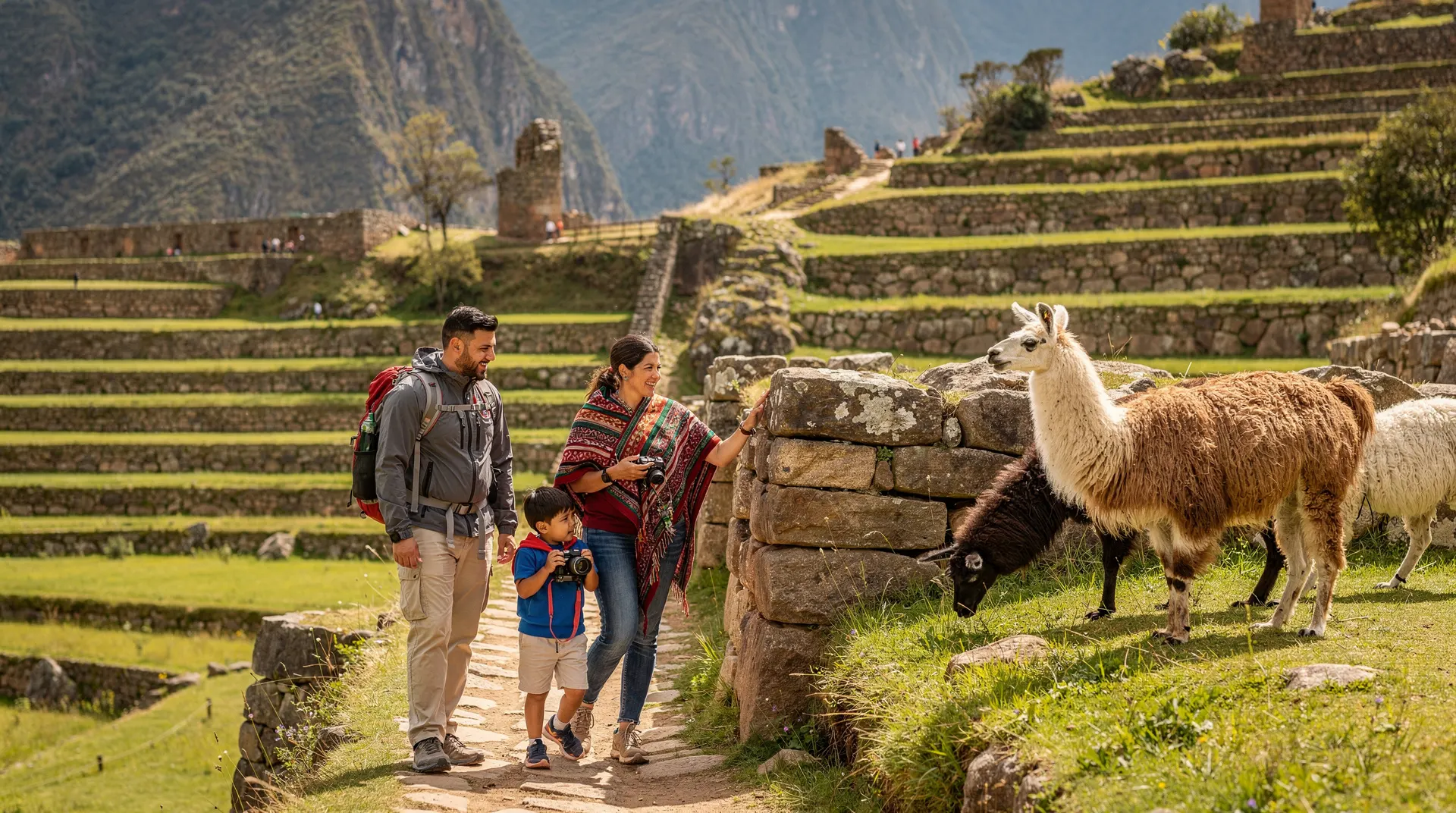
The honest answer, based on the consistent reports of families who have been: the Cusco region is unusually good for child engagement compared to most heritage destinations, primarily because the sites are outdoor, at a human scale (the stones are touchable, the terraces are climbable), and because the combination of architectural mystery and living animals (llamas everywhere) provides a different quality of experience from the distance-and-glass-case indoor museum format.
The challenge — altitude — is manageable with planning. This guide covers both: the sites that work, and the altitude framework that makes them accessible.
| Top site | Sacsayhuamán — open, touchable, scale that works across ages |
| Cost | Child Boleto Turístico ~S/40–70; Machu Picchu child ~S/77 |
| Time per site | 1.5–2.5 hours before fatigue typically sets in |
| Getting around | Taxi for uphill sites (S/8–20); walk on flat ground |
| Best time | May–September, avoiding the wettest months for outdoor sites |
Altitude management: the practical framework for families
Cusco at 3,400 m requires the same core approach for children as for adults, with a few important differences.
Children under 10 may not be able to clearly communicate symptoms of altitude sickness before they become significant. Watch for: unusual irritability or tearfulness, refusal to eat, unusual fatigue at times they would normally be active, persistent headache even with pain relief, and vomiting. The absence of a verbal complaint does not mean absence of symptoms.
The working structure:
- Day 1: Arrive, rest, short walk only. Coca tea (safe for children over 5). No climbs, no hills.
- Day 2: Gentle Cusco centre — Plaza de Armas, Cathedral exterior, short flat walks. Half-day maximum activity.
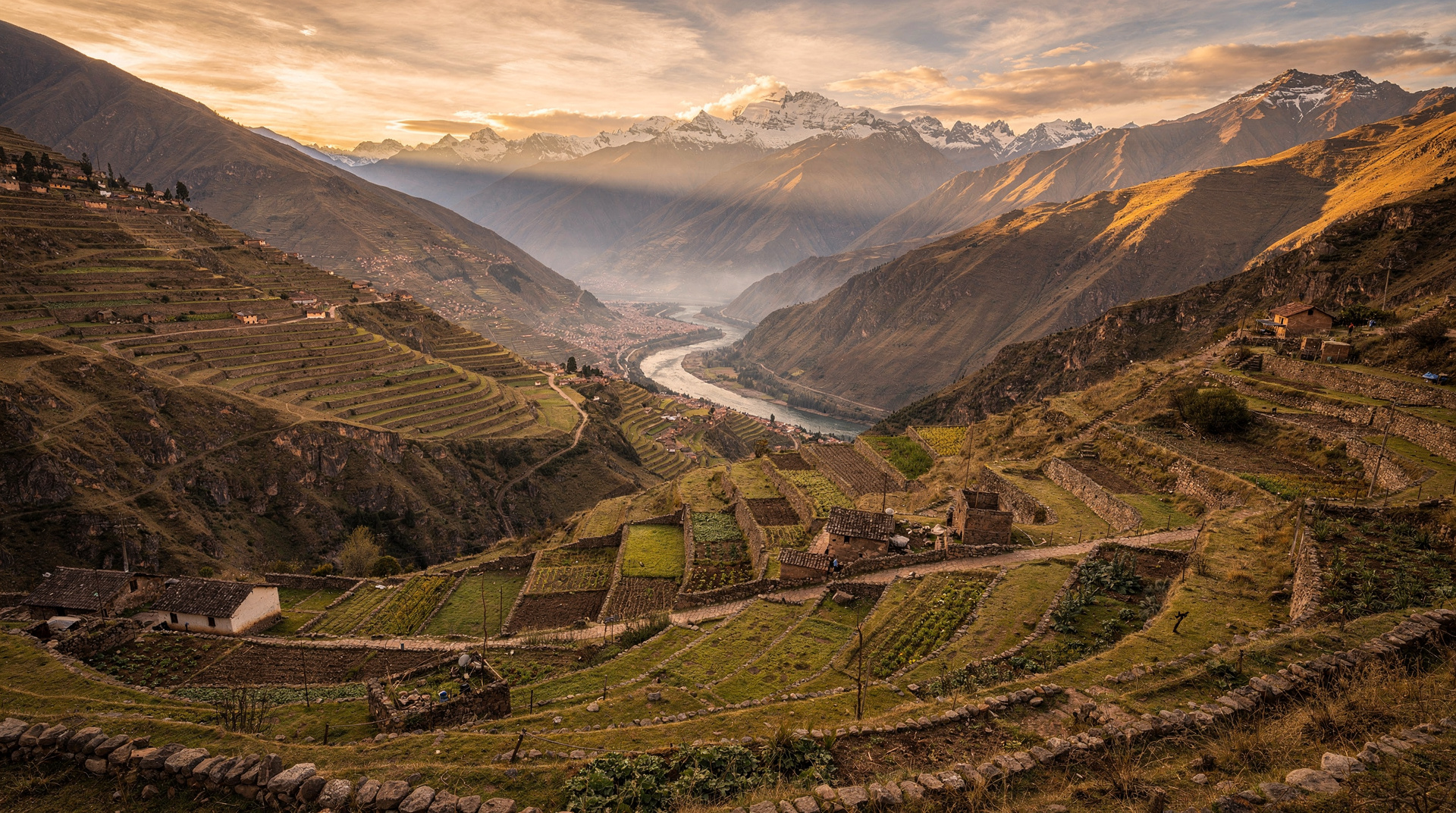
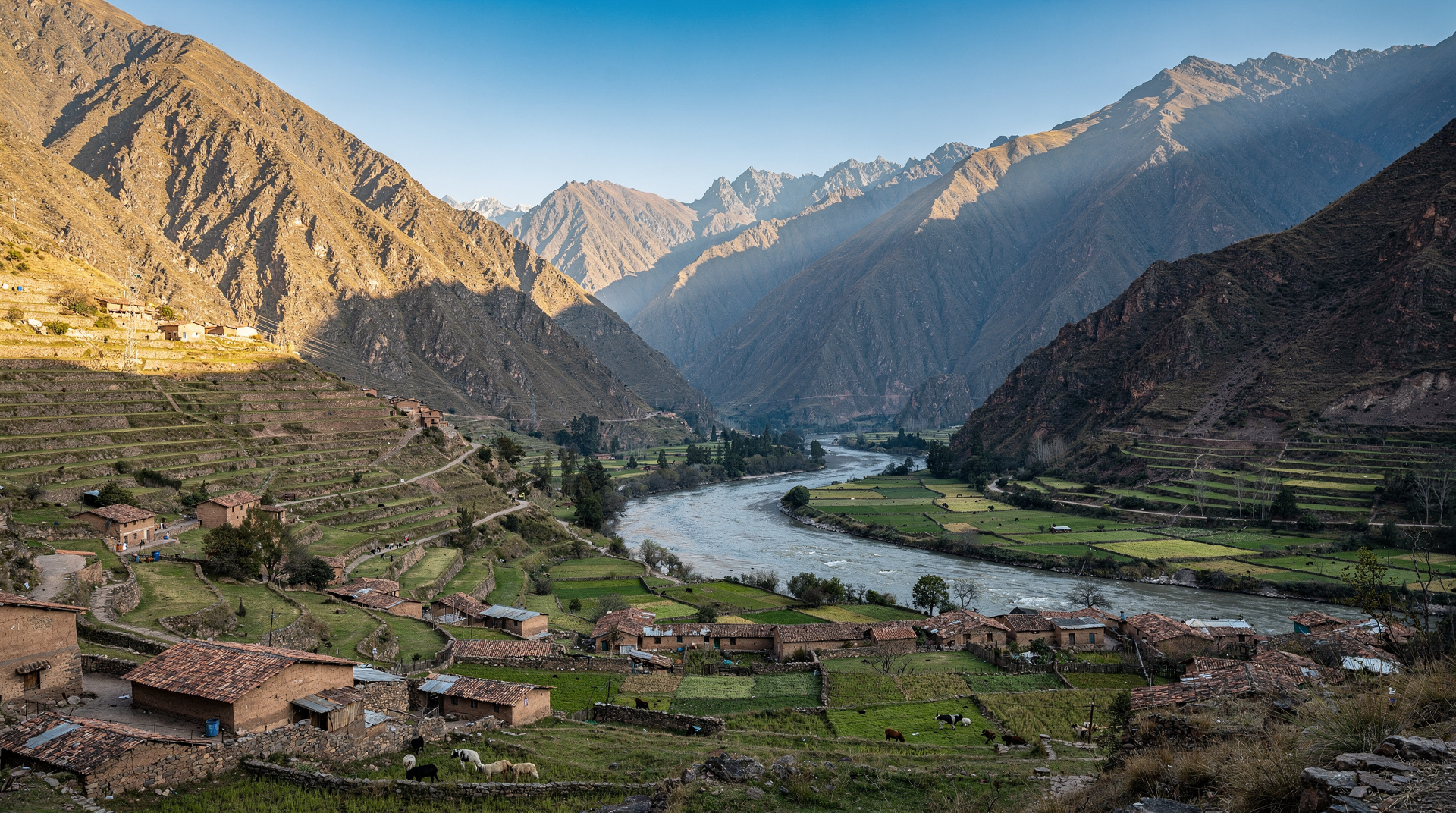
- Day 3: Sacred Valley — lower altitude (2,800–3,000 m) than Cusco, actively helpful for acclimatisation. This is the recommended family day-trip choice for day three.
- Day 4: Cusco sites including Sacsayhuamán — by taxi to the top (10 minutes, S/15–20) rather than on foot from the city.
- Day 5 onwards: Machu Picchu (2,430 m — lowest altitude of the trip, genuinely comfortable once acclimatised).
The altitude sickness guide covers medical preparation including whether altitude medication is appropriate for children (a GP consultation is required — it is not a universal recommendation).
Sites that work for families
Sacsayhuamán
Consistently the top family site in Cusco. The zigzag walls of fitted stone blocks — the largest individual stones weigh up to 200 tonnes and fit together without mortar — create an immediate visual impression of scale that works across ages. The open hilltop setting means children can move freely rather than file quietly through indoor spaces. The path around the main walls has enough variety (viewpoints, a large open ceremonial area, the smaller adjacent site of Qenqo nearby) for 2–2.5 hours of genuine engagement.
The Sacsayhuamán guide covers the historical context and what to look for. Take the taxi up rather than the 45-minute walk from the city with children — save that energy for the site itself.
Pisac market and ruins
Pisac market is the most colourful and sensory-rich market in the Sacred Valley — textiles in every colour, ceramic work, carved gourds, and silver jewellery arranged along the main market street. Older children typically enjoy the shopping interaction; younger children respond to the colours and the bustle. The ruins above the market (separate ticket, part of Boleto Turístico) are extensive terraced sites with good viewing angles over the valley below.
Arrive early — the market peaks around 10–11 am and becomes very crowded on Sundays. An 8–9 am arrival means the market is active but manageable.
Maras salt mines
The several hundred terraced evaporation pools at Maras turn different shades of white, pink and orange depending on the salt crystallisation stage. The visual impact from the viewpoint above the pools is dramatic, the walk along the edge of the active mine is short enough for younger children, and the site is genuinely unusual — children who struggle to engage with standard Inca masonry tend to find the salt mines more immediately interesting because they are still in active use.
Ollantaytambo fortress
The Inca fortress at Ollantaytambo rises on steep terraces above the town. The climable terraces, the dramatic scale, and the active water channels running through the lower site make it one of the best-preserved and most physically engaging archaeological sites in the region. Children with energy tend to climb enthusiastically; the views from the top terraces over the town and the surrounding mountains are outstanding. Allow 2–2.5 hours. The ruins guide covers the context.
A full-day Sacred Valley tour covering Pisac market, Maras and Ollantaytambo is the most efficient family day in the region — all three sites in one structured day at altitude lower than Cusco, with transport provided between.
Moray agricultural terraces
The concentric circular terraces at Moray — believed to have been an Inca agricultural laboratory that created microclimates at different depths — are visually striking from the rim in a way that photographs well and strikes children as deliberately unusual. The circular structure invites the immediate question: what is it for? The honest answer (agricultural research station for different temperature zones) is engaging enough for older children. The walk around the rim is flat and manageable for all ages.
The city itself: non-archaeological experiences
Choco Museo cooking workshops
The chocolate museum near Plaza de Armas runs interactive chocolate-making workshops for children aged 6 and up. These last approximately 2 hours and include making and tasting finished chocolate. A reliable, air-temperature rest-day activity that works for ages 6–14.
San Pedro Market
San Pedro Market’s interior — stalls selling every variety of Andean produce, prepared food counters serving set lunches, and sections dedicated to dried herbs, potions, and Andean folk items — is a sensory experience that most children respond to strongly. The combination of unfamiliar colours, smells, and foods is a genuine engagement rather than an obligation. Keep close to children in the crowded entrance areas; pickpocketing risk is real in this specific area.
The train to Aguas Calientes
The Vistadome train from Ollantaytambo to Aguas Calientes runs through increasingly dramatic cloud-forest gorge scenery over 1.5 hours. Large viewing windows and the changing landscape from highland to jungle make it one of the more actively engaging rail journeys in South America for children. Many families describe this as one of the trip highlights — unhurried and genuinely beautiful.
Sites to approach with realistic expectations
Qorikancha (Temple of the Sun): The most sacred Inca site in Cusco — curved Inca foundation walls with a colonial church built directly on top. Historically fascinating, visually striking in a specific way (the contrast of masonry styles), but primarily appreciated through explanation rather than scale. Teenagers and older children with an interest in history respond well; children under 10 may find the indoor museum sections less engaging. The Qorikancha guide covers what to look for.
The Cathedral interior: Enormous, dark, and densely hung with colonial paintings. Genuinely impressive if you are interested in colonial art and history; difficult for children under 12 who struggle with the “look quietly” format. Worth 45 minutes with older children on a rest day.
Inca Trail and Salkantay treks: Not suitable for children under 12 without extensive high-altitude trekking experience. Even for teenagers, the 4-day Inca Trail involves camping at 4,200 m with limited exit options. Seek a specialist family trekking operator if this is a priority rather than a standard group departure.
Practical notes for families
Food and altitude: Children’s appetites are suppressed by altitude in the first few days. Do not worry excessively about this; encourage hydration and offer familiar snacks rather than pushing large meals. Rice, bread, and plain proteins are easy on altitude-affected stomachs. Most Cusco restaurants serving tourist menus include options that work for selective eaters.
Pacing: Plan shorter days than you would elsewhere. Four hours of active sightseeing at altitude followed by a proper rest period works much better than a 10-hour day for children. The afternoon rest also allows adults to recover for the evening.
Altitude for babies and toddlers: Under-2s should only travel to Cusco altitude after paediatric medical consultation. The physiology of altitude in very young children is less predictable and altitude illness in pre-verbal children is harder to detect and manage. This is not a prohibition — it is a conversation to have with a paediatrician rather than a decision to make from a travel guide.
A note on the Boleto Turístico for families
The full Boleto Turístico at S/130 (~$39) covers 16 sites. Children up to 9 enter free, and ages 10–17 buy the student ticket with an identity document. If you plan to visit Sacsayhuamán, Pisac ruins, Ollantaytambo, Moray and Chinchero, the Boleto represents good value. If you only plan one circuit, a partial circuit ticket (S/70 for foreign adults) may work out cheaper. The tourist ticket guide provides a full site-by-site cost comparison.
One practical note: the Boleto Turístico is sold at the COSITUC central counter (Av. El Sol 103, Galerías Turísticas) or at the covered sites. Do not buy it from individuals offering “discounted tickets” on the street; these are fake and rejected at the gate.
Getting the most from a Cusco family trip
The families who report the best experiences in Cusco share several characteristics: they planned the altitude acclimatisation properly, they kept daily activity volumes lower than they would elsewhere, and they arrived with at least a basic context for what they were seeing. A children’s book on the Inca Empire, a short documentary, or even a one-page summary read together before the trip is worth an hour of adult guide narration at the site for children under 10.
The Machu Picchu with kids guide covers the citadel visit with children in detail, including the overnight recommendation and the logistics of the bus, tickets, and on-site management. The family day trips guide gives the full comparison of which excursions from Cusco work at which ages and acclimatisation stages.
The cooking class option: an underrated family activity
A Cusco cooking class that begins with a San Pedro Market visit and ends in a kitchen making ceviche, lomo saltado or pachamanca is consistently one of the highest-rated activities among families with children aged 8 and up. The structure works particularly well for families: the market visit is stimulating and hands-on, the kitchen session is active rather than passive, and the meal at the end is both an achievement and a genuine sit-down family lunch. Classes typically run 3–4 hours, cost S/120–180 ($36–54) per person, and operate in small groups where families often find the most genuine connection with local culinary culture.
Several operators in San Blas and the historic centre run family-specific sessions where the recipe choices and pace are calibrated for children. The Inca Trail closed February is one of the few genuinely unproductive times in the Cusco calendar for trekkers, but a cooking class with the family in the rain while imagining the trek is a pleasant alternative.
What to bring specifically for children
Beyond the general packing list, a handful of items make a disproportionate difference with children: a favourite small toy or book for the long train ride and any waiting time, a printed or downloaded picture book about llamas or the Incas to build anticipation before the trip, motion-sickness tablets for the winding Sacred Valley roads if your child is prone to car sickness, and a basic first-aid kit with children’s-dose paracetamol and plasters, since scraped knees on uneven Inca stonework are common. A small backpack that the child carries themselves (with their own water and a snack) often increases their sense of ownership over the day and reduces complaints about walking.
Altitude medication for children: the summary
This is the question parents ask most and find least satisfactory generic answers to. The honest position: altitude medication decisions for children require consultation with a GP or paediatric travel medicine specialist, not a travel guide.
What can be said safely: paracetamol (not aspirin, which is contraindicated for children) manages mild altitude headache reliably. Ibuprofen is safe for children over 3 months at appropriate dosing and handles most altitude-related pain. Acetazolamide’s use in children is off-label and requires a clinical decision — it is sometimes used by paediatric travel medicine specialists for children over 5 travelling to high altitude, but this is a conversation to have with a doctor, not a purchase to make in a Cusco pharmacy.
Hydration is the single most effective non-pharmacological intervention. Children at altitude need more water than they feel thirsty for — the standard advice of “drink before you feel thirsty” applies more forcefully at 3,400 m. Keep a water bottle easily accessible throughout the day and actively encourage drinking every 30–45 minutes during activity.
Rainy season vs dry season with children
The dry season (May–September) is the more forgiving window for families — reliably clear mornings mean outdoor sites like Sacsayhuamán and the Sacred Valley terraces are seen at their best, and there is less risk of a rained-out day derailing a carefully paced schedule. The rainy season (November–March) is not off-limits, but plan indoor backups (the Choco Museo, museum visits, a cooking class) for afternoons, since Andean rain tends to arrive predictably after midday. July and August bring the heaviest crowds at family-favourite sites like Sacsayhuamán and Pisac market — an earlier or later dry-season month (May, September) gives a similar experience with more breathing room.
Building a family itinerary around these sites
Once you know which sites suit your children, the order matters as much as the choice. The six-day Cusco with kids itinerary puts the altitude framework above into a day-by-day shape, with open-air sites early and indoor or rest activities saved for tired afternoons. If your time is shorter, the three-day Cusco itinerary can be adapted by dropping the indoor stops and keeping Sacsayhuamán and one Sacred Valley day.
Families deciding where to sleep should read the comparison of Cusco and the Sacred Valley as a base and the acclimatisation plan. Many parents find that children settle better in the quieter, lower valley towns, and the Sacred Valley vs Cusco altitude guide explains why that matters for sleep and appetite.
For the practical side of moving a family around, the Sacred Valley transport guide and the taxi and money tips cover what to expect with strollers, bags and tired children. The Machu Picchu complete guide and the best time to visit Cusco help you pick dates that suit the whole family, while the what to pack guide covers layers for the sharp swings between sunny afternoons and cold mornings.
Finally, if your children like animals or active outdoor time, the horseback riding guide and the Pisac ruins guide offer gentler options, and the Cusco archaeological sites overview lets you see how each place fits together before you commit to a plan. Treat every plan as a draft: the best family days in Cusco are the ones where you leave room to stop early when energy runs out.
Booking help for the first days
Guided options take some pressure off parents in the first days, when everyone is still adjusting. For the city, a half-day guided city tour that includes Sacsayhuamán and Qenqo keeps the pace gentle and handles the uphill transport for you. For a rest-day activity that is hands-on, a cooking class that starts with a visit to San Pedro Market suits curious children well. Check the current child policy of any operator before paying, and keep the group small where you can.
If you want more ideas before booking, the best day trips from Cusco and the one-day Sacred Valley itinerary show how a family day can be structured. The Cusco acclimatisation plan and the what to pack for Cusco guide are worth reading together, and the Cusco 3-day short itinerary is a useful starting draft if time is tight.