Ollantaytambo fortress: the complete ruins guide
Cusco: Pisac, Maras, Moray, Ollantaytambo Small Group Tour
Ollantaytambo fortress
Ollantaytambo's fortress and Temple of the Sun complex is one of the finest Inca sites in Peru — rivalling Machu Picchu for the quality of its stonework. Entry is covered by the full Boleto Turístico (S/130) or the Circuit III ticket (S/70). Open 7 am–6 pm daily. The site sits at 2,800 m, considerably lower than Cusco — an important advantage for visitors still acclimatising.
The fortress that stopped the Spanish
| Where | 70 km northwest of Cusco, Sacred Valley |
| Cost | full Boleto Turístico (S/130) or Circuit III (S/70) |
| Time needed | 1.5–2.5 hrs for the ruins, +45 min for the living town |
| Best time | early morning (7–9 am) before tour groups arrive |
| Altitude | 2,800 m — lower than Cusco |
Ollantaytambo is 70 km northwest of Cusco at 2,800 m in the Sacred Valley, and it occupies a very specific place in Inca history: it is the site of the only major Spanish military defeat in the conquest of Peru. In 1537, the Inca Manco Inca — who had initially cooperated with the Spanish before turning against them — used the Ollantaytambo fortress to rout a Spanish cavalry force led by Hernando Pizarro. His engineers flooded the valley plain to neutralise the horses and directed projectiles from the steep terraces above. The Spanish withdrew.
The victory was short-lived — Manco Inca abandoned Ollantaytambo shortly afterwards and retreated to Vilcabamba in the jungle — but the encounter establishes something about the site that visitors can still feel when they climb the terraces: this was genuinely defensible ground, and the people who held it knew what they were doing.
For most visitors, Ollantaytambo is either a major stop on the Sacred Valley day trip or the town from which they board the train to Aguas Calientes on the way to Machu Picchu. Either way, the ruins deserve more attention than the typical hour that the tour itinerary allows.
What the site consists of
Ollantaytambo’s archaeological zone divides into three main areas, all accessible with the same Boleto Turístico Circuit III ticket (S/70 standalone, S/130 full).
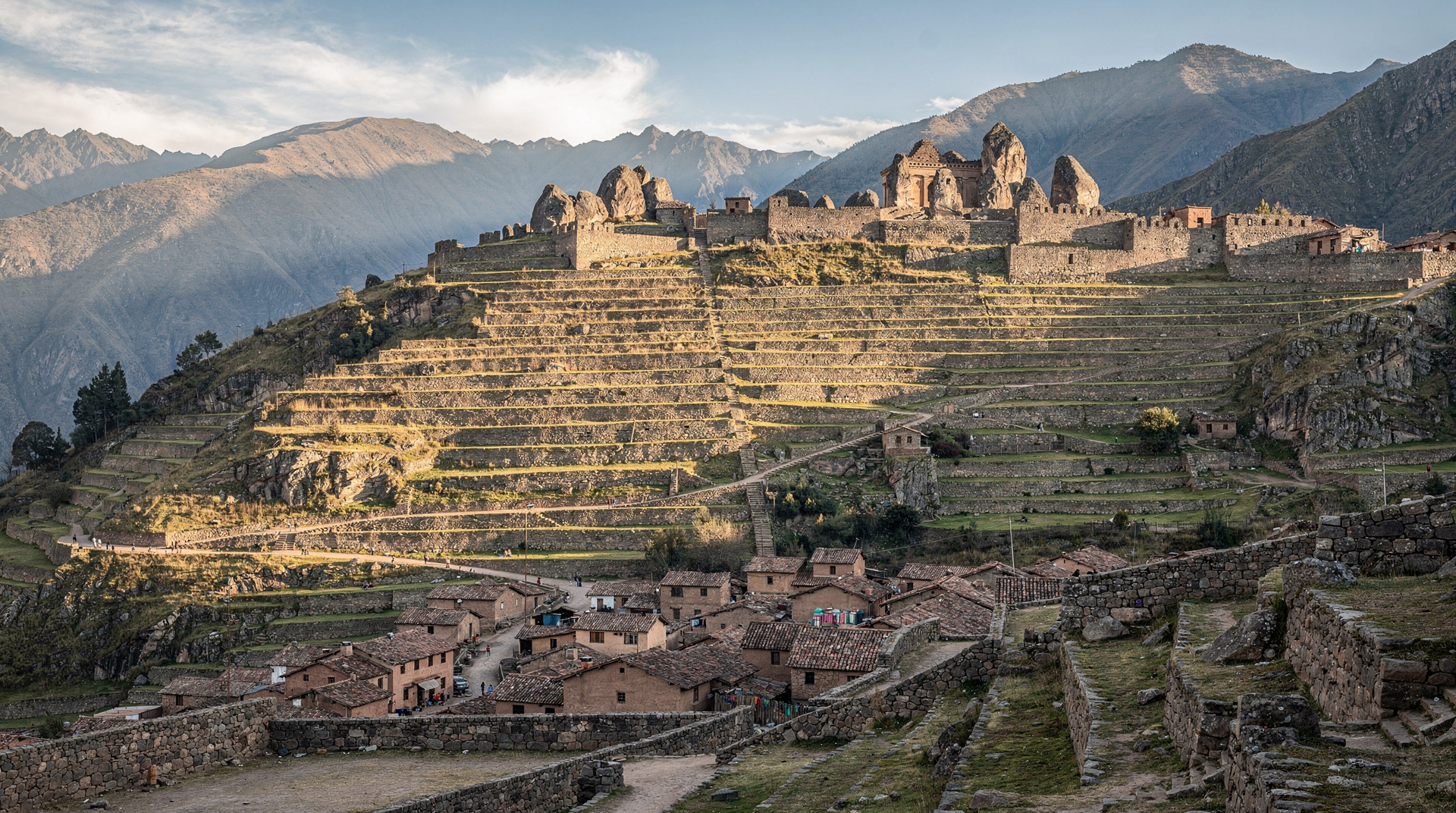
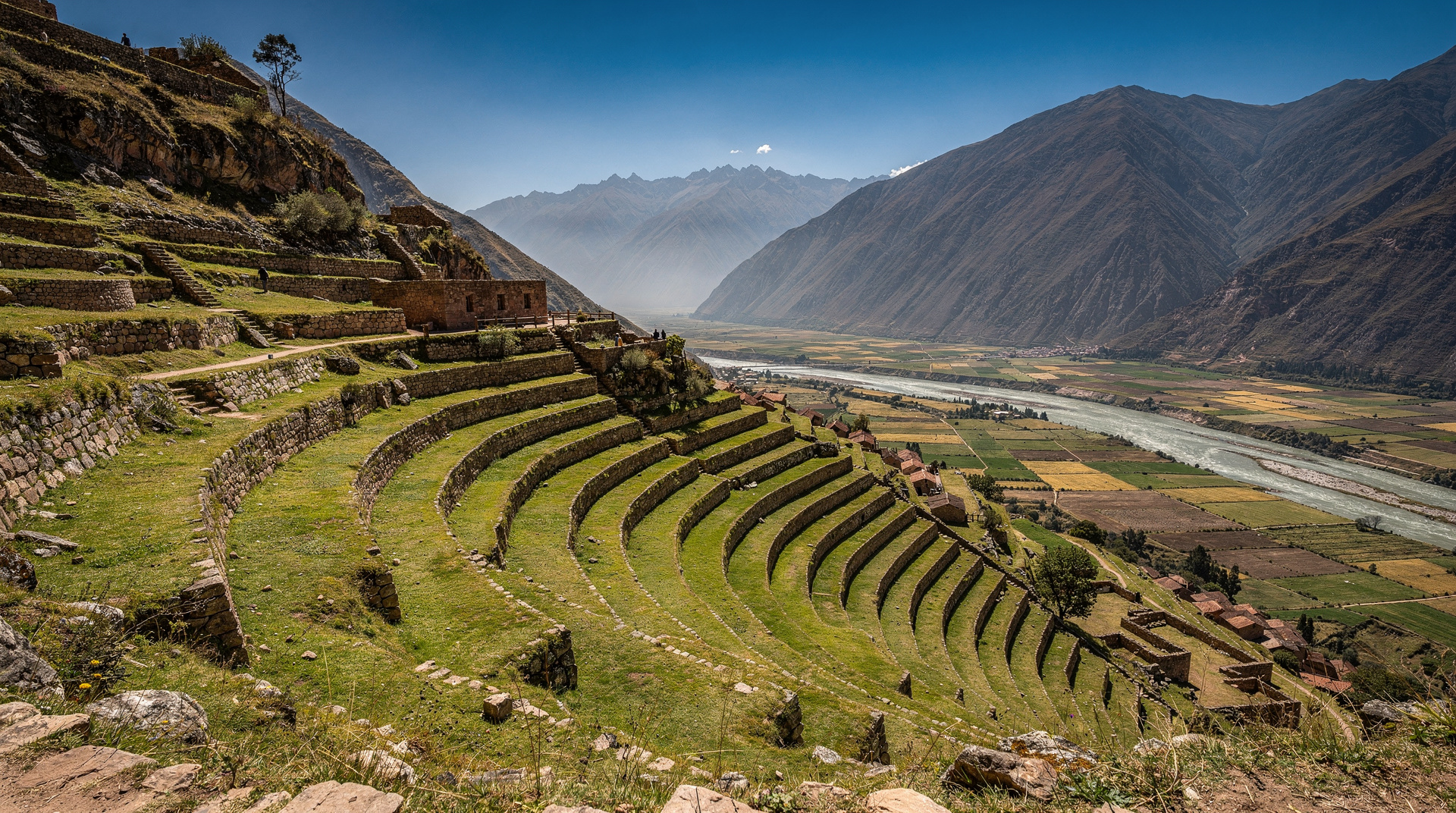
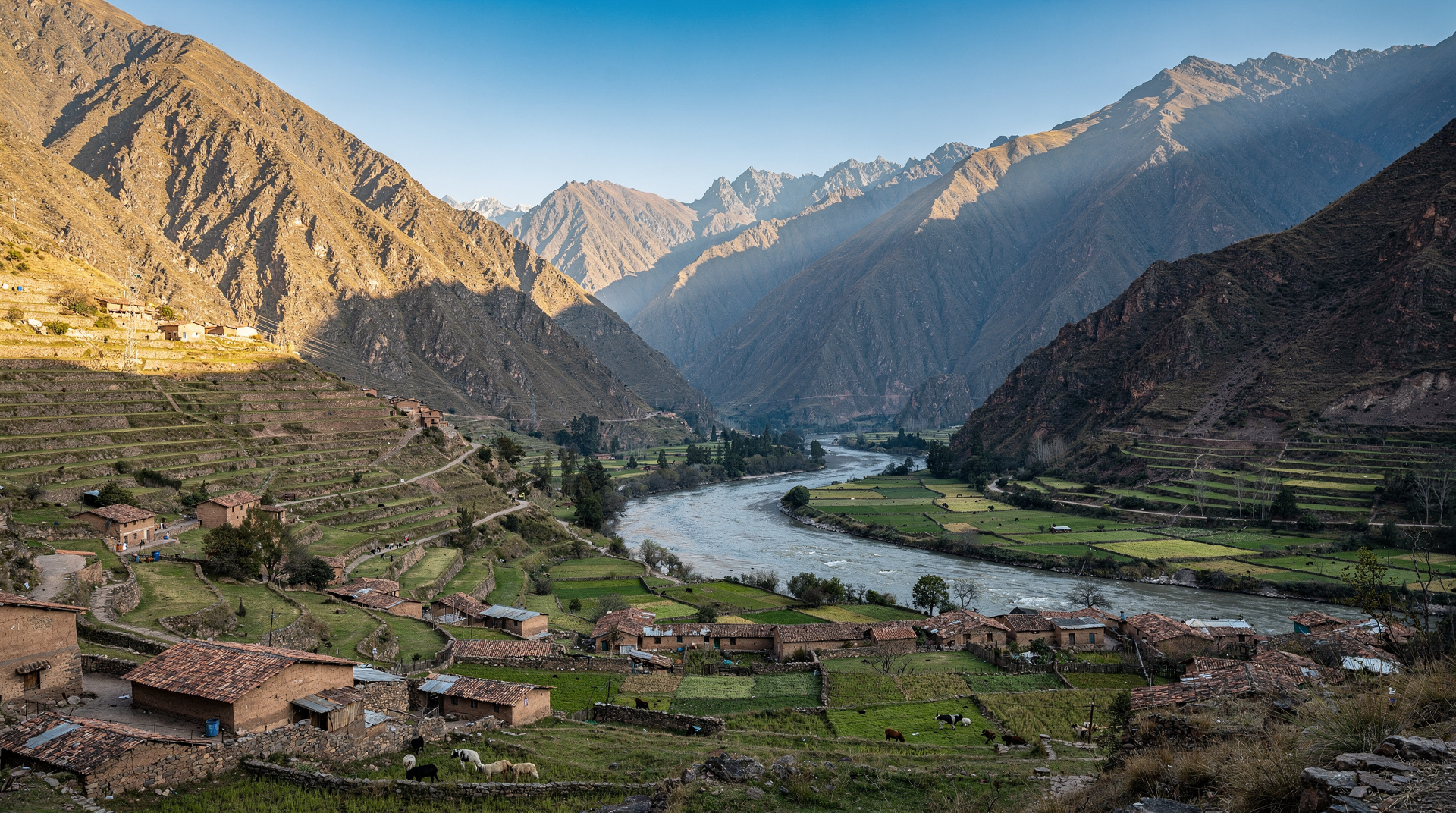
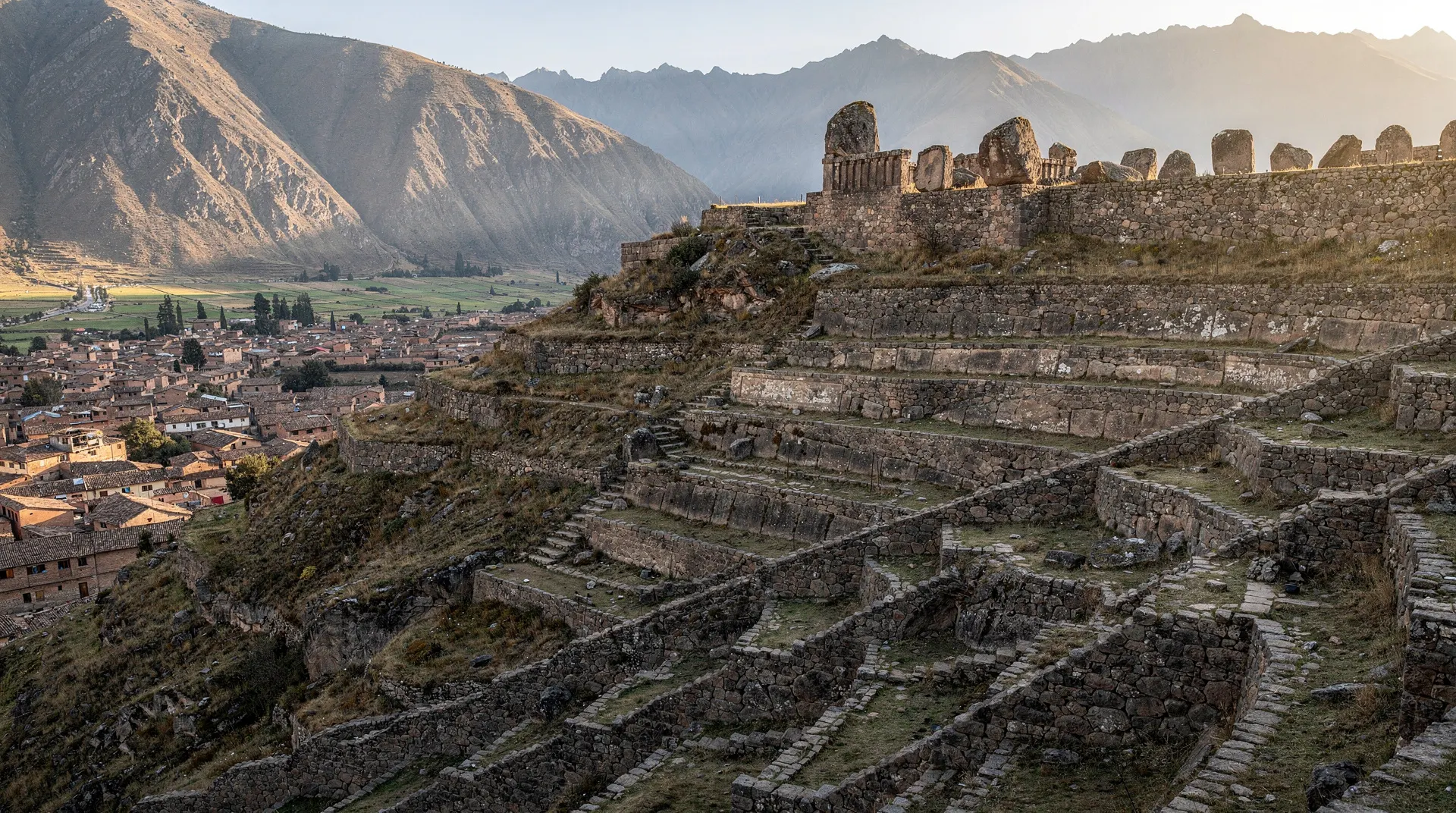
The agricultural terraces fill the entire hillside below the main fortress. These are steep, finely-built platforms of cut stone retaining walls, each terrace several metres wide. They are primarily functional — Ollantaytambo sits at the junction of two river valleys and was an important agricultural production site for the Inca state — but they are also the visual element that dominates the site from the valley floor and the first thing you climb through on the way up to the fortress.
The fortress and Temple of the Sun occupy the upper portion of the hill. The approach to the Temple of the Sun is via approximately 200 Inca stone steps, many of them large and uneven, in a climb that takes 20–30 minutes depending on pace. At altitude — even at 2,800 m, which is considerably lower than Cusco — this is a real physical effort.
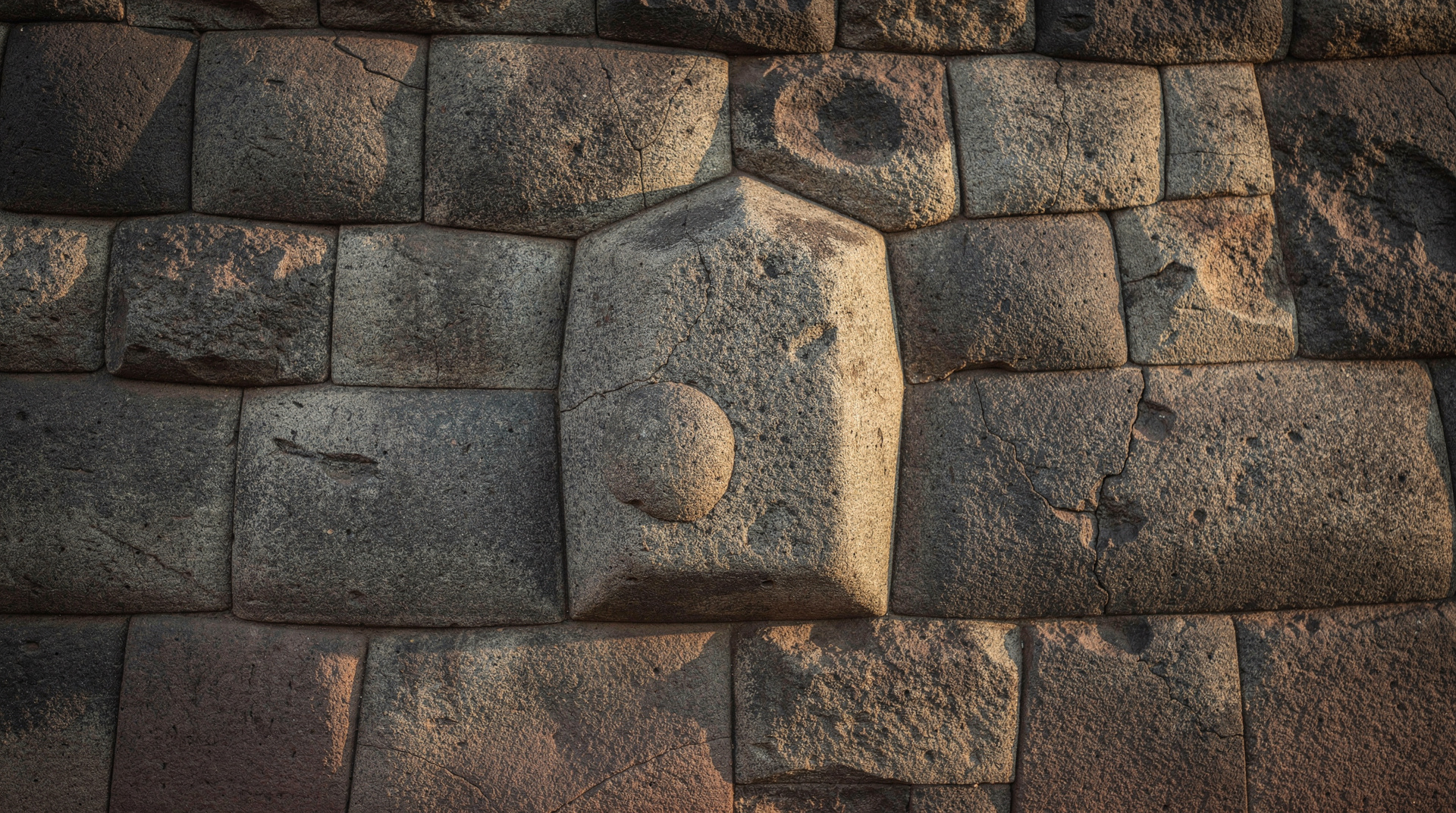
The reward is the Temple of the Sun complex itself: six massive monolithic pink granite stones (the largest weighing an estimated 50 tonnes) fitted together with extraordinary precision in a wall that was, at the time of the conquest, still under construction. The joints between the stones are so tight they appear machined; the horizontal transport of these blocks from the quarry at Cachiccata, across the Urubamba river and up the terraces, is one of the great logistics puzzles of Inca archaeology.
The storehouses (qollqa) dot the opposite hillside across the valley in a distinctive row. These rectangular structures were used for preserving food, textiles, and weapons in the cool, ventilated conditions above the valley floor. They are not accessible but are clearly visible and well worth a photograph.
The living Inca town
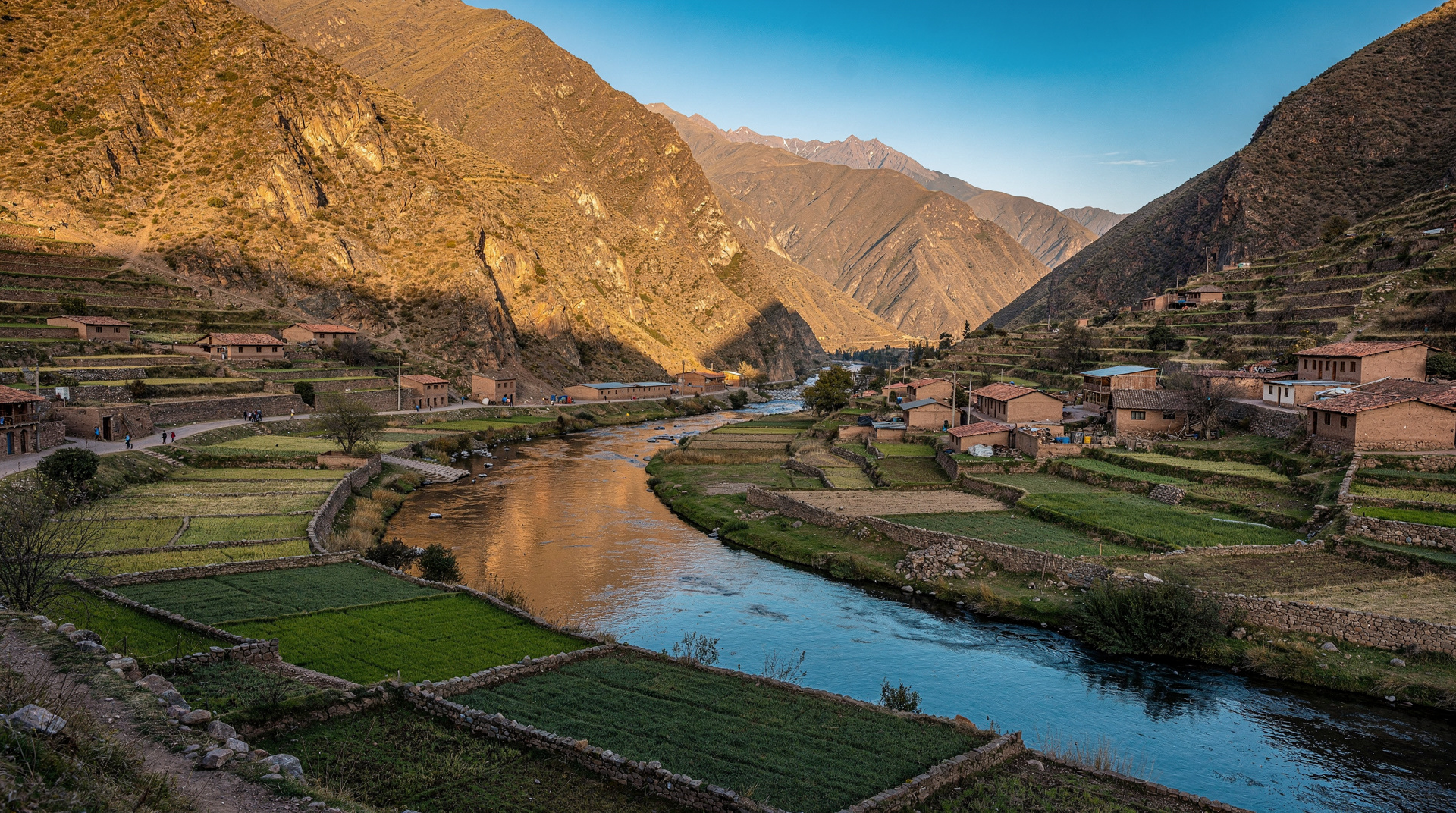
Below the fortress entrance, in the residential neighbourhood behind the main plaza, lies what is genuinely the best-preserved example of Inca urban planning anywhere in Peru. The grid of kanchas — rectangular residential compounds separated by narrow lanes with central water channels fed from the river system above — was laid out in the fifteenth century and has been continuously inhabited since. The canal channels still carry clean water; the stone walls still stand to their original height in many lanes; the trapezoidal doorways and niched walls still give the architecture its characteristic Inca character.
Walking the living town is free, takes about 45 minutes, and is almost always less crowded than the fortress itself. This is the place to understand the Inca city as a functioning organism rather than an archaeological monument. The Sacred Valley complete guide covers the living town in more detail alongside the ruins, as both are necessary for a full understanding of what Ollantaytambo was.
Boleto Turístico and entry logistics
Ollantaytambo is covered by:
- Full Boleto Turístico: S/130 (~$35) — all three circuits, 16 sites.
- Circuit III (Sacred Valley): S/70 (~$19) — Ollantaytambo, Pisac, Chinchero, and Moray.
There is no standalone Ollantaytambo ticket. The Circuit III ticket is worth buying if you plan to visit at least two of its four sites. The full Boleto is worth it if you are also visiting Sacsayhuamán and the Cusco circuit.
Buy tickets at the COSITUC office in Cusco (Av. El Sol 103), at Pisac market entrance, at the Ollantaytambo site entrance, or through authorised tour operators. The Boleto Turístico guide covers purchase options and warns against the resellers who operate near site entrances.
A full-day Sacred Valley tour typically covers Pisac, Maras, Moray, and Ollantaytambo in a single day with the Boleto included and a guide who can explain the construction and historical context at each site. This is the most efficient approach for first-time visitors who want to understand what they are seeing rather than simply reach each entrance gate.
Getting to Ollantaytambo
From Cusco, three options:
Shared colectivo: Departs from near the Pavitos bus terminal in Cusco (ask locally for current location as it changes). Typically S/10–15 and takes about 1.5 hours, stopping in Urubamba. The most budget-friendly option if you are comfortable navigating independently.
Private taxi or driver: Around $30–50 for the journey from Cusco. A driver who waits for you and continues to other Sacred Valley sites adds efficiency that makes sense for a single day covering Pisac, Maras-Moray, and Ollantaytambo.
Organised tour: A Sacred Valley day tour includes transport, guide, and Boleto Turístico in a single booking. The per-person cost is higher than the colectivo but substantially lower than a private driver, and you gain a guide’s expertise for the entire day.
Ollantaytambo is also the main train station for services to Aguas Calientes (and Machu Picchu). If you are continuing to Machu Picchu from the Sacred Valley, you will pass through here regardless.
Accessibility notes
The climb to the Temple of the Sun is genuinely demanding for visitors with mobility limitations — around 200 uneven stone steps with no handrail for most of the ascent and no alternative route to the upper terrace. Visitors who cannot manage the climb can still appreciate a substantial part of the site from the lower terraces near the entrance, and the living Inca town below (flat, cobbled but manageable) is fully separate and accessible without the climb. There is no wheelchair-accessible route to the Temple of the Sun itself.
Altitude and physical notes
At 2,800 m, Ollantaytambo is significantly lower than Cusco’s 3,400 m — approximately 600 m lower, which makes a measurable difference in how your body manages exertion. This is one of the practical reasons the standard acclimatisation advice recommends sleeping in the Sacred Valley before going to Cusco: your body starts adjusting at a more manageable altitude.
That said, the climb to the Temple of the Sun is steep regardless of altitude. The 200 or so Inca steps, some of them knee-height, are tiring at any elevation. Take them slowly, drink water, and do not let the group pace push you beyond a comfortable rate of ascent.
Children and older travellers generally manage Ollantaytambo well precisely because the altitude is lower. If you are visiting Cusco with the family, Ollantaytambo is a more manageable fortress experience than anything at Sacsayhuamán or the outlying ruins circuit.
What makes Ollantaytambo different
The standard visitor conversation around Sacred Valley ruins tends to position Pisac as the “market ruins” and Ollantaytambo as the “fortress ruins,” with both serving as a preview for Machu Picchu. This framing undersells both sites. Ollantaytambo is architecturally and historically distinct from Machu Picchu in ways that matter:
The scale of the stones is different. The monolithic blocks of the Temple of the Sun are larger and more precisely fitted than anything at Machu Picchu. The pink granite was quarried 5 km away across a river canyon; the logistics of transporting it remains incompletely explained.
The construction was unfinished. At the time of the Spanish arrival, Ollantaytambo was still under construction. The upper walls of the Temple of the Sun are complete; the intended extension is visible in the standing “T”-shaped bosses left on the stone faces (a standard Inca technique for gripping ropes during stone-moving that was normally cut away once blocks were in final position). The site is, in effect, a snapshot of Inca construction in progress.
The urban context is intact. Machu Picchu is a mountaintop site with no associated town. Ollantaytambo’s living town is directly adjacent to the fortress, occupied continuously, and gives you both the ceremonial monument and the functional city together.
For visitors who have read the Inca Empire overview before arriving, Ollantaytambo is where the abstract history becomes legible in stone.
Practical information
Opening hours: 7 am–6 pm daily.
Entry: Full Boleto Turístico (S/130) or Circuit III (S/70). No standalone ticket.
Time needed: 1.5–2.5 hours for the ruins; add 45 minutes for the living town.
Getting there: Shared colectivo from Cusco (S/10–15, 1.5 hrs); private taxi ($30–50); organised tour.
Train connections: PeruRail and Inca Rail to Aguas Calientes depart from Ollantaytambo station, roughly 500 m from the ruins entrance. Book in advance.
Facilities: Restaurants and cafés in the main plaza; toilets at the site entrance.
Altitude: 2,800 m — significantly lower than Cusco, higher than Machu Picchu.
The 7-day Sacred Valley and Machu Picchu itinerary uses Ollantaytambo as a base for the train departure to Aguas Calientes on day four — the logistically cleanest approach to combining the Sacred Valley ruins with the Machu Picchu train journey.
Guided versus self-guided: what you actually gain
Ollantaytambo rewards a guide more than most Sacred Valley sites, because the visual puzzle of the unfinished Temple of the Sun and the logistics of moving 50-tonne blocks across a river gorge are genuinely hard to reconstruct without context. A licensed guide at the site entrance charges approximately S/60–100 for a private session of about an hour, or you can join a group already on-site. Self-guided visitors who prepare beforehand — reading the Inca Empire overview and this guide in full — get most of the same value without the added cost, though the “T”-shaped bosses on the unfinished stones and the specific quarry-transport puzzle are easy to walk past unremarked without someone pointing them out.
Combining Ollantaytambo with the storehouses viewpoint
Across the valley from the main fortress, the qollqa storehouses are visible in a distinctive row on the opposite hillside — most visitors photograph them from the fortress terraces without realising a closer viewpoint exists. A short walk from the main plaza toward the river, then along a track that climbs the lower slope of the opposite hill, reaches a spot with an unobstructed view of both the fortress and the storehouses in the same frame — a genuinely rewarding half-hour add-on for visitors staying overnight who have time beyond the standard fortress visit.
Staying in Ollantaytambo overnight
Ollantaytambo has one of the strongest arguments for staying overnight in the Sacred Valley rather than commuting from Cusco. The town after the day-trip crowds leave in the late afternoon becomes a genuinely quiet and pleasant Andean market town — small, walkable, and with a restaurant scene that punches above its size. The living Inca town feels different at 7 am on a weekday morning from how it feels at 11 am when the tour vans are parked three deep in the main plaza.
Sleeping in Ollantaytambo also makes the train departure to Aguas Calientes logistically simpler — rather than departing Cusco at 5 am to catch a morning train, you can take an afternoon train from Ollantaytambo after spending the morning at the ruins, arriving in Aguas Calientes in time for dinner. This is the structure used in the 7-day Cusco and Machu Picchu itinerary and it is sensibly organised.
The altitude at Ollantaytambo (2,800 m) is lower than Cusco (3,400 m), which means sleeping here is part of acclimatisation rather than a challenge to it. Visitors who are still adjusting to altitude will typically sleep better in Ollantaytambo than in Cusco — and arriving at Machu Picchu (2,430 m) from a night at 2,800 m rather than from a 5 am departure from 3,400 m makes the Machu Picchu experience itself more comfortable.
The Ollantaytambo village guide covers accommodation options, the restaurant scene, the local food market, and the logistics of using the town as a Sacred Valley base in detail. It is worth reading alongside this guide if you are deciding whether to commute or stay.