Cusco with kids: 6-day family itinerary
From Cusco: Sacred Valley of the Incas Full-Day Tour
Taking children to Cusco — the real planning picture
Cusco with children is genuinely rewarding — the living Inca street grid, the fortress ruins, the Sacred Valley’s market colour, and the moment they first see Machu Picchu are experiences that children remember for life. But it requires more care than the same trip with adults, and a few adjustments that significantly affect how you structure the days.
Altitude is the dominant variable. Children are not necessarily more affected by altitude than adults, but they are often less able to articulate their symptoms, and the gap between “feeling a bit off” and “seriously unwell” can narrow quickly in a six-year-old at 3,400 m. The structural principle in this itinerary is the same as for all Cusco plans — first night in the Sacred Valley at 2,800 m — but with an extra valley day built in before pushing into Cusco proper and before the Machu Picchu journey.
Six days is the right length for this trip with children. It is long enough to allow proper acclimatisation (three nights before going above 2,800 m), to visit Machu Picchu without a panic, and to cover Cusco city without exhausting everyone. The pace throughout is deliberately unhurried — this is not a tick-everything schedule.
Children’s Machu Picchu ticket: Children under 8 enter Machu Picchu free. Ages 8–17 pay the student/child rate (currently S/76). Book via tuboleto.cultura.pe with your child’s passport details. The name and document number must match exactly. Circuit 2 is the most suitable for families — it covers the main viewpoints without being excessively long. The circuit takes 2–3 hours at a family pace.
What not to include: Rainbow Mountain (5,200 m) is not appropriate for young children. Neither is the classic Inca Trail. The itinerary below is designed specifically to be achievable and enjoyable for families with children aged approximately 5–14.
| Where | Sacred Valley (2 nights) + Cusco (3 nights) |
| Cost | around $1,800–2,800 mid-range per person (family of 4), excl. int’l flights |
| Time needed | 6 days for a genuinely unhurried family pace |
| Getting there | Fly into Cusco Airport (CUZ), transfer to the Sacred Valley |
| Best time | Dry season (May–September) for easier walking conditions |
Why six days instead of four for a family trip
The standard 4-day itinerary works well for adults, but with children the calculus changes: kids need an extra buffer night to recover from international travel, cannot always articulate altitude symptoms clearly, and benefit from a slower pace between activities. This six-day version adds a second full valley day and a dedicated departure buffer, both of which reduce the odds of a meltdown, an altitude scare, or an exhausted family arriving at Machu Picchu on the wrong day for it.
Day 1: Arrive in Cusco — transfer to Sacred Valley
Altitude: 2,800 m (Sacred Valley)
Land at Cusco Airport and transfer directly to the Sacred Valley, aiming for Ollantaytambo or Urubamba. Shared shuttles cost S/25–35 per person; a private taxi from the airport directly to Ollantaytambo is S/100–140 and worth it with children and luggage. The drive takes 45–60 minutes.
Arrive in the valley, have a light lunch, and let the children stretch. In the afternoon, walk slowly through Ollantaytambo’s Inca street grid — the channels in the cobblestones are full of clear water, the grid unchanged since the 15th century. Children who like history will find it satisfying even at this level; younger ones will enjoy the water channels. Look up at the fortress from the plaza; you will climb it on day two.
No altitude stress today. Water, mate de coca if offered (safe for children in small quantities), and an early bed. Avoid alcohol on night one — the children will need you functional tomorrow morning.
Where to stay: A guesthouse or small hotel in Ollantaytambo with a garden or courtyard gives children room to move after the journey. KB Tambo (family rooms S/280–420), El Albergue (S/350–500, excellent breakfast), or budget options around the plaza (S/120–200 double).
Day 2: Ollantaytambo — Sacred Valley exploration
Altitude range: 2,800–3,500 m
Morning at Ollantaytambo ruins. Climb the ceremonial terraces to the Temple of the Sun at the summit — six massive granite slabs from quarries across the valley. The fortress is dramatic from below, and from the top the views back over the town and up to the grain stores on the cliffsides opposite are satisfying for adults and children alike. Allow 90 minutes. Take water and go at the children’s pace; the upper terraces are steep and require care with younger children.
After Ollantaytambo, take a taxi east to Maras and Moray. The circular agricultural terraces at Moray — concentric bowls cut into the earth, each level a different microclimate — fascinate children who like puzzles (why are they circles? what were they for?). The salt mines of Maras beside the road are visually extraordinary: thousands of small white terraced pools cascading down the hillside, still in use. Children can walk among the terraces on the pathways.
Return to the valley for lunch. In the afternoon, the full Sacred Valley day tour covers these same sites with transport and a guide who can tailor explanation to mixed ages — worth booking if you want the interpretation without the navigation logistics.
Rest afternoon in the valley. Early dinner. The altitude is still comfortable and the pace today has been manageable.
Day 3: Pisac market — transfer to Cusco
Altitude range: 2,800 m rising to 3,400 m (Cusco)
If day three falls on a Tuesday, Thursday or Sunday, the Pisac market is the morning’s destination — 40 minutes by taxi from Ollantaytambo. Head straight for the inner agricultural section where local families buy produce rather than the tourist-facing outer ring. The colours, the scales, the unfamiliar vegetables. Younger children tend to love the sensory intensity; teenagers often prefer the textile and craft stalls on the outer ring.
On non-market days, go directly up to the Pisac ruins on the ridge above the town. The site is extensive and less crowded than Ollantaytambo; the agricultural terraces covering the hillside and the solar observatory at the top are impressive. Allow 90 minutes.
Late morning, transfer to Cusco (35 minutes from Pisac). Check into your Cusco hotel and spend the afternoon quietly. This is the first night at 3,400 m — children may feel the elevation more than they did at 2,800 m. Rest, hydrate, light dinner. Do not attempt sightseeing this afternoon; tomorrow is a full Cusco day and over-exerting on the first Cusco evening is the most common family mistake.
Where to stay in Cusco: A hotel with good natural light, space, and a courtyard is ideal. Rooms around San Blas give easy walking access to the main sights. Mid-range options with family rooms: Niños Hotel (S/280–380), Hotel Rumi Punku (S/320–450), or the quieter streets off Cuesta San Blas (S/200–350).
Day 4: Cusco city for families
Altitude: 3,400 m — full acclimatisation day
By day four, three nights of graduated altitude means the whole family should feel functional. Start at Qorikancha (check current fares and opening hours on the official Qorikancha website). The Temple of the Sun beneath the Spanish convent is visually and historically striking — for children with any interest in history, the contrast between the Inca stonework and the colonial overlay is easy to grasp.
Walk through the historic centre to the Plaza de Armas. The Cathedral (S/25) rewards patient families with the “Last Supper” painting (the meal includes cuy — guinea pig — and chicha), and the giant silver altars. Continue to San Blas for the carved pulpit and the artisan lanes.
The market cooking class is one of the best family activities in Cusco — it combines a guided visit to San Pedro Market with cooking lunch from local ingredients. Children actively participate in the class, not just watch, and the result is a proper Peruvian meal you all eat together. It runs mid-morning and finishes by about 1:30 p.m.
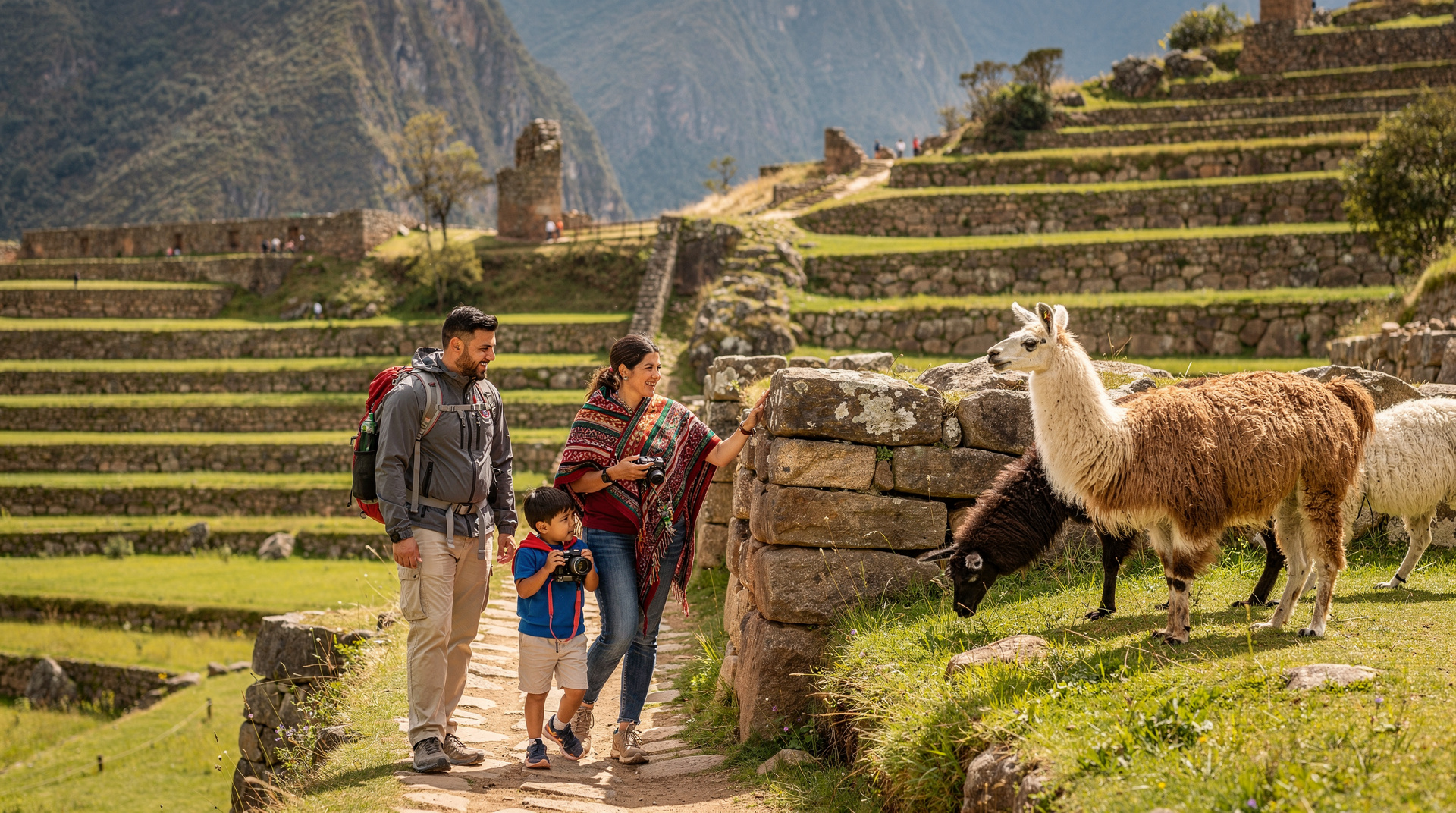
Afternoon: the half-day ruins tour to Sacsayhuamán is one of the highlights of the whole trip for children — the sheer scale of the stones (125 tonnes each), the zigzag walls, the broad flat field for playing, and the llamas wandering freely make it more interactive than most archaeological sites. Q’enqo, Puca Pucara and Tambomachay are included; allow 3–4 hours for all four.
Day 5: Machu Picchu day trip
Altitude range: 3,400 m (Cusco) to 2,040 m (Aguas Calientes) to 2,430–2,700 m (citadel)
This is the early-morning day. Wake at 4:30–5 a.m. The train and entrance day trip from Cusco includes transport to Ollantaytambo, the train to Aguas Calientes, bus up to the citadel, and return. Book well in advance — this tour sells out in high season.
The train journey (approximately 90 minutes) through the Urubamba gorge and into cloud forest is one of the most dramatic rail experiences in South America. Children who are bored by ruins are usually not bored by the train. Large panoramic windows and occasional wildlife sightings (cock-of-the-rock, parrots, occasional monkeys) help.
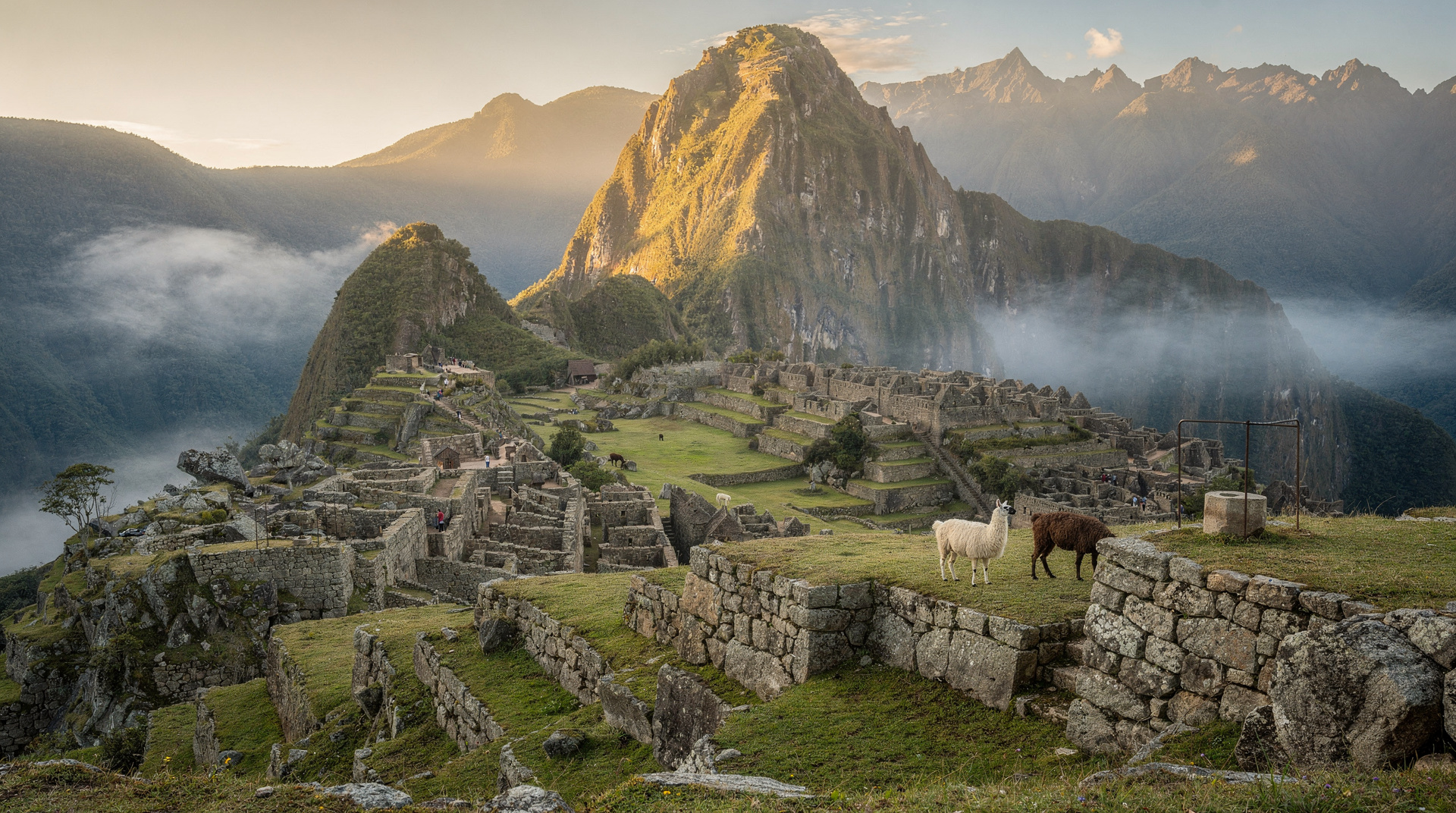
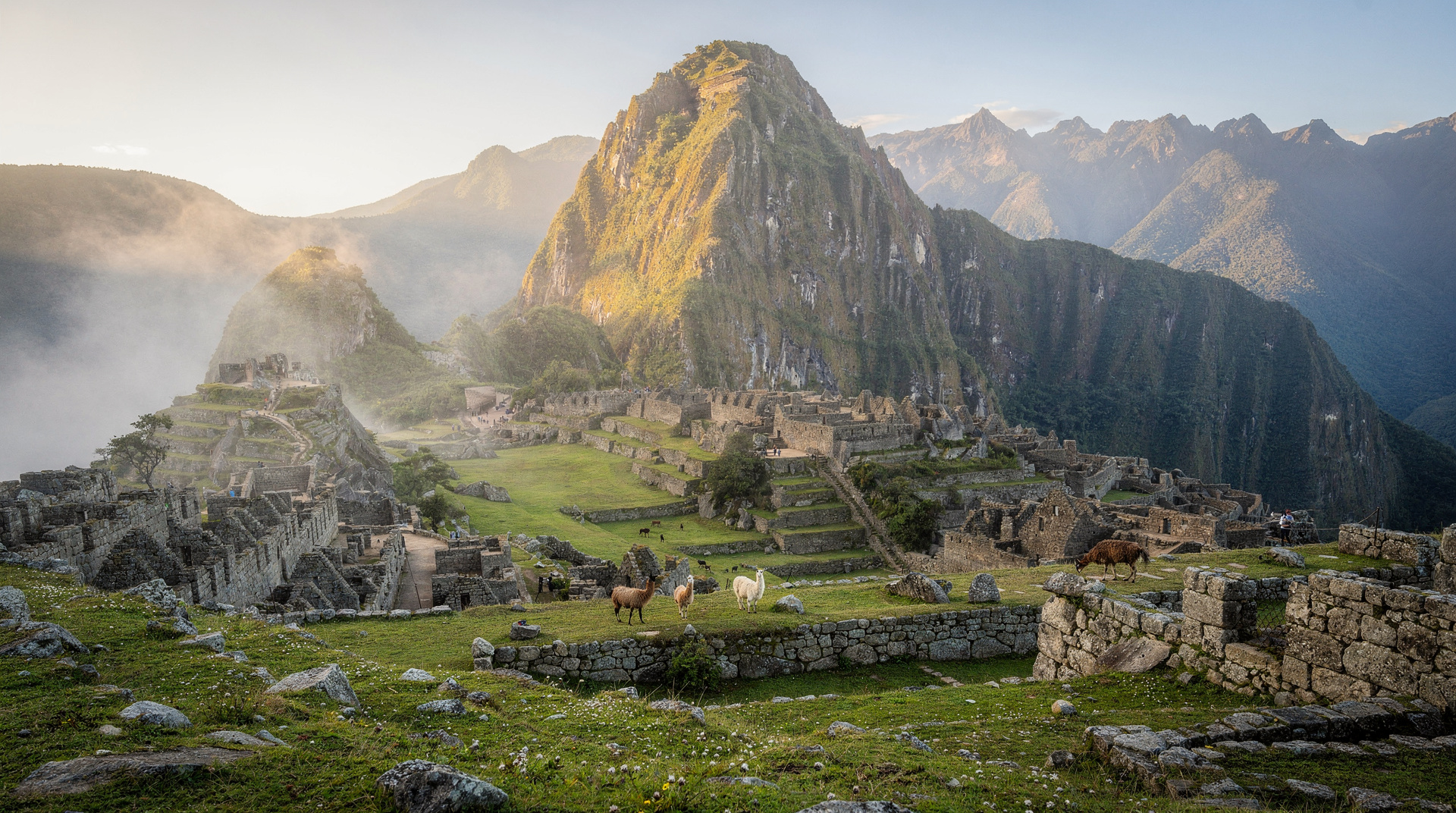
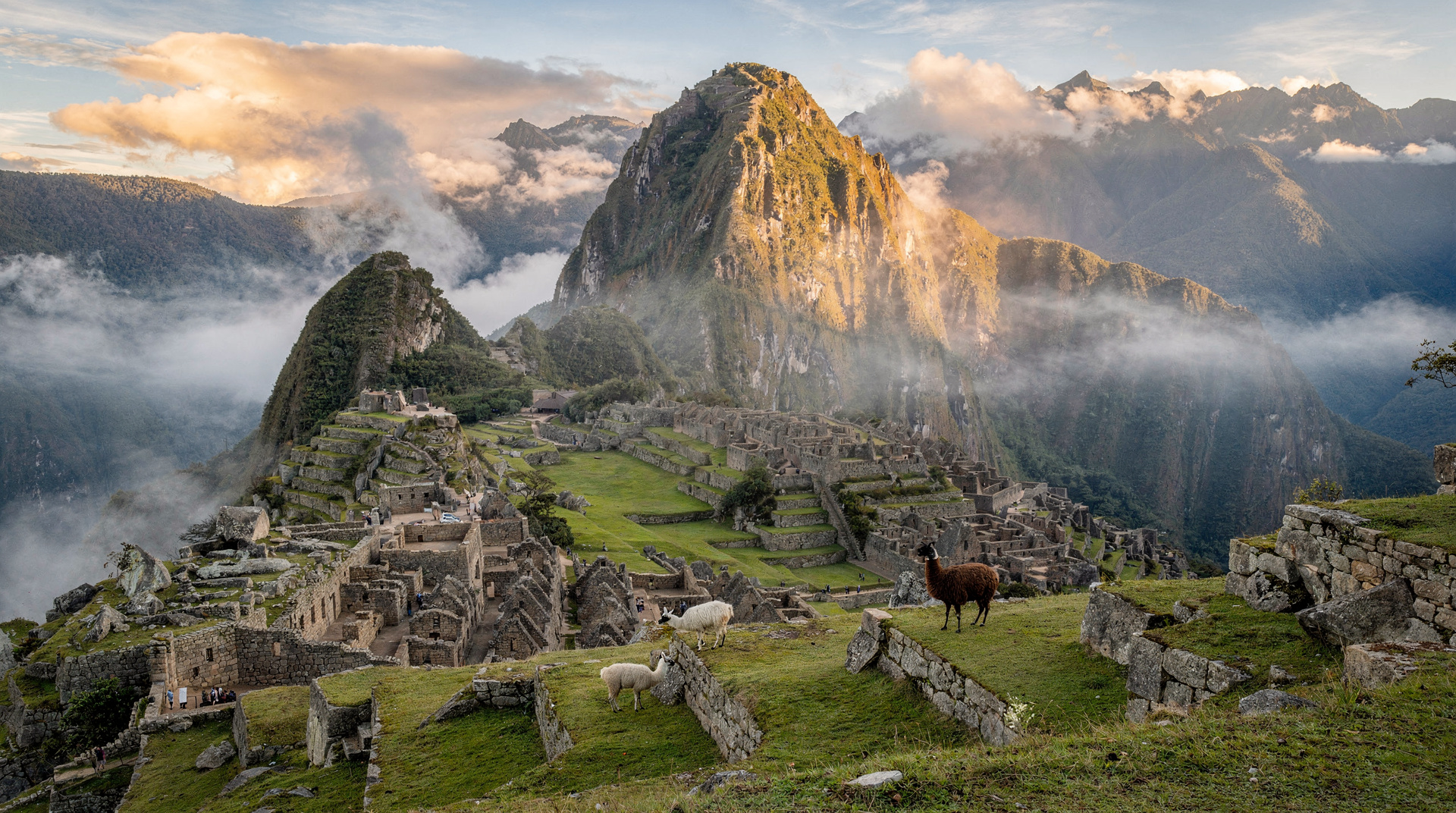
At the citadel, allow 2–3 hours. Circuit 2 covers the main plaza, Temple of the Sun, the Intihuatana stone, and the approach to the Sun Gate — everything a family needs without being exhausting. Machu Picchu at the lower altitude of 2,430 m will actually feel easier to the children than Cusco did on day three. Bring snacks; there is no food inside.
Return to Cusco by early to mid evening. Last night dinner at a proper Cusco restaurant.
Day 6: Departure or extension day
Altitude: 3,400 m
If your flight is in the afternoon, day six allows a final morning back in Cusco — either a return to the Plaza de Armas for missed sights, a visit to the Chocolate Museum (popular with children, near the plaza, free–S/10), or simply a slow breakfast in San Blas.
Alternatively, use day six to extend towards Rainbow Mountain (too demanding for most children, but adolescents 12+ who are well acclimatised can attempt it — see Rainbow Mountain altitude tips), or to take the Palccoyo alternative: a shorter, less demanding high-altitude walk at 4,900 m that older children and teenagers tend to manage well.
Airport: Allow 20–30 minutes from the historic centre. Cusco Airport taxis S/20–30; arrange the night before for early flights.
Budget summary
| Category | Budget (S/) | Mid-range (S/) |
|---|---|---|
| Accommodation (5 nights, family room) | 600–900 | 1,400–2,500 |
| Machu Picchu day trip (per adult) | — | 450–600 |
| Machu Picchu ticket, children 8–17 | 76 | 76 |
| Cooking class (family) | — | 300–450 |
| Sacred Valley tour | — | 350–500 |
| Meals (6 days, family of 4) | 1,200–1,800 | 2,800–4,500 |
| Taxis and transport | 300–500 | 500–800 |
A mid-range family of four (two adults, two children) across six days should budget approximately $1,800–2,800 USD per person, excluding international flights.
Family logistics
Machu Picchu with a pushchair: Circuit 2 at the citadel is largely paved and manageable with a compact pushchair or buggy for children up to about age 4. The bus road is not navigable independently — take the bus, not the walking path. The citadel gate has ramps at the main entrance. See Machu Picchu with kids for the detailed layout.
Food in Cusco: Children who are selective eaters do well in Cusco. Rice, pasta, chicken, and chips are universally available. Quinoa soup is excellent for altitude and most children accept it. Avoid raw salads and unpeeled fruit for the first couple of days; altitude mildly suppresses the immune system and dietary caution is sensible.
Altitude and children — what the evidence says
The most common parental question about Cusco with children is whether children are more vulnerable to altitude sickness than adults. The honest answer is that the evidence is mixed, and children tend to have fewer pre-existing risk factors (cardiovascular, respiratory) that amplify altitude effects in older adults. However, children frequently cannot accurately describe their symptoms — a child who says “my tummy hurts” may be describing a headache they cannot yet localise, and altitude headaches in young children can be written off as tiredness or travel fatigue.
The practical implication: watch your children more carefully than you watch yourself for the first 48 hours at altitude. The signs to look for are persistent headache (ask directly), loss of appetite (altitude suppresses it), irritability beyond normal travel tiredness, and any difficulty breathing at rest. If you observe two or more of these in combination, descend and rest before continuing.
The structural approach in this itinerary — three nights at progressively higher altitudes (2,800 m, 2,800 m, 3,400 m) before the Machu Picchu day — is the most conservative reasonable approach for children. The 4-day itinerary’s two nights in the valley before Cusco is already good; this six-day version adds an extra valley night which meaningfully reduces the altitude shock for the whole family.
Diamox for children: Acetazolamide (Diamox) is sometimes used in children for altitude sickness prophylaxis. Dosing in children differs from adults and requires a paediatric doctor’s advice. Do not give adult doses. Consult your travel health clinic, not just a general practitioner, before making this decision — ideally 4–6 weeks before travel.
Packing for a family Cusco trip
Layering matters more with children than with adults, because they regulate temperature less efficiently and are less likely to tell you they are cold until it becomes a problem. Pack a warm fleece or down layer, a light waterproof, a sun hat and high-factor sunscreen regardless of season — the UV index at altitude is significant even on cool, overcast days.
A small daypack that a child can carry themselves (water bottle, snack, a favourite small toy) gives them some ownership over the day and reduces complaints on longer walks like Ollantaytambo’s terraces or the Sacsayhuamán site. See what to pack for Cusco for the full adult packing list, which mostly applies with a smaller, child-sized version of each item.
Keeping a flexible pace
The single most useful piece of advice for families on this itinerary is to treat the schedule as a framework rather than a fixed plan. If a child is tired, cranky, or showing early altitude symptoms on any given afternoon, skip the optional activity and rest instead — nothing on this six-day plan is so time-critical that missing an afternoon at San Blas or an extra hour at the market will meaningfully damage the trip. The two built-in rest windows (the Sacred Valley afternoons on days one and two, and the quiet first Cusco evening on day three) exist specifically so you have slack to absorb a bad day without it cascading into the rest of the trip.
The altitude symptom most overlooked in children: disturbed sleep. At altitude, periodic breathing (Cheyne-Stokes breathing, where breathing pauses briefly during sleep) is common in adults and children alike. Children may wake frequently or seem restless without complaining of specific symptoms. This is altitude-related and generally resolves within 48 hours as the body adjusts. It is not dangerous in itself but can leave children under-rested and more susceptible to other altitude effects. Keep nights warm and hydration high throughout.
Sacred Valley: the best base for families
The decision to spend two full nights in the Sacred Valley rather than rushing to Cusco is the structural choice that makes this itinerary family-friendly rather than just shorter. The valley at 2,800 m has several practical advantages beyond the altitude benefit.
First, space. Valley guesthouses typically have gardens and outdoor areas where children can move freely — a meaningful contrast with Cusco hotels on narrow colonial streets where movement is limited. After a long international journey, children need space.
Second, child-appropriate activities at altitude. The Ollantaytambo ruins are excellent for children aged 6 and up — the scale of the terraces, the water channels that still flow, and the sheer height of the fortress make for engaging exploration. Moray’s circular terraces are genuinely puzzling in a way that children find interesting. The Maras salt pans with their cascading white pools fascinate almost everyone under 12 without exception.
Third, horse and animal access. The Sacred Valley has horses, llamas, and alpacas in genuine abundance. Several farms near Urubamba and Chinchero offer family-friendly animal encounters that are not staged tourist experiences — working farms where children can interact with animals in a functioning agricultural setting. Ask your accommodation for recommendations.
The valley’s lower altitude also means children sleep better on nights one and two, which means parents sleep better, which means everyone arrives in Cusco on day three in better condition than if they had gone straight from the airport into the city.
Boleto Turístico with children
The Cusco Boleto Turístico (Boleto Único de Ingreso COSITUC) covers multiple archaeological sites in and around Cusco. Children up to 9 enter free, and ages 10–17 buy the student ticket with an identity document (source: cosituccusco.pe). See Boleto Turístico explained for the current site list and pricing. For a family covering Sacsayhuamán, Qorikancha, Q’enqo, Puca Pucara, and Tambomachay, purchasing the partial Cusco-area circuit (S/70 per foreign adult) is the most reliable approach.
Frequently asked questions about Cusco with kids
Is Machu Picchu suitable for young children? Yes, with the right circuit choice. Circuit 2 covers the main viewpoints without excessive walking, and children under 8 enter free. See Machu Picchu with kids for pushchair access and pacing details.
How much more altitude risk do children face than adults? The evidence is mixed, but children often cannot describe symptoms clearly, which is the real practical risk rather than a heightened physiological one. Watch for persistent headache, appetite loss and irritability beyond normal travel tiredness in the first 48 hours, and descend if you see two or more together.
Top experiences
Bookable activities with verified prices and instant confirmation on GetYourGuide.