Cusco vs Arequipa: which southern Peru city should you prioritise?
Arequipa: 2-Day Classic Colca Canyon Tour
Should I visit Cusco or Arequipa?
Cusco for Machu Picchu, the Inca Trail, Sacred Valley, and the Inca historical experience. Arequipa for Colca Canyon, Spanish colonial architecture, excellent food, and a gentler altitude (2,335 m vs Cusco's 3,400 m). They are complementary, not competing — most southern Peru trips include both. If you only have a week, Cusco wins by volume of unique highlights. With two weeks, both are worth the time.
Two cities, one southern Peru trip — how they compare
Cusco and Arequipa are the two main anchor cities for southern Peru travel. Both have UNESCO-recognised historic centres. Both are gateways to Peru’s most famous natural highlights. Both have strong food scenes and genuinely interesting streets to explore on foot.
They are not competing for the same reason to visit. Cusco is the Inca capital — the city where the Inca Empire governed its vast territory, and the departure point for Machu Picchu, the Sacred Valley, and the great trekking routes. Arequipa is a Spanish colonial showpiece at lower altitude, gateway to Colca Canyon and one of Peru’s most distinctive regional cuisines.
The question most travellers are actually asking is: “If I can only visit one, which should it be?” — followed by “How do I fit both into my trip?”
| Where | Southern Peru, connected by bus (~10hrs) or flight (~1hr) |
| Altitude | Cusco 3,400 m; Arequipa 2,335 m |
| Time needed | 5–7 nights Cusco; 2–4 nights Arequipa (with Colca Canyon) |
| Getting between them | Bus via Juliaca or direct flight |
| Best time | May–September dry season for both |
The key differences at a glance
| Cusco | Arequipa | |
|---|---|---|
| Altitude | 3,400 m | 2,335 m |
| Principal appeal | Inca history, Machu Picchu, trekking | Colonial architecture, Colca Canyon, food |
| UNESCO designation | Historic centre | Historic centre |
| Nearby day trip | Sacred Valley, Machu Picchu | Colca Canyon (2 days recommended) |
| Altitude sickness risk | Moderate (25–40% of visitors) | Low at city level |
| Budget per day | S/180–350 ($50–95 USD) | S/150–300 ($42–82 USD) |
| Signature food | Quinoa-based dishes, cuy, pisco sour | Rocoto relleno, adobo arequipeño, chicha de jora |
| Best for | First-time Peru visitors, trekkers | Foodies, architecture lovers, Colca Canyon |
Why Cusco wins if you can only pick one
For the majority of international visitors making their first or only trip to Peru, Cusco is the non-negotiable city. Here is why:
Machu Picchu: The most famous archaeological site in the Americas is only accessible via Cusco or the Sacred Valley. No Cusco = no Machu Picchu.
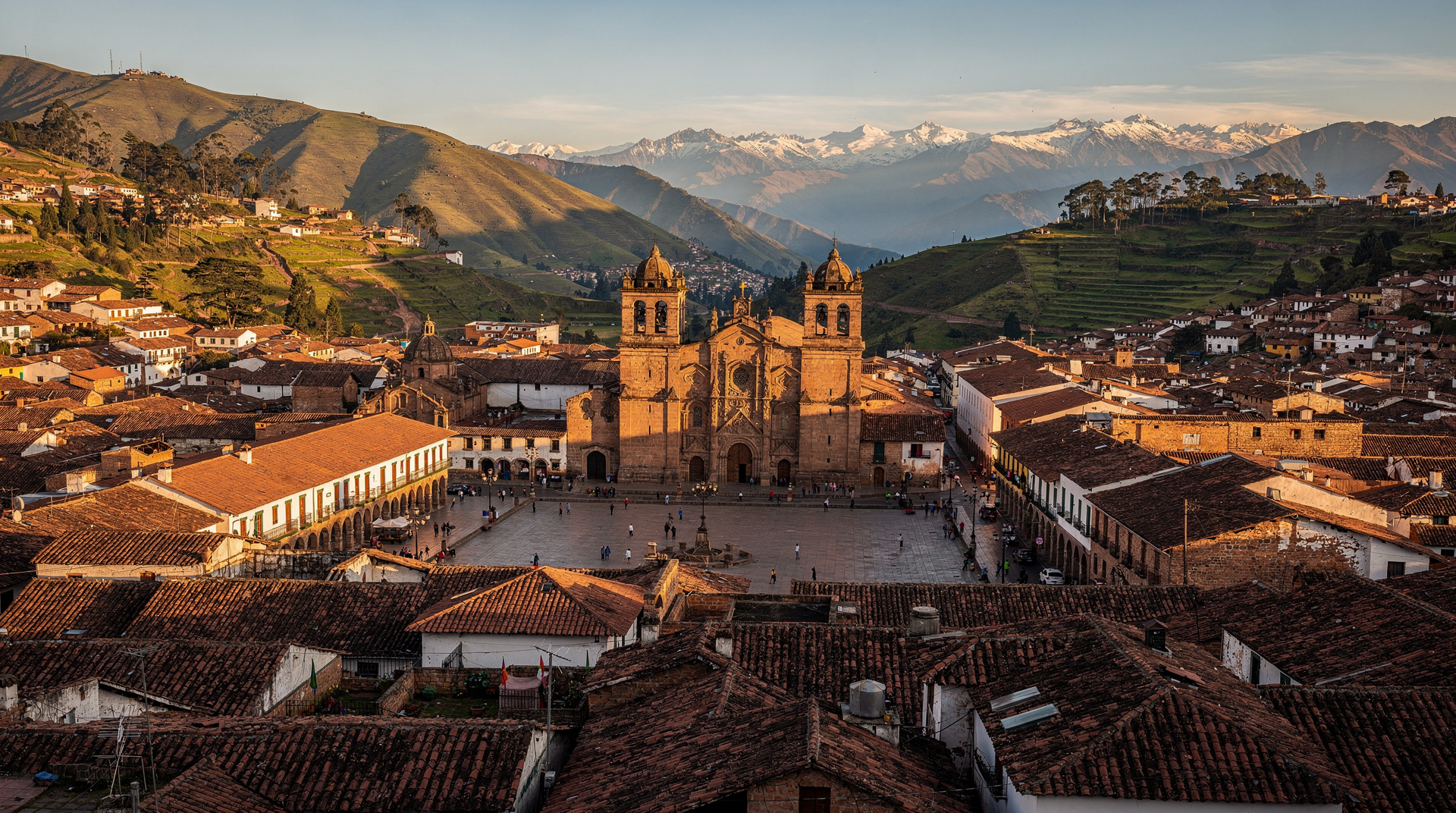
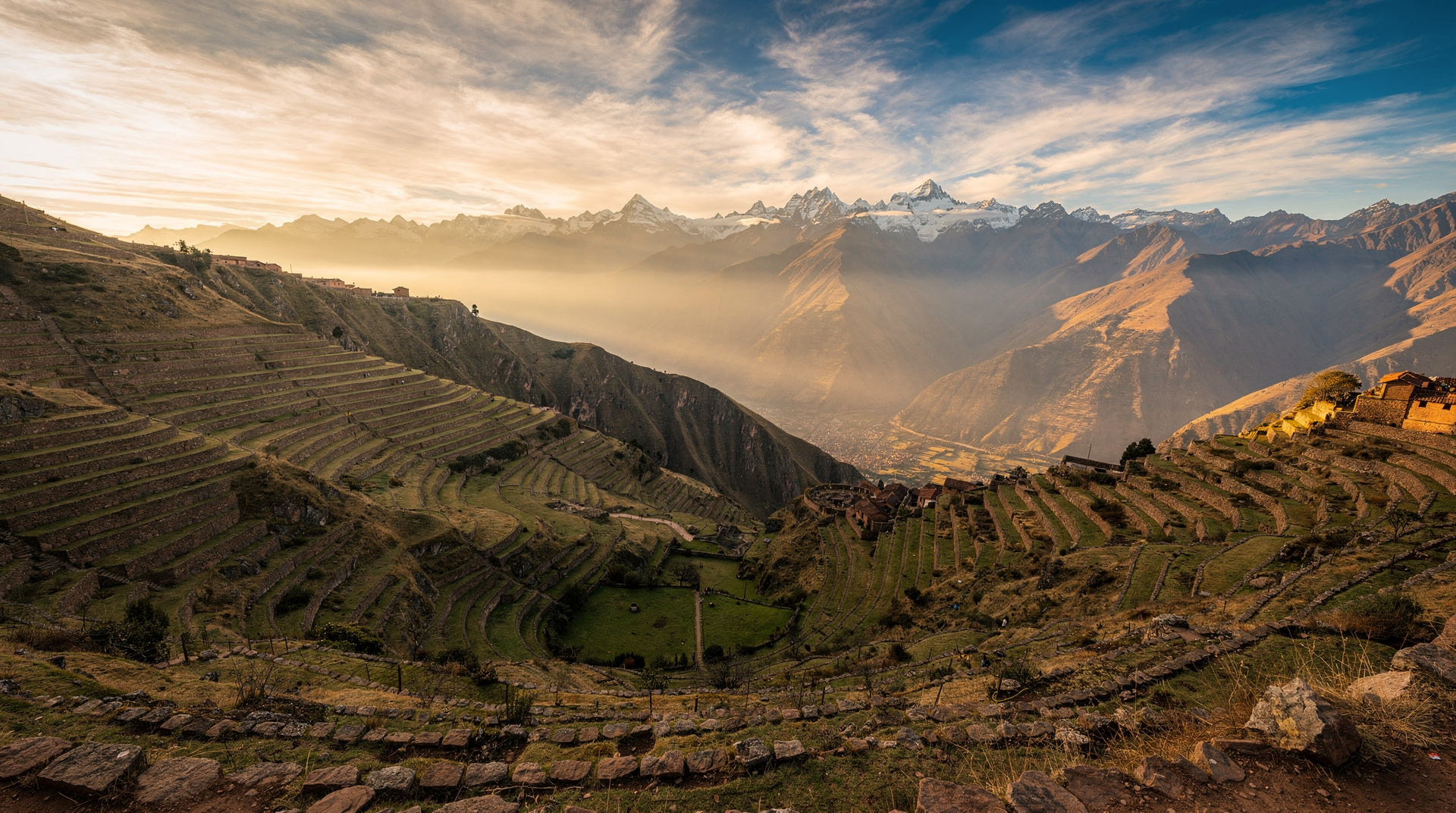
The Inca historical density: Cusco itself is one of the world’s most extraordinary Inca cities. Qorikancha — the Temple of the Sun — is genuinely breathtaking. Sacsayhuamán on the hill above the city is a massive Inca military complex. The historic centre contains Inca stone foundations beneath Spanish colonial churches on every block. Nowhere else in the world has this density of intact Inca urban archaeology.
Trekking: The Inca Trail, Salkantay, and other multi-day routes all depart from the Cusco region. If trekking is any part of your Peru plan, Cusco is essential.
The Sacred Valley: Pisac, Ollantaytambo, Maras and Moray — the valley between Cusco and Machu Picchu contains a succession of important sites accessible on day trips from the city.
If your Peru trip is seven to ten days, Cusco alone is a full programme. You may not need Arequipa. For a short stay, a Machu Picchu day trip from Cusco by tourist train with the entrance ticket included is the simplest way to tick off the headline site without organising each piece separately.
Why Arequipa deserves more credit
Arequipa is frequently described as “the second city” of southern Peru, which undersells it. It has attributes that Cusco does not:
Lower altitude: At 2,335 m, Arequipa is significantly lower than Cusco’s 3,400 m. Visitors who struggled with altitude in Cusco often find Arequipa a genuine relief. For travellers coming from Lima who are concerned about altitude, Arequipa is a workable intermediate acclimatisation stop.
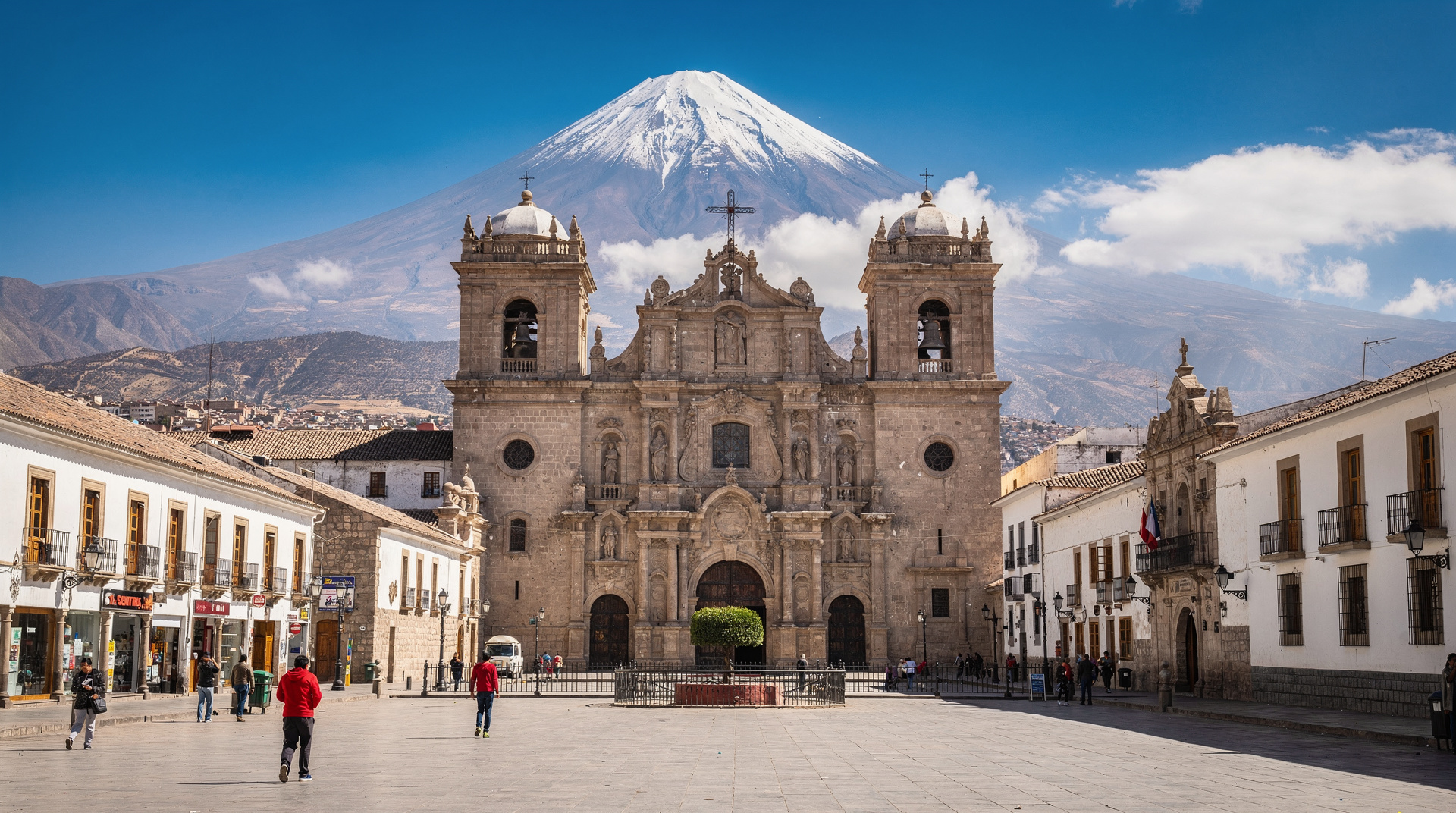
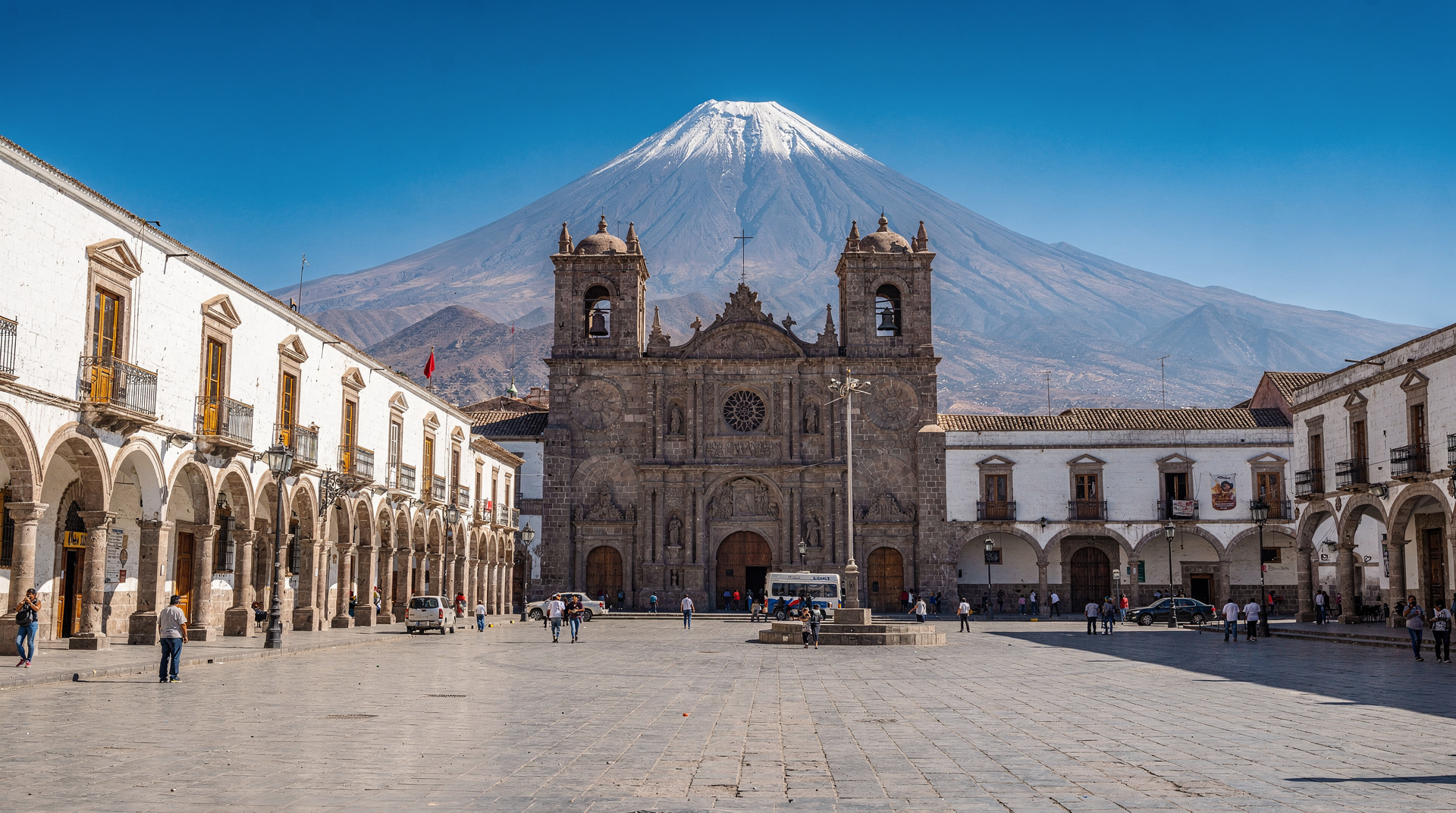
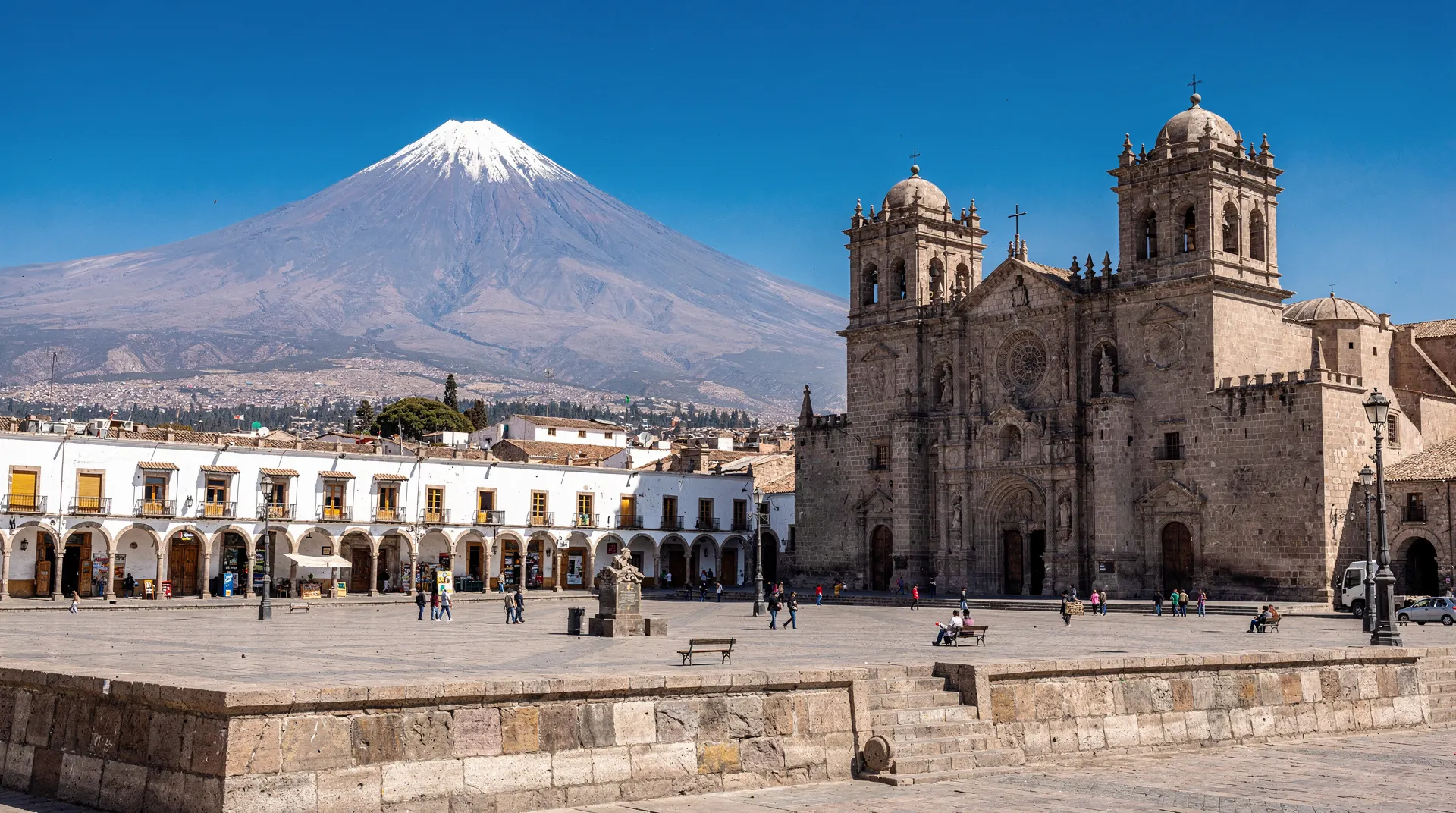
The sillar architecture: The city centre is built almost entirely in white volcanic sillar stone (quarried from the El Misti volcano that overlooks the city), giving it a completely different visual character from Cusco’s colonial-over-Inca combination. The cathedral on Plaza de Armas, the arched Compañía church, and the streetscapes of the historic centre have a coherent architectural grandeur that Cusco’s more layered urban history does not.
Santa Catalina Monastery: This walled convent — a city within the city — is one of the most genuinely extraordinary single monuments in Peru. It housed hundreds of nuns in a self-contained world of colourful streets, plazas, and chapels for centuries. Exploring it takes half a day and feels unlike anything else.
Regional cuisine: Arequipa’s food is considered distinctive enough that food writers regularly make specific trips to taste it. Rocoto relleno (a stuffed spicy pepper dish), adobo arequipeño (slow-cooked pork stew, classically eaten on Sunday mornings), chupe de camarones (freshwater prawn chowder) — these are dishes you find authentically only in Arequipa. Cusco has an excellent restaurant scene, but its cuisine is more cosmopolitan and less regionally specific.
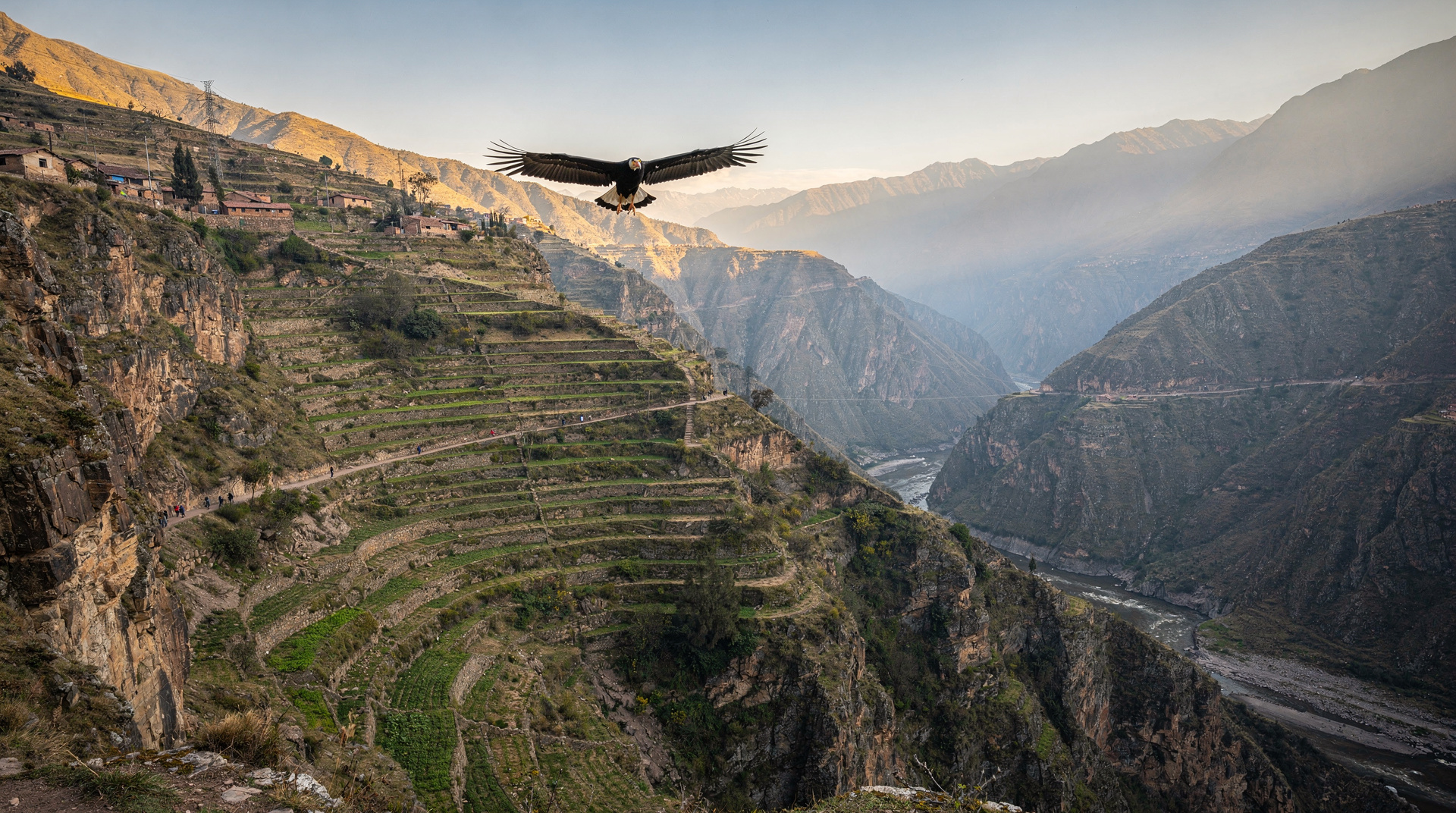
Colca Canyon: One of the world’s deepest gorges (deeper than the Grand Canyon at its maximum), with Andean condors riding thermals at Cruz del Cóndor viewpoint every morning. The canyon is 3–4 hours from Arequipa by road and is typically done as a two-day trip. The 2-day Colca Canyon tour is the standard approach and includes the condor-watching viewpoint, hot springs, and traditional villages in the canyon.
The altitude comparison: a genuine consideration
The altitude difference between Cusco (3,400 m) and Arequipa (2,335 m) — over 1,000 m — is medically relevant for travellers who have experienced altitude sickness before or who are arriving from very low altitudes.
The Arequipa acclimatisation strategy: Some travellers fly Lima–Arequipa, spend two nights there, then travel to Cusco. The theory is that acclimatising at 2,335 m provides a stepping-stone to 3,400 m. This has physiological logic — you begin the acclimatisation process at a gentler altitude before jumping to Cusco.
The practical caveat: If you travel Arequipa–Cusco by bus through Juliaca (3,824 m) and the high altiplano, you actually exceed Cusco’s altitude during the journey, which partially defeats the purpose. Flying Arequipa–Cusco is faster and avoids this. The Cusco acclimatisation plan covers the full approach, including the Sacred Valley option (2,800 m), which is physiologically more efficient than Arequipa.
The Arequipa acclimatisation approach works better for those who want to see Arequipa before Cusco for its own merits — as a combined itinerary rationale, it is good; as a purely altitude-management strategy, the Sacred Valley approach is more effective.
Combining both cities: how it works in practice
For 12–14 day trips (optimal): Lima arrival → 2 nights Arequipa (city) → 2-day Colca Canyon → Puno/Titicaca 2 nights → bus Puno–Cusco (overnight or full day) → 4–5 nights Cusco → Machu Picchu → Lima departure.
This covers the main southern Peru circuit, allows proper Cusco acclimatisation time, and does justice to both cities.
For 10-day trips (tight): Lima arrival → 2 nights Arequipa → 1-day Colca Canyon (or skip for more Cusco time) → fly Arequipa–Cusco → 4 nights Cusco → Machu Picchu → fly Cusco–Lima departure.
This works but Arequipa is rushed and Colca Canyon is either skipped or done as a day trip (missing the condors, which are best in early morning of day two).
For 7-day trips (Cusco only): Lima arrival → 5 nights Cusco (including Sacred Valley day trip) → Machu Picchu → Lima departure. No time for Arequipa; do not try.
Cost comparison
Arequipa is modestly cheaper than Cusco across accommodation, food, and day trips. The main expensive item in Cusco is Machu Picchu access (entry ticket, train, and bus combined: roughly $90–160 per person). That cost does not apply in Arequipa.
A mid-range day in Arequipa (decent hotel, three meals, one museum or site): S/180–280 ($50–76 USD). A mid-range day in Cusco (similar standard, not including Machu Picchu): S/200–350 ($55–95 USD).
Neither city requires large budgets for a quality trip. The most expensive element in both cases is the day trips — Colca Canyon two-day tour and Machu Picchu — rather than the daily city costs.
Where the money actually goes
A useful reframe: the city-by-city daily budgets above are similar enough that they should not drive your decision. What genuinely moves the total trip cost is which excursions you add — Machu Picchu train class, whether you do the Inca Trail (a multi-day guided trek costs considerably more than a day trip), and whether Colca Canyon is one day or two. Decide on excursions first, then treat the daily city costs as a rounding error by comparison. The Peru trip cost guide breaks down a full sample budget across both cities and the excursions in between.
Lake Titicaca as the bridge between them
Many travellers use Puno and Lake Titicaca as the natural link between Cusco and Arequipa on a southern Peru circuit. The standard route runs: Cusco → Puno by road or train (5–6 hours) → 1–2 days on the lake → Puno to Arequipa by bus (4–5 hours). This is the most rewarding way to connect the two cities because it adds a genuinely extraordinary destination between them. If you prefer not to arrange the road leg yourself, a daytime bus journey from Cusco to Puno with sightseeing stops along the way turns the transfer into part of the trip rather than lost time.
Puno sits at 3,830 m — higher than Cusco — so the Cusco-acclimatised visitor usually manages Puno well, though fresh altitude symptoms are possible. Spending at least one night in Puno before continuing is important; the altitude shift from Puno (3,830 m) down to Arequipa (2,335 m) is a 1,500 m drop that most travellers find refreshing.
The Lake Titicaca guide and the Uros and Taquile full-day tour cover the key highlights: the floating reed islands of the Uros, the island of Taquile with its remarkable textile tradition, and the option of an overnight homestay on Amantani island.
What each city handles best for your travel goals
For Inca history and archaeology: Cusco and the Sacred Valley are without peer. Arequipa’s primary historical layer is Spanish colonial (1540s–1800s), which is excellent but completely different in character.
For natural landscapes: Both cities are gateways to world-class natural highlights. Cusco leads to Rainbow Mountain (5,200 m), the Inca Trail, and the Salkantay; Arequipa leads to Colca Canyon and the volcanic El Misti (5,822 m). Neither is more or less spectacular — they are different landscape types.
For budget travel: Both are manageable on a budget. Basic accommodation in Cusco starts around S/50–70 ($14–19 USD) per night for a clean dorm; Arequipa similar. Food in local markets is under S/15 ($4) for a full lunch in both cities. Arequipa’s margins are slightly more generous at the budget end because the city has more Peruvian domestic tourism and a larger economy than just foreign visitors.
For solo travellers: Both cities are well established on the backpacker circuit and have good solo-traveller infrastructure (hostels, group tours, social common areas). Cusco has more organised social activities; Arequipa has a more relaxed, slightly less heavily touristed pace.
For families: Cusco requires more careful altitude planning with young children — see the Cusco with kids guide for age-specific advice. Arequipa’s lower altitude makes it noticeably easier for families with small children, and the Santa Catalina Monastery’s maze-like streets are genuinely enjoyable for kids to explore.
What most people get wrong when choosing
The most common planning mistake is treating this as a binary choice when time allows for both. The second most common mistake is under-allocating Cusco time to fit in Arequipa on a short trip — Cusco’s Inca sites, Sacred Valley and Machu Picchu logistics simply take longer to do justice than most first-time visitors expect.
If your total trip is under 8 days, resist the temptation to add Arequipa; a rushed Colca Canyon day trip without the overnight in Chivay misses the best condor-viewing window at Cruz del Cóndor entirely. The how many days in Cusco guide and the Cusco trip planning guide both help calibrate a realistic day count before you decide whether Arequipa fits.
Where to read next once you have chosen
If Cusco is the priority, the next decision is how to reach Machu Picchu. The Machu Picchu complete guide lays out the options, and how to get to Machu Picchu compares the routes. Trekkers will want the Inca Trail complete guide alongside Inca Trail vs Salkantay, because the choice of trek shapes how many nights you need around it.
If you are leaning toward the valley rather than the city, the Sacred Valley complete guide and Sacred Valley vs Cusco as a base help you decide where to sleep first.
If Arequipa is the draw, the Colca Canyon condors guide explains what the condor morning is really like, and the Arequipa trip report gives a first-hand account of the transfer and the city. For the connecting leg, the Cusco to Puno transport guide covers the lake stop that sits between the two cities, and best time to visit Cusco helps you match the season to the part of the trip that is most weather-sensitive.
Travellers who worry about the altitude side of the choice can read the altitude sickness guide before booking, and anyone building a longer route will find the Peru 10-day Cusco and Titicaca itinerary a useful middle ground between the one-city and two-city versions.
The honest verdict
Visit Cusco if: You have a limited time budget, Machu Picchu is on your list, or Inca history is a primary motivation. Cusco is the more internationally unique destination.
Visit Arequipa if: You have the time and are interested in Spanish colonial architecture, distinctive regional cuisine, Colca Canyon condors, or want a lower-altitude entry point to the southern Peru highlands.
Visit both if: You have 12 or more days and want to do southern Peru properly. They work best as part of a circuit rather than a competition.
The southern Peru two-week itinerary builds both cities into a coherent 14-day route, including Puno and Lake Titicaca. That is the reference for the complete version of this trip.
Frequently asked questions about Cusco vs Arequipa: which southern Peru city should you prioritise?
Which city is better for altitude acclimatisation?
How do you travel between Cusco and Arequipa?
Is Arequipa worth visiting beyond Colca Canyon?
How much time should I spend in each city?
Which city has better food?
Can I visit both cities in a 10-day trip?
Top experiences
Bookable activities with verified prices and instant confirmation on GetYourGuide.