Wildlife of Lake Titicaca: birds, otters and more
Puno: Full-Day Tour of Lake Titicaca and Uros & Taquile
What wildlife can you see at Lake Titicaca?
Lake Titicaca hosts Andean flamingos, giant coots (some of the heaviest flying birds in the Americas), puna ibis, various grebes, Andean geese, and the rare Titicaca flightless grebe found nowhere else on earth. Otter sightings occur around reed beds. The Uros and Taquile full-day tour (S/90–150/$25–40 USD) includes the most wildlife-rich areas.
| Where | Puno, reached from Cusco (6–8 hrs bus or 1 hr flight) |
| Best time | Early morning, 6:00–9:00 am, before wind picks up |
| Cost | around S/90–150 full-day Uros and Taquile tour |
| Bring | Binoculars (8x42), sunscreen, warm layers |
| Altitude | 3,810 m — acclimatise before strenuous activity |
Lake Titicaca as a wildlife destination
Most guides to Lake Titicaca lead with the Uros floating islands, the weavers of Taquile, and the cultural significance of the world’s highest navigable lake. All of that is real and worth your time. What gets less attention is the wildlife — and this is a mistake, because Titicaca is one of the most important wetland ecosystems in the Andes and home to birds found nowhere else on the planet.
Lake Titicaca covers 8,372 km² at 3,810 m, stretching across the Peru-Bolivia border. The Peruvian side is managed partly as the Titicaca National Reserve (36,180 hectares), protecting the reed beds and open water that form the core habitat for the lake’s endemic and migratory species. The Bolivian side contains the Titicaca National Park with similar protections.
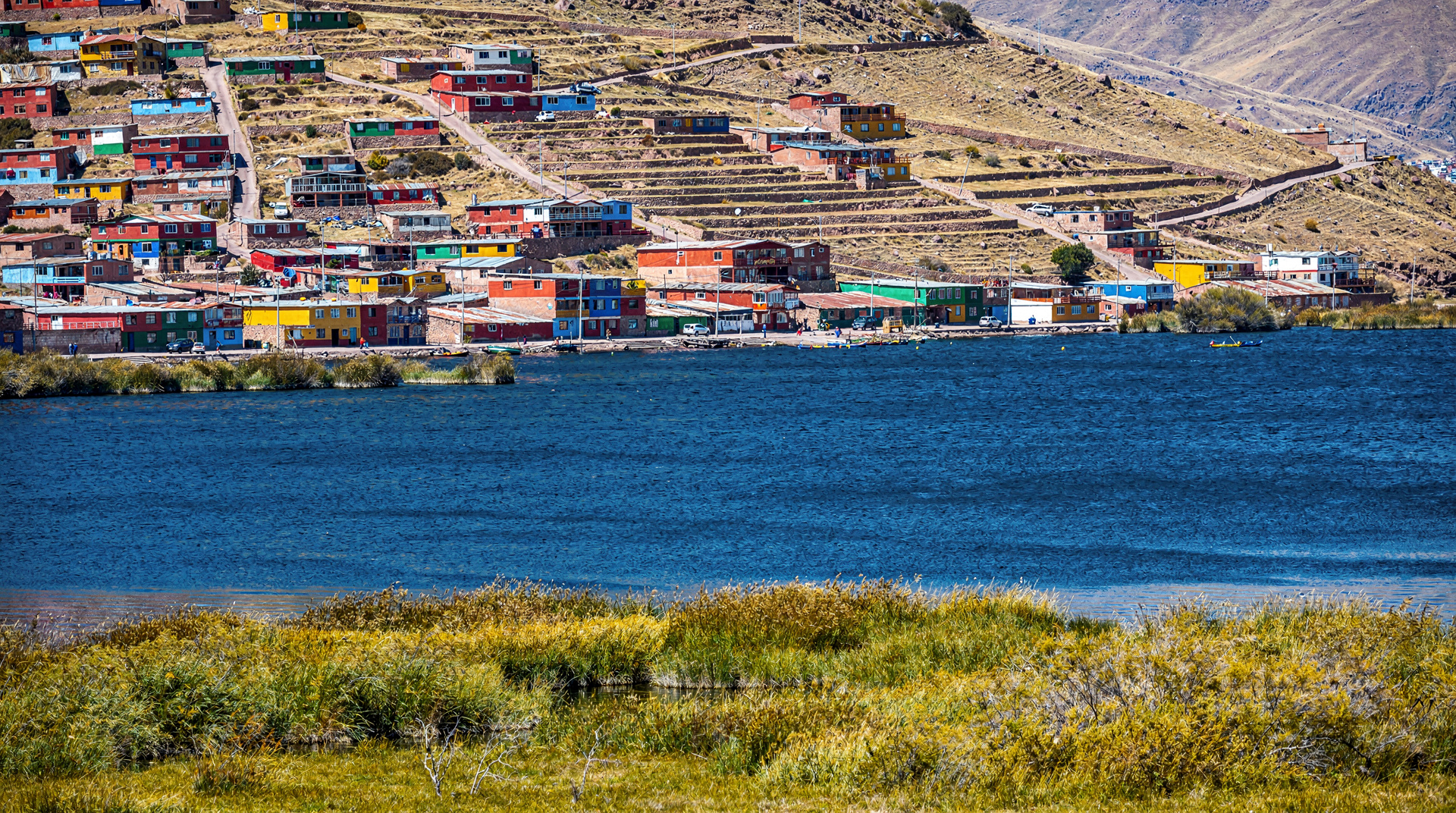
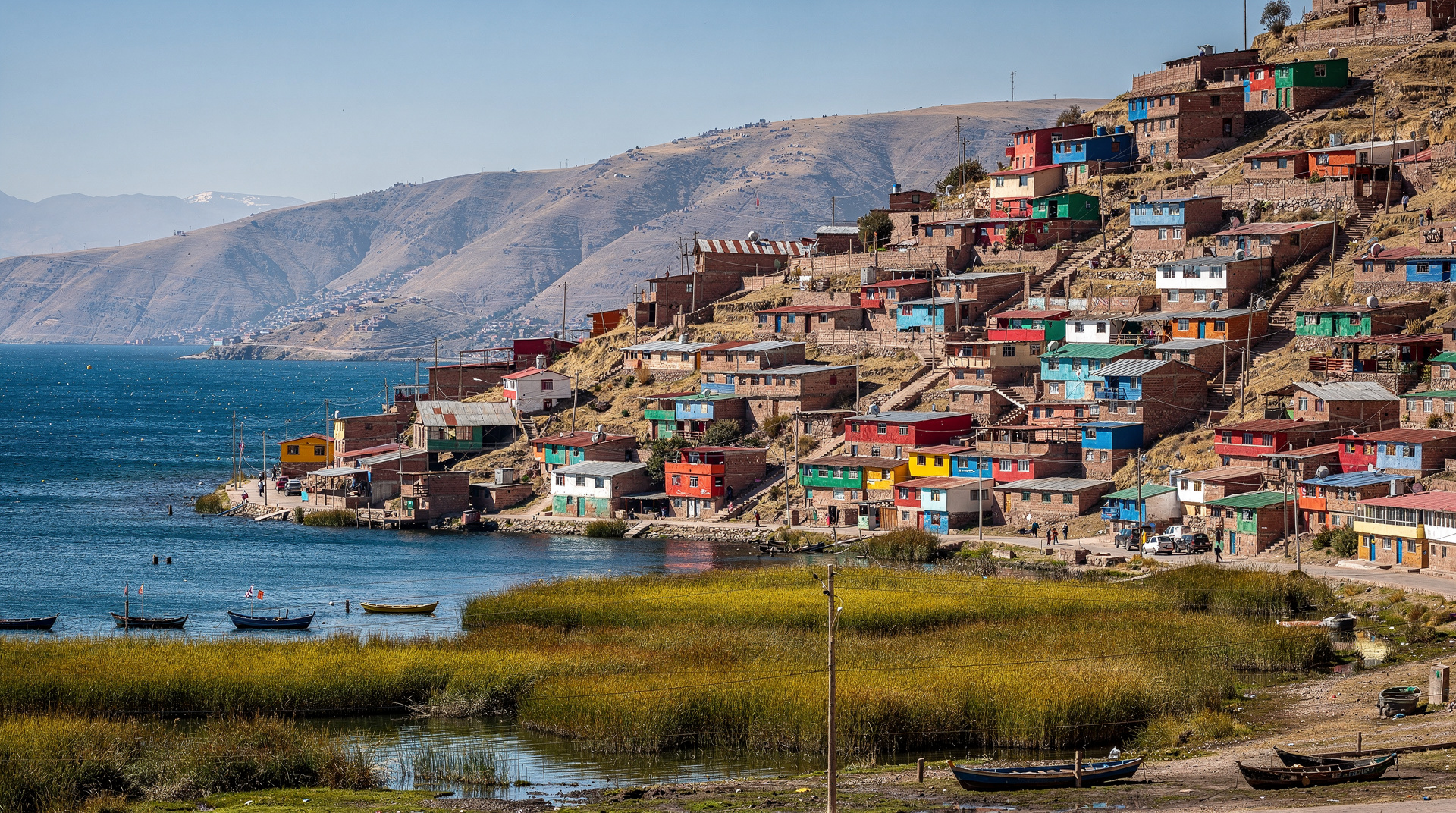
For visitors arriving from Cusco, the 6–7 hour bus ride or 1-hour flight to Puno drops you at the lakeside town that serves as the base for all Titicaca excursions. The wildlife is best in the morning, before the wind picks up and the light becomes harsh.
The star species: Titicaca flightless grebe
The Titicaca grebe (Rollandia microptera) has the most restricted range of any South American bird and is arguably the most remarkable endemic wildlife sight in Peru. It has been flightless since the last glacial retreat, when the lake’s abundance of fish removed any evolutionary pressure to fly. It swims powerfully, dives to 10 m depth, and nests in the reed beds around the lake margin.
The population is estimated at 1,500–2,000 individuals, all living on Lake Titicaca. Sightings are possible from any boat tour crossing the reed beds, but dedicated birding boat trips from Puno increase your chances significantly. Look for a medium-sized, all-dark grebe with a reddish-brown neck patch swimming alone or in pairs in open water near reeds. The species is listed as Endangered due to reed bed loss, fishing net entanglement, and lake level changes.
Giant coots and their floating nests
The Andean giant coot (Fulica gigantea) is improbable. It weighs up to 2.5 kg — comparable to a large domestic chicken — and is one of the heaviest birds in the Americas capable of sustained flight, though it takes a long running start to achieve it. Giant coots are abundant in the shallower parts of Titicaca and are impossible to miss on any lake tour.
Their nests are what make them memorable. Giant coot pairs construct floating platforms of bundled reed and aquatic plants that can measure 2–3 m across and reach a metre in height. Multiple nests cluster in the same area, and the territorial interactions between neighbouring pairs — involving loud calling, wing-spreading and occasional physical combat — provide sustained entertainment at no extra charge.
On a full-day Uros and Taquile tour, the boat passes through reed beds on the crossing to the Uros islands where giant coots are reliably visible along with Andean coots, puna ibis, white-tufted grebes, and various ducks.
Flamingos at altitude
Three flamingo species are present in the Andes: Chilean, Andean and James’s flamingos. All three can be seen around Lake Titicaca, particularly in the shallow marshy areas of the Ramis delta on the northern Peruvian shore. Flamingos feeding in still water at 3,810 m beneath snowcapped Bolivian peaks is one of the stranger sights Peru offers.
Numbers at Titicaca are modest compared to the flamingo colonies of the Chilean altiplano (Atacama and Lauca), but sightings of small groups (5–30 birds) are regular from October through April when breeding season draws birds to the reed beds. Your boat driver will usually know which areas currently have flamingos.
Andean geese and highland ducks
The reed beds and open lake shore support a full suite of high-altitude waterbirds beyond the headline species. Andean geese (Chloephaga melanoptera) are large, striking black-and-white birds that graze the totora reed margins. Puna ibis (Plegadis ridgwayi) wade in shallow areas. Torrent ducks, yellow-billed teal, puna teal and crested ducks are all present depending on season and location.
The open lake hosts Silvery grebes and Andean lapwings on the short-grazed shore above the water line. The Peruvian meadowlark and Andean flicker are both visible around Puno and the Uros community areas. For birders, a morning of careful watching around the reed beds before joining the standard Uros tour is worth the early rise.
The Uros floating islands: wildlife habitat in plain sight
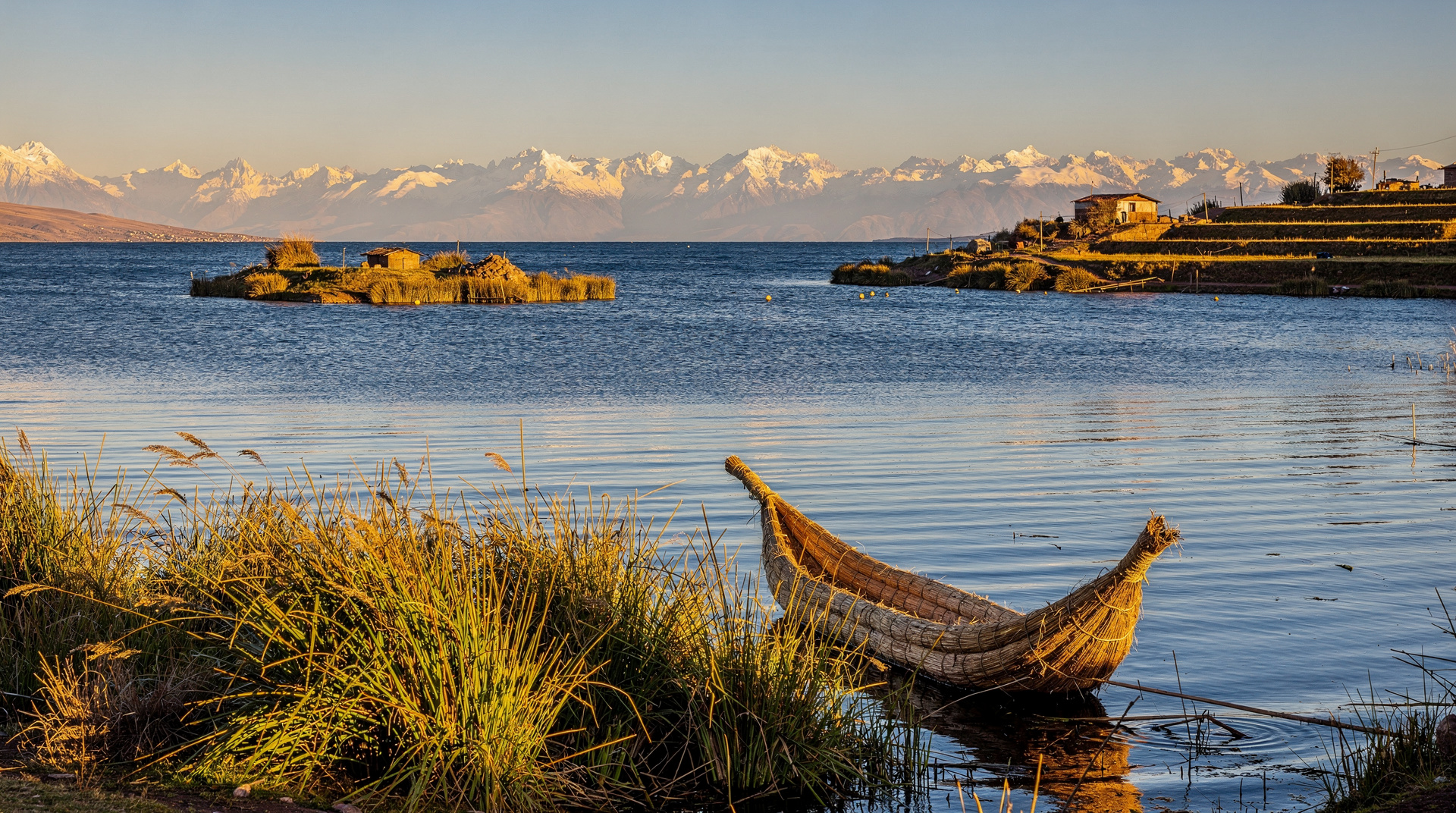
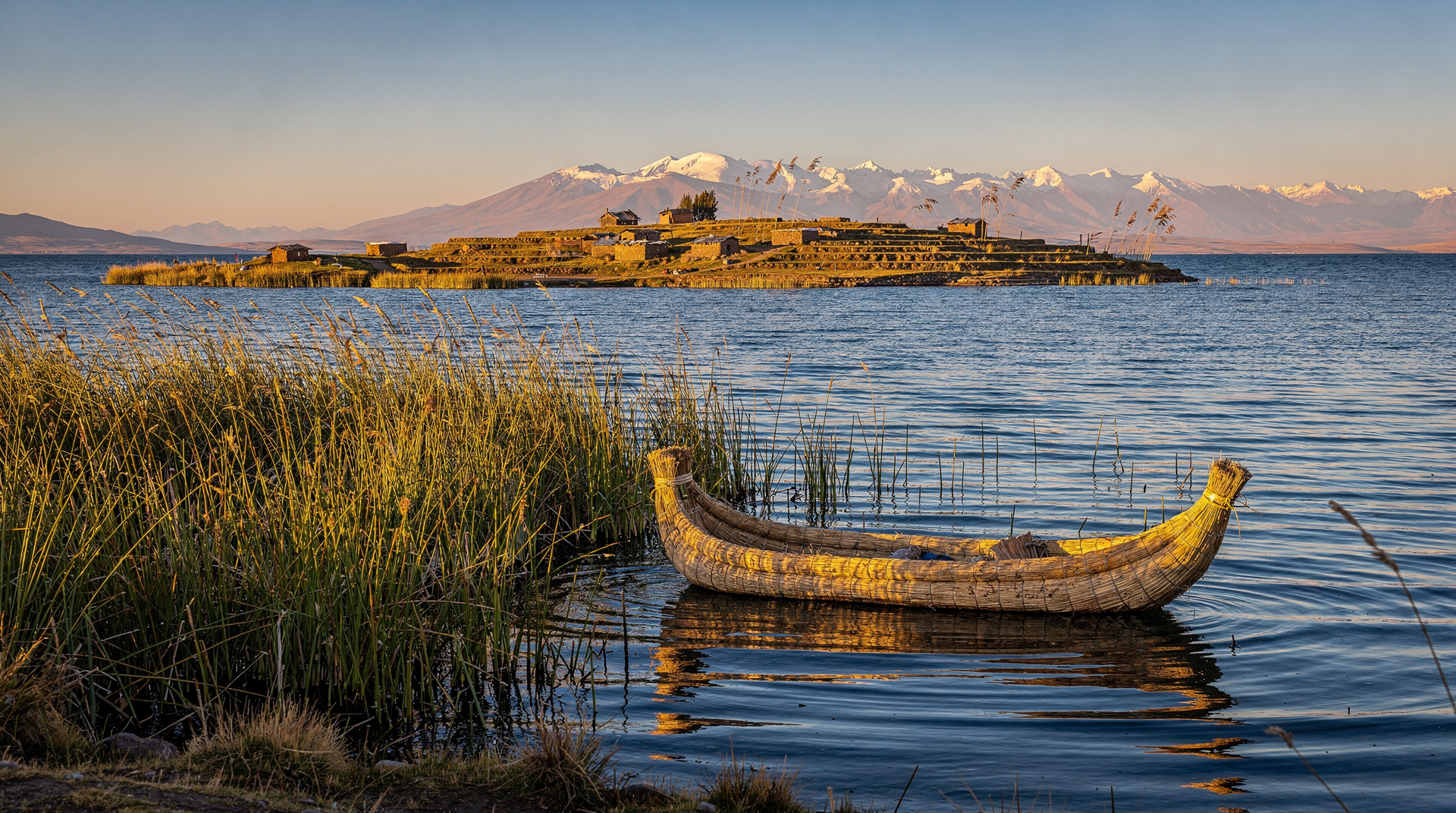
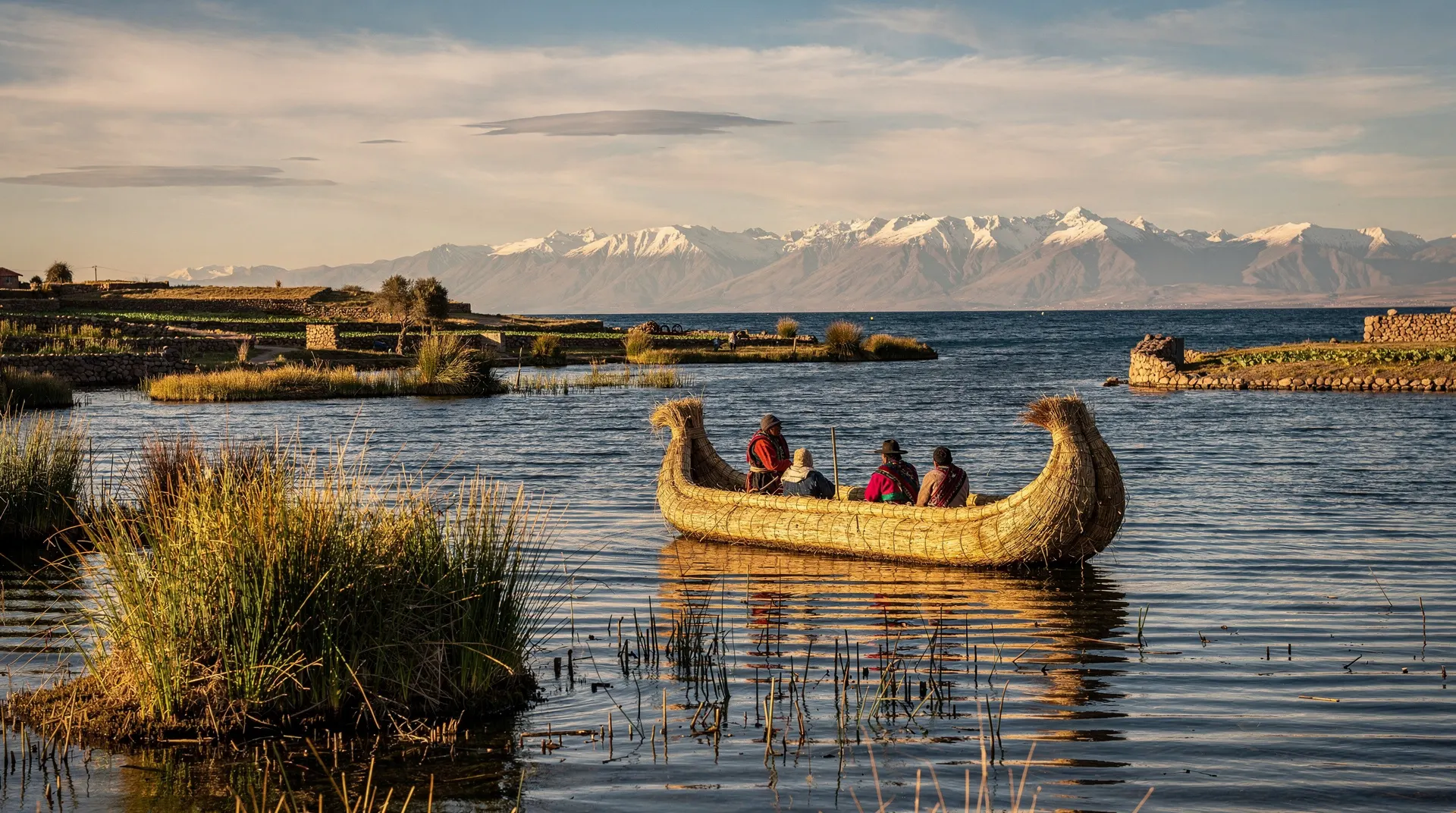
The Uros islands — constructed from bundled totora reeds by the Uros people over hundreds of years — are a tourist experience that doubles as wildlife observation. The reed beds surrounding the islands support exactly the species most difficult to observe from a moving boat: Titicaca grebes swim close to the reed margins, giant coot nests are visible from island level, and the reed stalks are hunting grounds for marsh wrens and Wren-like rushbirds.
A half-day or full-day tour to the Uros islands, which includes the fascinating and well-explained cultural experience of island life, naturally passes through the most wildlife-rich part of the reserve. Understanding the reed ecosystem — used for food, fuel, construction and medicinal purposes — adds an ecological dimension to what can otherwise feel like a purely cultural visit.
Taquile Island and migratory birds
Taquile Island, 45 km from Puno in the open lake, hosts fewer endemic waterbirds than the reed beds but offers a different wildlife experience: the rocky hillsides and terraced fields attract montane species including Andean flicker, sierra finch, ground-dove, and various tyrant-flycatchers found across the high Andes. The lake crossing to Taquile on the full-day tour passes areas of open water where sea-going cormorants — Neotropic cormorants — fish in loose groups alongside grebes.
Andean cat and foxes: the unseen mammals
Lake Titicaca’s fame as a wildlife destination rests on birds, but the lake margin and surrounding puna grassland support a quietly impressive mammal list. Andean foxes (Lycalopex culpaeus) are occasionally seen at dawn and dusk near the reed edges. Viscachas — large, rabbit-like rodents related to chinchillas — live in the rocky areas above the lake shore. The Andean cat (Leopardus jacobita), one of the world’s rarest felids, inhabits the high rocky terrain further from the lake; a sighting would be exceptional but is not impossible for patient, early-rising visitors.
Getting to Lake Titicaca from Cusco
The Cusco to Puno transport guide covers all options. The most popular is the tourist bus service (Ruta del Sol and similar) which takes 7–8 hours but stops at Andahuaylillas church, Raqchi temple ruins and Pucara on the way. This turns the journey into a day of sightseeing and is far better than the express bus for first-timers. Cost: S/70–120 ($19–32 USD) per person.
The direct overnight train (PeruRail, Cusco to Puno, 10 hours) is a scenic alternative with comfortable seating and dining service. Cost: S/200–320 ($54–86 USD) per person.
Wildlife watching practicalities
The reed beds are most active in the early morning, 6:00–9:00 am, when birds are feeding before the wind picks up. Join the first tour boat of the day (departing Puno dock around 7:30 am) rather than the more convenient 9:00 am departure.
Bring binoculars — 8x42 is suitable for open lake watching. Sunscreen is essential at 3,810 m; UV radiation at this altitude is extreme and the lake surface reflects it. Warm layers matter: even in dry season, the early morning lake wind is cold.
The full-day Uros and Taquile tour from Puno runs S/90–150 ($25–40 USD) including boat, guide and Taquile entry. The Peru 10-day Cusco and Titicaca itinerary incorporates two nights in Puno for the wildlife watching to feel unhurried.
The reed ecology: totora as keystone species
The totora reed (Schoenoplectus californicus subsp. tatora) is the architectural foundation of Lake Titicaca’s ecology. It grows in vast stands in the shallow margins of the lake to depths of 3–5 m, providing nesting substrate for giant coots, cover for grebes, food for waterfowl, and the raw material for the Uros floating islands and traditional boats.
Understanding totora’s role changes what you see from the tourist boat. The seemingly impenetrable reed wall is a stratified habitat: the outer face, in open water, is where diving birds fish; the interior, where boats cannot penetrate, is where grebes and coots nest. The marginal zone where reed meets open water is where most of the bird activity you observe actually happens.
Totora is also edible. The lower white section of young reed shoots — locally called chullo — is eaten raw by children and adults in the Uros communities and has a mild, slightly sweet flavour. On the Uros island visits, community members may offer you the fresh shoot to try; it is a genuine food source that sustained the Uros population long before tourism.
Fish of the deep lake and their hunters
Lake Titicaca was once home to many endemic fish species including the Orestias genus (pupfish relatives found nowhere else). The introduction of rainbow trout for fishing in the 1940s and the introduction of silverside (pejerrey) in the 1970s dramatically altered the fish community, driving several endemic species to extinction and reducing others. The current fish community is largely dominated by trout and pejerrey in the open lake; endemic orestias survive in high-altitude streams feeding the lake.
The giant river otter (Pteronura brasiliensis) does not occur at Titicaca — that species is Amazonian. River otters (Lontra longicaudis) do occur around the lake margins in small numbers; sightings are occasional rather than reliable. The birds, particularly the Titicaca grebe and giant coot, fill the fish-hunting ecological niche here rather than mammals.
Amantaní Island and the homestay experience
Beyond the standard Uros and Taquile day trip, a two-day tour extends to Amantaní Island for an overnight homestay with a local family. Amantaní is a largely treeless island with Inca temples on two hilltops and a farming community that has hosted visitors since the early 1980s. The homestay model distributes income directly to individual families on a rotation system.
The wildlife dimension of an Amantaní overnight: the island’s elevated shoreline provides excellent conditions for early morning bird watching before the day trippers arrive. Andean geese, puna ibis, and various ducks feed undisturbed on the east shore before 7 am. Titicaca grebes are visible in the bay below the main village at dawn.
Bolivia side of the lake: Isla del Sol
The Bolivian side of Lake Titicaca includes Isla del Sol, the mythological birthplace of the first Inca and a significant archaeological site. Copacabana on the Bolivian shore is the main tourist base. The wildlife of the Bolivian side of the lake is essentially continuous with the Peruvian side; the lake does not respect the international border.
Crossing to Bolivia from Puno is straightforward (border crossing at Yunguyo or Desaguadero, both with regular public transport) and worthwhile if your itinerary allows. The Cusco to Puno transport guide and Bolivia border crossing information are covered separately; this guide focuses on the Peruvian side for the wildlife perspective.
Puno festivals and lake access
Puno is one of Peru’s most festive cities: the Candelaria festival in early February brings weeks of dance, costume and music from surrounding communities, and is one of the largest folk festivals in the Americas. The festival draws large crowds to Puno and accommodation books out entirely. If your visit coincides with Candelaria (late January through mid-February), book accommodation and tours far ahead; wildlife watching will be incidental to the festival experience.
At other times of year, Puno operates at a quieter pace that makes early morning wildlife boat trips very easy to arrange. The dock area at Puno is modest and informal; arranging a private dawn boat tour for serious bird watching (S/80–150 for a 3-hour private tour including guide and boat) is entirely possible by walking to the waterfront in the evening and talking to the boat operators directly.
Photography and equipment notes
Lake Titicaca’s wildlife photography has a particular character shaped by the water, the light, and the altitude. Reflections off the open lake are intense from mid-morning onward, so a polarising filter measurably improves colour saturation and cuts glare for both bird and landscape shots. Birds like the Titicaca grebe are often distant and dive frequently, so a longer lens (400mm equivalent or more) or a capable superzoom compact makes a real difference over a standard travel lens.
Because boats move and rock, image stabilisation or a faster shutter speed matters more than a wide aperture. Early morning light, before 9 am, is both when wildlife is most active and when the low-angle sun gives the richest colour on the reed beds — another reason the first boat of the day outperforms the standard mid-morning departure for photography as well as sightings.
Conservation context: a fragile wetland under pressure
The Titicaca National Reserve protects the Peruvian side’s reed beds, but the ecosystem faces real ongoing pressure. Untreated sewage entering the lake from Puno and other lakeside towns has degraded water quality in bays closest to urban areas, contributing to algal blooms that affect both wildlife and the traditional Uros way of life. Overfishing and the historical introduction of trout and pejerrey have reduced the diversity of the native fish community that once supported a richer food web.
Climate-driven changes in lake level affect reed bed extent, which directly affects nesting habitat for the Titicaca grebe and giant coot. None of this should discourage a visit — tourism revenue is one of the few economic forces supporting conservation funding and community stewardship of the reed beds — but it is useful context for understanding why guides and community members are often visibly invested in explaining the reserve’s ecological fragility alongside its cultural significance.
Fitting the lake into a wider Peru trip
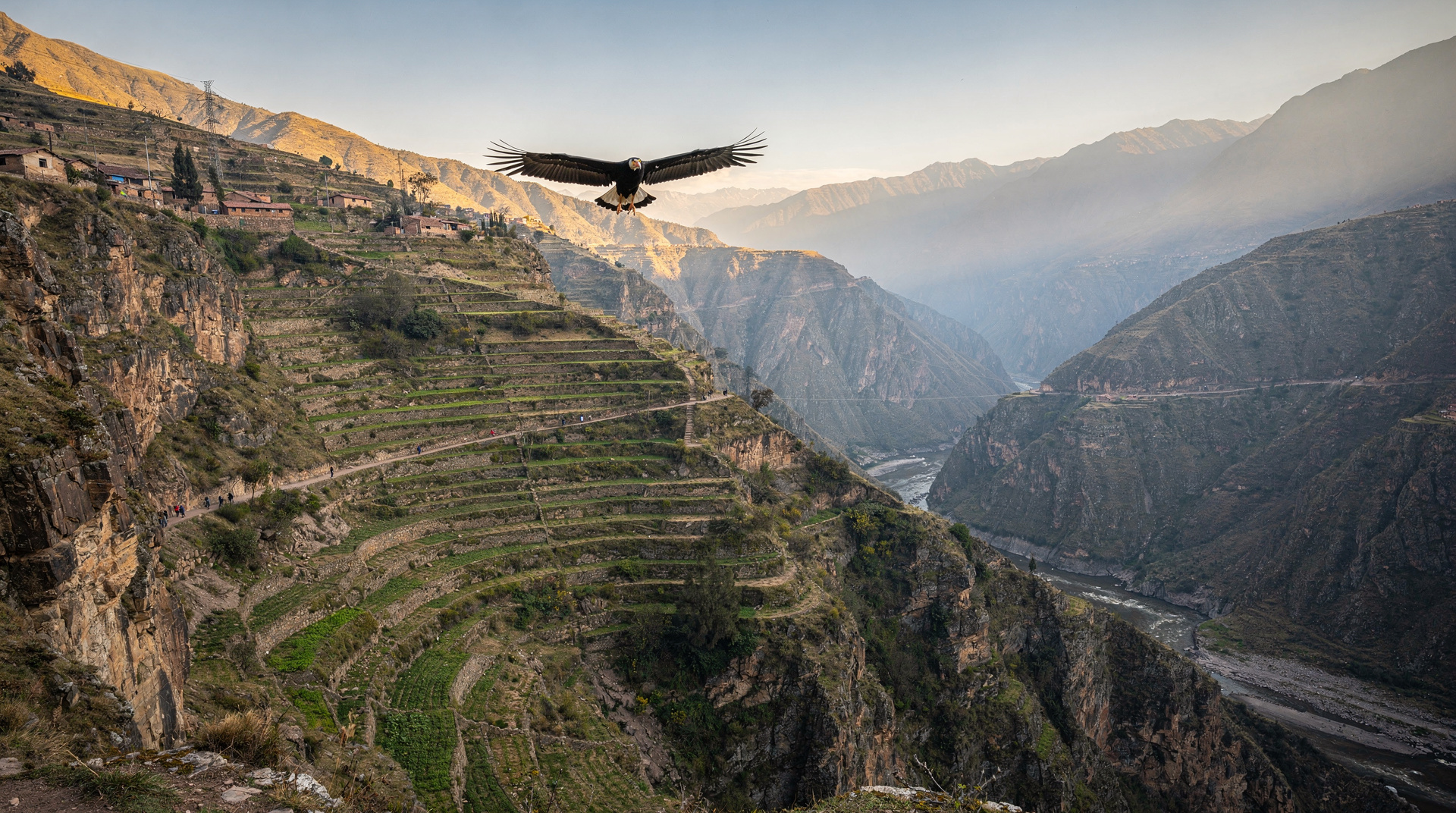
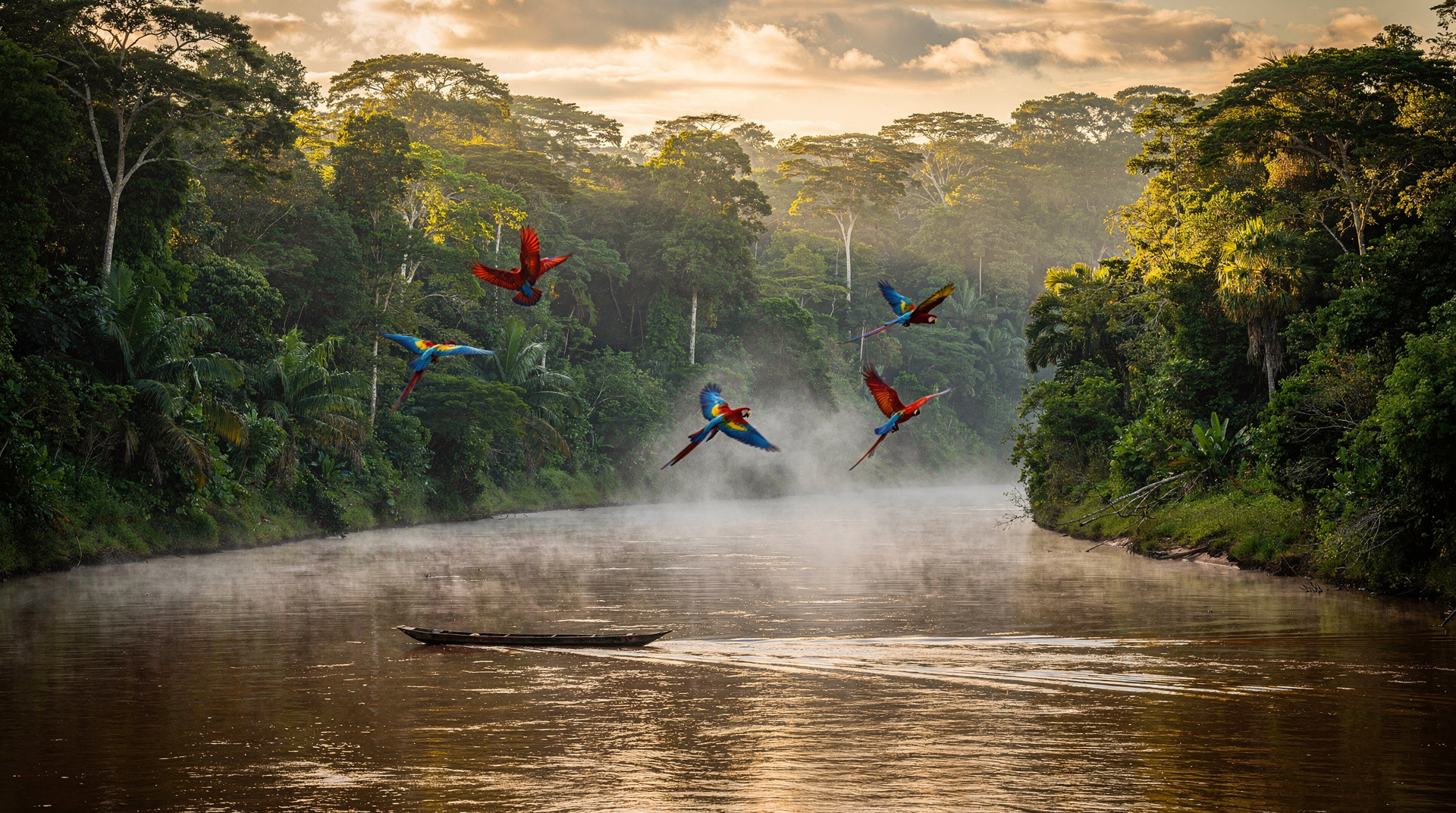
Titicaca works best as one chapter in a longer southern Peru route rather than a stand-alone destination. If the birds are what draw you, the same trip can include other wildlife stops: the condors of the Colca Canyon guide and the Colca Canyon itself sit on the road between the lake and Arequipa, while the rainforest species described in the Amazon from Cusco guide offer a very different kind of birdwatching.
Think of the three as complementary. The lake gives you waterbirds and reed-bed ecology at altitude, the canyon gives you big soaring birds, and the Amazon gives you forest species and mammals. Seeing all of them across one trip makes the contrast between Andean and lowland ecosystems far easier to appreciate.
Acclimatising before you go out on the water
Because the lake is so high, it pays to arrive prepared. The Cusco acclimatization plan explains how to spread out your first days, and the altitude sickness guide for Cusco covers symptoms and what to do about them. Travellers who spend time in the Sacred Valley first often find the lake easier to handle, since they have already adjusted before the long journey south.
For a first-hand account of an overnight on the water, read the Lake Titicaca homestay diary. If you are still deciding how the lake fits your dates, the guide to the best time to visit Cusco and the guide to the dry season help you weigh weather against crowds. Puno itself is covered in the Puno destination page, and the culture of the islands continues on the Taquile Island page.