Cusco & the Amazon: 7-day itinerary
Tambopata Peruvian Amazon Jungle for 3 Days / 2 Nights
Two worlds in one week
Peru contains extraordinary geographical range. In seven days it is possible — with careful logistics — to experience both the high Andes and the Amazon basin. This itinerary combines three nights in the Sacred Valley and Cusco area (including Machu Picchu), then pivots to Puerto Maldonado and the Tambopata National Reserve for three nights of jungle — macaws, caimans, river dolphins, and one of the highest concentrations of bird species on earth.
The altitude shift is the structural key. The itinerary moves from high altitude (3,400 m in Cusco) to near sea level (300 m in the Amazon) after the mountain section. This sequence — Andes first, jungle second — is physiologically easier than the reverse. Arriving in Cusco after three days in the low jungle and attempting to acclimatise at altitude with an already fatigued body is harder. By going Andes-first and jungle-second, you also ensure the most altitude-sensitive days come when your body is freshest.
Logistics note: Puerto Maldonado (MBP airport) is served by direct flights from Cusco on LATAM and Star Peru. Flight time is approximately 50 minutes, making the transition between these two entirely different worlds surprisingly simple. Flights depart Cusco from around 7 a.m. Book in advance; seats sell out in high season.
Amazon timing: The Amazon around Tambopata has two rough seasons — the dry period (May–October) when river levels fall and wildlife concentrates around water sources, and the wet period (November–April) with daily afternoon rain but lush green vegetation and easier oxbow lake access. Both have their strengths. Most wildlife lodges operate year-round. See best time to visit Cusco and the Amazon for the seasonal breakdown.
| Where | Cusco/Sacred Valley/Machu Picchu, then Tambopata (Amazon) |
| Cost | around $701–1,276 per person, excl. international flights |
| Time needed | 7 days minimum for both regions properly |
| Getting there | Fly CUZ, then domestic flight CUZ–MBP (~50 min) |
| Best time | Dry season (May–October) for easiest Amazon wildlife viewing |
Andes-first vs jungle-first: why sequencing matters
It is tempting to reverse this itinerary — jungle first, Andes second — especially if flight timing makes it convenient. Resist that temptation. Arriving in the Amazon lowlands straight off an international flight is easy on the body, but then flying up to Cusco’s 3,400 m afterwards means acclimatising to serious altitude while already travel-fatigued from several days of jungle heat and humidity. Doing the Andes section first, while your body is freshest, and dropping to the Amazon’s near sea level second is physiologically the easier direction — descending is never the hard part. If your international flights genuinely only work the other way round, build in an extra buffer day in Cusco before any strenuous activity.
Day 1: Arrive in Cusco — Sacred Valley
Altitude: 2,800 m
Fly into Cusco Airport (CUZ). Transfer immediately to the Sacred Valley rather than sleeping in Cusco tonight — the 600-metre difference between 3,400 m and 2,800 m materially improves your first night’s sleep. Shared shuttles to Ollantaytambo cost S/25–35; a private transfer runs S/100–140.
Settle in the valley. Walk gently, eat lightly, drink water, avoid alcohol. Look up at the Ollantaytambo fortress from the plaza. You will climb it tomorrow morning.
Where to stay: KB Tambo (S/200–350), El Albergue (S/300–500), or valley guesthouses. Ollantaytambo gives the best access for day two’s activities and is 90 minutes from Machu Picchu on the train.
Day 2: Ollantaytambo — Machu Picchu — Aguas Calientes overnight
Altitude range: 2,800 m to 2,430 m
An early train from Ollantaytambo to Aguas Calientes — depart by 6–7 a.m. Book your timed Machu Picchu circuit ticket in advance at tuboleto.cultura.pe. The train and entrance combination covers the logistics cleanly.
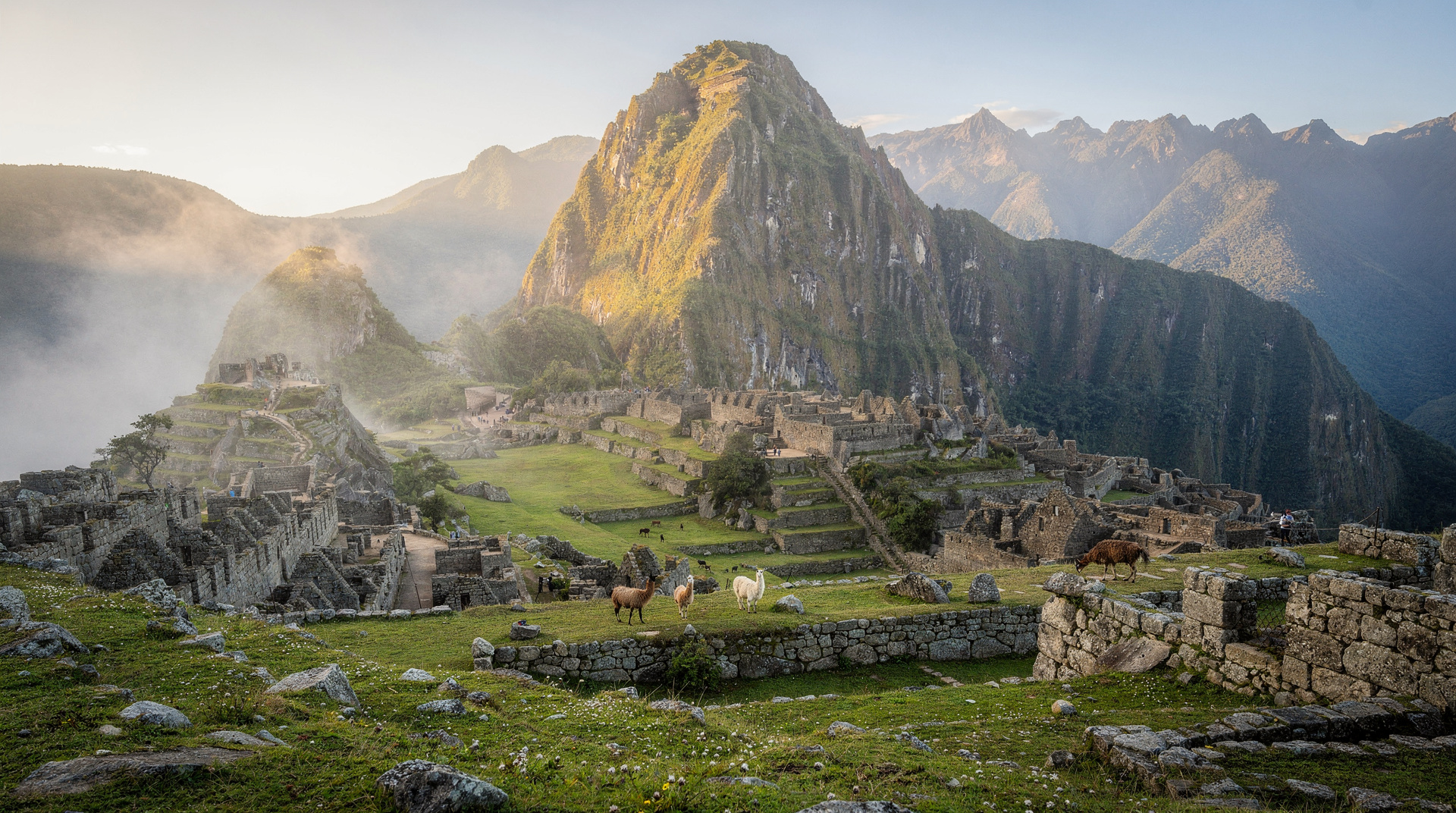
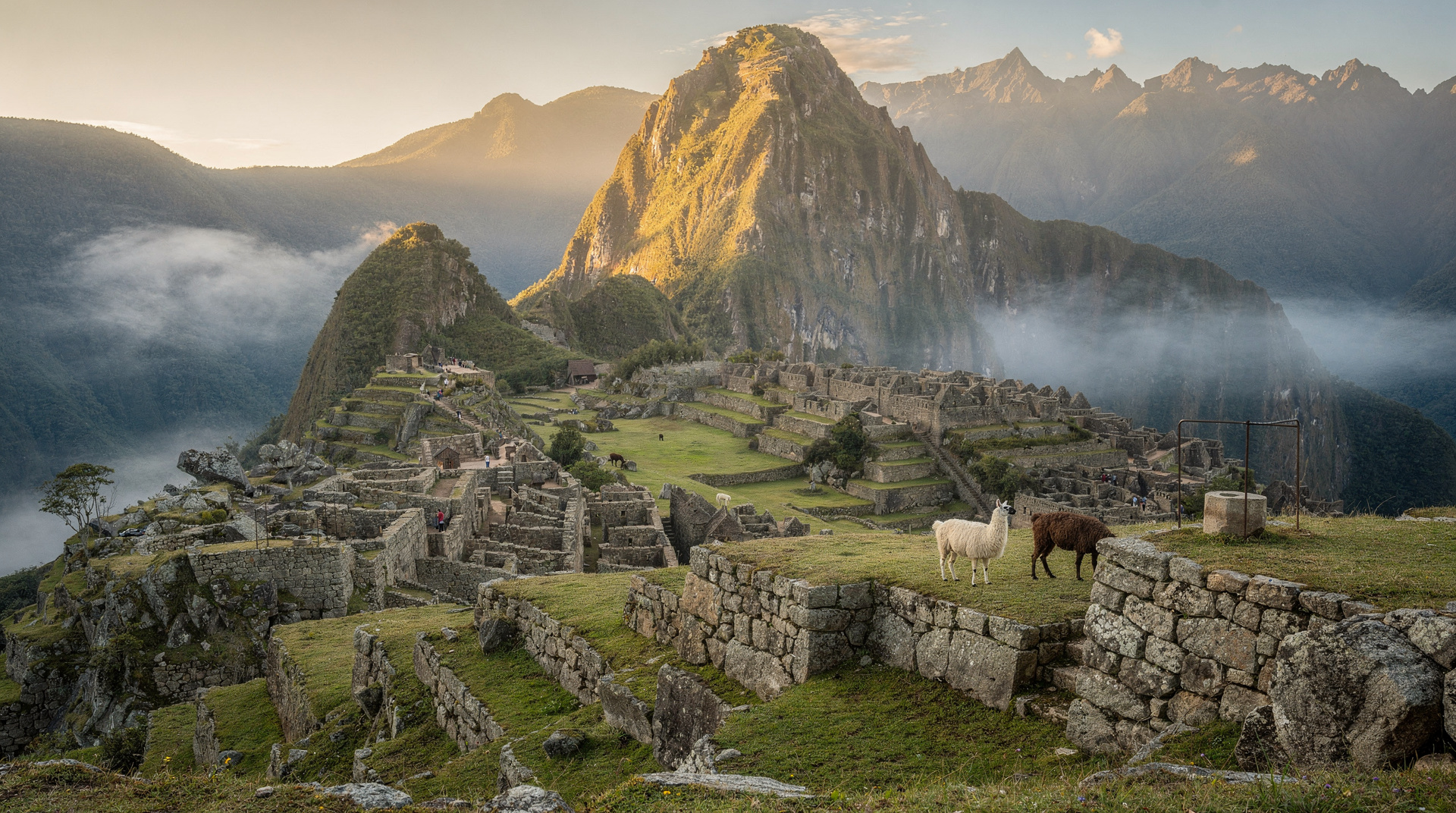
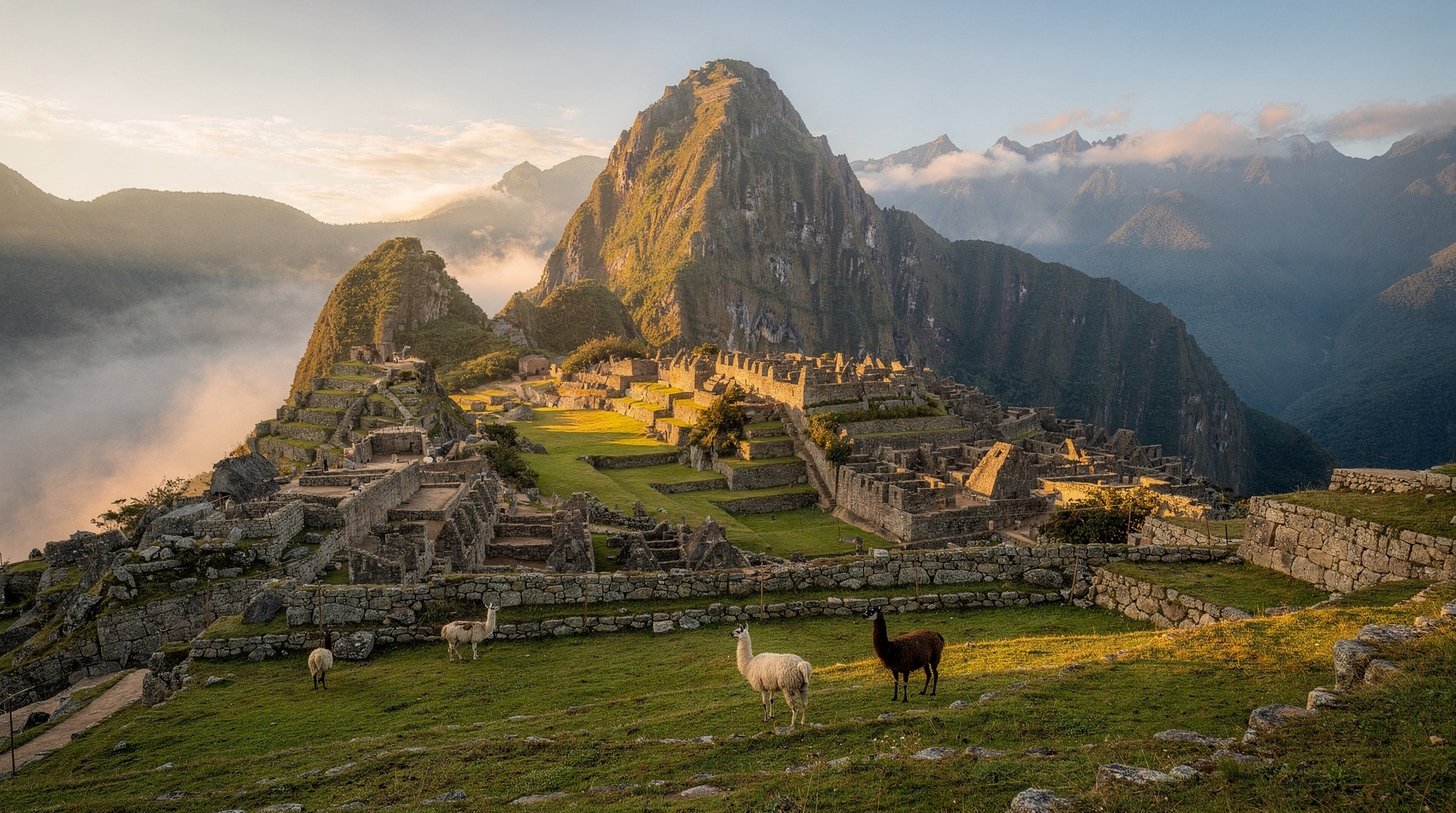
At the citadel, Circuit 2 gives you the full main sector in 2.5–3 hours — the Intihuatana stone, Temple of the Sun, Sacred Plaza, Sun Gate approach. The citadel at 2,430–2,700 m will feel lower and easier after Cusco-area altitudes. Give it the full afternoon if you can — stay through the midday rush and into the quieter late afternoon.
Sleep in Aguas Calientes tonight rather than returning to Ollantaytambo. This gives you the option of an early morning visit to the citadel at the top of the crowd queue, and it makes day three’s departure easier. Budget dorm beds in Aguas Calientes: S/40–70. Mid-range private rooms: S/150–280.
Day 3: Machu Picchu second morning (optional) — return to Cusco
Altitude: 2,430 m rising to 3,400 m
If you are visiting Machu Picchu on consecutive days, you must book a separate entrance ticket for each day at tuboleto.cultura.pe. You cannot re-use the same day’s ticket. A second morning at the citadel — early, quieter, with better light — rewards trekkers who find the first visit rushed. Circuit 1 covers the agricultural terraces and the classic viewpoints and differs enough from Circuit 2 to justify a return.
If one day at the citadel is sufficient, skip the morning Machu Picchu visit and take the first train back to Ollantaytambo by 9 a.m., arriving in Cusco by mid-morning. This gives a half-day in Cusco city.
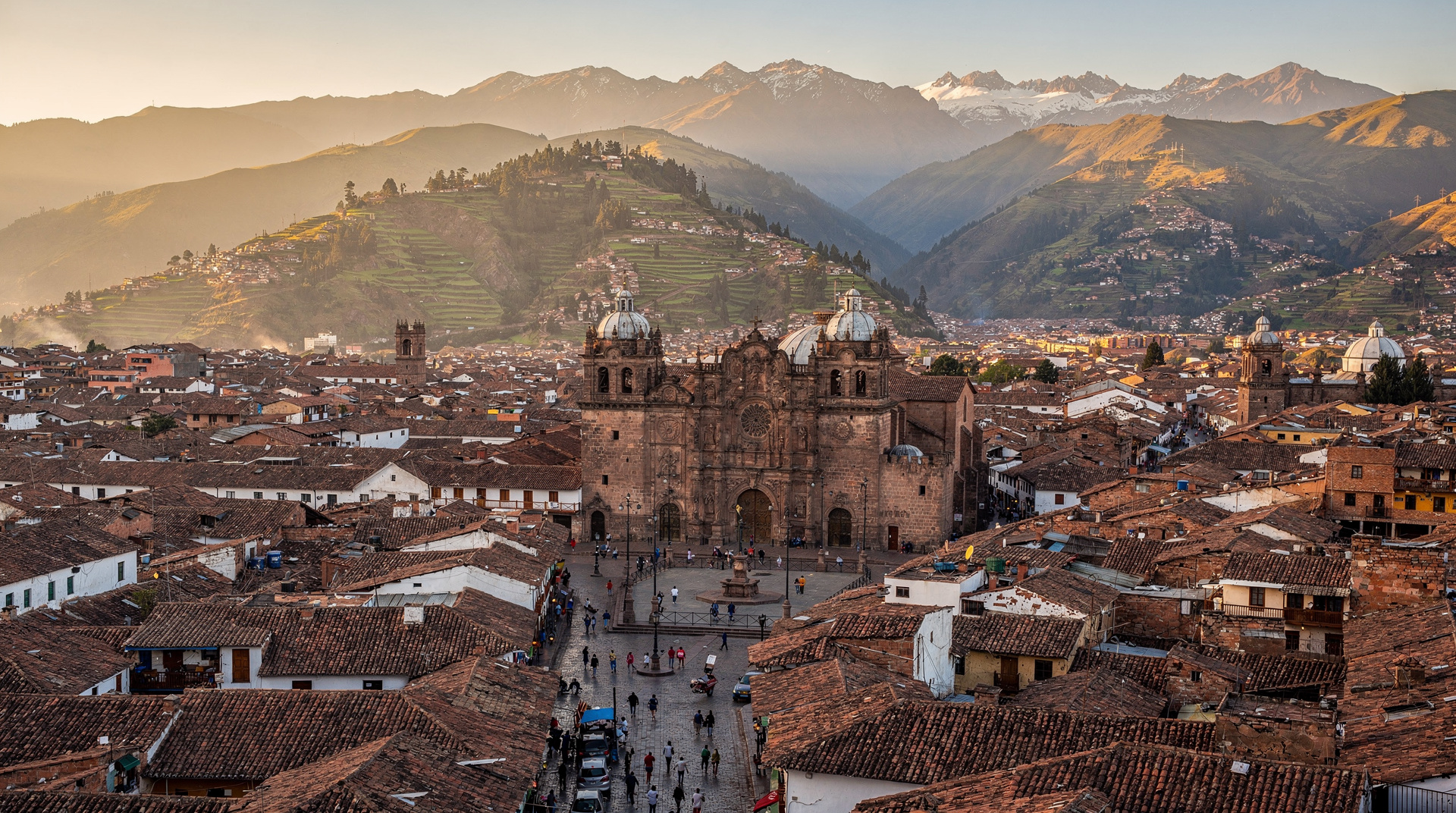
In Cusco, focus the available hours on Qorikancha (Temple of the Sun, S/15) and a walk through San Blas. The half-day is enough for both. The historic centre is walkable from any central hotel.
Check into your Cusco accommodation. Eat a good dinner; tomorrow you fly to the jungle.
Day 4: Fly to Puerto Maldonado — Tambopata lodge transfer
Altitude: 300 m
Morning flight from Cusco (CUZ) to Puerto Maldonado (MBP) — approximately 50 minutes. Book flights 4–8 weeks in advance on LATAM or Star Peru; fares are S/180–350 one way from Cusco. Arrive in Puerto Maldonado before 9 a.m. if you take the first flight, giving maximum time for the river transfer.
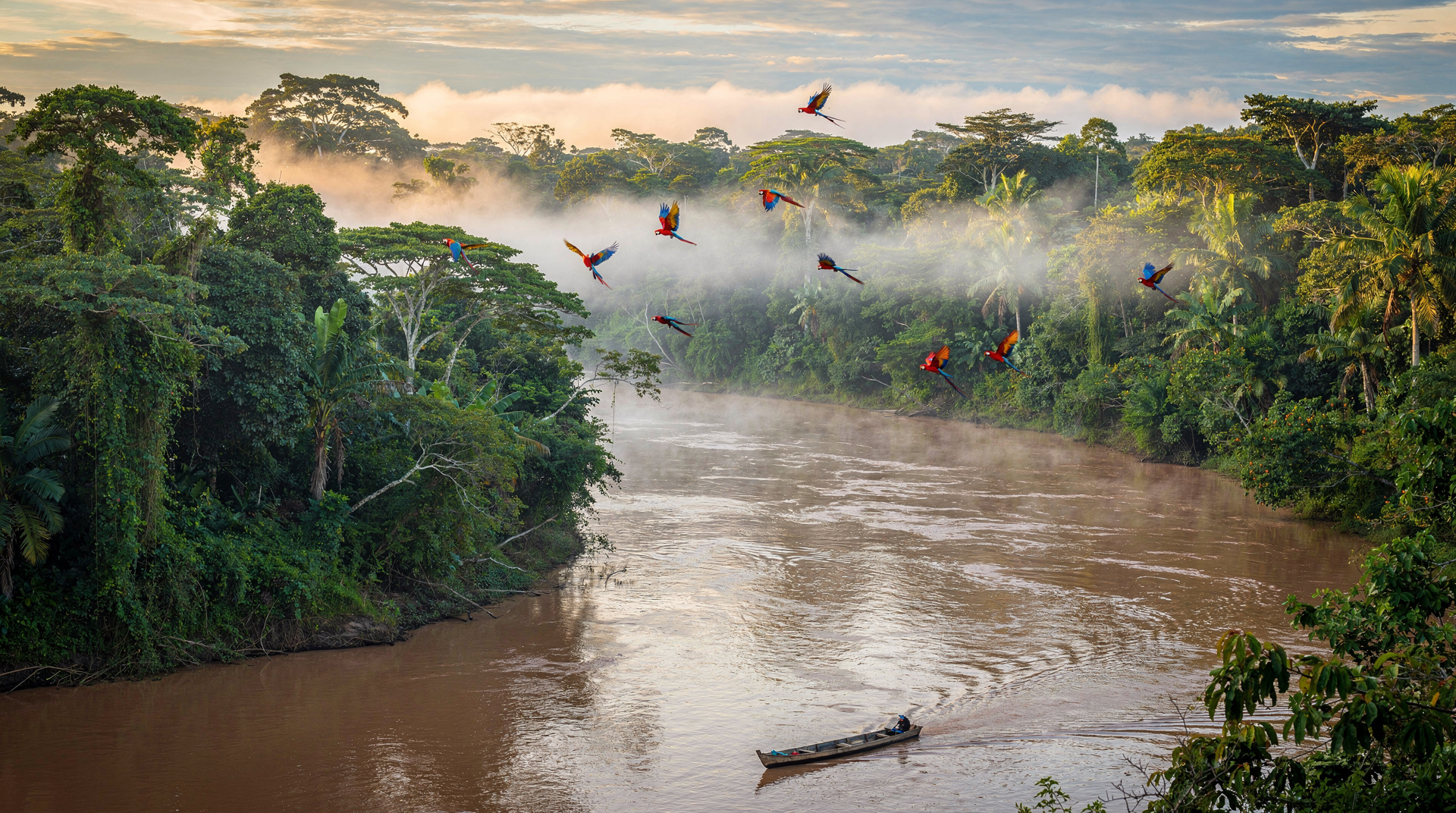
Your Tambopata lodge will arrange airport pickup. The transfer involves a taxi to the Puerto Maldonado river port (25–30 minutes) and then a motorised canoe up the Tambopata River. Travel time to lodges within the Tambopata National Reserve ranges from 1 hour (basic lodges near the reserve boundary) to 3–4 hours (deeper reserves with better wildlife). The 3-day 2-night Tambopata lodge package covers accommodation, all meals, guided wildlife walks, and river transfers — exactly the right format for three jungle nights.
The jungle after the Andes is a genuine physiological reset: temperature rises to 25–32°C, humidity hits 80–90%, and the entire sensory environment flips. The first afternoon at the lodge is typically a short orientation walk in the primary forest, a visit to a clay lick (where parrots and macaws congregate to eat mineral-rich clay), and a canoe trip on the river at dusk for caiman spotting.
Day 5: Full day in Tambopata
Altitude: 300 m
A full day in the reserve. A typical day includes a pre-dawn walk for dawn bird activity (the bird diversity around the Tambopata River is extraordinary — over 600 species in the reserve, including up to 17 species of parrot and macaw), a morning boat trip on the Madre de Dios or Tambopata River, and an afternoon visit to an oxbow lake (cocha) for river otters, black caimans, and hoatzins.
Night walks (offered by most lodges, S/30–50 if not included) reveal a completely different ecosystem: tarantulas, tree frogs, stick insects, night-herons, and sometimes a tayra or kinkajou in the understorey.
The standard of accommodation in Tambopata lodges varies significantly. Expect basic but comfortable bungalows in the mid-range category — screened windows, proper beds, en-suite bathrooms. Electricity is typically limited to a few hours daily. The food at most lodges is good — fresh river fish, rice, tropical fruit, and hearty set meals timed around excursion schedules.
If you have the budget, the 4-day 3-night option extends this deep into the reserve with an additional night at a remote camp — worth it for serious wildlife watchers.
Day 6: Tambopata — final morning — return to Puerto Maldonado
Altitude: 300 m
Last morning at the lodge, usually with a dawn walk and a final breakfast. The canoe back to Puerto Maldonado and the taxi to the airport follow a tight schedule — your guide will coordinate departure times with the flight schedule.
Puerto Maldonado town is worth an afternoon if your return flight to Cusco or Lima is in the evening. The Maloka market near the port has fresh tropical fruit, local crafts, and cheap set lunches (S/15–20). The Madre de Dios riverfront promenade gives views out to the flood-plain forest.
Fly from Puerto Maldonado back to Cusco or directly to Lima depending on your onward travel. One-way flights Puerto Maldonado–Cusco run S/180–350; Puerto Maldonado–Lima (connecting via Cusco) requires a layover.
Day 7: Buffer day or Lima connection
Altitude: 3,400 m or sea level
If returning to Cusco, day seven is a buffer for delayed flights, a final morning’s shopping in San Pedro Market, or the half-day city ruins tour to Sacsayhuamán if you missed it earlier. Cusco’s domestic terminal for Lima departures (LATAM, Sky, Avianca) has frequent morning flights from around 6 a.m. — S/150–300 one way.
If connecting via Lima to an international flight, Lima’s Jorge Chávez International Airport (LIM) requires you to factor in at least a 3-hour connection minimum; 5 hours is safer given occasional Cusco weather delays.
Budget guide (per person)
| Category | Mid-range (USD approx.) |
|---|---|
| Accommodation (nights 1–3, Sacred Valley/Aguas Cal./Cusco) | $120–220 |
| Machu Picchu entrance (1 day) | $41 |
| Train Ollantaytambo–Aguas Cal. return | $65–85 |
| Cusco–Puerto Maldonado flights (return) | $95–180 |
| Tambopata 3D/2N lodge package (all inclusive) | $300–600 |
| Meals outside lodge (Cusco, 3 days) | $80–150 |
| Total per person | $701–1,276 |
Practical notes
Vaccinations: Yellow fever vaccination is recommended for travel to the Amazon and legally required to cross certain borders onward from Peru. Consult your travel health clinic at least 6 weeks before departure. Antimalarial medication is advisable for the Madre de Dios region; discuss with your doctor.
Packing: See what to pack for Cusco for the Andes layers; for the Amazon, add light long-sleeved shirts, trousers, rubber boots (often provided by lodges), a quality rain jacket, strong insect repellent (DEET 30–50%), and a head torch with spare batteries.
Tambopata vs Manu: The Amazon from Cusco guide and Tambopata vs Manu compare the two main Amazon options from Cusco. Manu National Park offers more pristine wilderness but is more expensive, harder to access, and requires longer time. For a 7-day trip, Tambopata is the realistic choice.
Insurance: Confirm your travel insurance explicitly covers jungle activities and remote medical evacuation — standard city-only policies sometimes exclude activities more than a set distance from a hospital. Puerto Maldonado has a regional hospital, but anything beyond basic care means a flight back to Cusco or Lima. Carry a basic first-aid kit and any personal medication in your daypack, not checked luggage, given the short Cusco–Puerto Maldonado flight connections.
What Tambopata actually looks like
The Tambopata National Reserve covers 274,690 hectares of primary rainforest in the Madre de Dios region. The river system is one of the most biodiverse in the Neotropics — the reserve has been the subject of multiple long-term biological surveys and holds records for reptile and butterfly diversity as well as consistently producing new species descriptions. For travellers, this translates to visible, abundant wildlife in a relatively short stay.
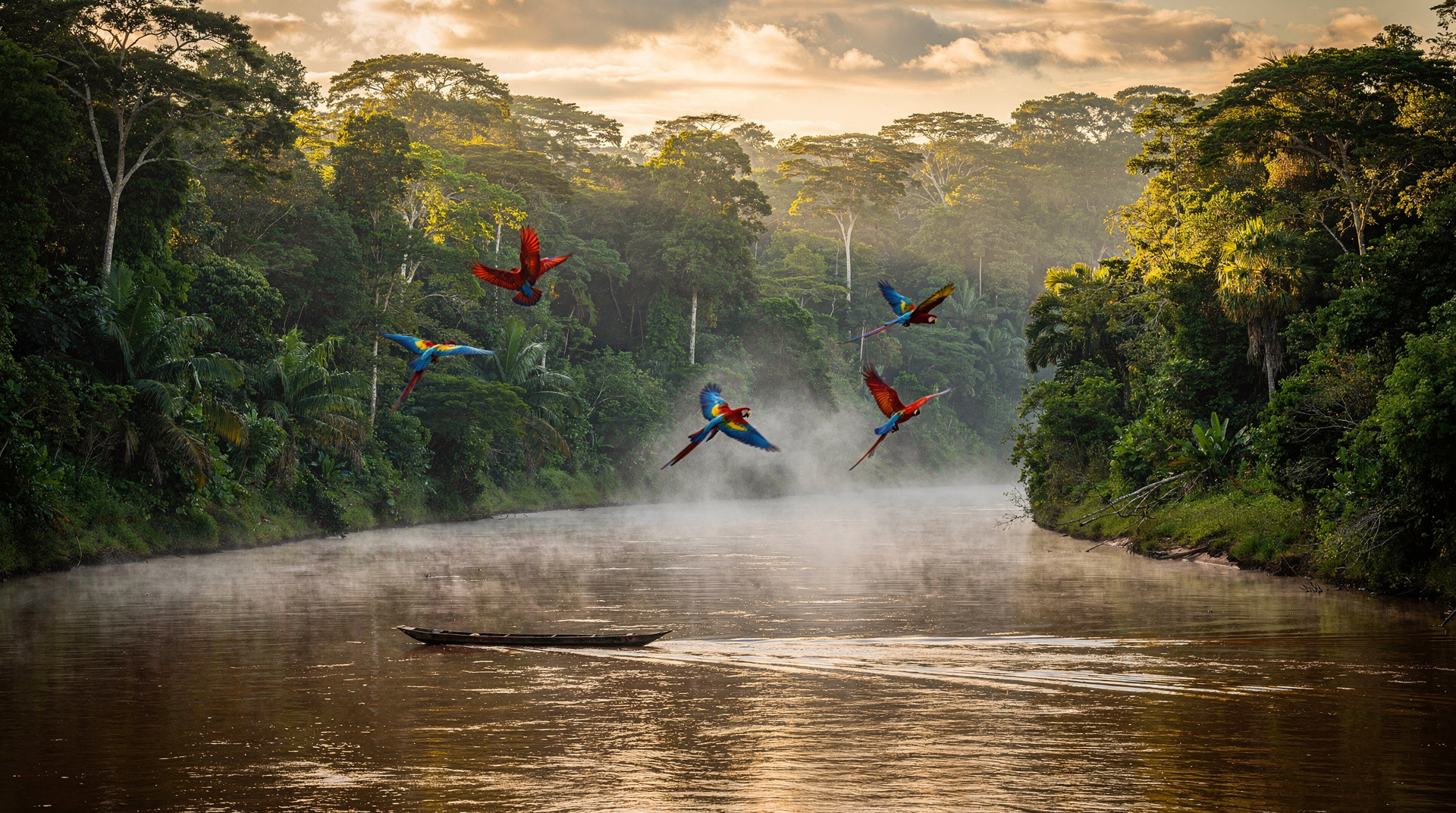
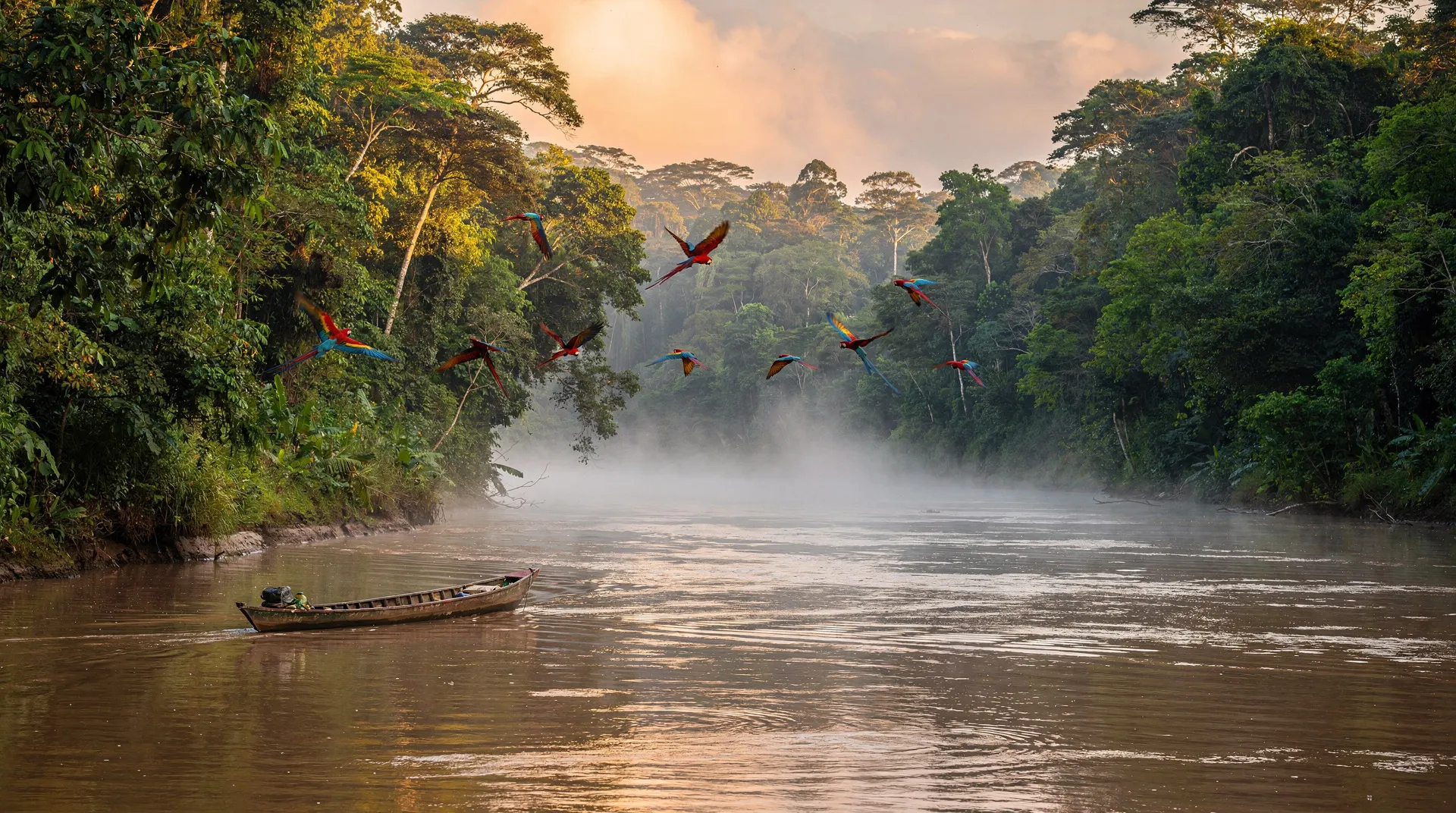
What is reliably seen on a 3-night Tambopata visit: macaws (Blue-and-yellow, Scarlet, and Red-and-green are the most common species around the clay licks), parrots and parakeets in large mixed flocks, river otters at oxbow lakes (Cocha Salvador, the largest accessible lake in the reserve, has a resident family), black caimans (commonly spotted on night canoe excursions), hoatzins (prehistoric-looking birds that smell of cow dung and are completely unmistakeable), and giant river otters if you are visiting in the dry season when water levels are lower.
What is not reliably seen: jaguars (present in the reserve but very rarely encountered — anyone guaranteeing jaguar sightings is either misleading you or describing a different, more remote reserve), tapirs (nocturnal and shy), and harpy eagles (present but extraordinarily scarce). Any operator promising guaranteed large cat sightings should be viewed with scepticism.
The clay lick (collpa) experience is worth understanding. Puerto Maldonado Amazon lodges with good river access can reach the macaw collpa — a mineral-rich clay bank on the Tambopata River — by boat in the early morning. Hundreds of macaws and parrots descend on the clay bank from around 7–9 a.m., eating the mineral-rich soil that neutralises toxins in their fruit-heavy diet. The spectacle of hundreds of blue, red, and green macaws on the orange clay is one of the iconic wildlife moments in South America and unlike anything available in the Andean section of the itinerary.
Choosing between the 3-day and 4-day Tambopata package
The 3-day 2-night package fits comfortably into this seven-day itinerary and covers the essential Tambopata experiences: clay lick, oxbow lake, night walk, and at least two guided forest walks. For most first-time Amazon visitors, this is sufficient to get a genuine sense of the ecosystem.
The 4-day 3-night option adds a full additional day, typically used for a deeper penetration into the reserve or an overnight camp. This is worth the extra day for serious wildlife watchers, photographers, or those with a specific interest in reptiles, butterflies, or night ecology. It requires replacing one of the Cusco days or extending the overall itinerary to eight days.
The practical difference: on the 3-night package you see the standard highlights with good guides. On the 4-night package you have the option of a remote camp where you are genuinely far from any lodge infrastructure, which changes the soundscape (no generator hum after 10 p.m.), the light conditions, and the wildlife encounter probability. Primary forest that has had no footfall for 24 hours before your arrival yields different encounters than forest that lodge guests walk through twice daily.
The Madre de Dios — context
Puerto Maldonado sits at the confluence of the Madre de Dios and Tambopata rivers at approximately 300 m above sea level — a drop of more than 3,000 m from Cusco in under an hour’s flight. The Madre de Dios department has one of the lowest population densities in Peru and contains some of the last large areas of intact lowland rainforest on the continent.
It is also, less happily, one of the most active artisanal gold mining regions in South America — the Madre de Dios river system upstream of Puerto Maldonado shows significant mercury contamination and deforestation from illegal mining operations. This is visible from the air on the flight from Cusco in the dry season: brown river channels surrounded by stripped land, contrasting with the dense green of the reserve to the south.
The Tambopata National Reserve was established partly in response to this pressure. The reserve boundary creates a formal protection zone that the mining operations cannot legally enter. Staying at a lodge inside the reserve rather than outside it supports both the local economy of guides and lodge workers and the conservation framework that makes the wildlife experience possible. Ask your operator explicitly whether their lodge sits inside the reserve boundary.
Travel tip: the Puerto Maldonado airport (MBP) is small, efficient, and 10 minutes from the town centre. Domestic flight checkin closes 45 minutes before departure — the same as Cusco (CUZ). Given the regional remoteness of the airport, being late is not an option. Build at least 90 minutes between your lodge river transfer and your scheduled departure time.
Frequently asked questions about Cusco & the Amazon
Should I do the Andes or the Amazon first on a 7-day Cusco-and-jungle trip? Andes first. Flying up to Cusco’s 3,400 m after several days in the humid Amazon lowlands means acclimatising to altitude on a body that is already fatigued from heat and travel. Doing the mountain section first, while you are fresh, and descending to the jungle afterwards is the physiologically easier sequence — see the sequencing note above for the full reasoning.
Is 7 days enough to see genuine wildlife in the Amazon, or do I need Manu instead? Seven days with 3 nights at a good Tambopata lodge is enough for a genuinely rich wildlife experience — macaws, caimans, river otters and exceptional birdlife are all realistic. Manu National Park is more pristine but requires significantly more time and budget than a 7-day trip allows; Tambopata is the honest choice at this itinerary length.
Choosing your Tambopata lodge distance
Tambopata lodges are not interchangeable — their distance from the Puerto Maldonado river port materially changes what you see. Lodges within an hour of the port are convenient but sit closer to fishing and local river traffic, which pushes the shyest wildlife further into the reserve. Lodges 3–4 hours upriver, deeper inside the Tambopata National Reserve, see meaningfully less human traffic and correspondingly better sightings of species like giant river otters and a wider range of macaws at the clay lick.
The trade-off is travel time eating into your three jungle nights — a lodge that is 4 hours each way effectively costs you the better part of two travel days out of a 3-night stay. For a first Amazon visit within a 7-day Cusco-and-jungle trip, a mid-distance lodge (1.5–2.5 hours) is usually the right balance.
Top experiences
Bookable activities with verified prices and instant confirmation on GetYourGuide.