Puerto Maldonado Amazon
The Peruvian Amazon from Cusco: 45-minute flight to Puerto Maldonado, Tambopata Reserve, Sandoval Lake, and macaw clay licks. Plan your jungle trip here.
Tambopata Peruvian Amazon Jungle for 3 Days / 2 Nights
Quick facts
- Country
- Peru
- Altitude
- 183 m / 600 ft
- Currency
- Peruvian sol (S/) — USD widely used
- Best for
- Amazon wildlife, macaws, Sandoval Lake oxbow, jungle lodges, birdwatching
Forty-five minutes from Cusco to the Amazon
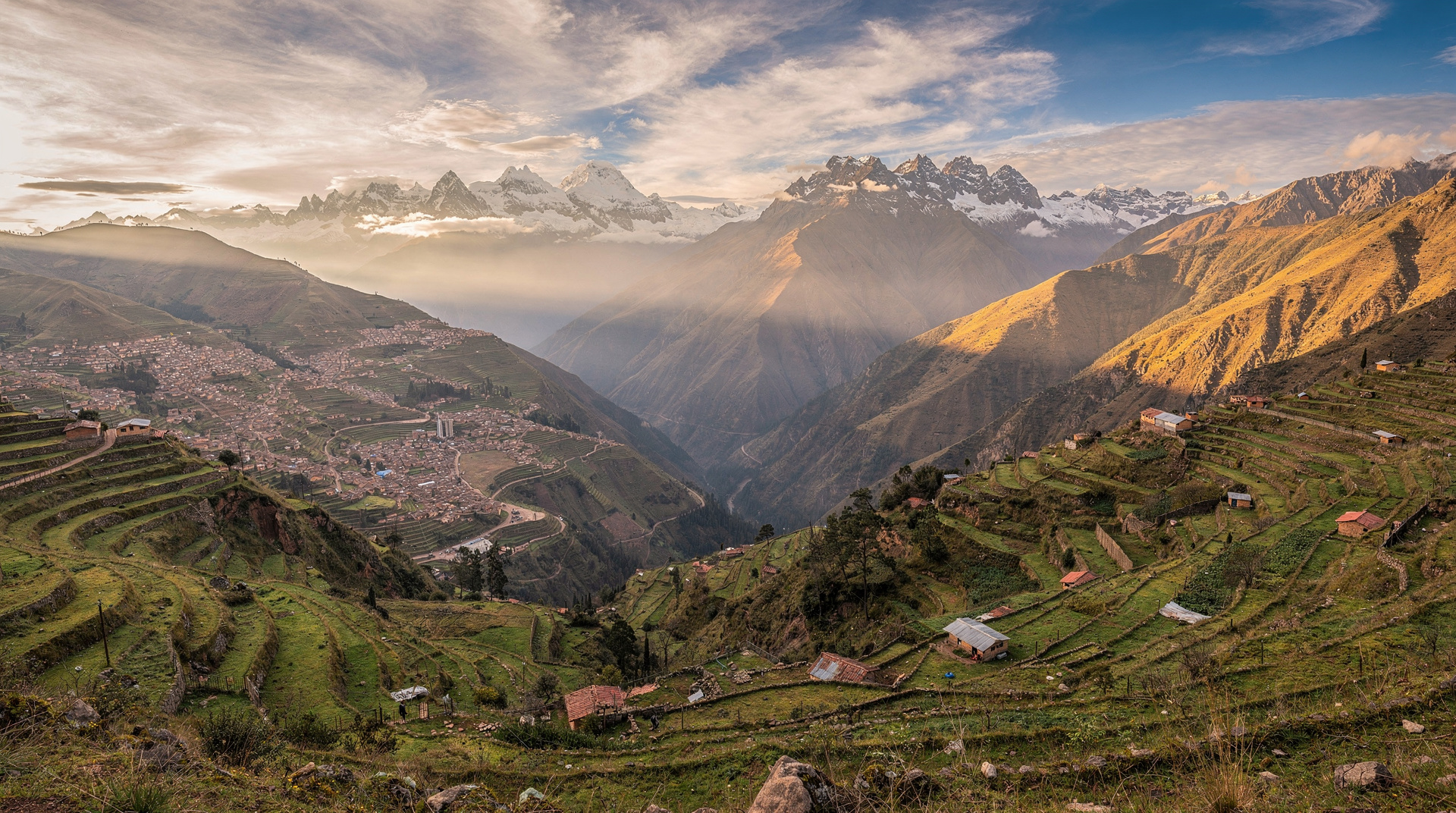
The journey from Cusco at 3,400 m to Puerto Maldonado in the Amazon basin takes 45 minutes by plane. In that time you descend 3,200 m, the temperature rises 15–20°C, the vegetation changes from Andean puna grassland to lowland rainforest, and you land in one of the most biodiverse river systems on earth. It is one of the most dramatic short journeys in Peru.
Puerto Maldonado itself is a mid-sized river town on the Madre de Dios River — functional, sprawling, hot, and unpolished in the way that genuine frontier towns are. The town is not the destination. The Tambopata National Reserve, which begins south of the city on the Tambopata River, is the destination. The reserve covers 274,690 hectares of primary Amazon rainforest and is home to species counts that challenge comprehension: over 600 bird species, 180 mammal species including jaguar and giant otter, and plant diversity so extreme that a single hectare of Tambopata forest can contain more tree species than exist in all of northern Europe.
| Where | Madre de Dios region, Peruvian Amazon — 183 m, 45-min flight from Cusco |
| Cost | Lodge programmes from ~$150–500 per person per night, all-inclusive |
| Time needed | 3–4 days (3D2N minimum to make the flight worthwhile) |
| Getting there | LATAM/Sky Airline flight from Cusco to Puerto Maldonado (PEM) |
| Best time | May–October (dry season; lower water, more concentrated wildlife) |
The Tambopata Reserve: what it actually contains
The Tambopata reserve protects a zone of primary lowland Amazon that has not been logged, farmed, or significantly disturbed. This distinction matters because secondary forest — cleared and regrown — and primary forest are fundamentally different ecological systems. Primary forest has a closed-canopy structure that supports the full community of specialist species: primates that can only survive in old-growth trees, birds that require specific forest layers, mammals whose territory ranges require intact corridors. Most Amazon lodges outside of specifically protected areas sit in secondary or disturbed forest; Tambopata lodges are inside or adjacent to genuine primary forest.
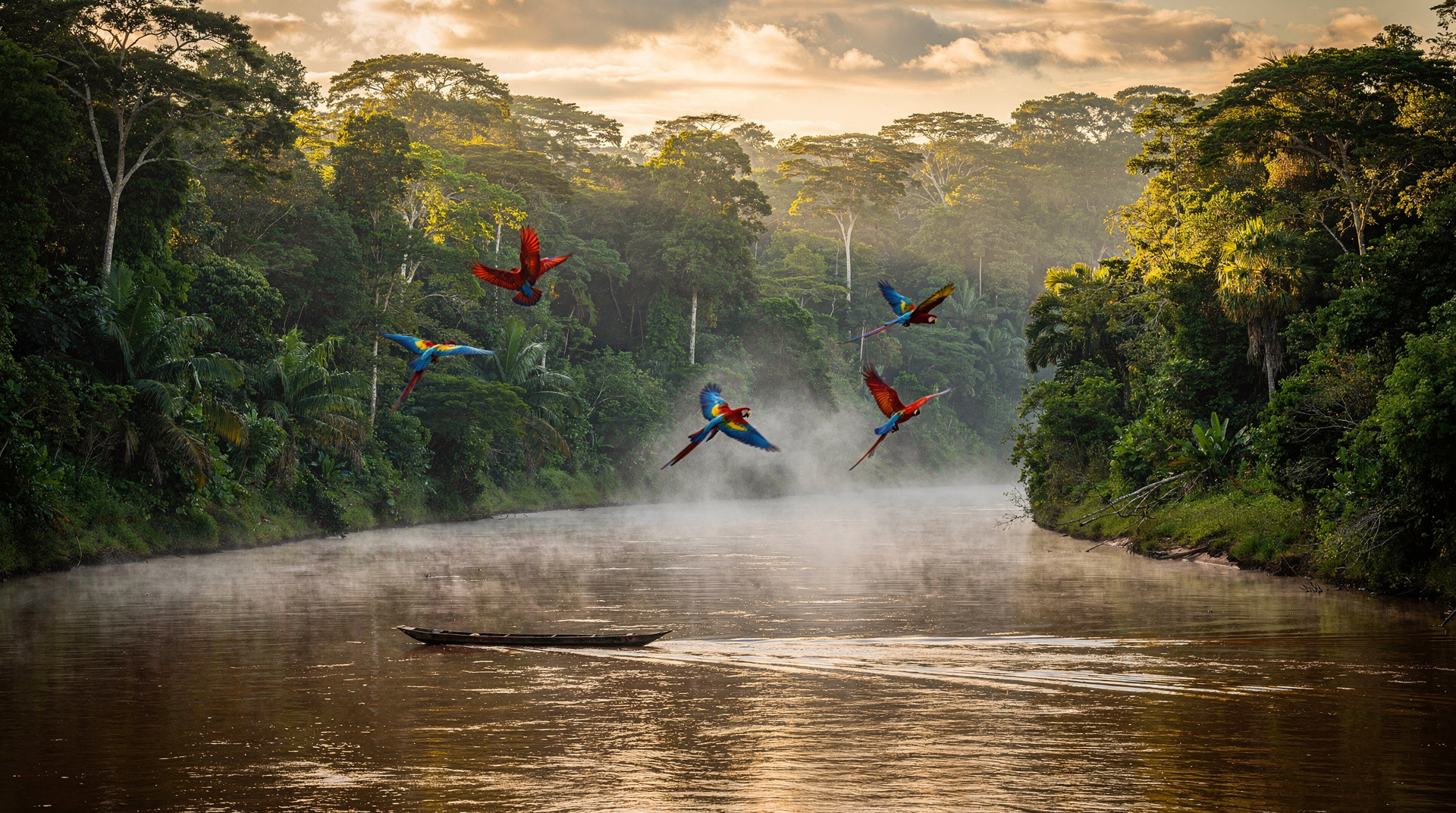
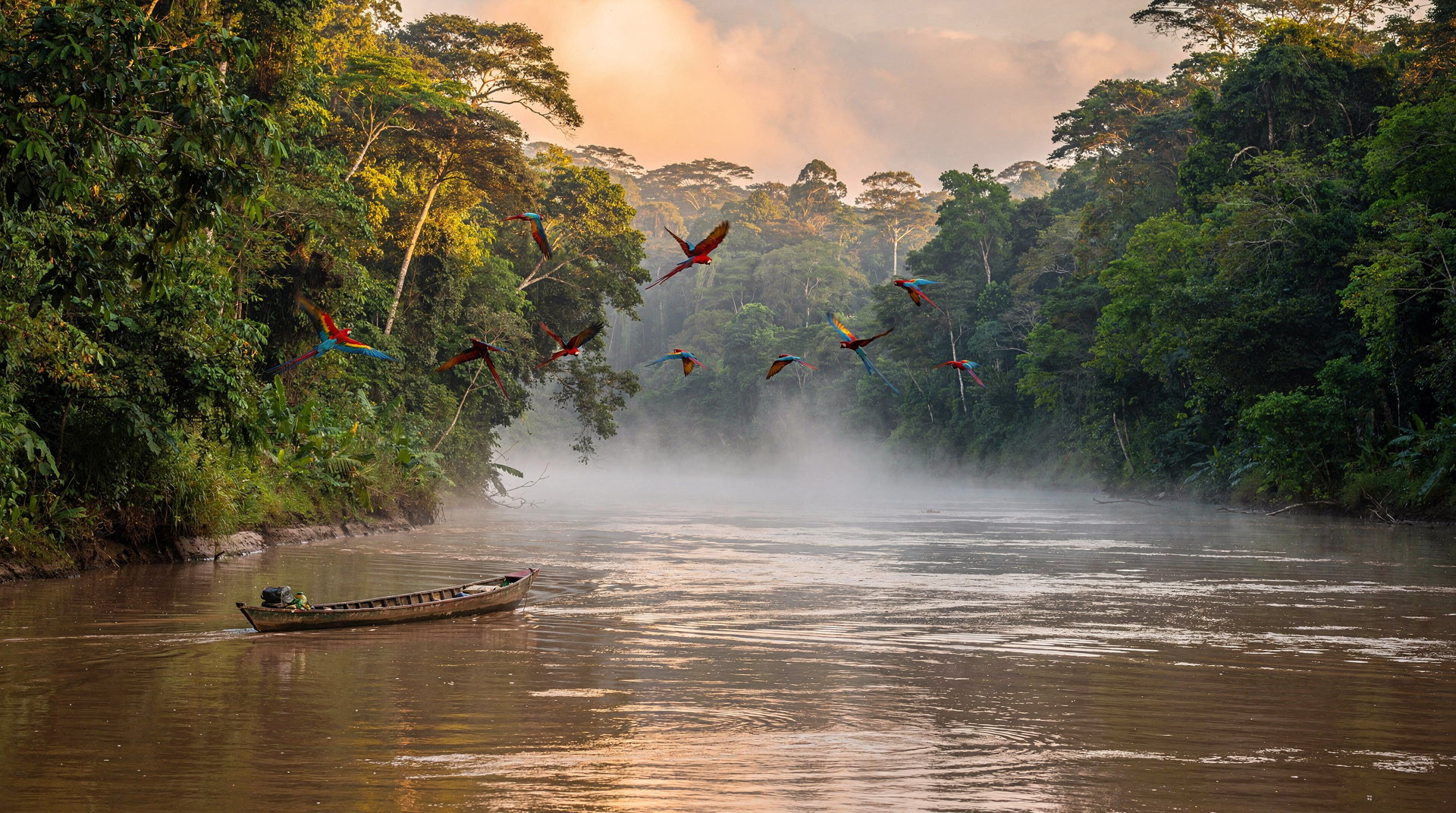
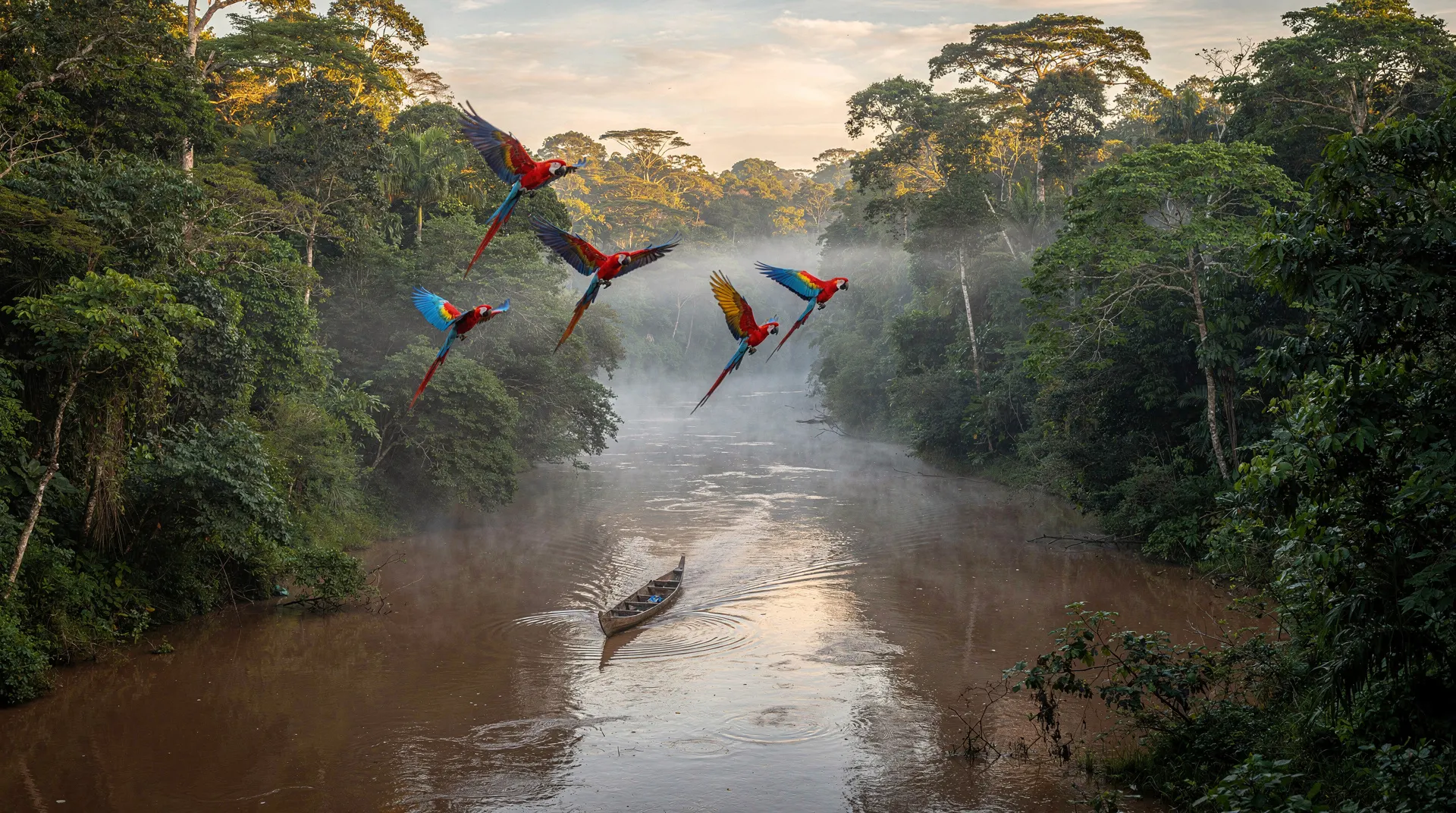
Wildlife in the reserve includes the giant river otter (Pteronura brasiliensis, found in Sandoval Lake’s oxbow), several primate species including spider monkeys, howler monkeys, and squirrel monkeys, giant anteaters, peccaries, capybaras, and — very rarely — jaguar. More consistently, the macaw clay licks (collpas) at Blanquillo and other points in the reserve draw hundreds of Scarlet Macaws and Blue-and-Yellow Macaws to mineral-rich riverside banks each morning in the dry season.
Sandoval Lake: the oxbow lake experience
Sandoval Lake is a classic Amazon oxbow lake — a former meander of the Madre de Dios River, cut off from the main channel as the river shifted, now a slow, vegetated lake surrounded by unbroken forest. It is home to the largest known family group of giant river otters in Peruvian Amazonia. The otters are habituated to careful boat presence and can be watched from canoes at relatively close range on most dry-season mornings.
The approach to Sandoval is partly by motor canoe from Puerto Maldonado (about 45 minutes on the river) and partly on foot through a brief trail section carrying canoes over a sand ridge to the lake itself. Early morning — on the water by 06:00 — is when otter activity peaks, when the lake mist is still rising, and when the surrounding forest produces its greatest bird diversity. The morning experience at Sandoval on a clear dry-season day is one of the signature wildlife experiences in Peru.
The macaw clay licks
The clay lick phenomenon is one of the most photographed spectacles in the western Amazon. Macaws and parrots require clay minerals (kaolin) to neutralise toxins in the seeds they eat. At certain exposed riverside banks, mineral-rich clay attracts hundreds of birds simultaneously, producing aggregations of Scarlet Macaws, Blue-and-Yellow Macaws, Mealy Parrots, and Red-bellied Macaws in numbers that descend at dawn in shrieking, colour-saturated flocks.
The Blanquillo clay lick on the Madre de Dios River, accessible from the lodge circuit in Tambopata, is the most reliable and spectacular. Peak season is May to September when river levels are lower, the clay is exposed, and the birds are most active. Visiting outside this window is possible but the spectacle is significantly reduced. A good dry-season morning at Blanquillo can produce 500 or more individuals of multiple macaw species simultaneously on a single clay bank.
Lodge options and tour formats
The lodges in the Tambopata area operate on full-board, fully guided programmes where guests stay in thatched bungalows in the forest and are led on morning and afternoon walks, boat excursions, and night walks by local naturalist guides. This format is common across the Amazon and sensible — navigating primary forest without a guide who knows both the trails and the wildlife is neither effective nor safe.
A three-day, two-night Tambopata lodge programme is the standard minimum. It covers: day one, transfer from Puerto Maldonado airport to the lodge; afternoon orientation walk; evening frog and insect walk. Day two, early morning birding, Sandoval Lake oxbow visit, afternoon forest walk for mammals. Day three, morning walk before transfer back to Puerto Maldonado for the return flight to Cusco. This format gives two full days in the forest, which is enough for a solid cross-section of Tambopata’s wildlife highlights.
A four-day, three-night programme adds a full day, typically used for the clay lick excursion or a longer river journey. If the macaw clay lick is a priority — and for many visitors it is the primary motivation — the four-day format is necessary since the clay lick requires a longer river journey not feasible in the shorter programme.
Lodge pricing covers accommodation, all meals, guiding, and most activities. Rates vary by lodge quality and season: budget to mid-range lodges run approximately $150–250 per person per night all-inclusive; upmarket options reach $350–500 per person per night. Prices in USD are standard for Tambopata lodge bookings.
Tambopata versus Manu: which Amazon region to choose
Tambopata is not Peru’s only Amazon gateway from Cusco — Manu National Park, reached overland to the north, is the other main option, and travellers researching an Amazon add-on often find the two conflated.
| Tambopata (Puerto Maldonado) | Manu | |
|---|---|---|
| Access from Cusco | 45-min flight | 1–2 day overland journey |
| Typical trip length | 3–4 days | 5–8 days |
| Wildlife density | Very high, concentrated at clay licks and Sandoval Lake | Higher overall biodiversity, more remote |
| Best for | Travellers with limited time who still want genuine primary forest | Serious wildlife travellers with a week or more to spare |
The Tambopata versus Manu guide goes through the full trade-offs; for most Cusco-based itineraries with three to four spare days, Tambopata’s short flight makes it the more realistic choice.
Health and safety in the Amazon
Beyond yellow fever vaccination and malaria prophylaxis, most health considerations in Tambopata are practical rather than exotic: humidity and heat mean hydration matters more than at altitude, insect bites are the most common minor issue (DEET-based repellent at 50%+ concentration is standard), and lodges brief guests thoroughly on river safety before any boat transfer. Serious wildlife incidents are extremely rare given how guided and structured the lodge programmes are — nearly all activity happens with an experienced local naturalist guide who knows both the trails and the animals’ behaviour.
Getting to Puerto Maldonado from Cusco
LATAM and Sky Airline both operate the Cusco to Puerto Maldonado (PEM) route, with departures typically in the morning (07:00–09:00) and returns in the early afternoon. The flight takes 45 minutes and costs approximately $60–130 one-way. Morning departures allow arrival at the lodge before midday and a full afternoon in the forest on day one — relevant for maximising a short programme.
There is an overland route from Cusco to Puerto Maldonado on the Interoceánica Highway, taking approximately 10–12 hours by bus. It is rarely recommended for tourists as a primary option: the road, while paved, passes through heavily deforested areas, the journey time is long, and the flight is cheap enough to make the calculus straightforward. The bus route makes more sense for travellers on extreme budgets or for those who have specific reasons to see the transition from highland to lowland.
The Amazon from Cusco guide covers the flight options, lodge tiers, and how to incorporate Tambopata into different trip lengths without excessive back-and-forth. The seven-day Cusco and Amazon itinerary maps the Cusco-to-Amazon combination in detail.
What to pack for the Amazon
The packing list for Tambopata is almost the inverse of Cusco. You need lightweight, breathable clothing that covers arms and legs (insect protection matters more than sun protection in the forest interior), rubber boots provided by the lodge for muddy trails, a good head torch, DEET-based insect repellent at 50% concentration or above, and a dry bag for electronics on river boat transfers.
Leave the down jacket in your Cusco hotel. You will not need it at 183 m in the western Amazon. What you will need is a lightweight rain jacket for the afternoon showers that occur even in the dry season, and patience for the insects at dusk.
Vaccinations: Yellow fever vaccination is recommended for the Madre de Dios region and is required for some onward countries. Check requirements before arrival; the vaccine must be administered at least ten days before travel. Malaria prophylaxis is worth discussing with a travel medicine doctor; risk is low in the lodge zones but not zero.
Money: Lodge programmes are typically pre-paid; bring small amounts of cash (soles or dollars) for tips and any extras. Puerto Maldonado town has ATMs but the machines occasionally run out of cash on weekends.
A three-day Tambopata jungle lodge programme with accommodation and guided excursions included is the most booked format from Cusco and represents a practical balance between depth of experience and total days required from a Peru itinerary.
Night walks and the forest after dark
The forest between 20:00 and 22:00 is a different ecosystem from the forest at 06:00. The daytime bird chorus is replaced by frog calls — several hundred species of frog occur in Tambopata, and on a warm, humid evening after rain the volume can be extraordinary. Caiman cruising in the lodge’s small lagoon are found with torchlight from the riverbank; their eye-shine is visible at 30–50 m in still water. Nocturnal insects include stick insects spanning 30 cm, bullet ants (whose sting the Sateré-Mawé people use in coming-of-age rituals), tarantulas in their burrows, and a variety of moths with wingspans that challenge the imagination.
Night walks are guided and last approximately 90 minutes. They require rubber boots and a good head torch; the lodge provides the former. The pace is slow and the focus is close — knowledgeable guides find animals in leaf litter, bark, and low vegetation that unaided eyes would entirely miss. A well-guided night walk in Tambopata is one of the experiences most consistently rated as memorable by visitors who expected the daytime forest walks to be the highlight.
Fitting the jungle around your Andean days
Because the lowlands are so different from the highlands, the order of your trip matters. Many travellers spend their first days acclimatising in Cusco or the Sacred Valley, and the acclimatization plan and the altitude sickness guide explain how to pace that part. The Amazon is a natural way to give your body a rest from altitude, but it is still worth settling the highland section of your trip first, as the Sacred Valley and Machu Picchu both reward unhurried days.
Before you leave, the Cusco airport guide is useful for the morning departure logistics, and the packing guide for Cusco helps you decide what to leave in your hotel luggage while you are in the jungle. If you are arriving in Peru via the capital, the Lima to Cusco flights guide covers the first leg. For general reassurance on staying well and avoiding problems on the road, see the Peru travel safety guide.
Readers who like to hear how it really goes may enjoy the Amazon from Cusco diary, a first-person account of a short jungle stay, and the Cusco and Amazon itinerary shows how the pieces fit together day by day.
Honest expectations
Tambopata is extraordinary in its biodiversity but not reliably dramatic in the way that, say, the Galápagos is dramatic. Wildlife sightings require patience, early starts, and quiet movement. On any given morning walk you may see fifteen to twenty bird species, several species of monkey if the forest is good, and on better days, a tapir crossing, an armadillo, or a giant anteater. On less good days, the forest is quiet and you see insects, insects, and more insects, which are themselves remarkable at this level.
The clay lick, Sandoval Lake, and early-morning boat birding are the consistently spectacular elements. The forest walks are cumulative — you understand more on day three than you did on day one — and the experience rewards those who go without rigid expectations about what they will see.
The seven-day Cusco and Amazon itinerary shows how to build the Tambopata visit into a trip from Cusco that also includes Machu Picchu, making productive use of both the altitude and the lowland jungle in a single week. The Amazon from Cusco guide has more on managing expectations and choosing between the main Tambopata operators.
Frequently asked questions about Puerto Maldonado Amazon
Do I need 3 or 4 days at Tambopata? Three days (2 nights) is the practical minimum and gives you Sandoval Lake, guided forest walks, and a night walk. Four days adds the macaw clay lick excursion, which requires a longer river journey — if the clay lick is a priority, book the longer programme.
Is the flight from Cusco to Puerto Maldonado safe and reliable? Yes, it’s a well-established, short domestic route operated by major Peruvian carriers, and considerably more practical than the 10–12 hour overland alternative, which is rarely recommended for tourists given the long journey time through deforested areas.
Top experiences
Bookable activities with verified prices and instant confirmation on GetYourGuide.