Tambopata vs Manu: which Amazon reserve to choose
Tambopata Peruvian Amazon Jungle for 3 Days / 2 Nights
Should I choose Tambopata or Manu for the Amazon from Cusco?
Tambopata (Puerto Maldonado, 45-minute flight) is more accessible, better infrastructure, more reliable wildlife viewing including the best macaw clay licks in Peru, and lower cost. Manu is more remote, more pristine, more expensive, requires a 2-day journey each way, but offers the most biodiverse protected area on earth for serious naturalists. Most first-timers should choose Tambopata.
Two world-class reserves, one decision
Peru has two protected areas that stand among the most biodiverse places on earth: Tambopata National Reserve in the Madre de Dios region, and Manu National Park straddling the Madre de Dios and Cusco departments. Both protect vast swathes of Amazonian lowland rainforest with connecting cloud forest. Both have extraordinary wildlife. Both are reachable from Cusco. The question of which to visit is one that serious travellers wrestle with — and this honest comparison will help you choose.
| Tambopata | 45-min flight, 3+ days, $190–325 |
| Manu | 2-day overland, 6–7 days, $540–945 |
| Best for | Tambopata: first-timers; Manu: naturalists |
| Combine both | Yes, with 6–7 days available |
| Vaccination | Yellow fever, 10+ days before travel |
The short version: Tambopata is the right choice for most visitors. Manu is the right choice for dedicated naturalists who can afford more time and money. The fuller picture is below.
Getting there: the biggest practical difference
Tambopata: 45 minutes by air
Fly Cusco to Puerto Maldonado (45 minutes). From the airport, a vehicle takes you to the river dock; a motorised canoe takes you to your lodge — 30 minutes to 3 hours depending on which lodge. Total time from Cusco to sleeping in the jungle: 4–6 hours.
Puerto Maldonado has daily flights on LATAM and Sky Airlines. If something goes wrong — medical emergency, weather, change of plans — you can be back in Cusco within hours. This practical flexibility matters.
Manu: 2 days overland
The Manu Road from Cusco is one of the great mountain-to-jungle drives on earth — descending from 3,400 m at Cusco through Paucartambo and the cloud forest to the Amazon lowlands over 2 days. The first day stops at cloud forest (~1,500 m) where quetzals and hundreds of cloud forest birds appear. Day two continues to the Manu River and the Reserved Zone lodge.
The return journey mirrors this. If your trip allows only 3–4 days for the Amazon, 4 are consumed by travel. A meaningful Manu trip requires 6–8 days minimum. The journey is spectacular and not wasted — birdwatchers especially regard the Manu Road descent as one of the finest birding transects in the world — but it is time.
Wildlife: what you will actually see
Tambopata’s star performers
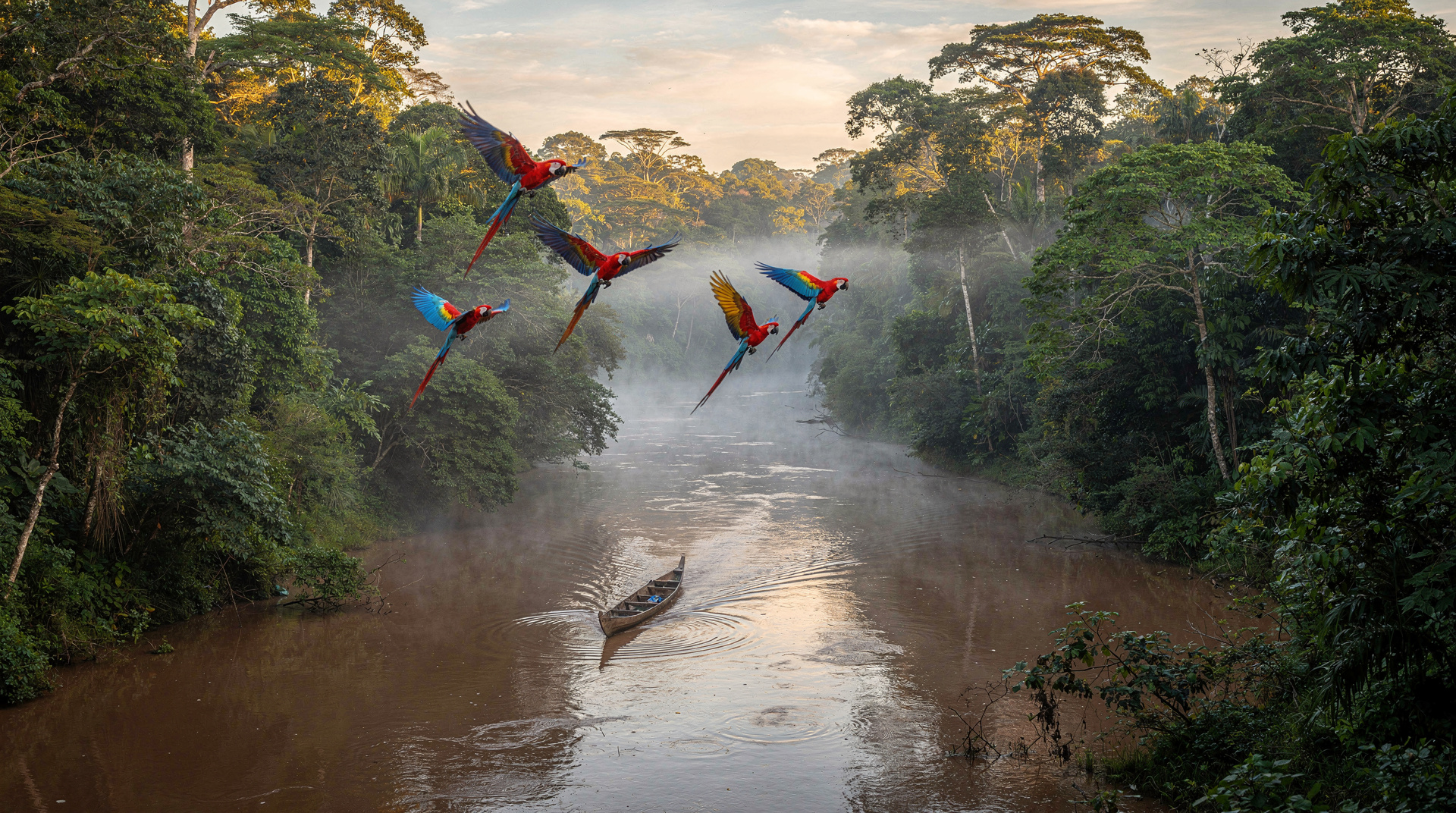
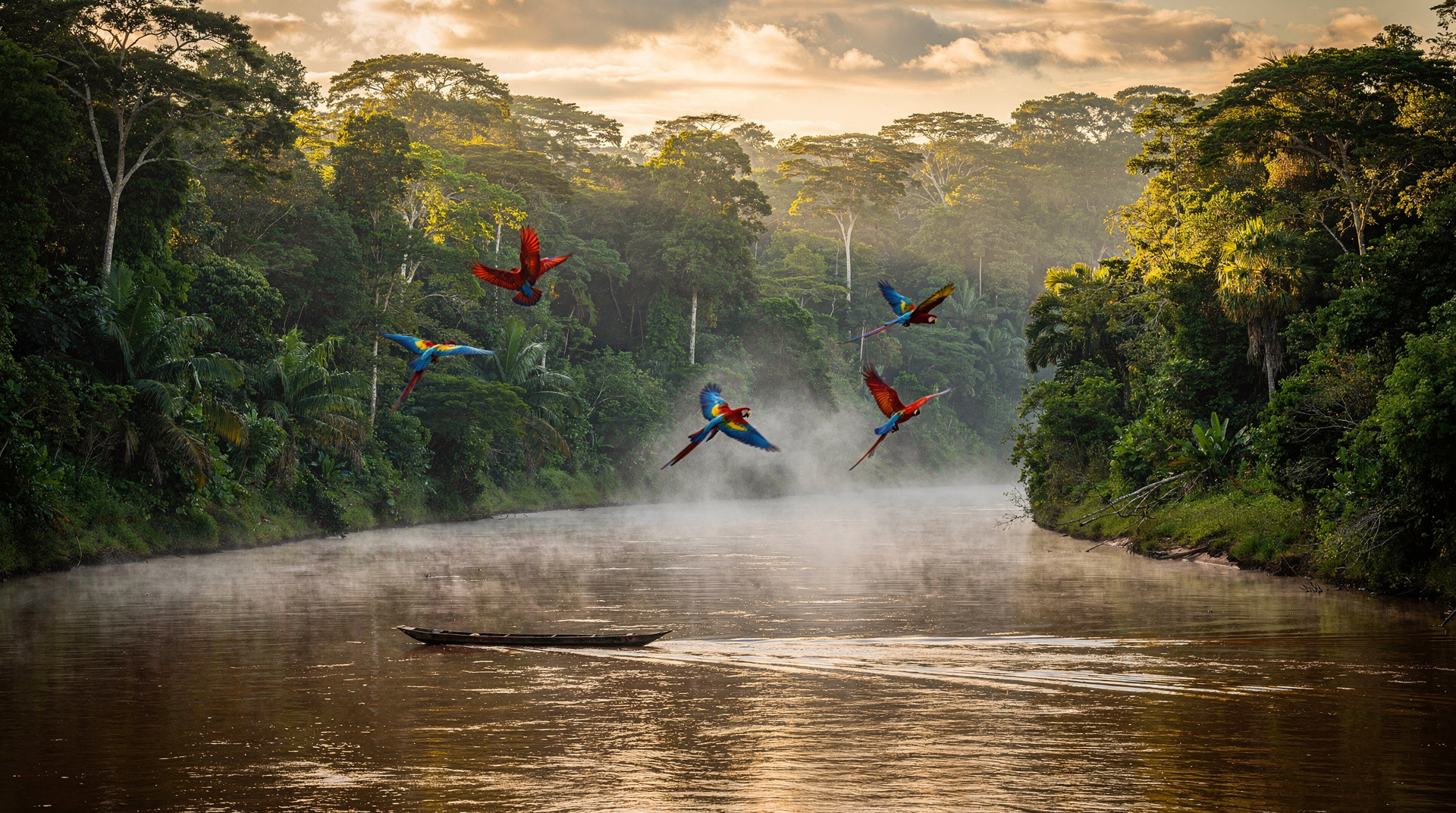
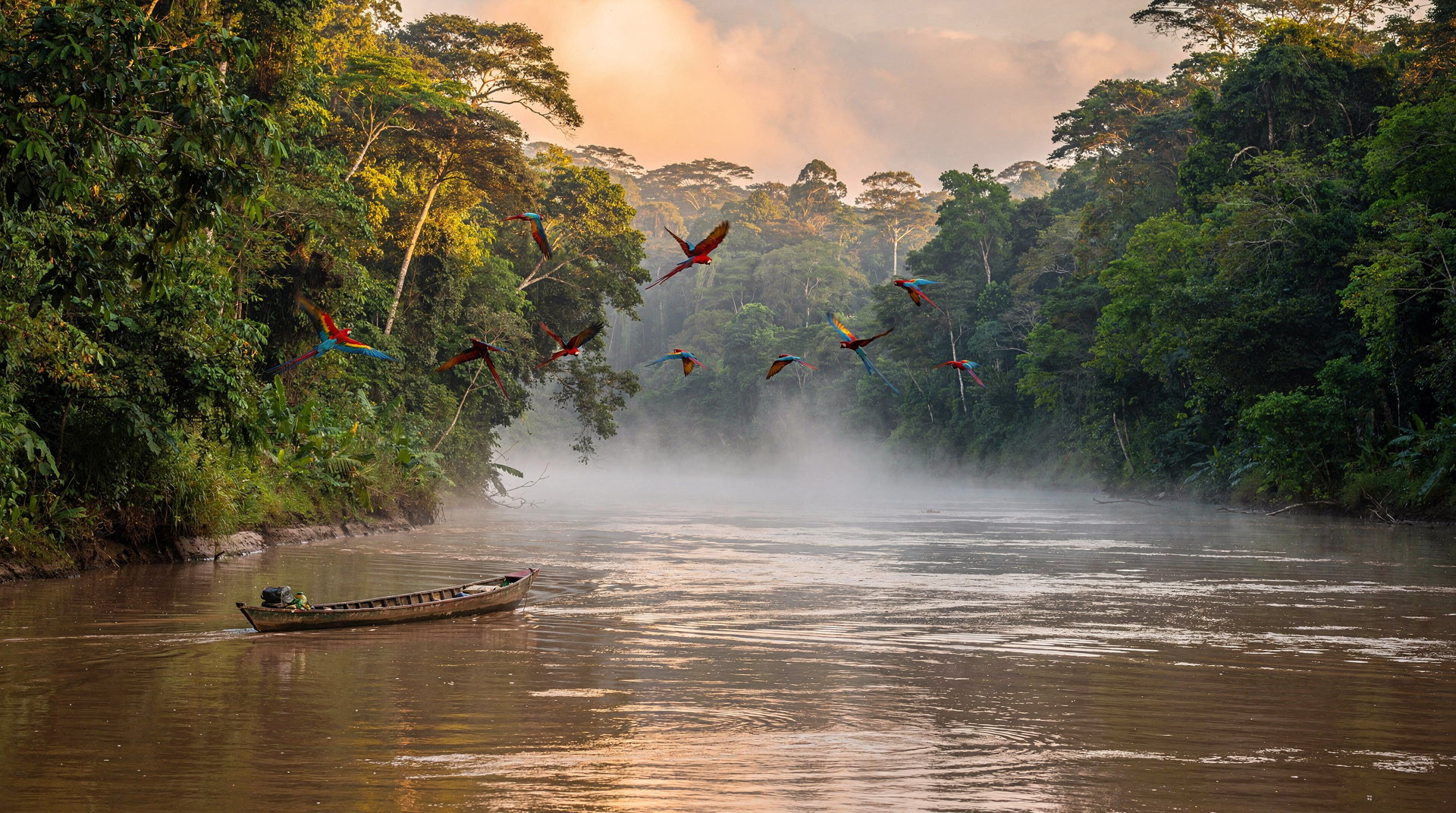
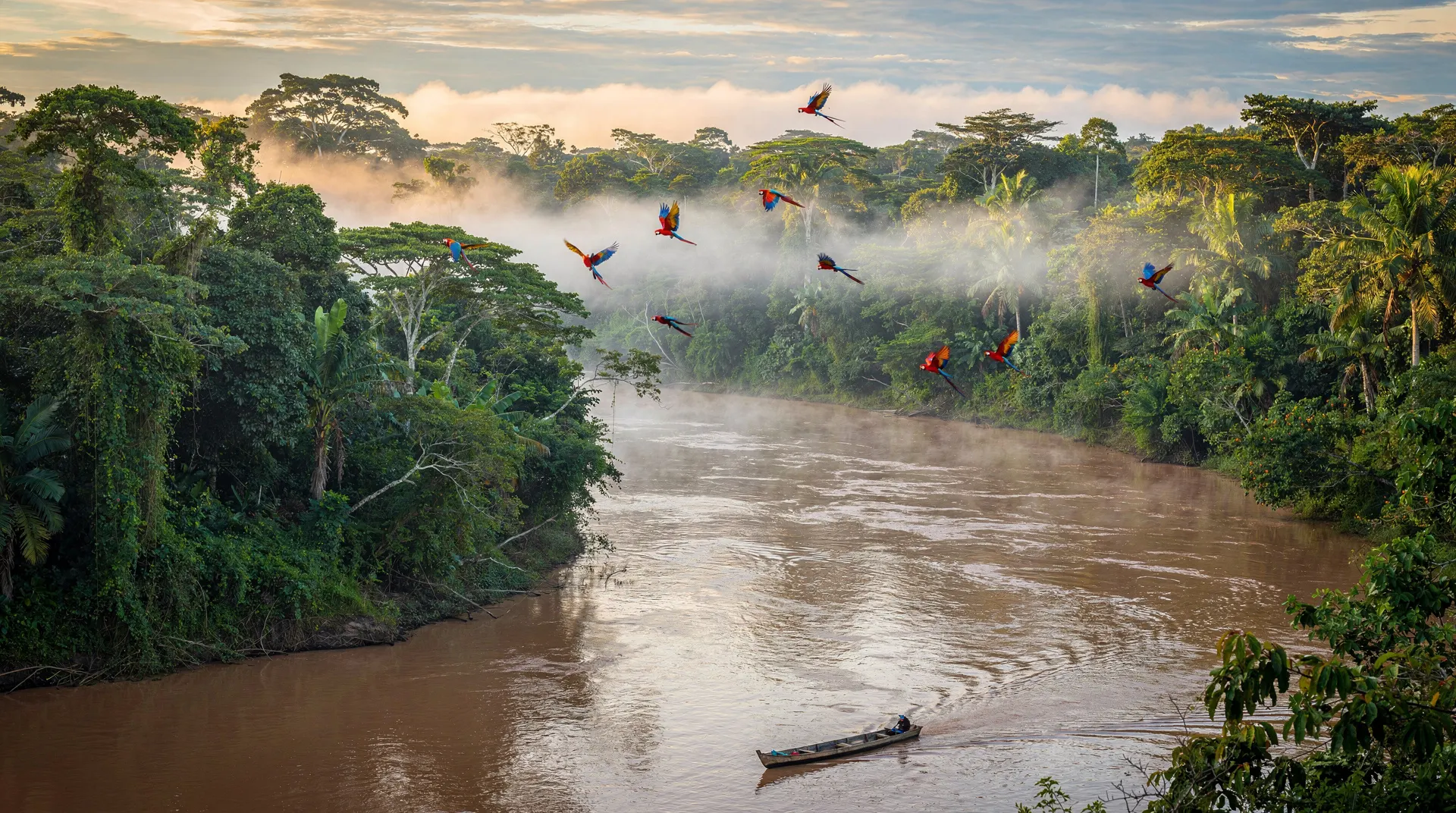
The macaw clay licks in Tambopata — particularly the Colorado clay lick near the Tambopata Research Center — are the finest in Peru and among the best anywhere in the Amazon. Hundreds of macaws (scarlet, red-and-green, blue-and-yellow) gather daily in the early morning to ingest mineral-rich clay. This is a spectacle that ranks alongside the Serengeti migration for sheer wildlife theatre.
An all-inclusive Tambopata 3-day/2-night lodge package includes a clay lick visit and giant river otter viewing on Sandoval Lake. The oxbow lakes near established lodges support giant river otter families — Laguna Sandoval is the most reliable site in Peru for this endangered species — as well as yacaré caimans, hoatzins (the prehistoric “stinkbird”), and a rotating cast of 80–100 waterbird species per day.
Night walks and canoe trips add caimans in the river shallows, tree frogs, tarantulas and sleeping birds. Monkeys — howler, squirrel, brown capuchin — are daily sightings. What Tambopata delivers that Manu cannot guarantee: reliability. The lodges are established, animals are habituated, and the signature experiences consistently deliver.
Manu’s extraordinary wildness
Manu National Park is officially the most biodiverse protected area on earth, with over 1,000 bird species, 200 mammal species, and plant diversity that exceeds the entire European continent. The Reserved Zone — accessible by boat along the Manu River with licensed operators — is genuinely pristine in a way that the more-visited Tambopata lodge areas are not.
Target species more reliably seen in Manu than Tambopata: giant anteater, tapir, white-lipped peccary herds, giant armadillo, harpy eagle, and a broader variety of monkey species. The density and abundance of life in deep Manu is perceptibly higher than in the tourist-accessible parts of Tambopata.
A 4-day Tambopata programme gives you a genuine taste of the Peruvian Amazon without the Manu time investment. For those who then want to go deeper — literally — Manu awaits on a future trip.
Cost comparison
| Tambopata | Manu | |
|---|---|---|
| Travel time from Cusco | 4–6 hours total | 2 days each way |
| Minimum viable trip | 3 days/2 nights | 6–7 days |
| Base package cost (per person) | S/700–1,200 ($190–325 USD) | S/2,000–3,500 ($540–945 USD) |
| Accessibility rating | High | Low–moderate |
| Wildlife reliability | High | Moderate–high |
| Wilderness authenticity | Good | Exceptional |
| Good for first-timers | Yes | Advanced naturalists preferred |
Manu prices reflect the longer journey, more expensive permits, smaller group sizes and more remote logistics. Tambopata lodges compete on price and the result is genuine value.
The cloud forest bonus on the Manu Road
If you choose Manu, the Manu Road itself is a wildlife destination. The descent from Andean highlands through different cloud forest zones (3,000 m down to 500 m) passes through habitats not accessible in Tambopata. The Wayqecha Cloud Forest Reserve near the top of the road is a hotspot for cock-of-the-rock (Peru’s national bird), quetzals, mountain toucans and dozens of cloud forest specialities. Even visitors who choose Tambopata should consider a separate day trip to the Manu Road cloud forest — it is accessible as a day excursion from Cusco via the Paucartambo road.
Which reserve for birders specifically?
Both. Seriously. If you can do both — Manu Road for cloud forest birds, Tambopata for Amazon lowland birds — you will cover more species across more habitats than almost anywhere else on the planet.
If you must choose: the Manu Reserved Zone has the higher species list and more chance of globally rare species. Tambopata has better infrastructure for seeing the species you will see, more reliably. Birders with limited time and a target list of key Amazon species (macaws, giant river otter, oxbow lake birds) should choose Tambopata. Birders wanting to maximise total species count and who can invest the time should choose Manu.
The bottom line
Choose Tambopata if: you have 3–5 days for the Amazon extension, you are visiting Peru primarily for Cusco and Machu Picchu with the Amazon as a complement, or you are a first-time Amazon visitor wanting the most reliable and accessible experience.
Choose Manu if: you are a serious naturalist or birder with 6–10 days dedicated to the Amazon, cost is not the primary constraint, you are prepared for more basic lodge conditions in exchange for greater remoteness, and you specifically want the most pristine and biodiverse Amazon experience available to tourists.
Do both if: you have the time and budget for a longer Peru trip. Many dedicated naturalists come specifically to do Tambopata and the Manu Road cloud forest in the same trip — two very different habitats in 6–7 days.
The Amazon from Cusco guide has the full logistics for Tambopata. The Cusco and Amazon 7-day itinerary shows how to combine Machu Picchu with a Tambopata extension efficiently.
Birding specifically: a detailed comparison
For visitors coming to Peru specifically for birding, the comparison between Tambopata and Manu requires more nuance than a general wildlife breakdown.
Tambopata species count: The Tambopata National Reserve and its surrounding buffer zone holds approximately 600 bird species. The lodges on the Madre de Dios river record consistently around 400 species per year from their grounds alone. The oxbow lakes (Sandoval, Tres Chimbadas) specialise in waterbirds including hoatzin, sunbittern, agami heron, jabiru, and multiple species of kingfisher.
Manu species count: Manu National Park holds over 1,000 bird species — about 10% of all bird species on earth in a single national park. The Manu Road transect from Cusco to the lowlands crosses 15+ distinct habitat zones and can produce 300+ species in a single descent. The lowland reserve zone adds the full Amazon lowland suite. For a dedicated birder with 8–10 days, no better value for species count exists in the Western Hemisphere.
The Manu Road versus everything else: Several operators now offer 4–5 day tours that cover the Manu Road without going all the way to the Reserved Zone. These are more affordable than full Manu tours (S/1,200–1,800 per person versus S/2,000–3,500), and for birders primarily interested in the cloud forest transition zone, they are arguably better value. The road descent from Tres Cruces (3,600 m) through the cloud forest to Atalaya (500 m) crosses more habitats in two days than a month in the Tambopata lowlands.
Which operators are most trustworthy
For Tambopata: Rainforest Expeditions (TRC, Posada Amazonas), Inkaterra (Reserva Amazonica), and Wasai Lodge are operators with long track records, genuine conservation programmes, and English-speaking naturalist guides. Booking through GetYourGuide connects to vetted operators within this network.
For Manu: Manu Expeditions, Crees Foundation, and Manu Wildlife Center are the most respected operators in the Reserved Zone. All require advance booking — many Manu tours run with groups of 6–10 people and fill weeks to months ahead in dry season.
Avoid operators offering “Manu” tours that actually only cover the Cultural Zone (the accessible highway section) without entering the Reserved Zone. The Cultural Zone has interesting wildlife but is not the Manu experience most visitors are imagining.
Timing your visit around the clay lick
The macaw clay lick season at Tambopata peaks between May and October, broadly coinciding with the dry season. Activity at clay licks is connected to the fruiting cycles of forest trees — when fruit supply is high, clay lick attendance increases as birds consume more toxin-laden fruit and need the clay’s detoxifying minerals.
The Colorado clay lick near the Tambopata Research Center has recorded activity in every month, but the peak months of July and August produce the most spectacular gatherings: 400–600 macaws of multiple species simultaneously. If your visit is specifically timed around the clay lick, June–August is the optimal window.
Practical notes for both reserves
Yellow fever vaccination: Recommended for all Amazon visitors. Must be administered at least 10 days before travel. Consult your doctor before departure.
Best time to visit: May to October (dry season) for Tambopata — trails passable, oxbow lakes navigable, clay lick activity peaks. Manu is accessible year-round but the Manu Road can be difficult in heavy rains (January–March). Both reserves are lush and active year-round; “dry season” in the Amazon still means regular rain.
What to pack: Long-sleeved lightweight clothes, DEET insect repellent (30–50%), waterproof bag, binoculars (8x42 minimum), head torch, rubber boots (lodges usually provide), and a complete change of mind about what constitutes interesting wildlife after two nights in the forest.
Combining an Amazon extension with your Machu Picchu trip
Most visitors who add Tambopata or Manu to their itinerary are doing so as an extension to a Cusco and Machu Picchu trip rather than as a standalone Amazon holiday, and the logistics work cleanly for this. The typical sequence is Cusco and the Sacred Valley first, Machu Picchu mid-trip, then a return to Cusco followed by the flight to Puerto Maldonado for Tambopata — or, for Manu, allowing the extra travel days before returning home.
Altitude adjustment works in your favour here: descending from 3,400 m Cusco to sea-level Amazon humidity is generally easier on the body than the reverse direction, so scheduling the jungle extension after the highlands rather than before is the more comfortable sequence for most travellers. The Cusco and Amazon 7-day itinerary builds exactly this structure around a Tambopata extension.
Health and comfort in the jungle
Both reserves involve genuine jungle conditions that differ meaningfully from anything else on a typical Peru itinerary. Humidity is constant and high; expect to be perpetually slightly damp regardless of how much you towel off, and pack quick-drying synthetic fabrics rather than cotton, which stays wet for days. Malaria risk in the Madre de Dios region is considered low but not zero — discuss antimalarial medication with a travel medicine clinic before departure, particularly for Manu’s more remote zones.
The Peru travel safety guide covers general health precautions for the wider trip, including altitude and food safety alongside jungle-specific concerns. Biting insects are a given at both reserves; a physical barrier (long sleeves, tucked trousers, a head net for dawn boat trips) matters more than repellent alone. Both reserves have basic first-aid facilities at lodges, but serious medical evacuation from Manu’s Reserved Zone takes considerably longer than from Tambopata, which is a genuine consideration for travellers with health conditions.
Fitting the Amazon around the rest of your plans
The choice between the two reserves rarely happens in isolation. It usually comes down to how much of your trip you are willing to hand over to the jungle. If you are still deciding how long to stay in the region overall, how many days in Cusco and the Cusco trip planning guide help you see what an Amazon extension displaces. Tambopata slots into a tight schedule; Manu asks you to build the whole trip around it.
Season matters as much as distance. The best time to visit Cusco explains how the highland dry and rainy seasons line up with jungle conditions, and the Cusco rainy season guide is worth reading if you are considering Manu, since the Manu Road is the part of the journey most affected by heavy rain.
Think about what else you want from the trip, too. Travellers who have already booked the big highland experiences, such as Machu Picchu or the Sacred Valley, often find that a short, reliable Tambopata stay is the better complement, because it adds a completely different landscape without eating into the rest of the itinerary. If wildlife in a very different setting appeals, the Colca Canyon condors guide describes another nature experience in the south of Peru, and Lake Titicaca wildlife covers a third.
Finally, remember the altitude. Whichever reserve you pick, the highland days before or after it are where acclimatisation in Cusco matters. Plan the jungle portion as the restful, low-altitude stretch of your trip, and use the diary-style account in Amazon from Cusco: a trip diary to get a feel for what the days in a lodge are actually like.
Frequently asked questions about Tambopata vs Manu: which Amazon reserve to choose
How do you get to Tambopata?
How do you get to Manu?
Which has better wildlife: Tambopata or Manu?
Is Manu worth the extra cost and effort?
What is the buffer zone vs the restricted zone in Manu?
Top experiences
Bookable activities with verified prices and instant confirmation on GetYourGuide.