Unlicensed tour agencies in Cusco — how to spot them
From Cusco: Vinicunca Rainbow Mountain Day Trip
How do I check if a Cusco tour agency is licensed?
Ask to see their MINCETUR (Ministry of Tourism) registration number and verify it on Peru's government tourism registry. Licensed agencies display their credential prominently. Approximately 650 of 810 agencies in the Cusco region operate without a valid licence — they carry no liability insurance, use unlicensed guides, and have no regulatory accountability if something goes wrong.
The uncomfortable reality of Cusco’s tour industry
No legitimate Cusco travel site run by a tour operator will tell you this: approximately 650 of the 810 tour agencies advertising services in the Cusco region operate without a valid MINCETUR licence. That figure comes from Peru’s tourism ministry itself, reported periodically in local media, and it has remained stubbornly consistent over the past decade despite occasional enforcement drives.
For most travellers arriving in Cusco and wanting to book a city tour, a day trip to Rainbow Mountain, or a multi-day trek, this statistic is actionable information — not a reason for panic, but a reason to do a five-minute check before handing over money.
This guide explains what licensing covers, how to verify it quickly, what the practical risks of using an unlicensed operator are, and which types of tours carry the most meaningful risk.
| Where | Any Cusco agency, especially Plaza de Armas street-level sellers |
| Check | MINCETUR registration number, verifiable online |
| Highest risk | Multi-day treks, adventure activities, Inca Trail bookings |
| Lower risk | Short city walking tours, single-site visits |
| Time cost | About 5 minutes to verify before paying |
What a MINCETUR licence actually means
Peru’s Ministry of Foreign Trade and Tourism (MINCETUR) issues operating licences to tour agencies and travel agencies under the national tourism regulations. A licence requires:
Liability insurance. A licensed operator carries insurance covering accidents, cancellations, and client harm during tours. For adventure activities — trekking, rafting, mountain biking — this is directly relevant to you.
Licensed guides. MINCETUR also separately certifies guides. Licensed guides complete formal training in Peruvian history, archaeology, ecology, and first aid, and must carry a credential. They are qualified to provide interpretation at heritage sites including Sacsayhuamán, Pisac ruins, Ollantaytambo, and inside Machu Picchu. Technically, only licensed guides are permitted to operate as professional guides at these sites.
Consumer protection accountability. Disputes with licensed agencies can be escalated to MINCETUR and to INDECOPI (Peru’s consumer protection agency). An unlicensed agency operates outside this system — there is no regulatory body to hear your complaint.
Published pricing transparency. Licensed agencies are required to provide itemised written confirmations for bookings above a certain value.
None of these protections apply to an unlicensed operator.
How to check: the verification process
The MINCETUR operator registry is publicly accessible online. The practical steps:
In person: Ask the agency directly for their MINCETUR registration number (número de registro). Any licensed agency displays this prominently — on their certificate (required to be posted visibly), on their website, on booking documentation. If they hesitate, cannot find it, or say it is “in processing,” walk out.
Online: Search MINCETUR’s Directorio de Prestadores de Servicios Turísticos (Tourism Service Providers Directory) at the MINCETUR government portal (sigmaagencias.mincetur.gob.pe or the current equivalent — the URL changes periodically). Enter the agency name or location. If the agency is not in the directory, they are not licensed.
For Inca Trail specifically: The Inca Trail requires that all commercial groups are led by a SERNANP-certified operator with separate permission from the national park authority. An agency offering Inca Trail bookings without being in the SERNANP-authorised operator list is operating illegally on the trail — this matters because trail guards check permits and group authorisations, and an unlicensed group can be turned back.
The types of tour where risk is highest
Multi-day trekking (Inca Trail, Salkantay, Ausangate, Lares). These involve remote terrain, overnight camping, significant elevation gain and altitude exposure, and minimum-equipment requirements. An unlicensed operator is unlikely to carry emergency rescue insurance. The Inca Trail permits guide specifically addresses how to verify operator authorisation for the classic Inca Trail.
Adventure activities. Rafting, ziplining, ATV tours, mountain biking — all of these carry inherent physical risk. Insurance matters. Unlicensed operators frequently use unserviced or ageing equipment with no regular safety inspection.
Overnight and long-haul tours. If the tour takes you away from Cusco for multiple days — to Lake Titicaca, Colca Canyon, the Amazon — you are depending on the operator for logistics, accommodation, emergency protocols. These dependencies raise the stakes.
City walking tours with site access. Lower stakes but still relevant: an unlicensed guide at Qorikancha or Sacsayhuamán is providing interpretation outside their authorisation. If they misrepresent entry fees, provide inaccurate historical information, or create a problem at the gate, you have no basis for complaint.
The discount trap
The clearest signal of an unlicensed or low-quality operator is a price that is meaningfully below the market rate for equivalent services.
A full-day Sacred Valley tour from Cusco that includes transport, guide, entry fees (Boleto Turístico Circuit III), and lunch runs approximately S/180–250 per person with a licensed operator. An offer at S/80–100 for “the same tour” is almost certainly cutting one or more of these components: the guide is unlicensed, the entry fees are not included (despite being stated as included), the transport is unsafe, or the operator carries no insurance.
The same logic applies to Rainbow Mountain day trips (legitimate around S/90–130 per person including transport and guide), Inca Trail treks (4-day classic legitimately starts around $350–500 per person including permit, licensed guide, camping equipment, and cook), and all other tour categories.
Price comparisons across platforms are useful — a spread of prices for similar tours gives you the market range. Prices significantly below the bottom of that range are a warning sign.
Using vetted platforms as a filter
For travellers who prefer not to do licensing research themselves, the practical alternative is using booking platforms that pre-screen operators. Booking a Rainbow Mountain day trip through GetYourGuide or the Cusco city tour through the same platform connects you with operators that have been reviewed by previous customers and have agreed to platform terms that require operator licensing and insurance.
This is not a guarantee of perfection, but it removes the primary risk of engaging a completely unlicensed operation. The traveller review system also provides a real-world quality signal that no MINCETUR licence check can.
A practical booking standard for Cusco
Before paying any Cusco agency — online or in person — confirm:
A MINCETUR registration number is provided and verifiable. Takes 5 minutes on the government registry.
Licensed guide credentials. Guides at heritage sites should carry a MINCETUR-issued guide credential badge. Ask to see it.
Written booking confirmation. With the tour itinerary, what is included, price, cancellation terms. Verbal agreements are not protection.
Insurance confirmation. For any tour involving physical risk, ask specifically whether the operator carries liability and accident insurance. A licensed operator will confirm this readily.
Payment receipt. Any legitimate business provides a factura or recibo. A business that insists on cash only with no receipt is operating in the grey economy.
The honest Cusco tourism landscape is one where many excellent, licensed operators run high-quality tours — and where the unlicensed ones are concentrated among the cheapest, most street-visible operations. This guide exists to help you navigate to the former.
What happens when things go wrong with an unlicensed operator
Understanding the regulatory gap concretely helps explain why licensing is worth verifying. Consider three scenarios:
Cancelled tour, no refund. A licensed operator has consumer protection obligations under MINCETUR and can be pursued via INDECOPI (Peru’s consumer protection agency). An unlicensed operator disappears or refuses to engage — there is no regulated channel. Your credit card dispute is your only recourse, which may or may not succeed.
Accident on an adventure tour. A participant is injured during a poorly conducted multi-day trek or rafting trip with an unlicensed operator. No insurance exists to cover medical costs or compensation. The operator has no registered address to pursue. The only recourse is a civil claim in Peruvian courts — a complex, expensive process for a foreign visitor.
Fraudulent tour content. You paid for an Inca Trail permit and guide; the guide turns out not to have a valid Inca Trail operating licence. The group is stopped and turned back by SERNANP trail staff. You have lost the trek cost and your travel days. No regulatory remedy exists for transactions with unregistered operators.
These are not hypothetical scenarios — they happen, and they happen specifically to visitors who chose the cheapest option without verifying licensing.
Rainbow Mountain and multi-day treks: the highest stakes
For one-day city tours and half-day excursions, an unlicensed operator may deliver a perfectly adequate experience. The stakes are higher for:
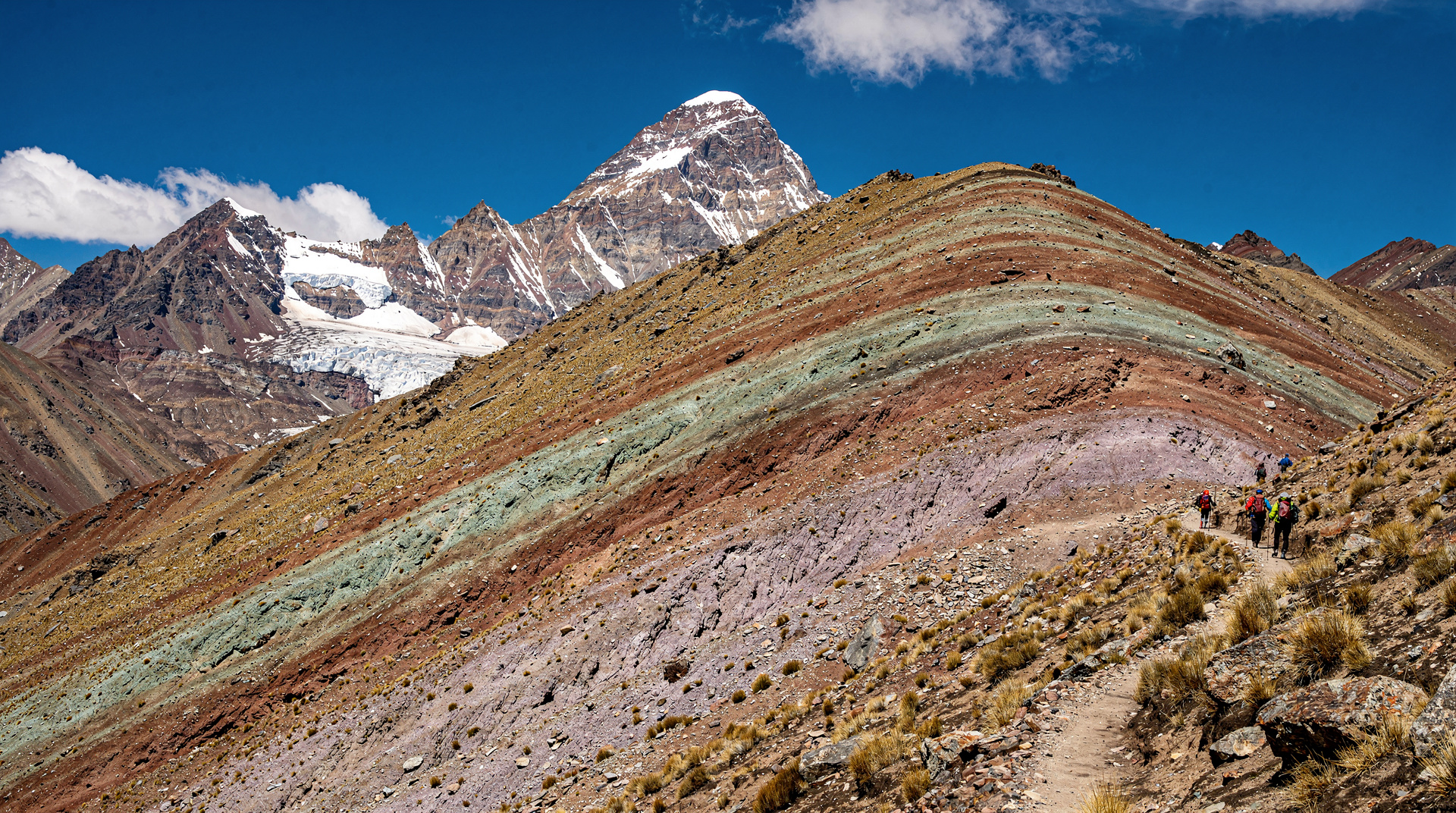
Rainbow Mountain day trips. The 5,200 m summit is high enough that altitude emergencies can occur. An operator without insurance and with an unqualified guide is not equipped to handle a medical incident. The rainbow mountain altitude tips guide explains what to watch for.
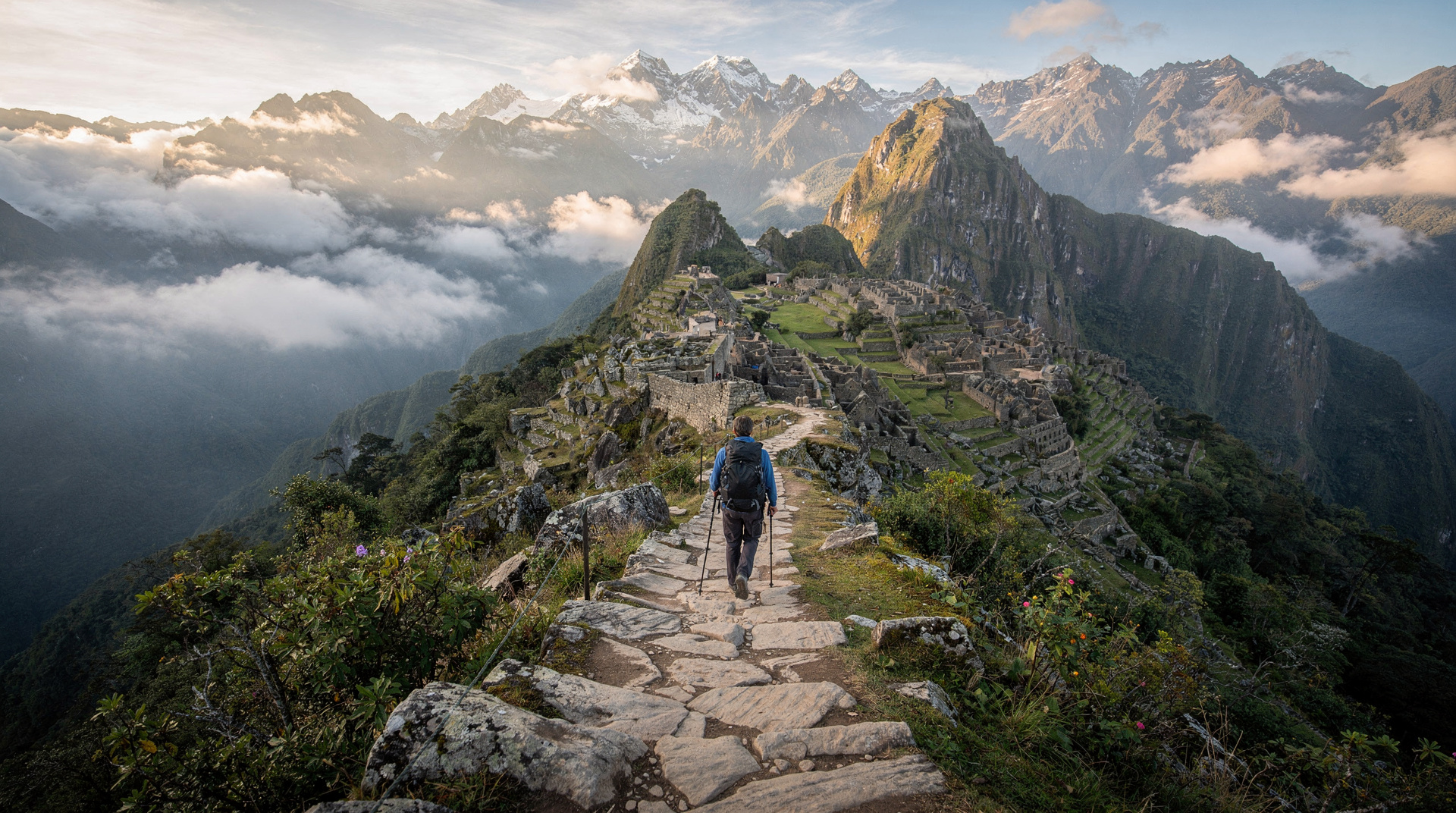
Multi-day treks. The Inca Trail, Salkantay, Ausangate — all involve remote terrain, overnight camping, and significant altitude change. Certification of guides (especially for the Inca Trail, which requires SERNANP operator registration) is not optional. The inca trail permits guide covers the authorisation system specifically.
For any of these activities, the verification steps described in this guide are not optional extras. They are the difference between an adventure with professional backup and one without.
The Inca Trail case study
The Inca Trail deserves specific mention because it has its own licence system separate from general MINCETUR certification. All commercial groups on the classic Inca Trail must operate under a SERNANP (national park authority) permit — a separate authorisation from MINCETUR, issued to operators who have applied and been approved specifically for the trail.
SERNANP publishes the list of authorised Inca Trail operators on its website. An agency that is not on this list cannot legally operate an Inca Trail group, regardless of whether they have a general MINCETUR licence. Trail wardens check operator authorisation at the control points on day one. Groups with an unauthorised operator are turned back and receive no refund.
The inca trail permits guide explains the full permit system including how to verify operator authorisation before booking.
What legitimate operators look like
To balance the warning content in this guide with practical guidance: there are many excellent, fully licensed tour operators in Cusco. Some of the best-reviewed day-trip companies in the region are small operators with 5–15 staff who run focused routes with expert guides. Licensing status has nothing to do with size — a small licensed agency with deep local knowledge often outperforms a larger unlicensed one.
The signal of a good operator beyond the licence check: guides who speak fluently about what you are seeing, route timing that is realistic rather than rushed, transparency about what is and is not included, and reviews from previous customers that describe specific positive experiences rather than generic praise.
The cusco tourist traps guide covers the broader protection landscape. The peru travel safety guide addresses safety more broadly across transport, health, and personal security.
How this plays out at specific sites
The abstract risk becomes concrete once you picture particular bookings. A licensed guide standing at Qorikancha or inside Machu Picchu has passed a certification exam covering the archaeology and history of the site — an unlicensed “guide” is often reciting a memorised script with no ability to answer a genuine question.
At Sacsayhuamán, where entry is bundled with the Boleto Turístico, an unlicensed operator sometimes tells clients the site fee is “included” when it is not, leaving travellers to pay twice or argue at the gate. Around the San Pedro Market area, unlicensed street sellers approach visitors directly with same-day trek offers that undercut every legitimate agency’s price — a reliable signal that corners are being cut somewhere in the chain.
Regional differences worth knowing
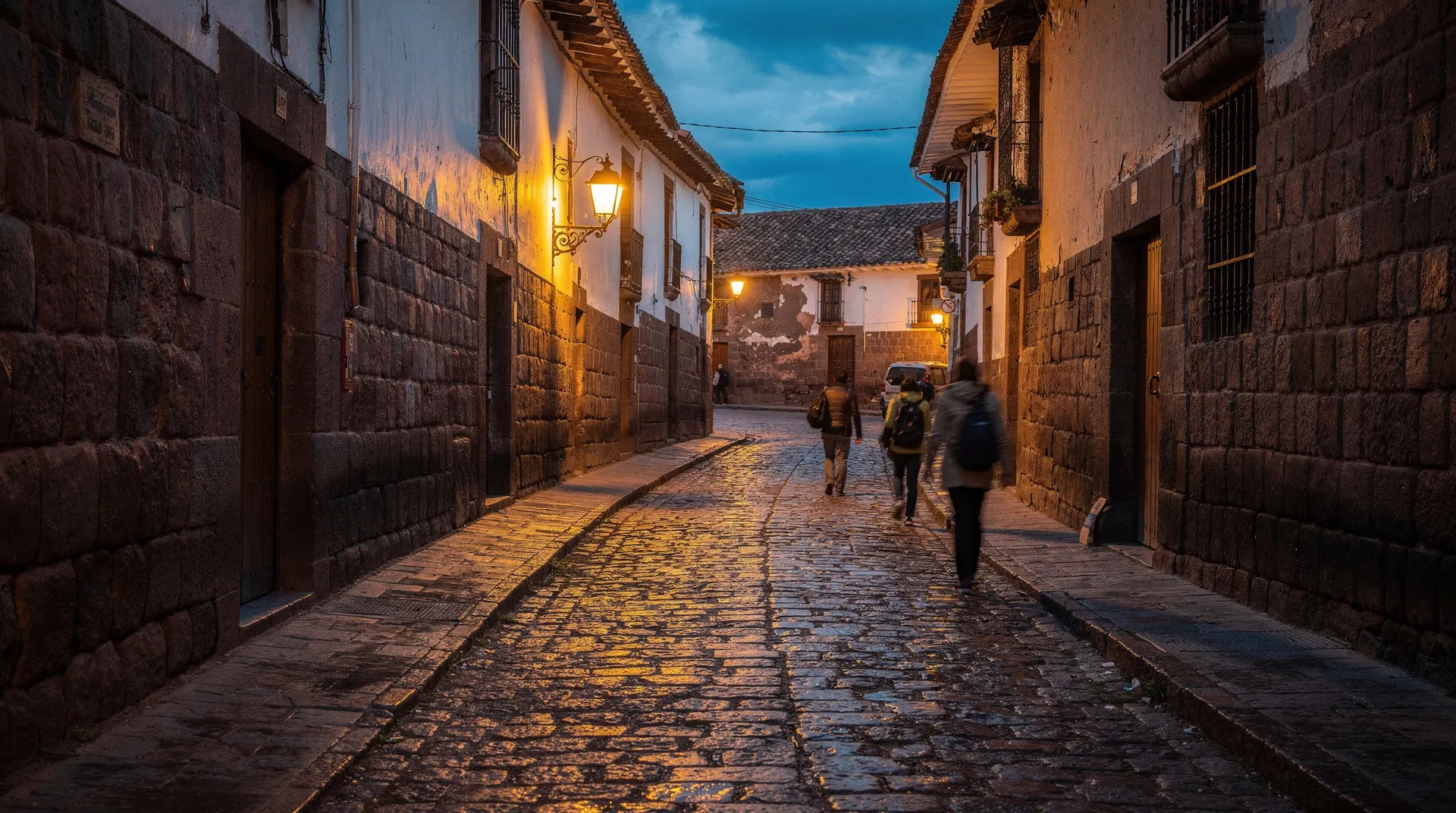
Licensing enforcement is not uniform across the region. In central Cusco, MINCETUR and municipal inspectors periodically sweep the Plaza de Armas and San Blas area, temporarily reducing the visible unlicensed presence — but the underlying agencies usually reopen under a new name within weeks. In the Sacred Valley towns of Ollantaytambo and Pisac, the tour economy is smaller and more personal; unlicensed operators here are more often small local guides moonlighting without formal certification rather than organised low-quality outfits, which somewhat changes (without eliminating) the risk profile.
For Rainbow Mountain day trips specifically, the sheer volume of demand has attracted the largest concentration of unlicensed operators in the region, because a high-turnover, low-differentiation product is the easiest one to run without proper infrastructure.
A simple pre-payment script
If verifying online is not practical in the moment, a short verbal script narrows the risk considerably. Ask the agency: “Can I see your MINCETUR registration number?”, “Is the guide MINCETUR-licensed, and can I see their credential?”, and “Can you email me a written confirmation before I pay?” A legitimate operator answers all three without hesitation, often volunteering the information before you finish asking. Hesitation, vague answers, or pressure to pay in cash immediately are the clearest behavioural signals that the checklist elsewhere in this guide is trying to catch.
Where to read next, depending on what you plan to book
The right level of checking depends on the trip you are building, and several other guides on this site go deeper on the bookings that attract the most unlicensed sellers.
If your plan centres on the citadel, start with the Machu Picchu complete guide, then read about fake Machu Picchu tickets and how Machu Picchu tickets work. Ticket sellers and agencies overlap more than most visitors realise, and a licence check is only one part of buying safely. The Machu Picchu train ticket scams guide and the comparison of PeruRail and Inca Rail cover the rail side, where resellers are especially persistent. If you want to see how a bundled day out is structured, a guided day built around a city tour covering Qorikancha and Sacsayhuamán shows what a clear, itemised inclusion list looks like, which is the standard to hold every other quote against.
For the valley, the Sacred Valley complete guide and the Sacred Valley day trip page explain what a normal route covers, so you can tell when a quote is leaving something out. Comparing it with a full-day guided tour of the Sacred Valley gives you a reference for what an operator should state in writing: stops, inclusions, and meeting point. The Boleto Turístico explained guide is worth reading first, because many disputes with street sellers come from confusion over which entries are already covered.
For high-altitude and trekking plans, pair this page with the altitude sickness guide and the Cusco acclimatization plan. An operator that brushes off altitude questions is giving you useful information about how it runs its trips. The Salkantay trek guide and Inca Trail complete guide describe what a well-run multi-day departure should look like.
Finally, if you are weighing the wider picture of costs and risks, the Peru trip cost guide helps you judge whether a quote is realistic, and where to buy tickets in Cusco lists the sensible channels. A traveller’s first days are covered in the first time in Cusco account, which is a good reality check on how these sales approaches feel on the street.