Best day trips from Cusco
From Cusco: Vinicunca Rainbow Mountain Day Trip
What are the best day trips from Cusco?
The five most rewarding day trips from Cusco are Machu Picchu (train day trip), the Sacred Valley (Pisac, Ollantaytambo, Chinchero), Rainbow Mountain Vinicunca, Humantay Lake, and Maras & Moray. Each suits different fitness levels and interests. Ausangate lakes and Palccoyo are quieter alternatives worth knowing about.
Choosing the right day trip from Cusco
Cusco sits at 3,400 m in the Peruvian Andes and acts as the launchpad for some of the most dramatic scenery on the continent. Within a three-hour radius lie Machu Picchu, the coloured flanks of Rainbow Mountain, glacial lakes, Inca engineering on a monumental scale, and salt-evaporation terraces unchanged since pre-Columbian times. The challenge is not finding something to do — it is choosing sensibly, accounting for altitude, your fitness level, and how many days you have.
This guide ranks the best day trips honestly, with realistic travel times, cost breakdowns, and the cases where a shorter or lesser-known alternative might suit you better than the headline attraction.
| Top picks | Machu Picchu, Rainbow Mountain, Sacred Valley |
| Cost range | Around S/80–750 per person depending on trip |
| Time needed | Half-day (Maras/Moray) to full 14–16hr day (Machu Picchu) |
| Booking lead time | 1–3 months (Machu Picchu), days (Sacred Valley) |
| Altitude order | Sacred Valley first, high-altitude trips from day 3+ |
The honest altitude caveat
Before you book anything: your first 24–48 hours in Cusco should be quiet. Altitude sickness (soroche) affects roughly a third of visitors and peaks between 12 and 24 hours after arrival. Launching straight into a 3 am wake-up for Rainbow Mountain at 5,200 m on your first night is a reliable way to have a miserable trip.
A sensible order: arrive in Cusco on day one, rest; day two, explore the city or do the Sacred Valley (lower altitude, less strenuous); day three onwards, consider higher-altitude options. Read the Cusco acclimatisation guide before finalising any itinerary.
The top day trips, ranked
1. Machu Picchu — the unmissable
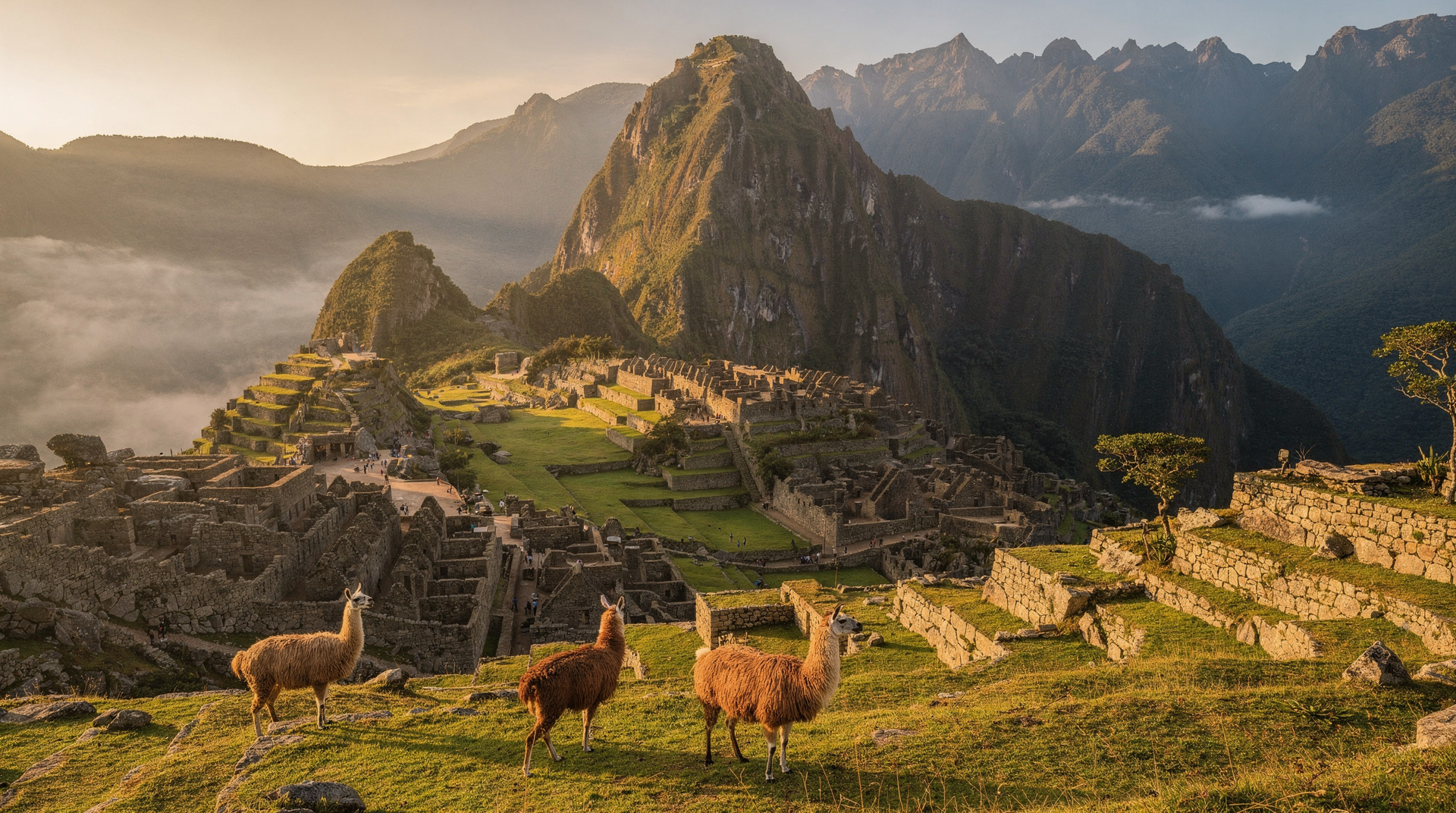
Distance from Cusco: 112 km as the crow flies; travel time 3.5–4 hours each way by train and bus. Departure from Ollantaytambo (most train services) means an 80-minute drive before you even board. The round trip is a long day but entirely manageable with a guided tour that handles logistics.
A full-day Machu Picchu tour with train, bus and entrance costs roughly S/550–750 (approximately $145–200 USD) per person all-in, depending on train class. The entrance alone is S/152 and must be booked separately in advance via the official site if you are going independently. The tour option packages everything, which is worthwhile unless you specifically want to move at your own pace.
Machu Picchu sits at 2,430 m — significantly lower than Cusco — so altitude is less of a concern on the day itself. The challenge is the overall length: expect 14–16 hours door-to-door. See the Machu Picchu day trip guide for the full breakdown.
2. Rainbow Mountain (Vinicunca) — the high-altitude colour show
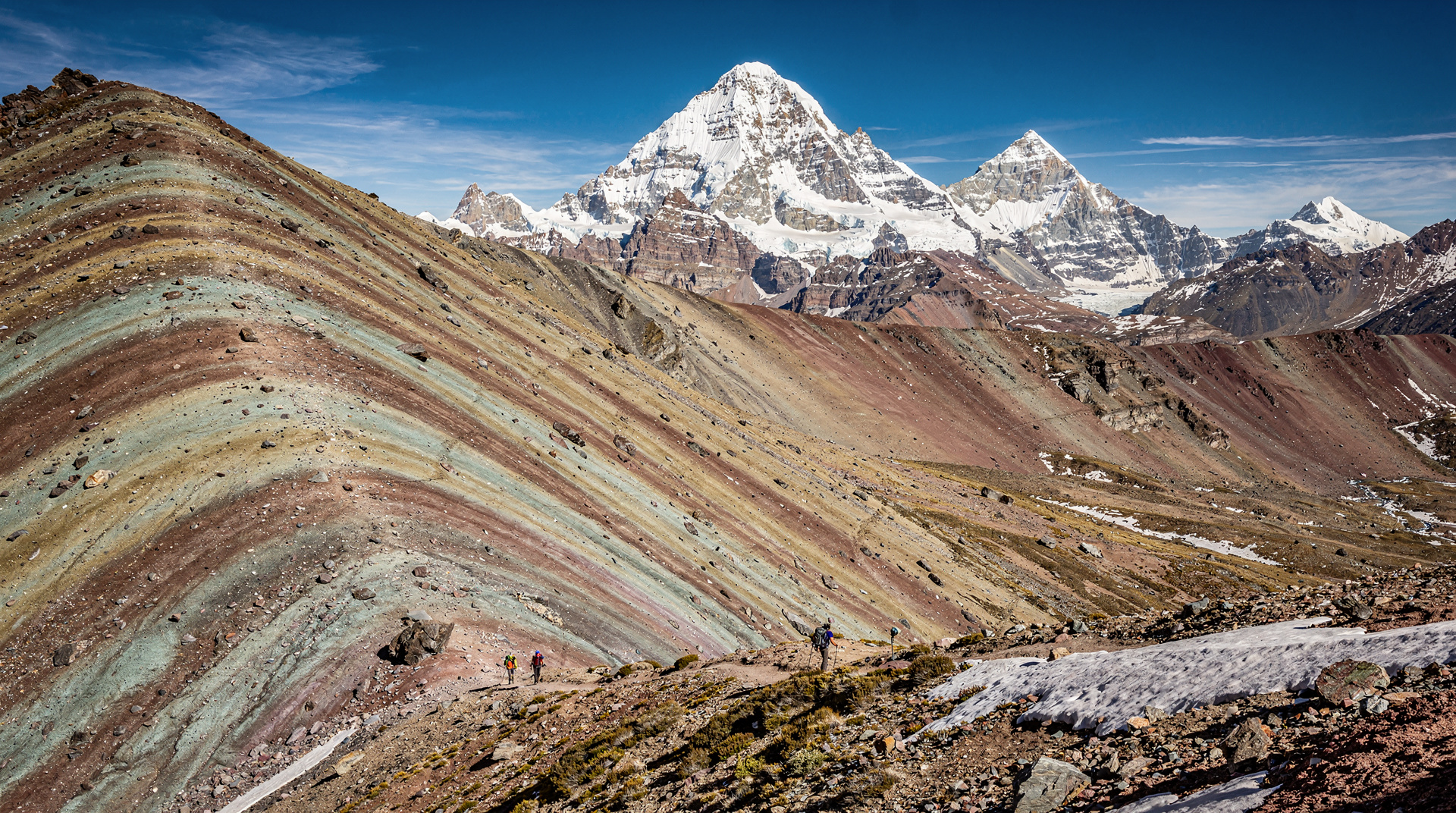
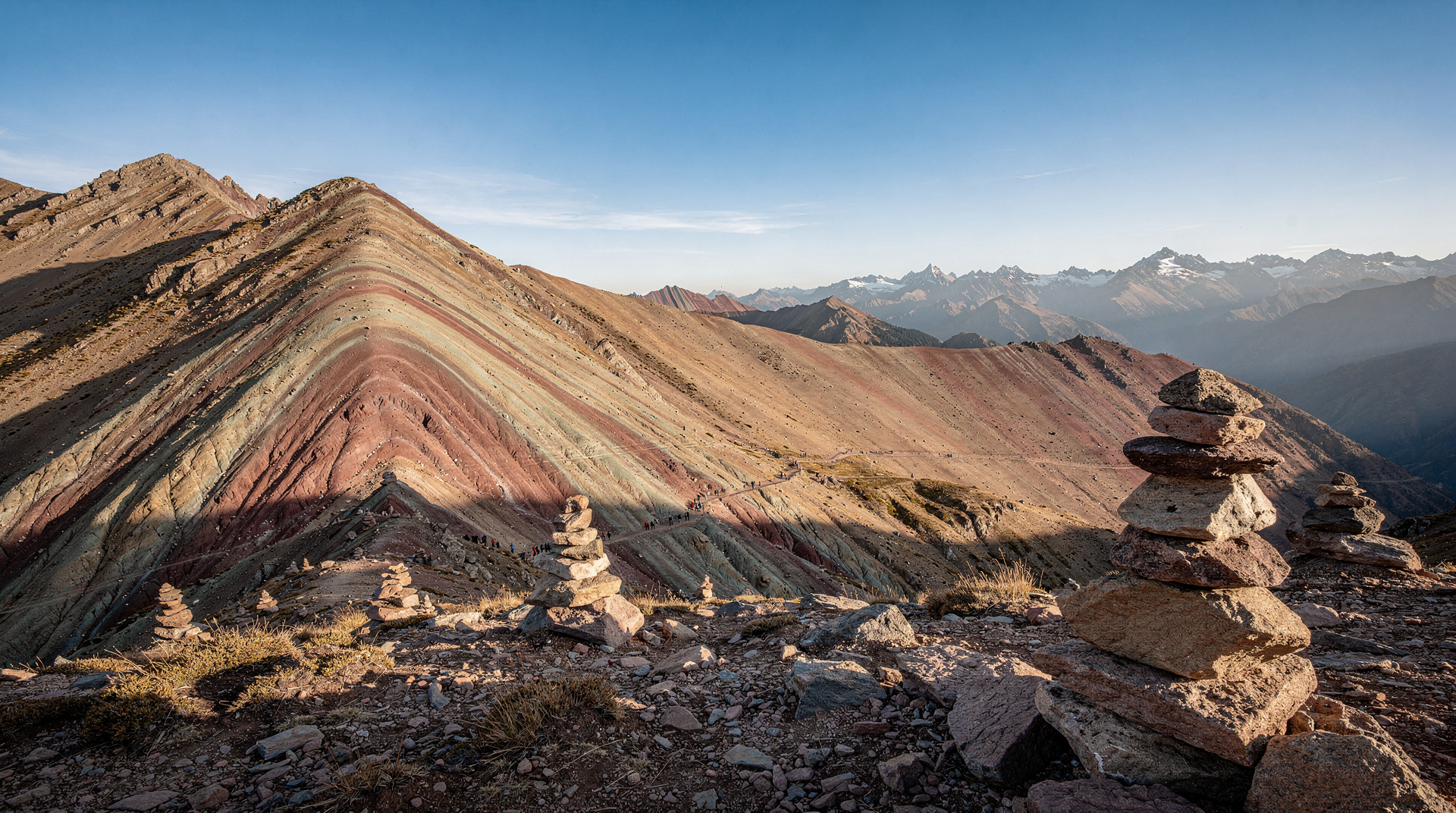
Rainbow Mountain Vinicunca peaks at 5,200 m and is Peru’s most photogenic day trip. The colours — reds, yellows, greens from iron, sulphur and copper minerals — are genuine, not enhanced, though Instagram tends to oversaturate them. The reality is still spectacular.
Departure time: 3–4 am from Cusco. Drive time: 3 hours to the trailhead. Trek: 8 km round trip, 3–4 hours, 300 m gain from the car park. Return to Cusco: around 5–6 pm. This is a demanding full day. Guided Rainbow Mountain tours cost S/90–130 (around $25–35 USD) per person and include transport, guide, breakfast and lunch. That represents excellent value.
Important honesty: if you are not confident at high altitude or find steep uphill walking hard, consider Palccoyo instead — it reaches similar landscapes at 4,900 m with a much shorter walk. See the Vinicunca vs Palccoyo comparison for a full breakdown.
3. Sacred Valley — history and markets
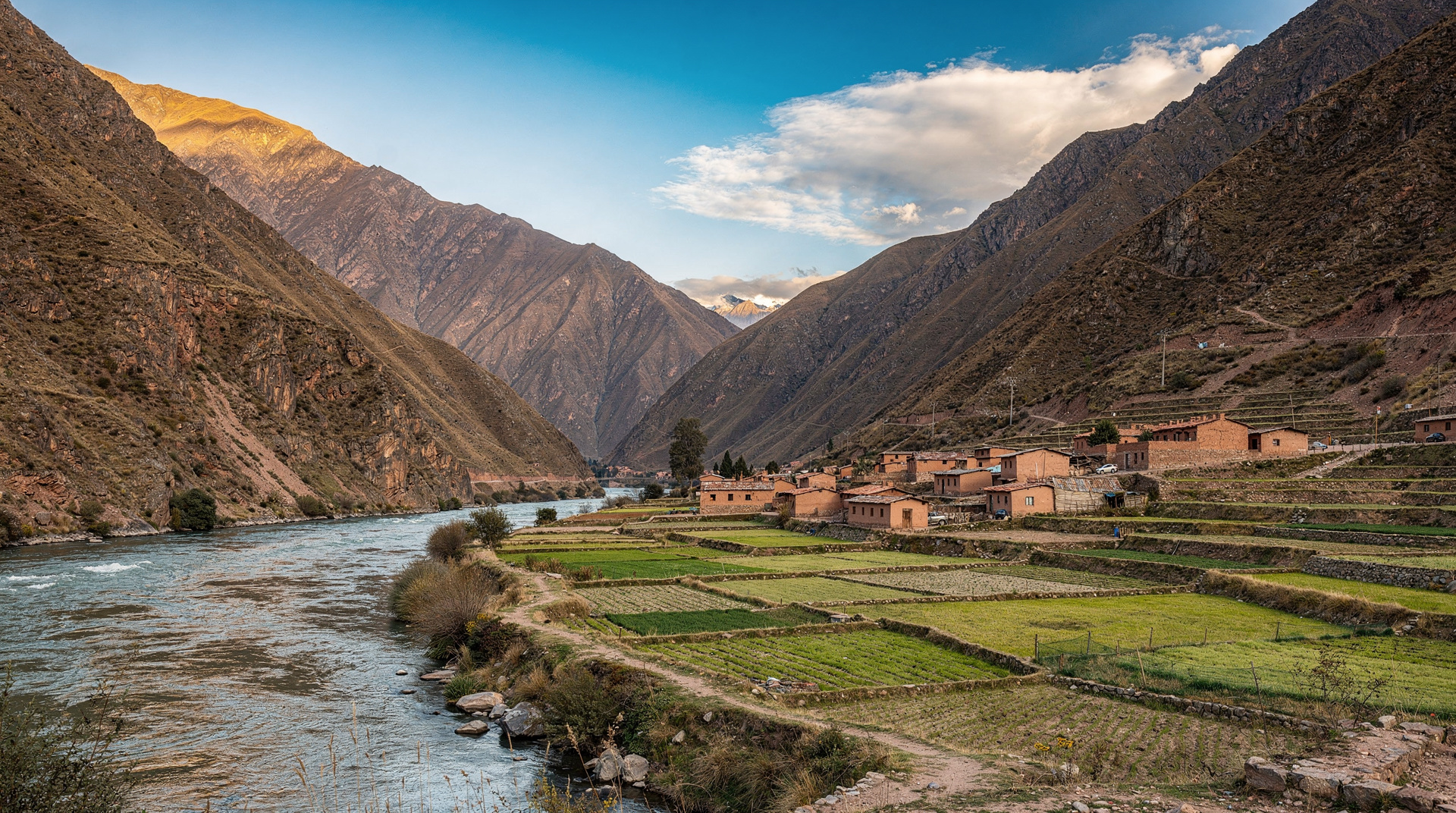
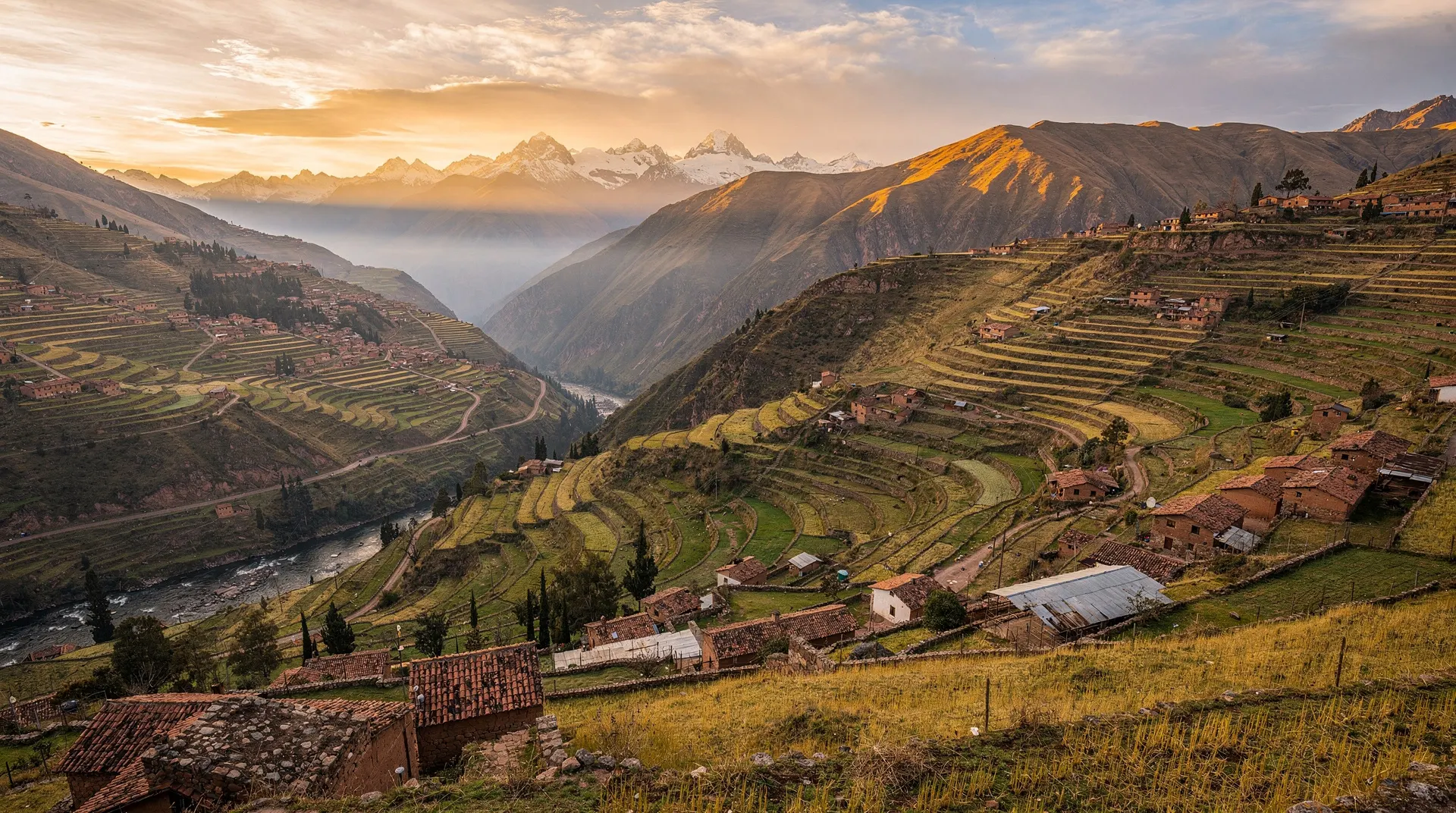
The Sacred Valley of the Incas stretches along the Urubamba River and sits at 2,800–3,000 m — a helpful lower altitude than Cusco, which is why this makes an ideal early excursion. A full-day Sacred Valley tour typically covers Pisac ruins and market, a lunch stop in Urubamba, and the impressive fortress of Ollantaytambo. Chinchero (weaving demonstrations) is often added as a fourth stop.
Cost: S/100–180 per person ($27–50 USD) for a guided group tour, including transport and usually lunch. Many include the Boleto Turístico entries for Pisac and Ollantaytambo; confirm before you book.
The valley rewards a slower pace if you can manage it. Staying overnight in Ollantaytambo positions you perfectly for an early Machu Picchu train the following morning.
4. Humantay Lake — the turquoise gem
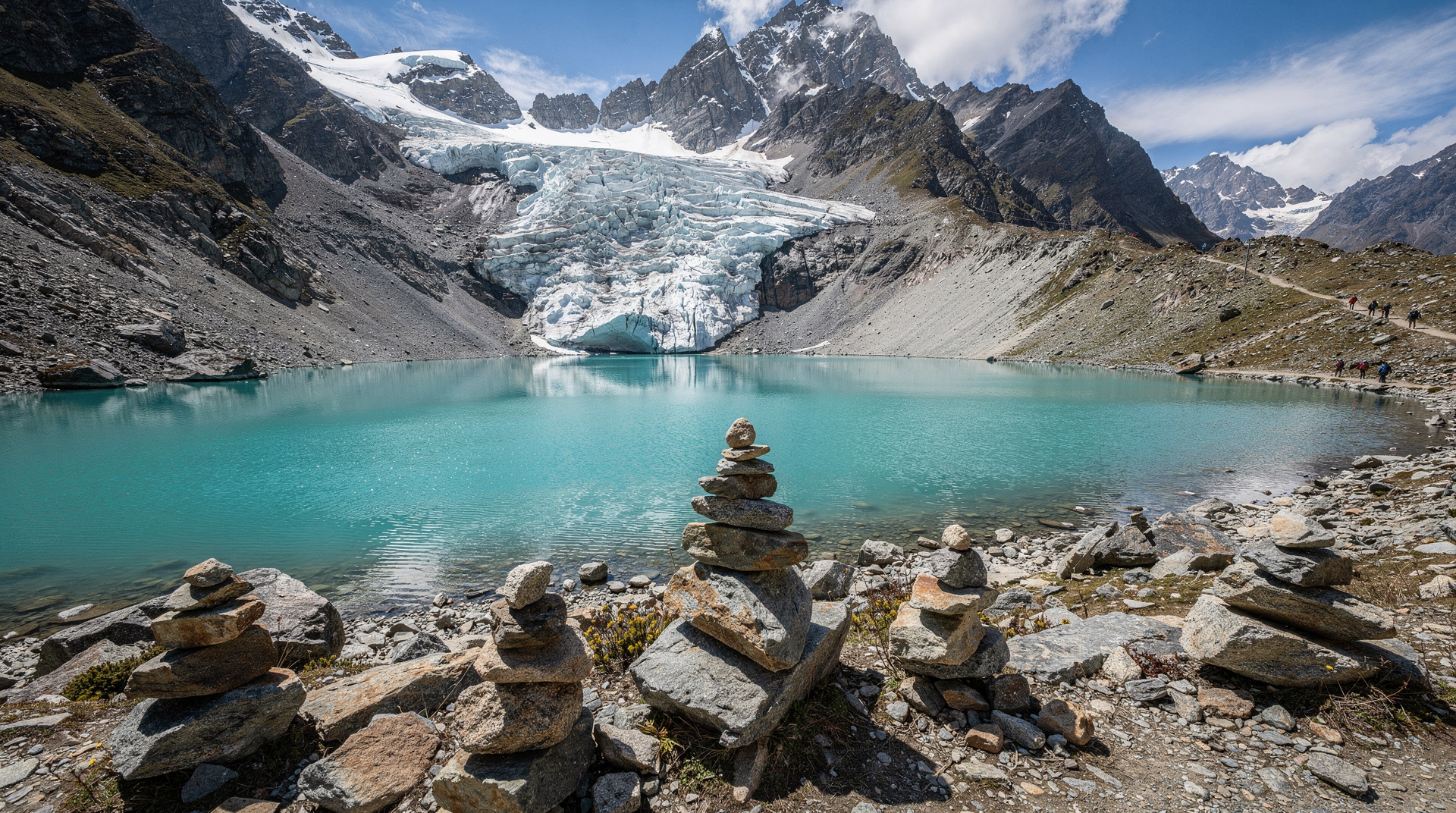
Humantay Lake (4,200 m) sits in a glacial cirque below the Humantay glacier and is one of the most visually striking destinations accessible as a day trip. The hike from the car park is 4 km return with roughly 450 m of elevation gain — genuinely steep and hard going in thin air, but achievable for walkers of average fitness who have acclimatised for two days.
Guided Humantay Lake day tours from Cusco cost S/100–140 ($27–38 USD), including transport, breakfast and lunch. Departure is around 5 am, return by 5–6 pm. The lake itself takes your breath away in both the literal and metaphorical sense.
See the Humantay Lake day trip guide for trail conditions and what to expect.
5. Maras and Moray — salt mines and Inca ingenuity
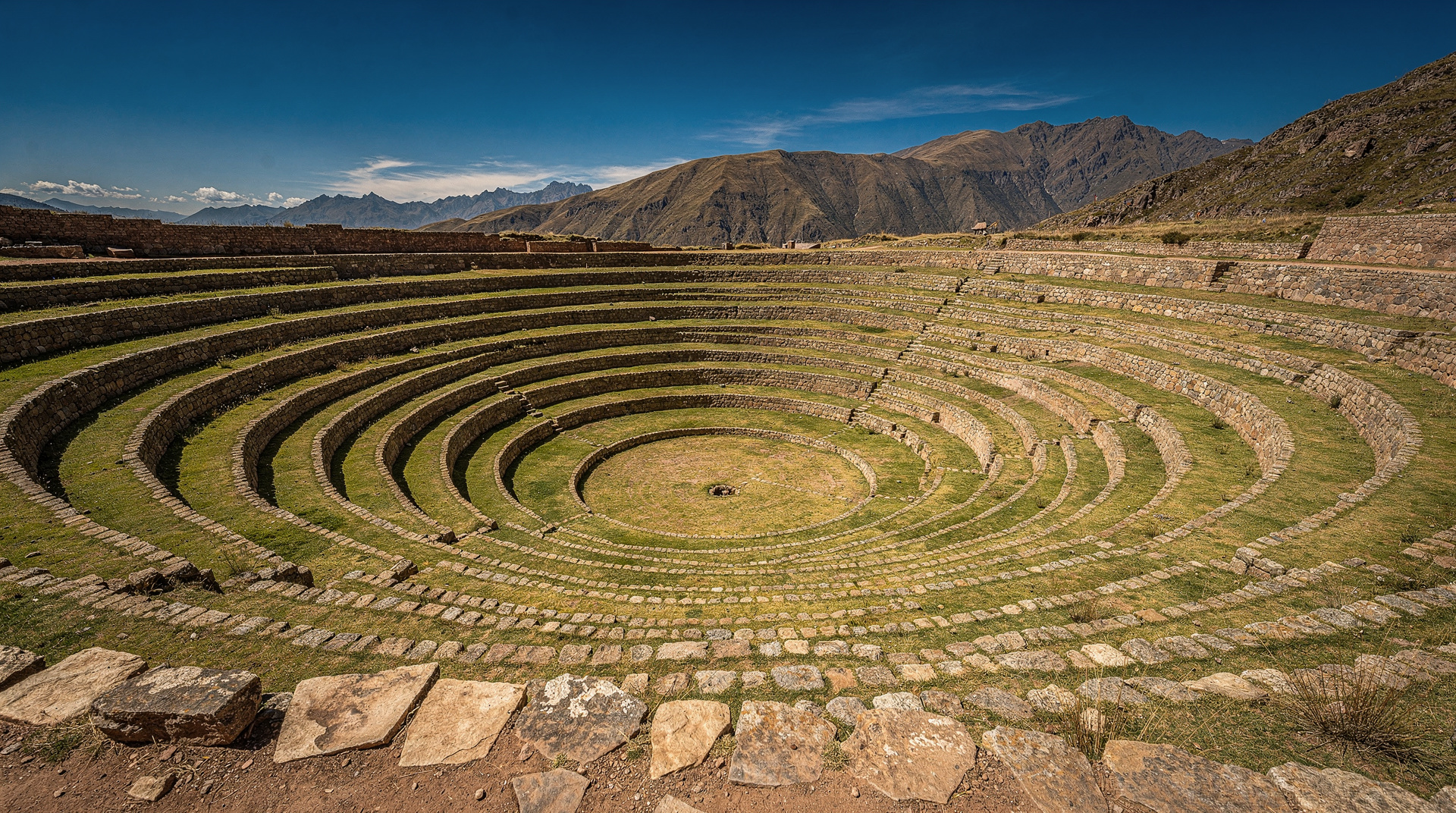
Maras (3,380 m) and Moray (3,500 m) are often paired as a half-day trip and make for one of the most satisfying excursions without a long drive or a demanding hike. Maras holds thousands of Inca salt-evaporation pools still in use today, cascading down a hillside. Moray is a circular series of agricultural terraces that Inca engineers apparently used as a climate-control experiment — the temperature difference between the top and bottom rings is around 15°C.
Both sites can be covered in 2–3 hours combined. A guided Maras and Moray tour costs S/80–130 ($22–35 USD) and can be combined with a morning in Cusco or an afternoon return. The full Maras and Moray day trip guide has everything you need.
6. South Valley (Tipón and Pikillacta) — the quieter route
The South Valley route through Tipón and Pikillacta is far less visited than the Sacred Valley and, in some ways, more interesting for those with an appetite for Inca hydraulics. Tipón features a superbly preserved Inca water management system — channels, fountains and terraces — while Pikillacta is an unusual pre-Inca Wari site from around 600 CE, a rare chance to see a civilisation that predated the Incas. See the South Valley day trip guide for details.
7. Palccoyo — Rainbow Mountain without the crowds
Palccoyo is the sensible person’s alternative to Vinicunca. The altitude tops out at 4,900 m (versus 5,200 m), the walk from the car park is a gentle 3 km return with minimal steep sections, and the crowd levels are a fraction of those at Rainbow Mountain. Three separate coloured ridges are visible from a single vantage point. Palccoyo day trips are worth seriously considering if you are not a confident high-altitude walker.
8. Ausangate lakes — the adventure option
The Ausangate massif (6,384 m) is the highest peak in the Cusco region and one of the most sacred mountains in Andean cosmology. Day trips focus on the turquoise lakes clustered at its base, typically reached by ATV quad. The scenery is raw and magnificent, with fewer visitors than Rainbow Mountain. Best for: adventurous travellers who have acclimatised well. See the Ausangate lakes day trip guide.
9. Machu Picchu — why it stays number one despite the crowds
Circling back: despite higher costs and logistical complexity, Machu Picchu remains in a category of its own. The scale, the setting, the stonework — arriving at the Sun Gate or stepping through the main entrance for the first time is one of the genuinely transformative travel moments available on this continent. Book the tickets early, go on a guided tour to understand what you are looking at, and do not let any of the organisational friction put you off.
How to plan multiple day trips
If you have five days in Cusco (the sweet spot for covering the highlights), a workable sequence is: day one — rest and acclimatise; day two — Sacred Valley (lower altitude, easy day); day three — Maras and Moray (half-day option) or city exploration; day four — Rainbow Mountain or Humantay Lake (by now you have three days of acclimatisation); day five — Machu Picchu.
The 5-day Cusco itinerary maps this out in full with train times, booking links and accommodation suggestions.
Booking: tour or independent?
Most of these excursions are straightforward to do independently with private transport. Tours add value primarily for: Machu Picchu (where a guide genuinely enriches the experience), Rainbow Mountain (where transport logistics at 3 am are fiddly), and any site where you lack background in Inca history. For Maras and Moray, the sites are small enough that a good guidebook substitute is fine.
Whatever you book, use a licensed agency. The guide to spotting unlicensed tour agencies in Cusco explains the red flags. GetYourGuide operators are vetted and have refund protections; this is one context where the convenience genuinely matters.
What day trips cost: a realistic budget
Understanding the full cost of a Cusco day trip before you book avoids surprises. Here is a realistic breakdown per person in soles and approximate USD:
| Day trip | Tour cost | Entrance fees | Total approx. |
|---|---|---|---|
| Machu Picchu | S/350–550 | S/152 + S/55 bus | S/560–760 ($150–206 USD) |
| Rainbow Mountain | S/90–130 | S/10 community fee | S/100–140 ($27–38 USD) |
| Sacred Valley | S/100–180 | S/70 Boleto partial | S/170–250 ($46–67 USD) |
| Humantay Lake | S/100–140 | S/10 community fee | S/110–150 ($30–40 USD) |
| Maras and Moray | S/80–130 | S/35 Moray indiv. | S/115–165 ($31–45 USD) |
| Palccoyo | S/90–130 | S/10 community fee | S/100–140 ($27–38 USD) |
| Ausangate (ATV) | S/180–280 | S/10–15 | S/190–295 ($51–80 USD) |
| South Valley | S/70–120 | S/70 Boleto partial | S/140–190 ($38–51 USD) |
These prices are for group tours booked through agencies in Cusco or through platforms like GetYourGuide. Private tours cost 2–3 times more for the vehicle but are worth it for families or groups of four or more where the per-person maths changes.
The importance of timing within the day
Most Cusco day trips succeed or fail based on arrival time at the main attraction, not the drive time or the tour operator. Here is the honest timing reality:
Rainbow Mountain: The summit is most photographically impressive 8:00–10:00 am, before clouds build. Miss this window and you may arrive to a grey summit. Choose a 3:00–3:30 am Cusco departure over a 4:30 am departure.
Machu Picchu: Timed entry tickets determine your slot: one slot per hour, from 6:00 am to 3:00 pm. Morning slots (8:00–10:00 am) give the best light for the classic viewpoint and the widest choice of guided tours. Later slots leave you less time on site. Check the current slots and prices on tuboleto.cultura.pe.
Humantay Lake: The lake receives direct sun between 9:00 am and 1:00 pm. Arriving mid-morning shows the turquoise colour at its most vivid. Early arrivals in shade see the colour as a deeper, duller green.
Sacred Valley: Pisac market is best visited before noon. The ruins are best in morning light. Ollantaytambo in the afternoon is fine and often has beautiful low light on the fortress terraces.
Acclimatisation: the most important trip-planning factor
Many first-time visitors to Cusco book day trips before they fully understand altitude sickness. Planning day trips before altitude experience is reversed — start with the lower sites and the less strenuous days.
Day one in Cusco: do nothing strenuous. Walk the historic centre, sit in a cafe, eat lightly, go to bed early. Day two: the Sacred Valley (lower altitude, minimal climbing) is ideal. Day three: consider Maras and Moray (same altitude as Cusco) or a city ruins circuit. Day four: if you feel well, Humantay Lake or Palccoyo. Day five: Rainbow Mountain or Ausangate.
This progression is not overly cautious — it is the sequence that gives you the best days, rather than the sequence that leads to spending day four in bed with a headache.
The Cusco acclimatisation guide has a full day-by-day plan with altitude benchmarks for each excursion.
What to wear on Cusco day trips
The single most common clothing mistake on Cusco day trips: leaving the warm layer at the hotel. Even in Peru’s summer (December–February), temperatures at 4,000 m at 6:00 am are close to freezing. The UV radiation at altitude burns faster than at sea level, meaning you can simultaneously be cold and sunburned. Pack both a down jacket or fleece and a high-SPF sunscreen for every day trip, every time.
Trekking poles are worth packing for Rainbow Mountain, Humantay Lake and Ausangate. They reduce knee stress on steep descents and provide genuine stability on loose stone paths at altitude where your coordination is slightly impaired by reduced oxygen. Most tour operators do not supply them; if you will be doing two or more highland hikes, consider buying an inexpensive pair in Cusco (S/50–80 at the market near San Pedro).
Practical details
All Cusco day trips involve early starts. Pack a warm layer even in dry season — temperatures at altitude drop sharply in the early morning. Carry at least two litres of water per person, sunscreen (UV radiation is intense above 3,000 m), and small-denomination soles for on-site purchases, tips and entrance fees not covered by your tour.
Check the seasonal guide if you are unsure about timing — some roads to Rainbow Mountain and Ausangate close after heavy rain in the wet season (November–March).
Frequently asked questions about Best day trips from Cusco
How far in advance should I book day trips from Cusco?
Which day trip is best for acclimatisation?
Are day trips from Cusco included in the Boleto Turístico?
Can I do two major day trips in one day from Cusco?
Which day trip is best for families with children?
Top experiences
Bookable activities with verified prices and instant confirmation on GetYourGuide.