Maras and Moray day trip from Cusco
Sacred Valley: Pisac, Ollantaytambo, Chinchero with Lunch
How do you visit Maras and Moray from Cusco?
Tours from Cusco reach Maras salt mines and Moray circular terraces in about 45 minutes. Both sites can be covered in 3–4 hours, making this a comfortable half-day trip. Tours cost S/80–130 ($22–35 USD). It is often combined with a Sacred Valley full-day itinerary.
Two sites that belong together
| Where | Chinchero plateau, ~45 min from Cusco |
| Cost | around S/80–130 ($22–35) guided; Maras entry ~S/10–15 extra |
| Time needed | 2–4 hours for both sites, half-day trip |
| Best paired with | a Sacred Valley full-day tour (Pisac + Ollantaytambo) |
| Altitude | ~3,380–3,500 m — similar to Cusco, no extra acclimatisation needed |
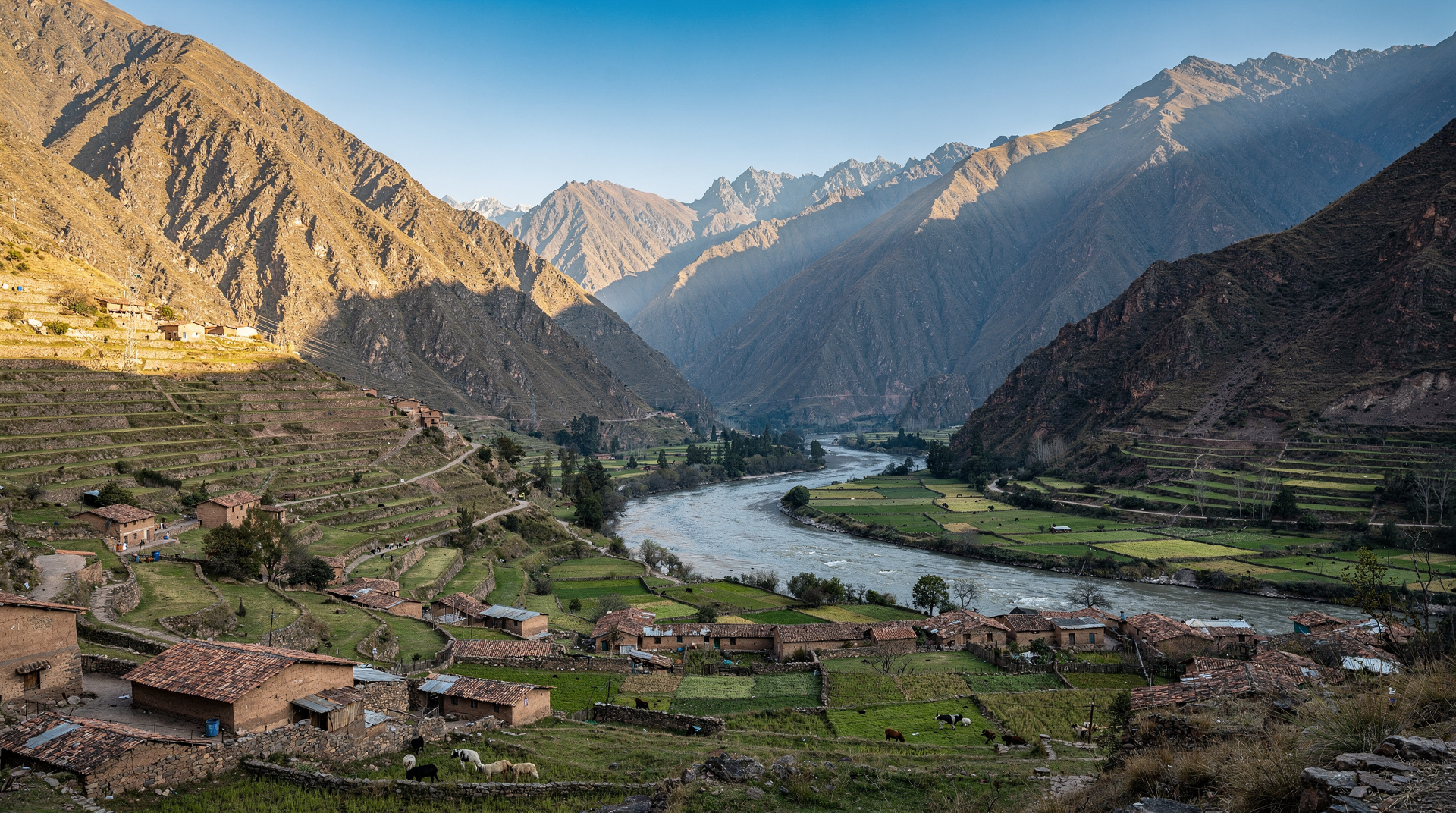
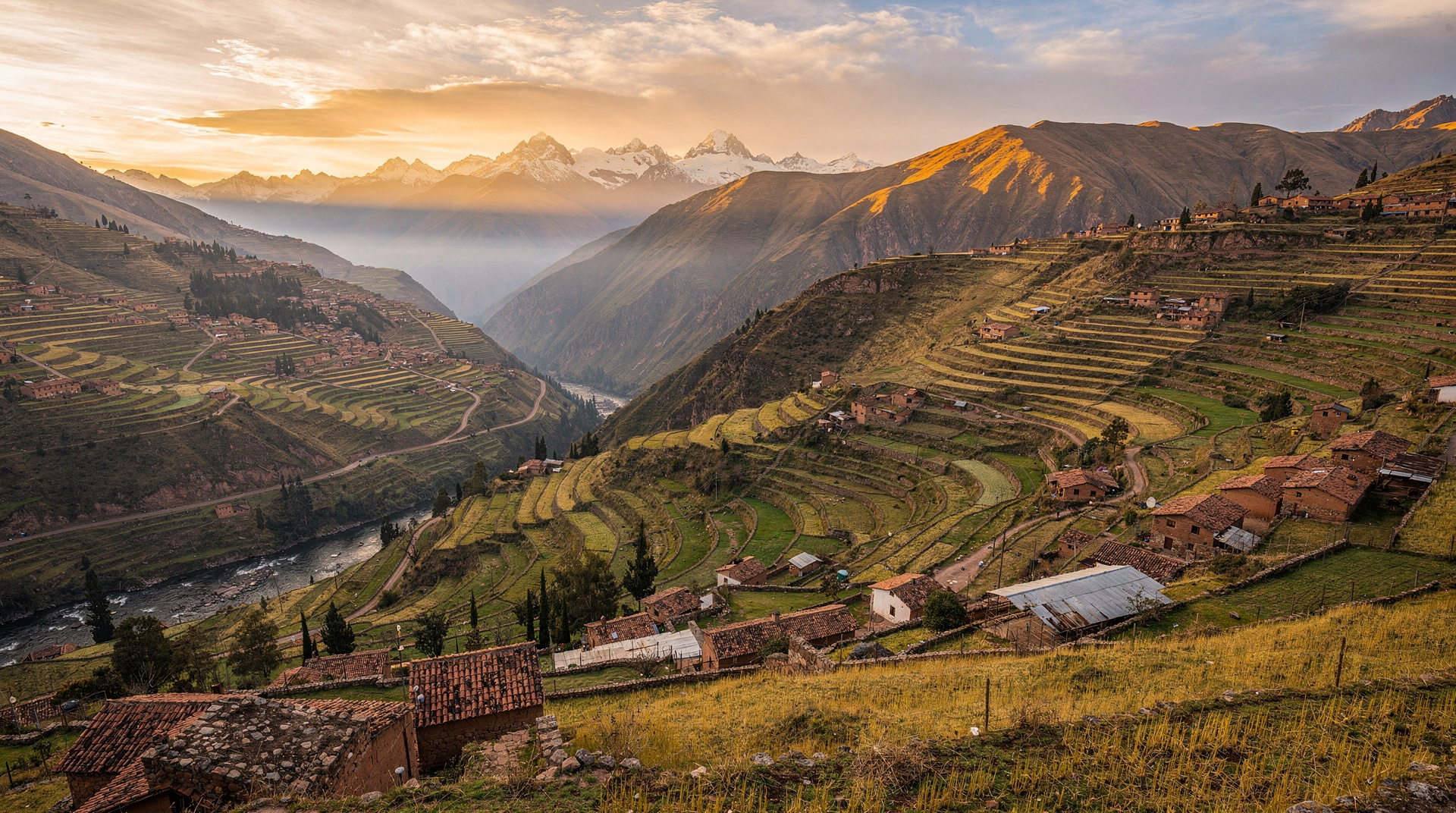
Maras and Moray sit within 10 km of each other on the plateau above the Sacred Valley, 45 minutes from Cusco, and each offers something genuinely different from the more frequently visited Inca sites. Maras is not an archaeological ruin — it is a living landscape of salt production unchanged in its essential method for over five centuries. Moray is one of the most architecturally unusual things you will see anywhere in the Andes: circular terraced bowls carved into the earth with an engineering rationale that still generates academic debate.
Together, they make one of the most satisfying and underrated half-days available from Cusco — and crucially, they suit virtually anyone regardless of fitness or altitude acclimatisation, since the plateau sits at around 3,380 m, similar to Cusco itself.
Getting to Maras and Moray from Cusco
The most common route runs from Cusco via Chinchero (on the plateau road, 28 km) or via the Sacred Valley and up a side road from Urubamba (adding Pisac and Ollantaytambo to the day). Both approaches take around 45–60 minutes to reach the sites.
Guided tour: A Maras and Moray tour from Cusco typically includes transport, a guide, both site visits, and often lunch. Cost: S/80–130 ($22–35 USD) per person. This is one of the more affordable guided tours from Cusco, and the guide adds genuine value at Moray where the engineering context is not immediately obvious from the surface.
Combined Sacred Valley tour: If you want to visit Pisac, Chinchero, Maras, Moray and Ollantaytambo in one day, a Sacred Valley combined tour covers all five for S/130–180 ($35–50 USD). This makes for a packed day but is feasible.
Private driver or taxi: Negotiating a full-day hire from Cusco covering Maras, Moray, and optional Sacred Valley stops costs S/200–300 ($55–80 USD) for the vehicle. Good option for small groups wanting flexibility.
Cycling: A number of operators offer guided bike tours descending from the plateau through Maras and Moray to the Sacred Valley below. The route is predominantly downhill on the return, making it accessible to most visitors. Ask about electric bike options if you are uncertain about fitness.
Maras salt mines: what you are looking at
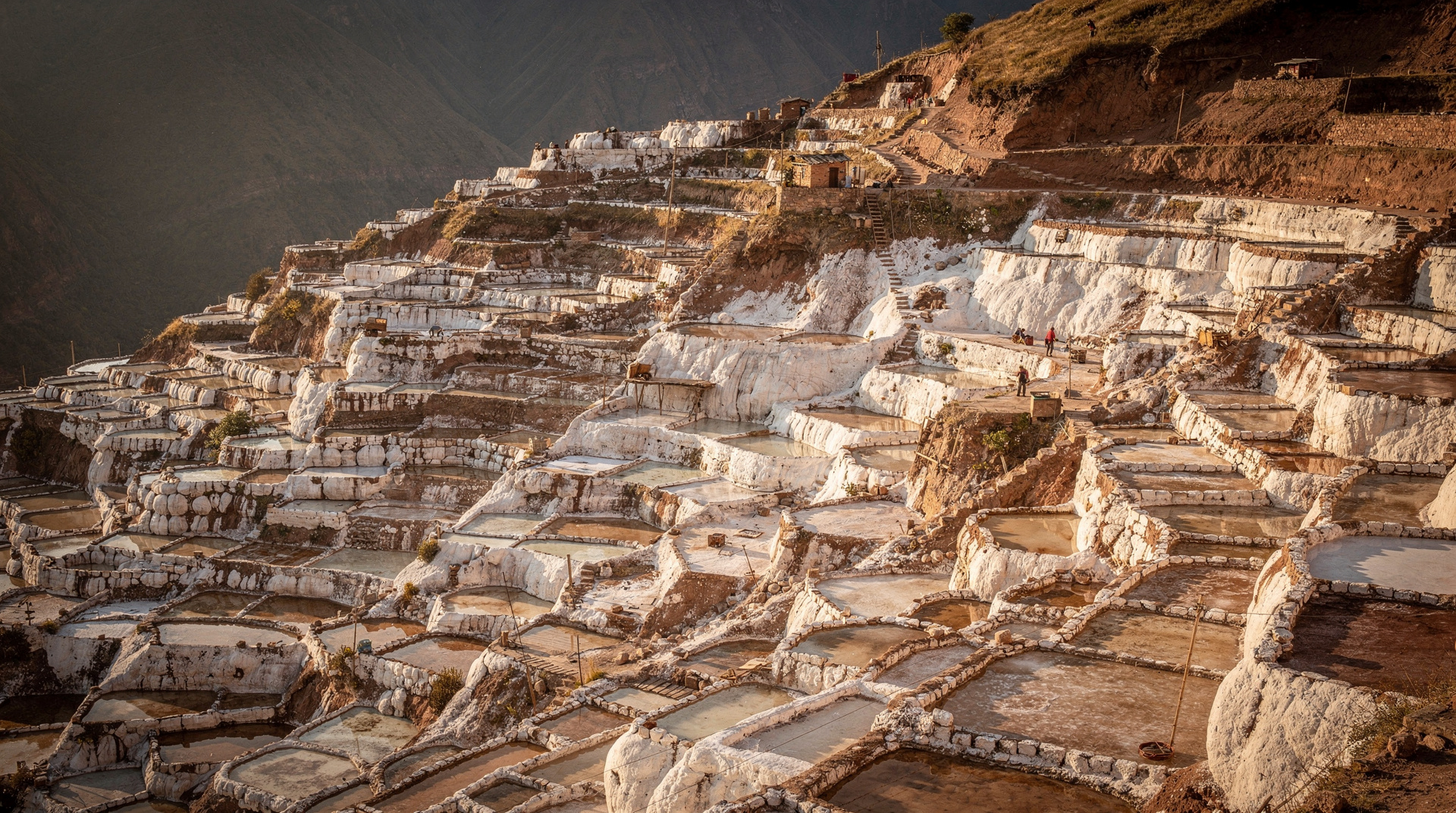
The Salineras de Maras are a cascade of roughly 3,000 individual salt pans descending a hillside into the lower Sacred Valley. The sight from the main viewpoint — tiers of white, cream and pink pools stepping down through the valley wall, each one neatly bordered and managed by a different family — is one of the most photogenic scenes in the Cusco region, and the photographs are not exaggerated.
The salt comes from a natural hypersaline spring that emerges from the hillside. Water is guided into the top pools, left to evaporate in the sun, and the residue is raked into salt crystals by the pool owners. The process has been essentially unchanged since before the Inca period; the Incas expanded and formalised what was already an ancient local practice.
Walking through the salt mines takes 30–45 minutes. A path runs between the pools; stay on designated paths as the pool walls are fragile. There is a small stall area at the entrance where you can buy locally produced salt — pink salt from Maras is a legitimate local product and a good souvenir.
Entrance: The Maras community charges around S/10–15 per person. This is payable at a small booth near the entrance. The Boleto Turístico does not cover Maras.
Moray: the Inca agricultural laboratory
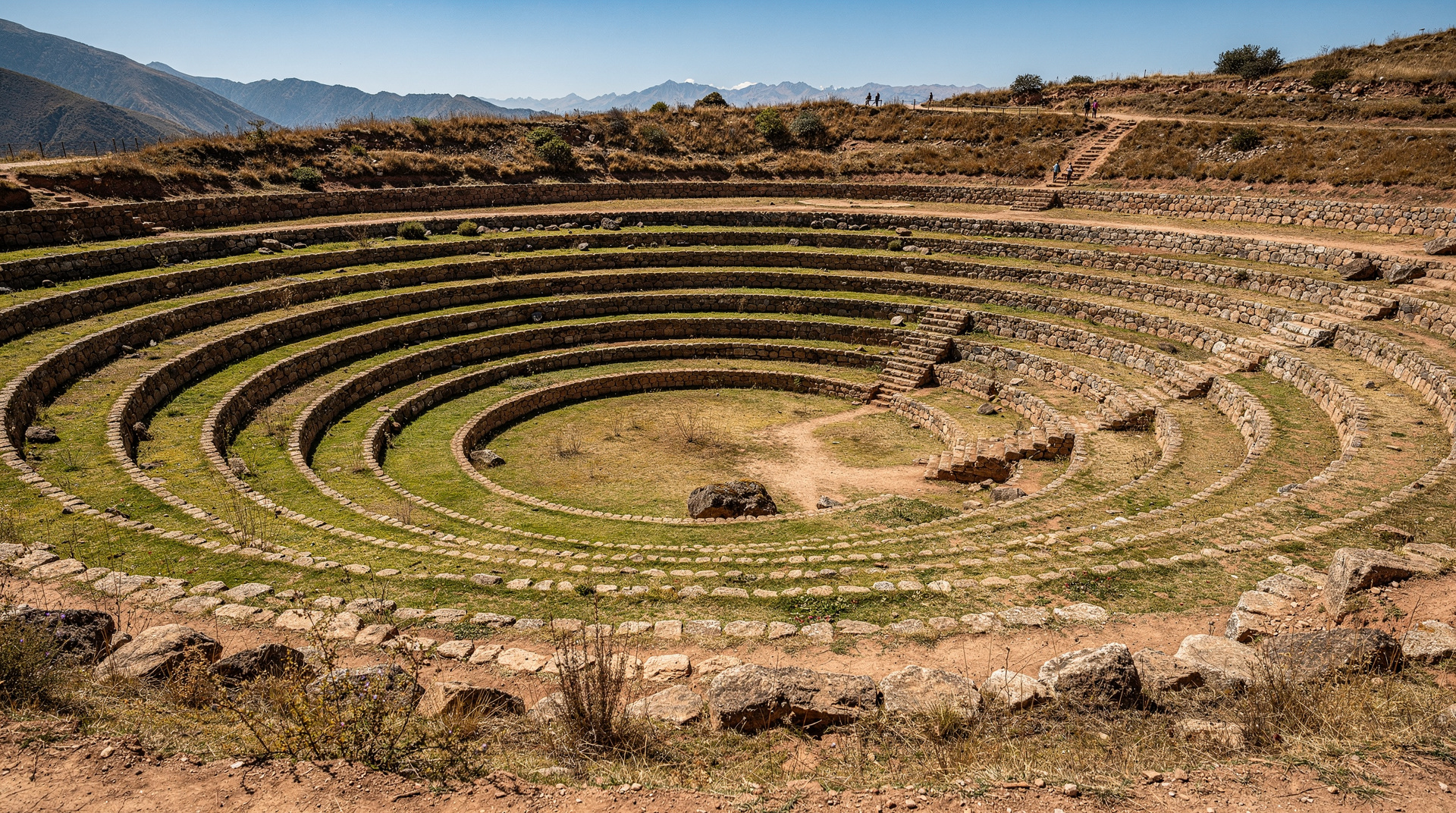
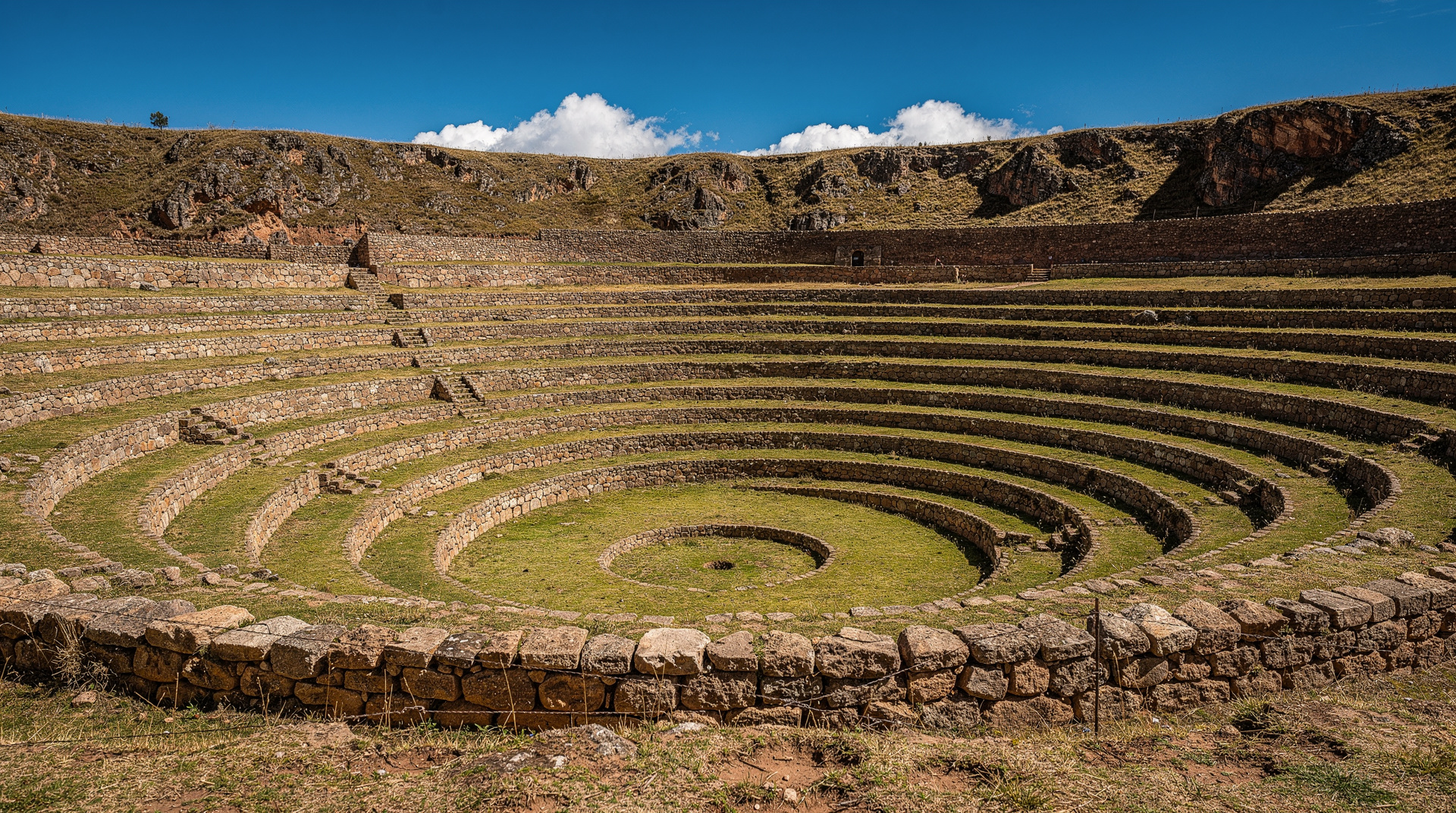
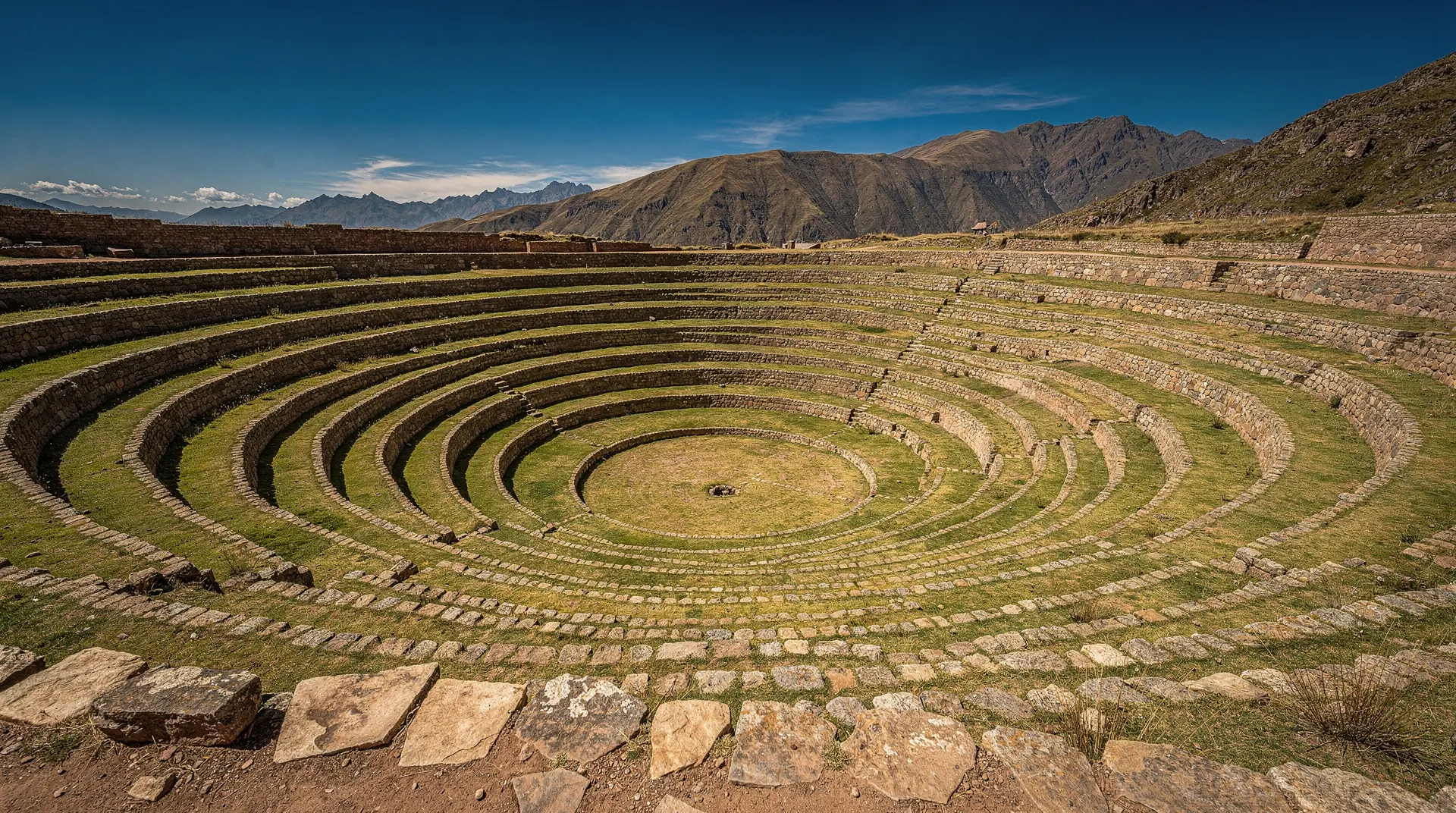
Moray sits 7 km from Maras on the same plateau. Three large circular depressions hold concentric rings of terraces that step down to a central bowl. The largest depression is about 30 m deep and 220 m across. Standing at the rim looking down, the geometry is remarkable — each ring is perfectly proportioned, the walls are fitted with the characteristic Inca stonework, and irrigation channels run between rings.
The working theory — that Moray functioned as an agricultural laboratory exploiting microclimatic differences between terraces — is compelling and well-supported by evidence. Temperature measurements show differences of up to 15°C between top and bottom, allowing crops from dramatically different altitude zones (coastal, mid-elevation, high Andes) to be cultivated simultaneously. Each ring may have been dedicated to a different variety or climate simulation.
Allow 45–60 minutes at Moray. The path descends into the central bowl of the largest depression, so what you see from the rim is also explorable at close range. In dry season the terraces are bare earth; in wet season (November–March) they carry green growth that actually enhances the visual impression.
Entrance: Covered by the Boleto Turístico (partial circuit S/70 or full circuit S/130). Individual ticket at the site itself: around S/35 if you have not purchased the pass.
Combining with the Sacred Valley
The most efficient way to see Maras and Moray is as part of a Sacred Valley day that also includes Pisac and Ollantaytambo. The route from Cusco via Chinchero down to Maras and Moray, then continuing down to the valley for lunch in Urubamba and a final stop at Ollantaytambo, covers all the highlights in a single day.
If you prefer to leave the logistics to someone else, a small-group tour that strings together Pisac, Maras, Moray and Ollantaytambo keeps the whole circuit in one booking, with a guide to explain what you are looking at on the plateau.
The one-day Sacred Valley itinerary maps this route in full. The Sacred Valley day trip guide has more detail on Pisac and Ollantaytambo.
What to expect at each site
Time allocation: Allow 45 minutes at the salt mines, 60 minutes at Moray, and travel time between the two sites (10–15 minutes by vehicle). Total on-site time: approximately 2 hours, plus a lunch stop of 45–60 minutes.
Physical demand: Very low. Both sites involve walking on relatively flat or gently sloping ground. The only notable climb is descending into the Moray depression (around 30 m of steps) and returning. Suitable for all fitness levels, including older visitors and young children.
Altitude: Both sites sit at approximately 3,380–3,500 m — comparable to Cusco. If you have been in Cusco for 24 hours you should have no additional altitude concerns at Maras or Moray.
Honest assessment: is this worth your time?
Yes — particularly if you have already seen the main Sacred Valley sites on a separate day or plan a multi-day stay. Maras offers something genuinely unusual and visually extraordinary with almost no physical effort. Moray is the most intellectually interesting Inca site I know of: it asks you to think about agricultural engineering rather than military power or religious ceremony, and that is a refreshing change.
Neither site is overrun with crowds in the way that Machu Picchu or Rainbow Mountain can be. Even in peak season (June–August) you can walk the Maras salt mines with room to breathe, and Moray rarely has more than a few dozen people at any one time.
The Moray terraces guide and the Maras salt mines guide both go deeper into the archaeology and history of each site if you want preparation before visiting.
The living salt tradition at Maras
The Maras salt pans are a working salt production site, not a museum piece. Roughly 460 families each own and work between one and several pools. The pools are inherited; the water rights and the pools themselves pass from generation to generation and cannot easily be bought or sold outside the community. Salt production here predates the Inca conquest of the region and continued uninterrupted through colonial rule and into the present day.
The process is seasonal in its intensity. In dry season (May–September) evaporation is fastest, harvests are most frequent, and the pools are most visually spectacular — fresh white crystal overlaying the pink mineral substrate. In wet season, some pools fill with rain water and production slows. The salt produced is slightly pink and mineral-rich; it commands premium prices in Lima and in export markets. Buying a small bag from the site stalls directly benefits the families who maintain the pools.
Photography at the Maras salt mines is subject to a community fee that is separate from the entrance charge — you will be approached by a community member near the viewpoint if you plan to photograph extensively or use a drone. This is legitimate and the fee is modest (S/5–10 for still photography). Drone use requires advance permission and is restricted in many areas.
Moray’s engineering: three competing theories
No contemporary Inca document explains Moray’s function. The three main scholarly theories are:
Agricultural laboratory: The most widely accepted explanation. The microclimatic differences between terrace rings (up to 15°C) would have allowed simultaneous cultivation of crops from different altitude zones — effectively simulating multiple ecological niches in one location. This fits with what is known about Inca agricultural experimentation with new crops and hybridisation.
Ritual and ceremonial space: The circular form echoes other Inca spaces used for ceremony (the town of Cusco itself was planned in the shape of a puma). Some scholars argue Moray was a sacred landscape rather than a functional one, with astronomical alignments built into the terracing.
Water management system: The third, less common interpretation focuses on the drainage systems built into the terracing, suggesting Moray was primarily an experiment in managing water flow on a large scale.
None of these explanations is confirmed. The mystery is part of the appeal. A good guide at Moray will present all three and invite you to form your own view based on what you see — which is the honest approach, and considerably more interesting than the “it was a lab” story many guides recite.
Visiting with limited time or as a private hire
If you only have a half-day and cannot join a scheduled group tour, a private taxi or driver hired directly from Cusco is the most flexible option — you set the arrival time (useful for reaching Maras in the good morning light) and can linger at Moray without a group’s schedule pressing you along. Negotiate the fare before departure and confirm it includes waiting time at both sites, not just the drive. This is a reasonable option for couples or families who prefer not to share a group itinerary, though it costs more per person than a scheduled tour and does not include a guide’s explanation of the sites unless you arrange one separately.
What to eat in the area
The town of Maras and the village near Moray both have basic restaurants serving the Andean lunch staples — papa a la huancaína (potatoes in a spicy cheese sauce), trucha (trout), sopa de quinua. These are substantially cheaper than the tourist-facing restaurants in Pisac or Urubamba: expect S/15–25 for a set menu.
Chinchero, if included in your tour on the return, has a market on Sundays where local produce including dried chillies, local cheeses and vegetables are sold to the community rather than tourists. Worth stopping at if you are passing.
The Peruvian food guide covers the full range of Andean dishes to seek out during your Cusco visit.
Cycling from the plateau: an alternative approach
For visitors who want an active alternative to a standard vehicle tour, several Cusco operators run guided mountain-bike descents that start on the Chinchero plateau above Maras and finish in the Sacred Valley, passing directly through both sites en route. The route is mostly downhill after the initial plateau riding, making it accessible to riders who are reasonably fit but not necessarily experienced off-road cyclists.
A guide manages the pacing, and the bikes are typically shuttled up in a support vehicle so you only ride the descent. This format suits travellers who want to combine the Maras and Moray visit with a genuine adventure activity rather than a seated tour; the mountain biking Cusco guide covers this and other regional cycling routes in detail, including what to look for in rental bike quality.
Planning around the plateau
Because Maras and Moray sit at a similar height to the city, they work well on a first or second day out of town. If you are still adjusting, the Cusco acclimatization plan and the altitude sickness guide explain how to pace your first days, and Cusco versus the Sacred Valley as a base helps you decide where to sleep. Travellers who stay in the valley will find the plateau an easy morning outing from Urubamba or Chinchero.
If you are building a longer stay, this half-day slots naturally into the wider Sacred Valley picture. The complete Sacred Valley guide shows how the plateau relates to the villages below, while getting around the Sacred Valley covers the practical side of moving between them without a tour. For a wider choice of outings, see the best day trips from Cusco.
Families can treat this as one of the gentler excursions on offer; the family-friendly day trips from Cusco page compares it with other easy options. Anyone who wants to see how the plateau fits into a fuller programme can look at the one-week Cusco, Sacred Valley and Machu Picchu itinerary, and the Chinchero weaving guide is a good companion if your route passes through that village on the way. For a more personal account of the area, the Sacred Valley slow travel diary is worth reading before you go.
Practical notes
Carry soles in small denominations for the Maras community entrance fee and any purchases at the site stalls. The salt sold at Maras is genuine and worth buying if you like cooking with quality mineral salt — it is dramatically cheaper here than in Cusco artisan shops.
Sunscreen and water are essential as always. There is no shade at Moray; the wind on the plateau can be cold despite the sun. Pack a windproof layer even in summer.
Photography at the salt mines is best in the late morning when the light hits the pools from a low angle and picks out the colours most vividly. Moray is most dramatic in very early morning light before the sun is overhead.