Cusco in the dry season — a photo diary and honest conditions report
A nine-day photo diary from Cusco in early October — the tail end of the dry season, when the light gets more interesting and the crowds thin out before the rains arrive.
| When | Early October (late dry season / shoulder) |
| Conditions | 6 clear days, 2 with cloud, 1 with 40 minutes of rain |
| Crowds | Noticeably lower than July–August at every site |
| Prices | 10–20% below peak-season quotes |
| Best for | Photography light, Rainbow Mountain visibility, fewer queues |
October: the dry season’s last weeks
I arrived in Cusco on 1 October. By that point the high season — the July–August peak, Inti Raymi in June, the months when Machu Picchu operates at absolute maximum capacity — was firmly behind us. What remained was the tail of the dry season: the sky still mostly clear, the days still bright, but the quality of the light changing as the season shifts toward the first rains.
I want to be precise about what “dry season” means in late October because a lot of travel writing implies a binary — either dry season (perfect) or wet season (difficult) — when the reality is a gradient. October in Cusco is still primarily clear but not uniformly so. In my nine days I had six fully clear days, two days with significant afternoon cloud (no rain), and one afternoon where it properly rained for about 40 minutes. That’s a good month. It’s not August.
The light in October
If I’m honest, October light in the Andes may be more interesting photographically than July light, even though July is clearer. The reason: at peak dry season, the air is completely dust-free and the light is flat and brilliant. Beautiful in person, occasionally difficult to photograph without washing out the warm tones of the stone and earth. In October, there’s just enough atmospheric haze — not cloud, but the approaching moisture of the transitional period — to add texture to the afternoon sky and quality to the golden hour.
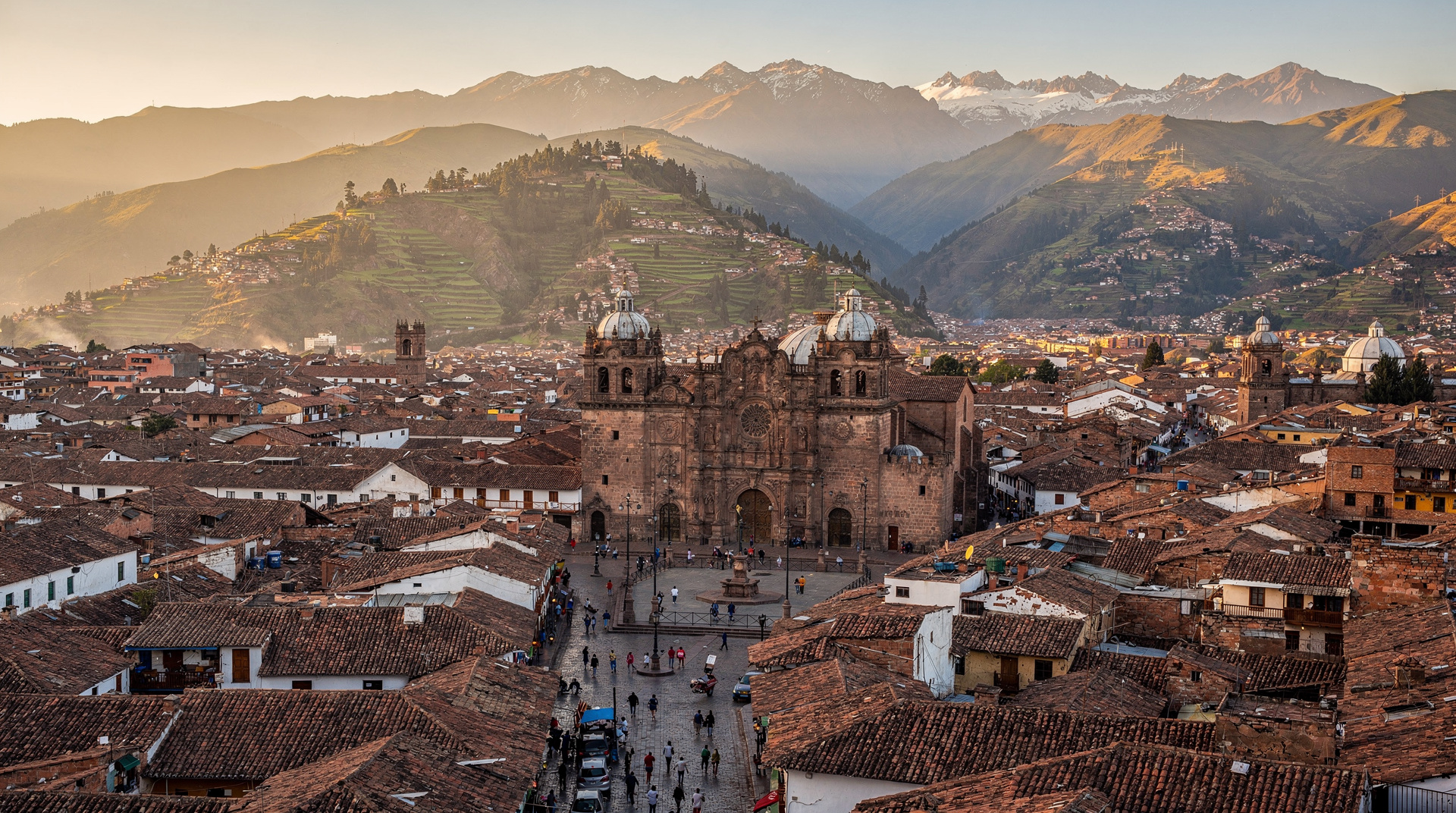
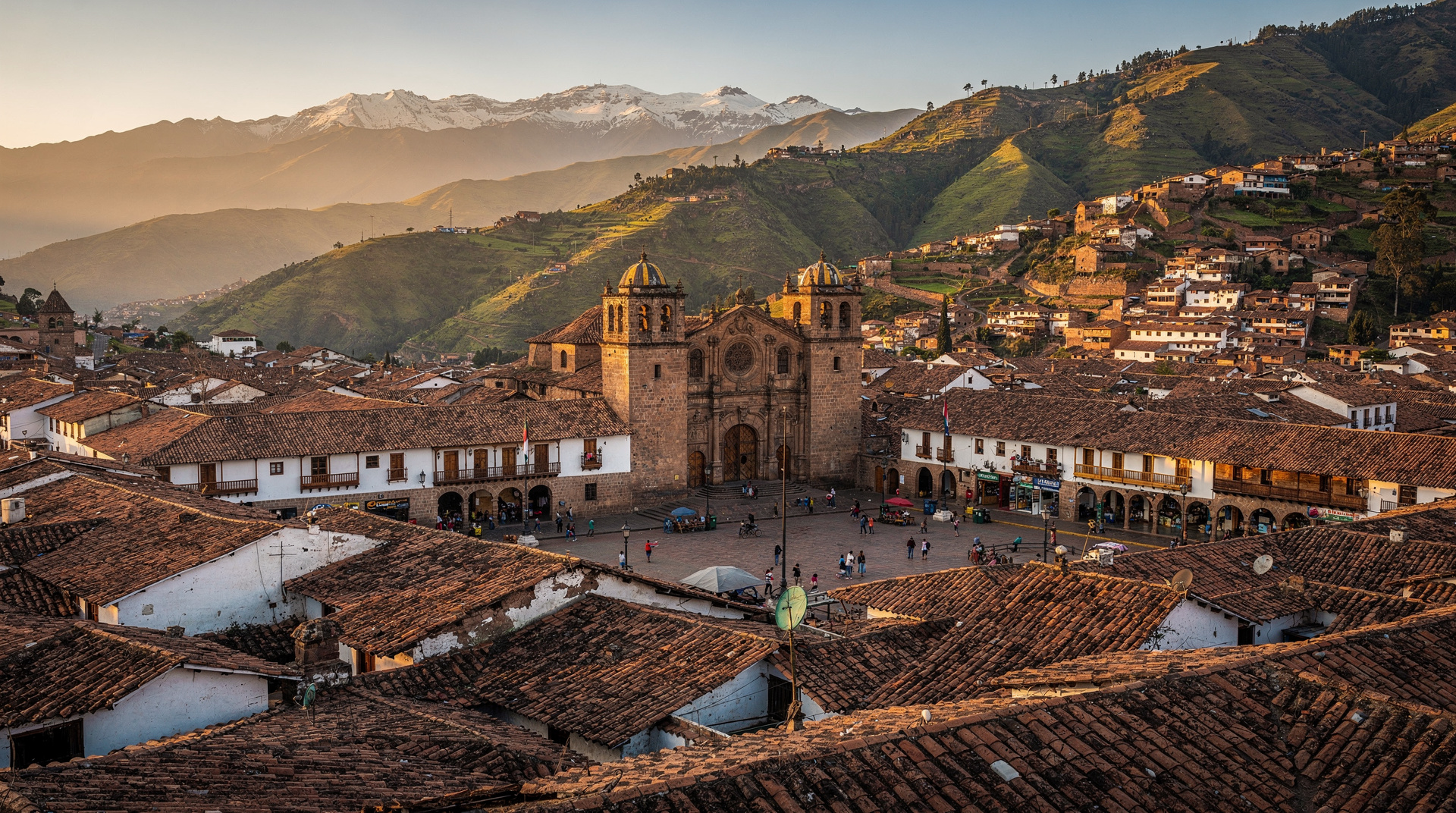
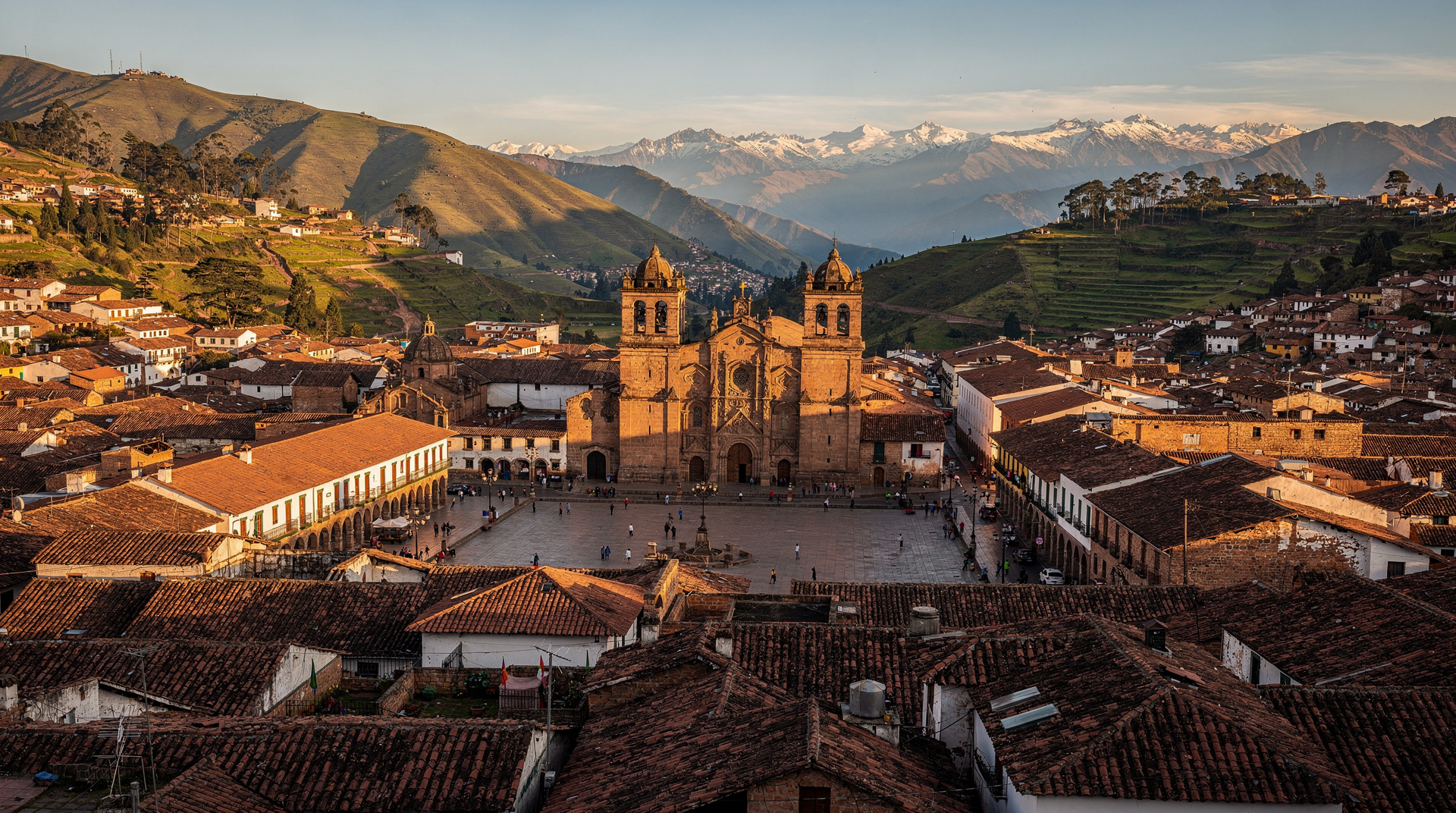
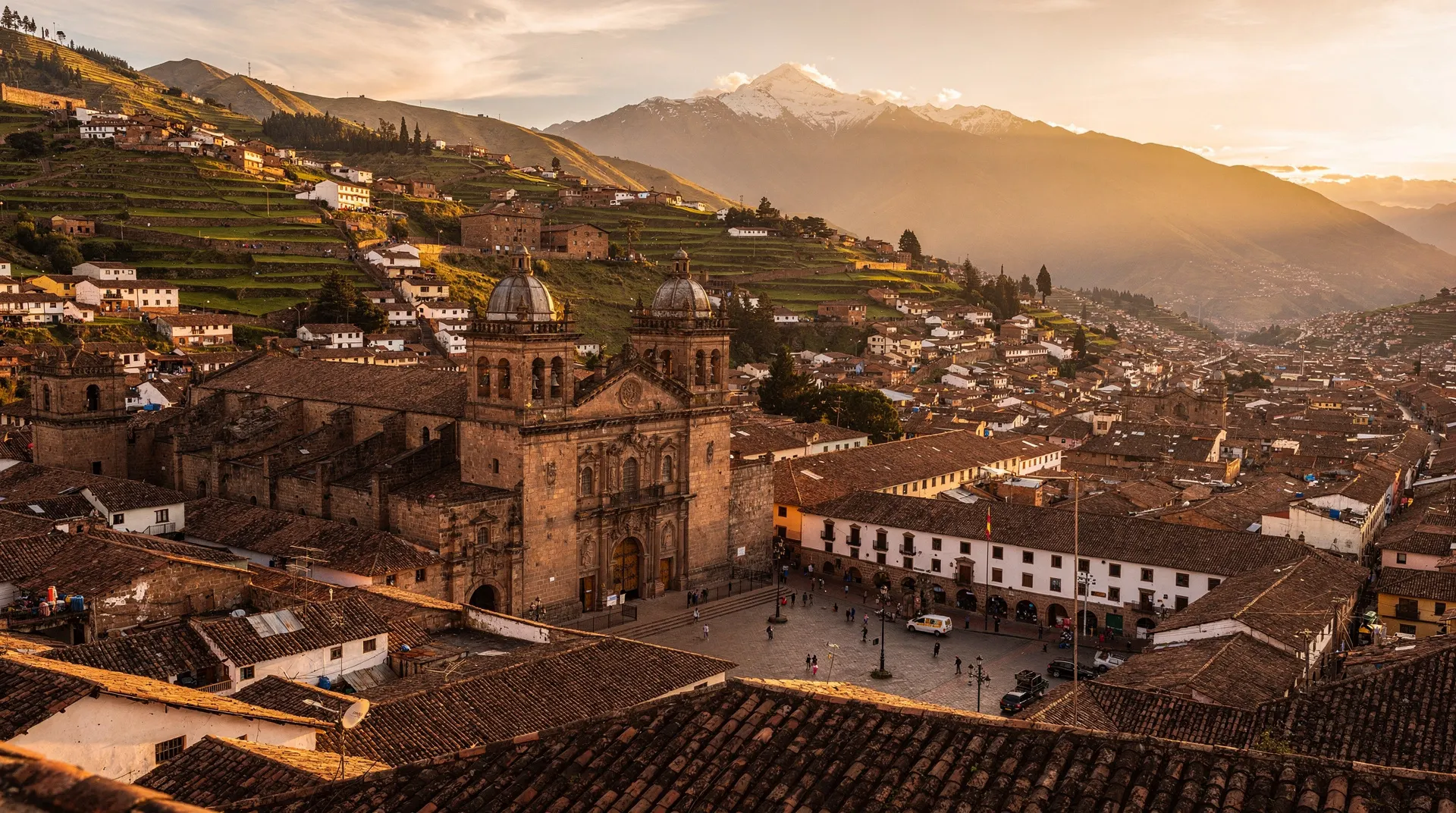
The late afternoon light on Cusco’s historic centre in early October was extraordinary: the terracotta rooflines, the Inca stone walls of the lower city, the Baroque church facades — all catching a warm orange-gold that I haven’t seen matched in photographs taken in high summer.
Sacred Valley conditions in October
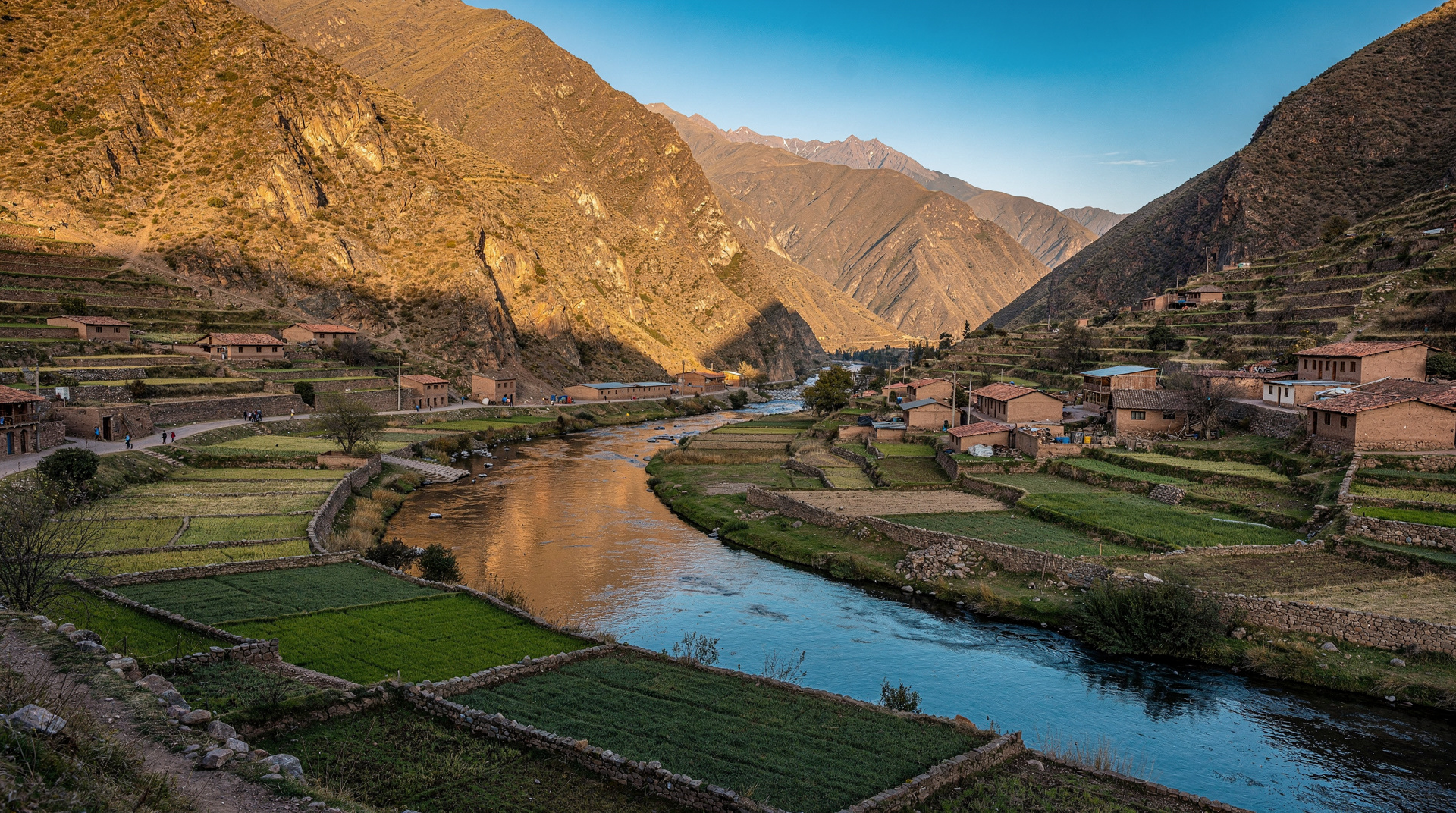
The Sacred Valley at this time of year sits at a sweet spot: the wet season’s green hasn’t arrived yet, but the valley floor’s agricultural terraces are being prepared for planting, and the activity gives the landscape life in a different way from the lush growth of the rainy months. The hillside terraces above Ollantaytambo were golden-brown, the mountains snow-capped on the high peaks, the Urubamba river running at a calm level (not the high, brown torrent of February but not the summer low either).
Crowds at Ollantaytambo were noticeably reduced from July levels — the site was busy but navigable, with waiting times of perhaps five minutes at the main sun temple. I’d been to Ollantaytambo in August and the difference was significant. In August, the site moves in a queue. In October, you can stop where you want and stay as long as you like.
Pisac market on Sunday (I happened to be there on a Sunday) still attracted a significant number of visitors, but again, October volumes are manageable. The Pisac ruins above the market were nearly empty — I spent two hours there and encountered perhaps 20 other people total, which is unusual for a site of this quality.
If you would rather not organise the valley’s villages and ruins yourself, a small-group day through the Sacred Valley with stops at several sites is a simple way to see them in one go. For a slower rhythm, the Sacred Valley complete guide and the one-day Sacred Valley itinerary help you decide what to keep and what to skip, and the Maras and Moray day trip is the stop I would add if the light is clear. Pisac market and ruins explains how to combine the Sunday market with the quiet ruins above it.
Rainbow Mountain in October
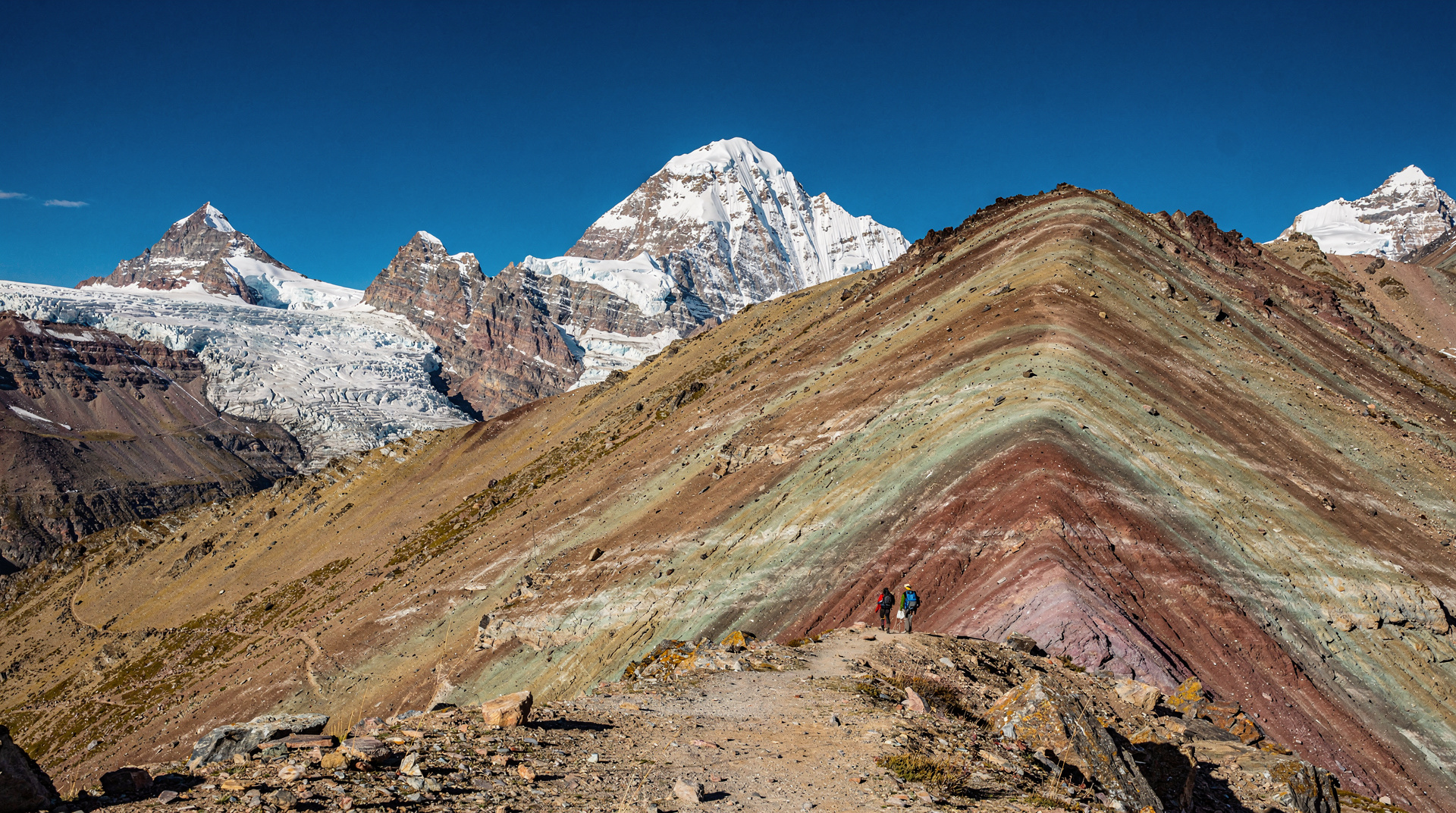
I made the Vinicunca trip on day four. Early October is considered good-to-excellent for Rainbow Mountain: the colours are not obscured by wet-season snow (snow coverage at the summit can hide the mineral stripes entirely in February), the mornings are generally clear, and the crowds are significantly reduced from August.
I was at the summit by 9:45 am. The colours were vivid — the geological banding of reds, yellows, and greens across the mountain’s cone was exactly what the photographs suggest. The sky was pure blue. There were perhaps 150 people on the summit and immediate approaches, compared to the 800–1,000 that July reportedly brings.
Book a Rainbow Mountain day trip from Cusco — the tours operate year-round, with October generally considered one of the more reliable months for conditions and one of the lower-crowd months of the dry season.
If the crowds at Vinicunca are what put you off, the Palccoyo rainbow mountain guide describes a quieter alternative, and Vinicunca vs Palccoyo sets the two side by side. Whichever you pick, read the Rainbow Mountain altitude tips first: this is the highest point most visitors reach on a trip, and a few days of acclimatisation in town make the climb far more enjoyable.
The descent was slower — my knees, as they always do at altitude, complained more going down than up — and I was back at the trailhead by noon. The drive back to Cusco takes about two hours. I was in Cusco for lunch.
Photographers who want a quieter mountain frame can also look at a full-day outing to the Palccoyo coloured hills; the Palccoyo destination page and Is Rainbow Mountain worth it? give the context for choosing. My longer account in Rainbow Mountain reality check is the honest companion to this section.
Planning around the light
A few habits made the photography easier. I kept the first and last hours of each day free for the best light, and used the middle of the day for travel, lunch and indoor visits such as Qorikancha and the San Pedro market. Acclimatising first also matters: the Cusco acclimatisation plan is worth reading before you plan early starts, because a tired, breathless photographer takes worse pictures. For the wider picture of the season, see the Cusco festivals calendar and Machu Picchu in each month; if you plan to reach the citadel, how to get to Machu Picchu and the Machu Picchu complete guide cover the practicalities, and Is Machu Picchu overrated? gives a more sceptical view.
The city in October
The Plaza de Armas felt more like a city and less like a theme park. That’s not a criticism of the site — it’s always been a working Peruvian city square as much as a tourist destination — but in peak season the visitor density shifts the balance. In October the square belonged more equally to the Cusqueños who use it: schoolchildren crossing it, local families eating on the steps of the fountain, couples sitting in the gardens.
The restaurants I’d been unable to get into in July — the better ones along Hatunrumiyoc and in San Blas — had tables available with same-day or next-day bookings. Prices at mid-range and above had eased noticeably (10–20% lower than peak-season quotes I’d seen). Accommodation was similarly more available and more reasonably priced.
The Boleto Turístico sites around the city — Sacsayhuaman, Qenqo, Tambomachay — were accessible and unhurried. Sacsayhuaman in late afternoon light, with Cusco spread below and the mountains to the east catching the last sun, was one of the best photographs of the trip.
The transitional feeling
There’s an atmospheric quality to October in Cusco that’s hard to quantify. The city knows the busy season is over. The tour operators are booking forward to the next season, the hotels are quieter, the streets have a different rhythm. This is neither complaint nor warning — it’s a description of something I actually appreciated. The best time to visit Cusco guide describes September and October as the hidden-gem shoulder months, and from what I experienced, that’s accurate.
On my last evening, sitting on a terrace in San Blas with a pisco sour, watching the sky over the Andes turn from blue to violet to deep indigo, I thought that this might actually be my favourite time to be here. Not the clearness of July, not the green of January, but this specific quality of a season ending — the last clear weeks before the rain.
The dry season guide covers conditions through the full May–September period with more systematic detail. For October specifically: come. The light is good, the crowds are down, and the city gives you more of itself.
If you are weighing this against the opposite end of the calendar, my companion diary from the rainy season shows the same city with the green turned up and the visitors turned down. And if October is what you are leaning towards, the Cusco trip planning guide for 2026 is a good place to start fitting the days together, while the Machu Picchu in each month guide helps you judge how a shoulder-season visit to the citadel compares with the peak.
Dry season month by month, from what I’ve seen
| Month | Crowds | Light/conditions | Best for |
|---|---|---|---|
| June–July | Peak, very high | Clear but flat, dusty haze | Guaranteed clear skies, Inti Raymi (June) |
| August | Peak, very high | Clear, windier | Clearest Machu Picchu views |
| September | High, easing | Clear with more texture | Balance of crowds and conditions |
| October | Moderate, dropping | Best light of the dry season, occasional cloud | Photography, lower prices, quieter sites |
Packing for the shoulder season specifically
October’s mix of clear mornings, occasional afternoon cloud and one proper rain shower in nine days means packing differently from peak dry season: a light rain shell is worth the space even though most days won’t need it, and the temperature swing between a cold morning at Rainbow Mountain and a warm afternoon back in the city is bigger than in July. The what to pack for Cusco guide covers this properly; my one addition from this trip is a compact rain cover for camera gear, which I needed exactly once but was glad to have.