Sacred Valley full-day tour: tour review
Cusco: Pisac, Maras, Moray, Ollantaytambo Small Group Tour
The tour that does more than it seems
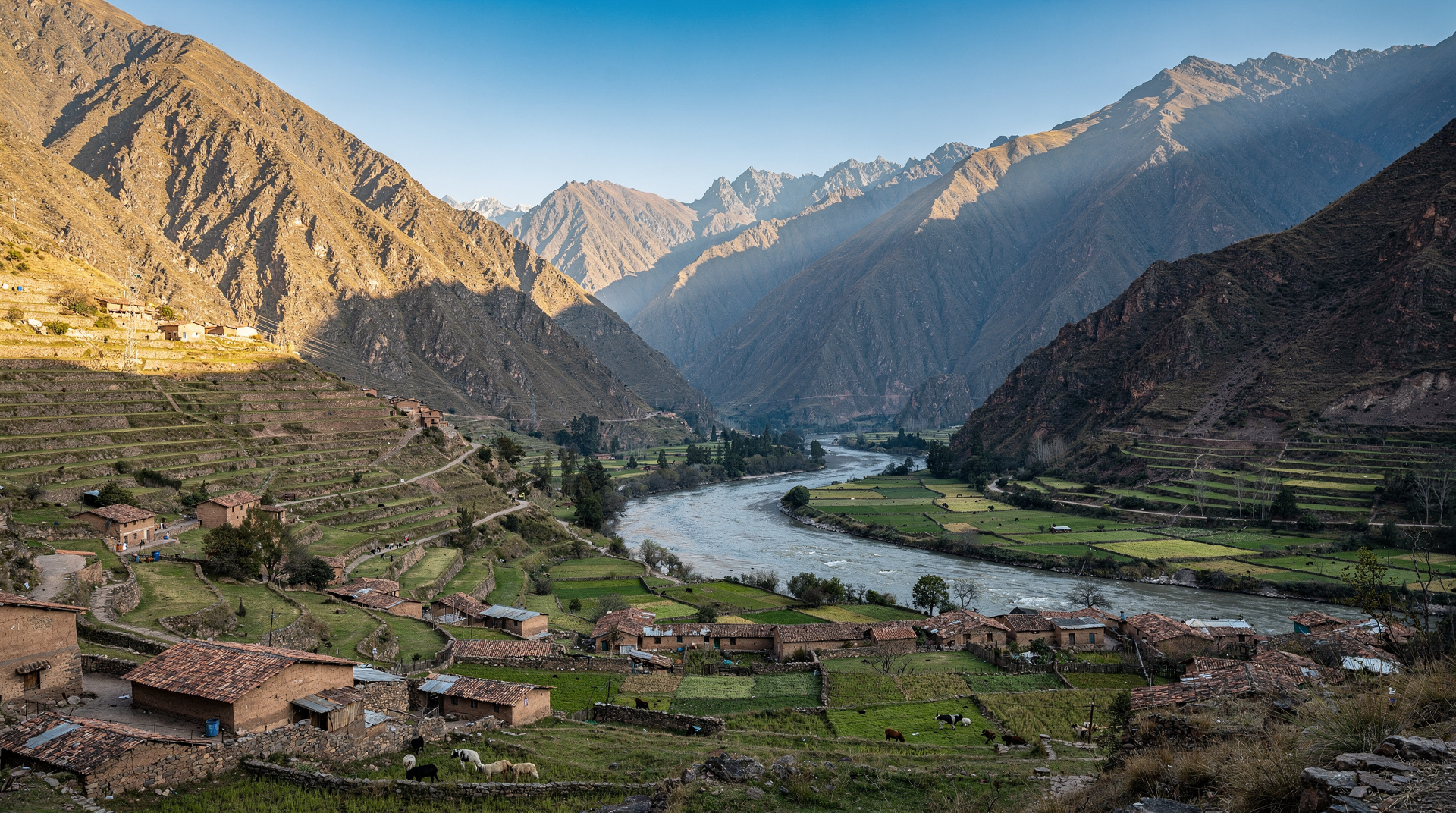
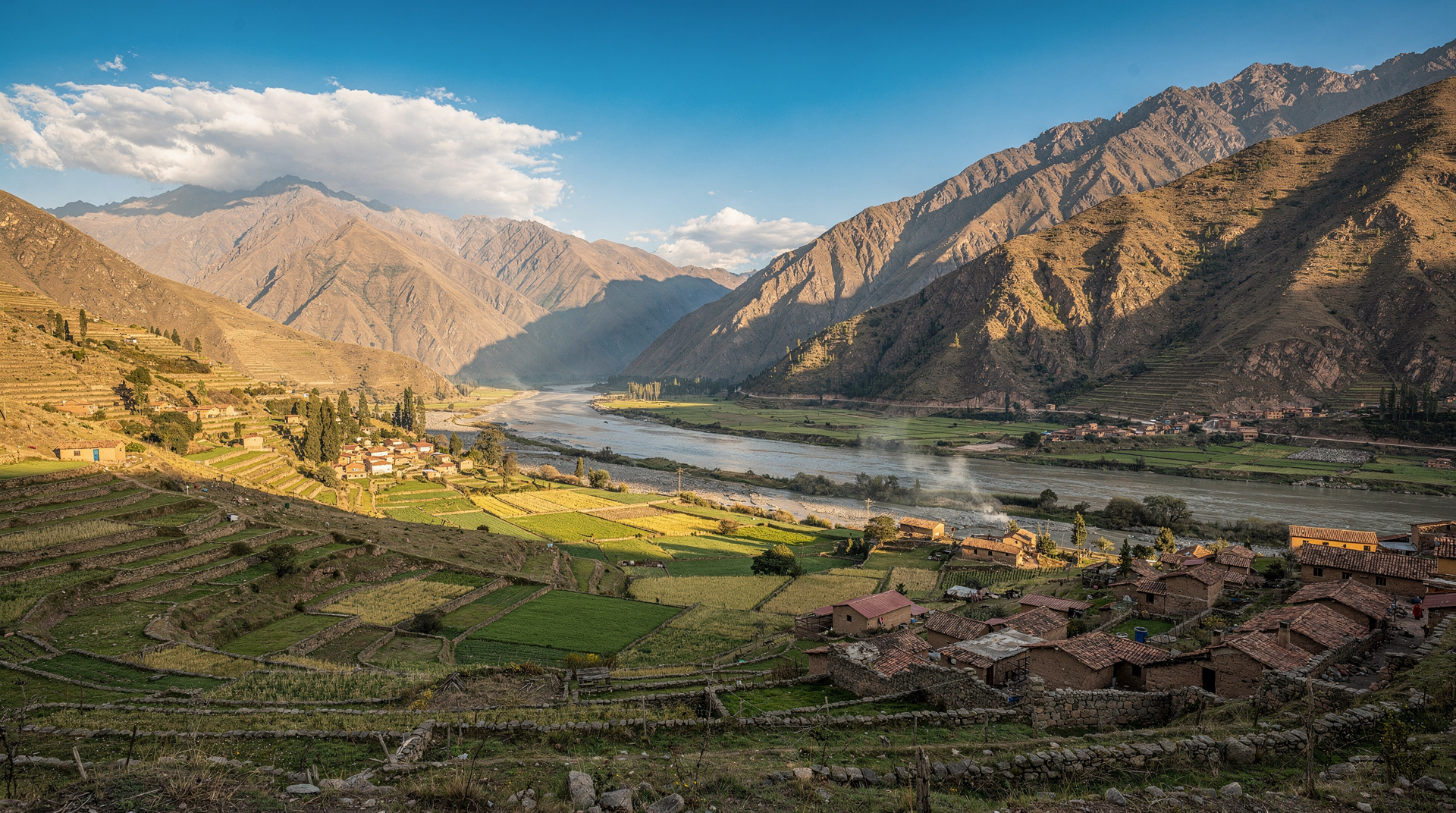
The Sacred Valley full-day tour is one of the most efficiently structured day trips in the Cusco region. On paper, it looks like a standard sightseeing run. In practice, it serves three distinct purposes simultaneously: it gives you the best of the Inca heartland between Cusco and Machu Picchu, it provides a meaningful altitude acclimatisation advantage, and for travellers whose Machu Picchu visit is the following day, it positions you conveniently at Ollantaytambo station for the evening or early morning train. This review breaks down each site, what the tour includes, and how to get the most from it.
| Where | Pisac, Moray, Maras, Ollantaytambo (~80 km of valley) |
| Cost | S/120–200 (~$35–58) |
| Time needed | Full day, ends at Ollantaytambo or Cusco |
| Altitude | Valley floor 2,800–3,000 m, lower than Cusco |
| Best time | Day 1 or 2 for acclimatisation benefit |
What the tour visits
Pisac is the first stop for most operators. The ruins above the town are one of the more underrated Inca sites in the region — a ceremonial complex, astronomical calendar, agricultural terraces and a massive Inca cemetery spread across a dramatic ridge above the Vilcanota River. The artisan market in the town below, particularly on Sundays, is the most atmospheric market in the Sacred Valley. Depending on your operator, you will visit one or both. Allow 1.5 to 2 hours for the ruins; the market adds 45–60 minutes and is worth building in if you want textiles, ceramics or silver work — the quality and variety here is significantly better than in Cusco’s Plaza de Armas market.
Moray is a short drive from Pisac, up on the plateau above the valley. The site consists of concentric circular agricultural terraces sunk into natural depressions in the earth, creating a series of microclimates (the temperature difference between the top and bottom terrace is approximately 15°C). The current theory is that these terraces were an Inca agricultural research station, testing crop varieties across different thermal zones. The visual effect is arresting and unlike anything else in the region. Allow 45–60 minutes.
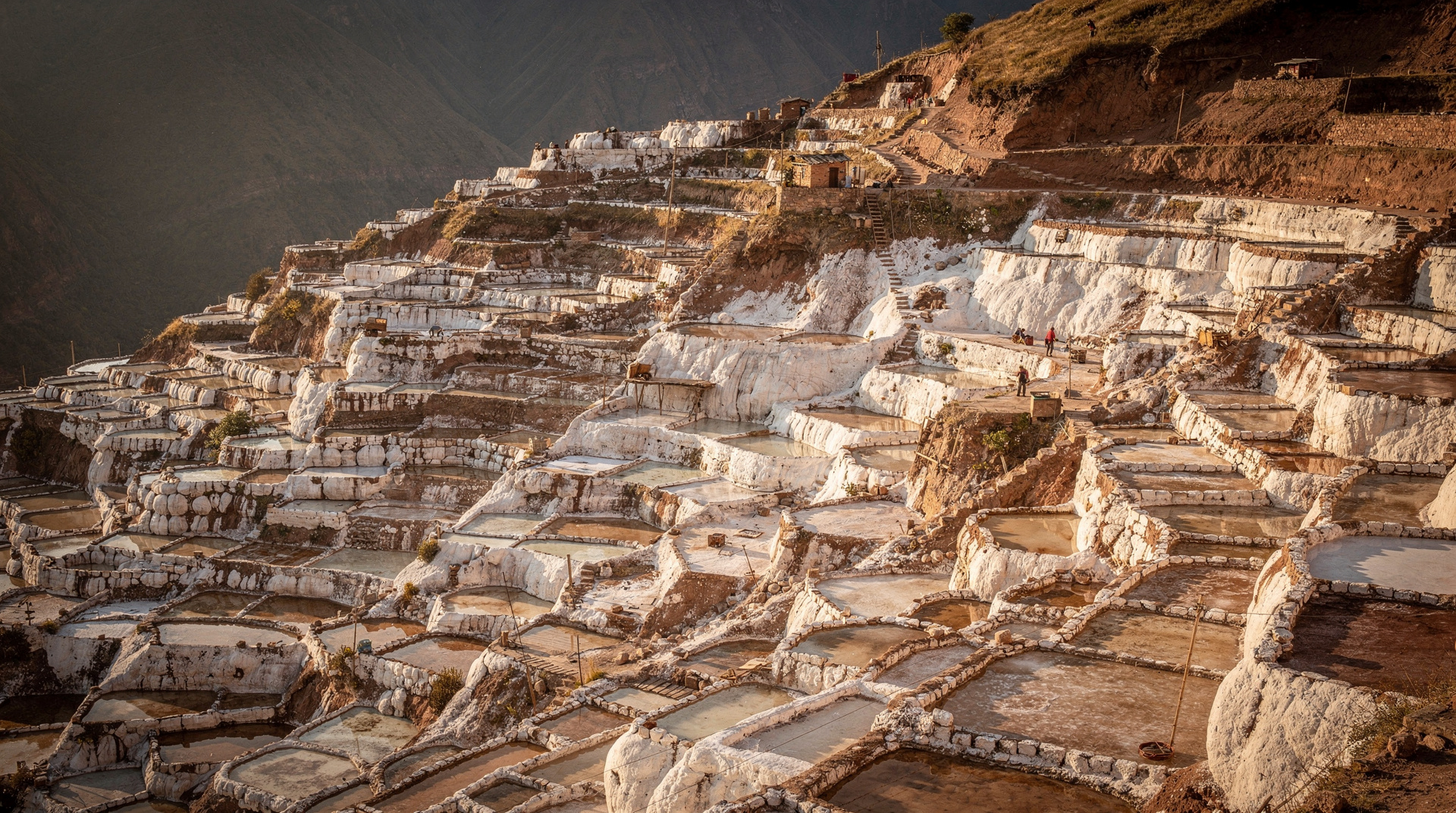
Maras salt mines (Salinas de Maras) are a short drive from Moray. Approximately 3,000 individual salt terraces cascade down a hillside, each fed by a warm saline spring. The salt is still harvested by local communities using traditional methods, with each family holding inherited rights to specific pans. The colours shift from white to pink depending on the mineral content of the water and the season. Allow 45–60 minutes. See the Maras salt mines guide for full context.
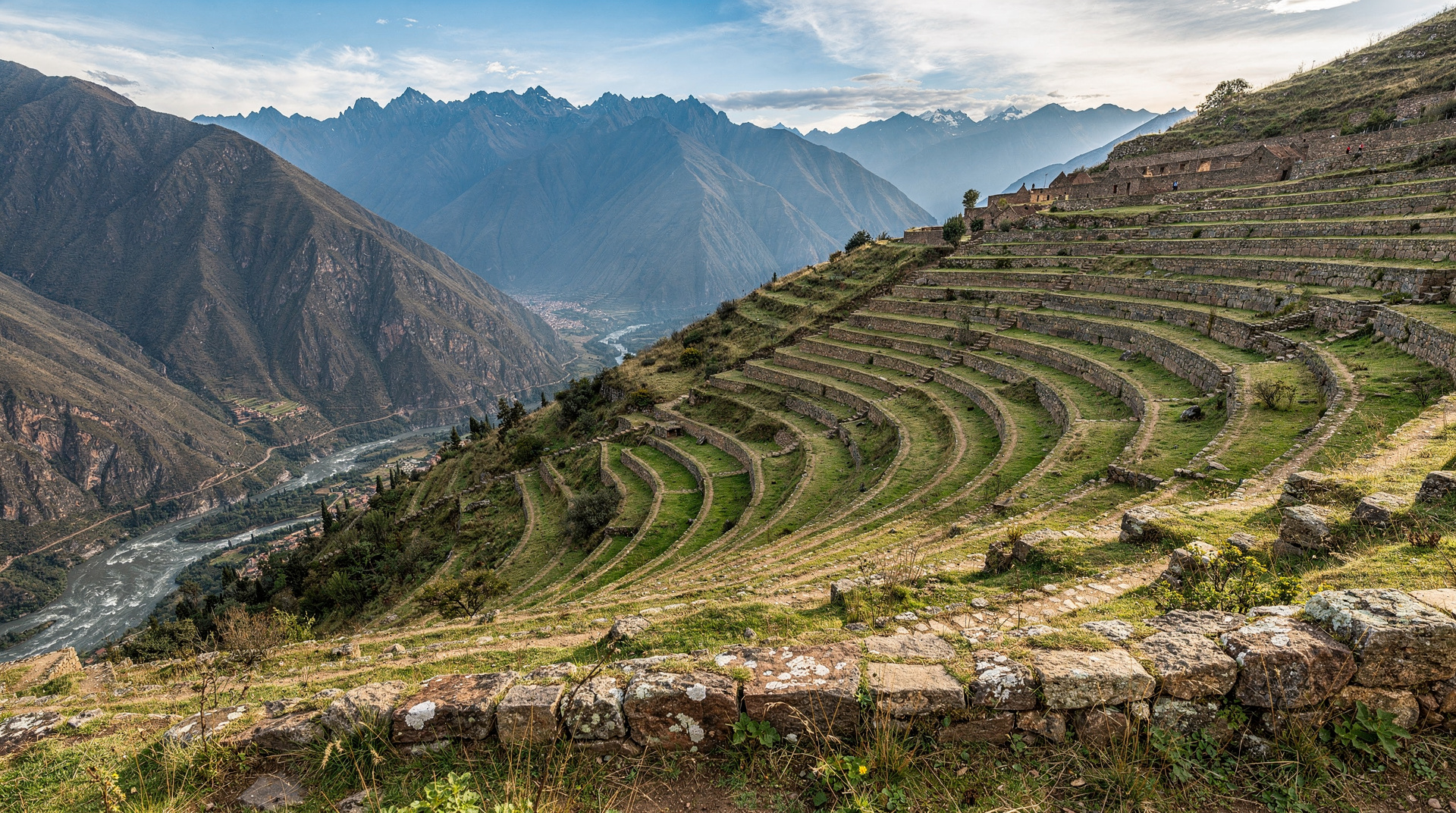
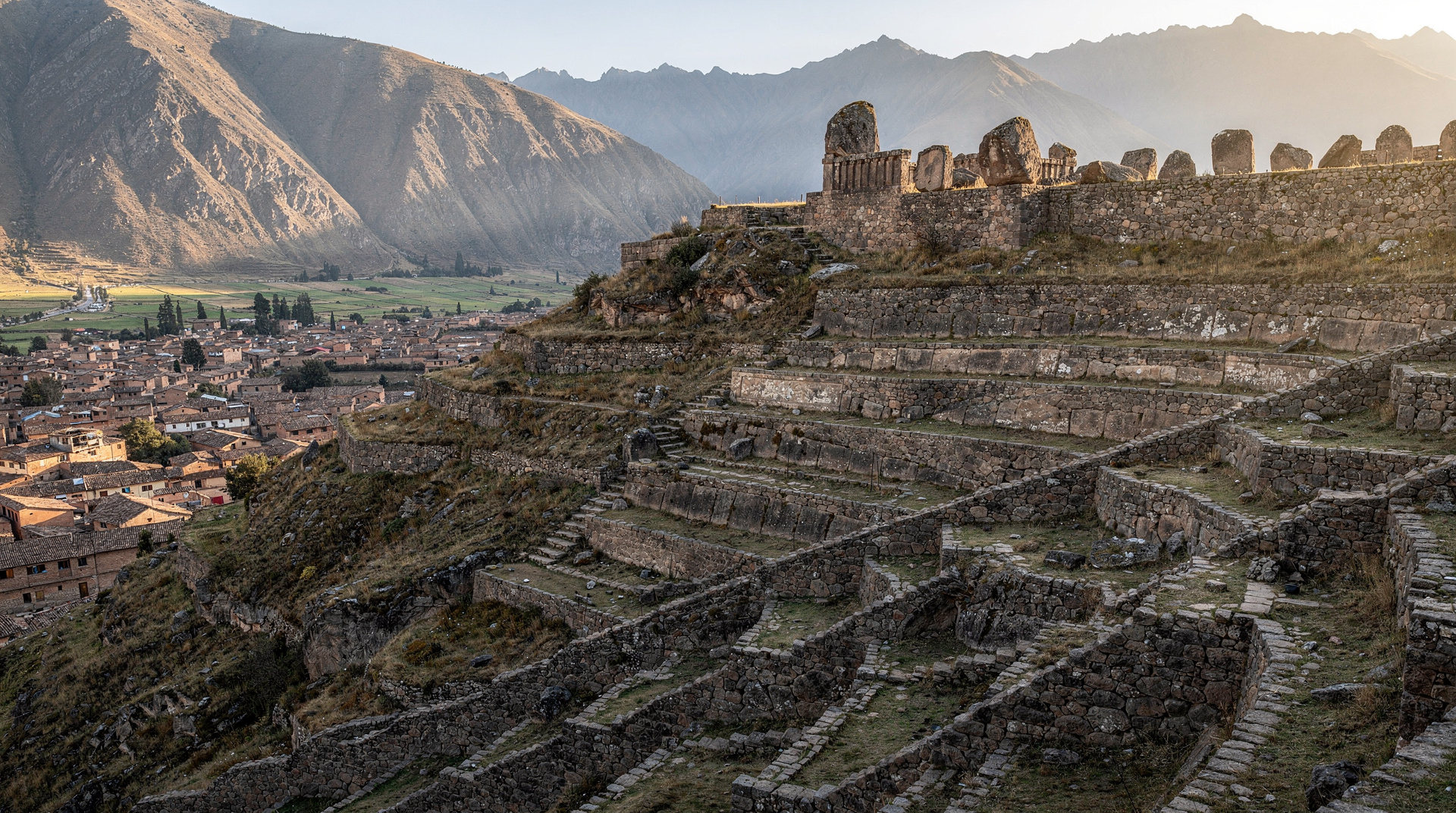
Ollantaytambo is the day’s final major site and its most historically significant. The Inca fortress terraces, the unfinished Sun Temple (with its extraordinary monolithic stone slabs), and the living Inca town grid — where current residents live in buildings with original Inca foundations and water channels — make this the site in the valley that rewards the longest stay. Unlike Pisac, which can be rushed, Ollantaytambo genuinely requires 90 minutes minimum and benefits from a licensed guide who can explain the construction techniques. The Ollantaytambo guide covers the site in detail.
What is included and what to check
Book the Sacred Valley tour covering Pisac, Maras, Moray and Ollantaytambo — standard inclusions: hotel pickup from Cusco, round-trip transport or transfer to Ollantaytambo, licensed bilingual guide, and in most cases a buffet lunch at a mid-range restaurant in Urubamba or Yucay (the valley’s main restaurant strip). Entrance fees to ruins are included with some operators and additional with others — confirm specifically about the Boleto Turístico component.
Not included in most packages: the Boleto Turístico partial circuit (Pisac and Ollantaytambo ruins, S/70 for the Valle Sagrado circuit), shopping budget at Pisac market, and travel back from Ollantaytambo to Cusco if you are staying overnight (arrange your own transport or book the train to Aguas Calientes directly).
The acclimatisation angle
The Sacred Valley sits at 2,800–3,000 m versus Cusco’s 3,400 m. This matters significantly in the first two to three days of a high-altitude trip. Spending Day 1 or 2 in the Sacred Valley rather than walking around Cusco at altitude reduces the severity of altitude sickness symptoms for many travellers. Ollantaytambo (2,790 m) is the best base: lower than Cusco, directly connected to the Machu Picchu train, and with several excellent accommodation options. See the Sacred Valley vs Cusco as a base guide for the detailed argument.
Comparing the standard full-day tour to alternatives
The Sacred Valley full-day product (in some operators’ catalogues listed as the “complete” Sacred Valley tour) sometimes differs from the Pisac/Maras/Moray/Ollantaytambo itinerary by adding Chinchero, adjusting the site order, or prioritising the ruins over the market. The content is largely the same. Compare inclusions and group size — some operators run 30+ person buses while others cap at 12–15. Smaller groups mean more personalised guide time and faster movement between sites.
The Maras and Moray focused tour (half-day) is the right choice for travellers who are returning to Cusco from Ollantaytambo and want to add these two sites without a full-day commitment. It typically takes four to five hours and is significantly cheaper than the full-day version. It works well combined with an independent Pisac visit on a separate morning.
The Maras and Moray day trip guide covers the shorter format in detail. The one-day Sacred Valley itinerary helps you sequence the sites if you prefer self-guided travel.
Who this tour suits
The Sacred Valley full-day tour suits virtually all first-time visitors to the Cusco region. It is significantly lower physical effort than Rainbow Mountain or the Inca Trail, is manageable for travellers of most fitness levels, and is genuinely suitable for older visitors, families with children, and those still acclimatising. The sites visited are among the most historically significant in Peru and, unlike Machu Picchu, the Pisac ruins and Ollantaytambo receive far fewer international visitors — a meaningful advantage.
For families, the open spaces, llamas, and tangible Inca stonework at Ollantaytambo work well with children. The Sacred Valley with kids guide has specific tips for managing the full day with younger travellers.
Honest pros and cons
Pros: Four or five major sites in a single efficiently structured day. Lower altitude than Cusco aids acclimatisation. Buffet lunch in Urubamba is typically excellent Peruvian food. Pisac market provides the best craft shopping in the region in a non-pressured setting. Ollantaytambo is genuinely impressive and connects directly to Machu Picchu by train for travellers continuing the following day.
Cons: The distance covered (80+ km of valley road) means a substantial time in a vehicle — two hours of driving in a typical day. Group bus tours sacrifice flexibility for economy. Some operators rush Ollantaytambo to 60 minutes when 90–120 minutes does it proper justice. Entrance fees may not be included in headline price — confirm before booking.
Using the Sacred Valley as a base for Machu Picchu
Many first-time Cusco visitors make the mistake of basing themselves in Cusco for the entirety of their trip and day-tripping to Machu Picchu from 3,400 m. The Sacred Valley offers a significantly better arrangement. Ollantaytambo at 2,790 m is the train gateway to Aguas Calientes — trains to Machu Picchu depart from Ollantaytambo, not Cusco. Basing yourself in Ollantaytambo for one or two nights before your Machu Picchu day gives you: lower sleeping altitude (improving both sleep quality and altitude adaptation), a 10-minute walk to the train station instead of a 2-hour pre-dawn drive from Cusco, and a genuine Andean town atmosphere significantly calmer than Cusco’s tourist centre.
The Sacred Valley full-day tour, structured to end at Ollantaytambo, makes this transition seamless: you finish the day tour at the train station town, check into a hotel there, and take the morning train to Machu Picchu the following day. This is the sequence recommended in the 4-day Cusco and Machu Picchu itinerary. The Sacred Valley vs Cusco as a base guide makes the case in full.
The Pisac ruins: why they are underrated
The Pisac archaeological complex high above the town is visited by far fewer tourists than the market below. The citadel stretches across a mountain ridge for over four kilometres, encompassing the Q’allaqasa military fortress, the Intihuatana ceremonial sector (with solar observation structures), the Pisaqa agricultural terraces (some of the most perfectly preserved in the valley), and the Kanchispacha residential sector. The cemetery sector on the far end of the ridge contains one of the largest Inca cemetery areas known — over 1,000 burial niches cut into the cliff face.
Most Sacred Valley tour operators include a brief Pisac ruins stop if you request it specifically, but the default at Pisac is the artisan market in town. If you want the ruins, confirm explicitly with your operator that the ruins (not just the market) are included in your itinerary. The ruins require a Boleto Turístico Valle Sagrado partial circuit pass. The Pisac ruins guide covers the full complex.
The buffet lunch in Urubamba: practical notes
Most Sacred Valley full-day tours include a buffet lunch at one of several mid-range restaurant complexes in or near Urubamba, the valley’s main town. These restaurants cater to tour groups and are calibrated for a reliable, broad-appeal Peruvian buffet — ceviche, ají de gallina, lomo saltado, quinoa salads, chicha morada, fresh bread. Quality is consistently adequate to good; rarely exceptional. Vegetarian and vegan options are nearly always present.
The lunch stop typically runs from 12:30 to 1:30 pm and doubles as a rest point between Moray and Ollantaytambo. The Urubamba River valley at this point is at around 2,800 m and noticeably warmer than Cusco — many visitors find the lunch atmosphere unexpectedly pleasant.
If you have specific dietary requirements (coeliac, severe allergies, strict vegan), inform your operator before booking — the buffet format means limited individual customisation is possible on the day, but advance notice usually results in a prepared alternative. Portion sizes at these buffets are generally generous, and returning for a second plate is normal practice rather than something to feel self-conscious about.
Seasonal notes
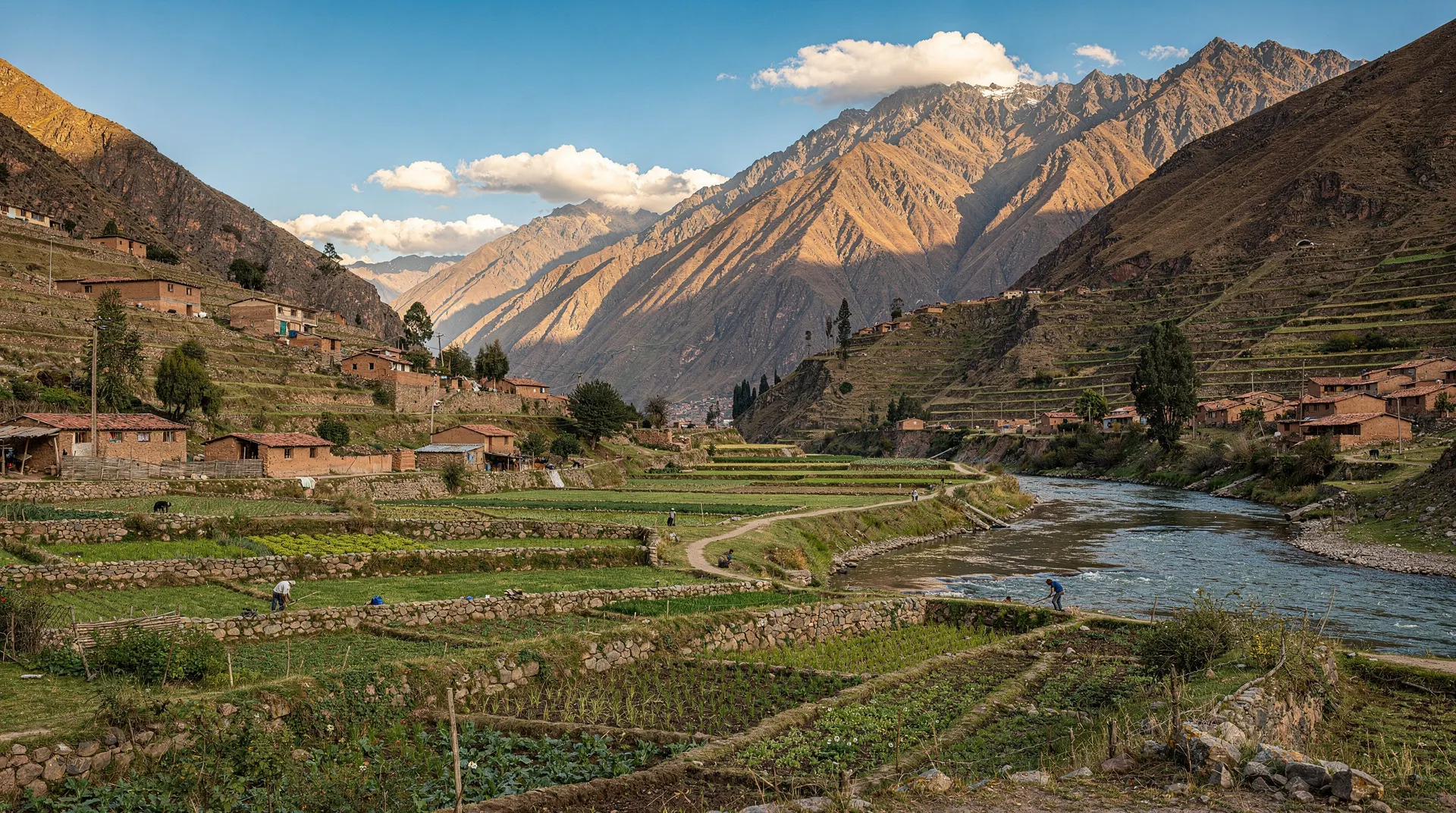
The Sacred Valley is visited year-round. In the dry season (May–September), the colours of the salt terraces at Maras are most vivid and the Ollantaytambo ruins are easily photographed without cloud. In rainy season (November–March), the terraces at Moray are most lush and green, and the valley itself is strikingly verdant — some photographers prefer this. The Pisac Sunday market operates regardless of season. See the best time to visit Cusco for the full seasonal picture.
Full-day tour versus the dedicated half-day alternative
| Full-day Sacred Valley | Maras/Moray half-day only | |
|---|---|---|
| Sites | Pisac, Moray, Maras, Ollantaytambo | Moray, Maras (+ optional Chinchero) |
| Time at each site | 45–90 minutes | 45–90 minutes, less rushed |
| Price | S/120–200 | S/80–140 |
| Best for | First-time visitors, full overview | Return visitors, photographers |
What to buy at the Pisac market
Pisac’s Sunday market is widely regarded as the best craft shopping in the Sacred Valley, with a scale and variety that Cusco’s Plaza de Armas stalls cannot match. Alpaca and llama wool textiles (scarves, ponchos, sweaters) are the most common purchase — check for genuine baby alpaca versus synthetic blends by feel (real alpaca is noticeably softer and warmer) and by price (suspiciously cheap “alpaca” items at S/10–15 are almost always synthetic). Silver jewellery, much of it worked by artisans from the valley, is another Pisac specialty, along with ceramics reproducing traditional Inca and colonial designs.
Bargaining is expected and normal, typically 10–20% off the initial asking price, done with good humour rather than aggressively. Weekday visits see a smaller but still functioning market, useful if your tour does not fall on a Sunday. Vendors selling directly from family stalls, rather than the larger consolidated stands nearer the entrance, are generally the better source for genuinely handmade items at fairer prices, though this requires a bit more browsing to identify.
Pricing reference (2026)
Full-day tour (pickup, transport, guide, lunch): S/120–200 ($35–58) per person. Premium small-group (12 or fewer): S/200–350 ($58–100). Boleto Turístico Valle Sagrado partial circuit (Pisac + Ollantaytambo ruins): approximately S/70. Maras community entrance: approximately S/10–15. Moray community entrance: approximately S/15–20.
Verdict
The Sacred Valley full-day tour is the single most practical day trip from Cusco for first-time visitors. It is the correct Day 1 activity for most itineraries, combining acclimatisation benefit with genuine historical depth and the best craft market in the region. Book a small-group product if budget allows — the difference in guide quality and pace between a 35-person bus and a 12-person minibus is substantial. The Sacred Valley complete guide and the 4-day Cusco and Machu Picchu itinerary show how this tour fits into the broader trip structure.