Pisac ruins: what to see at the hilltop Inca site
Cusco: Pisac, Maras, Moray, Ollantaytambo Small Group Tour
The ruins of Pisac
Pisac's hilltop Inca citadel is one of the most impressive and least crowded major Inca sites in the Sacred Valley. Entry requires the full Boleto Turístico (S/130) or Circuit III (S/70). The site sits at around 3,400–3,750 m and takes 2–3 hours to walk fully. Most visitors rush through in 45 minutes for the market — the ruins deserve much longer.
A site hiding behind its own market
Pisac is one of the most famous names on the Sacred Valley itinerary, and for a reason that has almost nothing to do with its archaeological significance. The Sunday market in Pisac town — and the smaller Tuesday and Saturday versions — draws thousands of visitors a week for textiles, silver jewellery, and ceramics. The Inca citadel on the ridge above the town, one of the most extensive and technically accomplished Inca sites in the Sacred Valley, is visited by a fraction of that number.
| Where | Ridge above Pisac town, eastern Sacred Valley |
| Cost | Full Boleto Turístico S/130 or Circuit III S/70 |
| Time needed | Minimum 1.5 hours; 2.5–3 hours for the full circuit |
| Getting there | Taxi from market plaza (15–20 min) or steep trail (~1.5 hours) |
| Best time | Tuesday, Thursday or Saturday, morning, for the fewest crowds |
This is partly a marketing problem: the citadel is not visible from the town unless you look directly up, and most tour itineraries allocate 45 minutes at Pisac before continuing to Ollantaytambo. The ruins reward considerably more. The site sits on a long ridge at roughly 3,400–3,750 m, commands views of the entire Sacred Valley, and contains — in addition to the ceremonial and residential structures — the largest known Inca cemetery in the Andes, with an estimated 10,000 burial niches cut directly into the surrounding cliffs.
The ruins are covered by the full Boleto Turístico (S/130) or the Circuit III ticket (S/70).
What the site contains
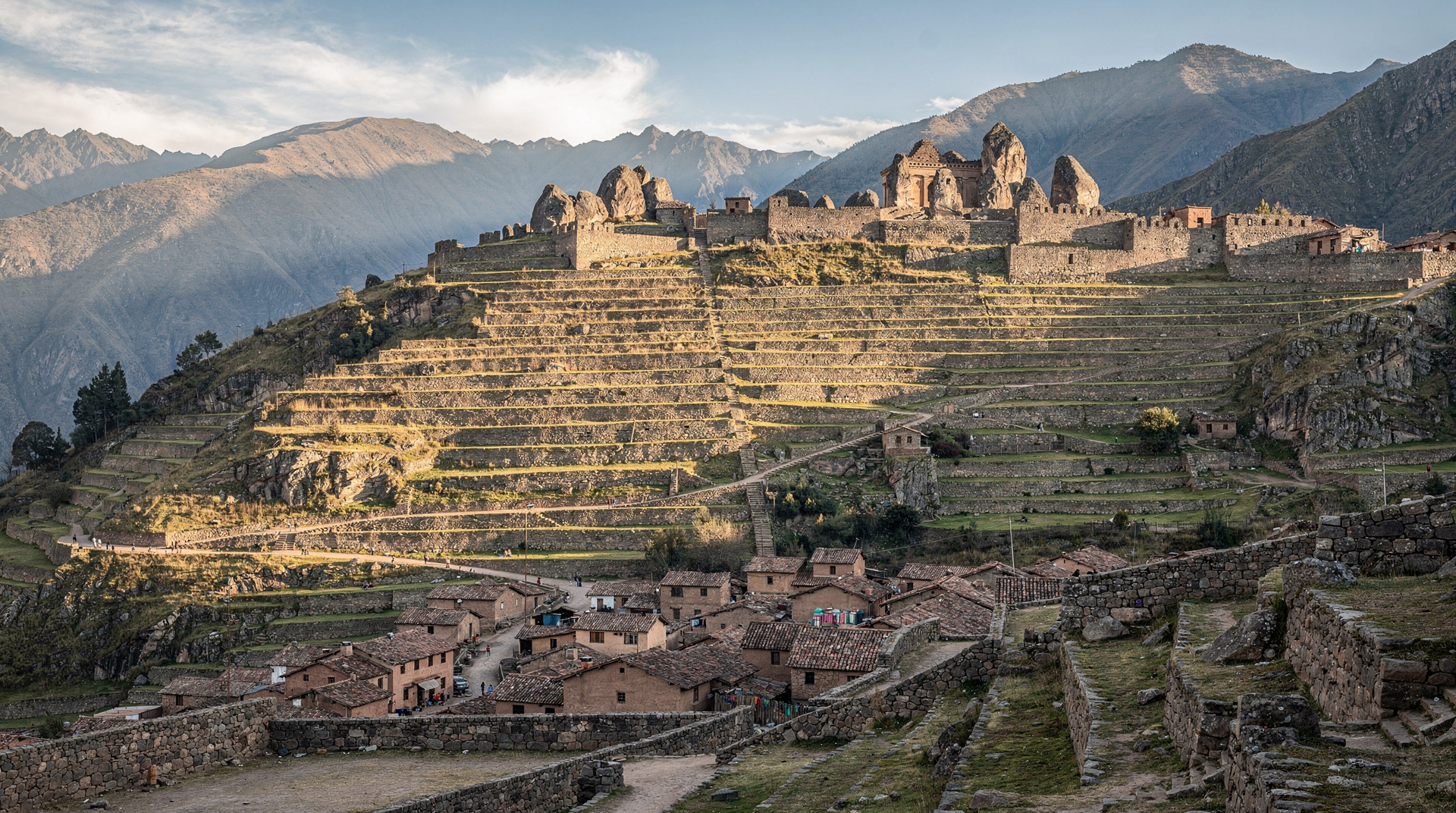
Pisac citadel is a multi-component site spread across a long ridgeline. The main components are:
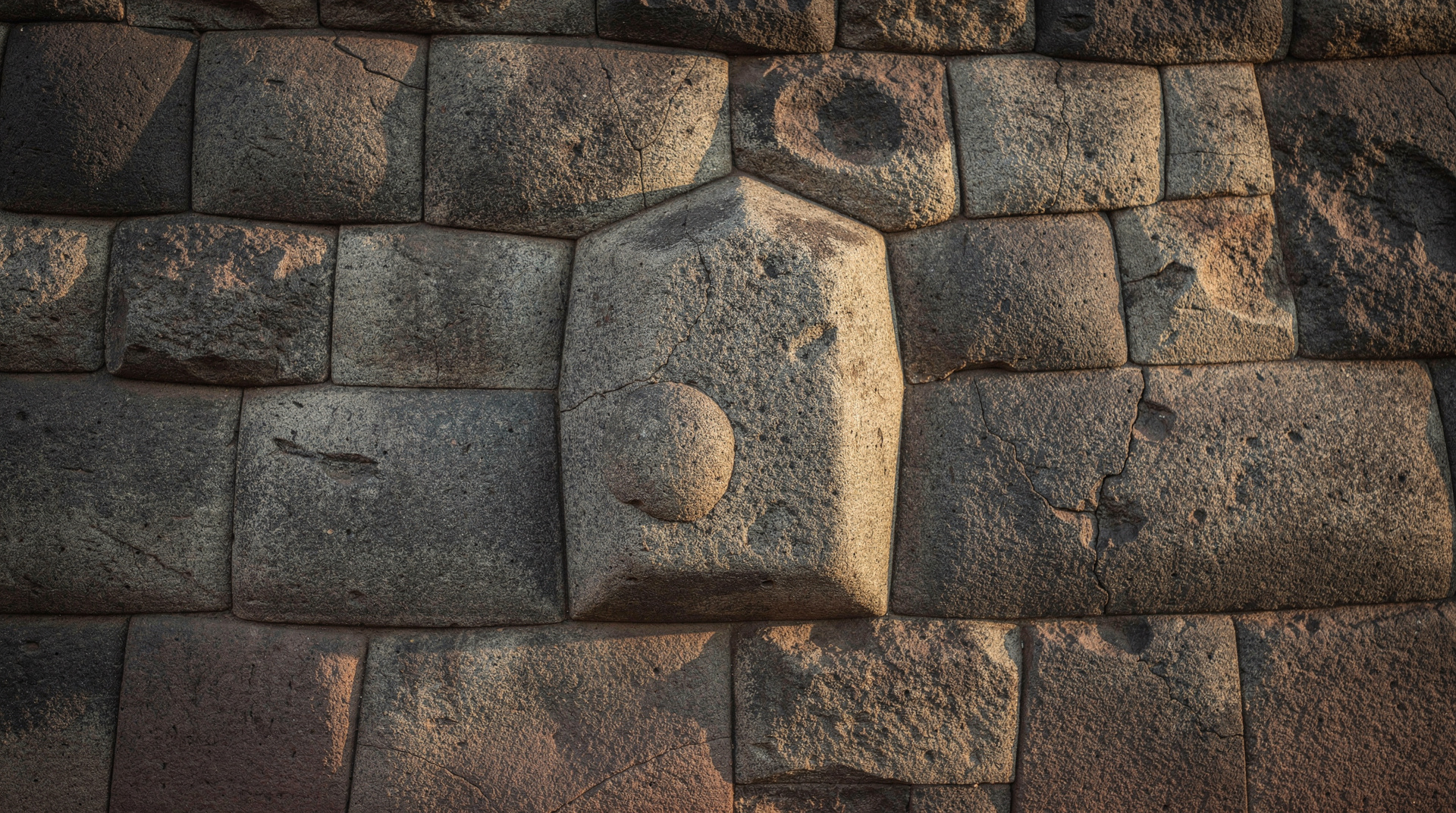
Intihuatana group: The religious and ceremonial heart of the complex, at the highest point of the accessible ruins. The name means “hitching post of the sun” — a carved stone sundial/astronomical instrument found at several Inca sites and deliberately destroyed by the Spanish at most of them. The Pisac version is one of the better-preserved examples. The surrounding buildings include a sun temple, an inti watana (solar observation platform), and a series of finely-built ceremonial halls with the characteristic trapezoidal doorways and double-jamb niches of high-quality Inca state architecture.
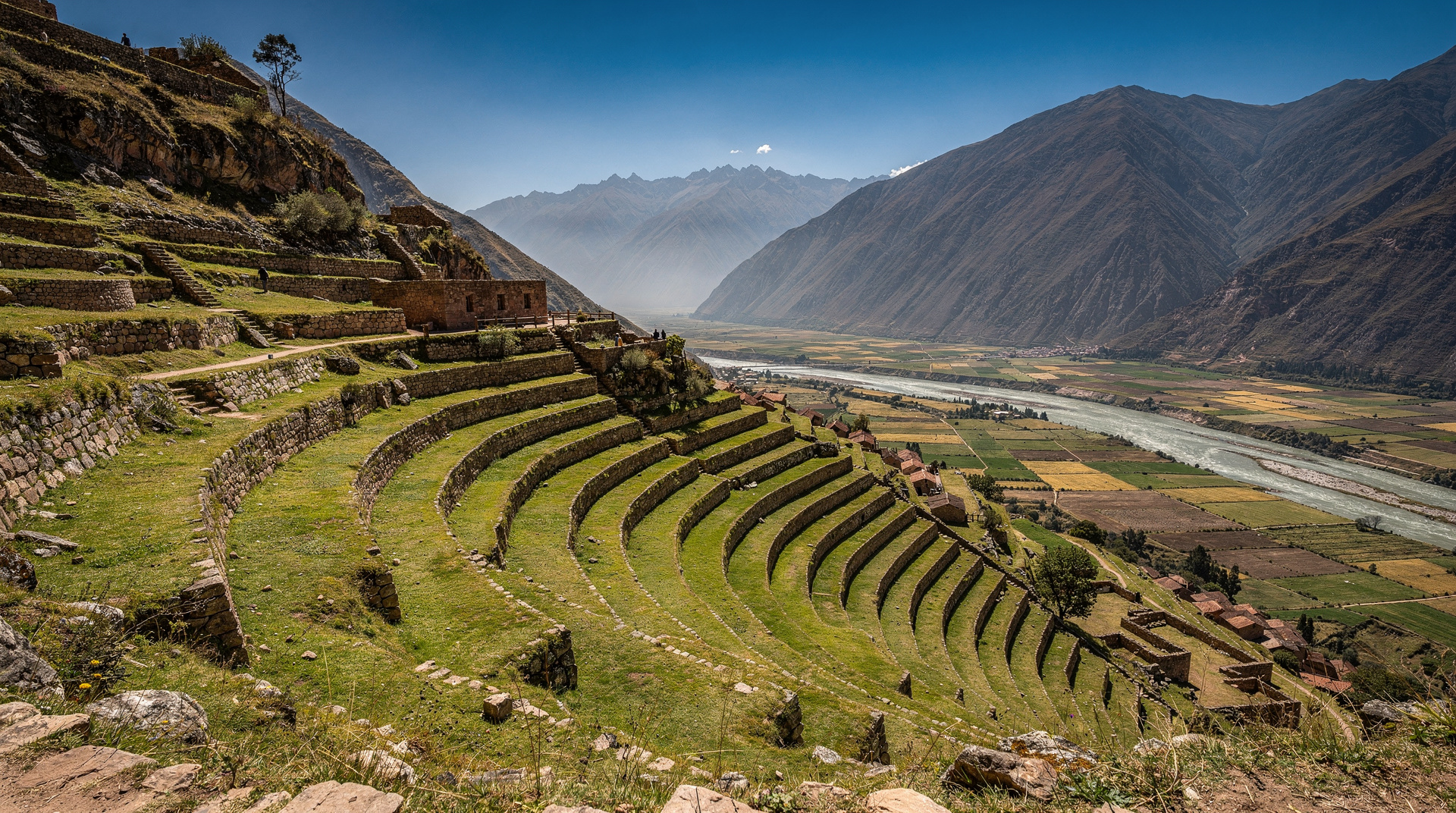
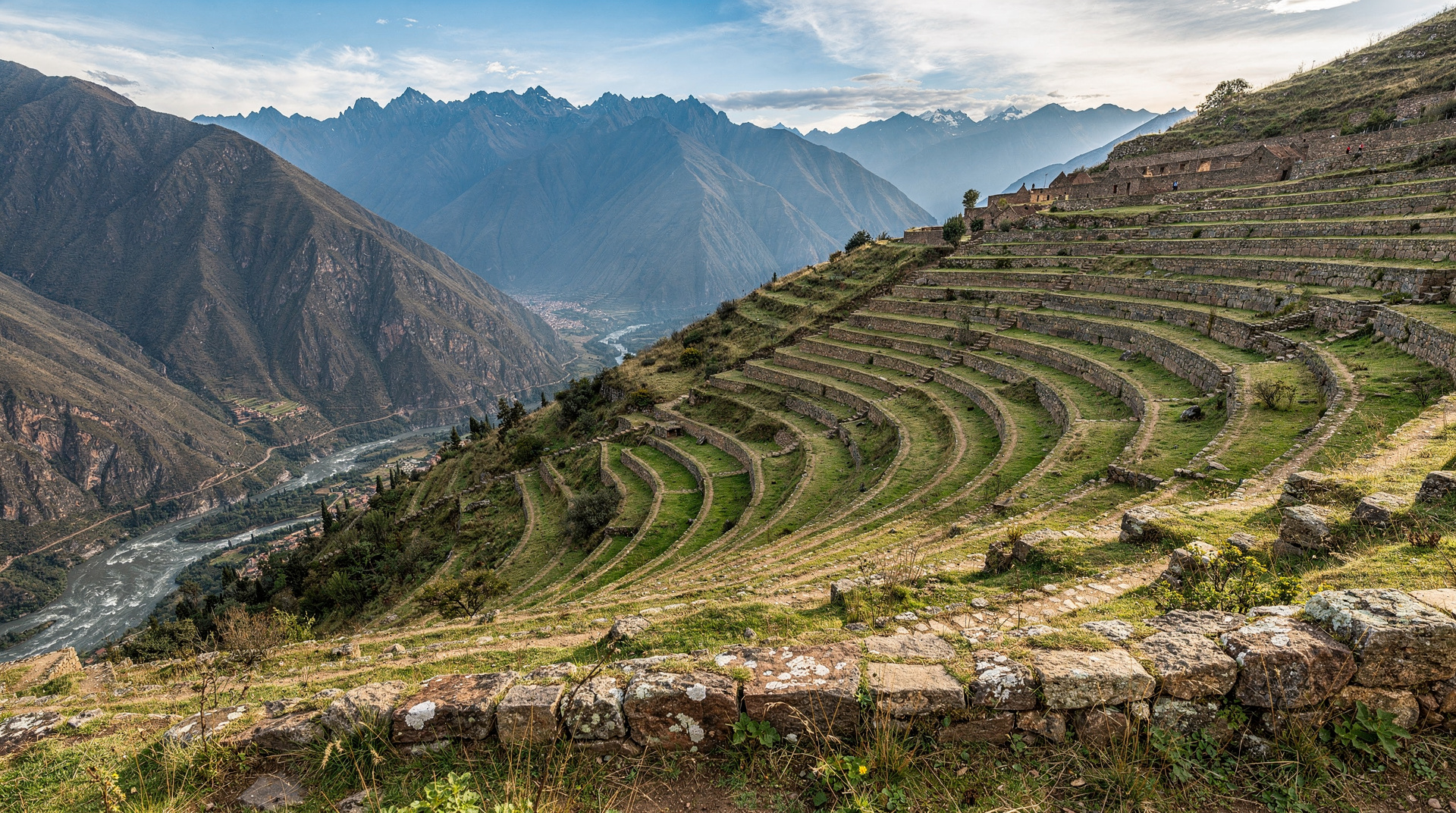
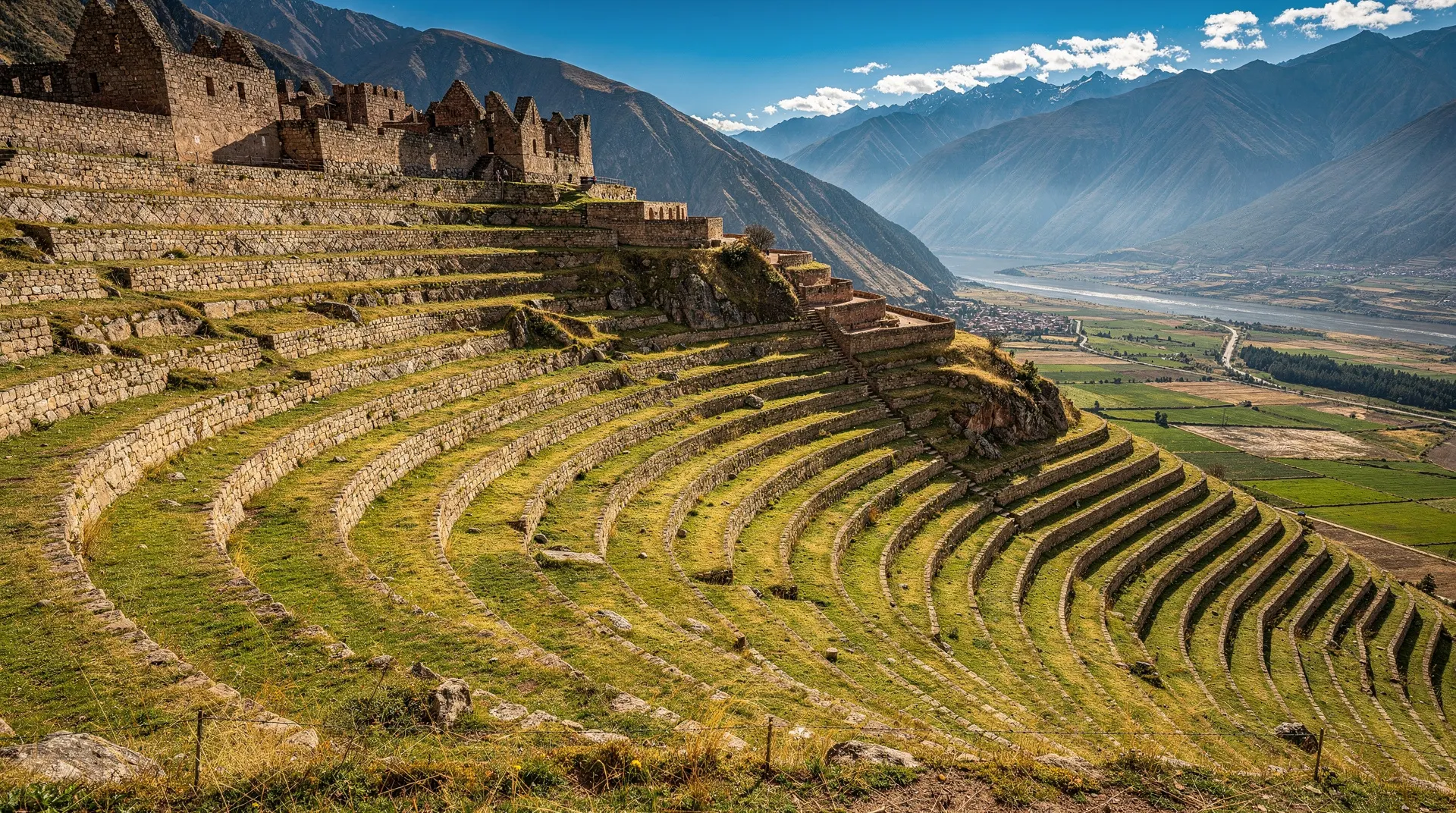
Agricultural terraces: The slopes below the ceremonial complex are covered in some of the most extensive agricultural terracing in the Sacred Valley. The terraces are not merely practical structures — their construction required the same engineering precision as the ceremonial buildings, with drainage channels, irrigation systems, and retaining walls all integrated into the hillside design. The agricultural infrastructure of Pisac supported both local production and the wider storage and redistribution system that the Inca state used to manage provincial food security.
Residential sector (Pisaq): A large residential area of interlocking kanchas (compound blocks) with communal patios, storage rooms, and water channels lies between the ceremonial complex and the agricultural terraces. The quality of construction here is high — this was not a standard provincial agricultural post but an important administrative centre, probably built or expanded under the Inca Pachacuti in the mid-fifteenth century.
The cemetery cliffs: The most visually striking feature from a distance. The cliff faces on the north and east sides of the ridge are honeycombed with chullpa burial niches carved directly into the rock. Most were looted during the colonial period; the grave goods that once accompanied high-status burials here were dispersed centuries ago. What remains is the visual record of a funerary landscape on a scale that is genuinely difficult to comprehend — the cliff face as collective monument.
Getting up to the ruins
Three practical options:
By road (taxi or tour vehicle): The switchback road from Pisac town climbs 8 km to the main ruins entrance. By taxi from the market plaza the drive takes 15–20 minutes and costs approximately S/20–30. Most organised tours use this route. The site entrance is at the Intihuatana group, and you can walk the ruins from there before descending the trail.
On foot via the trail: A steep trail climbs directly from Pisac town through the agricultural terraces to the ruins, taking about 1.5 hours uphill. This route gives you the best appreciation of the terracing sequence and the spatial relationship between the lower residential areas and the upper ceremonial zone. At altitude, the ascent is demanding — take it slowly and stop to drink water at each terrace level.
Drive up, walk down: The most popular combination for serious visitors. A taxi drops you at the upper entrance, you walk the ruins from top to bottom, and then continue down the trail to Pisac town. Total walking time is about 2.5–3 hours. This is the approach used in most quality Sacred Valley tours.
A Sacred Valley full-day tour typically includes Pisac, Maras and Moray, and Ollantaytambo in a single day, with the Circuit III Boleto included and a guide who can explain the construction sequence and the historical context at each site. For first-time visitors to the Sacred Valley, this is the most efficient way to cover all three major archaeological sites without managing transport and tickets independently.
Altitude at Pisac
The Pisac citadel sits at roughly 3,400 m at its lower entrance, rising to approximately 3,750 m at the Intihuatana. This is at or above the elevation of central Cusco — the common assumption that the Sacred Valley is uniformly lower than Cusco is only partially true. The valley floor (Pisac town) is at about 2,970 m, which is meaningfully lower. The ruins above are not.
The practical implication: if you are still acclimatising to altitude, the Pisac ruins are not the soft option compared to the Cusco outlying ruins circuit. The sustained climbing, thin air, and UV exposure at 3,700 m require the same preparation — water, sunscreen, hat, deliberate pace — as any other high-altitude site.
The full altitude sickness guide covers the acclimatisation process and the warning signs that distinguish normal adjustment discomfort from the symptoms requiring attention.
The cemetery: a note on what was lost
The 10,000-odd burial niches cut into the Pisac cliffs represent a funerary tradition that archaeologists are still working to understand. Inca burial customs varied significantly by social status, region, and period, and the Pisac cemetery was likely a multi-generational community burial site used over the full period of Inca occupation — perhaps 60–80 years from the founding of the site under Pachacuti to the Spanish conquest.
Almost all the graves were looted within decades of the conquest. The grave goods — ceramics, metalwork, textiles, and the mummified bodies themselves — were dispersed. Some objects eventually reached European collections; the provenance of much of it is untraceable. The human cost is harder to quantify: the mummified ancestors of the communities buried here were central to Inca religious practice, visited and consulted as living presences. Their destruction was not incidental but part of a systematic programme of religious erasure.
Standing at the cliff base and looking up at the niches is one of the genuinely affecting experiences Pisac offers to visitors who know the context. Without the context, it is a curious cliff formation. With it, it is a record of a society’s relationship with its dead, interrupted.
Combining Pisac with the rest of the Sacred Valley
Pisac works best as part of a full Sacred Valley day that includes at least one other major site. The most common combinations:
Pisac + Ollantaytambo: The two major Inca citadels of the valley, contrasting in character. Pisac is spread across a ridge with a cemetery and extensive terracing; Ollantaytambo is concentrated, vertical, and has the living town directly adjacent. Both are Circuit III Boleto sites.
Pisac + Maras + Moray: Pisac in the morning for the ruins, then the salt mines of Maras and the agricultural terraces of Moray in the afternoon. This combination connects Inca agricultural engineering at three distinct scales and functions.
Full Sacred Valley circuit: Pisac, Maras-Moray, and Ollantaytambo in a single day, as covered by most organised tours. Tiring but feasible — the key is an early start at Pisac (7 am opening) before the market crowds arrive.
The Sacred Valley complete guide covers the sequencing and timing in detail.
Practical information
Opening hours: 7 am–6 pm daily.
Entry: Full Boleto Turístico (S/130) or Circuit III (S/70). No standalone ticket.
Time needed: Minimum 1.5 hours; 2.5–3 hours for the full circuit.
Getting there: 32 km from Cusco by road (45–60 min); shared colectivo S/5–8; taxi S/40–60 from Cusco; included in Sacred Valley tours.
Facilities: Basic toilets at site entrance; small shops in Pisac town below.
Altitude: 2,970 m (town) to 3,750 m (Intihuatana summit). Acclimatise before the full climb.
The Sacred Valley day tour that includes Pisac, Maras-Moray, and Ollantaytambo remains the most efficient structure for combining the three best Circuit III sites in a single well-paced day, and it allows you to spend genuine time at the ruins rather than rushing between market stalls and bus departures.
The 5-day Cusco and Machu Picchu itinerary allocates a full day to the Sacred Valley on day two, which is the right sequence — acclimatise in Cusco first, then travel downhill to the valley before returning uphill on day three.
Pisac versus Sacsayhuamán for a first Inca ruins visit
| Pisac | Sacsayhuamán | |
|---|---|---|
| Scale | Full royal estate: ceremonial, residential, agricultural, funerary | Concentrated ceremonial/military complex |
| Distance from Cusco | 33 km, half-day minimum | Walking distance from central Cusco |
| Time needed | 2.5–3 hours for the full circuit | 1–1.5 hours |
| Standout feature | The 10,000-niche cemetery cliffs | The massive polygonal stone walls |
| Best for | Visitors with a full day to give the Sacred Valley | Visitors wanting a quick, dramatic Inca site with minimal logistics |
Neither site replaces the other — Sacsayhuamán is easier to fit into a half-day city itinerary, while Pisac rewards the extra travel time with considerably more to see and a fuller picture of how an Inca royal estate actually functioned. Visitors with time for only one should weigh logistics (Sacsayhuamán) against depth (Pisac). Visitors with time for both should do Sacsayhuamán early in their Cusco stay, as gentle acclimatisation practice, before attempting the longer and more strenuous Pisac circuit later in the trip.
What guides bring to Pisac
The gap between a self-guided visit to Pisac ruins and a guided one is narrower than at Sacsayhuamán but still significant. The interpretive signs at the site are sparse, and the functional distinction between the different building clusters — ceremonial, residential, agricultural, mortuary — requires background knowledge to read correctly.
A guide who can explain the relationship between the Intihuatana sun platform and the agricultural calendar, describe the social structure of the communities buried in the cemetery cliffs, and trace the hydraulic engineering of the terrace drainage system transforms what would otherwise be a beautiful but somewhat mysterious walk through stone structures into a coherent picture of a major Inca administrative centre.
For a full-day Sacred Valley tour that covers Pisac, Maras, Moray, and Ollantaytambo, a knowledgeable guide is included and the Boleto Circuit III entry is typically incorporated. This remains the most efficient structure for a first visit to the Sacred Valley — not because independent travel is difficult, but because a guide extracts more meaning from limited time at each site than independent exploration alone can achieve.
The Sacred Valley complete guide situates Pisac within the broader valley context, and the one-day Sacred Valley itinerary shows how to sequence the main sites without over-scheduling.