Maras and Moray salt mines tour: tour review
Sacred Valley: Pisac, Ollantaytambo, Chinchero with Lunch
Two sites that earn their own half-day
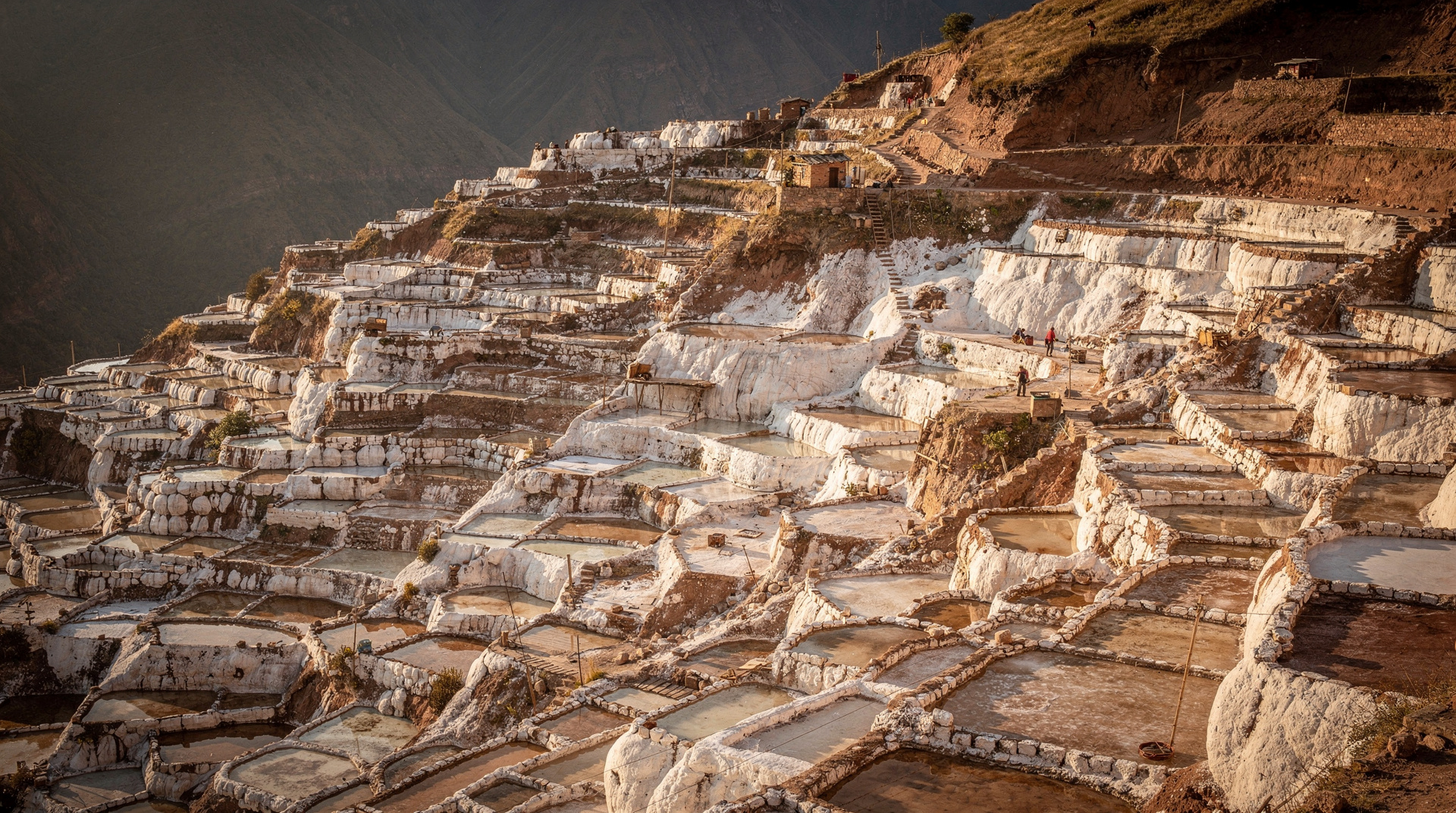
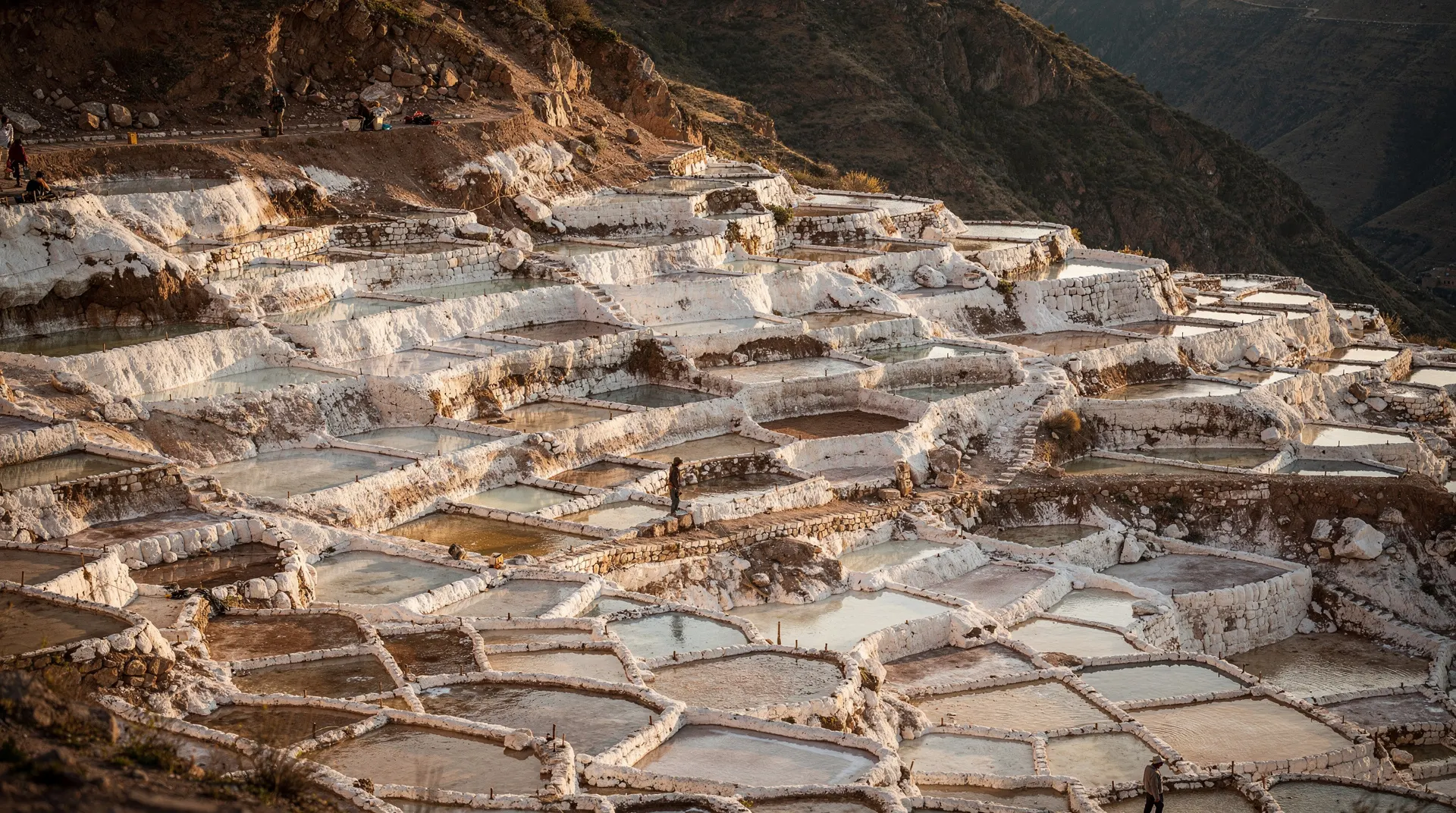
Maras and Moray are often bundled into the tail end of a full Sacred Valley day — visited in the 45 minutes between a buffet lunch and the drive to Ollantaytambo. Done this way, they get short-changed. Both sites reward a slower approach. The Salineras de Maras are one of the most visually unusual landscapes in the Andes — 3,000 individually worked salt pans cascading down a hillside, still harvested by hand, still owned by the families who have worked them for generations.
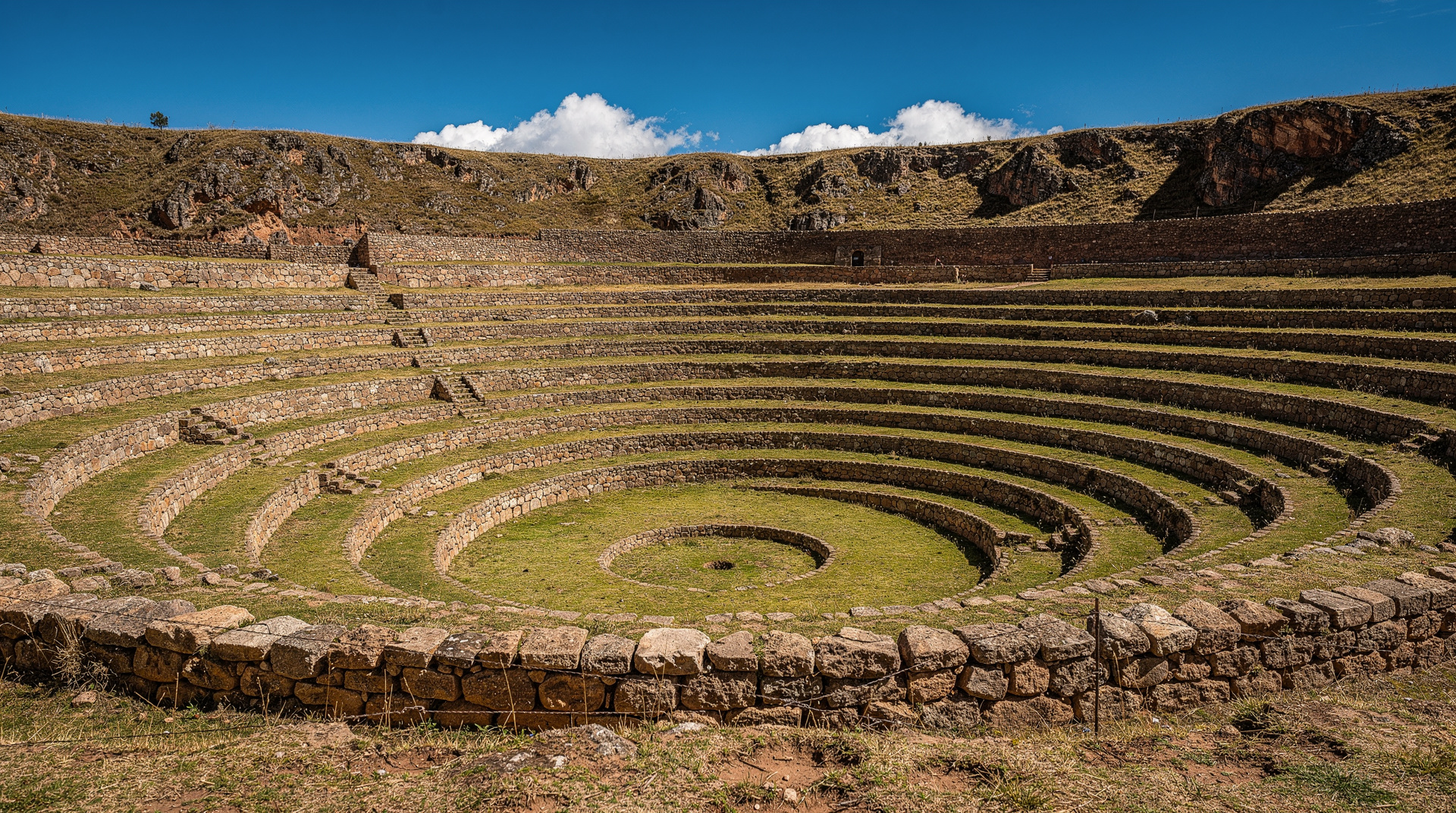
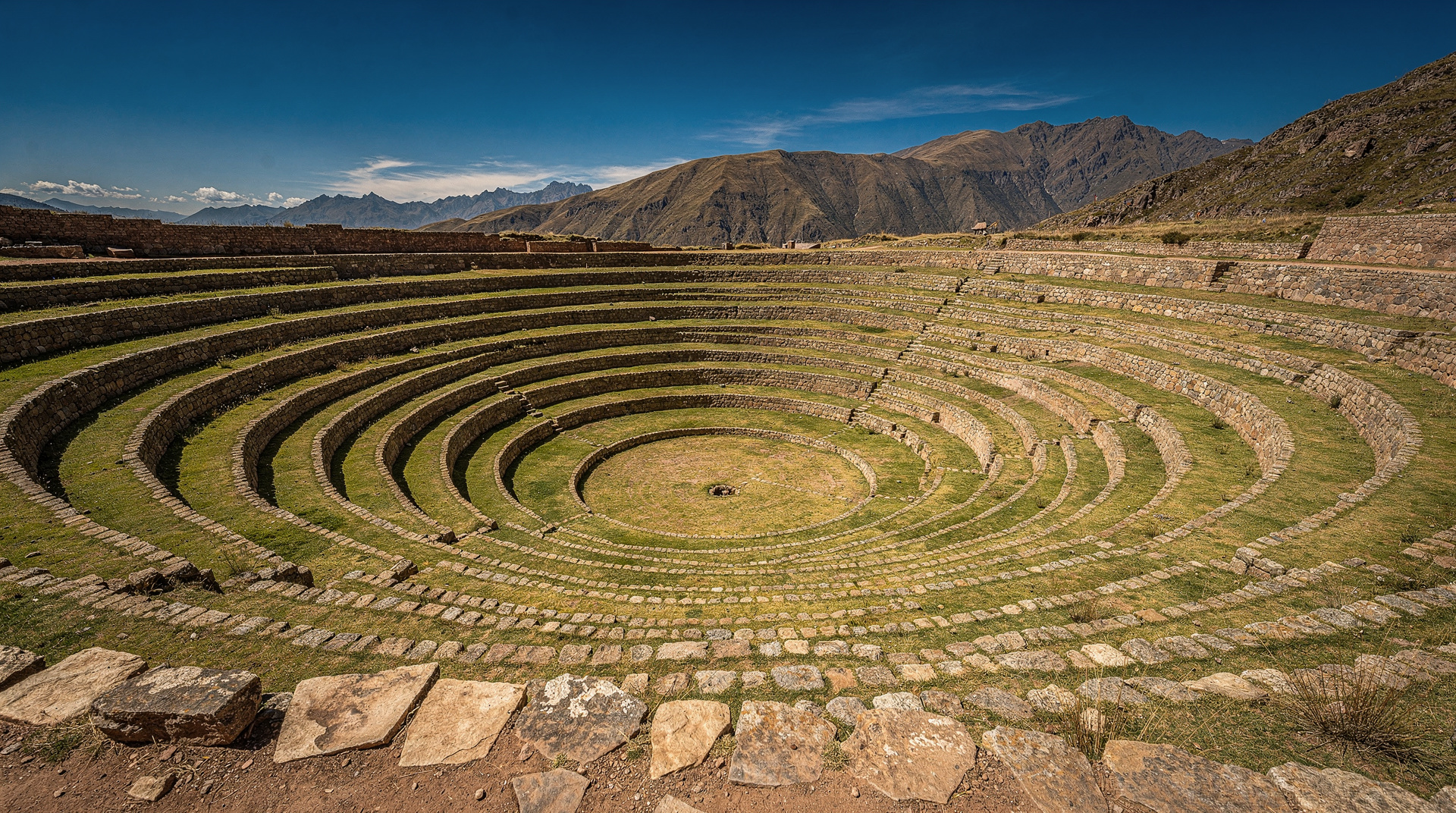
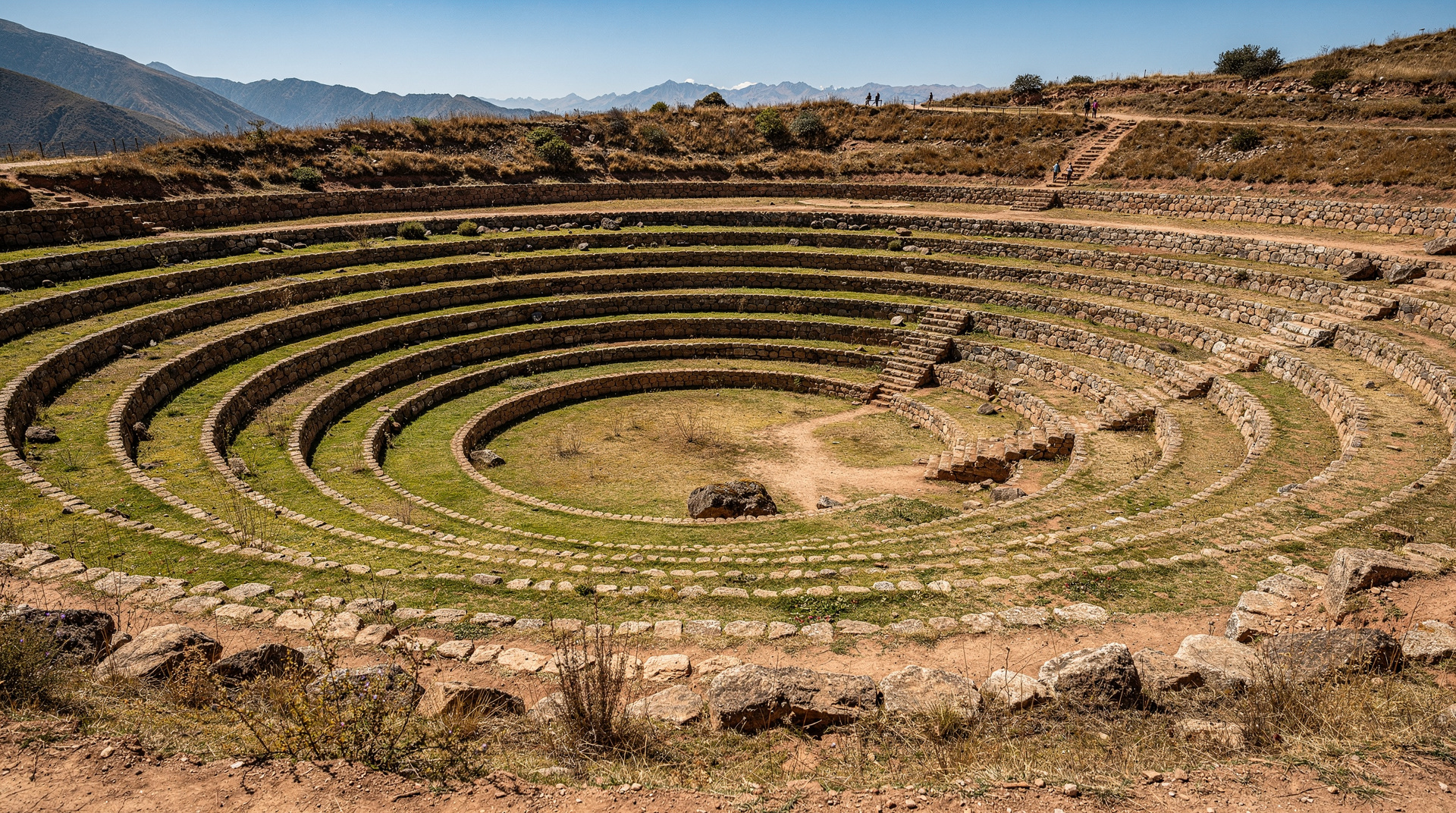
Moray’s circular agricultural terraces are stranger still: a series of concentric rings sunk into the earth that read, from above, like a green amphitheatre dropped into the plateau. This review covers what the dedicated Maras and Moray tour looks like, what justifies the separate half-day, and when to add these sites to the full Sacred Valley day instead.
| Where | Sacred Valley plateau, near Chinchero/Urubamba |
| Cost | S/80–140 (~$23–40), half-day |
| Time needed | 4–5 hours; +1.5 hrs if adding Chinchero |
| Altitude | Moray ~3,500 m; Maras ~3,380 m |
| Best time | Morning before 10 am, dry season for colour |
Moray: the site that needs more than 20 minutes
The Moray site (approximately 3,500 m) sits on the plateau above the Sacred Valley floor, accessed from Chinchero or from Maras village. The three main circular formations — Qechuyoq, Muyu Urqu, and Cheqoq — are the result of Inca engineering working with natural sinkholes in the limestone plateau.
The most visited formation (Qechuyoq) descends through approximately 12 concentric ring terraces to a lowest point roughly 30 m below the plateau surface. Temperature studies have shown a consistent 15°C differential between the uppermost and lowest terrace — a span of climates compressed into a single 45-metre vertical structure. The most credible interpretation is an Inca centre for agricultural research, testing the productive potential of different crop varieties across multiple altitude and temperature bands. An equivalent to a modern agricultural research station, though no written Inca records survive to confirm the theory definitively — it remains the leading scholarly explanation rather than settled fact.
The site is genuinely better with a guide who can explain the thermal gradient research and the evidence for the crop variety hypothesis. Without context, it is a beautiful circular formation that prompts curiosity but no answers. The Moray guide covers the site in detail.
Book the Maras and Moray dedicated half-day tour — this version spends proper time at both sites rather than rushing between them as part of a full Sacred Valley day.
The Salineras de Maras: what makes them worth it
The Maras salt mines pre-date the Inca period; the salt pans are documented in pre-Inca cultures and the Inca incorporated them into their own production system. Today, the approximately 3,000 pans are managed by roughly 500 Maras community families under an inherited rights system maintained by a community cooperative. Individual pans range from a few square metres to larger terraced areas; each family is responsible for their own pan maintenance, salt drying, and harvesting.
The visual spectacle varies by season. In the dry season (May–September), the pans are white and crystalline in bright sunlight; the mineral content of the specific spring water that feeds each pan creates slight variations — some pink, some orange-tinged from iron. In rainy season, the pans fill with brine but harvest is reduced. The best photography is mid-morning in dry season when the sun is at a low angle.
The community charge an entrance fee (S/10–15) and maintain a walkway along the terraces. Buying salt directly from producers at the site shop supports the community directly — the pink Maras salt is genuinely excellent and makes a lightweight, practical souvenir.
What is included in the tour
Standard inclusions in the dedicated Maras and Moray half-day: hotel pickup from Cusco, private vehicle to both sites, licensed guide, and community entrance fees for both Moray and the salt mines. Some operators include Chinchero (the colonial church and weaving cooperative, 30 minutes from Moray) as a third stop. Others add it as an optional extension. The Chinchero weaving guide is useful context if the artisan component interests you.
Not included: lunch (the tour typically ends in Chinchero, Maras village or back in Cusco — most operators suggest lunch in Urubamba if combined with an afternoon in the Sacred Valley), tips for the guide, and personal purchases at the salt mine shop.
How the salt mining system actually works
Each of the approximately 3,000 pans at the Salineras de Maras is fed by a single warm saline spring (approximately 37°C) that rises from within the mountain above the site. The spring’s saltiness is a geological anomaly — its mineralogy reflects the presence of ancient salt deposits deep in the Andes. Water from the main spring feeds a network of channels that distribute brine to individual pans by gravity; each pan owner is responsible for maintaining the channels serving their allocation.
Once a pan is filled with brine (to a depth of a few centimetres), the salt-maker allows the water to evaporate in the sun. In the dry season, the evaporation cycle takes approximately 3–5 days depending on sun intensity and temperature. The residual salt is then hand-raked and collected. Multiple harvest cycles are possible in a single dry season; in rainy season, the pans are flooded repeatedly and harvest is impractical.
The varying colours of the pans — from pure white to pink, orange, and even slightly purple in some lights — reflect different mineral concentrations in different sections of the system. Iron compounds produce the pinkish tints, which is why Maras salt is sometimes marketed as “pink Andean salt.” The differences are visually striking and not artificial. The salt produced is harvested raw (unrefined, no additives) and sold in its natural state.
Ownership of pans is inherited within Maras families and adjudicated by a community cooperative with rules dating back centuries. Sales, transfers, and subdivision of pans are governed by community agreements that operate outside the normal Peruvian property law framework. This autonomous management is part of what makes the Salineras a genuinely living community institution rather than a heritage site managed for tourism.
The comparison: dedicated tour versus full Sacred Valley day
The full Sacred Valley day combining Pisac, Maras, Moray and Ollantaytambo is the right choice for first-time visitors on a four to seven day itinerary who want to see everything in a single efficient day. Maras and Moray get roughly 45–60 minutes each in this format — enough for a surface experience and the best photographs, but not enough for the depth that a slower visit provides.
The dedicated Maras and Moray half-day is the better choice for: travellers returning to Cusco who want one more significant site without a full day; visitors whose primary interest is in the agricultural and community heritage rather than Inca fortresses; photographers who want to spend proper time at the salt pans without a group waiting; and travellers who have already visited Pisac and Ollantaytambo independently.
If you are choosing between the two, the sequencing that works best is: Sacred Valley full day first (Pisac, Maras/Moray quickly, Ollantaytambo) to get the overview, then return to Maras and Moray specifically on a second morning if schedule allows. Most travellers visiting Cusco for five or more days have room for both.
Getting the most from the visit
Moray is best visited on a clear morning before 10 am — the circular terraces photograph best when lit from an angle. Arrive at the main formation (Qechuyoq) and walk the upper ring before descending. The descent to the lowest terrace takes 15–20 minutes; the ascent is shorter than it feels at 3,500 m.
The salt mines are best in mid-morning dry season light. The main walkway through the terraces takes about 20 minutes at a comfortable pace; there are extended routes along the edge of the pans for those who want more. The community shop at the exit is worth spending five minutes in.
Between the two sites, the village of Maras itself is quiet and largely untouristed — a narrow colonial grid with a small plaza and an unpretentious atmosphere that contrasts with Cusco’s tourist-oriented centre.
Combining Maras and Moray with Chinchero
The village of Chinchero sits on the plateau above the Sacred Valley at approximately 3,762 m, 30 minutes from Moray by road. It is worth adding if you have not previously visited, for two reasons: the colonial church built directly over an Inca royal palace (the layering is visible in the foundations and lower walls), and the Chinchero weaving cooperative.
The cooperative is one of the best places in the Sacred Valley to observe authentic Andean backstrap loom weaving in practice — women demonstrate the full process from raw wool to finished textile — and to buy directly from weavers at honest prices. Unlike market vendors who source goods from Cusco’s wholesale districts, the cooperative’s weavers make what they sell. The Chinchero weaving guide covers the textile tradition in detail.
Adding Chinchero to the Maras and Moray half-day extends the tour by roughly 1.5 hours and S/20–30 per person in additional operator cost. Most operators can arrange this as a half-day variant.
How altitude affects this visit
Moray sits at approximately 3,500 m on the plateau — slightly higher than Cusco’s 3,400 m floor. The Maras salt mines are somewhat lower (around 3,380 m). For travellers who have spent at least two days in Cusco, this altitude should not be a concern. For those on Day 1 or Day 2, the plateau can feel noticeably thin. The main risk is not altitude sickness so much as the reduced energy and slightly slower pace that comes from not yet being acclimatised — take the circular terrace descent slowly and do not rush the uphill sections between viewpoints.
The road from Chinchero or Urubamba to Moray crosses exposed altiplano at around 3,600–3,700 m in places. On cold mornings (most mornings in the dry season, particularly in June–August), the plateau is genuinely cold — bring a wind layer regardless of what the Cusco morning temperature suggested.
Honest pros and cons
Pros: Two distinctly unusual and visually striking sites that do not look like anything else in the Andes. The salt mines are still a living working landscape, not a heritage museum. Moray’s engineering is genuinely mysterious and rewards contemplation. The half-day format leaves the afternoon free for the Sacred Valley or Cusco activities. Community entrance fees support local livelihoods directly. Chinchero add-on provides one of the region’s best weaving cooperative experiences.
Cons: The two sites are beautiful rather than historically deep — travellers who want Inca stone masonry on the scale of Sacsayhuamán or Ollantaytambo will not find it here. Moray is at 3,500 m — acclimatise before visiting. In peak season, midday crowds at both sites can be significant, with multiple tour coaches overlapping. The plateau road to Moray is rough in places; motion-sickness prone travellers should note the winding approach. Maras village has limited lunch options — coordinate your meal arrangements with the operator or plan to eat in Urubamba.
Dedicated half-day versus full Sacred Valley day
| Dedicated Maras/Moray half-day | Full Sacred Valley day | |
|---|---|---|
| Time at each site | 45–90 minutes | 45–60 minutes |
| Other sites included | None (or Chinchero optional) | Pisac, Ollantaytambo too |
| Price | S/80–140 | S/120–200 |
| Best for | Photographers, return visitors, slower pace | First-time visitors wanting full overview |
What to buy at the salt mines and where the money goes
The community shop at the Salineras de Maras exit sells raw salt in several grades — coarse for cooking, fine for the table, and a spa-grade exfoliating salt sold in small bags. Prices are modest (typically S/5–15 for a bag depending on size and grade) and the proceeds go to the family or cooperative operating that section of the shop, not to a centralised tourism authority. Buying here is one of the more direct ways to put money into the Maras community’s hands during a Sacred Valley visit, comparable in spirit to buying textiles at the Chinchero or Taquile cooperatives.
Salt makes a genuinely practical souvenir: lightweight, useful, and a real product of the place rather than a manufactured trinket. Airport security in Peru and most connecting countries treats salt as a permitted item in checked luggage without issue, but pack it in a sealed bag inside a hard-sided item to avoid spillage — the fine grades in particular are prone to leaking through paper packaging over a long flight.
Pricing reference (2026)
Maras and Moray half-day tour (pickup, transport, guide, entrances): S/80–140 ($23–40) per person. Combined with Chinchero: S/100–160 ($29–46). Full Sacred Valley day including Maras and Moray: S/120–200 (~$35–58). Private taxi from Cusco (no guide): S/100–150 return.
Verdict
The dedicated Maras and Moray tour gives two sites that are genuinely unusual and rewarding the time they deserve. If your Sacred Valley day has already squeezed them into an hour, consider returning. If this is your only opportunity, the dedicated half-day format is significantly better than the rushed alternative. The Maras and Moray day trip guide and the Sacred Valley complete guide help integrate these sites into a broader Cusco itinerary.