Salkantay trek diary: five days, four blisters, one extraordinary mountain
Why I chose Salkantay over the Inca Trail
I wanted to walk to Machu Picchu. That much was decided when I booked the flights. The question was which route.
| Where | Mollepata to Aguas Calientes via Salkantay Pass |
| Cost | Around 480 USD for a mid-range 5-day guided trek |
| Time needed | 5 days / 4 nights |
| Getting there | Guided group trek from Cusco, no permit required |
| Best time | Dry season, May–September |
The Inca Trail requires permits that sell out months in advance — often by January for the entire dry season, and I was booking in August for an October departure. The short Inca Trail was available but felt like a compromise. The Salkantay trek had no permit system, departed regularly with various operators, and by most accounts was more physically demanding than the classic trail in exchange for landscapes — glaciated peaks, high moorland, cloud forest — that are genuinely different from anything the Inca Trail offers.
I booked a five-day guided group trek through a Cusco-based operator. The total cost was approximately 480 USD including transport, accommodation in mountain lodges and camping, guides, cooks, and the Machu Picchu entrance. That is in the middle of the market range — you can do it cheaper in tents throughout, and considerably more expensive in high-end lodges with hot tubs.
If you are still weighing the options, the best treks to Machu Picchu guide lays out the alternatives side by side, and the Inca Trail permits guide explains why that route is so hard to secure. A five-day Salkantay itinerary is also available if you prefer to see the days laid out before committing.
Day one: Cusco to Mollepata (2,800 m)
The minibus left Cusco at four in the morning — a time that feels punitive until you understand why. The drive to Mollepata, the trailhead village, takes about three hours through the dark on mountain roads, arriving in time for breakfast before the walk begins.
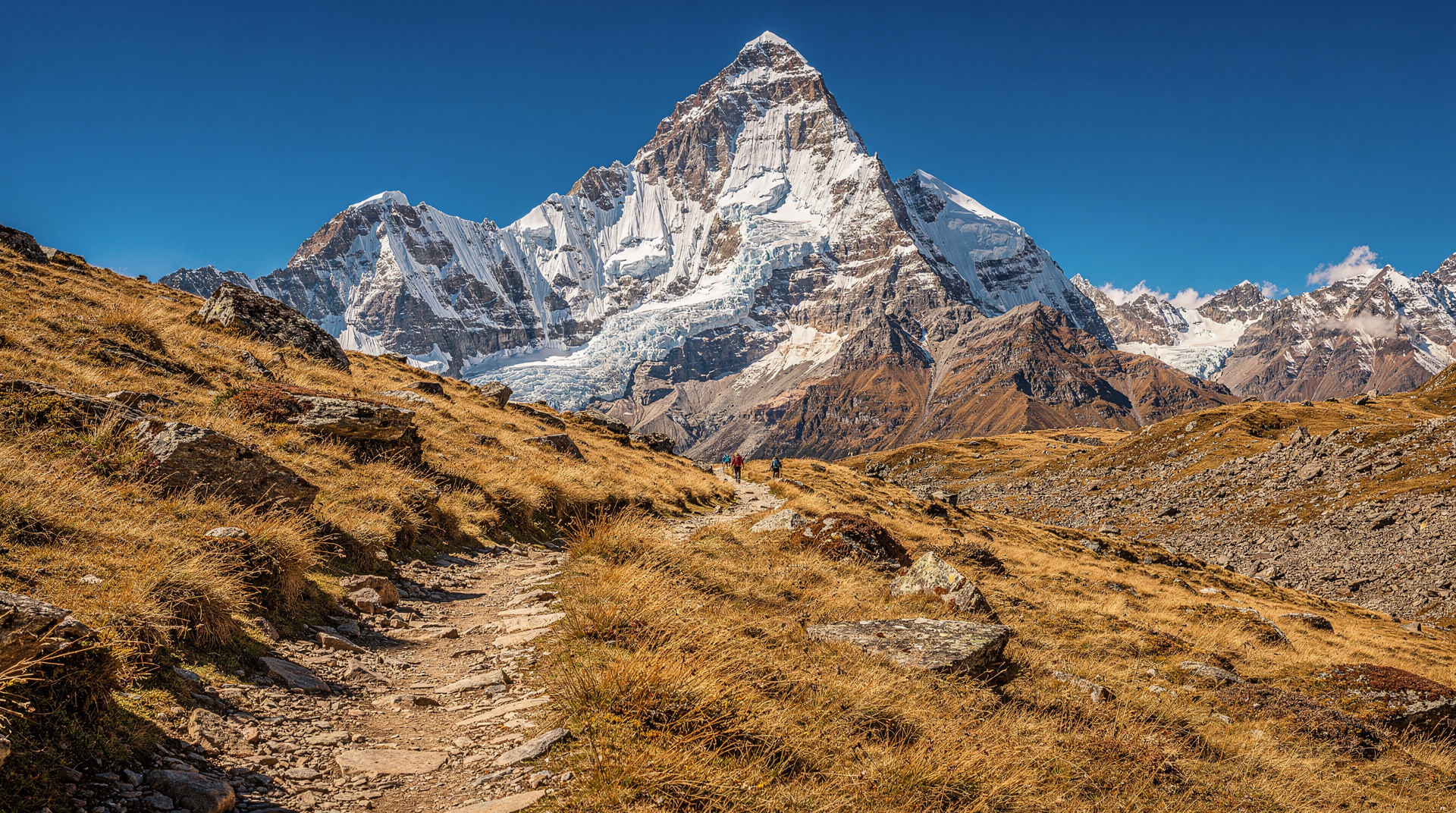
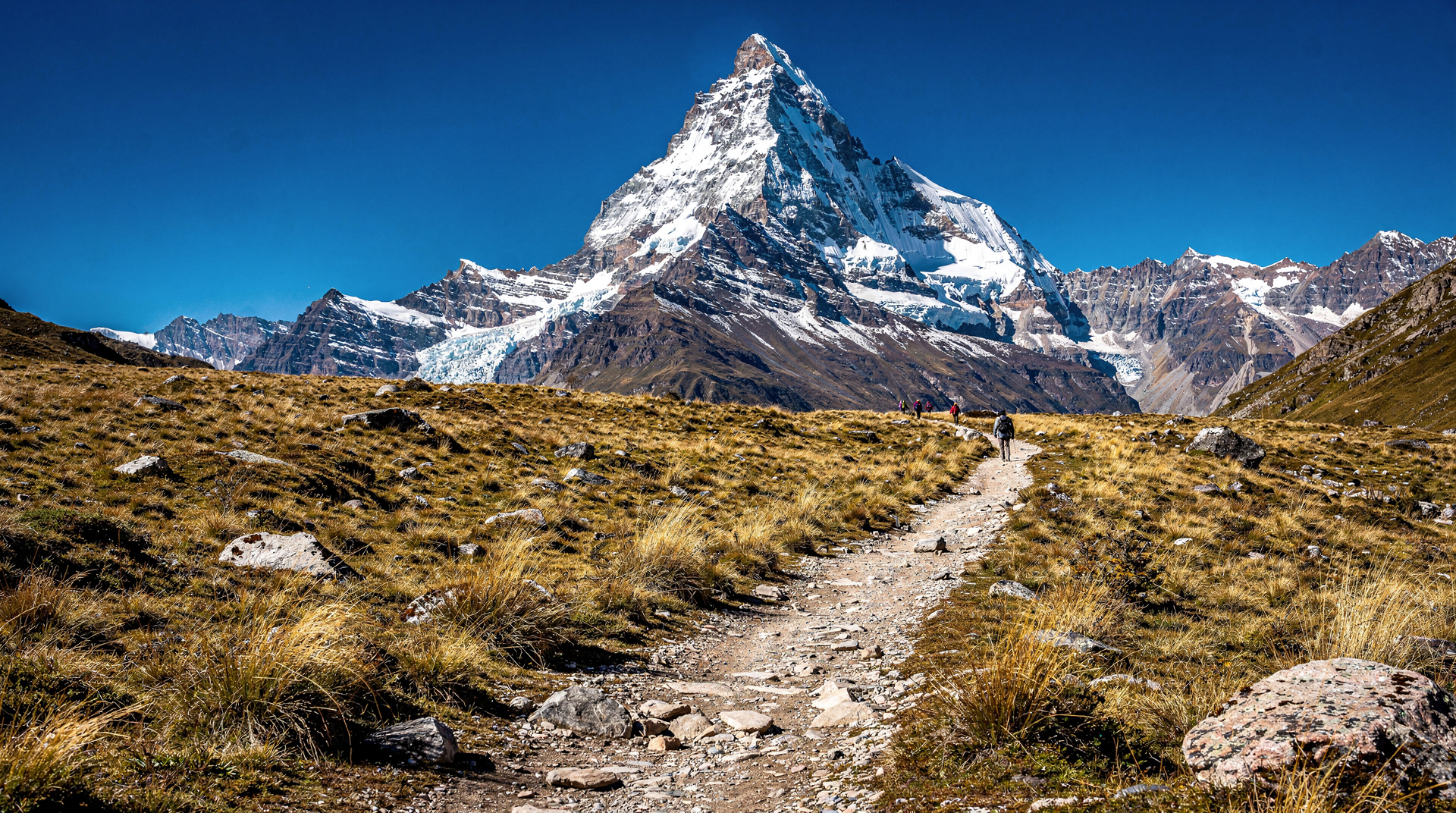
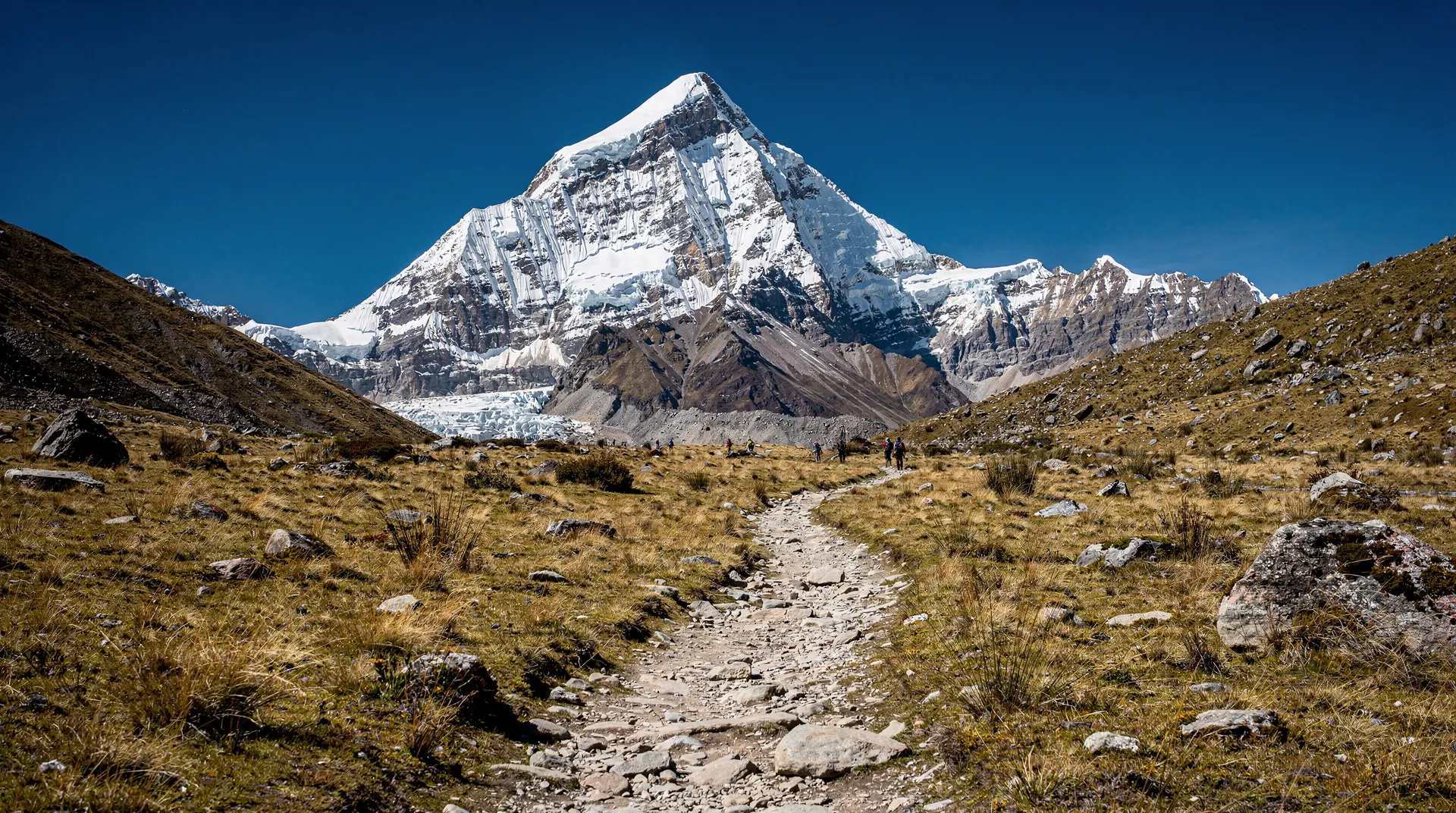
Mollepata sits at 2,800 metres, already higher than most of the Sacred Valley. After breakfast of scrambled eggs and coca tea in a village kitchen, we began walking by eight. The first day is classified as the warm-up: a gentle ascent through farming land and scrub to the first camp at Soraypampa (3,900 m), with the glacier-capped summit of Salkantay (6,271 m) visible ahead for most of the afternoon.
The view of Salkantay from camp at dusk — the mountain turning pink against a darkening sky, its glaciers picking up the last horizontal light — is one of those landscape moments that makes you feel briefly but sincerely grateful to be alive.
Camp temperature: approximately -4°C. Sleeping bag rating required: at minimum -10°C. This is not a suggestion.
Day two: the Salkantay Pass (4,630 m)
This is the day that sorts the trek into before and after.
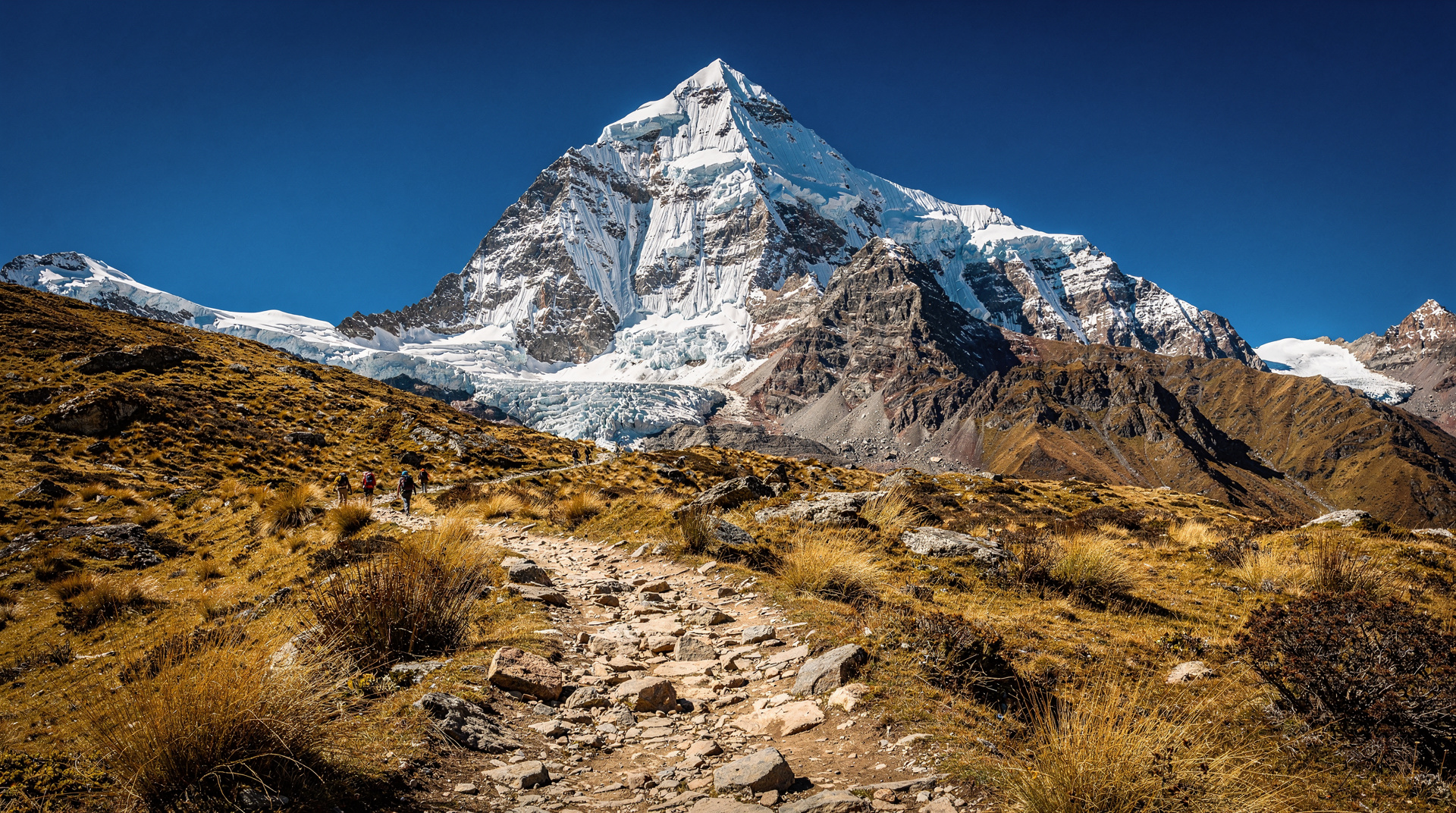
We were walking by five-thirty, in the dark, with headtorches, ascending towards the Salkantay Pass at 4,630 metres. The path rises steeply for about three hours through alpine grassland, then scree, then a final section of loose rock. At altitude, three hours of uphill walking feels like six. My pace halved in the final kilometre.
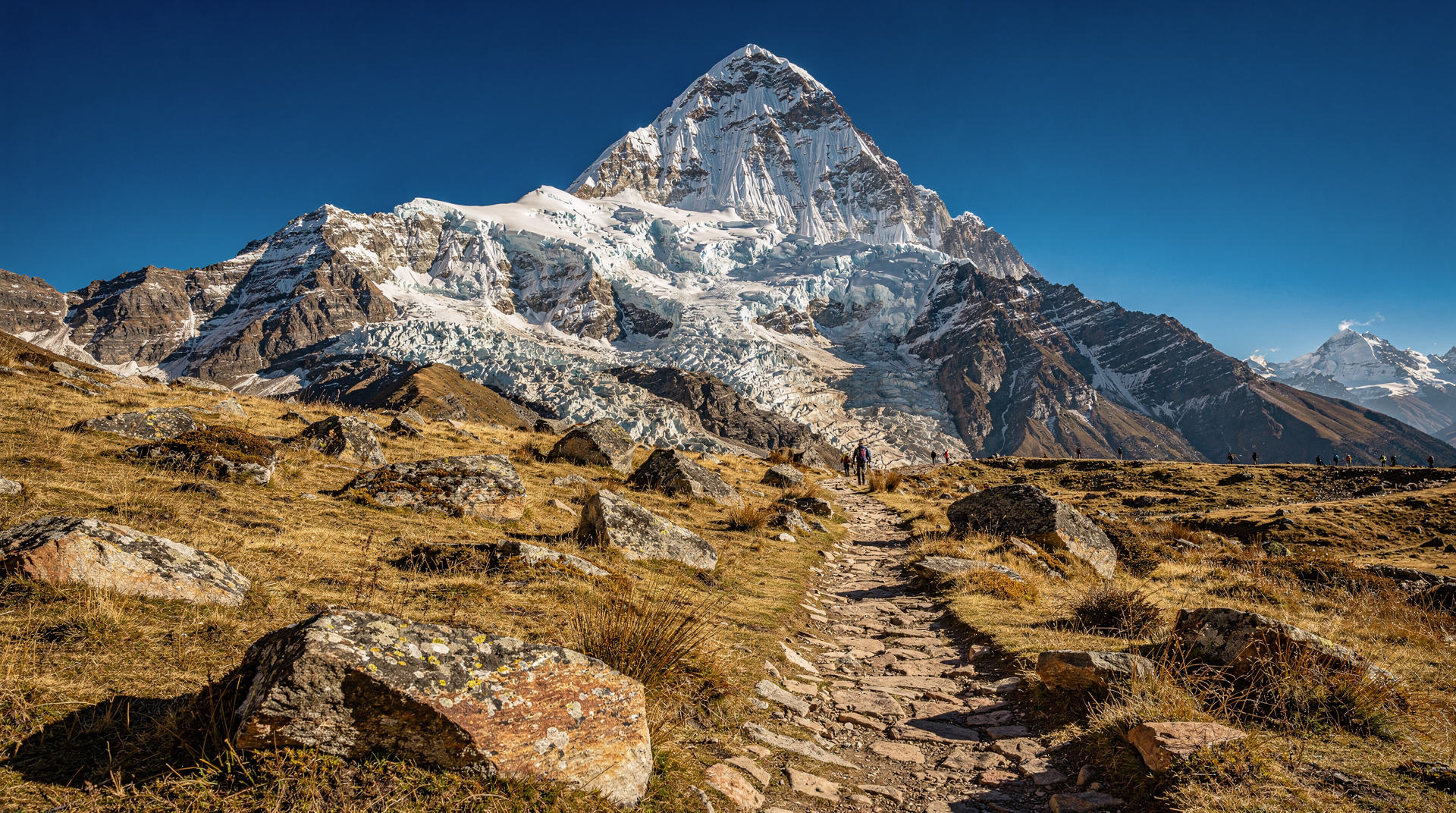
The pass arrives suddenly: you crest a ridge and find yourself between the Salkantay massif on one side and open sky on the other, with the valley dropping away ahead and cloud forest visible in the far distance below. The wind at the pass is fierce and cold regardless of season. I stood there for about four minutes before the cold forced me downhill.
The descent is long — about five hours — losing 2,000 metres of altitude from the pass into the cloud forest zone around Chaullay. By the time we reached camp, the vegetation had changed entirely: tree ferns, orchids, bromeliads, the air thick and warm. It felt like a different planet from the glacial morning.
Day three: cloud forest and coffee farms
Day three is the recovery day, and the reason the five-day itinerary is the right format. We walked through cloud forest for about four hours, descending further to the subtropical zone where coffee and coca are grown on terraced hillsides.
The trail through here is not dramatic in the way the pass was dramatic, but it is beautiful in a completely different register: narrow paths between coffee bushes, the sound of water everywhere, occasional views down to the Urubamba River far below. We stopped at a family farm where the woman of the house was drying coffee on a concrete slab and bought a small bag of beans for 10 PEN.
I developed two blisters during the cloud forest section, which I record here because the packing guide for the Inca Trail applies equally to Salkantay and its blister-prevention advice (specifically: two pairs of socks, worn simultaneously) is advice I wish I had followed more carefully.
Day four: Aguas Calientes
Day four is the longest day in terms of walking hours — approximately six hours — though the altitude drop makes it aerobically easier than days one and two. The trail descends to the Urubamba valley and follows the river towards Aguas Calientes, the town at the base of Machu Picchu.
The last two hours run alongside the railway line, on a track accessible only on foot, with the river loud beside you and the mountains closing in. There is something meditative about this section that I found I needed after three days of physical focus.
Aguas Calientes at the end of a four-day walk is the most satisfying meal of the trip: I ordered alpaca steak, chips and a cold beer, and ate it slowly on a restaurant terrace above the river.
Day five: Machu Picchu
We took the first bus up from Aguas Calientes at five-thirty. The Machu Picchu entrance gate opens at six and the first-bus crowd spreads quickly around the site — there are enough circuits and paths that even on a busy day you can find stretches where you are moving without being immediately surrounded.
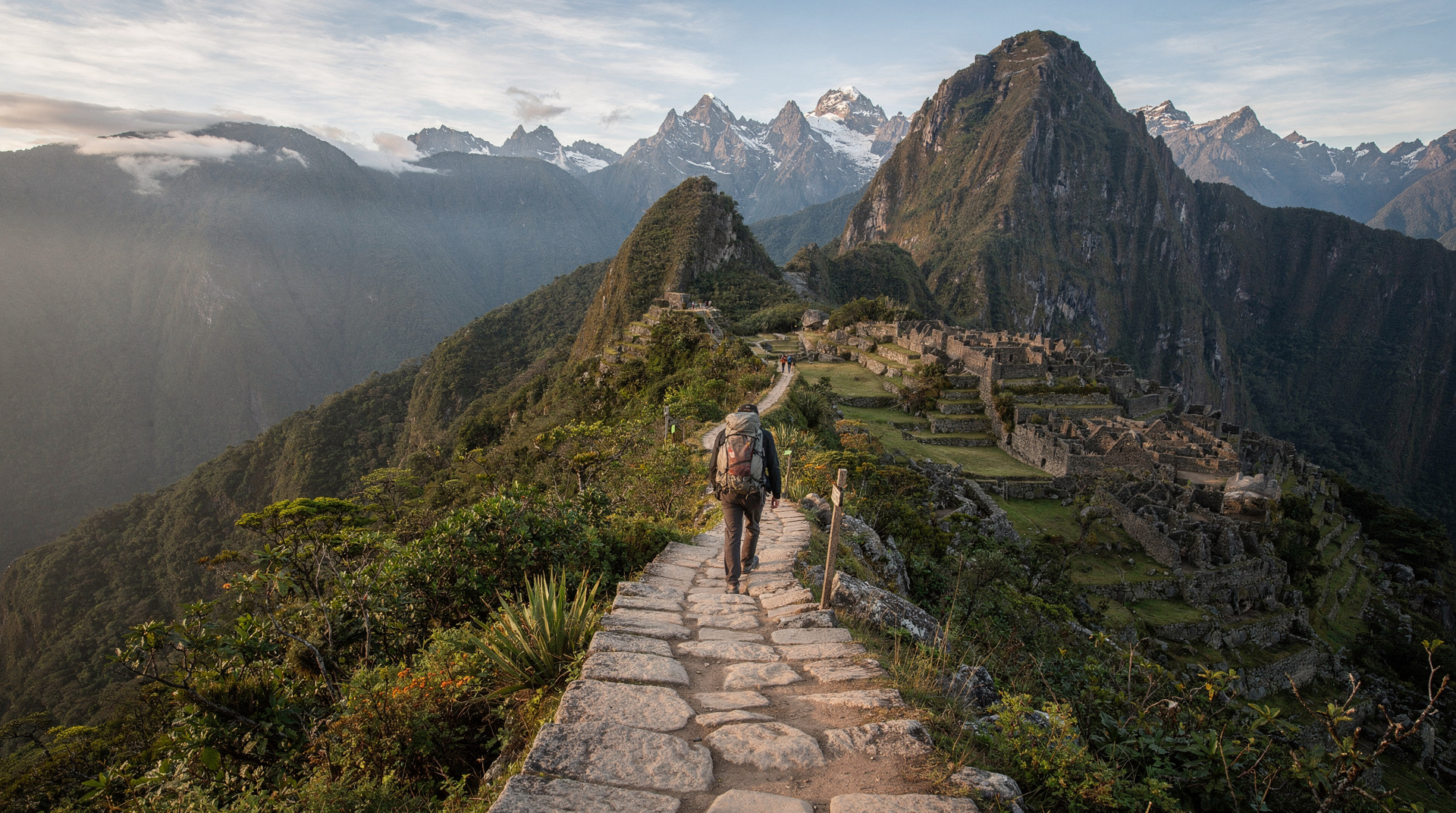
Arriving at Machu Picchu at the end of a four-day walk, on foot from the mountains behind it, produces a different emotional register than arriving by train. The site is the same. But the context you have built — the glacier, the pass, the cloud forest, the long river walk — gives the final destination a weight that it does not quite have when you step off a bus at seven in the morning.
I spent three hours at the site, mostly in silence, and then went back to Aguas Calientes for the train to Ollantaytambo and the bus to Cusco. The five-day Salkantay trek is, without hesitation, the best walk I have done in twenty years of travel. The full Salkantay trek guide has everything you need for planning.
After the trek I stayed on in Cusco for a couple of slow days, and I would recommend the same: tired legs are much happier wandering the historic centre than facing another early start. If you would rather get a feel for the town first, the acclimatization plan is a gentle way to spend the days before the trek.
What I learned
The Salkantay is not an easy trek. The pass at 4,630 metres is genuinely hard and requires either prior acclimatisation in Cusco or Sacred Valley or, ideally, a fitness level above casual. But it is also not technical — no rock climbing, no rope sections, no specialist equipment beyond good boots, layers and a sleeping bag rated for below zero.
The Inca Trail vs Salkantay comparison makes the trade-offs clear: the Inca Trail has the archaeology and the permit prestige; the Salkantay has the mountain and the flexibility. Neither is wrong. Choose based on what you want the walk to be about.
Shorter version, and what to add around the trek
Not everyone has five days. If I were short on time, I would look at a four-day version of the same route, which compresses the middle of the walk but keeps the pass. I preferred the longer format because the recovery day in the cloud forest made the rest of the trek enjoyable rather than merely endured, but the shorter one is a fair choice if your calendar is tight.
Think about what you want from the final morning too. Some walkers add an extra climb at the site, and the Huayna Picchu vs Machu Picchu Mountain comparison explains the difference, while the Huayna Picchu destination page shows what the climb involves. Those tickets are separate from the trek, so decide early. If you want an extra entry for the climb, you can look at a mountain entry ticket for the citadel well before you set off.
The Machu Picchu complete guide and the circuits explained page cover how to organise the morning once you arrive, and the Machu Picchu destination page gives the wider context. For the town at the end of the walk, see the Aguas Calientes guide.
Weather shapes the whole experience, so check the best time to visit Cusco before choosing your dates. If the trek has whetted your appetite for high places, the Humantay Lake day diary and the Ausangate trek guide are natural next reads. And if you are still undecided between walking and other routes, the Inca Trail vs Salkantay real talk post argues both sides, with the Lares trek guide as a quieter third option.
The trek at a glance
| Day | Route | Altitude range |
|---|---|---|
| 1 | Cusco → Mollepata → Soraypampa | 2,800 m → 3,900 m |
| 2 | Soraypampa → Salkantay Pass → Chaullay | 3,900 m → 4,630 m → ~2,900 m |
| 3 | Chaullay → cloud forest → coffee zone | Gradual descent |
| 4 | Cloud forest → Aguas Calientes | Descent to ~2,000 m |
| 5 | Aguas Calientes → Machu Picchu | Bus up to 2,430 m |
What to pack and how to prepare
The gear list matters more on Salkantay than on most Cusco day trips, because you’re sleeping at altitude in genuinely cold conditions on at least the first two nights. A sleeping bag rated to at least -10°C, proper layering (base layer, insulating mid-layer, windproof shell), broken-in hiking boots, and two pairs of socks worn together to prevent blisters are the non-negotiables. The what to pack for Inca Trail guide applies just as directly to Salkantay and goes through the full list.
Physically, the trek rewards some preparation beyond general fitness — a few weeks of regular walking or hill training before you arrive helps considerably on the pass day, though the altitude sickness Cusco guide matters more than raw fitness for how the first two days actually feel. Spend at least two to three days acclimatising in Cusco or the Sacred Valley before starting, regardless of how fit you are at sea level.
Before you book, it is also worth reading the guide to unlicensed tour agencies in Cusco, since not every operator selling this trek is properly registered. And if you want to compare walking in with taking the train, the train vs trek guide covers that choice, while the story of my Inca Trail trip gives a useful contrast to this one.
Choosing an operator
Salkantay is run by dozens of operators at wildly different price points and comfort levels — from budget camping-only trips to high-end options with mountain lodges and hot tubs along the route. The 480 USD I paid sat in the middle: good food, competent guides, comfortable-enough camping with one or two lodge nights depending on the operator. Cheaper options exist but tend to cut corners on food quality, guide-to-group ratios, or emergency equipment (oxygen, first aid) — all things you want a properly resourced operator to have at this altitude.
Frequently asked questions about Salkantay trek diary
Is the Salkantay trek harder than the Inca Trail? Generally considered so, yes — the Salkantay Pass at 4,630 m is higher than the Inca Trail’s highest point (4,215 m), and the daily distances on Salkantay tend to be longer. Neither trek is technical, but Salkantay asks more of your lungs and legs.
Can I do Salkantay without a permit or advance booking? Yes — unlike the Inca Trail, Salkantay has no government permit quota, which is exactly why it works as a fallback when Inca Trail permits are sold out. Booking a few weeks ahead with a reputable operator is still sensible, especially in peak season.