First time in Cusco: what I wish someone had told me
The things nobody tells you before you land
I arrived in Cusco on a Tuesday afternoon having flown from Lima, slept badly on the plane, eaten a questionable airport sandwich, and told myself the altitude was probably overstated by the internet. Within two hours of landing I was lying on my hostel bed with a headache that felt architectural — not a sharp pain but a heavy, pressurised ache behind my eyes that made staring at the ceiling feel like the correct activity.
This is a first-timer’s report. Not a polished itinerary but an account of what I got wrong, what surprised me, and what I would tell a friend who asked for real advice before their first trip to Cusco.
| Altitude | Cusco sits at 3,400 m; allow 2 full days before anything strenuous |
| Airport taxi | Around S/15–20 official rate from the arrivals rank |
| Boleto Turístico | S/130 for the full pass (S/70 for a single partial circuit) — only worth it for multi-site plans |
| Machu Picchu ticket | Separate ticket, bought in advance, not covered by the Boleto |
| Best first base | Historic centre, walkable, close to San Blas |
The altitude is the first conversation
At 3,400 metres, Cusco sits higher than any city in Western Europe, higher than most ski resorts, higher than the base of Everest’s south-facing approaches. The air contains roughly 65 per cent of the oxygen available at sea level. Your body can adjust to this, but adjustment takes time and it is not comfortable.
The headache I described above lasted most of that first afternoon. By evening I was well enough to eat dinner but not well enough to enjoy the walk to the restaurant. The second day was better. The third day I felt myself again. This is a typical pattern for most healthy adults — two days of adjustment, then normal functioning. Some people adjust faster; some take longer; a small number feel genuinely unwell and need to descend to lower altitude.
The practical steps that helped: I drank far more water than I felt I needed. I accepted every cup of coca tea offered — mild leaf tea, legal and traditional, not cocaine, and the slight caffeine-adjacent effect does seem to ease headache marginally. I did not drink alcohol for the first 48 hours, which was harder than I expected because Peruvian restaurants are enthusiastic about their pisco sours and the person sitting opposite you at dinner is always ordering one. I ate light food on arrival day.
What made it worse: I tried to walk up to Sacsayhuaman on day one. The uphill walk from the Plaza de Armas at 3,400 metres to a site at 3,700 metres, while not adjusted to altitude, was foolish. I made it, but the headache that evening was significantly worse than if I had stayed level.
The altitude sickness guide covers the medical side properly. What I can add from personal experience is that the first day is a day for sitting, eating gently and watching the city from a café rather than charging up hills.
If you want a plan rather than improvisation, the Cusco acclimatization plan lays out how to sequence the first days, and the guide to coca tea and altitude remedies explains what is worth trying and what is just a souvenir-shop promise. Another option, if your itinerary allows it, is to sleep lower first — the comparison of Cusco altitude versus the Sacred Valley shows why some travellers start in the valley and come up to the city later.
The taxi from the airport
Cusco’s airport is about 15 minutes from the city centre. The official taxi rank is outside the arrivals hall. The price from the airport to the centre is fixed at around S/15–20 for an official cab at the time of my visit; unofficial touts approach inside and quote less, then ask for more on arrival or drive circuitously.
Take the official taxi. Write down your hotel’s address before you land. Have soles in your wallet — ATMs inside the airport charge higher fees than those in the city centre. The Cusco taxi and money tips guide has current ATM fee information and which bank cards work without surcharges.
For the arrival itself, the Cusco airport guide walks through what happens between the aircraft door and the taxi rank, and getting to Cusco covers the other ways of arriving, including the flight from Lima that I took. Whatever route you choose, plan the first afternoon as a slow one.
The Plaza de Armas and the tourist restaurant belt
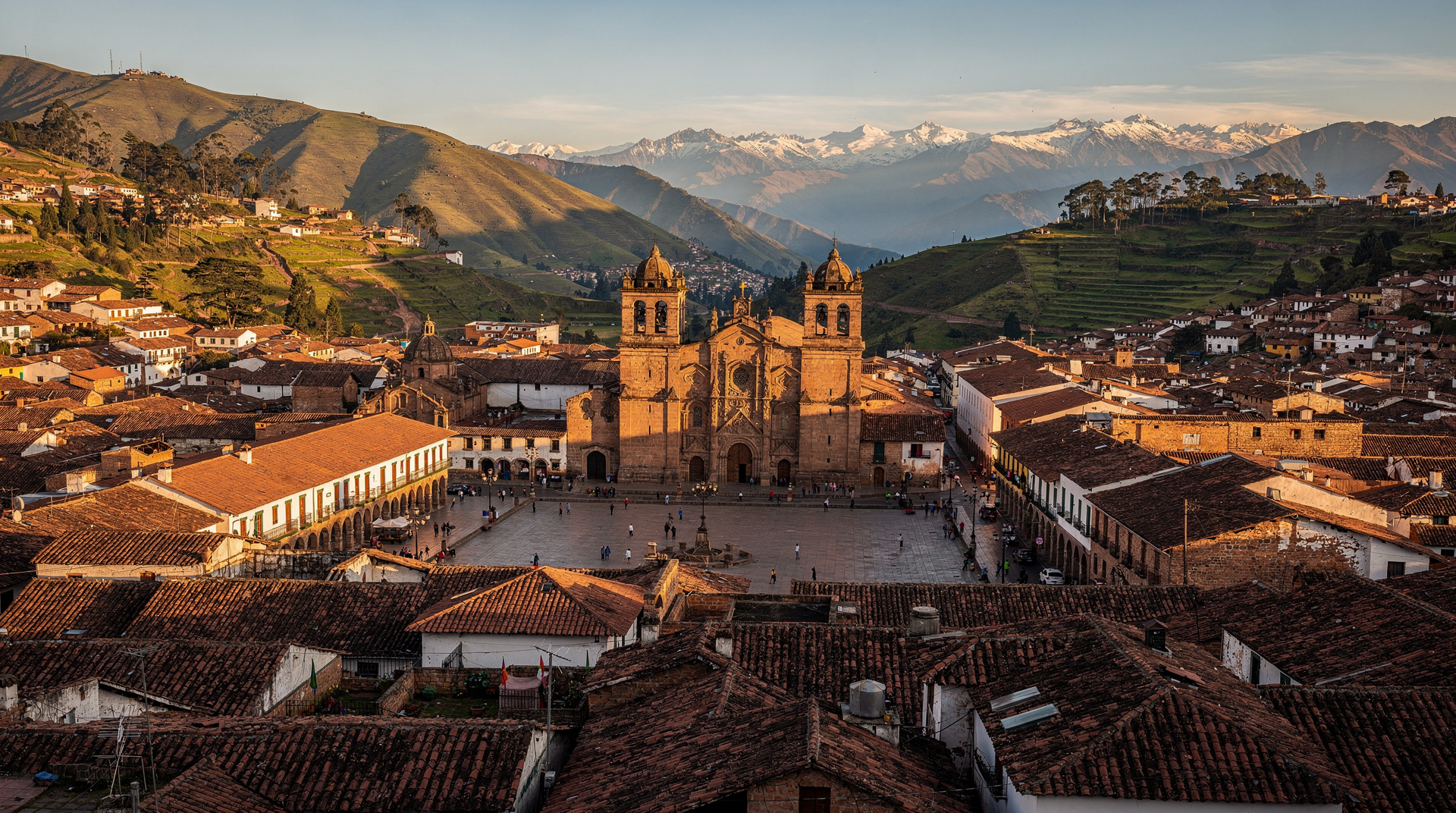
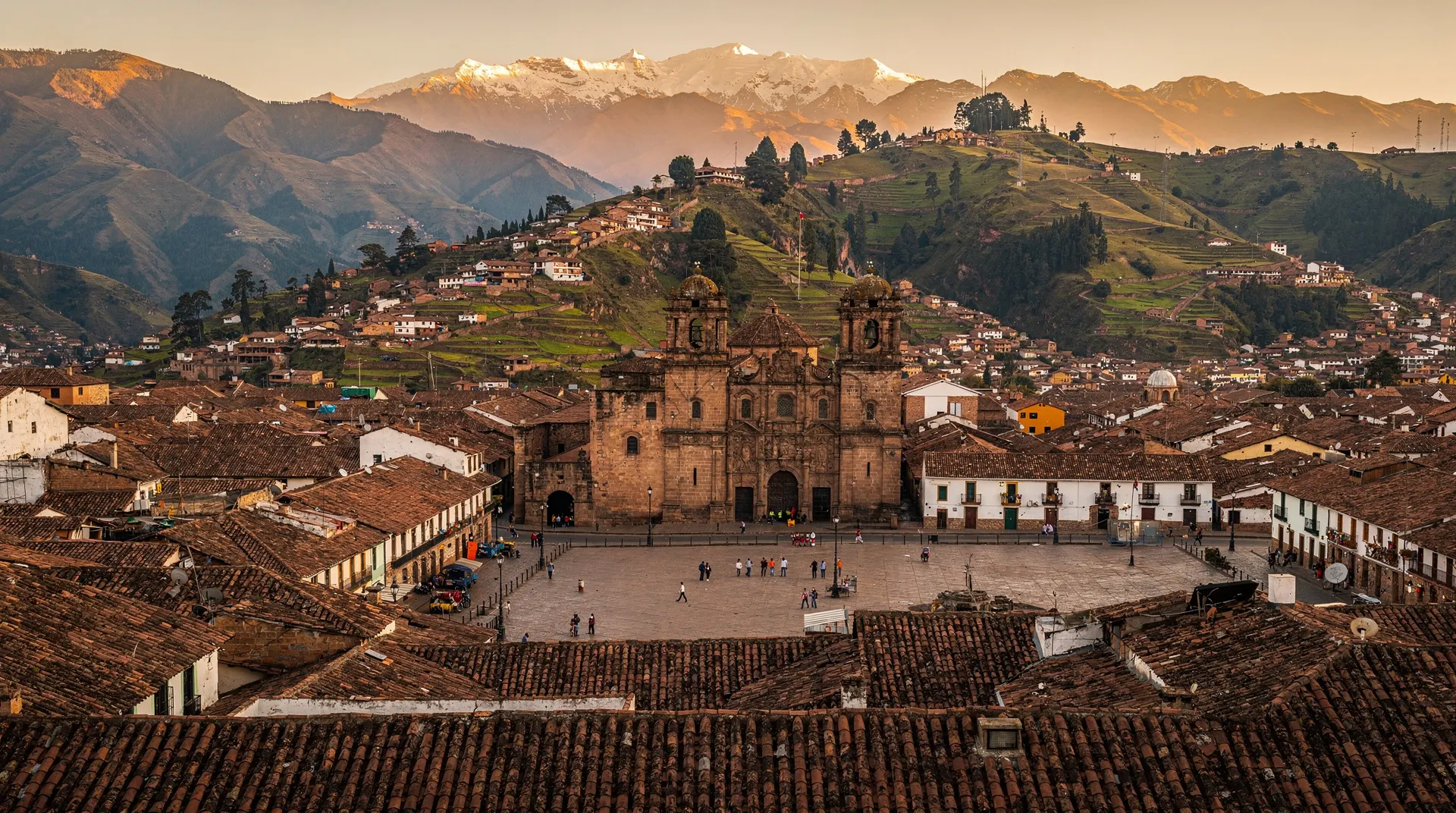
The Plaza de Armas is the centre of the city and it is spectacular — large, colonial arcades, two major churches, Inca stonework visible beneath Spanish facades, mountains in every gap between the rooftops. It is also ringed with tourist restaurants that charge double the price of identical food two streets away, sell pisco sours at S/28 that are smaller than the S/18 version from a San Blas bar, and have menus laminated in six languages with photographs.
I ate at one of these on my first night because I was tired, it was there, and I did not have the energy to find anything better. The meal was fine. The value was not. After that I used the Plaza as an orientation point and ate everywhere except directly on it.
The practical approach is this: walk two blocks towards San Blas from any corner of the Plaza and you are in a genuinely different price bracket. The neighbourhood restaurants that serve a lunch menu of two courses for S/12–18 are concentrated along the streets behind the cathedral and towards the market. These places have handwritten menus on whiteboards, no English translations, and the food is honest Peruvian cooking.
If you would rather choose with a little guidance, the best restaurants in Cusco is a good starting point, and the San Pedro market and its food guide show how locals eat when they are not feeding tourists. For the dishes themselves, the Peruvian food guide helps you order with some confidence.
The Boleto Turístico and what it covers
Most of Cusco’s major Inca sites — Sacsayhuaman, Qorikancha, the Sacred Valley archaeological parks — require the Boleto Turístico (tourist ticket), as there are no single-site tickets. It is a combined pass: the full version costs S/130 and covers sixteen sites over ten days from the day of purchase, while a partial version costs S/70 and covers one circuit.
Whether it is worth buying depends entirely on what you plan to visit. If you are spending multiple days in the Sacred Valley as well as the city sites, it almost certainly makes sense. If you are only in Cusco for two days before Machu Picchu, it almost certainly does not. The Boleto Turístico guide does the arithmetic clearly.
Machu Picchu is not included in the Boleto Turístico. It requires a separate ticket bought in advance through the official Peruvian government portal. I did not know this on my first visit and spent an anxious hour in a tour office being told that same-day tickets were impossible during high season. They were not wrong.
Learn from my anxious hour: the Machu Picchu tickets explained guide covers how the system works, and where to buy tickets in Cusco points you to sources you can trust. It is also worth reading about fake Machu Picchu tickets before you hand money to anyone, and the overview of Machu Picchu will help you decide what you want from the visit.
San Blas at a manageable pace
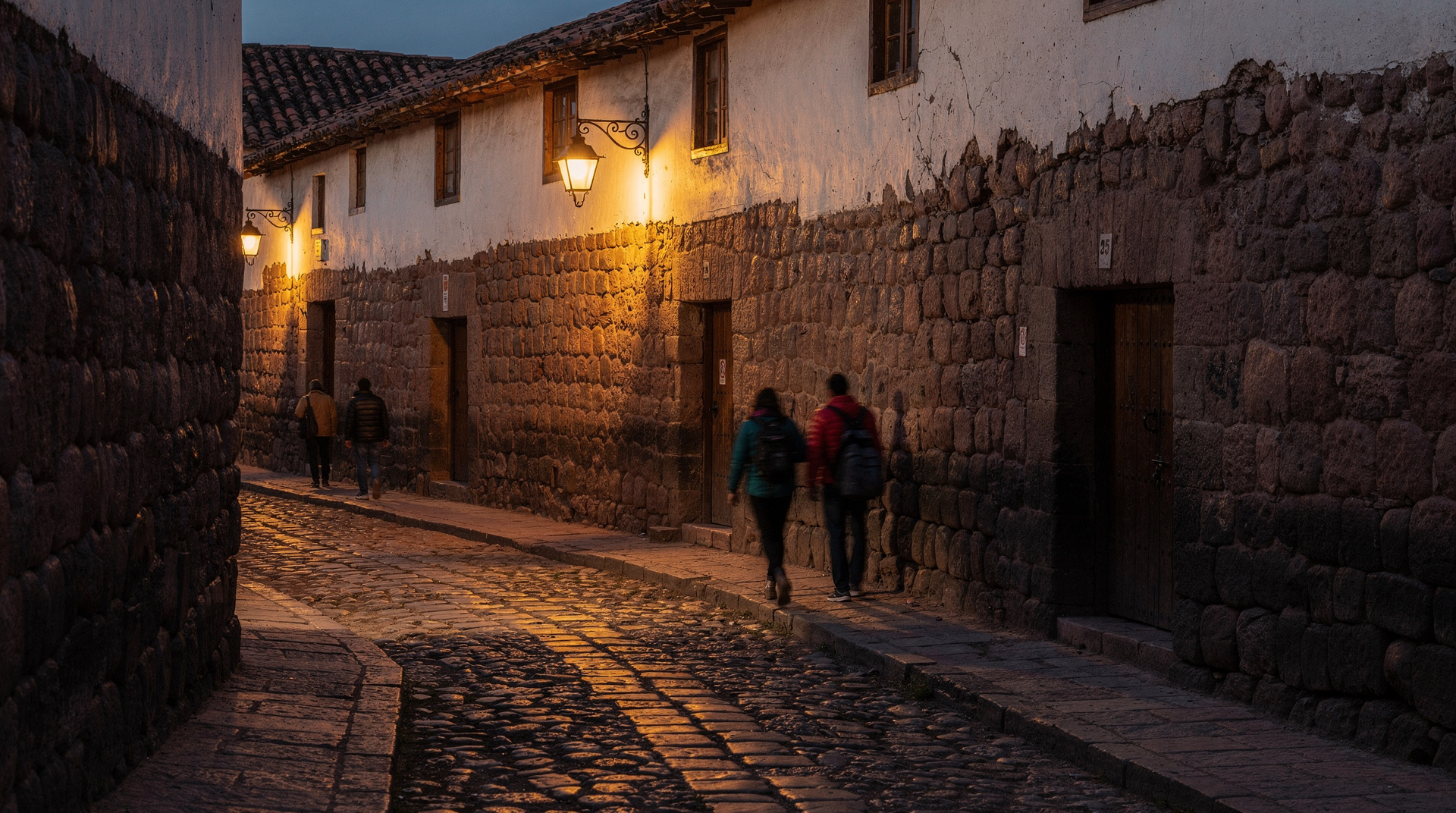
The neighbourhood of San Blas — uphill from the Plaza de Armas, its streets steep enough that the climb made me stop twice to breathe during the first two days — became my favourite part of the city by day three. Small squares, workshops where you can watch artists working in Andean weaving and ceramics, restaurants that do not feel as if they were designed by a committee that read “what tourists expect”, a church with a carved wooden pulpit that locals will correctly tell you is one of the finest pieces of colonial-era woodcarving in South America.
The altitude makes San Blas tiring to reach on foot from the centre during your first few days. I found that the uphill walk became easier each morning as my body adjusted — by day four I was walking up without stopping, which felt like a genuine achievement. On days one and two, taking a taxi up and walking down is a reasonable compromise.
A guided San Blas walking tour on day three, once I could breathe without stopping every block, was worth booking — a local guide pointed out workshops and details I would have walked straight past, and set a pace that matched what altitude-adjusted legs could actually manage.
Money, SIM cards and small practicalities
Soles (S/) are the only currency anyone wants — dollars are accepted at a handful of tourist-facing businesses but at a poor rate, so change money properly. ATMs in the historic centre generally charge lower fees than the ones inside the airport, and cards from a handful of international banks avoid the fee entirely — again, the taxi and money tips guide has the specifics. A local SIM card, bought at a kiosk near the Plaza rather than the airport, was cheap and solved the problem of maps and translation apps not working when I needed them most, which on my first day was constantly.
Small change matters more than I expected. Taxis, market stalls and the cheap set-menu restaurants behind the cathedral rarely have change for a S/100 note, so break large bills at a supermarket or your hotel early in the day.
What I’d pack differently next time
I under-packed for the temperature swing and over-packed for how far I actually walked. A warm layer for evenings, a light rain shell (even in dry season, afternoon showers happen more than the marketing suggests), sunscreen despite the cold air, and comfortable broken-in shoes for the cobbled streets around San Blas and the Plaza mattered more than anything technical. Altitude tablets or coca sweets are worth having on you rather than only at the hotel — the headache rarely announces itself with much warning. The what to pack for Cusco list is more thorough than my muddled version.
What I got right without knowing it
I booked accommodation in the historic centre rather than near the bus terminal, which meant the city was walkable from the start. I arrived two days before my Machu Picchu visit, which gave enough time to begin adjusting to altitude. I packed layers — the temperature in Cusco swings dramatically between midday sun and evening cold, sometimes by 15 degrees Celsius in the same day.
A half-day city tour on day two was useful because it covered Sacsayhuaman, Qorikancha and the key streets without me having to navigate the map while still headachy — a guide who knew the pace that altitude-adjusted walking requires made a practical difference.
The honest version of Cusco
Cusco has genuine tourist-industry problems: unlicensed tour operators selling tickets they cannot deliver, touts near the Plaza aggressive enough to be exhausting, restaurants that charge tourist prices for tourist-quality food while local spots a street away charge a third as much for better cooking.
The Cusco tourist traps guide goes through the usual ones, and unlicensed tour agencies in Cusco explains how to avoid the operators who sell what they cannot deliver. If a stranger offers medical advice or pills for the altitude, read about altitude medicine scams first.
None of this makes it a bad destination. It makes it a destination that rewards five minutes of research and a willingness to walk one block further than the obvious choice. The city beneath the tourist-facing surface is extraordinary — the historic centre with its layered colonial-Inca architecture is unlike any other city I have visited, and the surrounding mountains give every view a scale that is simply not available in most of the world.
Go. Arrive two days before you need to do anything strenuous. Drink water. Accept the coca tea. Walk to San Blas on day three when you can breathe properly. You will not regret any of it.