A morning at San Pedro market: what to eat, buy and not miss
Arrive before eight or you miss the real market
San Pedro market — Mercado San Pedro — is five minutes’ walk from the Plaza de Armas, directly across from the train station. From the outside it looks like a large covered market. Inside it is something considerably more complicated: a three-section building that contains a tourist souvenir market, a local textile and hardware market, and one of the best food markets I have found anywhere in South America.
| Where | Five minutes from Plaza de Armas, opposite the train station |
| Cost | 3–15 PEN for most food items |
| Time needed | 1.5–2 hours for a proper morning visit |
| Getting there | Walk from anywhere in central Cusco |
| Best time | 7–8 a.m., before the tour groups arrive |
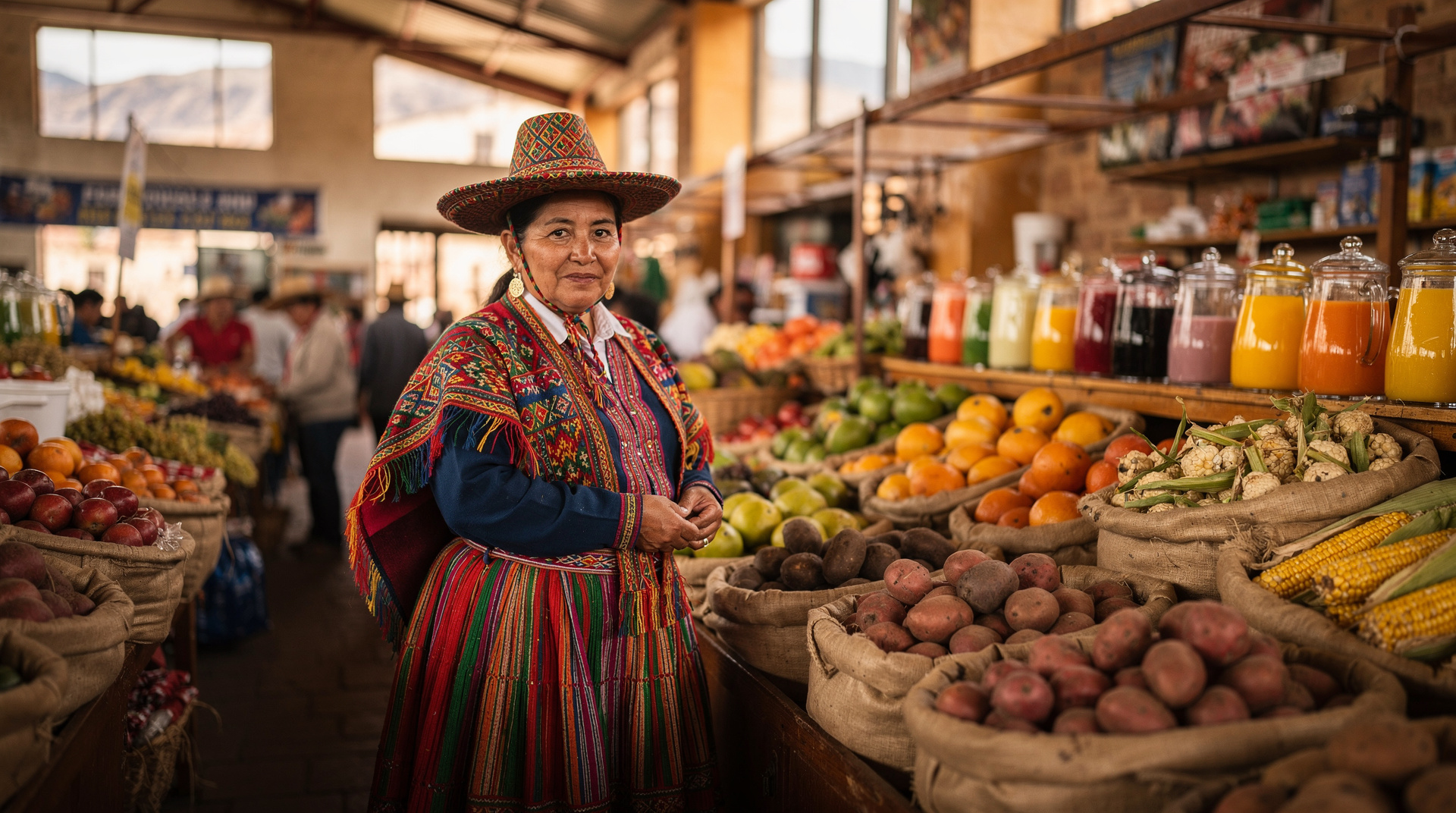
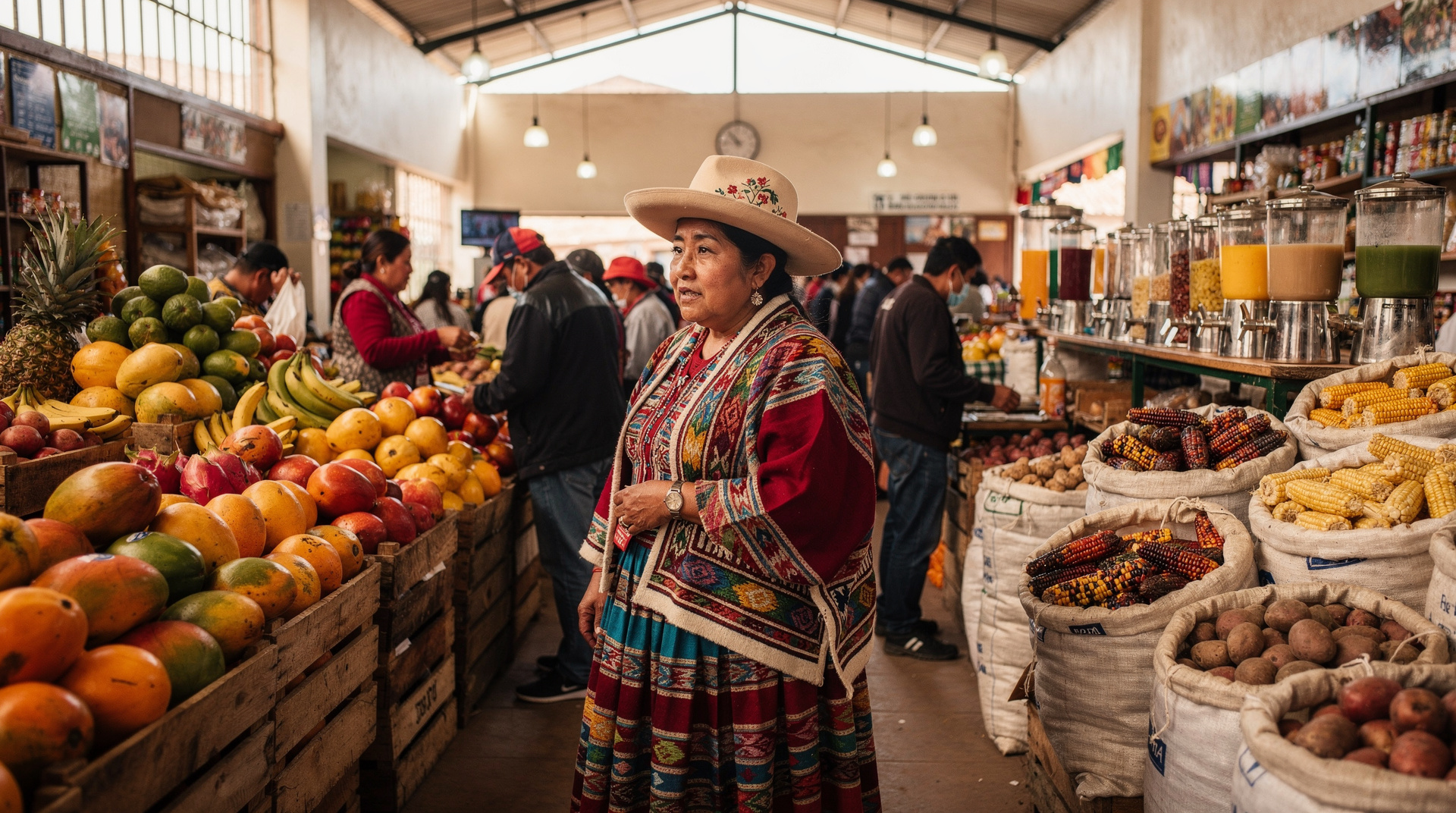
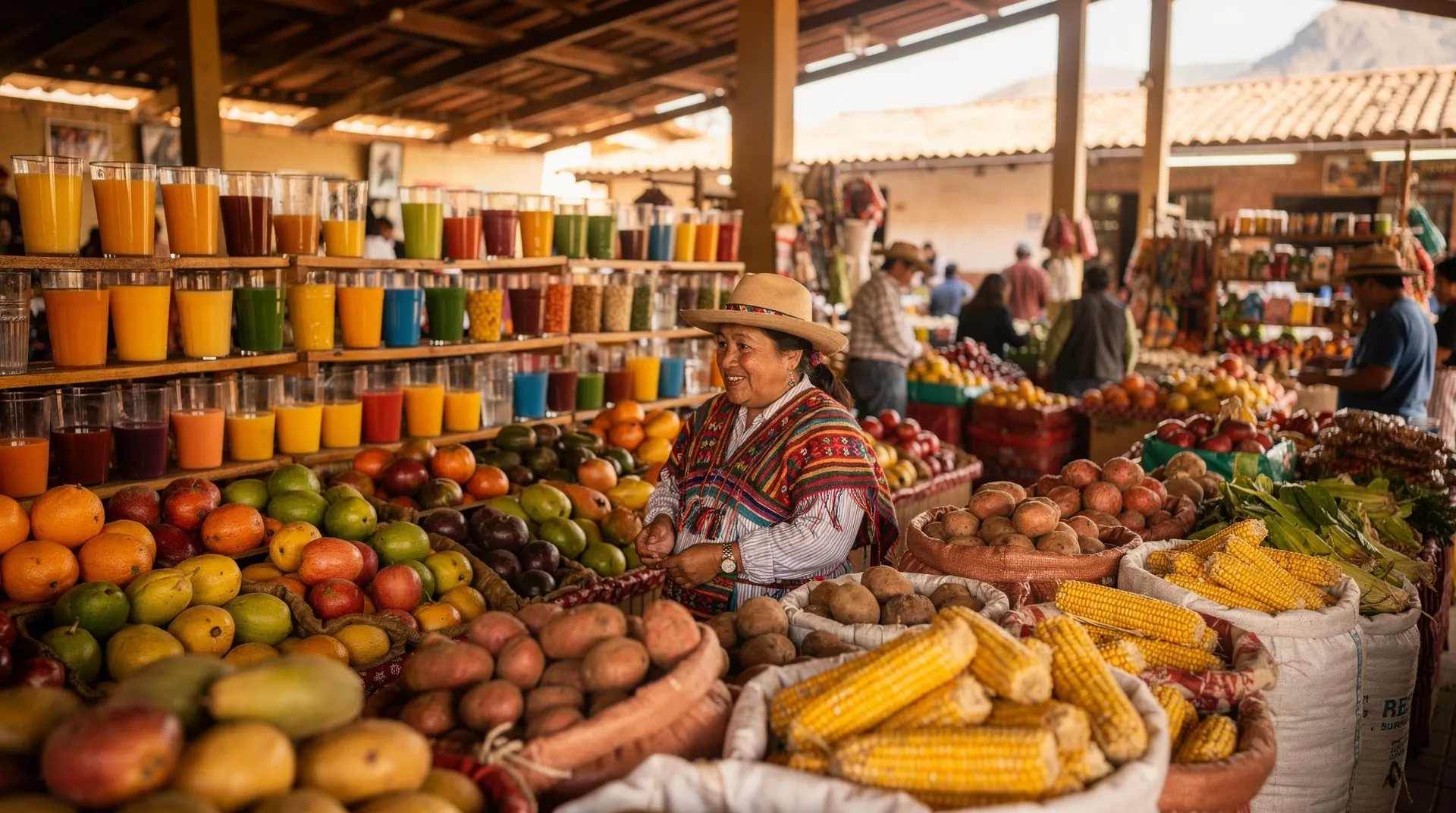
The key is timing. Arrive at seven in the morning, before the tour groups, and you find the food section in full operation: juice counters opening their shutters, soup vendors serving the people who have been working since four, bread baking, porridge vats steaming, stall holders unpacking crates of native potato varieties in colours that are not normal potato colours.
Arrive at ten, and you will still find good food, but the rhythm is different — calmer, more tourist-aware, slightly less vivid.
The juice corridor
My standard first move in San Pedro market is the juice counter in the central section. For 3–4 PEN you can get a glass of whatever the vendor has blended that morning: purple chicha morada (made from dried purple maize with spices), maracuyá (passion fruit) mixed with orange, or a lurid green concoction of spinach, aloe vera, pineapple and something the vendor calls “energizante” that I have never been able to identify precisely.
The vendors each have their regulars. If you stand at the counter for a few minutes you will see Cusco residents stopping for their morning juice on their way to work — construction workers, schoolteachers, market stall holders from other sections. This is not a tourist product. This is breakfast infrastructure.
Native potatoes and Andean staples
Peru has more than three thousand documented potato varieties, and the Andean highlands around Cusco contain the highest concentration of that diversity. In San Pedro market’s fresh produce section you can see a significant slice of it: long purple-black papa huayro, small yellow papa amarilla that has a floury intensity quite unlike European varieties, red papa puka, and various freeze-dried forms (chuño, moraya) that the Inca invented as a preservation method and which are still used in the same way.
I usually spend twenty minutes in the produce section just looking. The chillies are equally varied: rocoto (round, dangerously hot), ají amarillo (the backbone of Peruvian cooking, smoky and fruity), ají panca (dried, with a deeper flavour used for slow-cooked dishes). There is something about seeing the raw materials that makes the food you will eat later taste more intelligible.
Breakfast: chicharrón de chancho
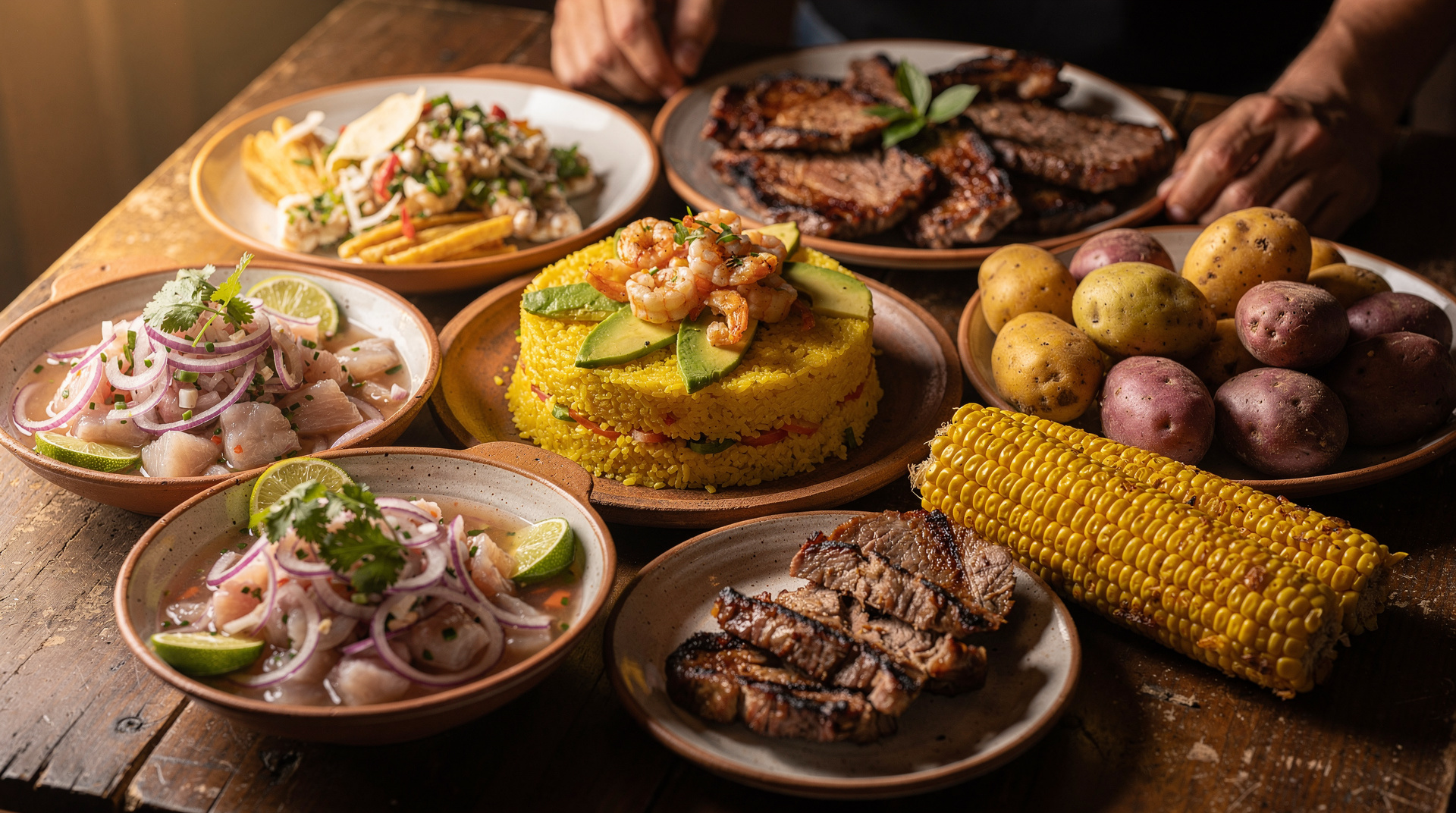
On my most recent visit I had breakfast at a counter in the far left section — one of perhaps a dozen women serving full Andean breakfasts from stations with gas rings and enormous stock pots. The meal was chicharrón de chancho: slow-fried pork, slightly crisped on the outside, served with mote (large hominy corn), salsa criolla (sliced red onion in lime juice), and cancha (toasted maize kernels). It cost 12 PEN.
This is not a delicate meal. It is the kind of breakfast that sustains someone doing physical labour from dawn to noon. At altitude, where your body works harder than usual for everything, it is also exactly what you want.
If pork for breakfast is a step too far, the alternative is api morado con buñuelos: a warm purple maize porridge, thick and lightly spiced with cinnamon, served alongside a fried dough fritter. It costs around 5 PEN and is one of the better sweet breakfasts I have had anywhere.
What the tourist section is actually like
I should be honest about the tourist section of San Pedro market, because it occupies the right-hand section of the building and is what many visitors spend most of their time in.
It sells the things you would expect: alpaca scarves in every colour, carved wooden masks, silver jewellery, textiles with Andean geometric patterns, replica Inca vessels. The quality varies enormously — some items are genuinely handmade in traditional techniques and fairly priced, others are factory products from Lima. The prices are higher than anywhere else in the city but still lower than most tourist markets in South America.
My approach: walk through it once without buying anything, so you understand the price range. Then, if something catches your eye, negotiate from the higher end down. The vendors expect and prefer negotiation. Offering 70–75 percent of the asking price is reasonable; going below that is not.
Fitting the market into a Cusco day
San Pedro works best as the first stop of a day in the historic centre. Eat early, then walk toward the historic center of Cusco and on to San Blas while the morning light is still soft. If you are building a short stay around meals like this, the 3-day Cusco itinerary leaves room for a slow market breakfast without rushing the sights.
A note on arrival: on your first day in town, go gently. Rich fried food and several juices are a lot for a body still adjusting to the height, so the Cusco acclimatization plan is worth reading before you order a second breakfast. Warm soup and a cup of coca tea suit the first morning better than anything heavy.
A morning with a cooking class
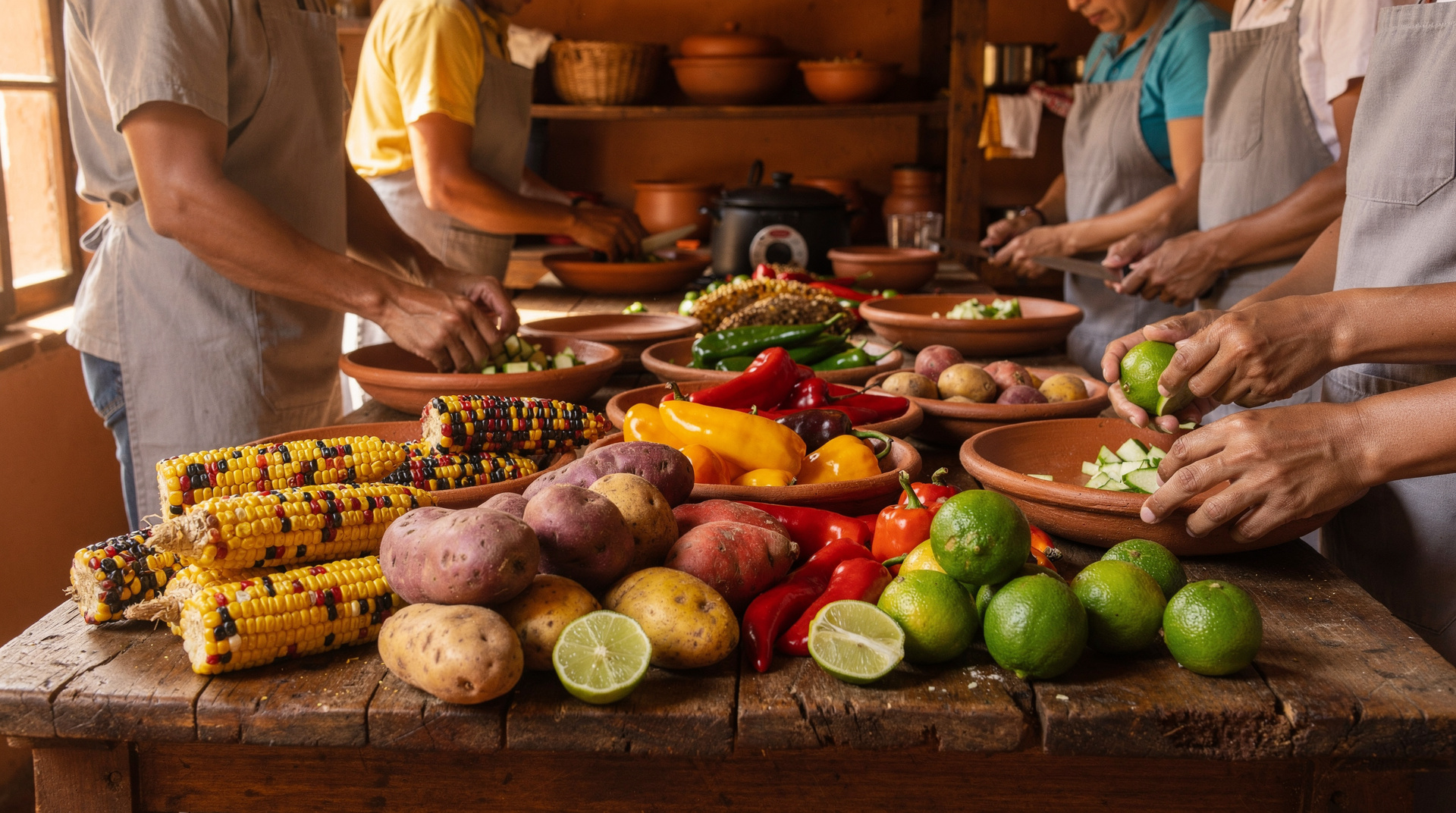
The logical extension of a San Pedro morning is a cooking class that begins in the market itself: selecting ingredients with a guide who can explain what you are looking at, then moving to a kitchen to cook. I have done this twice and both times it was the meal I most clearly remember from the entire trip.
The format typically starts at the chicha morada stall, moves through the chilli display, selects a couple of vegetables you have never cooked before, and arrives at the kitchen with a clear pedagogical purpose. You learn what ají amarillo actually tastes like raw (mild initially, building to heat), why certain potatoes are selected for certain dishes, and how lomo saltado — often dismissed as a simple stir-fry — is actually built in flavour layers that each add something specific.
A market and cooking class is, in my experience, the best two hours you can spend in Cusco if food interests you at all. The cusco-cooking-classes-compared guide lists what to look for when choosing.
The bit nobody mentions: the bread section
At the back of the food section, past the soup counters and the juice bar, there is a bread stall that I found by following my nose. The vendor — a woman who had been there every time I visited over three separate trips — bakes traditional Andean bread from a clay oven at the back of her stall: large round loaves with a slightly sour crumb and a hard crust, smaller sweet rolls flavoured with anise, and a flat bread I could not identify that she sold by the pair for 2 PEN.
I bought six rolls and a jar of honey from a neighbouring stall and sat on the steps outside the market eating breakfast in the morning sun. It cost me about 8 PEN all in and remains one of my clearest food memories from Peru.
The San Pedro market food guide covers every section in detail if you want to plan your visit in advance. But honestly, the best approach is to arrive, walk in, follow what smells good, and let the market do the rest.
What to eat and roughly what it costs
| Item | What it is | Typical price |
|---|---|---|
| Fresh juice | Chicha morada, maracuyá, or a vendor’s own blend | 3–4 PEN |
| Chicharrón de chancho | Slow-fried pork with mote, salsa criolla, cancha | ~12 PEN |
| Api morado con buñuelos | Warm purple maize porridge + fried dough | ~5 PEN |
| Bread rolls (anise or plain) | From the clay-oven bread stall at the back | 2 PEN a pair |
| Market cooking class | Guided ingredient tour + hands-on kitchen session | Varies by operator |
Where the market fits in a wider food trip
The market is the easiest way to understand what shows up on restaurant menus later. After a morning of looking at native potatoes and chillies, the dishes in the best restaurants in Cusco read differently, and the story of cuy and Andean food makes more sense. If you are curious how I got on with that particular dish, I wrote it up in eating cuy in Cusco.
For the drinks side of things, the pisco sour guide is a good evening follow-up to a day that began with chicha morada. And if the market makes you want to see where these crops are grown, the terraces and villages of the Sacred Valley are the natural next day out, with Pisac offering its own market.
Money matters too: the Cusco taxi and money tips page explains how to get small change before you walk into a food hall, and the Cusco on a budget guide shows how much a market breakfast helps a tight daily spend.
Pairing the market with the rest of your day
If you would rather have someone explain the stalls as you go, a guided visit to the market followed by a hands-on cooking session folds the shopping and the cooking into one outing. Once you are fed, a walking tour through the centre and San Blas is an easy way to use the rest of the morning without planning routes yourself.
The market also sits well inside bigger plans. Travellers building a first visit can read why visit Cusco and first time in Cusco for the wider picture, then check how many days in Cusco to decide how many mornings to spend here. My week in Cusco trip report shows where a market breakfast landed in a longer stay, and the Cusco trip planning guide for 2026 helps you slot it around bookings.
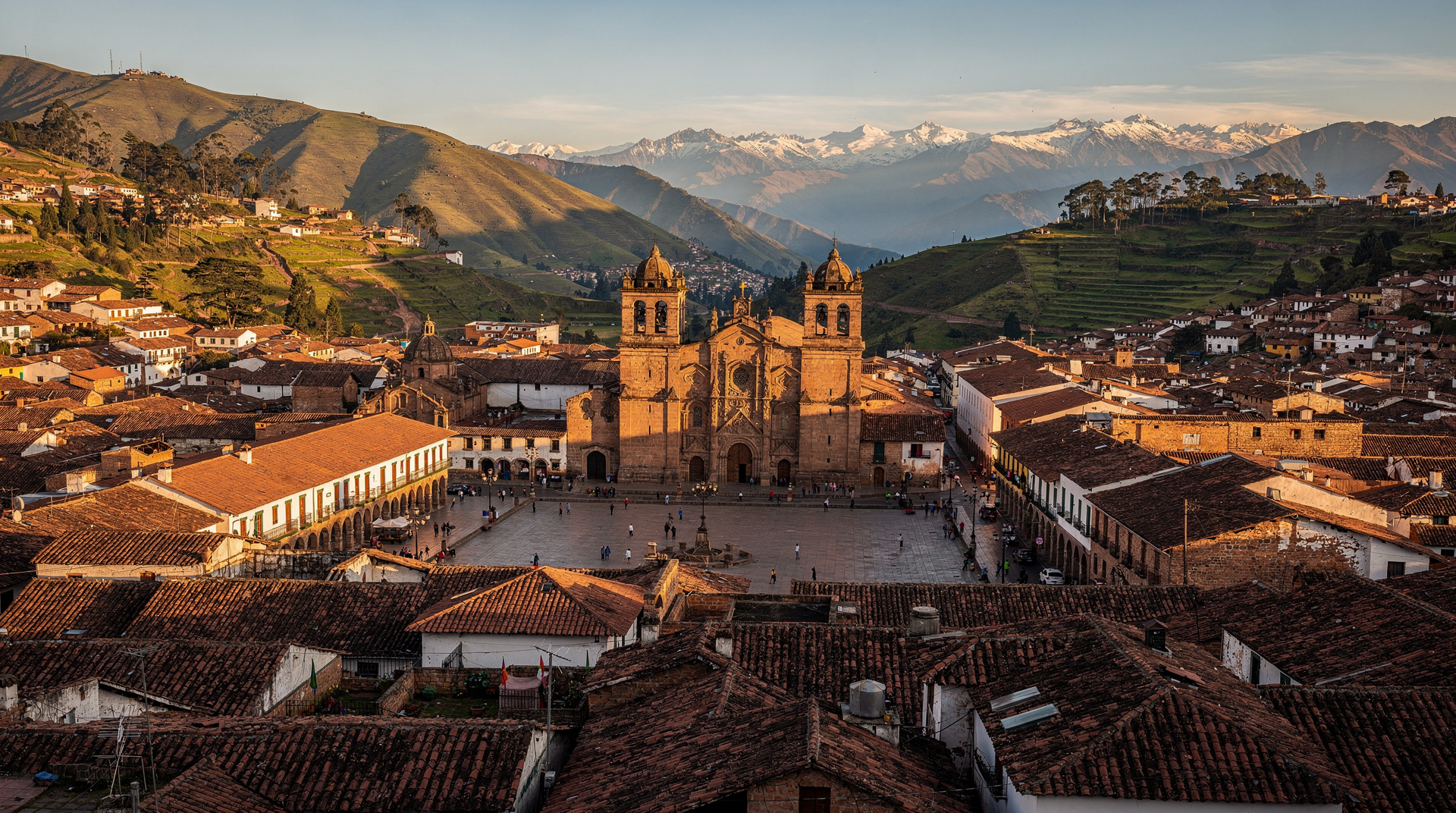
For context on the city around the market, the Cusco destination page and the San Pedro market page cover the neighbourhood, while the Qorikancha temple of the sun and Sacsayhuamán guide are natural afternoon follow-ups once you have eaten. Rest days between big excursions are also a good time for this kind of slow morning, whether before a Sacred Valley day trip or after a trek.
Etiquette and practical tips for first-timers
A few things I’ve learned across repeat visits: greet stallholders with a simple “buenos días” before pointing at what you want — it’s a small courtesy that’s noticed and appreciated. Carry small denomination soles; the food stalls rarely have change for large bills. Bring your own reusable bag if you’re buying produce or bread rolls to take away, since plastic bags aren’t always offered. And pace yourself — it’s easy to fill up on juice and one dish before you’ve reached the bread section at the back, so consider sharing portions if you’re travelling with others.
If you want to go deeper into Peruvian food beyond the market itself, the Peruvian food guide covers the wider dishes worth seeking out in Cusco’s restaurants, and ceviche and Peruvian dishes is useful if you’re heading to Lima afterwards, where the coastal cousin of Andean cooking takes over.
Safety and breakfast budget at the market
Is San Pedro market safe for tourists? Yes, generally — it’s a genuinely local, well-used market rather than a high-risk area. Standard precautions apply: keep bags zipped and in front of you, and be aware of your surroundings in the busier aisles, as you would in any crowded market.
Can I do a full breakfast at San Pedro market for under 20 PEN? Easily. A juice (3–4 PEN), a main like chicharrón de chancho or api morado con buñuelos (5–12 PEN), and bread from the back stall (2 PEN) comes to well under 20 PEN for a substantial, memorable breakfast.