Ceviche and Peru's essential dishes: a traveller's guide
Cusco: 3-Hour Peruvian Cooking Class
What are Peru's essential dishes to try?
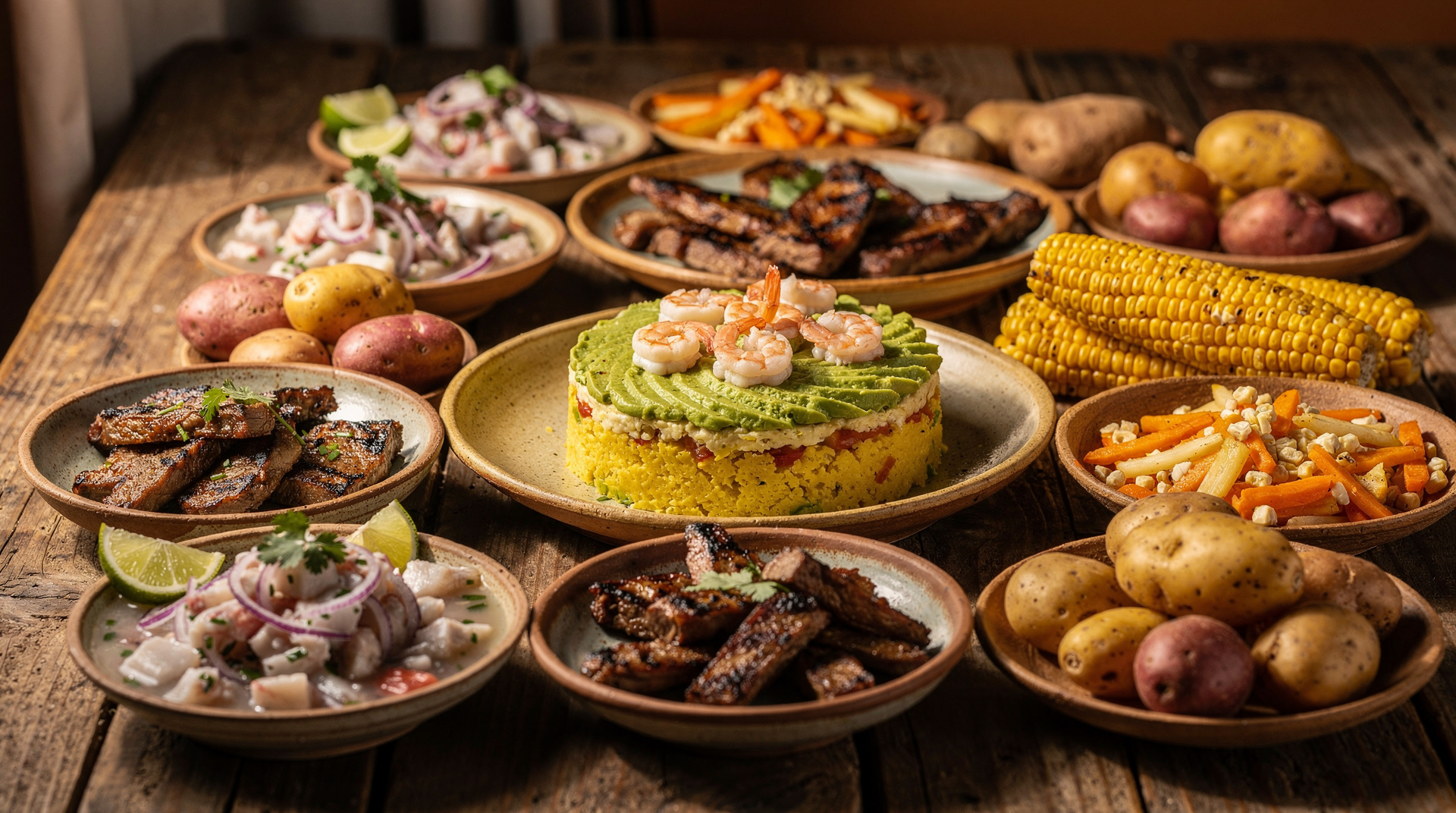
The five dishes every visitor should eat in Peru are ceviche, lomo saltado, ají de gallina, cuy (guinea pig) and causa limeña. Ceviche is the national dish but belongs to the coast; Cusco's strongest dishes are the Andean ones — lomo saltado, ají de gallina, and alpaca steak. Both the coastal and the highland traditions are excellent and worth understanding as distinct cuisines.
Why Peruvian food is genuinely exceptional
Peru produces the most complex and interesting cuisine in South America. That is not a promotional statement — it is the consensus among food critics, restaurant reviewers and gastronomy professionals who have evaluated it seriously. Lima has been home to multiple top-fifty world restaurant listings (Central, Maido, Astrid y Gastón, others). Peruvian food has influenced menus in Europe, North America and Asia for the past twenty years.
The reasons are specific. Peru’s geography — Pacific coast, Andean highlands, Amazon basin — generates a larder that no other country can replicate: fresh ocean fish alongside Andean tubers, tropical fruits from the rainforest edge, highland grains unavailable anywhere else. Peru’s immigration history added further layers: Chinese settlers in the 19th century created chifa cooking (best represented by lomo saltado); Japanese immigrants in the late 19th and 20th centuries created Nikkei cuisine (the best ceviche in Lima is at a Nikkei restaurant). The result is one of the world’s few genuinely fusion cuisines that earned its reputation rather than claimed it.
This guide explains Peru’s essential dishes in enough detail to eat them intelligently.
| Where | Cusco restaurants, San Pedro Market stalls, cooking classes |
| Cost | Around S/5–8 street food; S/28–55 restaurant mains |
| Signature Cusco dish | Lomo saltado, ají de gallina, trout ceviche |
| Spice level | Mostly mild-medium; ask for sin picante if unsure |
| Best way to learn | A hands-on cooking class before restaurant-hopping |
Ceviche
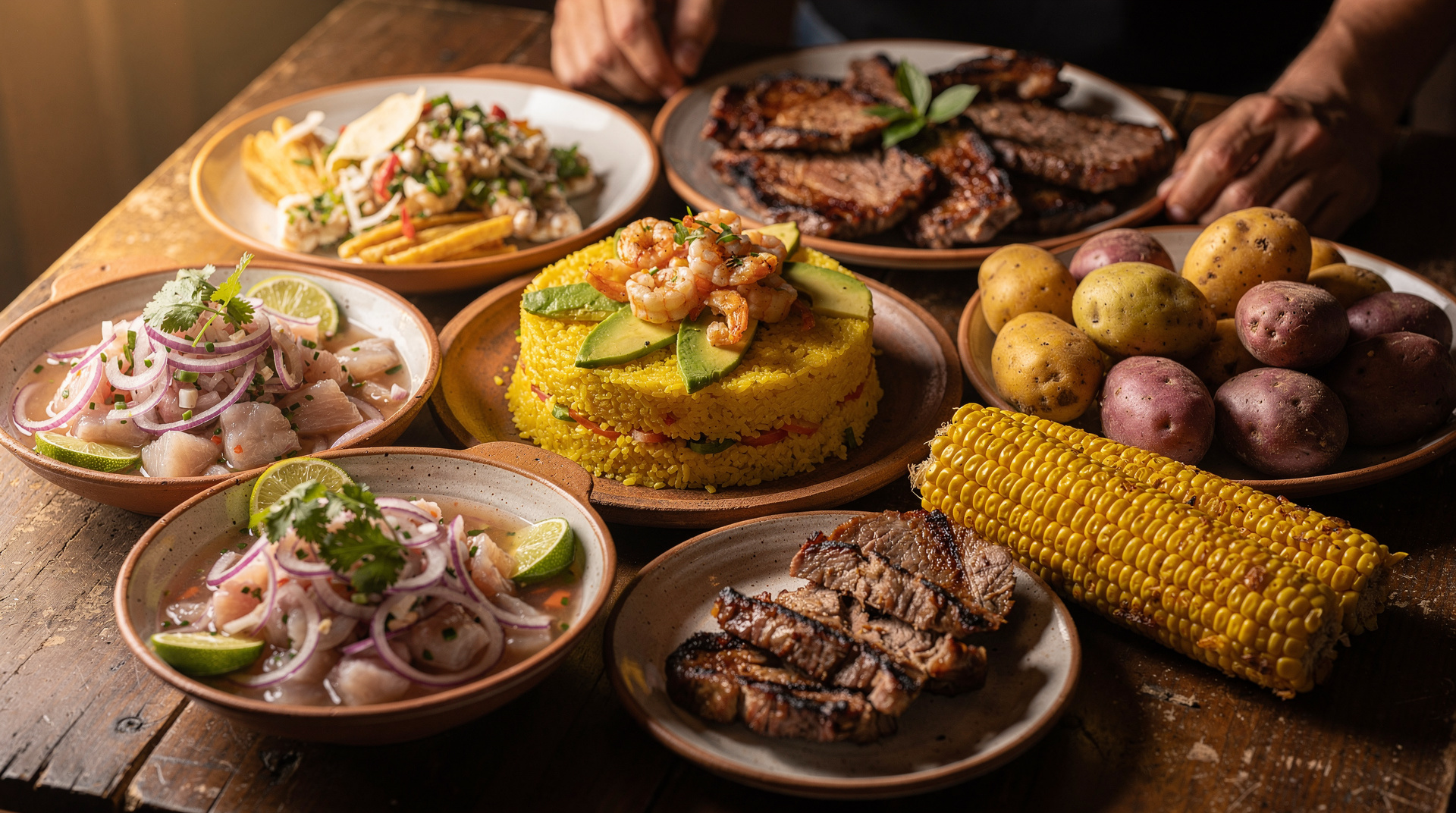
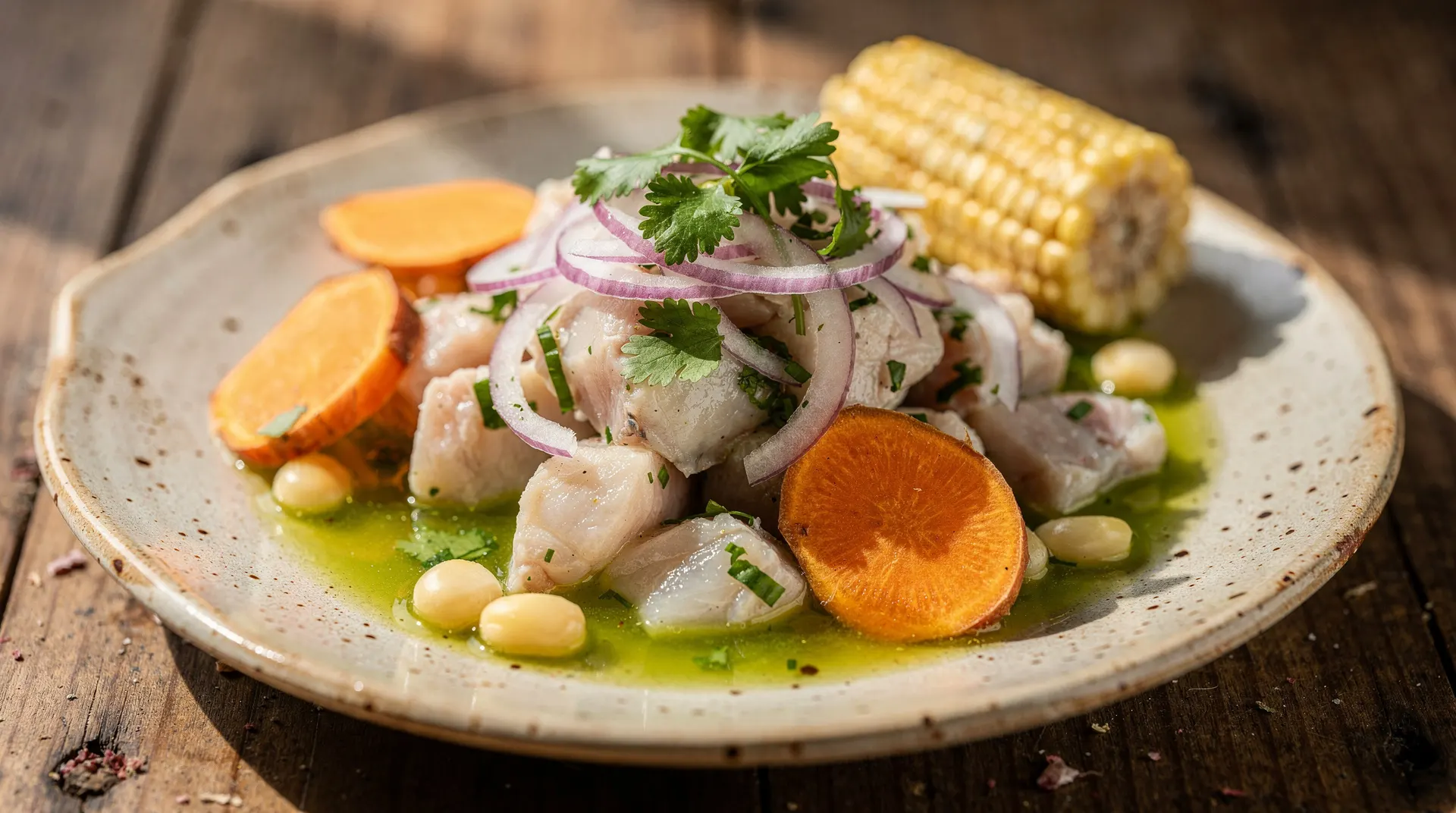
Peru’s national dish and the one most internationally recognised. Raw fish — traditionally sea bass (corvina) or sole on the coast — is cut into cubes and “cooked” by the acidity of freshly squeezed lime juice, a process called leche de tigre (tiger’s milk) when the marinade is served separately as a drink or sauce. The modern Lima style, popularised by chefs like Gastón Acurio and refined by Nikkei practitioners, uses a short marinade of five to fifteen minutes, preserving the fish’s texture while acidifying the exterior. The classic accompaniments are sweet potato (camote), choclo (large Andean corn kernels), cancha (toasted corn) and thinly sliced red onion.
In Cusco, ceviche shifts from ocean fish to river trout (trucha) from the Urubamba. Trout ceviche is milder and softer in texture than the coastal version; the flavour is cleaner rather than briny. It is very good, particularly at restaurants that source fresh rather than previously frozen fish.
Making ceviche properly requires fresh fish, correctly acidic limes (Peruvian limes are smaller and more acidic than the limes available in most other countries — outside Peru, making the dish at home produces a different result), and correct timing. A three-hour cooking class that includes ceviche preparation demonstrates the technique in a way that reading about it cannot replicate: the right cut, the correct marinade time, the seasoning sequence.
What makes ceviche bad: fish that is not fresh; over-marinating (rubbery, dull grey texture); insufficient lime acidity; sweet versions designed for international palates. Avoid the tourist-menu ceviche near the Plaza de Armas, which is usually made with previously frozen fish and excessive sweetness.
Lomo saltado
Cusco’s most reliable main course and the dish that best explains Peru’s hybrid culinary identity. Lomo saltado is a stir-fry: strips of tender beef (solomillo or lomo), cherry tomatoes, red onion, ají amarillo strips and soy sauce, cooked at very high heat in a carbon-steel wok until the vegetables char at the edges and the sauce reduces to a slightly syrupy glaze. It is served with fried potato strips (chips/fries) and white rice on the same plate, which sounds strange and works completely.
The Chinese chifa influence is direct: the wok technique, the soy sauce and the stir-fry method arrived with 19th-century Chinese labourers who cooked their own traditional technique with local ingredients. The wok hei (breath of the wok — the smoky, charred flavour from extremely high heat) is what distinguishes a properly made lomo saltado from a mediocre one. Home gas hobs rarely reach the required temperature, which is why the restaurant version is usually better than the home attempt.
A correctly made lomo saltado balances: char from the wok, acidity from the tomatoes and a splash of red wine vinegar, umami from the soy, heat from the ají amarillo, and the richness of the beef. The chips absorb the sauce from underneath and become something considerably better than a chip has any right to be. Price in Cusco: S/28–55.
The best restaurants in Cusco lists the specific places that get lomo saltado right.
Ají de gallina
A dish of colonial mestizo origin — the sauce’s rich, creamy character reflects European influence (bread, evaporated milk, Parmesan), while the chilli base, potato and shredded chicken are characteristically Andean. The resulting combination is something that belongs entirely to Peru.
The sauce is made by frying minced onion and garlic with ají amarillo paste until the chilli is fully cooked and its raw edge is gone, then adding bread soaked in evaporated milk, ground walnuts, chicken stock and Parmesan. The shredded chicken (poached, pulled) is folded in and the whole assembly served over white rice with boiled potato, black olives and a sliced boiled egg.
The flavour is hard to predict from the description: warm, creamy, slightly nutty, with the fruity-sweet heat of ají amarillo (which is hotter than a jalapeño but cooler than a Thai bird’s eye, with a tropical fruit quality underneath the heat). It is one of the dishes most associated with Peruvian home cooking, which means the best versions are at mid-range local restaurants rather than tourist spots.
Causa limeña
A cold starter: mashed yellow potato (papa amarilla, a Peruvian native variety with rich, dense flesh) seasoned with lime juice, ají amarillo paste and vegetable oil, layered in a terrine mould over a filling of tuna, avocado or chicken mixed with mayonnaise, and unmoulded for service. The colours — bright yellow potato, avocado green, white filling — and the temperature contrast (the potato is served cool, the filling cold) make it one of the most elegant Peruvian starters.
Causa is common on tourist-restaurant menus in Cusco and is one of the dishes that translates well — it is not culturally challenging in the way that cuy is (see the cuy and Andean food guide or the first-hand account of eating cuy in Cusco), and its flavours are accessible without being generic.
Anticuchos
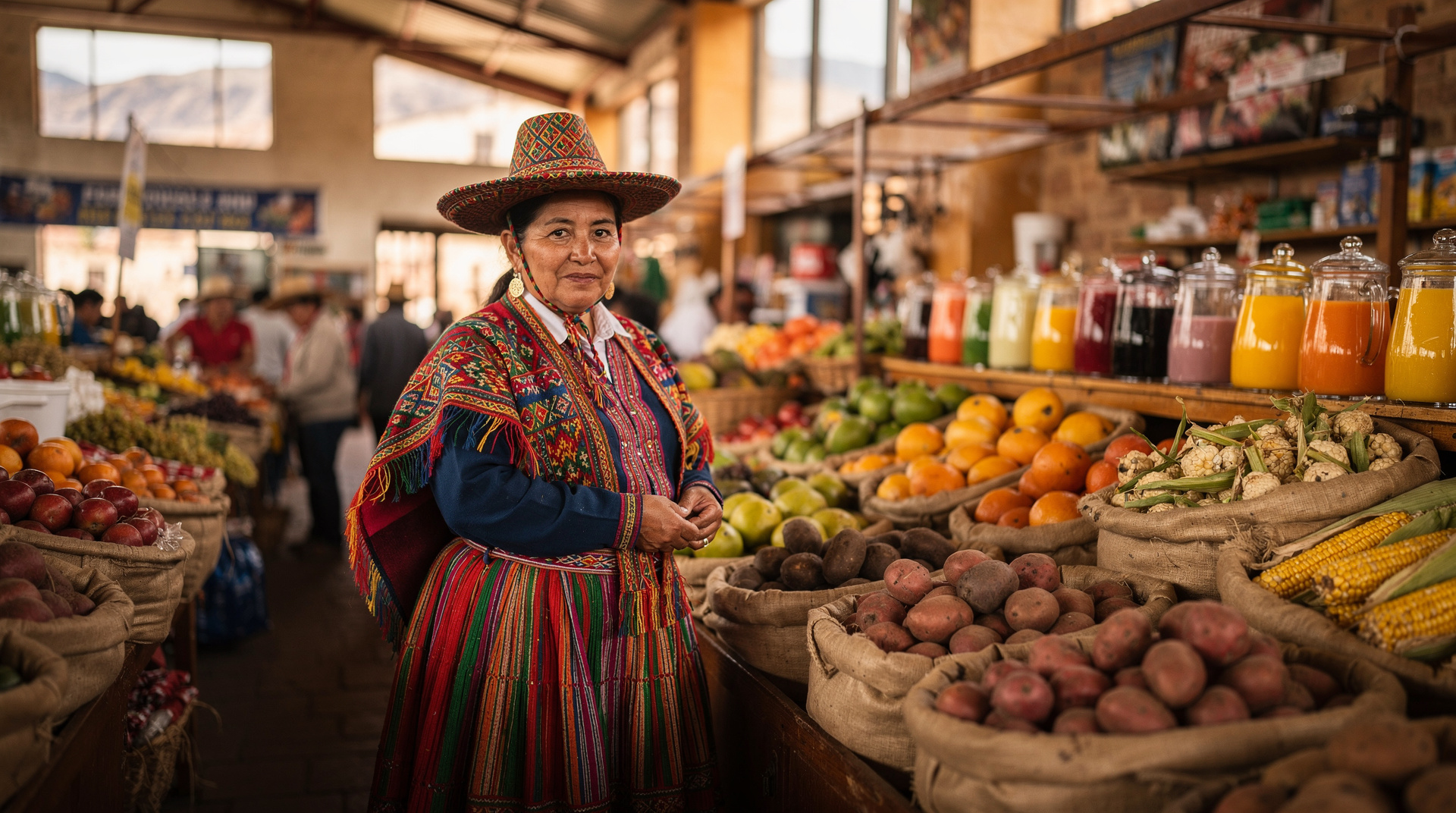
Skewered and grilled beef heart, marinated in ají panca (a mild, smoky red chilli paste), cumin and vinegar. Anticuchos are street food and market food — you smell the charcoal grill and the marinade caramelising before you see the stall. In San Pedro market several stalls operate charcoal grills specifically for anticuchos, serving them with potato and a small cup of dipping sauce for S/5–8.
Beef heart is lean, fine-textured and flavourful when properly marinated and cooked. Its reputation as “offal” is misleading — it is muscle, not organ meat in the standard sense, and the flavour is more concentrated beef rather than the liver-and-kidney range that “offal” implies. Most visitors who try anticuchos at a market stall find them considerably less challenging than anticipated.
Rocoto relleno
A large red Andean chilli stuffed with spiced minced beef, raisins, olives, egg and cheese, baked until the pepper is tender and the filling is set. The rocoto is genuinely hot — hotter than ají amarillo, closer to a habanero in heat level but different in flavour (more tomato-adjacent, less tropical fruit). The filling is sweet and savoury in the way of traditional Peruvian stuffed vegetables; the pepper provides heat and structure.
More common in Arequipa than in Cusco, but present on traditional menus throughout the region. Worth trying for the quality of the rocoto itself, which is rarely encountered outside the Andes.
Quinoa and Andean grains
Quinoa (Chenopodium quinoa) originates from the Andes and has been cultivated near Cusco for at least 5,000 years. In Cusco it is an everyday ingredient — not a health food trend but a staple grain — appearing in soups, stews and side dishes. Quinoa soup (sopa de quinoa) is the correct way to eat it: a thick, slightly starchy broth with vegetables, potato and the nutty grain, filling and warming at altitude. Cost at the market: S/4–8.
Kiwicha (amaranth, Amaranthus caudatus) and cañihua (Chenopodium pallidicaule) appear less commonly but are worth seeking at the market’s grain stalls. Both are native and both pre-date the Inca.
Sweets and desserts worth trying
Peru’s dessert tradition is less internationally known than its savoury dishes but rewards attention. Suspiro a la limeña, a caramel-based meringue-topped custard, is the closest thing to a national dessert and appears on most tourist-restaurant menus. Picarones, deep-fried rings of squash and sweet potato dough drizzled with a spiced syrup made from chancaca (unrefined cane sugar), are sold as street food and are a close relative of a doughnut but distinctly Andean in flavour.
Mazamorra morada, a thick purple-corn pudding related to chicha morada in its base ingredients, is common at markets and traditional restaurants alike. None of these require a special search — most mid-range restaurants in Cusco carry at least one, and San Pedro Market has stalls selling picarones fresh in the morning.
Essential dishes compared
| Dish | Origin | Typical price (Cusco) | Spice level |
|---|---|---|---|
| Ceviche (trout) | Coastal, Cusco version uses river trout | S/25–40 | Mild, acidic not spicy |
| Lomo saltado | Chifa (Chinese-Peruvian) | S/28–55 | Mild, ají amarillo warmth |
| Ají de gallina | Colonial mestizo | S/22–35 | Mild-medium |
| Causa limeña | Coastal, common on tourist menus | S/15–28 | Mild |
| Anticuchos | Street/market food | S/5–8 per skewer | Mild-medium (ají panca) |
| Rocoto relleno | Andean (more common in Arequipa) | S/25–35 | Hot |
Peruvian dishes on a cooking class
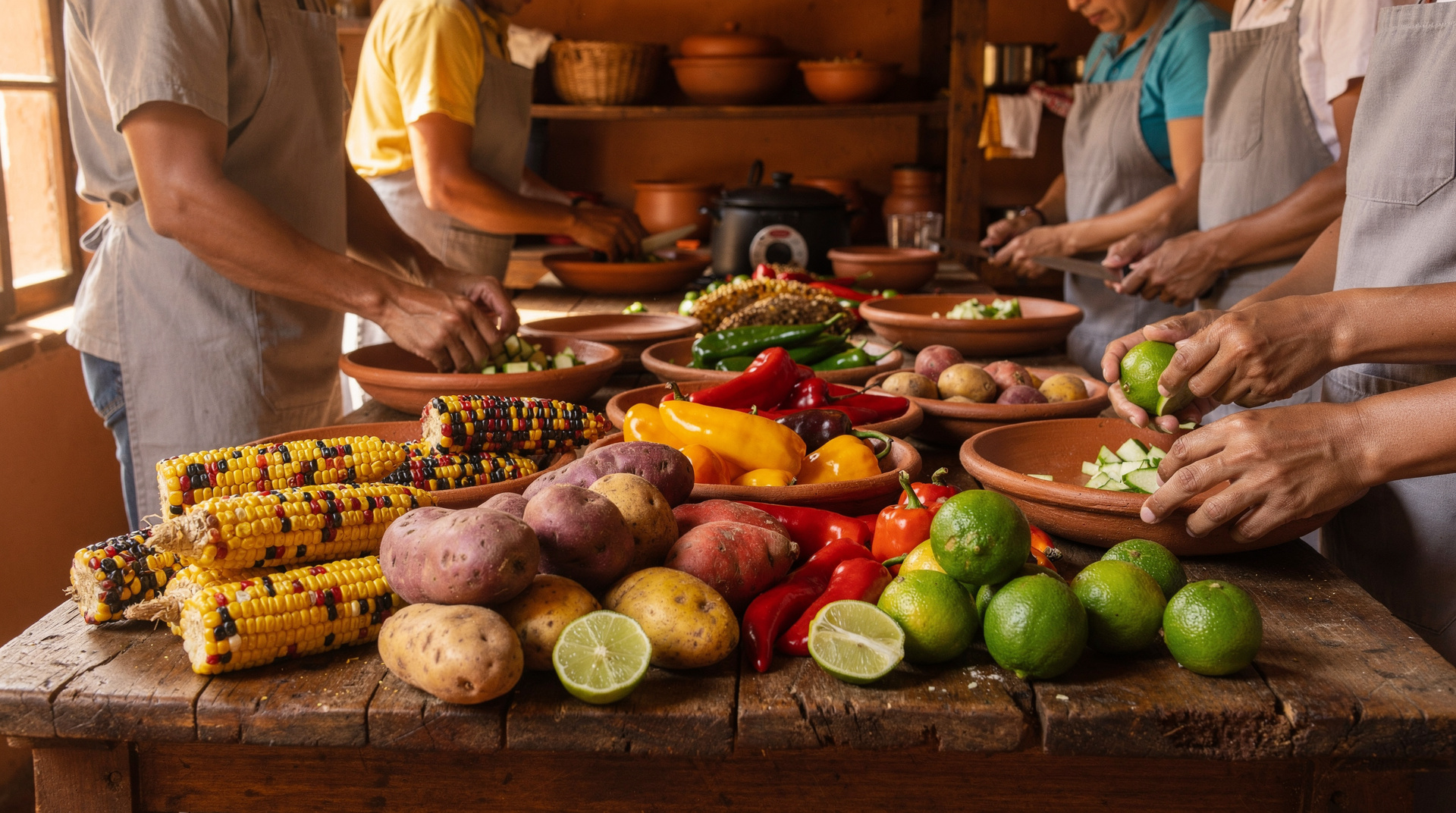
A cooking class in Cusco will teach you lomo saltado and ají de gallina as a minimum, with most also covering ceviche, causa and a pisco sour. The value of making these dishes under instruction before eating them at restaurants is not trivial: you will know what correctly made tastes like, which makes you a more critical and better-rewarded restaurant visitor.
A three-hour cooking class in the kitchen-only format covers the core dishes efficiently. The cooking classes comparison guide explains the different formats available and which suits different schedules.
Nikkei and chifa: the hybrid traditions
Two immigrant-influenced cooking traditions have shaped Peruvian food more than any other outside influence.
Chifa is the Chinese-Peruvian fusion cuisine that emerged from the 19th-century Chinese contract labour immigration. Peru received approximately 100,000 Chinese labourers between 1849 and 1874, primarily to work on railway construction and coastal plantations. These workers cooked their own food using local ingredients; the techniques — stir-frying, steaming, soy-based seasoning — combined with local chillies, potatoes and proteins to create what became known as chifa.
Lomo saltado is chifa’s most famous product; its soy sauce, wok technique and stir-fry structure are Chinese-derived, while its beef, ají amarillo and potato are entirely Andean. Chifa restaurants exist across Peru; the cuisine has moved so thoroughly into mainstream Peruvian cooking that most diners do not think of it as a foreign influence.
Nikkei cuisine emerged from the Japanese immigration of the late 19th and 20th centuries. Japanese settlers brought precision cooking techniques and a deep respect for raw fish — a cultural preference that combined with Peru’s Pacific coast fish tradition to produce what is now called Nikkei cuisine. The best contemporary ceviche in Lima is made in Nikkei restaurants, where the Japanese influence on knife technique, acid timing and presentation is visible. In Cusco, Nikkei influence is less pronounced — the city’s highland food tradition is the dominant register — but it appears in the careful raw fish preparations at the better restaurants.
Peruvian food outside Lima
A common question from visitors who have eaten well in Lima: is Cusco’s food at the same level? The honest answer is no — Lima is one of the world’s great food cities and Cusco is a regional city with a strong tradition but a smaller market and fewer professional kitchens. The gap is most visible at the top of the market: Lima’s multi-Michelin-equivalent restaurants (Central, Maido, Astrid y Gastón) have no equivalent in Cusco. At the mid-range, the gap is smaller: a good meal at Cicciolina or Chicha in Cusco is genuinely comparable to mid-range dining in Lima, and for Andean dishes specifically — lomo saltado, ají de gallina, native potato preparations — Cusco often has the advantage of superior sourcing of highland ingredients.
The dishes to compare are the Andean ones. A Cusco lomo saltado made with locally raised beef and freshly harvested papa amarilla will not be identical to the Lima version, and it is not trying to be. The local terroir produces a slightly different result, and in the case of altitude-raised ingredients the local version can be genuinely better.
Where to eat all of this
The peruvian food guide lists honest restaurant recommendations at every price point. The San Pedro market food guide covers eating at the market — the cheapest and most honest option for anticuchos, caldo and juice. For sit-down meals in the tourist-accessible price range, Chicha on Plaza Regocijo and Cicciolina on Calle Triunfo are the most reliable benchmarks.
Peru’s food culture is not a fixed thing — it is still evolving, still absorbing outside influences and returning to older ones simultaneously. Eating in Cusco in 2026 means eating in a city that has had restaurants among Latin America’s most interesting for over a decade. The altitude may briefly reduce your appetite (the Cusco acclimatization plan helps you ease in). Once it returns, eat as widely as you can.
Drinks that belong with the food
Peruvian food is inseparable from a handful of specific drinks, and understanding what to order alongside each dish improves the meal. Chicha morada, a non-alcoholic drink made from purple corn simmered with pineapple, cinnamon and clove, is the standard non-alcoholic pairing for heavier dishes like lomo saltado and ají de gallina — its slight sweetness and fruit acidity cut through rich sauces in a way plain water does not.
The pisco sour, Peru’s national cocktail (pisco brandy, lime, sugar syrup, egg white, bitters), (covered in more depth in the pisco sour guide) is the classic aperitif rather than a food pairing as such, best ordered before the meal rather than alongside ceviche, where its acidity would compete rather than complement. Chicha de jora, a fermented corn beer with genuine pre-Inca roots, is less commonly served in restaurants but appears at markets and traditional gatherings — mildly alcoholic, slightly sour, and an acquired taste worth trying once for the cultural context alone. Coca tea and herbal infusions (see coca tea and altitude remedies) round out the non-alcoholic side, though they pair with altitude adjustment more than with any specific dish.
Pairing dishes with the market versus a restaurant
Not every dish is best eaten in the same setting. Anticuchos and quinoa soup are genuinely better and cheaper at San Pedro Market stalls than at any restaurant — the charcoal grill and the high stall turnover produce a fresher result than a kitchen reheating for tourist hours. Ceviche and causa, by contrast, need a kitchen with reliable refrigeration and fast turnover of fresh fish, which favours a sit-down restaurant over a market stall unless you know the vendor well. Lomo saltado and ají de gallina work in both settings, though the wok heat needed for a proper lomo saltado char is easier to achieve in a restaurant kitchen than at a portable market burner.
Frequently asked questions about Ceviche and Peru's essential dishes: a traveller's
Is ceviche the same everywhere in Peru?
What makes Peruvian cuisine different from other Latin American food?
Can I eat vegetarian or vegan in Cusco?
Is Peruvian food very spicy?
Top experiences
Bookable activities with verified prices and instant confirmation on GetYourGuide.