Seeing condors at Colca Canyon: the complete guide
Arequipa: 2-Day Classic Colca Canyon Tour
How do you see condors at Colca Canyon?
Visit Cruz del Cóndor viewpoint in Colca Canyon, 160 km from Arequipa (3.5 hours). Condors soar on thermals from around 8:00–11:00 am. A 2-day tour from Arequipa covers the viewpoint plus canyon scenery and hot springs for S/180–350 ($49–95 USD). A 1-day tour is possible but rushed and misses the morning thermal window.
Watching the world’s largest flying bird
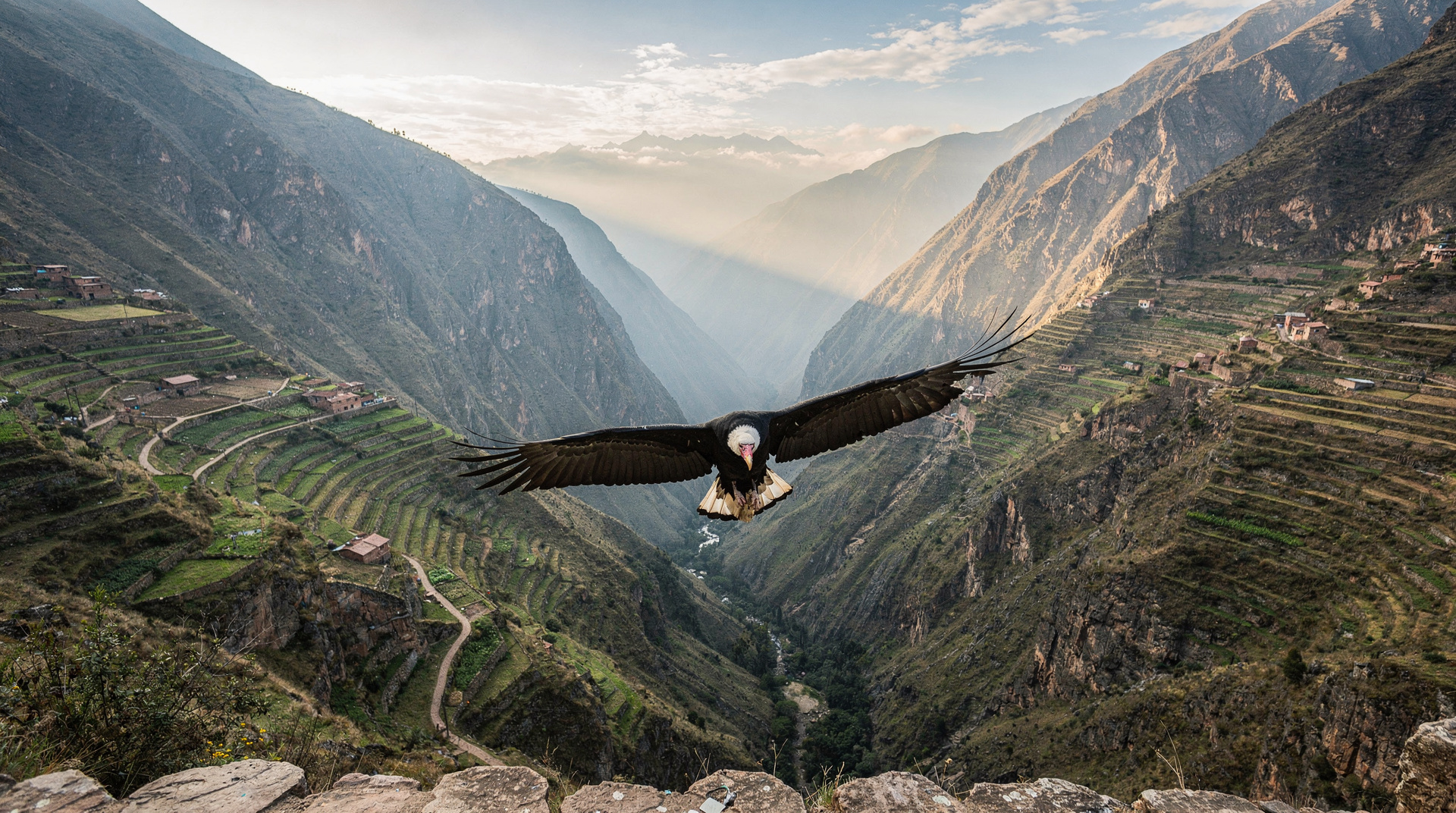
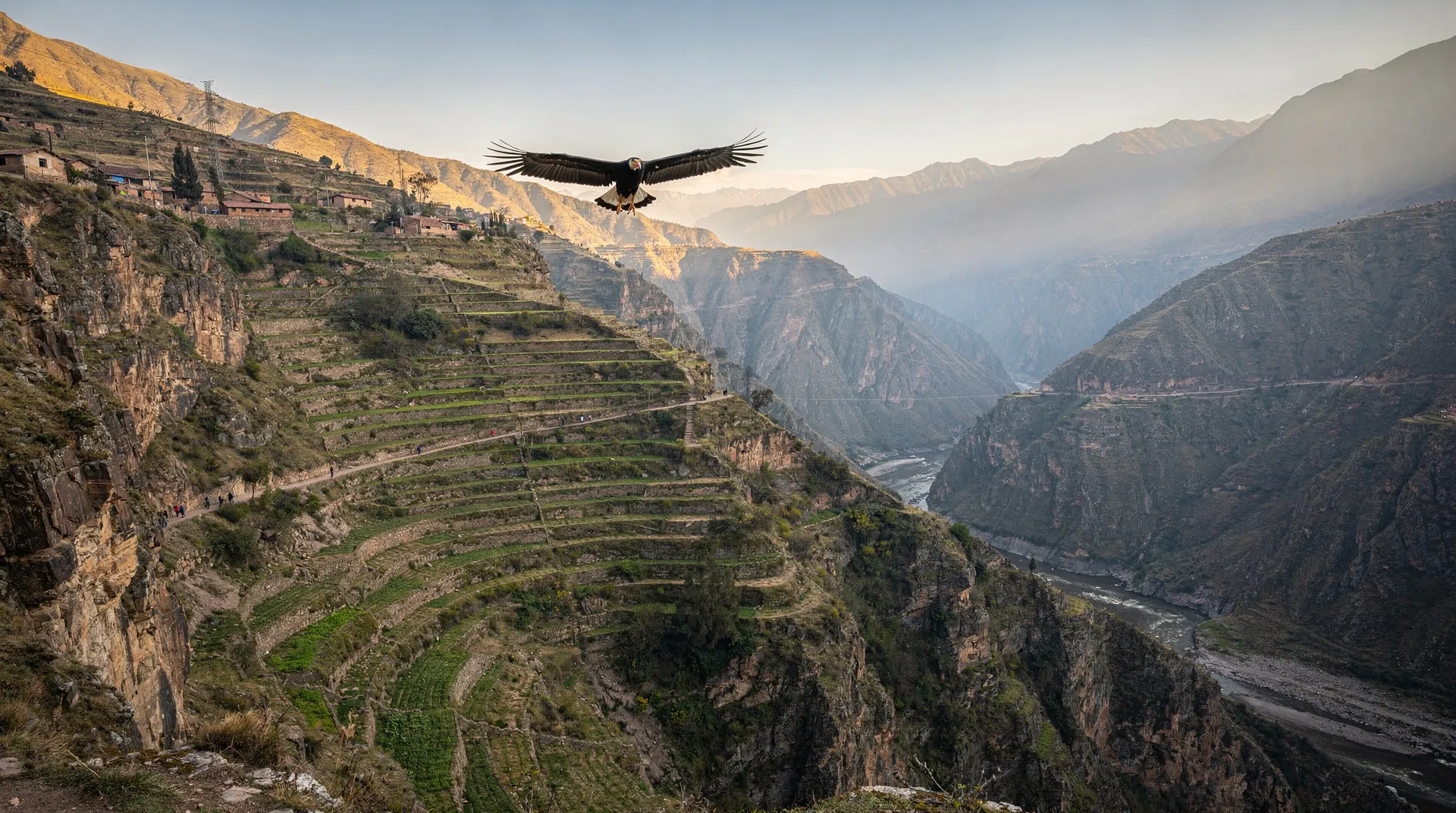
The Andean condor (Vultur gryphus) has a wingspan of up to 3.2 m and weighs up to 15 kg. At Cruz del Cóndor, watching a condor launch itself off the cliff face directly below the viewpoint and soar upward on a thermal until it is a speck at 4,000 m — all without a single wingbeat — is one of the most memorable wildlife moments available anywhere in South America.
Colca Canyon is one of the world’s deepest canyons, reaching 3,270 m at its deepest point and plunging from a rim of around 3,300–3,400 m to the Colca River below. The canyon walls create powerful updrafts as the sun heats the rock faces in the morning, generating the thermals that condors exploit for effortless altitude gain. Cruz del Cóndor is the name of the viewpoint where the thermals are most reliable and the viewing angle is closest.
This guide covers how to get to Cruz del Cóndor from both Arequipa and Cusco, what a condor watching experience actually involves, and how to build the most satisfying visit around it.
| Where | Cruz del Cóndor viewpoint, 160 km from Arequipa |
| Cost | Around S/180–350 for a 2-day tour from Arequipa |
| Time needed | 2 days (1-day possible but rushed) |
| Getting there | 3.5-hour drive from Arequipa, or fly/bus from Cusco to Arequipa first |
| Best time | 8–11 am, April–December (dry season most reliable) |
Getting to Colca Canyon from Arequipa
Arequipa is the natural base for Colca Canyon. The drive from Arequipa to Cruz del Cóndor covers 160 km and takes 3.5–4 hours, passing through the high Andean plateau (puna) at 4,700 m before descending into the canyon zone. The route itself passes vicuña herds, Andean flamingos on salt lagoons, and geothermal features — the journey to the canyon is not wasted time.
A 2-day Colca Canyon tour from Arequipa is the standard and strongly recommended format. It covers the drive in on day one (with stops at volcanic viewpoints, flamingo lagoons, and traditional canyon villages), an overnight in Chivay or Yanque, the condor viewing at Cruz del Cóndor on the morning of day two, and the return drive to Arequipa by afternoon. Cost: S/180–350 ($49–95 USD) per person including transport, guide, accommodation and breakfast.
A 1-day Colca Canyon tour from Arequipa is possible (S/120–180, $32–49 USD) but requires departing at 3–4 am to reach Cruz del Cóndor by the 8–11 am window, and returns to Arequipa very late. It misses the overnight in the canyon villages, which are genuinely charming. The 2-day version is the better choice unless time absolutely prevents it.
Getting to Colca Canyon from Cusco
Cusco to Arequipa is 10 hours by bus (services from Cruz del Sur and others, cost S/80–150 per person, highly scenic but long) or 1 hour by air (LATAM and Sky Airlines, S/150–280 each way, multiple daily flights). Most visitors doing Colca Canyon as part of a southern Peru circuit fly or bus from Cusco to Arequipa, join a 2-day Colca tour, then continue to Puno or back to Cusco.
See the Cusco to Arequipa transport guide for the full options. The southern Peru 2-week grand tour itinerary shows how Colca fits into a longer circuit including Cusco, Lake Titicaca, and the coast.
Cruz del Cóndor: what to expect
The Cruz del Cóndor viewpoint is a paved terrace with wall-mounted information boards, a toilet block, and typically 50–150 visitors on any given morning in high season. It sits at the canyon rim with a sheer 1,200 m drop below. Condors nest on the cliffs in the canyon walls immediately adjacent to the viewpoint.
Timing: Condors soar from approximately 8:00 am to 11:00 am, when morning thermals are strongest. Arriving by 8:00–8:30 am positions you for the main flight period. Afternoon visits (rare but sometimes offered on 1-day tours) are largely pointless for condor viewing.
What you will see: On a good morning (which is most mornings in dry season), 5–15 condors soar simultaneously above and below the rim level. At low altitude — sometimes below the viewpoint, looking down at them — you can see the white wing markings and pink bare head of adults clearly. Juveniles are all-dark. Condors soar rather than flap; the thermals do the work, and you can watch them rise hundreds of metres in a few seconds.
Photography: A zoom lens of 200mm minimum makes a significant difference. Condors at thermal height are distant; the moments when they pass close to the cliff face at rim level are the photographic opportunities. A telephoto compact will produce better results than a wide-angle phone camera.
Other birds: Red-tailed hawks, mountain caracaras, puna ibis and various hummingbirds are visible in the scrub below the rim. The hummingbirds at the nearby Yanque village are often the unexpected photographic highlight of the trip.
The canyon villages
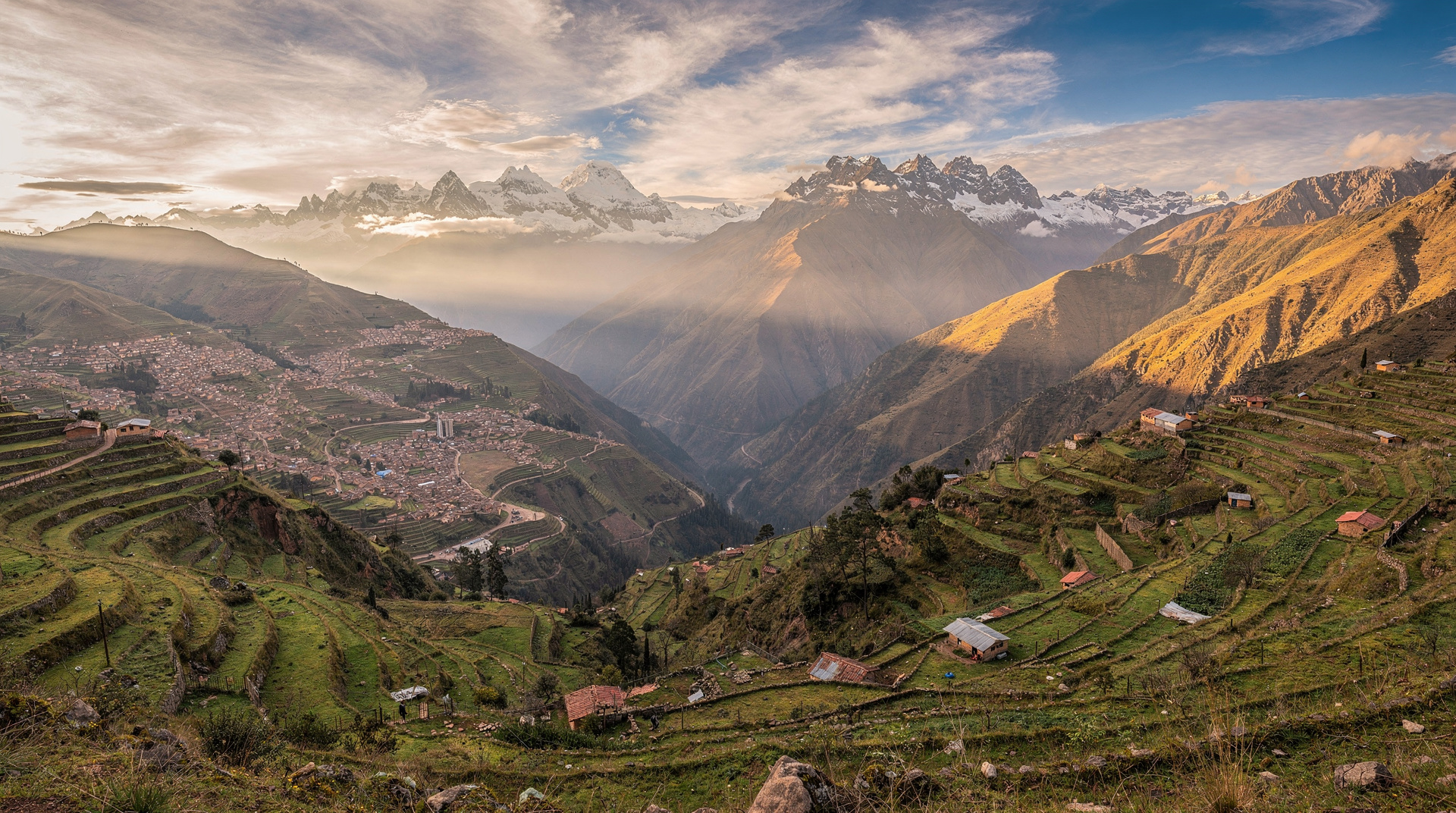
Colca Canyon is not an empty wilderness — it is a populated farming valley with villages that have maintained pre-Inca agricultural terracing for more than 1,000 years. The terraces are among the most extensive in the Americas and, seen from the rim, are genuinely beautiful in their scale and precision.
The main villages — Yanque, Maca, Cabanaconde, Achoma — have distinct local cultures with traditional dress still worn by many women. The Yanque church (17th century baroque) is excellent; the village of Maca has a market on Sunday mornings. A 2-day tour stops at two or three villages, which is enough to get a sense of the lived-in canyon rather than just the wildlife viewpoint.
Hot springs at La Calera (near Chivay): Thermal pools fed by a geothermal spring just outside Chivay are a fixture on all 2-day itineraries. Entry costs around S/15–20 ($4–5 USD). Soaking after the long drive is the sensible use of the afternoon on day one.
The condor in Andean culture
The condor is not merely a large bird in Andean cosmology. It is one of the three sacred animals representing the three realms of Andean spiritual geography: the condor for the upper world (hanan pacha), the puma for the middle world (kay pacha), and the serpent for the lower world (ukhu pacha). You will see this motif — three animals representing three realms — on Inca stonework and textile patterns throughout Cusco.
In the Colca valley specifically, the condor flight is interpreted as a message from the apus (mountain deities). The morning gathering at Cruz del Cóndor is, for local communities, a ritual presence rather than simply wildlife. This context adds a dimension to watching the birds that guidebooks rarely convey.
Altitude and acclimatisation
The road to Colca crosses the Patapampa pass at 4,910 m before descending to the canyon zone. If you are travelling from Arequipa (2,300 m), this can cause altitude symptoms — the descent on the far side brings relief but the crossing at 4,900 m can cause headaches and nausea.
If you are coming from Cusco (3,400 m), the altitude of the Colca tour route is less of a shock since you are already acclimatised to high altitude. Most visitors from Cusco have minimal altitude issues on the Colca tour. Arequipa-based travellers should take the crossing slowly, drink water, and not attempt the tour on their first day in Arequipa.
Costs at a glance
| Item | S/ | USD approx. |
|---|---|---|
| 2-day Colca tour from Arequipa | S/180–350 | $49–95 |
| 1-day Colca tour from Arequipa | S/120–180 | $32–49 |
| Colca tourist ticket | S/70 | $19 |
| Hot springs at La Calera | S/15–20 | $4–5 |
| Cusco–Arequipa flight one way | S/150–280 | $40–76 |
| Cusco–Arequipa bus | S/80–150 | $22–40 |
Beyond condors: canyon trekking
For those wanting a more active experience, a 2-day trek into the canyon descends from the rim to the Sangalle oasis at the canyon bottom — a micro-climate of palm trees and swimming pools incongruously warm at the base of this dramatic landscape. The ascent back (1,200 m on the return morning) is steep and demanding. Guides and mule hire are available in Cabanaconde village. This trek is typically independent of the condor tour; ask in Cabanaconde or Chivay for local guides.
The Cusco vs Arequipa comparison helps you decide how to structure a southern Peru trip that takes in both cities and their respective highlights.
Condor biology and behaviour at Cruz del Cóndor
Understanding what condors are doing at the Cruz del Cóndor viewpoint makes the experience more meaningful. They are not performing for visitors — the viewpoint exists because the cliff faces below it happen to generate the best thermals in this section of the canyon.
Andean condors have one of the lowest wingloading ratios of any bird — their enormous wingspan relative to their body weight means they can stay airborne for hours with minimal energy expenditure once on a thermal. They find thermals by watching other condors and by detecting the shimmer of heated air rising from the canyon walls. A condor that finds a good thermal will spiral upward, reach soaring altitude, then glide to the next thermal column without a wingbeat.
The behaviour you see at Cruz del Cóndor: condors launching from nest ledges in the cliff below, spiralling up on the thermal directly in front of the viewpoint, reaching the rim and gliding south toward feeding grounds. Juveniles (all dark, up to 6 years old) and adults (with the white ruff and pinkish bare head) fly together; immature birds in various stages of plumage change (the patchy transition between ages 2 and 6) are also visible. A good morning allows you to track individual birds through their spiralling ascent.
Condors typically do not hunt from thermals — they locate carcasses by watching other scavengers. The Colca valley floor, 1,200 m below, supports cattle ranching; carcasses on the valley floor or surrounding grassland are the food source.
Colca Canyon versus the Grand Canyon: the comparison explained
Colca Canyon is frequently described as twice the depth of the Grand Canyon and promoted as the world’s deepest. This requires some clarification that honest guides should provide.
The “depth” measurements for canyons depend on which measurement points you use. The deepest point of Colca Canyon — measured from the highest rim near Ampato volcano to the river below — is indeed greater than the Grand Canyon’s maximum depth (1,600 m). However, the Grand Canyon is wider, more extensively carved, and offers more varied landscape across a larger area.
Cotahuasi Canyon, also in the Arequipa region, actually surpasses Colca on some depth measurements. None of this diminishes Colca’s genuine impressiveness — it is by any standard an extraordinary geological feature — but the “world’s deepest” label is context-dependent and your guide may or may not mention the nuance.
Arequipa as the base: the case for a longer stay
Most visitors to Colca Canyon use Arequipa as a brief transit point — arrive, join a 2-day tour, return to Arequipa, fly or bus to Cusco or Lima. This is efficient but misses what Arequipa offers as a destination in its own right.
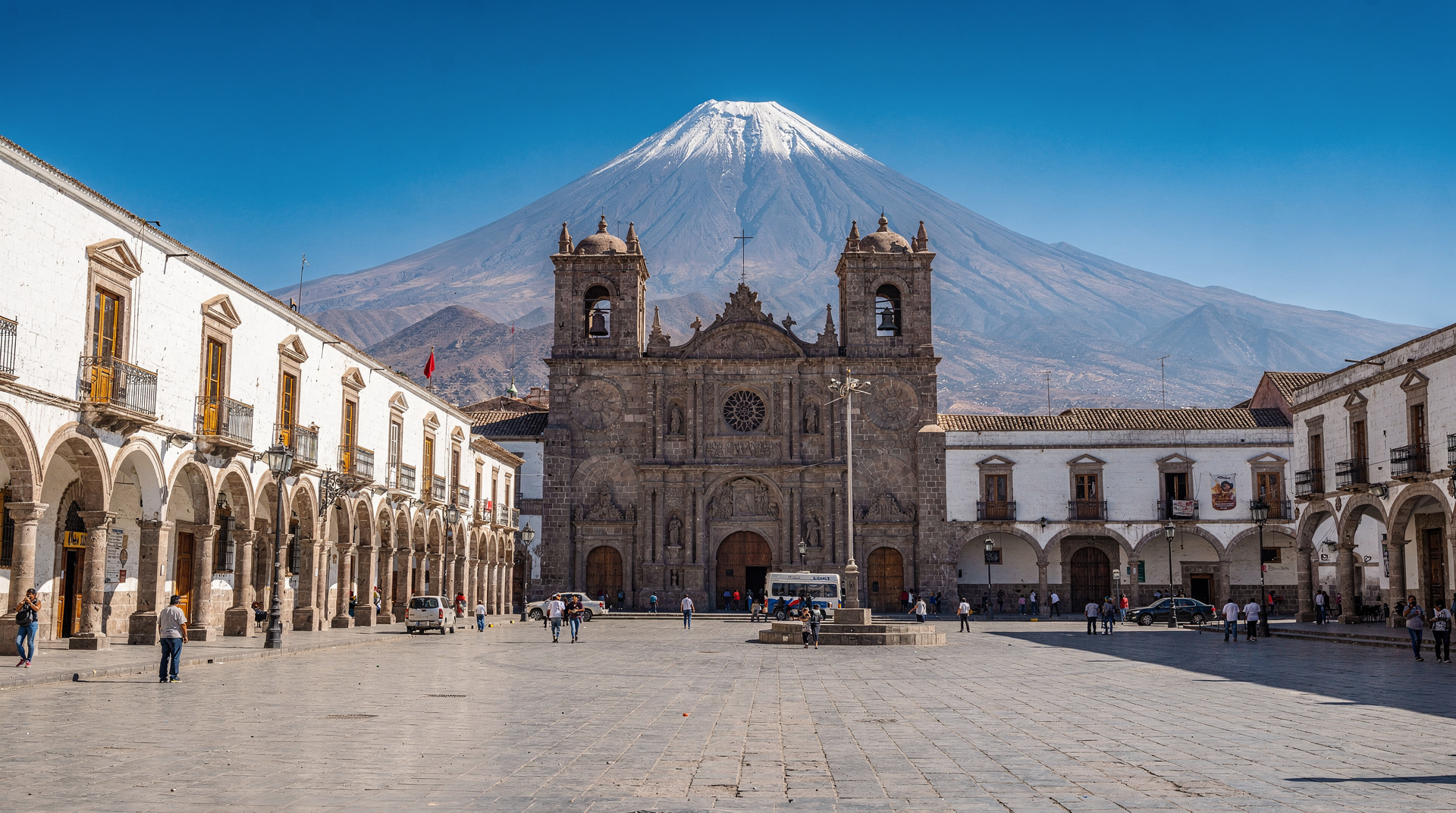
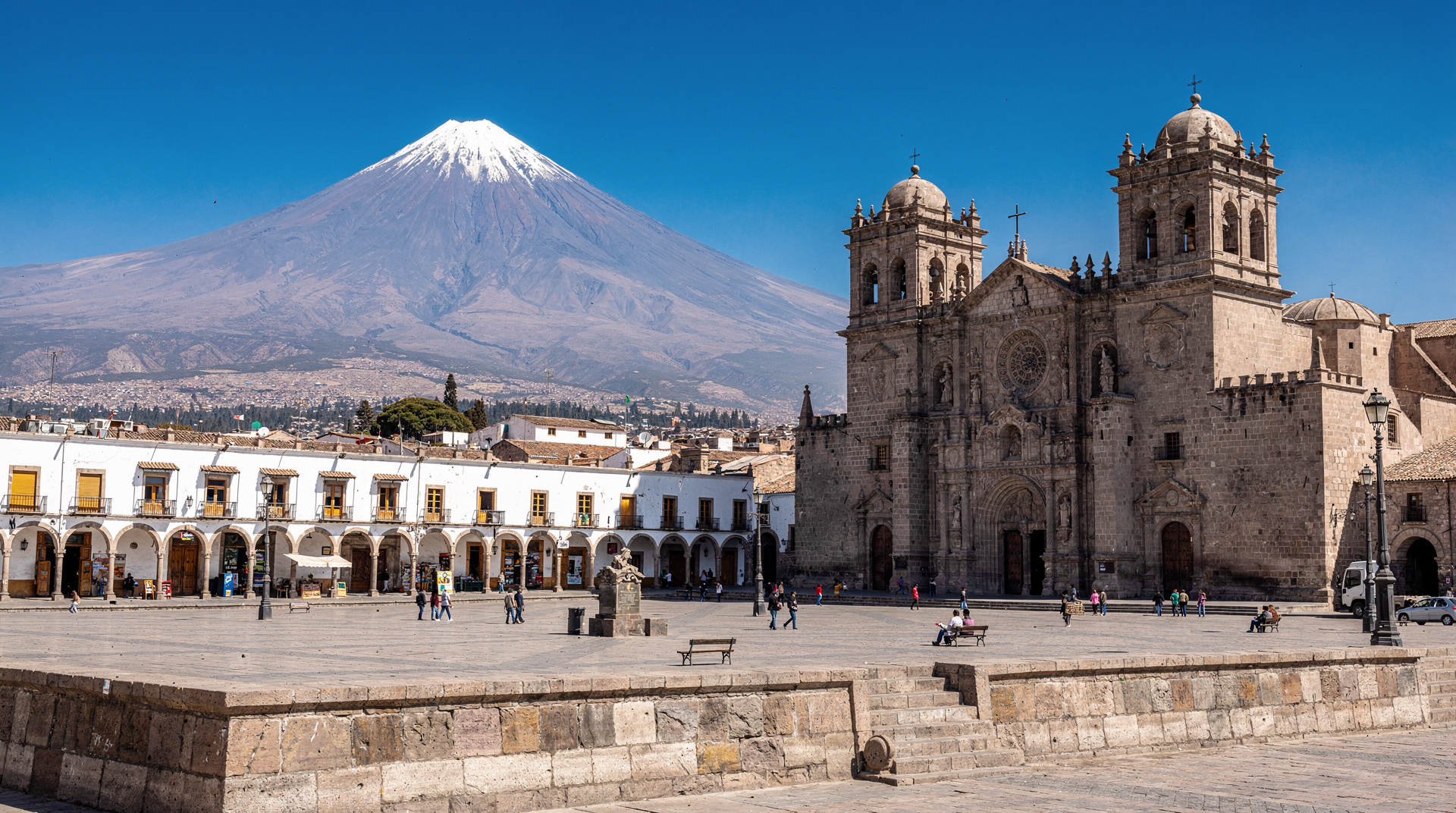
Arequipa is Peru’s second city, built largely from white sillar (volcanic stone) in a colonial baroque style that earned it UNESCO World Heritage status. The Santa Catalina Monastery — a 2-hectare convent complex frozen in the 17th century — is one of the most atmospheric sites in Peru and takes two hours to explore properly. The city sits at 2,335 m with the Misti volcano (5,822 m) visible from most streets. The food scene, particularly at the Mercado San Camilo, is excellent and distinct from Cusco’s Andean cuisine.
Two nights in Arequipa — one for city exploring, two days for the Colca tour, one final morning for the Santa Catalina Monastery before an afternoon flight — makes for a satisfying and unhurried southern Peru addition. The southern Peru 2-week grand tour builds this structure into the full overland circuit.
What to photograph at Cruz del Cóndor
The challenge of photographing condors in flight is real. Moving subjects at variable distances against a changing sky background require specific settings. Some practical notes:
A zoom lens reaching at least 300mm equivalent focal length makes a significant difference. Phone cameras with digital zoom produce acceptable results when birds are at rim level passing close; they struggle with birds at height.
Use a fast shutter speed (1/1600s or faster) to freeze wing detail. Condors rarely flap but when they do at low altitude the wing motion is fast. Set aperture to f/5.6–8 for depth of field on multiple birds in the same frame.
The most dramatic shots are taken when condors pass at rim level, below the viewpoint — at that moment you are looking down at a bird that may have a 3 m wingspan. These passes are unpredictable; have camera ready throughout the viewing window rather than only at moments of high activity.
Seasonal reliability month by month
While April–December is broadly the reliable window for condor sightings, the picture is more nuanced within that range. May through September, the core dry season, delivers the most consistent thermals and the clearest skies, making sightings close to guaranteed on any given morning. April and October, the shoulder months, are still generally good but carry a slightly higher chance of morning cloud delaying or dampening the thermal activity that condors depend on.
November and early December are more variable — afternoon rain patterns are establishing themselves, though mornings often remain clear enough for the 8–11 am viewing window that matters most. January through March, the wettest months, see the least reliable sightings: persistent cloud cover can suppress thermal formation entirely on the wettest days, and while condors are still present, the odds of a strong multi-bird morning drop noticeably compared to dry season visits.
Combining Colca with a wider Peru wildlife trip
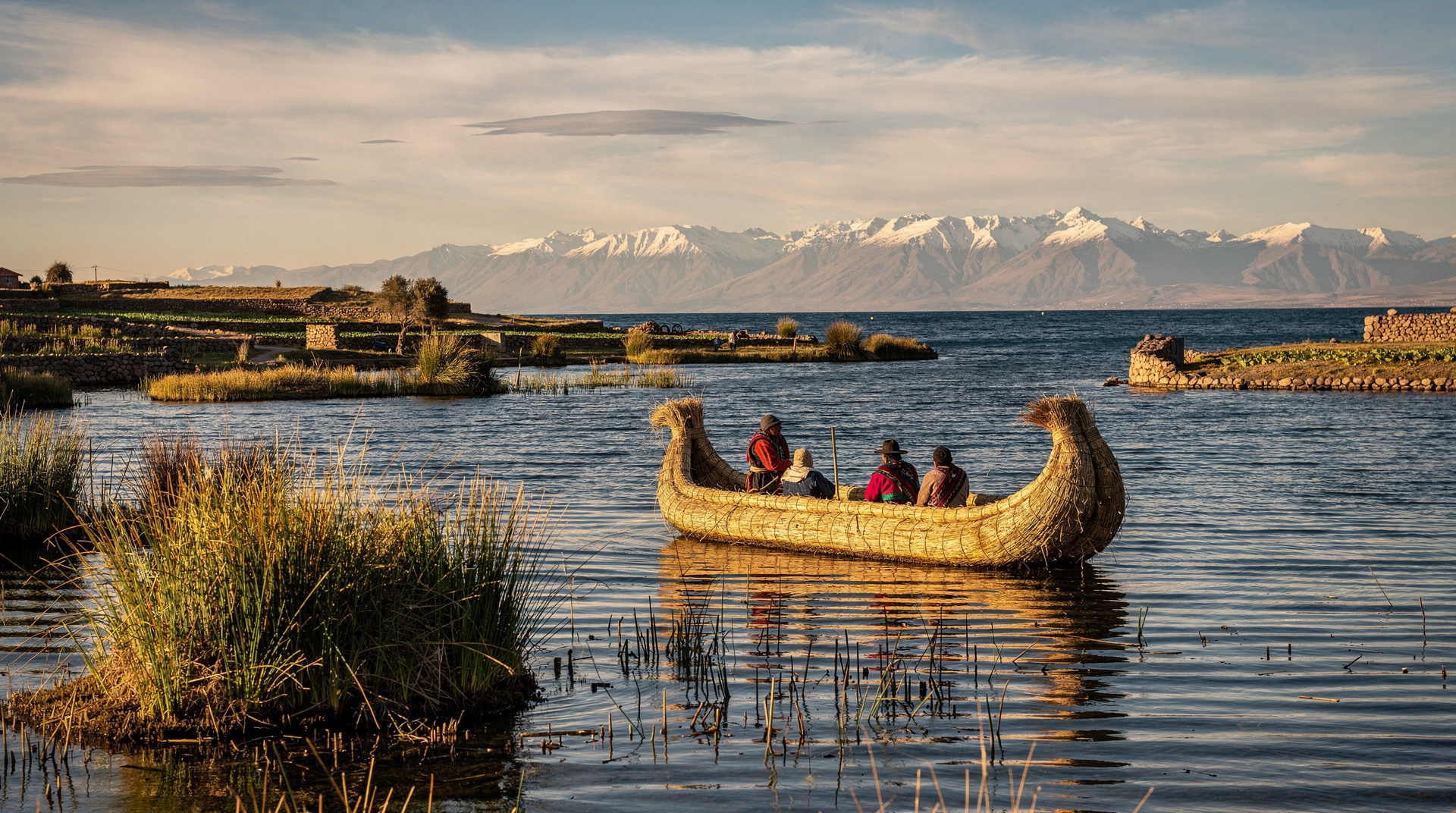
Colca Canyon’s condors are one of several distinct wildlife experiences in southern Peru, and it is worth being clear about how they differ. Lake Titicaca offers Andean waterbirds and a completely different high-altitude wetland ecosystem, not raptors.
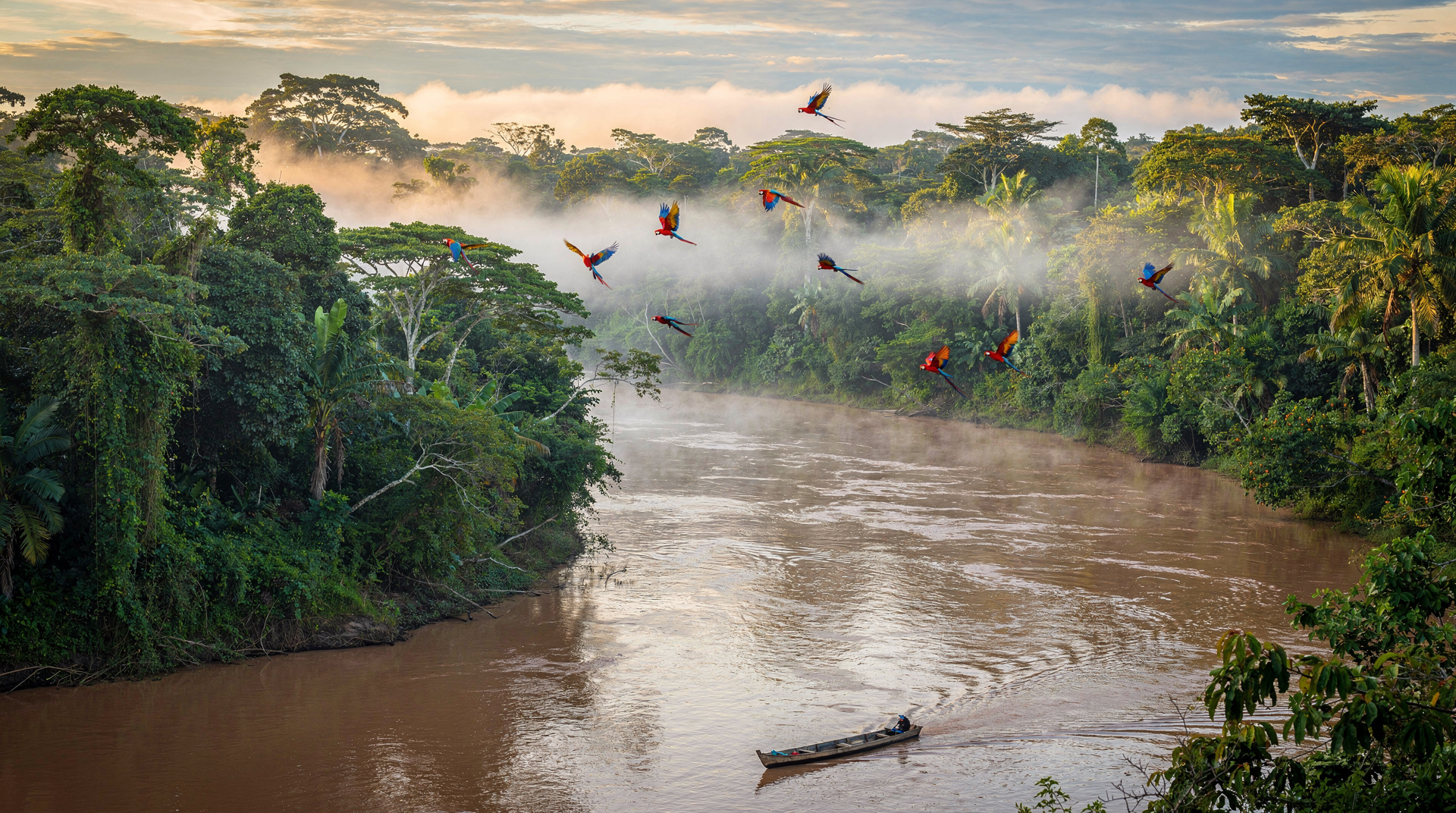
The Amazon basin trips from Puerto Maldonado, compared in the Tambopata vs Manu guide, offer rainforest biodiversity that has nothing in common with the Andean condor experience beyond both being wildlife-focused. If your trip has room for only one dedicated wildlife excursion beyond Cusco itself, Colca’s near-guaranteed condor sightings in a 2-day format are the most time-efficient option of the three.
A note on altitude sickness medication for the Patapampa crossing
Travellers prone to altitude symptoms should consider carrying sorojchi pills or their preferred remedy specifically for the Patapampa pass crossing at 4,910 m, even if they had no issues in Cusco. The rapid ascent from Arequipa’s 2,335 m to nearly 4,900 m in under two hours is a faster elevation gain than most Cusco-based itineraries involve, and it can trigger headache or nausea in travellers who otherwise tolerate altitude well. The discomfort is typically brief, easing as the road descends into the canyon, but having a remedy on hand for the crossing itself is a sensible precaution.
Practical clothing for the canyon rim
Cruz del Cóndor sits at around 3,300 m, and mornings on the rim are cold — temperatures at 7–8 am before the sun clears the opposite canyon wall can sit near freezing, warming quickly once direct sunlight arrives but staying brisk in any shade. Layering is the practical approach: a warm base layer and fleece for the early viewing window, shed as the morning warms, plus a windproof outer layer since the rim is exposed to wind funnelling up the canyon. Sturdy, closed shoes are sensible for the paved but sometimes uneven viewpoint terraces, and sunglasses matter more than they might seem — the combination of altitude UV and the light reflecting off the canyon’s pale rock is genuinely intense even on a partly cloudy morning.
What a rushed 1-day tour actually costs you
Beyond the early departure and late return, the 1-day Colca tour’s real cost is the canyon villages and the hot springs — both dropped entirely to make the timing work. Visitors who take the 1-day option because of a tight schedule often report the trip felt like “seeing a bird and a bus window” rather than experiencing the canyon. If your itinerary genuinely cannot accommodate 2 days, consider whether Colca is the right stop at all versus a wildlife alternative that fits a single day better, such as a shorter Lake Titicaca excursion from Puno.
Frequently asked questions about Seeing condors at Colca Canyon: the complete
Is Colca Canyon reachable from Cusco?
How likely am I to see a condor at Cruz del Cóndor?
How deep is Colca Canyon?
What is the entrance fee to Colca Canyon?
Can I trek into Colca Canyon?
Top experiences
Bookable activities with verified prices and instant confirmation on GetYourGuide.