The morning the condors came — Colca Canyon at dawn
A first-person account of the morning the Andean condors rose at Cruz del Condor — what it actually feels like, when to arrive, and whether the two-day trip from Arequipa is worth building into a Cusco itinerary.
| Where | Cruz del Condor, Colca Canyon, via Arequipa |
| Best time to arrive | 7:00–7:30am, before the car park fills |
| Best months | April–December (dry season, clearer thermals) |
| Getting there | 10hr overnight bus or 1hr flight, Cusco to Arequipa |
| Cost | 2-day tour typically S/250–400 incl. transport, Chivay night, entry |
The bird no photograph prepares you for
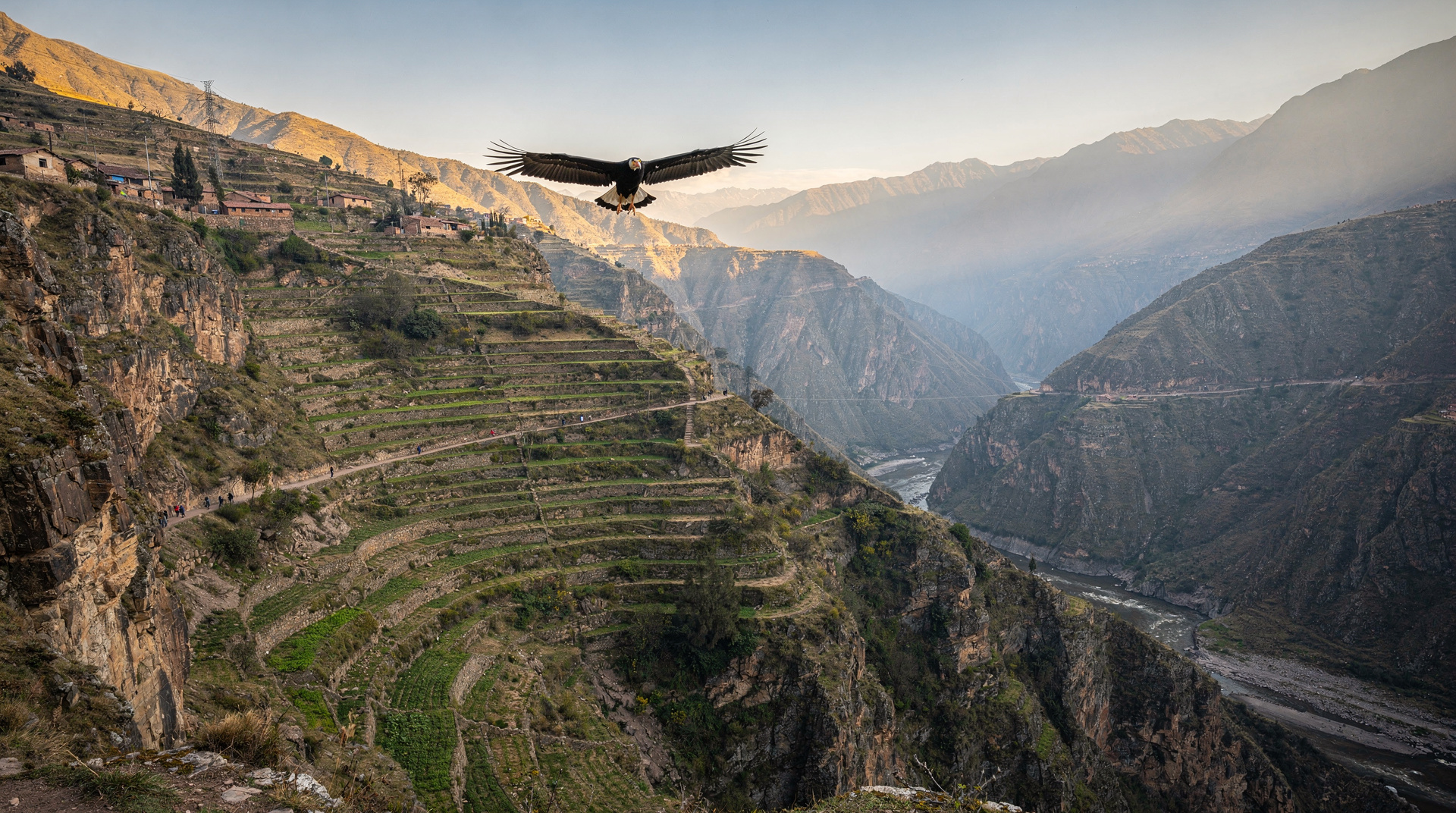
I have seen photographs of Andean condors. I have seen them in natural history documentaries. I was moderately confident I understood what I was going to experience at Cruz del Condor — the famous viewpoint above the deepest section of Colca Canyon, roughly 3,300 m above sea level and 1,200 m above the canyon floor, where the thermal updrafts that the birds depend on for flight rise in the warming morning air.
I was not prepared.
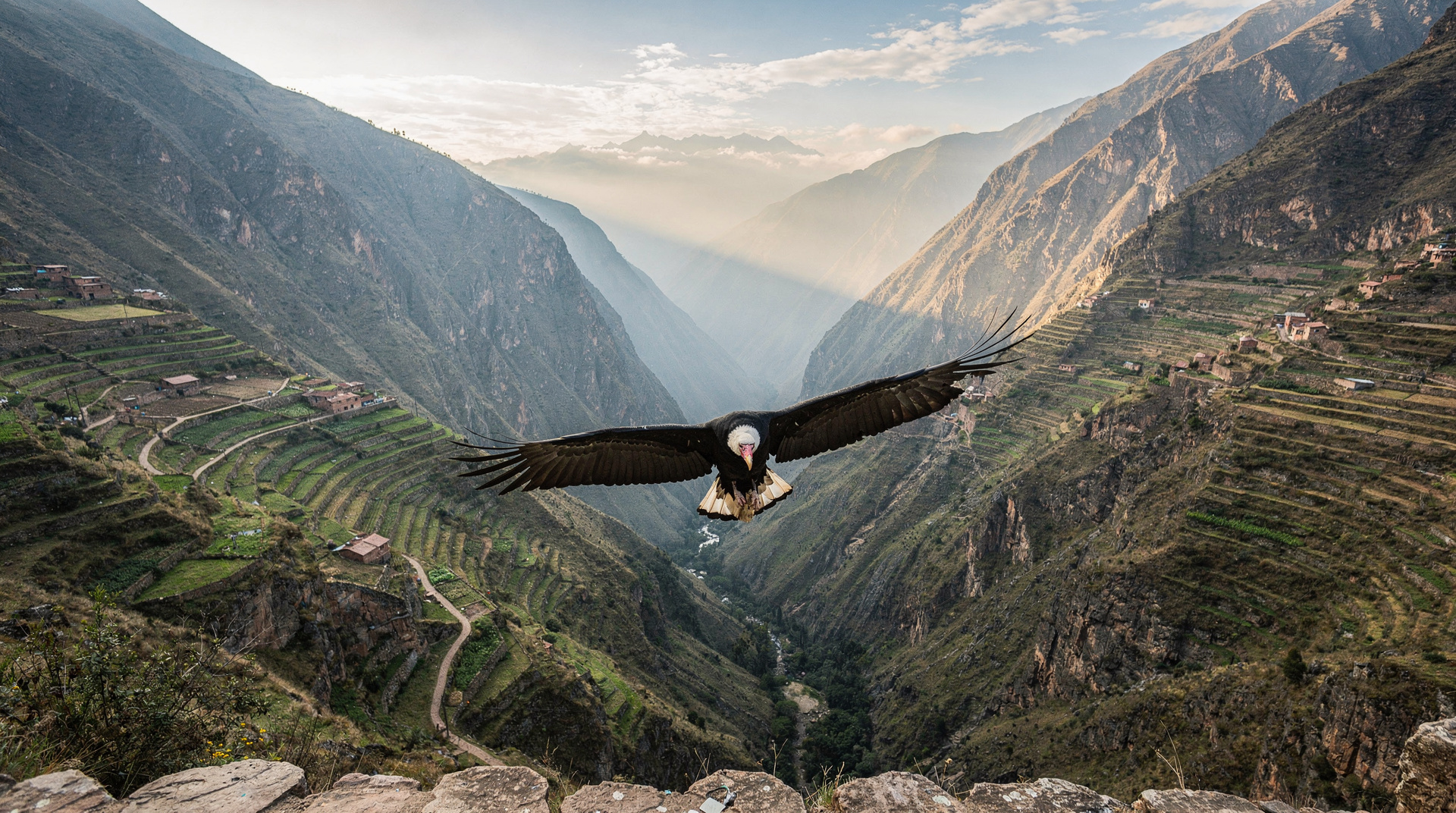
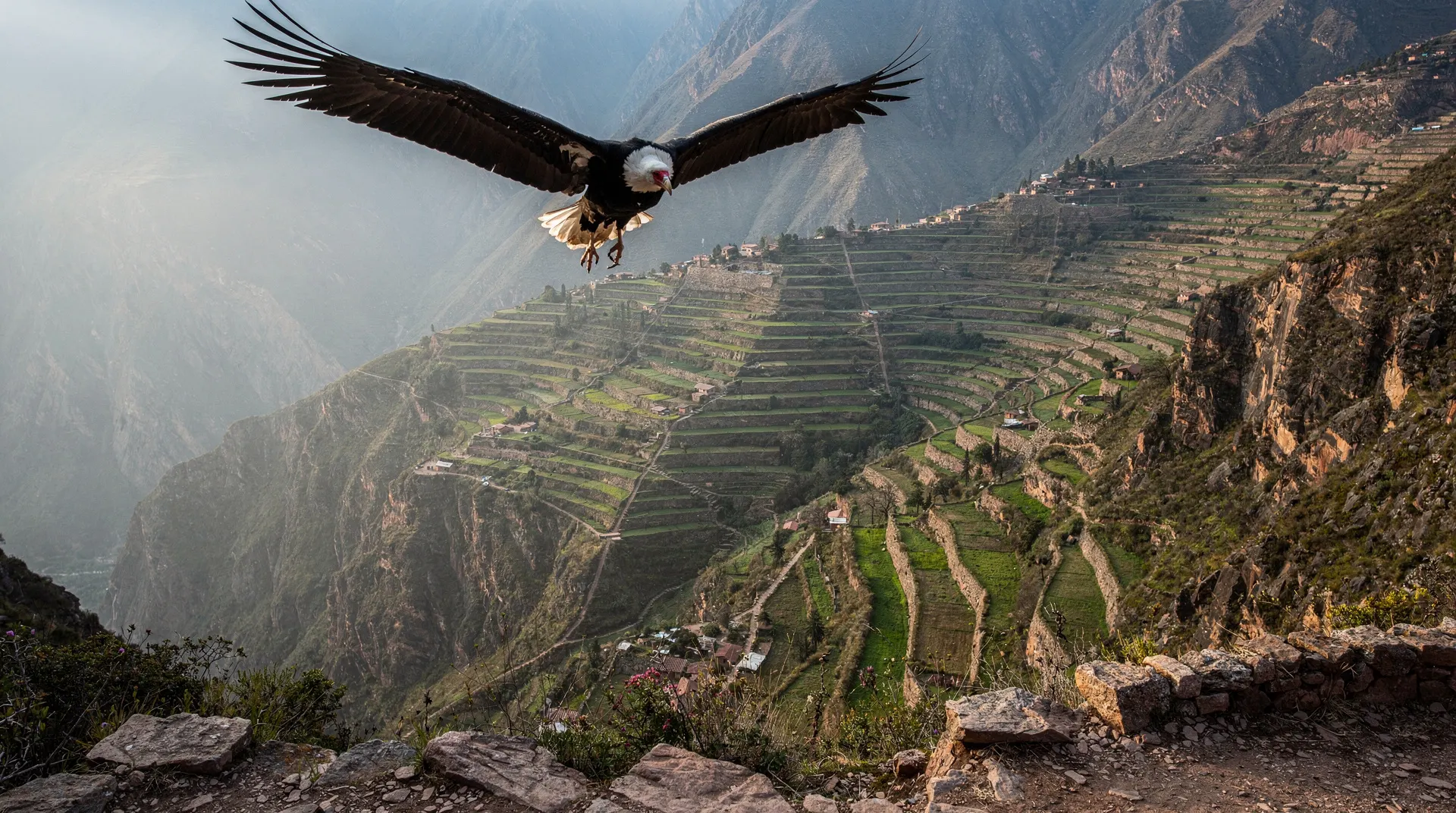
The condor is the largest flying bird in the world by wingspan — up to 3.3 m, which is about the height of a standard doorway laid horizontally. In photographs, taken from a distance or from below, the scale registers intellectually but not physically. When a condor passes 15 metres directly above your head, banked into a thermal, each primary feather individual and visible, the eye adjusting to the size against the sky — then the scale registers physically, in the spine, in a way that I can only describe as ancient. These birds have been riding these thermals for a very long time.
Getting to Colca from Cusco
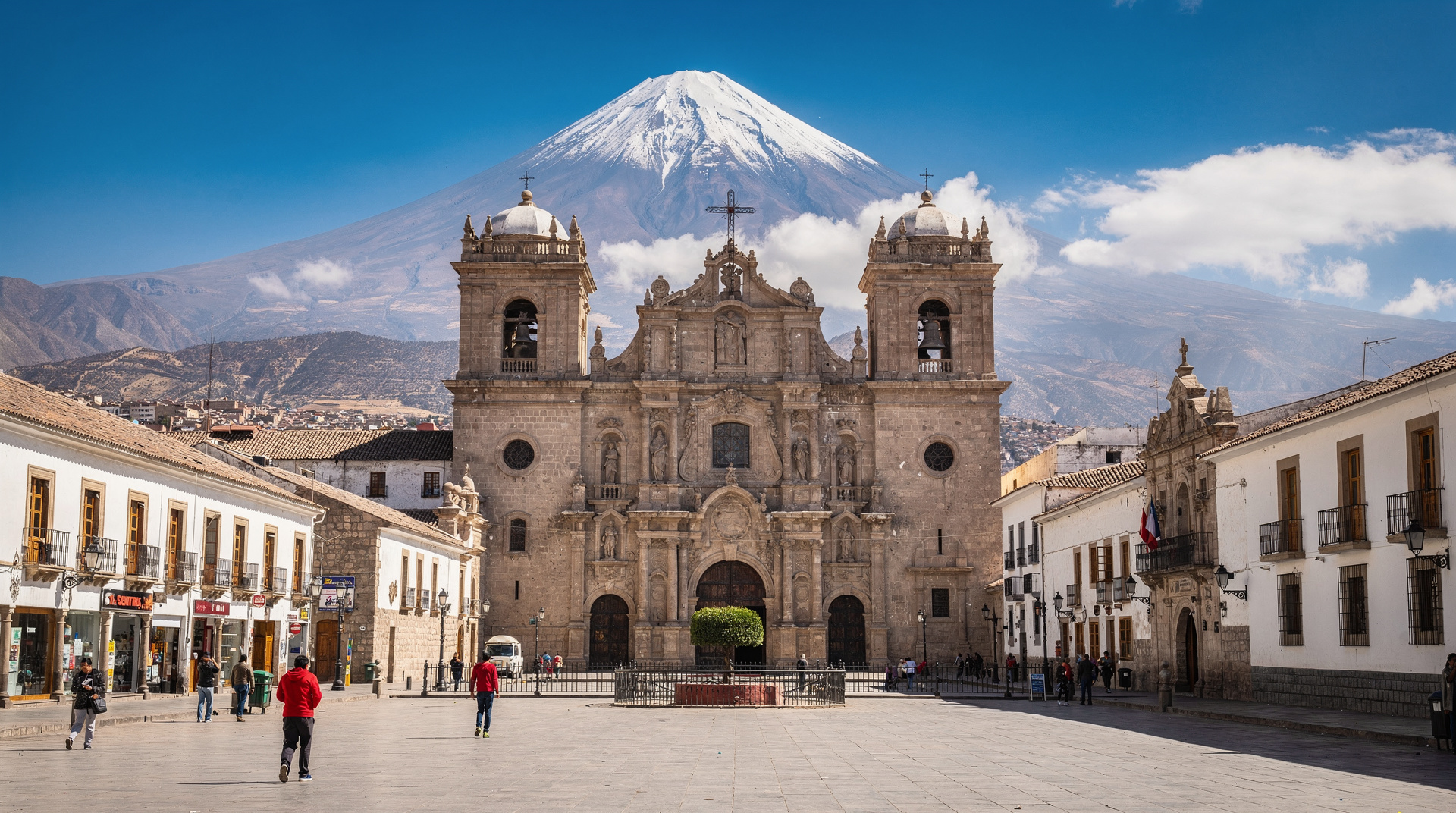
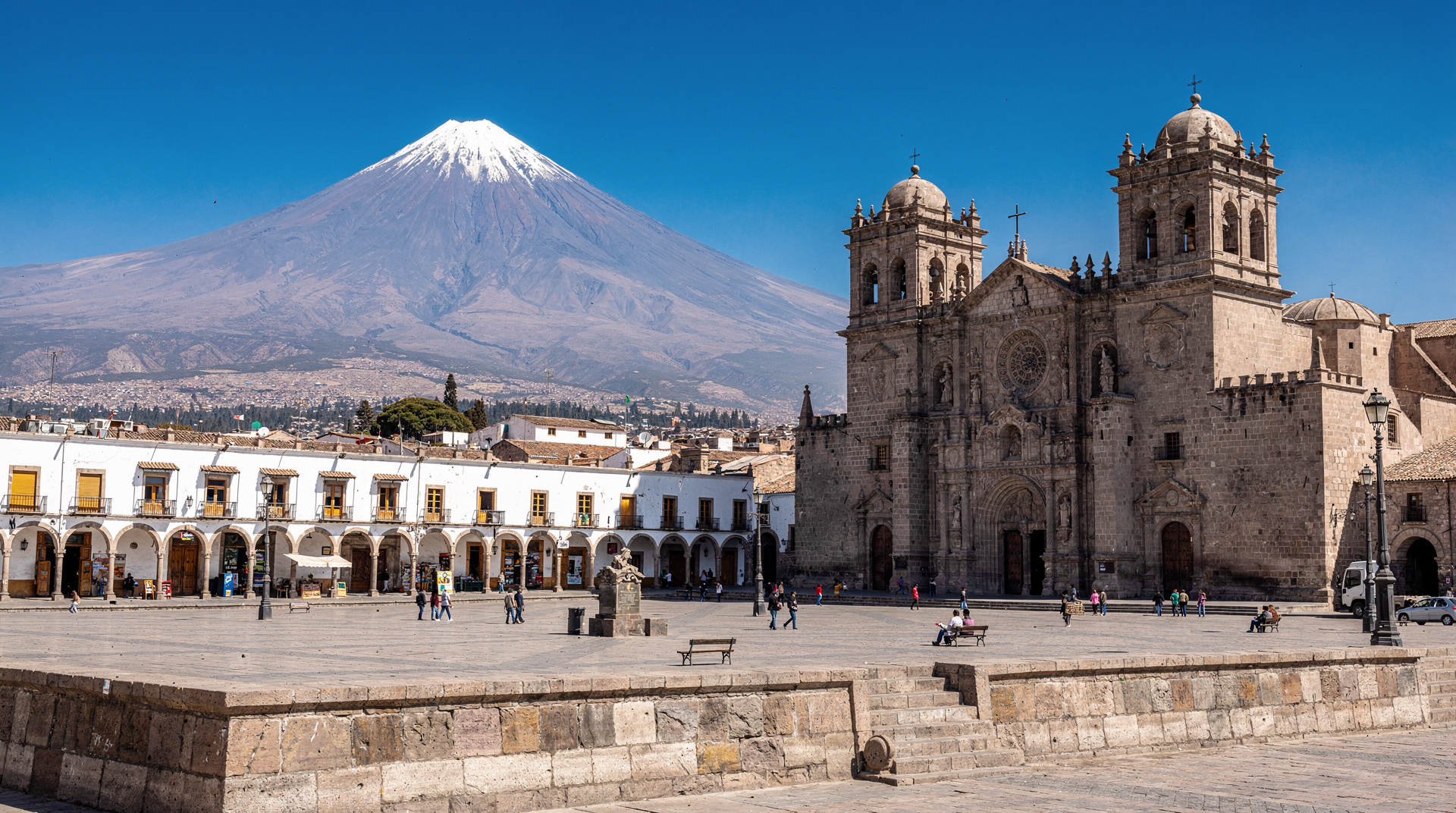
The route requires going through Arequipa, Peru’s second city, which sits at 2,335 m in a valley between three volcanoes. From Cusco, Arequipa is a 10-hour bus journey over the altiplano (overnight buses are the standard choice — Cruz del Sur and Oltursa are the reliable operators, S/80–130 for semi-cama) or a 1-hour flight (S/200–350 depending on timing).
From Arequipa, Colca Canyon is a 3.5-hour drive through the volcanic highlands. The standard approach is a two-day organised tour from Arequipa — overnight in the village of Chivay or further into the canyon at Cabanaconde, then early morning at Cruz del Condor before returning to Arequipa.
I came from Cusco as part of a longer overland circuit — two nights in Arequipa (which deserves more time than most Peru itineraries give it), then the Colca two-day tour, then back to Arequipa and onward. The southern Peru grand tour itinerary covers the full circuit properly.
The approach: altitude surprise
The drive from Arequipa to Colca crosses the Reserva Nacional Salinas y Aguada Blanca — a high-altitude reserve at 4,200–4,800 m with vicuñas grazing roadside (small, delicate, protected — their fibre is more valuable than cashmere), Andean geese in the wetlands, and the occasional flash of flamingo pink. The roadside bofedales — high-altitude wetlands — are richly biodiverse in a way that seems impossible at that elevation.
The pre-dawn start on day two: the alarm at 5:15 am, breakfast in the dark, the drive to Cruz del Condor in cold, clear early-morning light. September is well into the dry season — the sky was a deep navy still fading to lighter blue as we arrived at 7:00 am. The car park was already filling. Tour groups had come from Chivay, from Cabanaconde, some from Arequipa itself via the early-morning tour that doesn’t include an overnight.
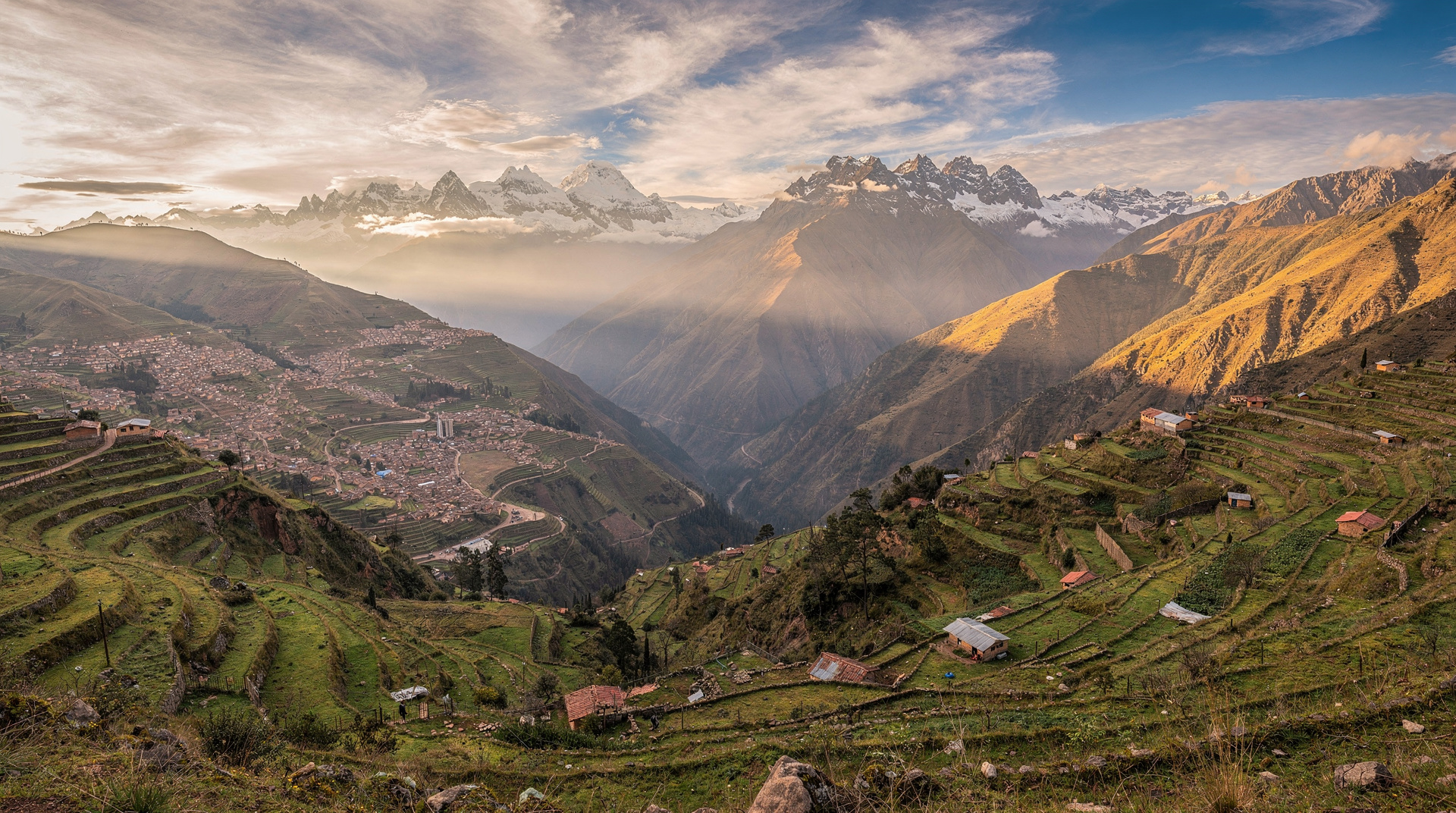
The viewpoint is a series of concrete platforms built into the canyon rim. The canyon falls away below you for more than a kilometre. The far wall, roughly 3 km across, is terraced in pre-Inca and Inca agricultural systems — green strips of cultivation visible even at that distance. The scale is hard to convey: Colca is deeper than the Grand Canyon, and that comparison keeps coming up because it’s useful even though the landscapes are entirely different.
When the condors appeared
The first bird appeared at 7:40 am. It rose from somewhere below the canyon rim — I didn’t see it take off, only registered it when it was already at eye level, sweeping along the wall before banking into the thermal above the viewpoint. The crowd noise shifted from conversation to whispers.
Over the next 90 minutes, 11 condors appeared. Some were adults — the distinctive white neck ruff and pink-orange bare head marking sexual maturity. Some were juveniles, all dark. They rode the thermals in wide circles, occasionally dropping into the canyon, occasionally rising high enough that they became black specks against the blue. Once, two adults came directly over the viewpoint together, perhaps 20 m above the platform, their wing tips almost reaching the width of the walkway. The silence of the crowd at that moment was remarkable — 80-odd people, all phones up, all completely still.
Book the 2-day Colca Canyon tour from Arequipa to have the transport, accommodation and early-morning condor visit arranged. The quality of guide matters here — a knowledgeable naturalist guide explains the thermal mechanics and can identify individual birds by wing pattern, which transforms the experience.
The canyon below Cruz del Condor
I’m glad I had the two-day version rather than the early-morning day trip, because the canyon deserves more than the condor visit. The villages along the canyon rim — Maca, Coporaque, Yanque — are genuinely Andean in a way that Cusco’s tourist infrastructure sometimes obscures: women in the traditional embroidered dress of the Colca region, markets that exist for the community rather than for visitors, colonial churches with astonishing facade work that mixes Catholic imagery with Andean symbolism.
The terraced agriculture is extraordinary — thousands of narrow terraces (andenes) climbing the canyon walls, some still cultivated, some abandoned, all visually staggering. This is what the Colca valley looked like to the Spanish when they arrived in the 16th century.
The thermal springs at La Calera near Chivay — S/15 entry, a series of outdoor pools fed by geothermal water at 38–40°C — are a legitimate pleasure after two days of altitude and cold mornings. I soaked for an hour and felt approximately human again.
Is Colca worth the detour from Cusco?
Yes. Unreservedly. The Colca Canyon and condors guide makes the case in detail, but the brief version: Colca combines one of the world’s great wildlife experiences (the condors), one of the world’s deepest canyons, living Andean agricultural culture, and the context of Arequipa — a beautiful, underrated city that most Cusco-focused itineraries skip.
The Cusco vs Arequipa guide argues for visiting both if you have the time. I’d agree. The two cities are different enough that they don’t compete — Cusco is the Andean Inca capital, Arequipa is the Spanish colonial Baroque city against a backdrop of volcanoes. Colca belongs to both of them, in a way.
What to bring for the viewpoint morning
The pre-dawn wait at Cruz del Condor is cold — the platform sits at over 3,300m and the temperature at 6am can be close to freezing even in the dry season. Bring a proper layer, a hat, and gloves if you have them; I underestimated this and spent the first thirty minutes more focused on my hands than the sky. Binoculars help enormously, since the birds often first appear as distant specks rising from below the rim before they come close. A zoom lens is nice to have but not essential — the closest passes need no lens at all. The what to pack for Cusco list covers most of the layers you will want here too.
Fitting Colca into a wider Cusco trip
Colca works best as a side loop rather than a destination you build the whole trip around. The practical question is how to get from Cusco to Arequipa and back into your onward plans, and the Cusco to Arequipa transport guide compares the bus and the flight properly. If you are also heading to the lake, the Peru 10-day Cusco and Titicaca itinerary shows how a southern loop can be sequenced, and the Cusco to Puno transport guide covers the other half of that route.
Altitude deserves a thought before you commit. The viewpoint is high, the drive crosses even higher ground, and you will feel it more if you arrive straight from sea level. I was already acclimatised after time in Cusco, which made the pre-dawn start far easier. If you are still adjusting, read the Cusco acclimatisation plan first, and my own rough experience in altitude sickness: my story is a useful reminder that it does not respect fitness. The coca tea and altitude remedies guide is worth a look for the milder symptoms.
One-day versus two-day Colca
If your schedule genuinely can’t stretch to two days, a one-day tour from Arequipa exists: leaves around 3am, drives straight to Cruz del Condor, returns by evening. It works, and I’ve done a version of it on the Arequipa detour trip. But it sacrifices the overnight in Chivay, the thermal baths, and the chance to walk the canyon villages, which is where the region’s character actually lives. If you can manage the extra night, take it.
Book the full-day Colca Canyon and condor tour from Arequipa if your schedule only allows the single-day version.