Three days in the Amazon from Cusco — a diary from Tambopata
Three days from Cusco into the Tambopata rainforest, told as it happened: the flight, the lodge, the wildlife, and an honest answer on whether it’s worth adding to a Peru itinerary already full of Inca sites.
| Where | Tambopata, via Puerto Maldonado (35-min flight from Cusco) |
| Cost | Around USD 380 for a mid-range 3-day/2-night lodge package |
| Time needed | Minimum 3 days, 2 nights to make the flights worth it |
| Best time | May–October (dry season) for easier trails and clearer clay-lick mornings |
| Altitude | Drops from 3,400m in Cusco to around 200m — a huge, fast change |
The transition that still astonishes me
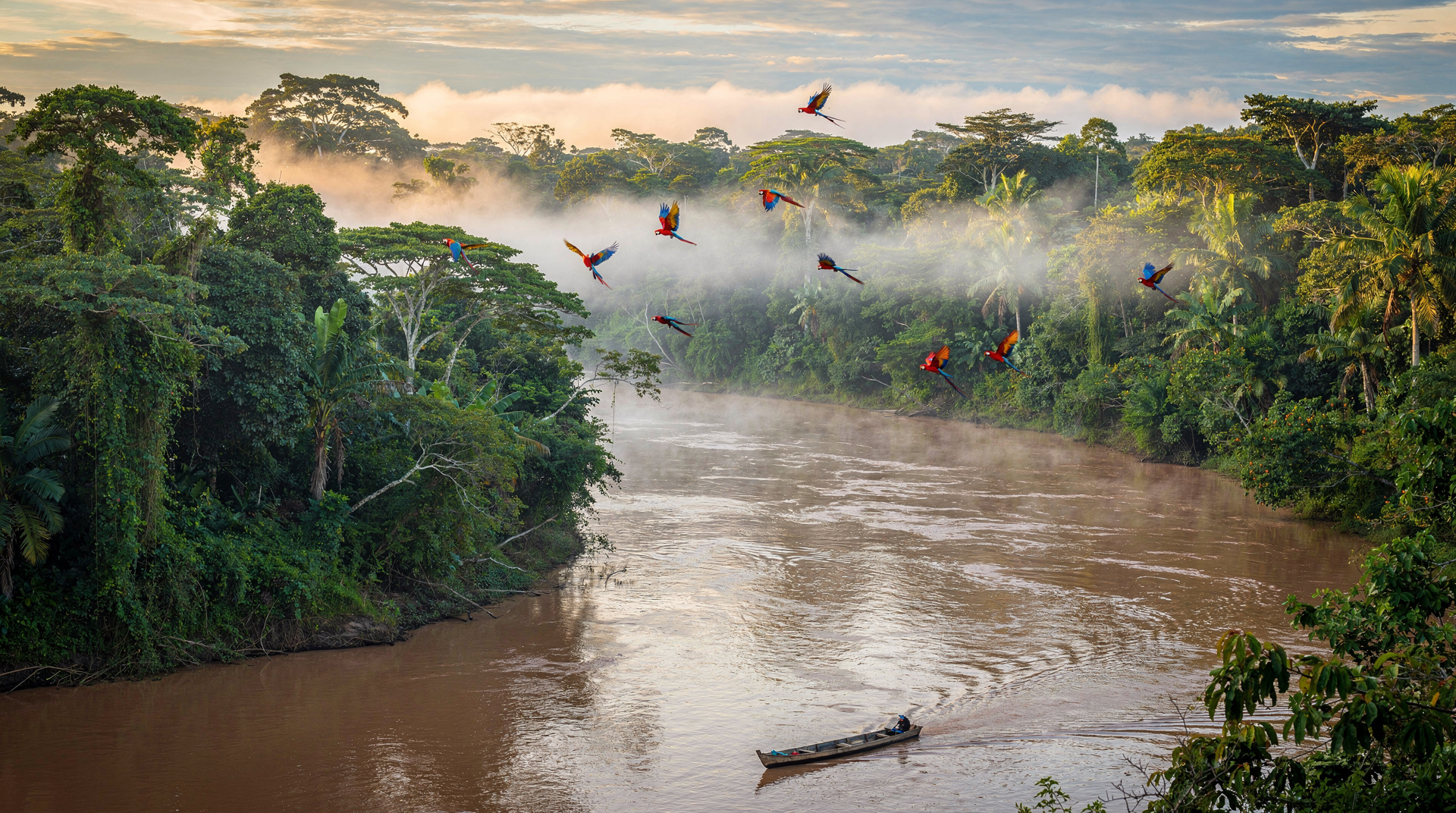
The flight from Cusco to Puerto Maldonado takes 35 minutes. You leave a city at 3,400 m in the Andes — cold, thin-aired, terracotta-roofed, built on Inca stone — and you arrive in a jungle town at 200 m above sea level, where the air is thick and warm and smells of river water and vegetation. The descent feels like falling through different worlds. The jungle appears below the plane window suddenly and completely: a solid green canopy from horizon to horizon, broken only by the brown snake of the Madre de Dios river.
I had three days. Most people tell you this isn’t enough for the Amazon. They’re right in the sense that the jungle rewards longer stays, that the wildlife becomes more visible the further you travel from town, and that the experience deepens with time. But three days with the right lodge in Tambopata is enough to understand what you’re in, to see things you’ve never seen anywhere else, and to come back to Cusco with a revised sense of how many different Perus exist on this small map.
Getting there
The standard approach is the short LATAM flight from Cusco to Puerto Maldonado — book it when you book your main Cusco flights, because it’s the same ticket window and the price is reasonable if booked ahead (S/180–250 each way when booked 3–4 weeks out). Puerto Maldonado is the gateway to the Tambopata reserve.
There’s also an overland route — a long bus journey over the Andes via the Interoceanic Highway — but for most travellers the time cost is prohibitive. The flight is the answer.
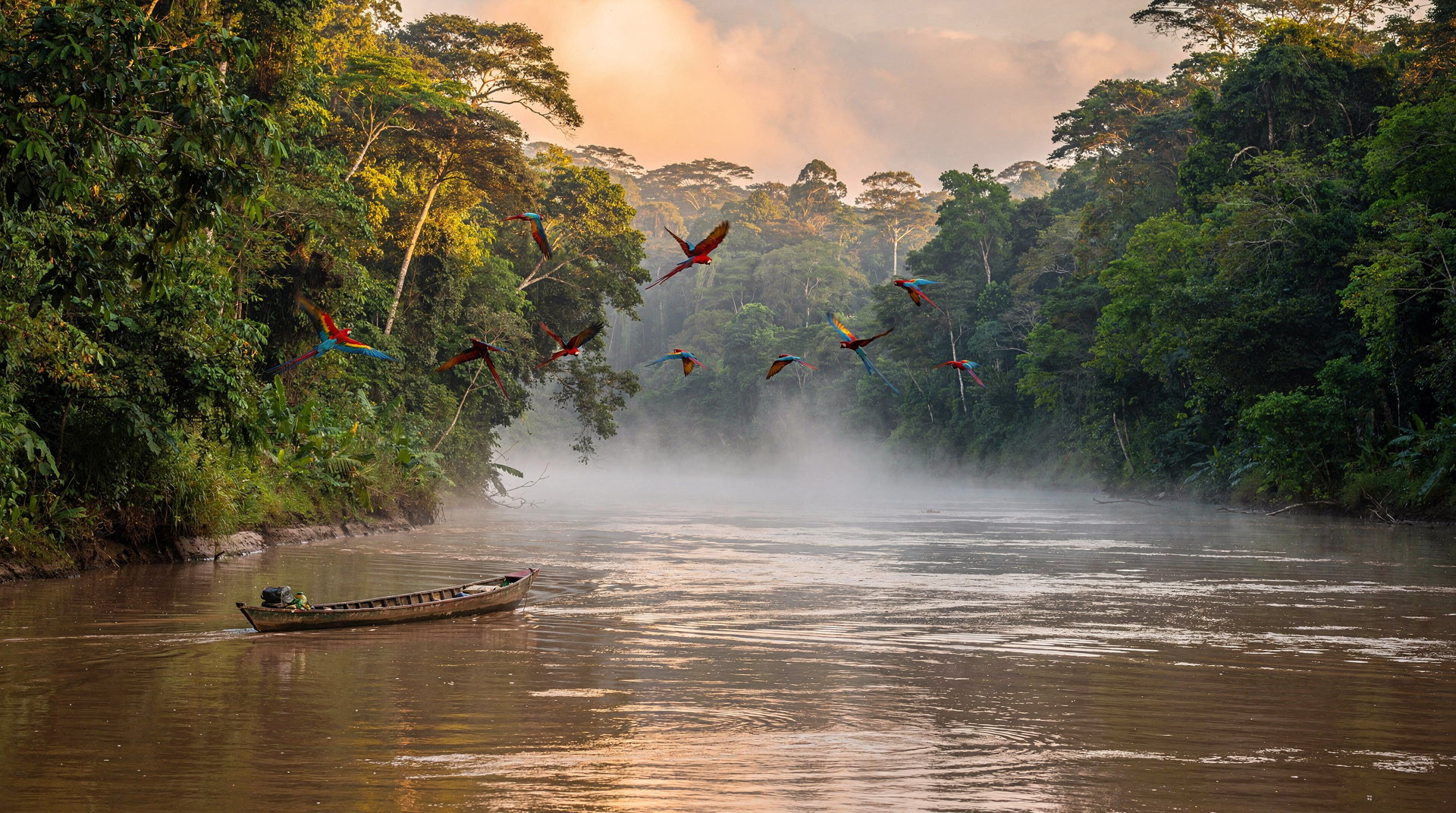
From Puerto Maldonado airport, the lodge sends a vehicle to take you to the river embarkation point, and then you travel by motorised canoe. My lodge was 45 minutes downriver, which put it inside the Tambopata National Reserve buffer zone. Lodges deeper in the reserve (2–3 hours downriver) offer more remote wildlife but cost considerably more and require more time.
The lodge
I’d chosen a mid-range lodge — not the budget option, not the high-end research-station tier. Bungalows on stilts with mosquito-net beds, a shared dining area with good food (jungle fish, yuca, tropical fruit, rice, beans — all good), and guided walks included in the package price. The price for three days, two nights, including the canoe transfers, all meals, and guided excursions: approximately USD 380 per person. This is towards the budget end for Tambopata lodges; the higher-end options start around USD 600–900 for the same duration.
The Tambopata vs Manu guide compares the two main Amazon options from Cusco — Tambopata is more accessible and significantly cheaper, Manu is more remote and more expensive but has higher biodiversity. For a first Amazon trip, Tambopata is the right call.
Day one: the canopy walk and the night sounds
The first afternoon: a walk through primary forest with our guide Wilber, who had been leading jungle walks for 14 years and could identify bird calls with the specificity of an audiophile identifying instruments in a recording. We saw a troop of squirrel monkeys — about 30 animals, moving through the canopy above us with casual speed. We saw a flash of blue that Wilber identified as a blue morpho butterfly before I’d properly registered what I was looking at. We did not see a jaguar. (Almost no one sees a jaguar in three days.)
The most memorable thing about the first day was not what I saw but what I heard after dark. The jungle at night is not quiet — it is the opposite of quiet. The cicadas, frogs, and insects generate a sound that is genuinely overwhelming the first time you experience it: a physical presence, a wall of noise that surrounds you completely. Lying in the bungalow under the mosquito net, listening to that sound while insects investigated the screen, I felt more aware of being somewhere alive than I can recall feeling anywhere else.
Day two: the clay lick
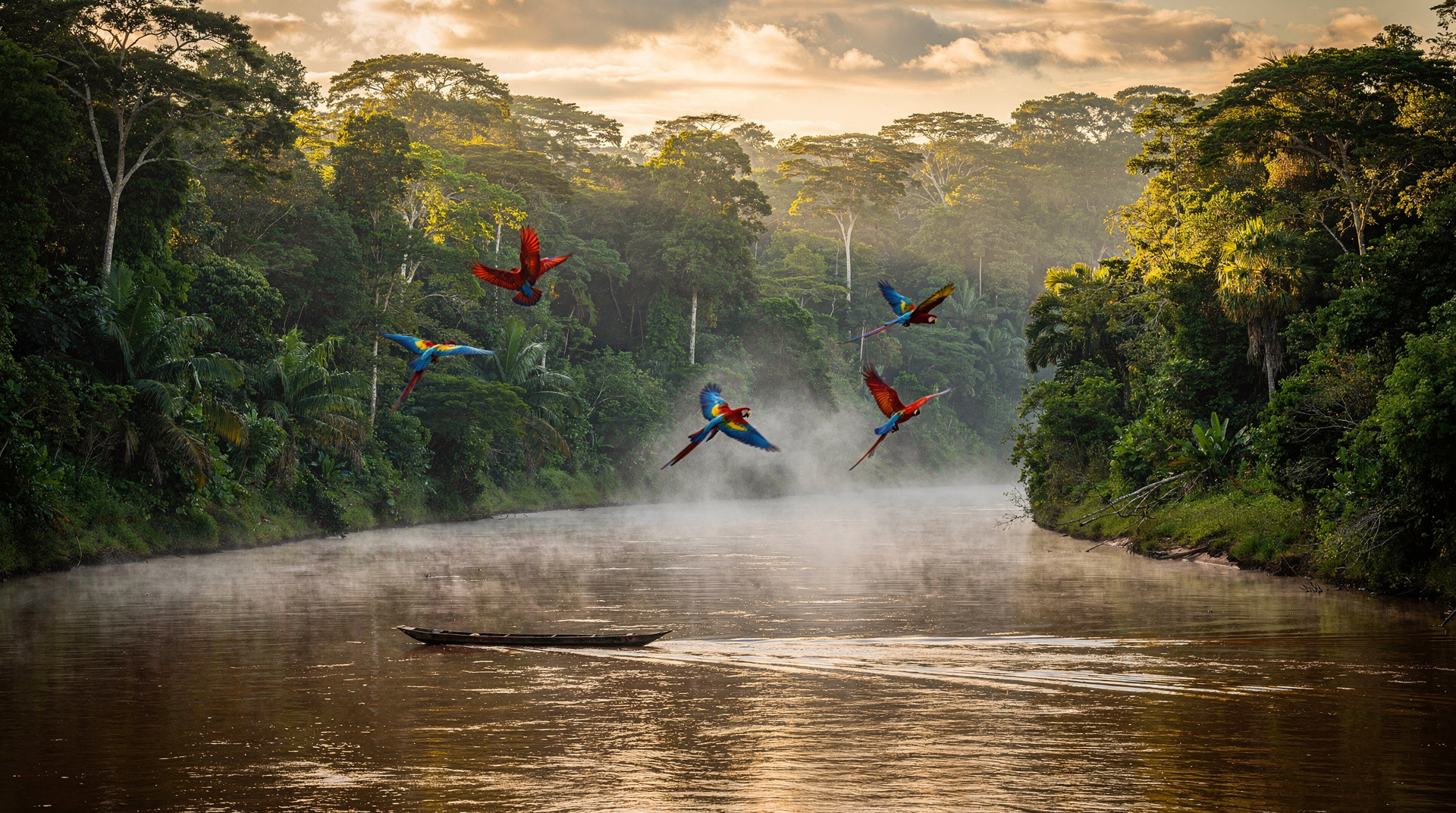
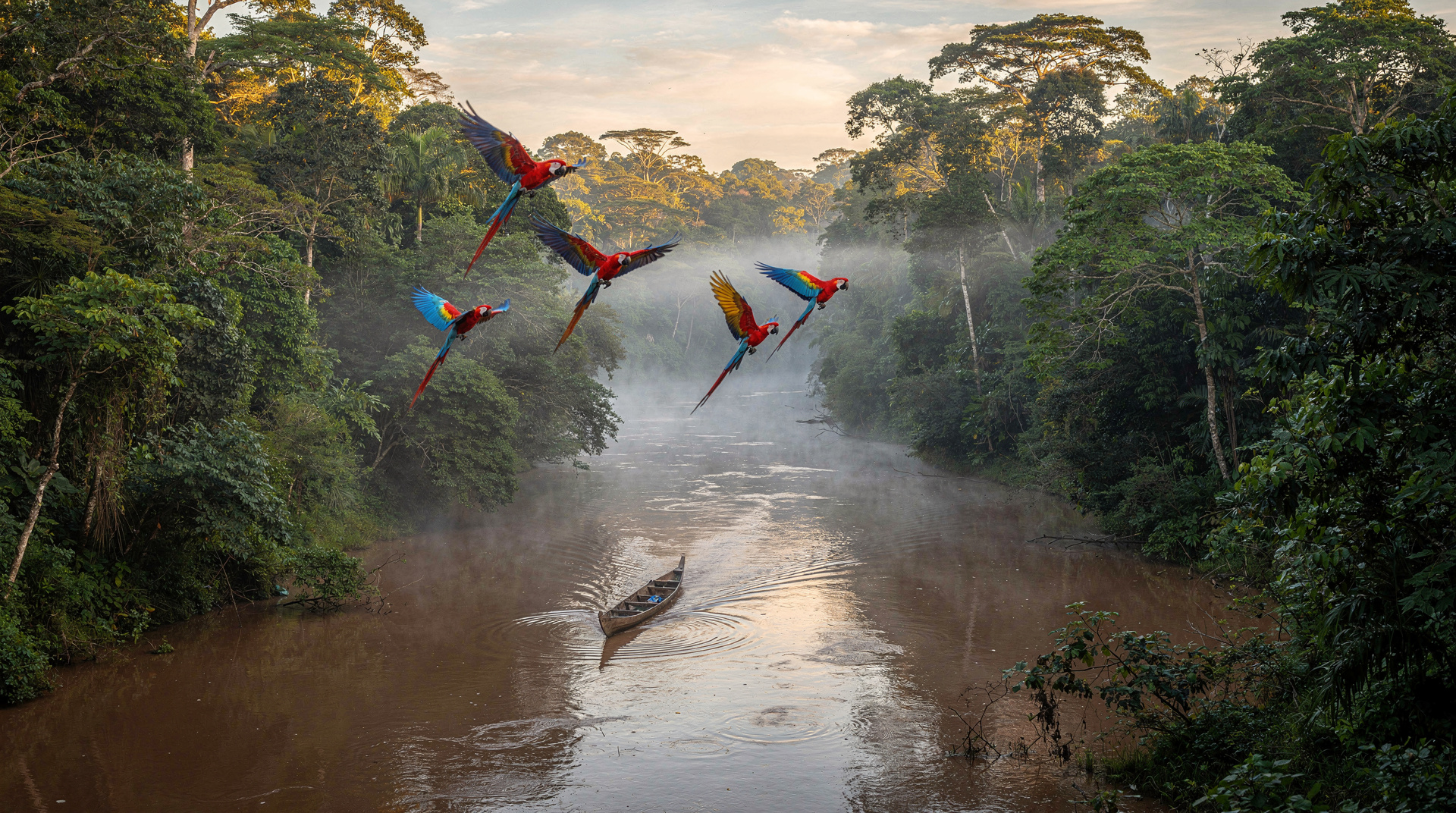
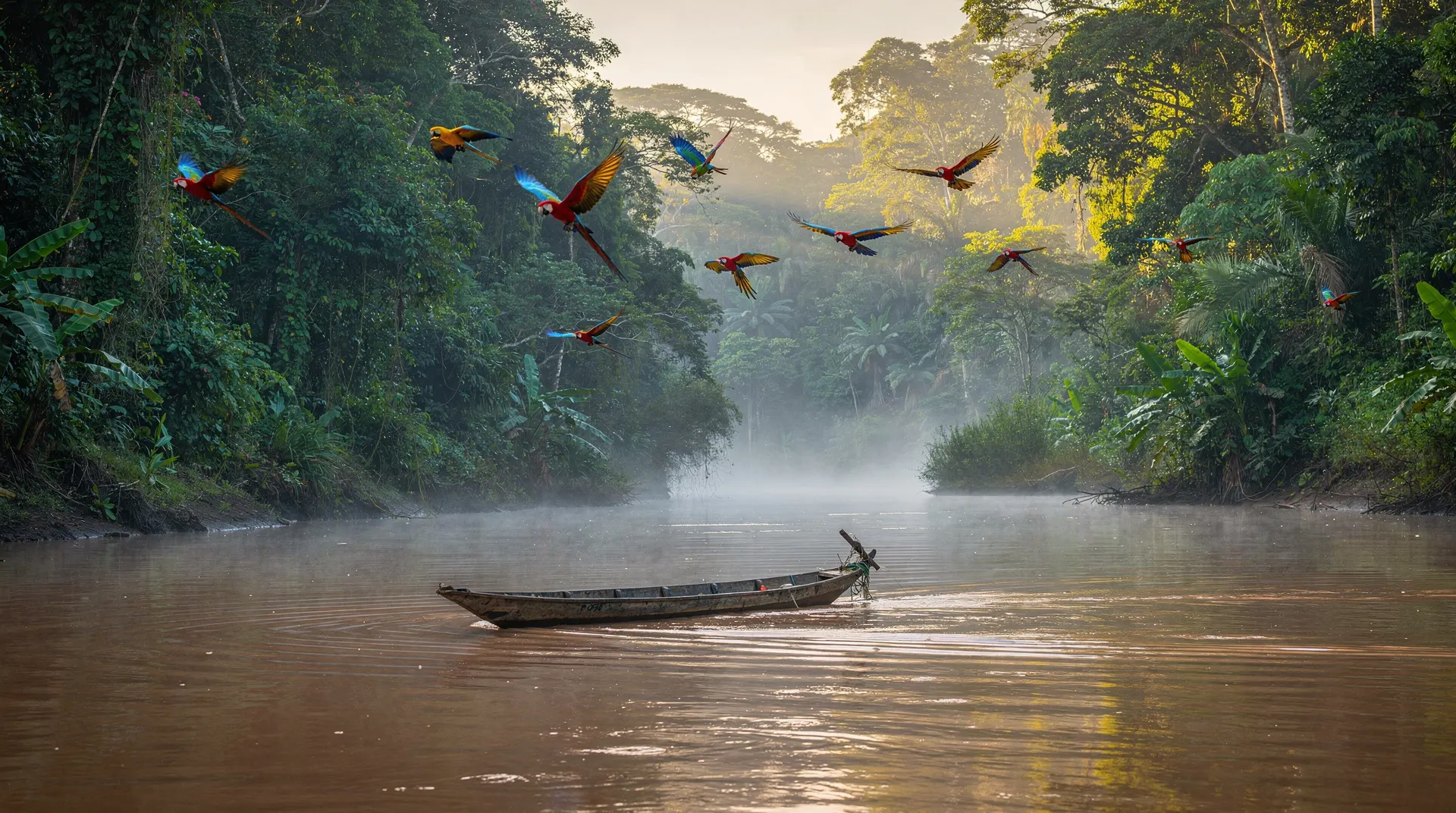
The clay lick (collpa) was the undisputed highlight. Macaws and parrots — primarily red-and-green macaws and various species of parrot — gather at exposed riverbank clay in the early morning to eat the minerals. The clay apparently neutralises toxins in the seeds they eat, though the precise mechanism is still debated.
We arrived at the riverbank hide before dawn and waited in silence. At 7:15 the first birds arrived — small parakeets, tentatively. They would land, flush at the slightest noise or movement, regroup in the trees across the river, and return. Gradually the larger species followed. By 8:30 there were 60–80 birds on the clay face: the red-and-greens with their absurd beauty, their voices cutting through the morning air.
I had a camera with a reasonable zoom. The photographs are the best wildlife photographs I’ve ever taken, and they’re not particularly good photographs by any objective standard — the birds were against light, the river mist hadn’t fully cleared, the distance was too great for the lens. It didn’t matter. The experience of watching them was complete in itself.
Book a 3-day Tambopata Amazon lodge package from Cusco — the logistics of the flight, canoe transfers, lodge, and guided excursions are complex enough that having them sorted together is worth it, particularly for a first visit.
Day three: the lake and the river
The final day included a morning canoe trip to an oxbow lake within the reserve. The lake — Lago Sandoval — is a former river meander cut off from the main river, its banks thick with aguaje palms and inhabited by giant river otters. We saw the otters. A family of six, swimming in loose formation across the lake surface, making a noise that sounds like a particularly outspoken cat. Giant river otters can reach 1.8 m in length. Seeing them in the wild, in their actual lake, in the actual Amazon, is one of those experiences that makes the journey feel entirely justified.
The return journey upstream to Puerto Maldonado was slower than the outward trip — against the current — and the sky was building toward the afternoon thunderstorm that comes reliably in June. The rain hit us about 20 minutes from the embarkation point. Large, warm, tropical rain. I didn’t bother putting on a jacket. By the time we reached the dock I was soaked through and deeply happy.
If three days feels too short once you have read this, a longer stay is the natural fix: a multi-day rainforest tour with a local guide gives the jungle more time to reveal itself, and the extra morning is usually spent deeper in the forest where animals are less wary. For the wider picture of how Tambopata fits among the region’s other wild places, the Lake Titicaca wildlife guide and the Colca Canyon condors guide show what the highlands and the south offer in comparison.
Whether to add the Amazon to your Cusco trip
The honest answer: yes, if you can spare three days. Tambopata adds something that no other part of a standard Peru itinerary provides — the low-altitude forest, the river ecosystem, the sensory overload of primary jungle, the wildlife that doesn’t exist anywhere in the Andes. The flight is cheap and fast. The cost is manageable. The 7-day Cusco and Amazon itinerary shows how to structure the combination.
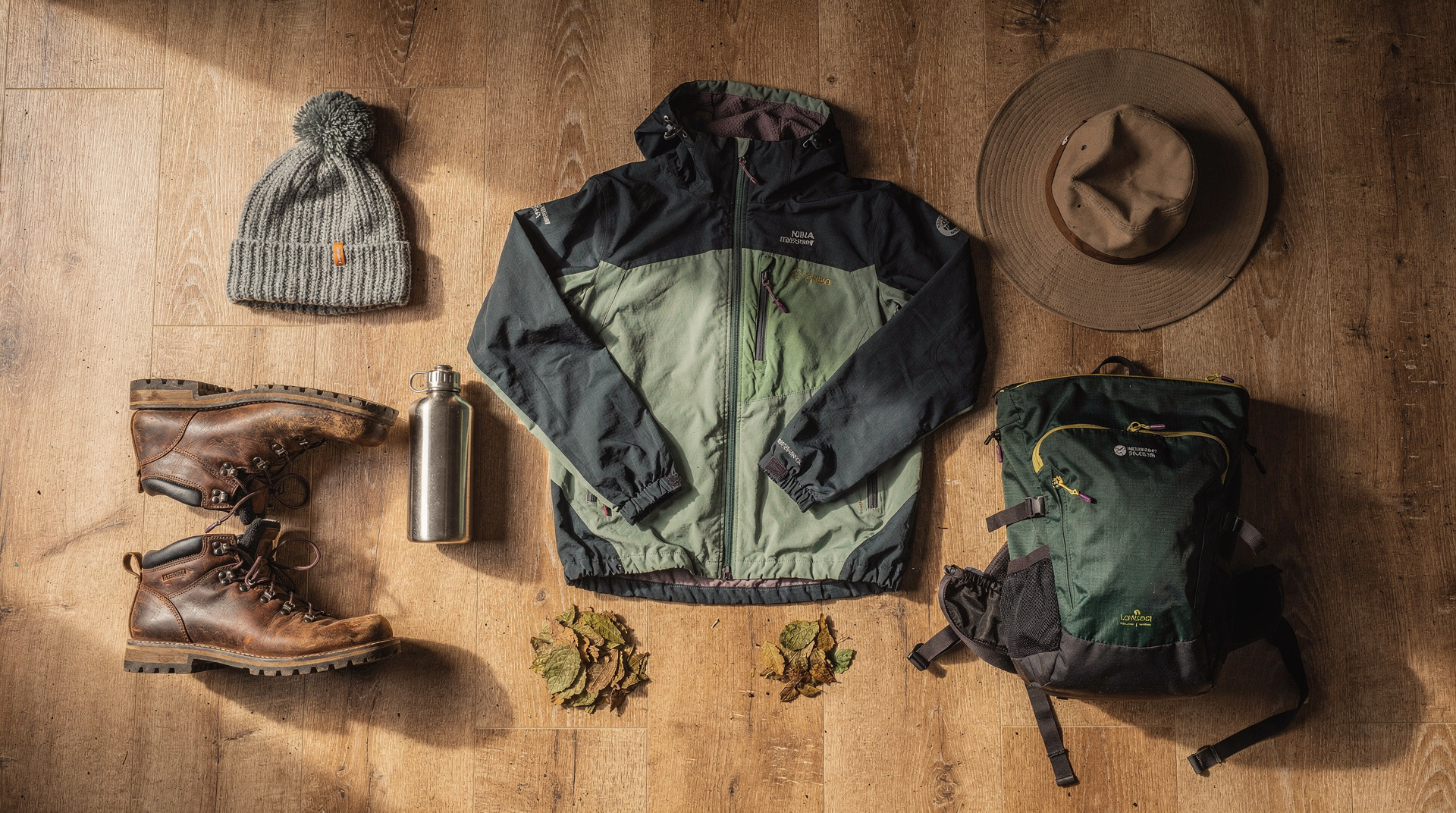
What to pack for the jungle: the what to pack for Cusco guide includes a jungle section. Key additions: long-sleeve shirts and trousers (mosquitoes, UV protection), proper insect repellent (DEET, not the gentle citronella alternatives), waterproof bag for electronics, rubber boots (the lodge provides them but bringing your own insoles is sensible), and binoculars if you have them. The guides have spotting scopes but having your own binoculars transforms the experience.
The Amazon from Cusco guide covers the full logistics — flights, lodge categories, what wildlife to realistically expect by season, and the comparative merits of the various operators.
Fitting it around the rest of a Cusco trip
The awkward part of adding the Amazon isn’t the jungle itself, it’s the scheduling: you need a return flight slot from Puerto Maldonado that doesn’t clash with your Machu Picchu train or your Sacred Valley day. I built my three days in after the Sacred Valley and before Machu Picchu, which meant re-acclimatising to 3,400m again on return — noticeably harder the second time, oddly, perhaps because the body had just adjusted to sea-level oxygen. If I did it again I’d put the jungle at the very start or very end of the trip rather than in the middle.
If you would rather have the Andean side handled in one block and then slot the jungle around it, an organised trip covering the Sacred Valley and Machu Picchu leaves you a clean window before or after for Tambopata. The Sacred Valley complete guide and the how many days in Cusco guide help you decide how much time the highlands deserve first, and the Peru trip cost guide is useful for seeing what the extra flights do to a budget.
Coming back down to the Andes
The jungle changes how you hear the rest of Peru. Back in Cusco the first thing I noticed was the silence at night and how quickly the thin air reminded me where I was. If you are building the Amazon into a longer route, the Cusco acclimatization plan is worth reading before you go back up, and the altitude sickness story shows what a bad re-entry can feel like. For the rest of the trip, the Machu Picchu complete guide and the Cusco trip planning guide help you slot the jungle days around the Inca sites without rushing either.
Wildlife: what’s realistic to expect
I want to be honest about expectations here, because some marketing implies a guaranteed wildlife parade. In three days I saw squirrel monkeys, a blue morpho, dozens of macaws and parrots at the clay lick, and a family of giant river otters — genuinely excellent by most standards. I did not see a jaguar, a tapir, or a harpy eagle, all of which are possible but rare even on longer stays. The Tambopata vs Manu guide is honest about the odds for each: Tambopata gives you reliable macaw and monkey sightings; the rarer megafauna favours Manu’s longer, pricier, harder-to-reach circuit.