Inca Trail 4-day trek: tour review
From Cusco: 4-Day Inca Trail Guided Trek to Machu Picchu
Why the classic Inca Trail still matters
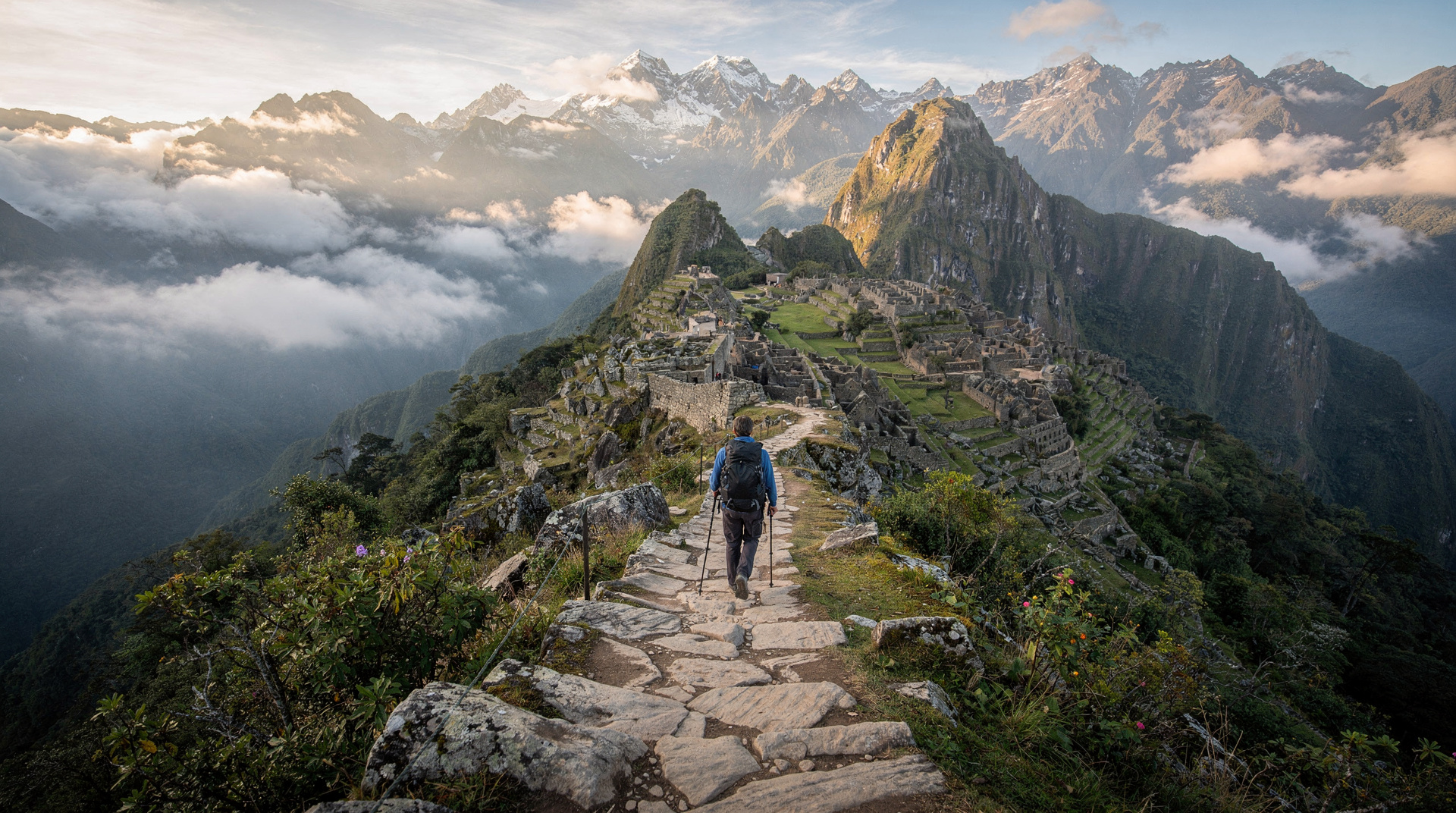
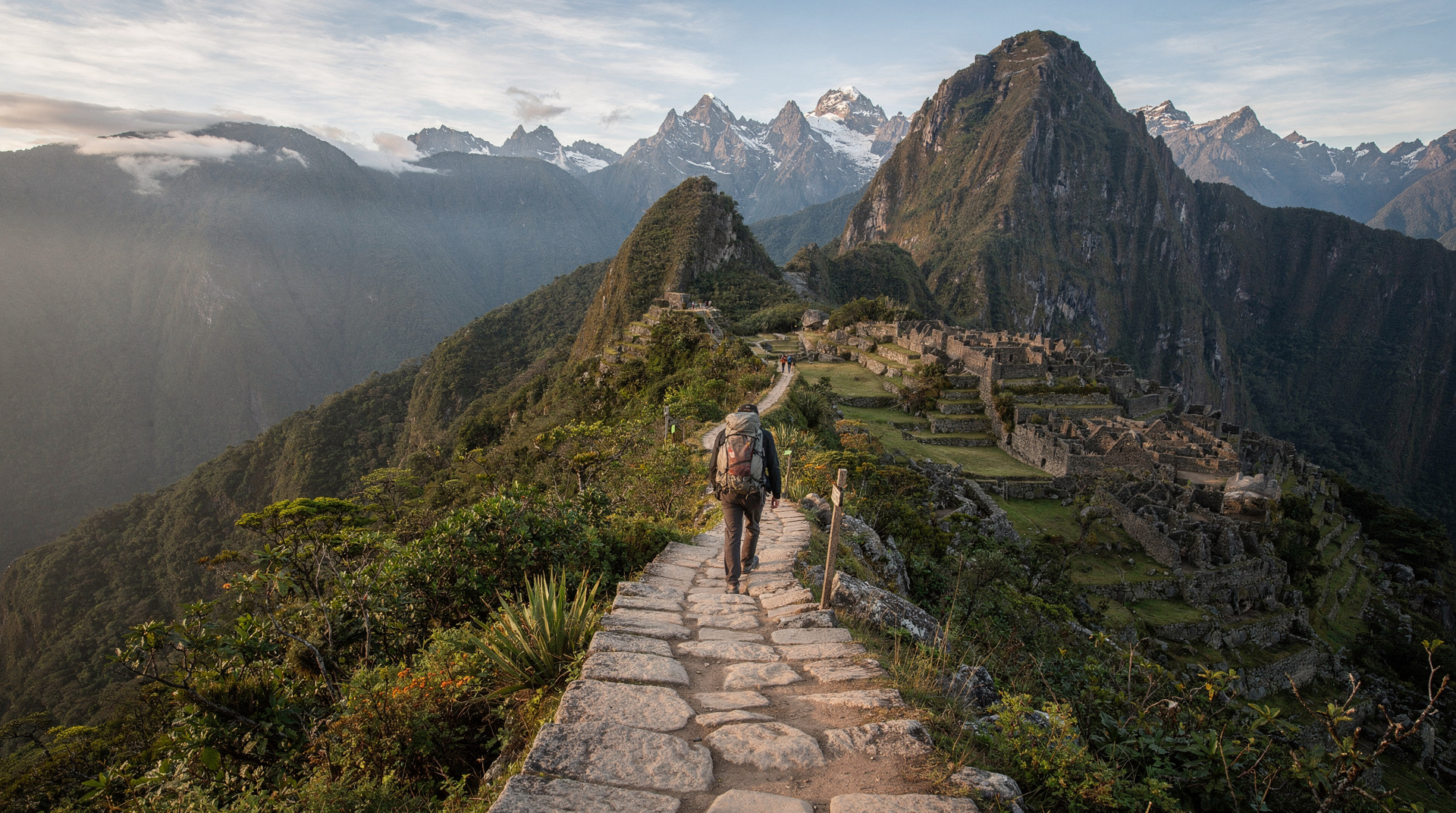
There are longer treks to Machu Picchu, cheaper treks, and treks with more dramatic scenery per kilometre. But the Inca Trail is the original paved Inca road, passing through cloud forest, alpine tundra and Inca ruins untouched since the 15th century. Arriving at the Sun Gate (Inti Punku) at dawn on Day 4, looking down at Machu Picchu below you in the valley, is one of the genuinely unrepeatable experiences in South American travel. This review tells you exactly what to expect, what the permit situation means in practice, and whether it is the right choice for your fitness level and budget.
| Distance | ~43 km over 4 days |
| Cost | S/1,750–2,800 (~$500–800), permit + full board |
| Highest point | Dead Woman’s Pass, 4,215 m (Day 2) |
| Booking window | 5–6 months ahead for June–August |
| Fitness needed | Genuinely fit; 5–7 hrs/day hiking with daypack |
| Closed | Every February for maintenance |
The four days: what actually happens
Day 1 begins in Cusco with a morning drive to Km 82 (Piscacucho), the official trail start at 2,640 m. The day’s walking is the easiest of the four — about 11 km along the Urubamba River valley, passing the ruins of Llactapata with views to the distant Salkantay massif. Altitude gain is gradual. Camp 1 is at around 3,100 m. It is a day for finding your legs and assessing how your body is responding to altitude.
Day 2 is the defining day: Inca Trail mythology in eight brutal kilometres. The climb to Dead Woman’s Pass at 4,215 m is relentless — around 1,200 m of elevation gain over roughly five kilometres. The path is original Inca paving throughout, which is beautiful and also uneven. Most trekkers take five to seven hours to reach the pass. The descent to Camp 2 at Pacaymayu (3,500 m) is steep enough to be hard on the knees. This is the day that separates the well-prepared from those who should have trained harder.
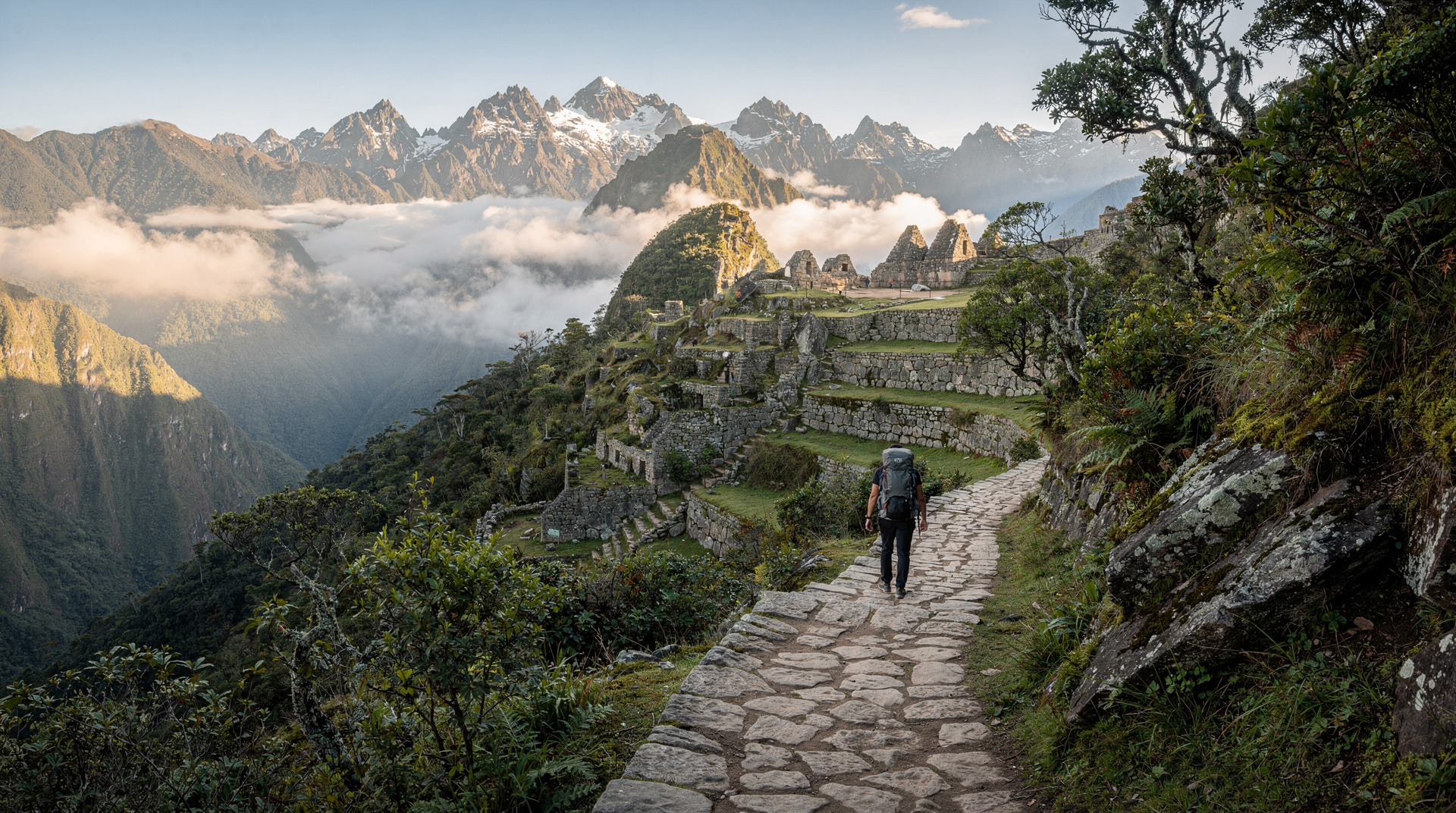
Day 3 is widely considered the most scenically varied: three Inca sites (Runkurakay, Sayaqmarca, Phuyupatamarca), two passes, and the descent through spectacular cloud forest to the Wiñay Wayna ruins. Camp 3 at Wiñay Wayna (2,650 m) is the most dramatic campsite on the trail, perched above agricultural terraces with Inca stonework visible directly below the tents.
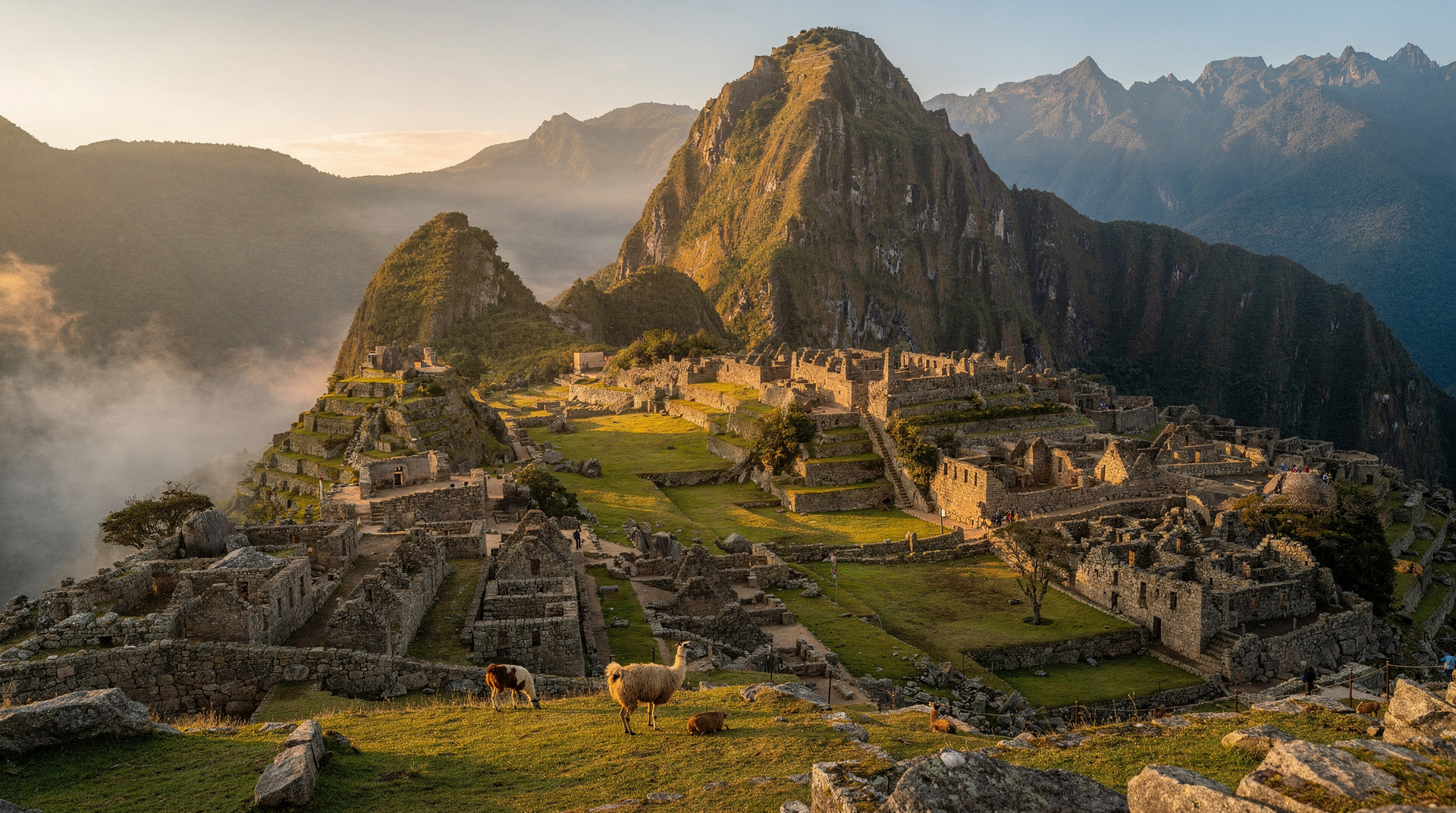
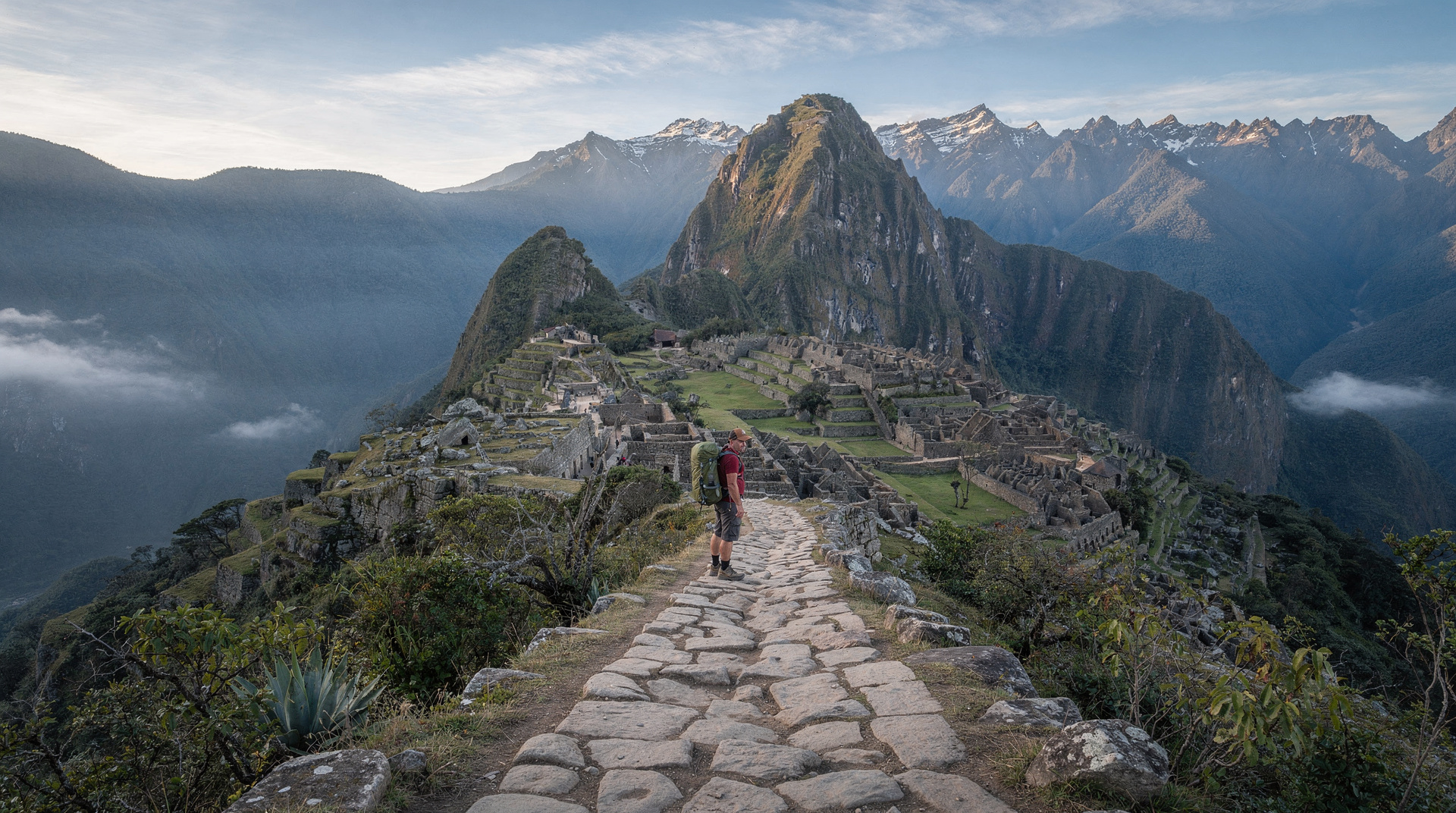
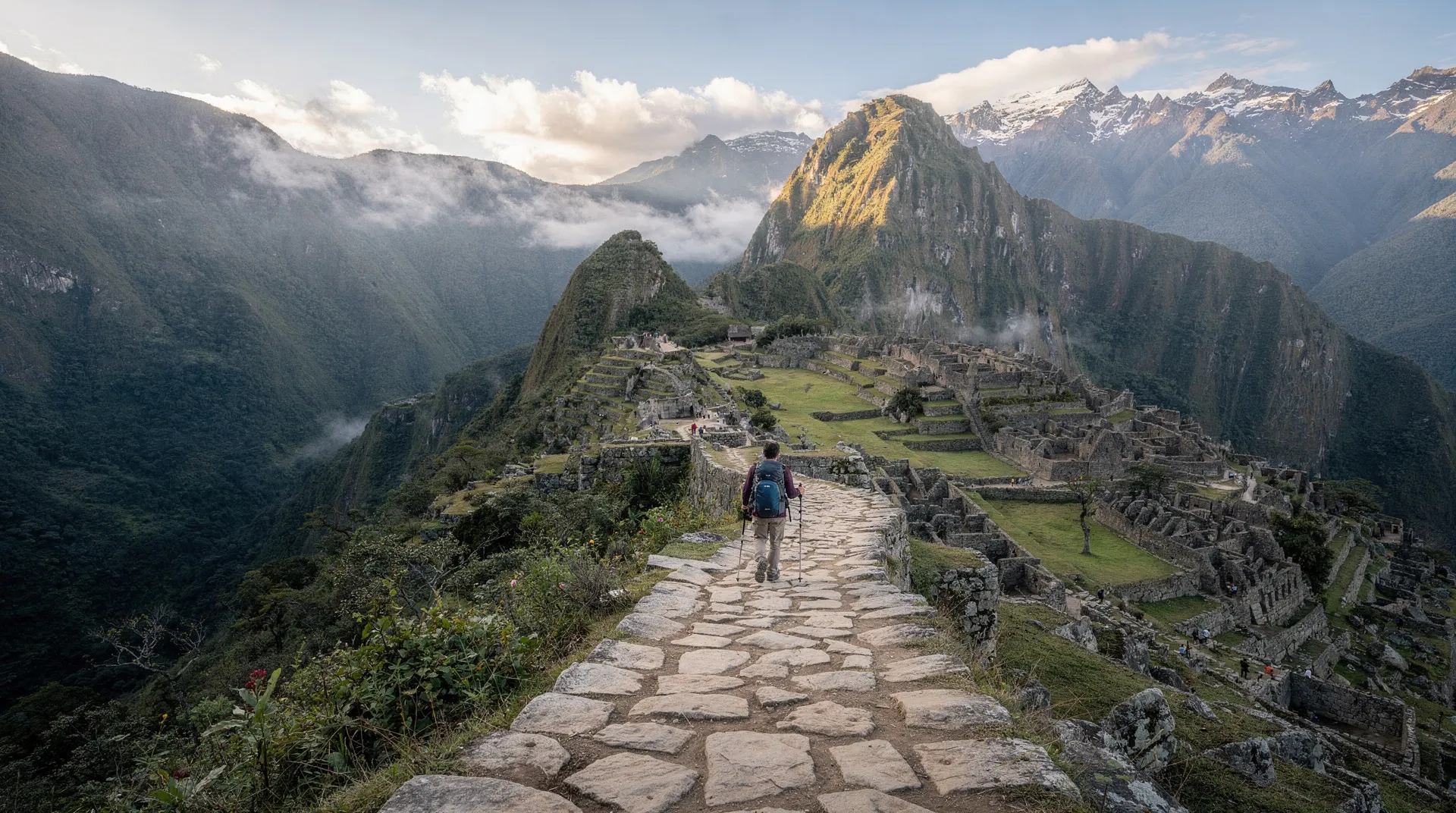
Day 4 begins at 3:30–4:00 am to queue for the Sun Gate (Inti Punku). The gate opens at first light. The walk from camp to the gate takes 45–60 minutes on stone steps in the dark. Your licensed guide leads you through. When the gate opens and the first sunlight hits the citadel below, the silence from the group of thirty or forty people is consistent and telling. Descent to the Machu Picchu citadel for a guided tour takes another 45 minutes. After the tour, you descend to Aguas Calientes for a welcome shower, lunch and the afternoon train back to Ollantaytambo, arriving in Cusco late evening.
Permits: the honest picture
The Inca Trail is managed by Peru’s Ministry of Culture with a strict daily limit set by the Ministry of Culture (750 visitors per day across the whole Inca trail network). The number of places per day is limited and the limit is not a marketing device — it is enforced.
The next year’s permit sales open in autumn or early in the year (2026 permits went on sale on 17 November 2025): check the date on the official platform, tuboleto.cultura.pe, or with your operator. Peak months (June, July, August) routinely sell out within 24–48 hours of the sales window opening. September and May typically take one to two weeks to fill. November through January can often be booked two to three months ahead.
Book the 4-day Inca Trail permit and tour through a licensed operator as early as possible — you cannot buy a permit independently. All permits are issued to licensed operators by the Ministry of Culture, and operators must submit trekker passport details when booking. Your passport number is on your permit; bring the exact document.
The practical implication: if you are planning a trip to Peru without having confirmed Inca Trail availability, check availability before booking your flights, not after.
What is and is not included
Most reputable operators include: government permit, return train (Aguas Calientes to Ollantaytambo), all meals on the trail, cook, kitchen staff, porters for communal equipment, licensed bilingual guide, and Machu Picchu citadel entry ticket. Some include a sleeping bag rental; most do not. Trekking poles are rarely included.
Not included: personal porter (optional add-on), tips for the porter and cooking team (factor in $10–15 per porter per day as a guide), sleeping bag if not hiring, any meals in Aguas Calientes or Cusco outside the trek, and travel insurance (required by all legitimate operators).
Who this trek suits
The Inca Trail at four days suits travellers who are genuinely fit, have spent at least two to three days acclimatising in Cusco or the Sacred Valley before Day 1, and have pre-existing hiking experience on multi-day trips. Day 2 will test everyone — including experienced trekkers — at altitude. It is not suitable for travellers with heart or respiratory conditions, knee or hip problems, or those who have not yet acclimatised at all.
The minimum recommended age for most operators is 12; children can and do complete this trek, though the physical demands are real. See the Cusco with kids guide for family-specific advice. The altitude sickness guide is essential pre-reading.
Altitude: a straightforward breakdown
Minimum pre-trek acclimatisation: two full days at Cusco (3,400 m) or one day in Cusco followed by one day in Ollantaytambo (2,800 m), which also conveniently positions you for an early Day 1 start. Three days is better. The acclimatisation planner helps sequence this.
On the trail, Dead Woman’s Pass (4,215 m) is significantly higher than anything in the Rainbow Mountain area (5,200 m is higher, but Rainbow Mountain is a day trip whereas the Inca Trail commits you to multiple days at altitude). Most trekkers experience some degree of headache and reduced pace on Day 2 — this is normal. Diamox (acetazolamide) is used by some trekkers; discuss with your GP before travel.
Honest pros and cons
Pros: The only route that walks original Inca paved roads through intact cloud forest and ruins to arrive at Machu Picchu on foot. The Sun Gate arrival is the most memorable single moment in Cusco-region travel. Small daily group limits mean the trail itself is far less crowded than Machu Picchu’s citadel. All-inclusive format means no logistical complexity on trail — meals, camp and guide are fully managed. Porter teams are local Quechua communities for whom this is significant employment.
Cons: The most expensive single tour product in the Cusco region — S/1,750–2,800 (~$500–800) per person is typical, depending on operator quality and season. Must be booked months ahead. Physically demanding in ways that go beyond most travellers’ normal fitness level. February closure forces a change of plans. No bail-out option: once on trail, you are committed for four days in a wilderness environment. The Machu Picchu citadel section on Day 4 is shared with hundreds of day-trippers who arrive by bus — the trek’s exclusive arrival at the Sun Gate does not translate into an exclusive citadel experience.
The ruins along the way: what you actually see
One of the Inca Trail’s structural advantages over all alternative routes to Machu Picchu is that the trail itself passes through four significant archaeological sites before arriving at the citadel. These are not detours or side trips — they are on the main route.
Llactapata (Day 1, approximately 2,700 m): A complex of agricultural terraces and structures in the Aobamba valley, believed to be a tambo (waystation) on the royal Inca road network. Recent research suggests it may also have functioned as a site for observing Machu Picchu across the valley — the alignment of Llactapata’s solar tower with Machu Picchu’s Intihuatana stone during the June solstice has been documented.
Runkurakay (Day 3, approximately 3,800 m): A round structure of uncertain function — possibly a watchtower, possibly a tambo. Its circular plan is rare in Inca architecture and its position overlooking the Pacaymayu valley made it an important route control point.
Sayaqmarca (Day 3, approximately 3,625 m): A heavily fortified complex built on a narrow ridge, accessible by a single steep staircase. The name translates roughly as “inaccessible town.” The complex includes residential sectors, water channels and a ceremonial sector, and was likely a permanent settlement rather than a waystation.
Phuyupatamarca (Day 3, approximately 3,600 m): “Town above the clouds” — a ceremonial complex with five circular fountains still functioning after 600 years, fed by a natural spring channelled by Inca engineering. The site sits on a cloud forest ridge and is frequently partially obscured by mist. In clear weather, it offers the first visible Machu Picchu mountain in the distance.
Wiñay Wayna (Day 3, late afternoon, approximately 2,650 m): The largest site on the trail before the Sun Gate. Ceremonial fountains, residential terraces, an upper ceremonial sector and spectacular lower agricultural terraces. Many trekkers rate Wiñay Wayna as a more impressive ruin than any of the individual sectors within Machu Picchu, partly because it is seen without crowds and without ticketing pressure.
This sequence of sites gives the Inca Trail a narrative quality that no other route to Machu Picchu has — you are following the original road through the structures it connected, arriving at Machu Picchu as the road’s destination rather than as a tourist site at the end of a bus ride.
How it compares to the Salkantay alternatives
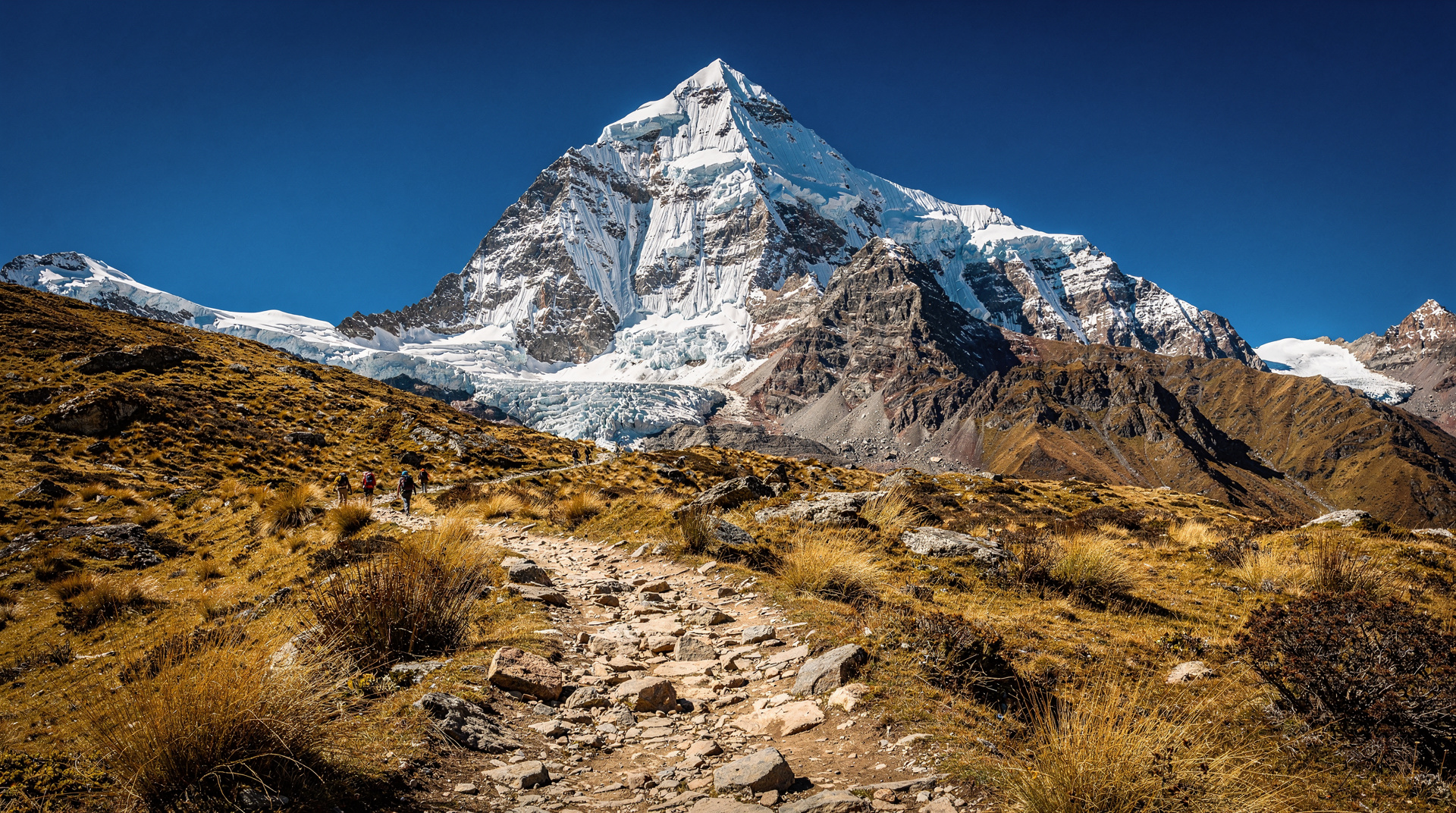
The 5-day Salkantay trek is the most popular alternative, passing beneath the 6,271 m Salkantay massif through extraordinary high-alpine scenery before descending through cloud forest to Aguas Calientes. No permits required (permits are Inca Trail-specific), bookable with far shorter lead times, generally 30–40% cheaper, and many experienced trekkers consider the raw scenery more dramatic than the Inca Trail. The trade-off: you do not walk original Inca roads, and you miss the Sun Gate arrival.
The 4-day/3-night Salkantay route compresses the five-day version for travellers with tighter schedules. Days are longer and more demanding, but the essential Salkantay Pass crossing (4,630 m — significantly higher than Dead Woman’s Pass) is included. This is the right choice if budget or schedule rules out the five-day version.
The detailed comparison of both approaches is in the Inca Trail vs Salkantay guide and the best treks to Machu Picchu guide.
Choosing an operator: what actually matters
Not all licensed Inca Trail operators are equal, and the permit system’s fixed structure (a limited number of daily spots) means price differences reflect service quality more than access.
The variables worth asking about before booking: porter welfare (reputable operators cap porter loads at 20 kg per person under Peruvian law and provide proper tents, food and boots — ask directly, since underpaying and overloading porters remains a real problem with budget operators); group size (8–12 trekkers per guide is the useful benchmark; larger groups slow the pace and dilute interpretation); toilet tent provision (a genuine comfort factor over four days of camping); and the cook’s reputation, since trail food quality varies enormously between operators using the same ingredients.
Read recent reviews specifically for mentions of porter treatment and camp food, not just summit-day photographs. It is also worth confirming whether the operator’s guides are permanently employed rather than freelanced per trip — permanent staff tend to know the route’s ecology, ruins and local history in more depth, and their continuity with the same porter teams tends to produce a smoother camp routine over the four days.
Day-by-day distance and difficulty at a glance
| Day | Distance | Key climb | Camp altitude |
|---|---|---|---|
| 1 | ~11 km | Gradual | 3,100 m |
| 2 | ~8 km | Dead Woman’s Pass, 4,215 m | 3,500 m |
| 3 | ~16 km | Two passes, cloud forest descent | 2,650 m |
| 4 | ~6 km | Sun Gate approach, pre-dawn | Machu Picchu, 2,430 m |
Pricing reference (2026)
Standard operator package (permit, meals, train, guide): approximately S/1,750–2,100 ($500–600) per person. Mid-range operators with better camps and smaller groups: S/2,100–2,800 ($600–800). Budget operators are rare because the permit cost alone is fixed at around S/350 (~$100) plus operator fees. The government permit fee is non-refundable if you cancel; check operator cancellation policies carefully.
Porter team tips are additional: budget S/50–70 per porter for the full four days (typically eight to twelve porters per group of eight trekkers), plus S/40–60 for the cook and guide.
Verdict
The 4-day Inca Trail is not the cheapest, not the most accessible, and not the most bookable last-minute. It is the most historically and emotionally resonant trek in South America for travellers who can commit to proper preparation. Book the moment your travel dates are confirmed — permit availability is the single biggest constraint — train for the altitude in the months before you depart, and budget properly for tips and equipment. If permits are sold out or the price is prohibitive, the Salkantay Trek is a genuinely excellent alternative, not a consolation prize.
Read the Inca Trail complete guide and the permits guide before confirming your booking. The 4-day Inca Trail itinerary covers daily logistics in detail.