Salkantay trek 5-day tour: tour review
Cusco: 5-Day Salkantay Ultimate Trek to Machu Picchu
The alternative that stopped being an alternative
Ten years ago, the Salkantay trek was the recommendation for travellers who could not get Inca Trail permits. Today it stands as a first choice in its own right, with a strong case that its scenery surpasses the classic route on raw mountain drama, its flexibility (no permits, shorter booking windows) suits modern travel planning, and its price point opens multi-day trekking to Machu Picchu to a broader range of budgets. This review gives you the honest picture of what five days on the Salkantay route actually involves.
| Where | Mollepata to Aguas Calientes, Cusco region, Peru |
| Cost | around S/700–2,100 (~$200–600) per person, depending on camping vs. lodge |
| Time needed | 5 days / 4 nights, plus 2–3 acclimatisation days beforehand |
| Getting there | Operator pickup from your Cusco hotel on Day 1 |
| Best time | May–September (dry season); avoid February if possible |
The five days in detail
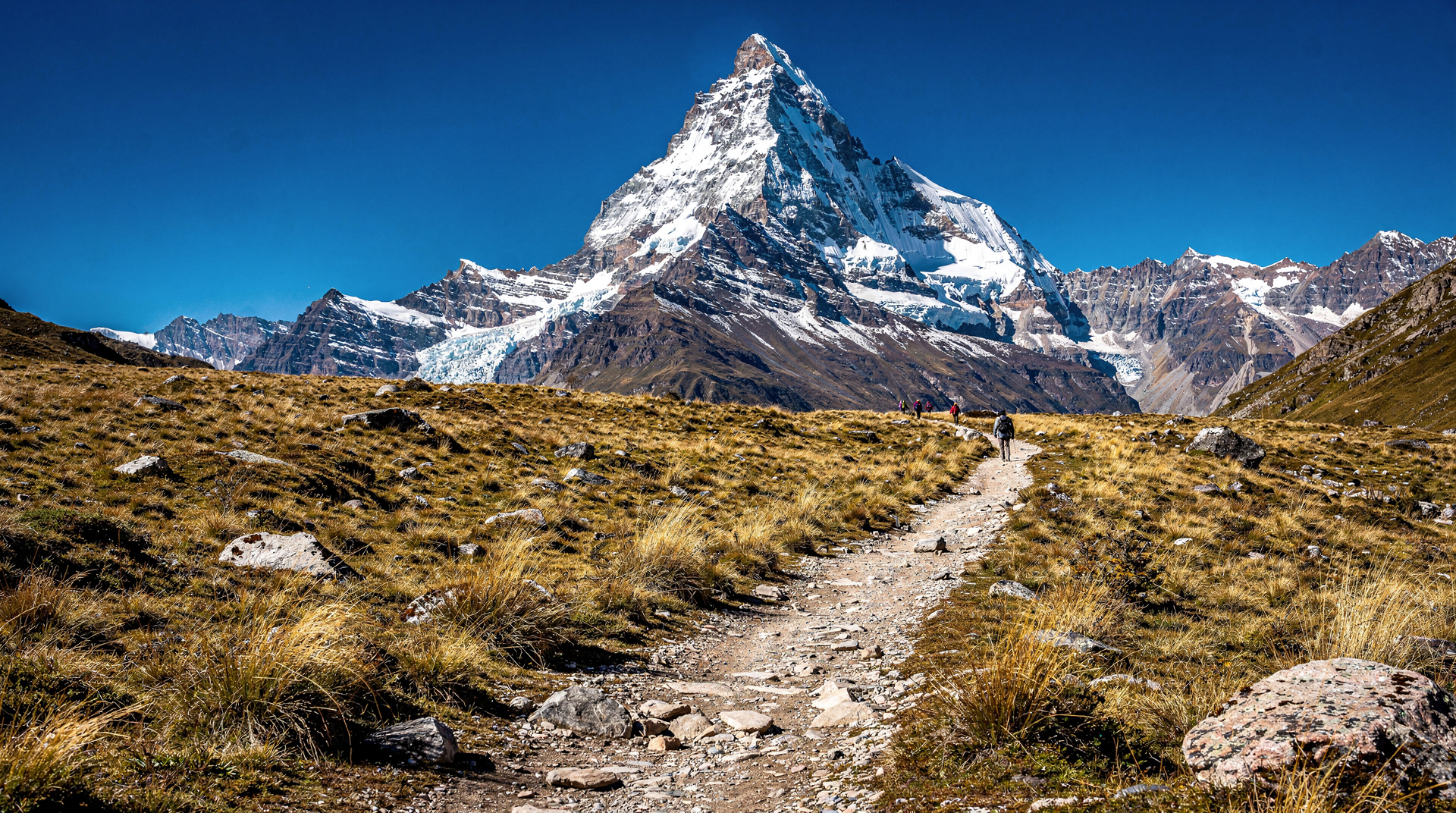
Day 1: Morning drive from Cusco to Mollepata (2,780 m), then by vehicle or mule to the Soraypampa base camp (3,860 m). Depending on your operator, you may walk a portion of this first leg as an introduction to trail conditions. Soraypampa camp is directly beneath the Salkantay glacier — on clear evenings the peak is strikingly close. Altitude gain is significant for a first day; do not underestimate it.
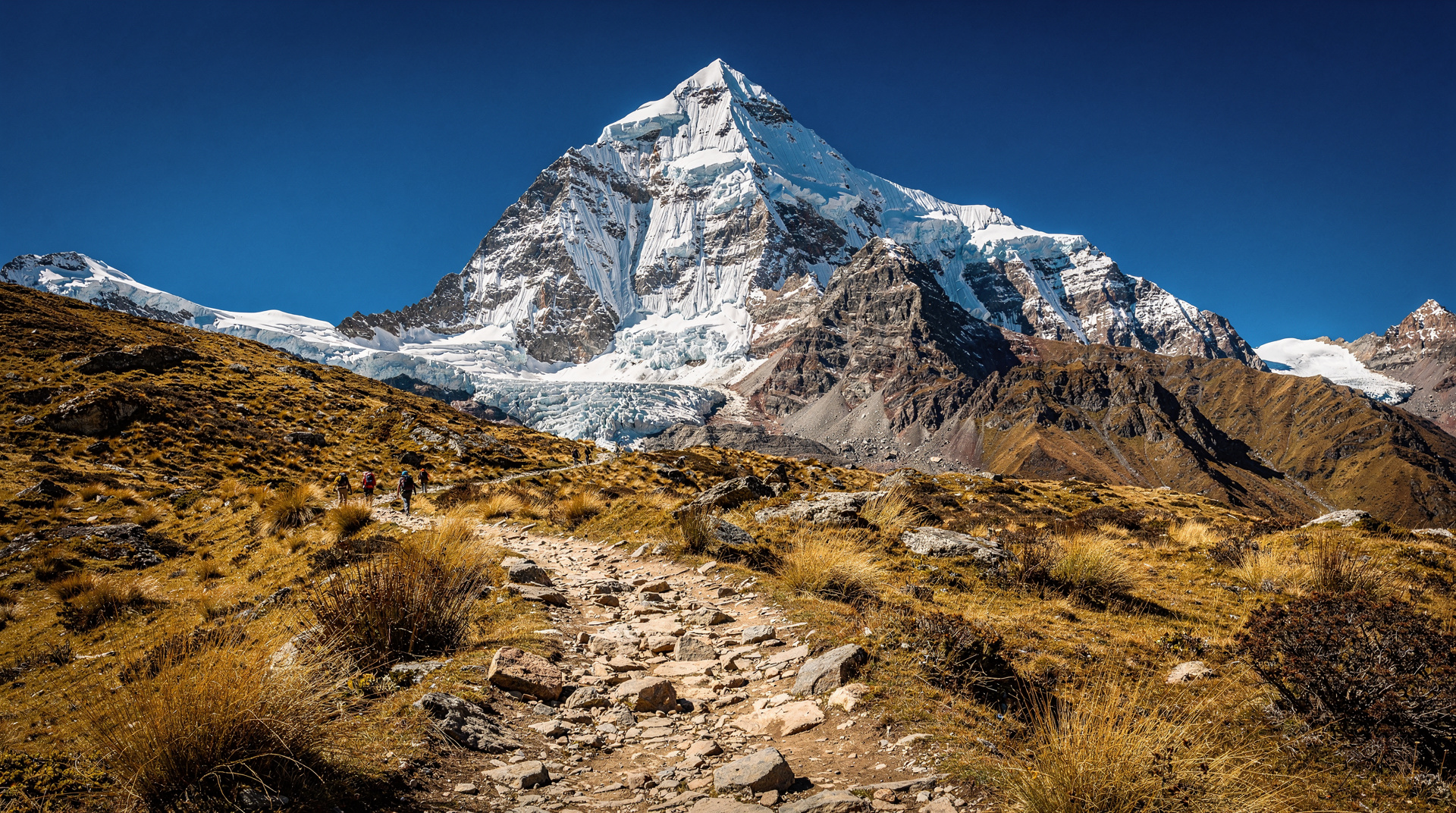
Day 2: The defining stage. The climb from Soraypampa to the Salkantay Pass at 4,630 m is 770 metres of ascent over roughly four kilometres — demanding even for fit trekkers. The pass itself is exposed and often cold and windy; your guide will lead you through quickly. The descent to Huayraccmachay or Wayracmachay at around 3,300 m is long (six to eight hours total from camp) and the trail conditions vary from rocky moraine to muddy cloud forest as you descend. This is the hardest and most memorable day.
Day 3: The character of the route shifts entirely. You leave the Andean highlands behind and descend into the subtropical cloud forest zone, passing La Playa (2,400 m) or Collpapampa (2,900 m) depending on your operator’s route. Walking is easier on gradients, but trails can be muddy in rainy season. This stage has some of the most beautiful cloud forest scenery in the region — tree ferns, bromeliads, hummingbirds.
Day 4: Arrival at Aguas Calientes or at the Hidroeléctrica station with a walk along the train tracks. Some operators route Day 4 to Aguas Calientes by road and rail from Hydroelectric; others walk the full Hidroeléctrica-to-Aguas Calientes riverbank trail (approximately three kilometres on flat terrain). In Aguas Calientes, a welcome shower and evening in a proper bed — the last night before Machu Picchu.
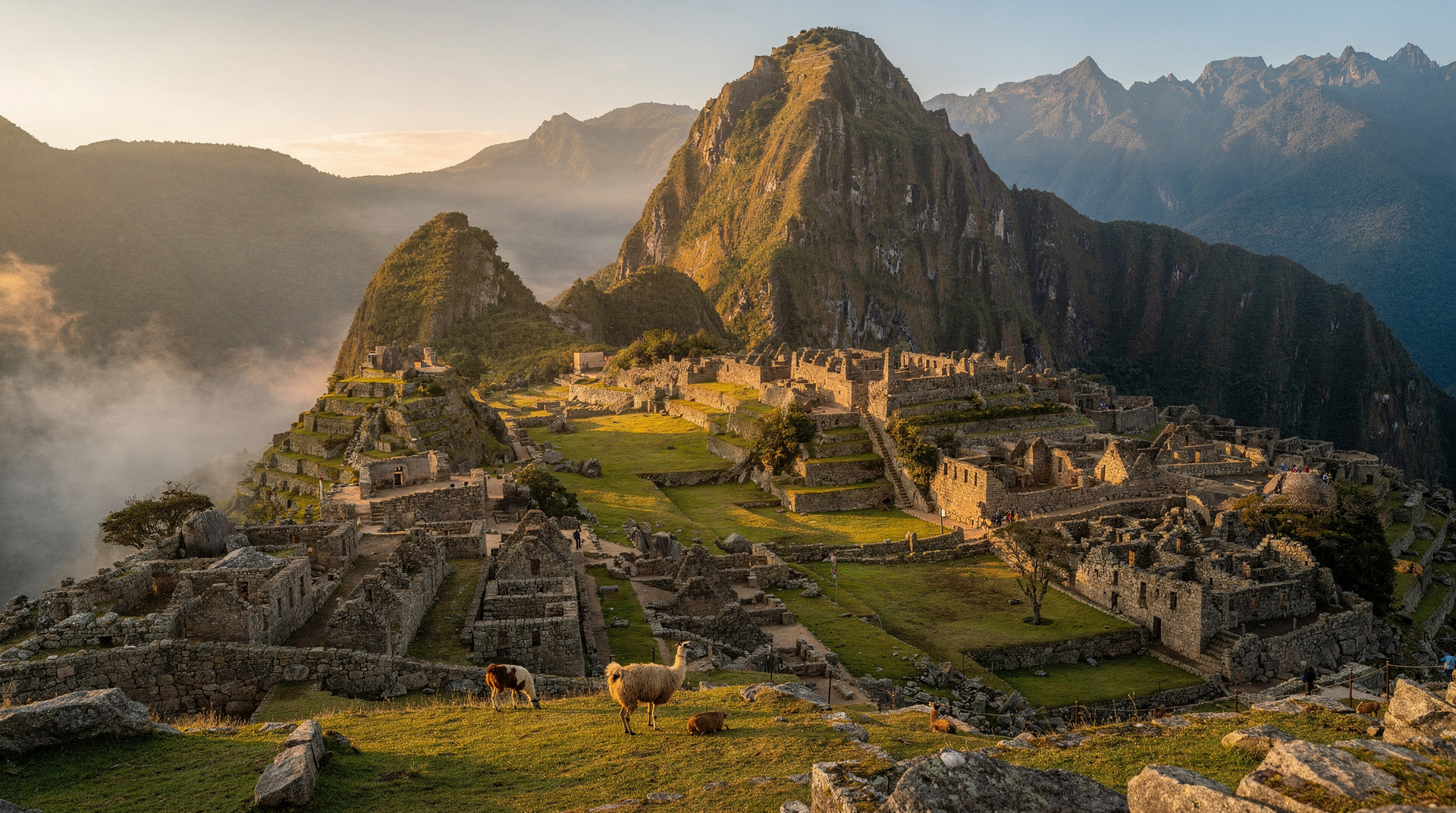
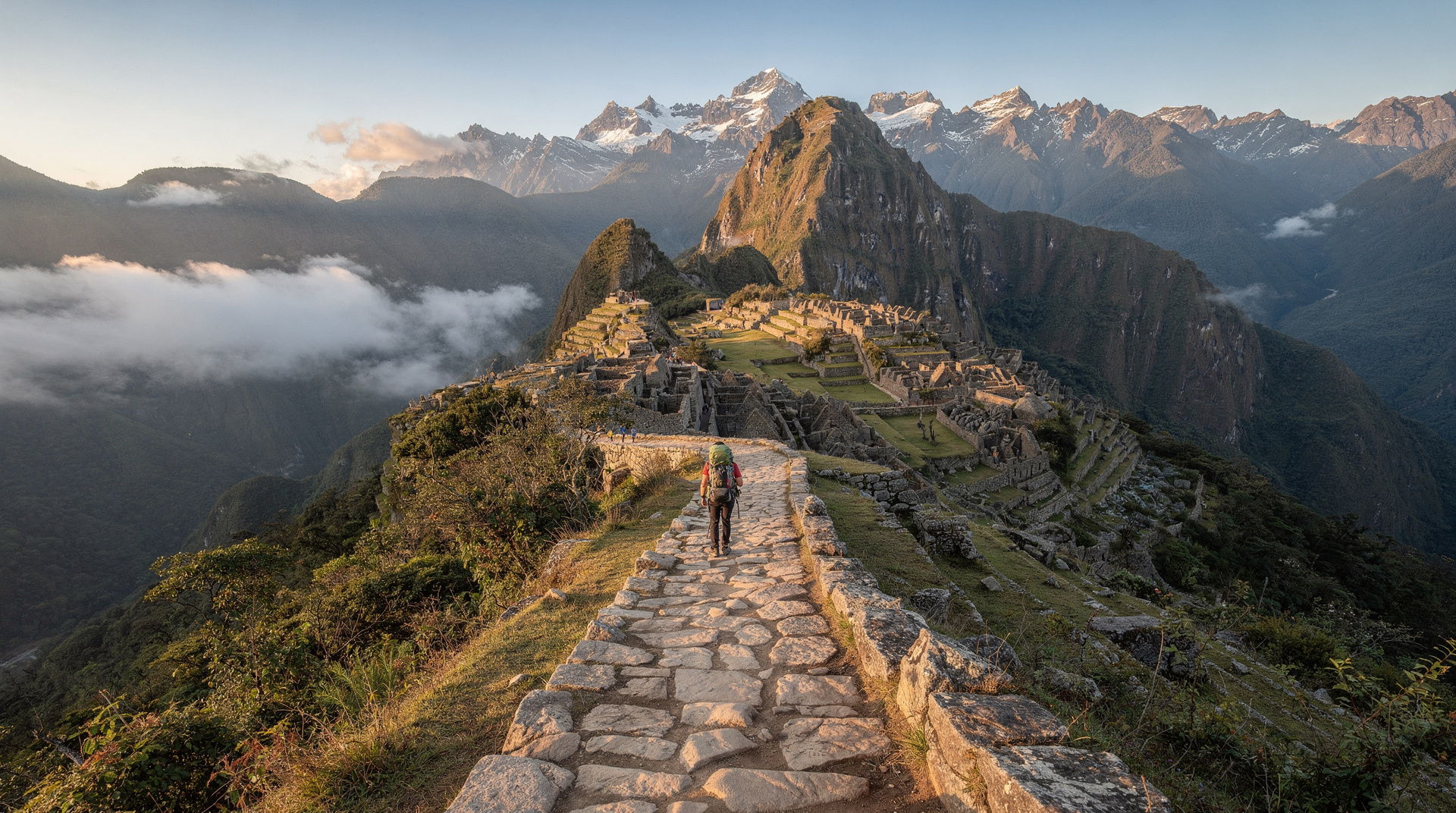
Day 5: Early start for the bus to Machu Picchu, guided tour of the citadel, return to Cusco by afternoon/evening train from Aguas Calientes to Ollantaytambo.
What is included
Book the 5-day Salkantay trek with accommodation and Machu Picchu entry — standard inclusions across most operators: return transport from Cusco to the trailhead, all trail accommodation (camping or lodge depending on package), all meals on the trail and in Aguas Calientes, cook and kitchen team, licensed bilingual guide, porters for communal equipment, Machu Picchu citadel entrance ticket, and return train from Aguas Calientes to Ollantaytambo.
Not included: sleeping bag (hire or bring your own), trekking poles (strongly recommended — hire in Cusco for around S/20–30 per day), travel insurance (required), tips for porter and cook teams, and personal porter if desired.
Who this trek suits
The Salkantay five-day is well-matched to travellers who are fit, acclimatised, and want a multi-day wilderness experience that justifies the logistics with genuine mountain drama. It is better than the Inca Trail for those who dislike group size constraints (Salkantay has no daily limit equivalent), those booking with under three months’ notice, those who want the option of February travel, and those working to a mid-range budget.
It is not appropriate for travellers who have not yet acclimatised at altitude — the Day 2 pass at 4,630 m is genuinely high — or for those with knee problems who will struggle on the steep Day 2 descent over loose stone. Trekking poles are essential, not optional.
The Salkantay massif: what you are looking at
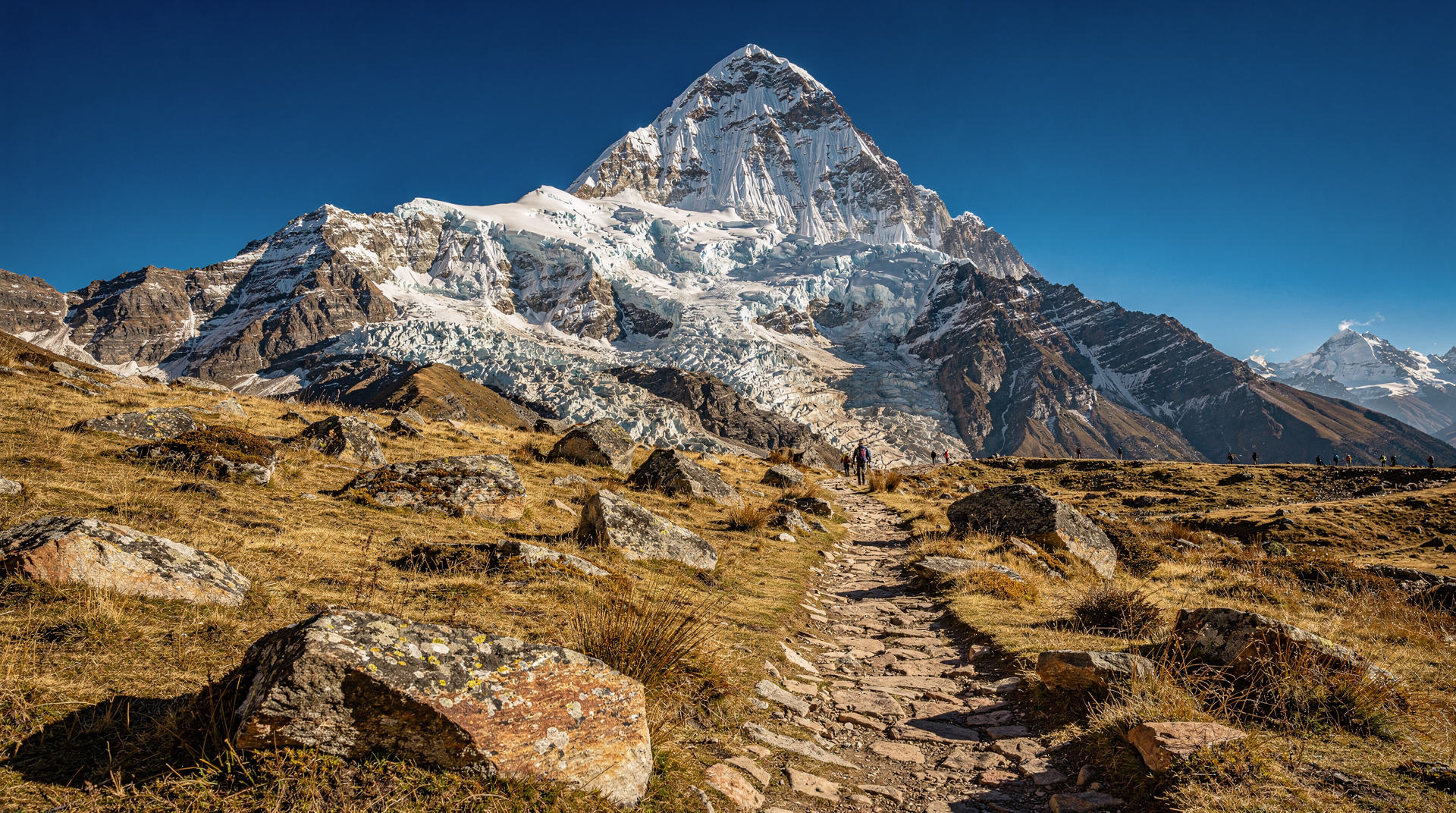
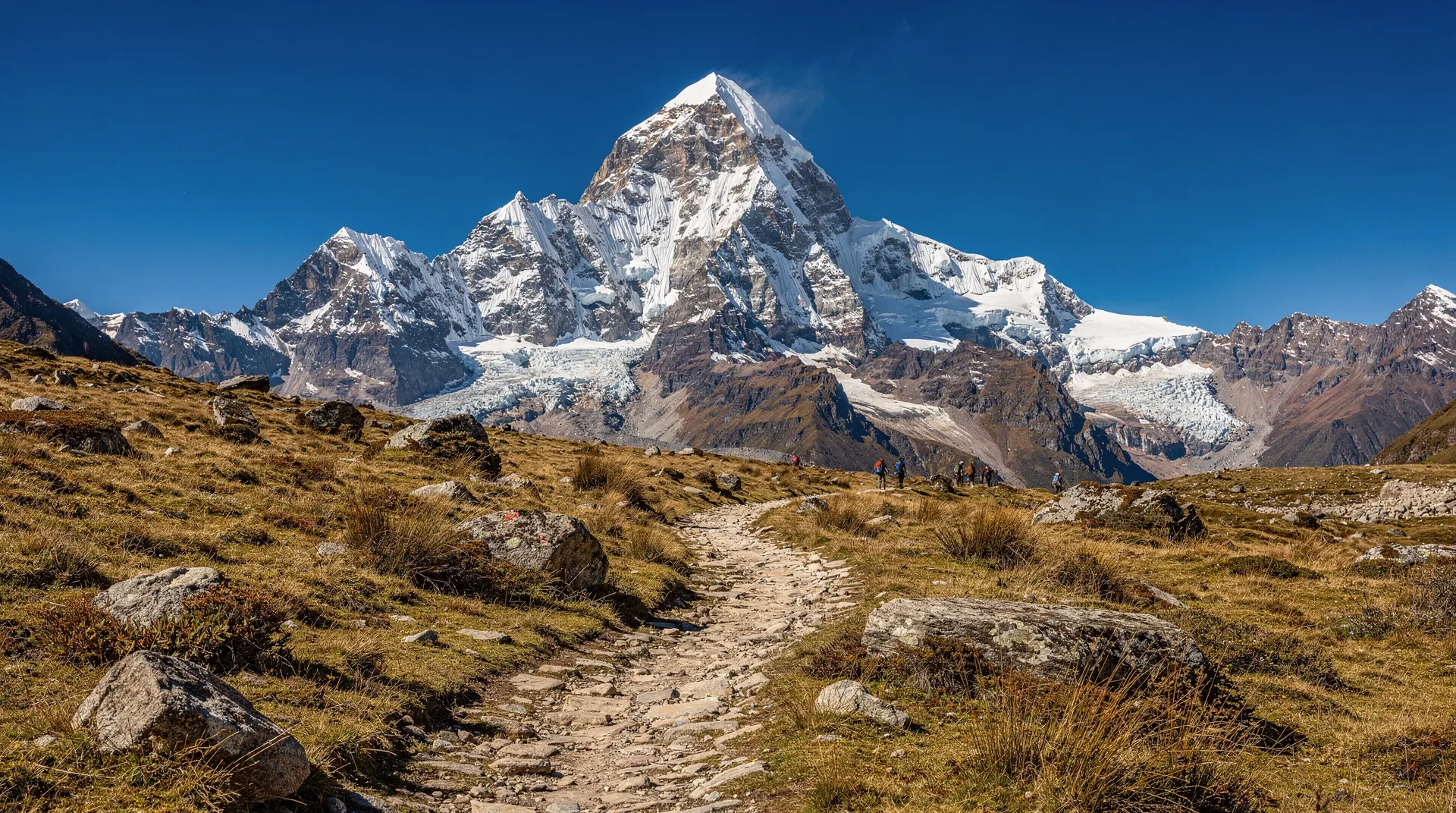
The Salkantay peak at 6,271 m is the highest mountain in the Vilcabamba range and the fifth highest in Peru. Its name in Quechua translates roughly as “savage mountain” or “wild mountain” — a reference to its notoriously difficult weather and its formidable appearance. Unlike Cusco-region mountains shaped by volcanic activity, Salkantay is a glaciated peak shaped by massive tectonic uplift: the rock at its summit was once ocean floor, raised to 6,000 m by the continuing collision of the Nazca and South American tectonic plates.
From the Salkantay Pass (4,630 m) on Day 2, you stand directly beneath the glaciated flanks of the peak — close enough to see the crevasse patterns on the lower glacier and the icefalls descending from the summit ridge. This is one of the most physically immediate encounters with a major Andean peak available on any standard trekking route in Peru. The visual scale is significant.
The Salkantay glacier has retreated substantially over the past 30 years, consistent with the broader pattern of Andean glacier loss driven by regional temperature increases. Humantay Lake (visible from the upper slopes of the Day 1 approach) exists in its current form partly because of that meltwater — the lake expanded as the glacier above it retreated. A good guide will acknowledge this context without using the trek as a climate lecture platform.
In Quechua cosmology, Salkantay is one of the most powerful apus — not a benign protector like some peaks but a genuinely formidable spiritual presence. The offerings at the shrines near the pass (small cairns of rock with coca leaves and sometimes flowers) are sincere requests for safe passage from a mountain that the communities living nearby still regard with genuine reverence.
Altitude reality
The Salkantay Pass at 4,630 m is 415 m higher than the Inca Trail’s Dead Woman’s Pass. At that altitude, exertion feels meaningfully harder than at 4,200 m. You will need at minimum two full days acclimatisation in Cusco (3,400 m) or ideally Ollantaytambo (2,800 m) before starting. Three days is better. Some trekkers take Diamox prophylactically for the high-altitude days; discuss with your doctor before travel. The acclimatisation planner and altitude sickness guide cover this in full.
Humantay Lake (4,200 m) is on the edge of the Salkantay drainage and is sometimes incorporated as a side trip on some operators’ version of Day 1 or Day 2 — it is a good acclimatisation indicator, and a poor sign if you are struggling there before the pass.
Honest pros and cons
Pros: No permit required — book with weeks rather than months of notice. High-altitude scenery on Day 2 is raw and extraordinary. Cloud forest descent is lush and dramatically different from the high Andes. Generally 20–40% cheaper than the Inca Trail for a comparable service level. Open in February. Lodge-to-lodge options provide much greater comfort than tented Inca Trail camps.
Cons: The Salkantay Pass day (Day 2) is the hardest single day of any standard Cusco-region trek — it is not for the under-prepared. No original Inca roads or intermediate ruins (the Inca Trail’s primary experiential advantage). The Machu Picchu arrival on Day 5 is by bus from Aguas Calientes rather than the Sun Gate on foot — you arrive the same way as a day-tripper. Cloud forest sections can be very muddy in rainy season. Budget camping versions can be uncomfortable.
Operator quality and what to look for
Not all Salkantay trek operators are equal, and the price range from S/700 to S/2,100 for essentially the same route reflects real differences. The variables that matter most:
Guide qualification: A certified bilingual guide with Salkantay-specific experience knows where to pause for the best Salkantay massif views (they vary significantly along the trail), how to read the weather on the pass (afternoon cloud is common and the pass in white-out conditions is disorienting), and what to do if a trekker shows serious altitude sickness symptoms at 4,630 m. Ask your operator specifically about their guide’s certification and experience.
Porter conditions: Reputable operators comply with Porter Protection Law standards — porters must carry no more than 25 kg including personal gear, receive hot meals, have access to appropriate shelter, and be paid fair wages. Budget operators cutting costs frequently violate these standards. Asking about porter conditions before booking is not naïve; it is due diligence. Operators who are transparent about their porter welfare practices are reliably better across other quality metrics too.
Camp and lodge specifics: For camping versions, ask exactly which campsites are used — some are significantly better positioned, drier, and more scenic than others. For lodge versions, ask for the specific lodge names and check reviews independently. The Salkantay route has seen rapid lodge development in recent years; some new lodges are excellent, others are still finding their footing.
Group size cap: Some budget operators fill groups to 20 or more. The Salkantay Pass at 4,630 m with 20 people is a slower, more stressful experience than the same pass with 8. Maximum 12 is a reasonable benchmark; 8 or fewer is better.
Emergency protocols: At a pass of 4,630 m in remote terrain, ask what the operator’s protocol is for altitude emergencies. Legitimate operators have an established relationship with the nearest medical facility and have evacuated trekkers before. If the answer is vague or dismissive, reconsider.
Packing for the five days
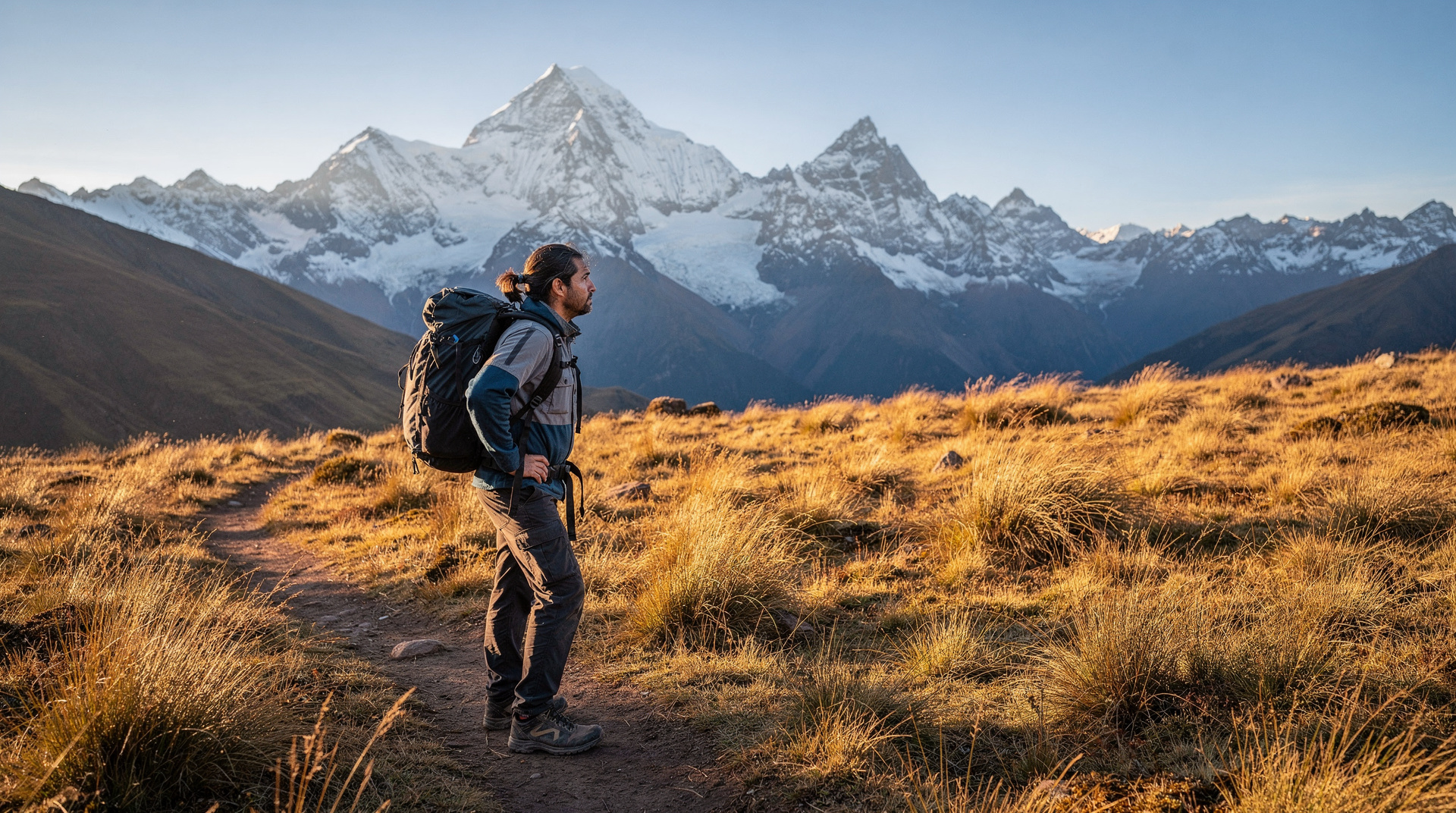
Layering is the single most useful packing principle: the Salkantay route moves from near-freezing pre-dawn starts at Soraypampa (3,860 m) to warm, humid cloud forest by Day 3, sometimes within the same 24 hours. A base layer, a fleece or light down jacket, and a waterproof shell cover most conditions. Trekking poles are close to essential on the Day 2 descent — hire them in Cusco for around S/20–30 per day if you do not own a pair. A 30–40 litre daypack is enough if your operator provides duffel transport for the rest of your gear (most do, on a weight limit of around 7 kg).
Footwear matters more on this trek than on many others: broken-in waterproof hiking boots with good ankle support handle the loose stone of the Day 2 descent far better than trail runners. A headlamp is necessary for the early Day 5 start and any camp use. Sun protection is easy to underestimate at altitude — strong sunscreen, a hat, and sunglasses rated for high UV are worth the extra weight. For the cloud forest stretch on Days 3 and 4, add a rain jacket regardless of season; the microclimate produces rain even in the dry months. The what to pack for Cusco guide covers the wider packing list for the trip beyond the trek itself.
Booking timing and group considerations
Because no permit is required, Salkantay bookings are far more forgiving than the Inca Trail’s six-month lead time. Two to four weeks’ notice is typical for most of the year, and last-minute bookings (a week or less) are sometimes possible outside peak months. That said, peak season — June through August — sees the best lodges and most reputable operators fill their small-group departures first, so booking a month or more ahead in that window secures better guides and better-positioned campsites rather than whatever capacity is left.
Solo travellers should ask specifically how groups are assembled: most operators combine solo bookings into shared departures of 6–12 people, which keeps costs down and is the standard, sociable way to do the trek. Private departures are available at a significant premium and suit travellers with specific pacing needs — a slower group member, a photography-focused itinerary, or a family wanting flexibility on Day 2’s demanding stage.
Connecting the Salkantay to the broader Cusco trip
Most travellers do the Salkantay trek within a seven to ten day Cusco itinerary. The typical sequence: one to two days in Cusco for acclimatisation, the five-day Salkantay trek (ending in Aguas Calientes on Day 4, Machu Picchu on Day 5, return to Cusco on Day 5 evening), followed by one or two additional days for any remaining Cusco-area activities — the Sacred Valley, Rainbow Mountain, or rest before onward travel.
If your itinerary includes both the Salkantay trek and a separate Machu Picchu visit (not all travellers include the full citadel tour at the end of the trek), sequence these carefully: the trek is exhausting and arriving at Machu Picchu on Day 5 in a state of significant fatigue is common. Some operators offer a rest day in Aguas Calientes between the end of the trek and the citadel visit — this is worth requesting.
The Salkantay trek 5-day itinerary provides the detailed day-by-day sequence including pre-trek acclimatisation days in Cusco.
Comparing the alternatives
The 4-day/3-night Salkantay route is the compressed version: same pass, shorter cloud forest section, longer daily walking times. It saves a day for travellers with tight schedules at the cost of a harder pace. The five-day version is consistently rated more enjoyable because the daily distances are more manageable.
The 4-day Inca Trail is the direct comparison. Choose the Inca Trail if: the Sun Gate arrival at dawn is a specific goal, the historical continuity of walking original Inca infrastructure matters to you, and you have six or more months’ lead time to secure a permit. Choose the Salkantay if: you are booking with shorter notice, budget is a constraint, February travel is possible, or you prioritise mountain wilderness scenery over ruins and history. The Inca Trail vs Salkantay guide covers this comparison in honest detail.
Pricing reference (2026)
Budget camping packages: S/700–900 ($200–260) per person. Standard mixed accommodation: S/900–1,400 ($260–400). Lodge-to-lodge packages (private rooms, hot showers): S/1,400–2,100 (~$400–600). All prices assume a group of 8–12. Private treks for two or a solo traveller cost more. Tips for support staff: budget S/40–60 per porter per trek, S/50–70 for the cook, S/60–80 for the guide.
Verdict
The 5-day Salkantay trek is the most versatile multi-day trek option in the Cusco region. It is available year-round except when conditions are genuinely dangerous, requires no permit, costs less than the Inca Trail, and delivers mountain scenery that will stay with you. The Day 2 pass demands genuine fitness and proper acclimatisation; do not underestimate this. Choose lodge accommodation over camping if your budget allows — the comfort differential on Day 2 evenings is significant.
The Salkantay trek guide and the 5-day Salkantay itinerary cover the daily logistics, gear and operator selection in detail.