Vinicunca vs Palccoyo vs Ausangate: which rainbow mountain to visit?
From Cusco: Vinicunca Rainbow Mountain Day Trip
Which rainbow mountain near Cusco should I visit: Vinicunca, Palccoyo, or Ausangate?
Vinicunca (Rainbow Mountain proper) is the most dramatic and most photographed — but the hardest at 5,200 m and the busiest in peak season. Palccoyo is easier (4,900 m, shorter walk), significantly less crowded, and gives three rainbow-coloured hillsides rather than one. Ausangate 7 lakes is the best for turquoise glacial lakes and solitude, with a longer but manageable walk at high altitude. All three are genuinely worth visiting; which suits you depends on fitness, altitude tolerance, and crowd preference.
Three rainbow mountains, one decision — and most operators want to sell you only one
The Cusco region has three distinct destinations known for their mineral-stained, multi-coloured mountain scenery: Vinicunca (Rainbow Mountain proper), Palccoyo, and the Ausangate massif area. Most tour operators promote Vinicunca almost exclusively, because it has the most Instagram recognition and commands the highest bookings.
This guide gives the honest comparison all three deserve — including the cases where the less-promoted options are genuinely the better choice.
The three destinations at a glance
| Vinicunca | Palccoyo | Ausangate 7 Lakes | |
|---|---|---|---|
| Maximum altitude | 5,200 m | ~4,900 m | ~4,800–5,000 m |
| Walk from parking area | 4–6 km, 500 m gain | 3–4 km, gentle | 10–14 km circuit |
| Crowd level (peak season) | Very high | Low | Moderate |
| What you see | Single rainbow peak | Three rainbow hillsides | Turquoise glacial lakes + Ausangate glacier |
| Horses available | Yes (extra cost) | Limited | No |
| Day trip from Cusco | Yes (5–6 hours travel each way) | Yes (5–6 hours) | Yes (4–5 hours) |
| Cost (approximate) | $45–80 USD | $40–65 USD | $50–80 USD |
| Best for | The iconic view | Easier walk, colours, quiet | Lakes, glacier, solitude |
Vinicunca: the famous one, with honest caveats
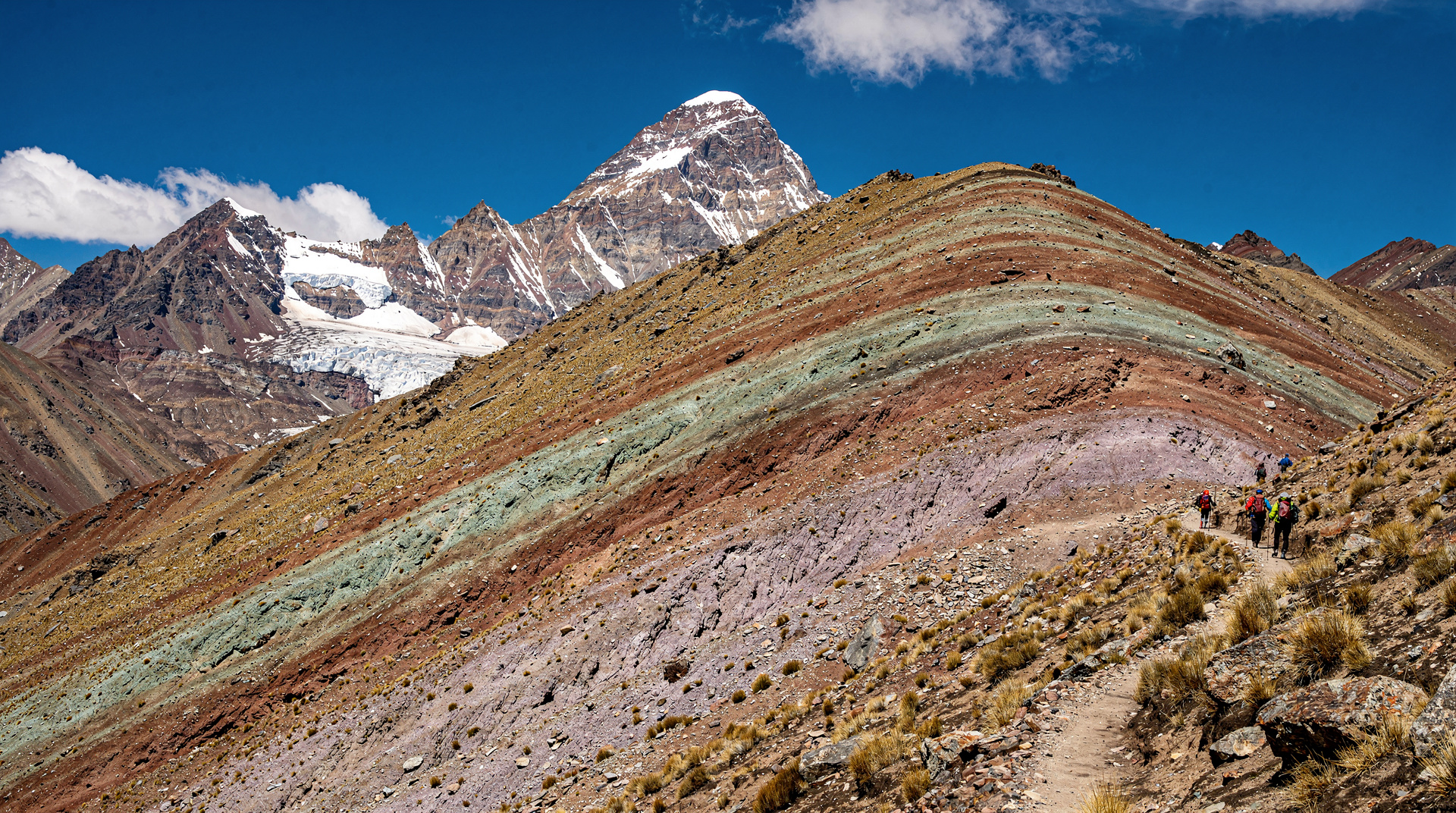
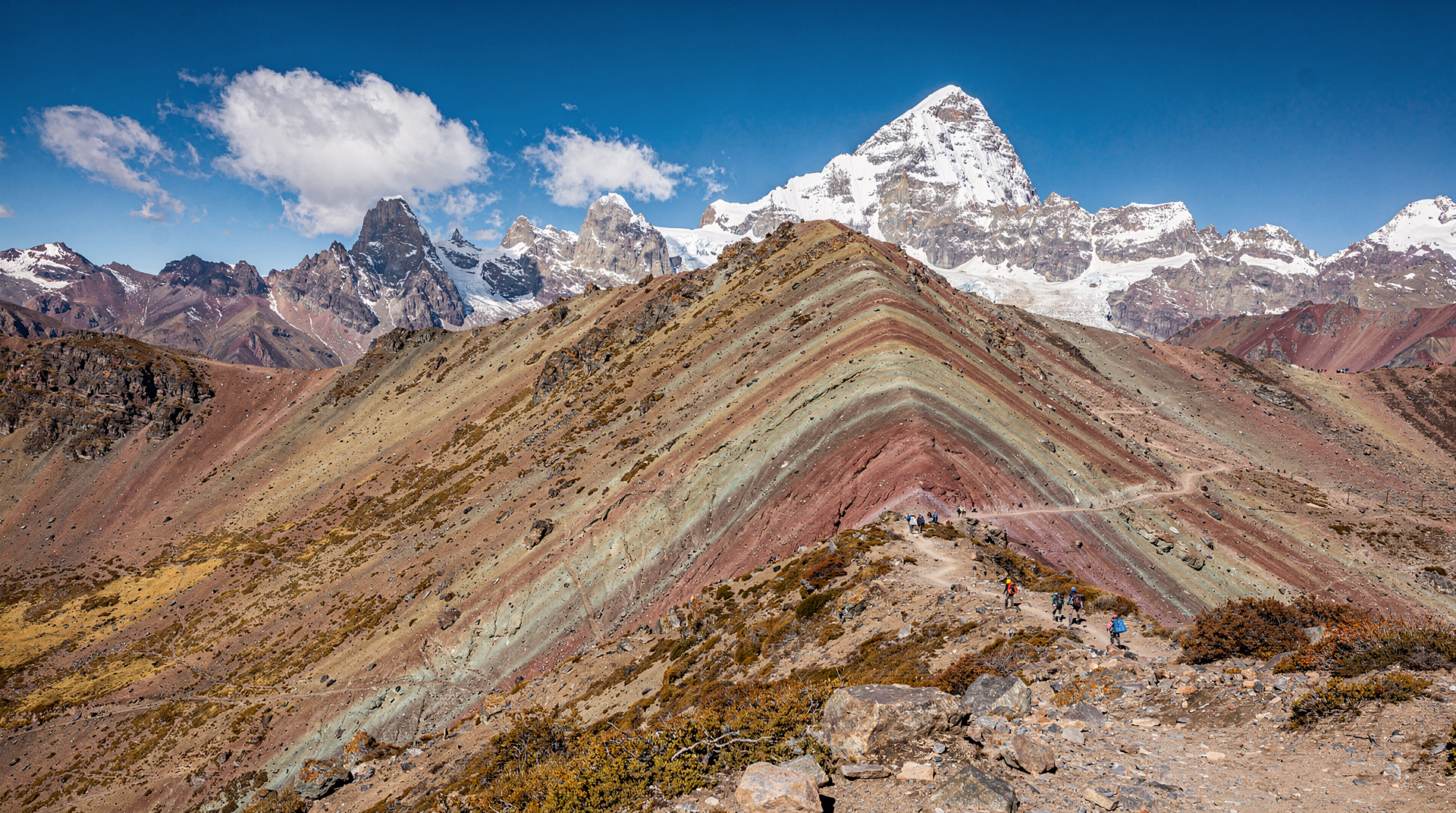
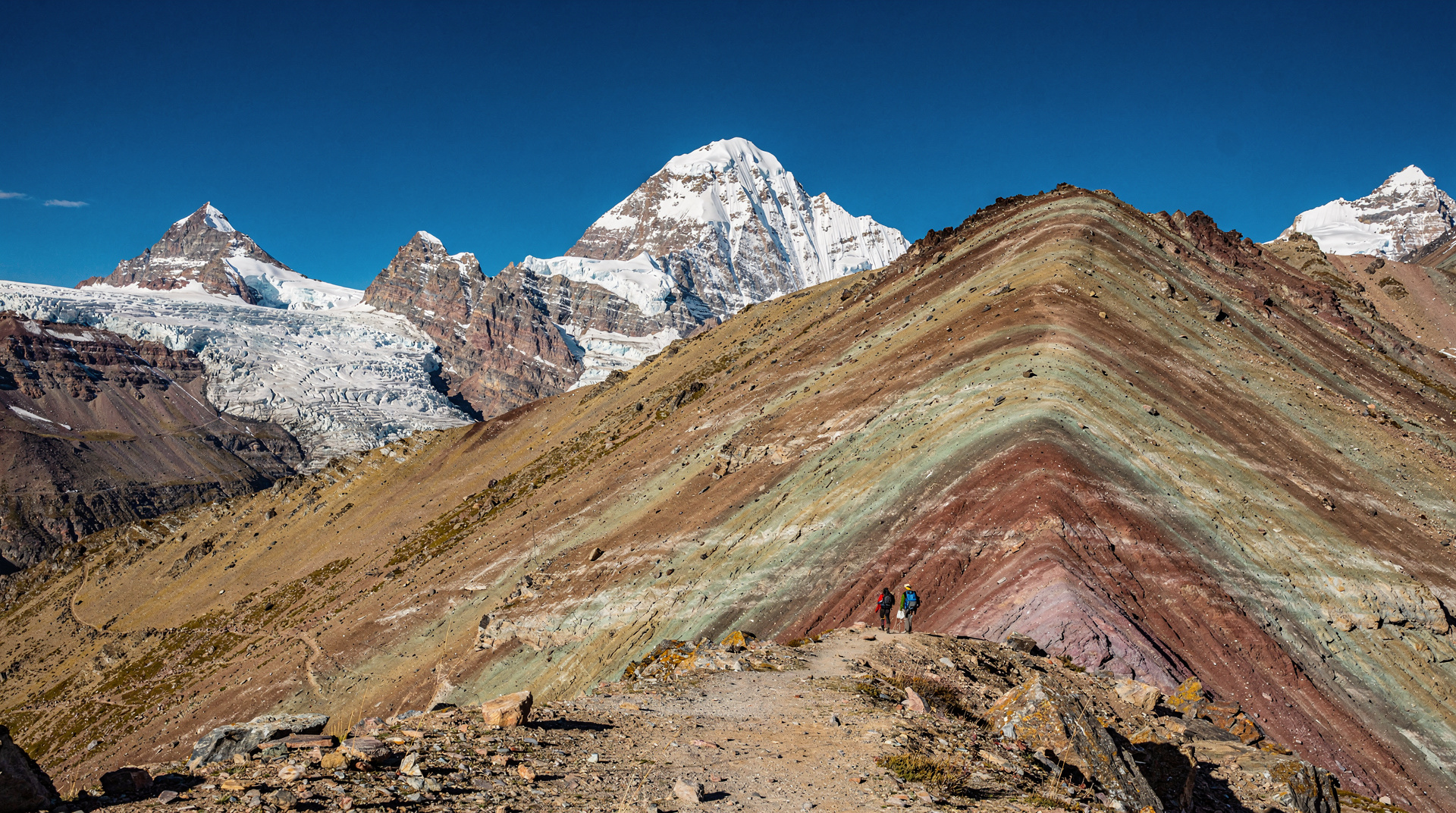
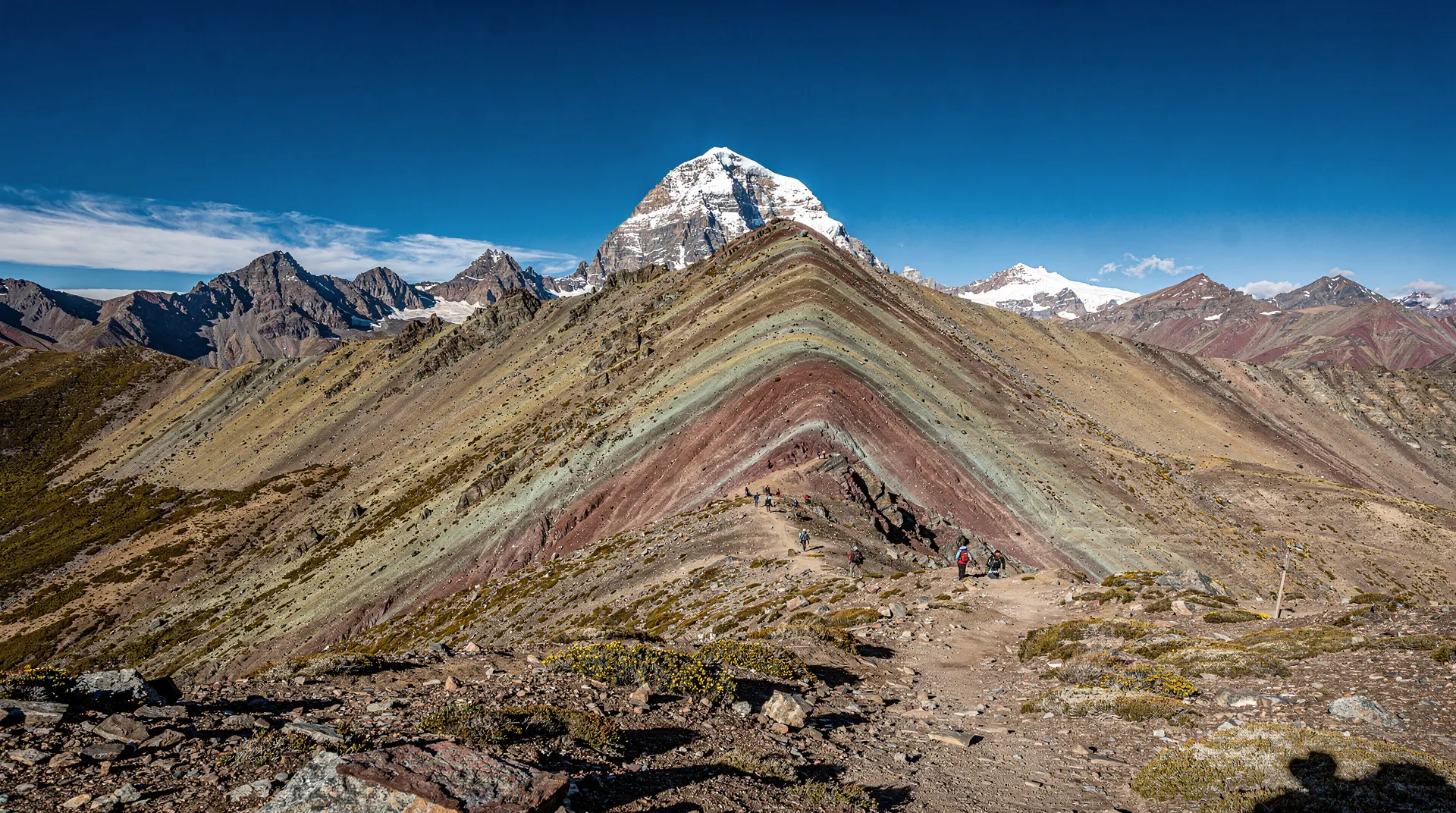
Rainbow Mountain (Vinicunca) at 5,200 m is the destination that brought international attention to the Cusco highland trekking scene after going viral on social media around 2015. The distinctive banding of the mountain — deep red, gold, green, and white stripes created by different mineral deposits — is real and striking. The view from the summit viewpoint, with the Andes stretching in every direction and the coloured peak in the foreground, is genuinely spectacular.
The walk: The trailhead parking area sits at around 4,700 m — already serious altitude. The walk to the main viewpoint is 4–6 km (depending on the starting point) with approximately 500 m of ascent. The final section is steep and exposed. In the thin air at 5,000–5,200 m, even well-acclimatised visitors breathe heavily. Allow 1.5–2 hours up and 1–1.5 hours back.
Horses: Available at the trailhead for hire — roughly S/60–100 ($17–28) paid to local herders on the day. They cover the main walking section. This is a genuine and popular option for those finding the altitude harder than expected; there is no stigma in using one. But horses cannot take you all the way to the viewpoint on the ridge; the final section is on foot regardless.
Crowds: Organised Rainbow Mountain day trips depart Cusco around 4–5 a.m., travel 3–3.5 hours, and arrive at the trailhead around 7:30–8:30 a.m. The majority of operators do this, which means dozens of groups arriving simultaneously. The viewpoint area between 9 and 11 a.m. is busy — sometimes very busy in July and August. Arriving earlier (first operator departure) or on a shoulder-season day significantly reduces the crowd.
The honest verdict on Vinicunca: It is worth seeing and the scenery is genuinely dramatic. But be prepared for the altitude, the crowd, and the early start. It is not a peaceful mountain experience in peak season. The Rainbow Mountain altitude tips guide covers the Vinicunca-specific altitude preparation in detail.
Palccoyo: the case for the quieter alternative
Palccoyo is the argument most operators will not make because it undercuts their Vinicunca bookings. The honest case for it is strong:
The altitude is lower (approximately 4,900 m): Still requiring Cusco acclimatisation, but 300 m below Vinicunca’s maximum. This is a meaningful difference for visitors who found Cusco at 3,400 m challenging, or who have a history of altitude sensitivity.
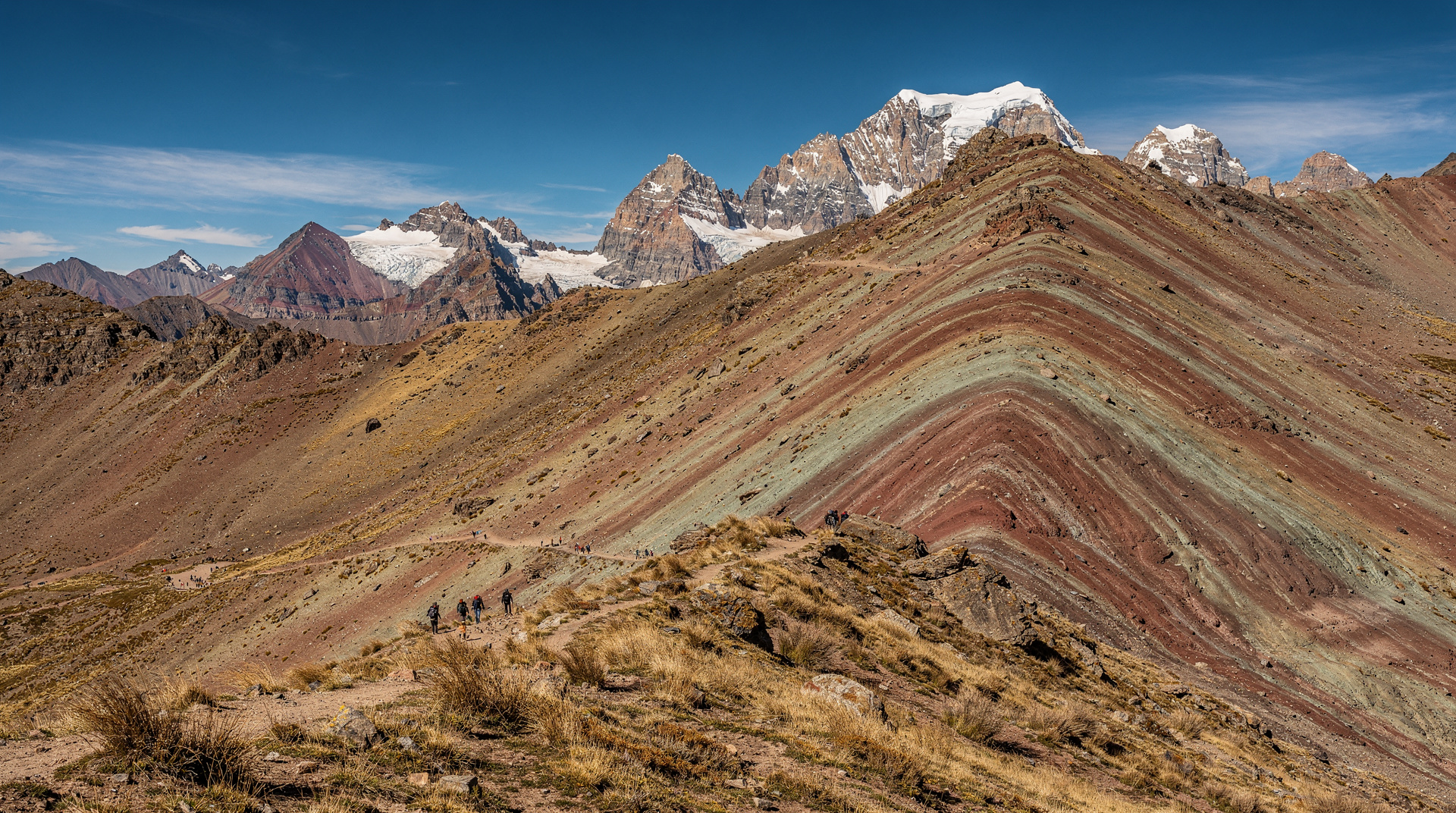
The walk is gentler: The parking area at Palccoyo is already near the coloured hillsides. The walk is essentially a traverse across three separate rainbow-coloured ridges — approximately 3–4 km with minimal altitude gain. It is a high-altitude stroll rather than a summit climb.
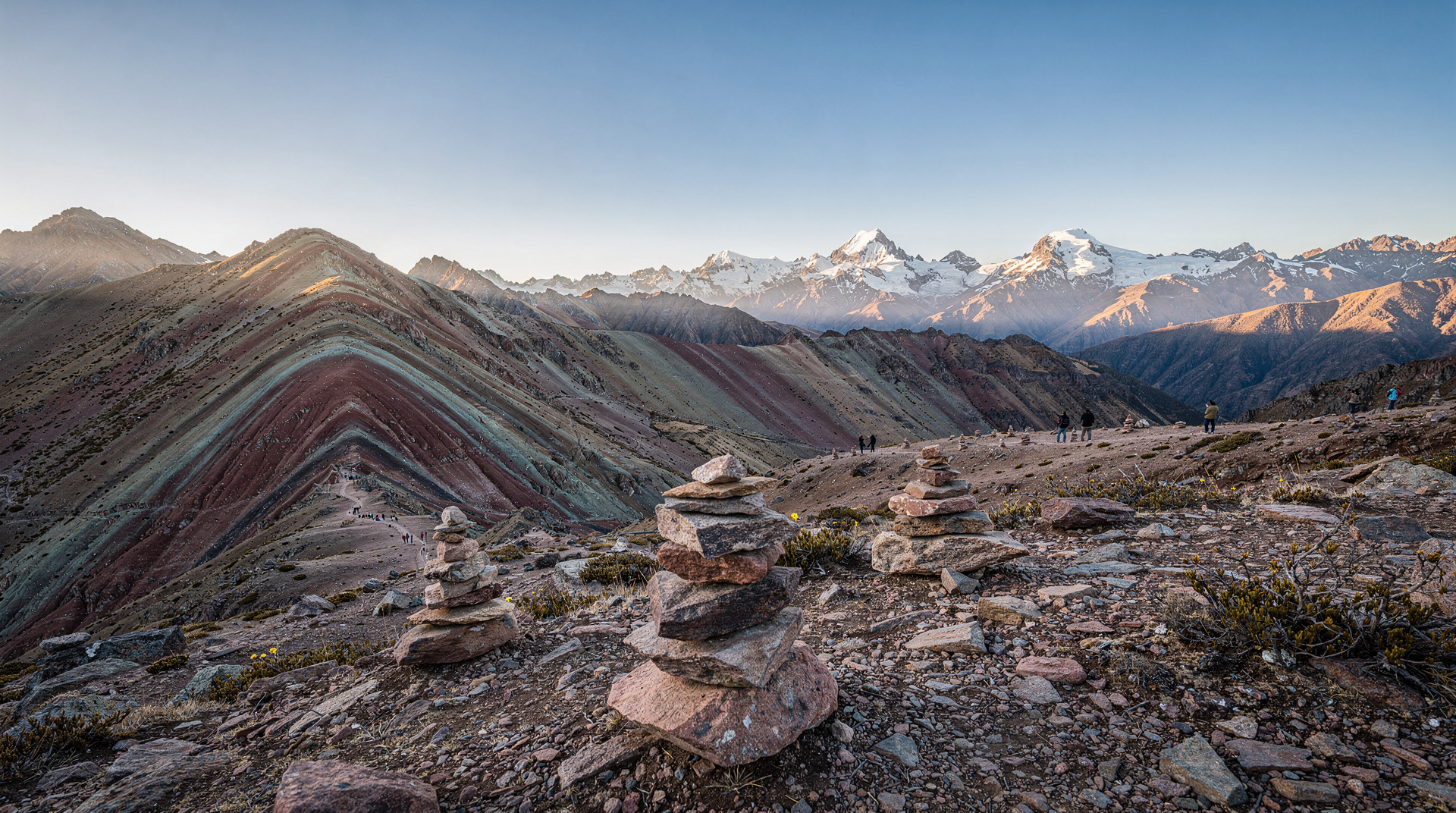
The colours are arguably more varied: Vinicunca has one primary rainbow peak. Palccoyo has three rainbow hillsides visible in a single sweep, plus a stone forest and a condor cross viewpoint. The mineral colour palette is comparable to Vinicunca — the same geological formations, just at a different altitude and spread over more terrain.
The crowds are dramatically lower: Even in July, Palccoyo feels quiet. A handful of tour groups, some local families, occasionally the site almost to yourself. If the overcrowded character of Vinicunca is a concern, Palccoyo resolves it.
A Palccoyo full-day trip from Cusco takes approximately the same time as Vinicunca (5–6 hours of travel total) and costs marginally less. For visitors whose priority is the multi-coloured mountain scenery without the crowd and the extreme altitude, Palccoyo is the better choice.
The honest caveat for Palccoyo: It does not have the iconic single-peak framing of Vinicunca. The photographs are less dramatic. If your main goal is to stand at the most photographed spot in the Cusco highlands and tick that specific view off your list, Palccoyo is not a substitute.
Ausangate 7 Lakes: the glacial lake option
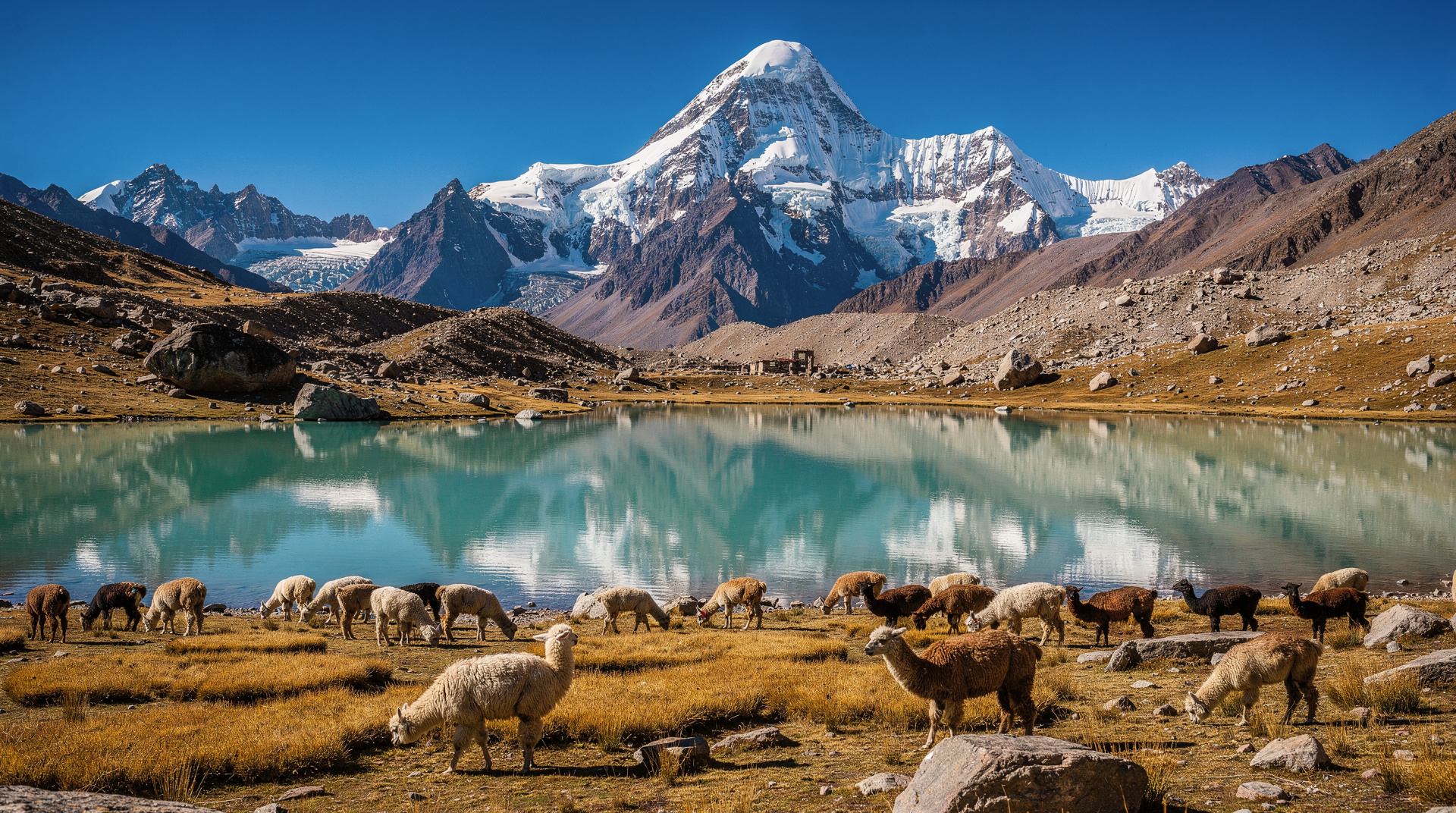
The Ausangate area is dominated by the Ausangate peak at 6,384 m — one of the highest mountains in Peru and the most sacred Apu (mountain deity) in the Quechua tradition. The day-trip version of Ausangate visits the area’s famous seven lakes circuit: turquoise and deep-blue glacial lakes at 4,600–4,900 m, set against the backdrop of the glacier-capped summit.
What it is: A 10–14 km circuit at high altitude, significantly longer than Vinicunca or Palccoyo. The landscape is raw high-altitude Andean tundra with dramatic reflective lakes. The colours here are glacial blues and turquoises rather than mineral reds and golds. A completely different aesthetic to the rainbow mountain options, though no less impressive.
The altitude: The circuit runs at 4,600–5,000 m with gradual altitude changes rather than a single steep ascent. The overall altitude exposure is comparable to Vinicunca over a longer period. Proper acclimatisation in Cusco is equally essential.
The Ausangate ATV and lakes day trip combines part of the lakes circuit with ATV riding on the high plains — a popular option for visitors who want the scenery without the full walking distance. The lakes are equally accessible by either approach.
Crowds at Ausangate: Less busy than Vinicunca, more variable than Palccoyo. This is Peru’s most sacred mountain and the site of the annual Q’oyllur Rit’i pilgrimage, which means it has local cultural significance that Vinicunca lacks.
Best for: Visitors interested in the glacial lake landscape rather than specifically the coloured mountains; those doing the Ausangate trek (5–7 days, advanced trekkers); visitors who want to combine high-altitude scenery with ATV activity.
How to choose: the honest decision framework
Choose Vinicunca if:
- The specific postcard view is important to you (it really is dramatic)
- You have acclimatised well to Cusco (3+ nights) and feel strong at altitude
- You are willing to be up at 3:30–4 a.m. for an early departure
- You accept that peak-season crowds are part of the deal
Choose Palccoyo if:
- Altitude sensitivity is a concern (300 m lower, much gentler walk)
- You prefer uncrowded, quieter experiences
- Rainbow-coloured mountain scenery (with more variety across three hillsides) is the goal, not the specific Vinicunca profile
- You want the more relaxed, family-friendly version of the experience
Choose Ausangate 7 Lakes if:
- Glacial lakes and glacier scenery appeal more than coloured mountains
- You want a longer walk (10–14 km) at high altitude
- The sacred mountain and Quechua cultural context adds meaning
- An ATV component appeals alongside the scenery
Do both/all three if:
- You have the time (separate days with rest between)
- You want the complete rainbow mountain circuit
- You want to compare the experiences first-hand rather than guess
The altitude consideration across all three
All three destinations require Cusco acclimatisation — none is appropriate on day one or two of a Cusco visit. The minimum is two to three nights in Cusco (at 3,400 m) before attempting any of them. Three nights gives better results.
The practical altitude risk ranking:
- Vinicunca (5,200 m) — highest risk; horses available; guides experienced in spotting AMS
- Ausangate circuit (4,600–5,000 m) — comparable to high sections of Salkantay trek
- Palccoyo (4,900 m) — lower than Vinicunca, gentler physical demand
The altitude sickness guide covers symptoms, prevention, and what to do if you or a companion shows signs of altitude illness on any of these trips.
What the operators do not want you to know about Palccoyo
Most Cusco tour operators book Vinicunca and have strong commercial reasons to do so: higher prices, higher consumer demand driven by social media recognition, and a well-developed supply chain. Palccoyo has a smaller operator ecosystem and commands slightly lower prices.
The operators who do promote Palccoyo are often the more reputable ones who prioritise visitor satisfaction over margin — because Palccoyo consistently delivers a better experience for visitors who are altitude-sensitive or crowd-averse, and satisfied customers generate better reviews.
If you ask a Cusco street-level tour seller about Palccoyo, they will often try to steer you back to Vinicunca. Ask specifically about Palccoyo and look for operators who can describe both options honestly.
Practical details: both options compared
Getting there:
- Vinicunca: 3–3.5 hours from Cusco by minibus, predominantly on rough unsealed road
- Palccoyo: similar journey time, slightly different route, comparable road conditions
- Ausangate: 4–4.5 hours from Cusco by minibus to the trailhead area
Weather: All three are high-altitude sites best visited in dry season (May–September). In rainy season (November–March), the roads can be challenging, the mist obscures the coloured geology, and the cold is more intense. Vinicunca and Palccoyo in clear dry-season conditions are at their best; wet season visits are significantly more unpredictable.
What to bring: Layers (temperature at 5,000 m can be well below freezing even on a sunny July day), waterproof outer layer, sunscreen (UV is extreme at altitude), snacks and at least 2 litres of water, any altitude medication (sorojchi pills from Inkafarma). The acclimatisation plan covers the preparation in full.
All three destinations can be booked through Cusco tour operators. The organised day-trip format is strongly advisable over independent attempts at these altitudes — having a guide who knows the terrain and can monitor altitude symptoms is genuinely valuable above 4,500 m.
Fitting one of these into a wider Cusco itinerary
Most visitors are not deciding among these three in isolation — the choice sits inside a broader Cusco and Sacred Valley trip. If your schedule already includes the Inca Trail or Salkantay, consider Palccoyo or the Ausangate day trip rather than Vinicunca on the days immediately before a multi-day trek — the shorter walk conserves energy without sacrificing the mineral-mountain scenery.
Visitors combining a rainbow mountain day with the Sacred Valley or Machu Picchu in the same week should schedule the highest-altitude option (Vinicunca) on a day with no other physical activity planned either side of it — recovery matters more than most itineraries allow for.
Booking timing and what changes by season
June to August is peak season for all three destinations, and Vinicunca in particular sees vehicle queues at the trailhead before dawn. Booking two to three days ahead is usually enough outside the July–August peak; during peak weeks, booking four to five days ahead avoids the risk of a fully booked departure slot.
Shoulder months (April–May, September) offer a meaningfully quieter Vinicunca experience with similar weather reliability to the dry season proper. Rainy season (November–March) visits to any of the three are a genuine gamble on visibility — Palccoyo’s spread-out hillsides give a slightly better chance that at least part of the site is visible through partial cloud, which is one more argument in its favour for a trip locked into those months.
Frequently asked questions about Vinicunca vs Palccoyo vs Ausangate: which rainbow mountain to visit?
How difficult is Vinicunca (Rainbow Mountain) compared to Palccoyo?
What is the best option if I am concerned about altitude sickness?
Are Palccoyo and Ausangate as colourful as Vinicunca?
How crowded is Vinicunca compared to the alternatives?
Can I visit both Vinicunca and Palccoyo on the same trip?
How much do each of the three day trips cost?
Top experiences
Bookable activities with verified prices and instant confirmation on GetYourGuide.