Rainbow Mountain reality check: the crowds, the cold and the Palccoyo alternative
A mountain with a branding problem
Vinicunca — the mountain that the tourism industry calls Rainbow Mountain — was essentially unknown to international tourists until around 2015, when a series of photographs taken after heavy snowmelt revealed the mineral-stained slopes in unusual clarity. Within two years it was one of the most visited sites in the Cusco region. By 2019, when I first visited, it was receiving over a thousand visitors on busy days.
| Where | Cusipata, ~100 km southeast of Cusco |
| Cost | Around S/90–100 for a guided day trip |
| Time needed | Full day, 3–4 a.m. pickup to early evening return |
| Getting there | Guided tour only (early departure, mountain roads) |
| Best time | Dry season, May–September, for clear skies |
I want to give you an honest account of what visiting Rainbow Mountain is actually like, because the marketing version — turquoise skies, a vivid mountain, a thin crowd of photogenic hikers — does not fully correspond to the experience on the ground. Then I want to tell you about Palccoyo, which does approximately the same visual thing with a fraction of the commercial infrastructure and a fraction of the crowd.
The trailhead at five in the morning
The day starts with a three-thirty or four a.m. pickup from Cusco. This is because the site is two and a half to three hours’ drive from the city, and the mountain is best seen in morning light before cloud builds in the early afternoon. By the time you reach the trailhead at Cusipata (roughly 4,600 m above sea level), it is around six-thirty.
The trailhead, when I arrived in December 2019, was busy in a way I had not expected from a site at this altitude. Food stalls selling instant noodles and boiled eggs, souvenir vendors setting up along the path, horses and their handlers offering rides to the summit for approximately 30 USD. There were perhaps two hundred people already on the trail when we arrived, and more buses pulling in as we started walking.
The walk from the trailhead to the summit ridge is approximately seven kilometres with roughly 300 metres of altitude gain, from about 4,900 metres to the viewpoint at 5,200 metres. In those terms it sounds manageable. At altitude, after a three-hour drive and insufficient sleep, it is genuinely hard work.
The summit at 5,200 metres
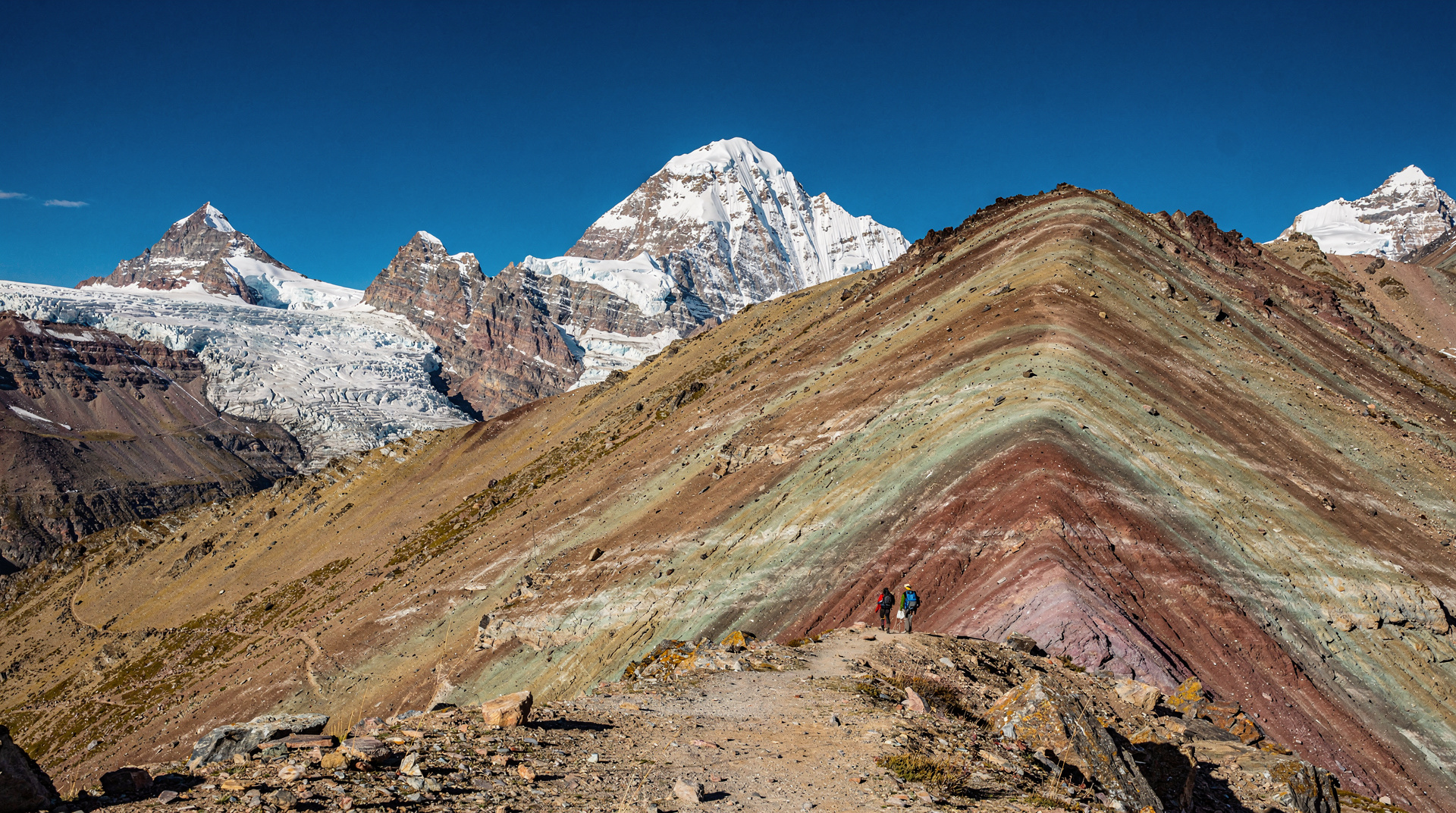
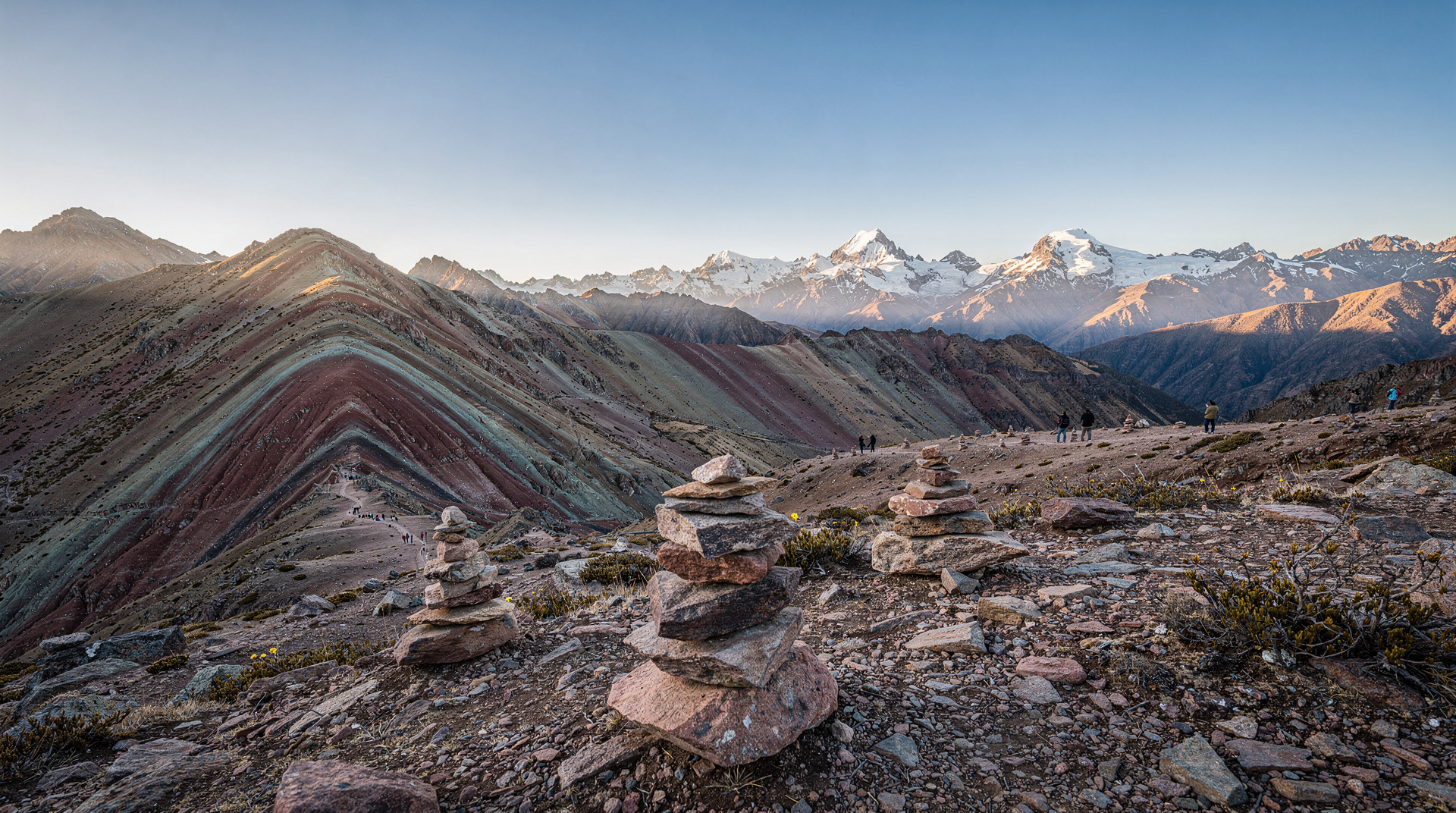
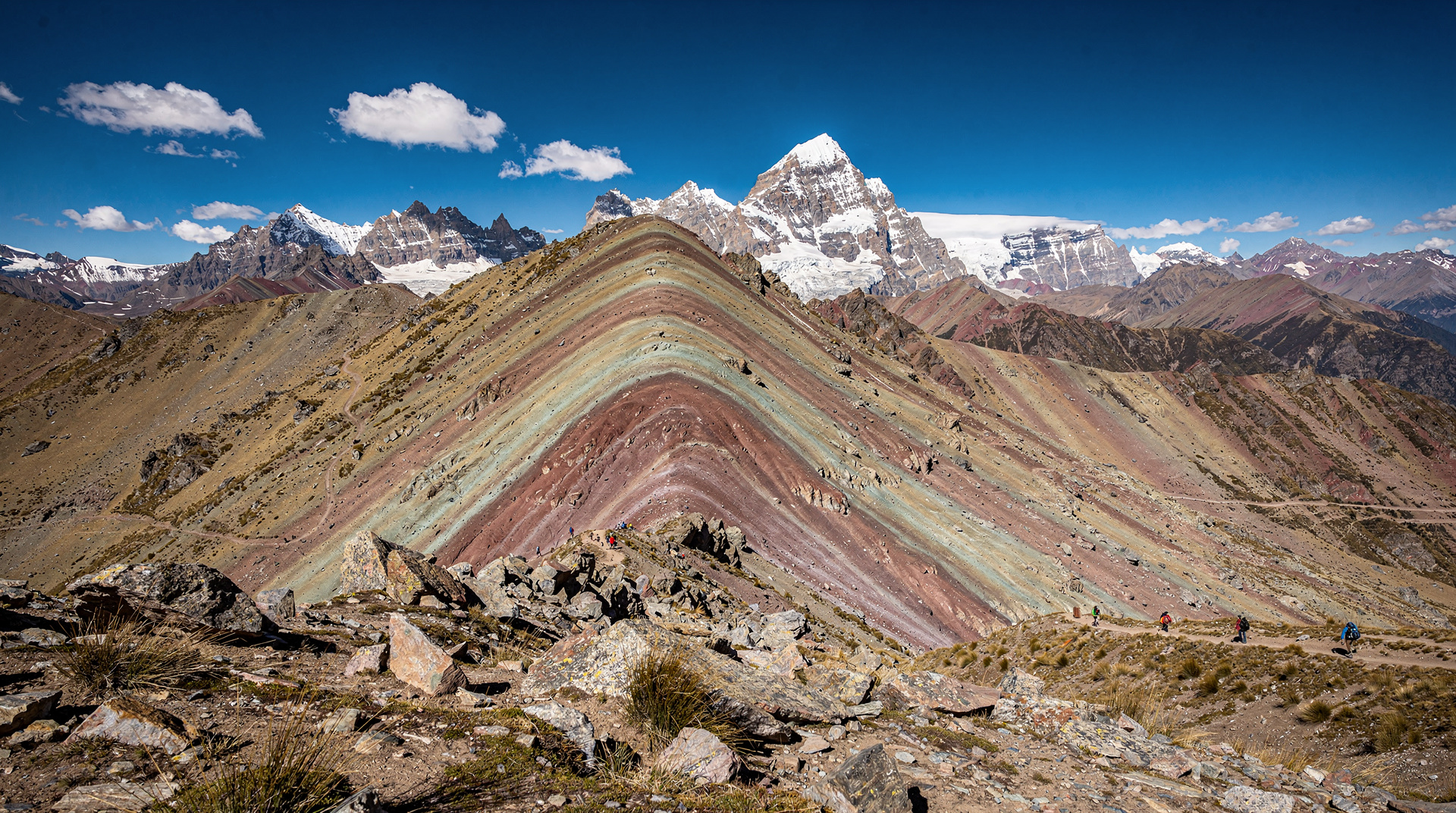
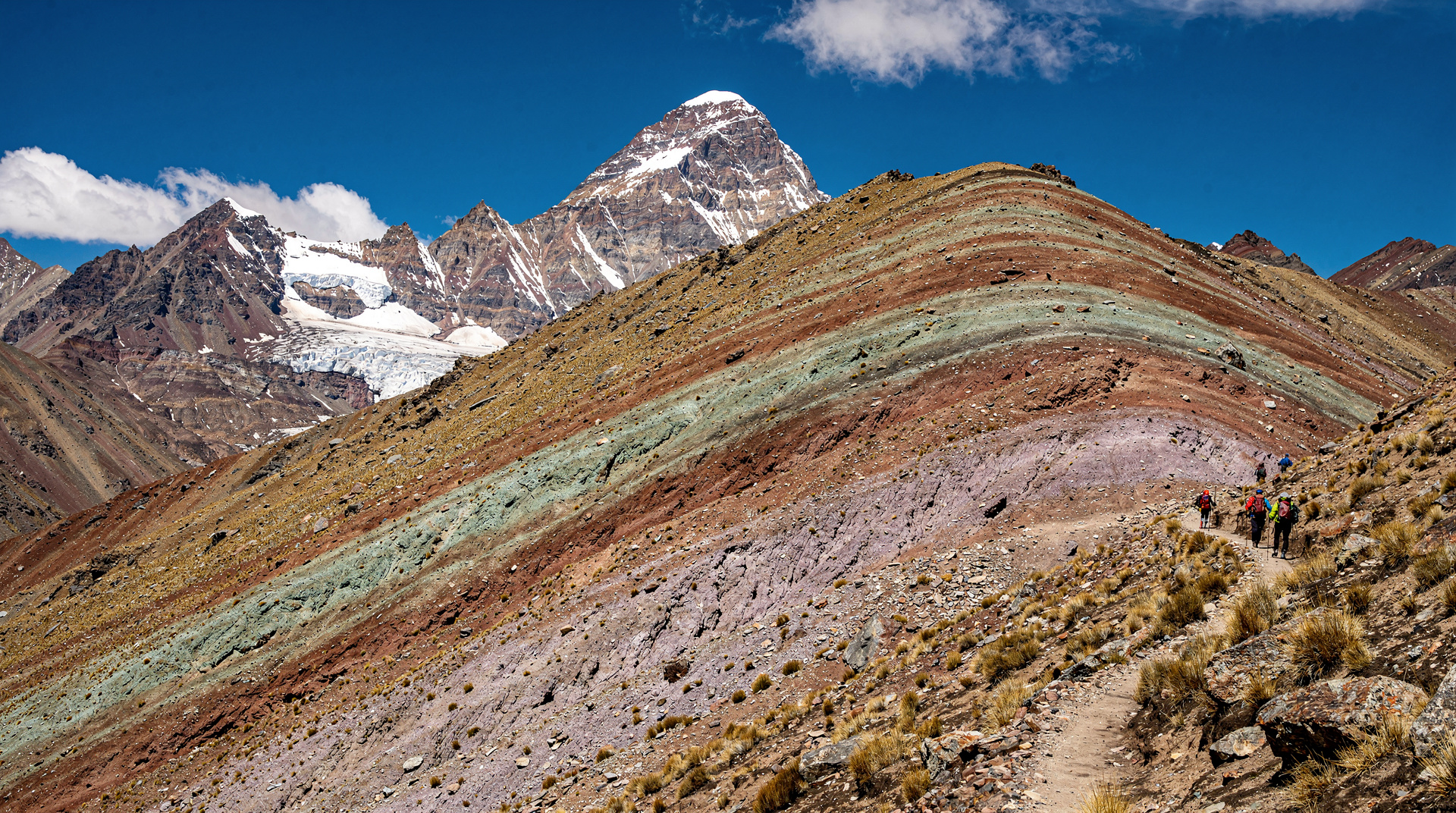
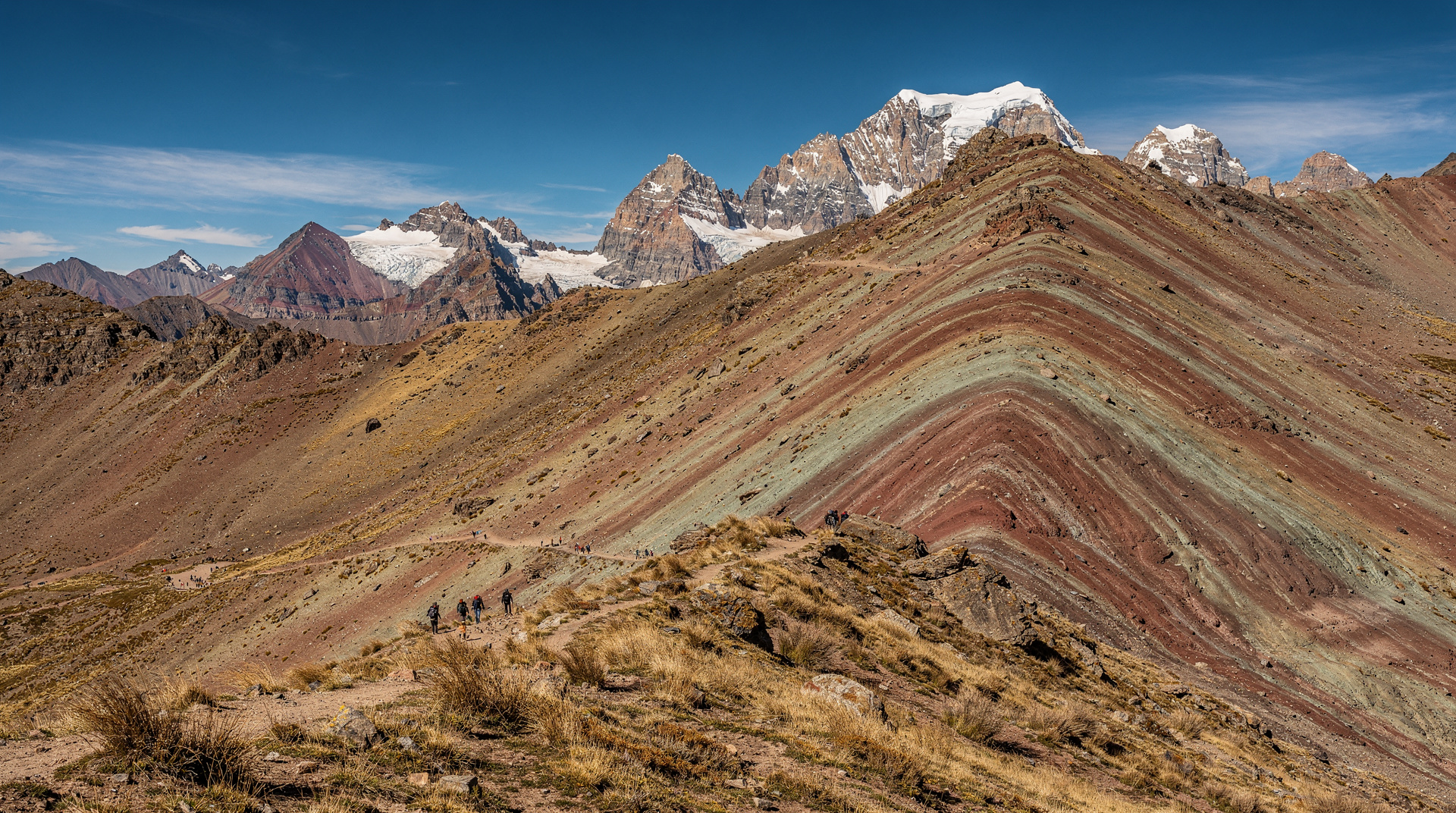
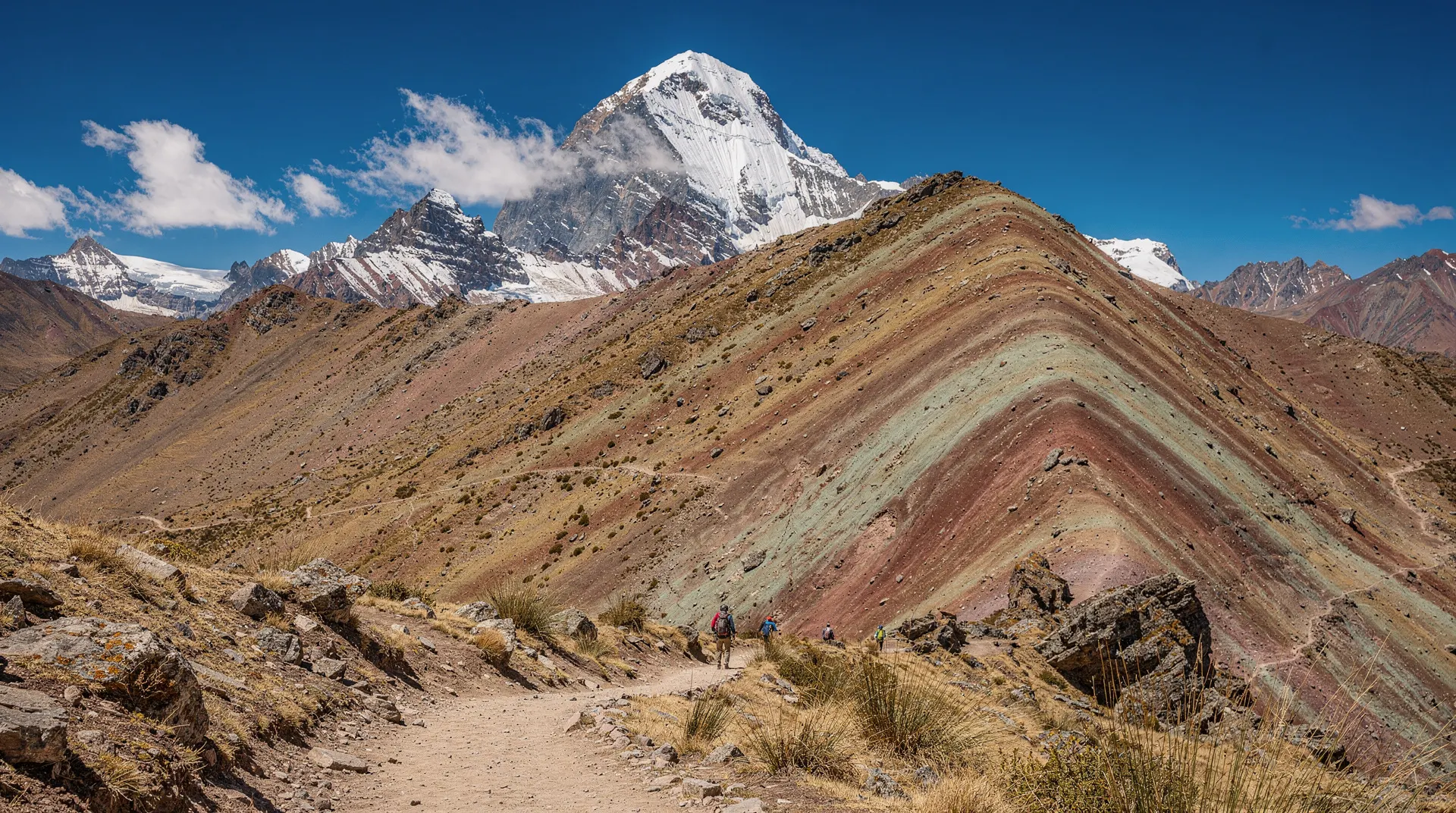
The summit ridge is where the famous mineral-stained slopes are visible: layers of red, pink, white, ochre and pale green running down the mountain flanks, produced by iron oxide, copper sulphate, chlorite, muscovite and other mineral deposits that the snow and rain reveal. In the right light they are extraordinary — genuinely other-worldly in a way that the photographs, which I had seen dozens of before visiting, do not fully communicate.
The summit ridge at peak times is also, however, extremely crowded. There is a roped-off viewing area, a scramble of people positioning themselves for the correct angle, and a persistent queue near the most-photographed spot. In July and August the wait for a clear photograph at the best angle can be thirty minutes or more.
I arrived at the summit in early light — the advantage of the four a.m. departure — and it was already crowded. The view was genuinely spectacular. I stood there for twenty minutes, took photographs, and began to feel the altitude producing a headache that stayed for the next two hours. This is normal at 5,200 metres and not a sign of anything serious; it is simply what 5,200 metres does to most people, even those who are well acclimatised to Cusco.
The honest altitude assessment
Rainbow Mountain at 5,200 metres is approximately 1,800 metres above Cusco. That gap matters. Even visitors who have spent a week in Cusco and feel fully acclimatised will notice the altitude at the summit in the form of slower pace, increased breathlessness, and possibly a mild headache.
The trailhead at 4,900 metres is already above the altitude where most people feel comfortable if they have not spent significant time acclimatising. The Rainbow Mountain altitude tips guide has the specifics on preparation: minimum three days in Cusco beforehand, hydration, no alcohol the night before, the option of horse transport if you feel the altitude strongly on the ascent.
I will not tell you the altitude makes the trip not worth it. I will tell you to take it seriously and plan accordingly.
The Palccoyo alternative: the same visual, less everything else
Palccoyo is a mountain approximately one hundred kilometres from Vinicunca that offers essentially the same mineral-stained slopes — similar colours, similar geology — at an altitude of approximately 4,900 metres rather than 5,200 metres.
The walk from the Palccoyo trailhead to the viewpoint is around three kilometres and gains about 200 metres. The overall exertion is noticeably less. The crowd is noticeably smaller — on a busy day at Vinicunca, Palccoyo might have thirty visitors in the same time window. The commercial infrastructure (souvenir stalls, horse rentals, instant noodle vendors) is present but on a much smaller scale.
The trade-off is that Vinicunca, on a clear day, has a more dramatic visual impact: the colours are more concentrated, the mountain is higher and more architecturally interesting, and the Red Valley just beyond the main viewpoint adds a dimension that Palccoyo does not have. Palccoyo is quieter and easier. Vinicunca is more dramatic and harder.
The Vinicunca vs Palccoyo comparison guide makes the trade-offs explicit. My personal recommendation: if you are altitude-sensitive, have limited time to acclimatise, or find large crowds reliably diminish your enjoyment of a place, go to Palccoyo. If you are reasonably altitude-adapted, value visual drama, and can manage the early start and the crowd, go to Vinicunca.
Both can be booked as guided day trips from Cusco. The Rainbow Mountain day trip from Cusco and the Palccoyo full-day tour are the two options.
Is Rainbow Mountain worth visiting?
Yes, with conditions. The visual is real — the mineral colours are not exaggerated in the photographs, and the mountain landscape at altitude has a scale and strangeness that is genuinely impressive. The site rewards the effort it requires.
The conditions: go with properly managed expectations of the crowd. Go prepared for the altitude — this means not on your first or second day in Cusco. Go in dry season (May to September) for the clearest colours; in heavy rain the colours flatten and the path becomes a mud channel. Book the guided trip for the logistical ease; attempting this independently requires a vehicle, local knowledge of the road conditions, and confidence with the altitude at the trailhead.
The tourists who come away disappointed are mostly those who expected solitude and spiritual impact. What you get is a remarkable geological spectacle shared with a significant crowd. If that is what you were expecting, you will not be disappointed.
The Rainbow Mountain complete guide has everything: logistics, altitude management, photography advice, and the honest comparison between Vinicunca, Palccoyo and Ausangate.
Seasonality: when the colours and crowds actually change
| Months | Conditions |
|---|---|
| May–September (dry season) | Clearest colours, driest trail, biggest crowds — June/July/August are peak |
| March–April, October–November (shoulder) | Good odds of clear mornings, noticeably thinner crowds |
| December–February (wet season) | Colours flatten in heavy rain, path turns to mud, fewer visitors still |
If crowd size matters to you more than guaranteed dry-season clarity, shoulder season is the sweet spot — you trade a small chance of cloud for a meaningfully quieter trailhead.
A third option: Ausangate
If both Vinicunca and Palccoyo feel too crowded or too short for your taste, Ausangate offers coloured mountain scenery as part of a multi-day trek at real altitude, away from the day-tripper circuit almost entirely. It’s a bigger physical undertaking and not a fair comparison for someone who just wants a single striking photograph, but for trekkers who want the visual without any crowd at all, it’s worth knowing it exists. The best treks to Machu Picchu guide and altitude sickness guide are both worth reading before committing to a multi-day option at this altitude.
Frequently asked questions about Rainbow Mountain reality check
Is Rainbow Mountain overrated? No, but it’s over-marketed as a peaceful, uncrowded experience, which it is not at peak times. The geology itself is genuinely as vivid as the photographs suggest; the crowd is the part the marketing leaves out.
How fit do I need to be for Rainbow Mountain? Reasonably fit and properly acclimatised. The walk itself — about 7 km round trip with 300 m of gain — isn’t technically hard, but doing it at 4,900–5,200 m after a 3 a.m. start is genuinely tiring even for people who consider themselves fit at sea level.