Humantay Lake day trip tour: tour review
Humantay Lake Tour from Cusco
A lake that earns its early morning start
Humantay Lake is not as famous as Rainbow Mountain or as historically significant as Machu Picchu, but for many visitors it becomes the most emotionally affecting day trip they take from Cusco. The lake’s extraordinary turquoise colour, the dramatic glacial cirque surrounding it, and the relative quiet compared to Vinicunca combine to create an experience that regularly appears in “best of Peru” retrospectives from travellers who also did Rainbow Mountain. This review tells you exactly what the day involves, who it suits, and what distinguishes the guided tour product from the basic hiking option.
| Where | Soraypampa base camp, near Mollepata, ~3 hrs from Cusco |
| Cost | S/120–200 (~$35–58), guided; S/80–130 hike-only |
| Altitude | Lake 4,200 m; base camp 3,860 m |
| Time needed | Full day, 4:30–5:30 am pickup to 4–6 pm return |
| Best time | Dry season (May–September) for clear glacier views |
What you see and why it looks like that
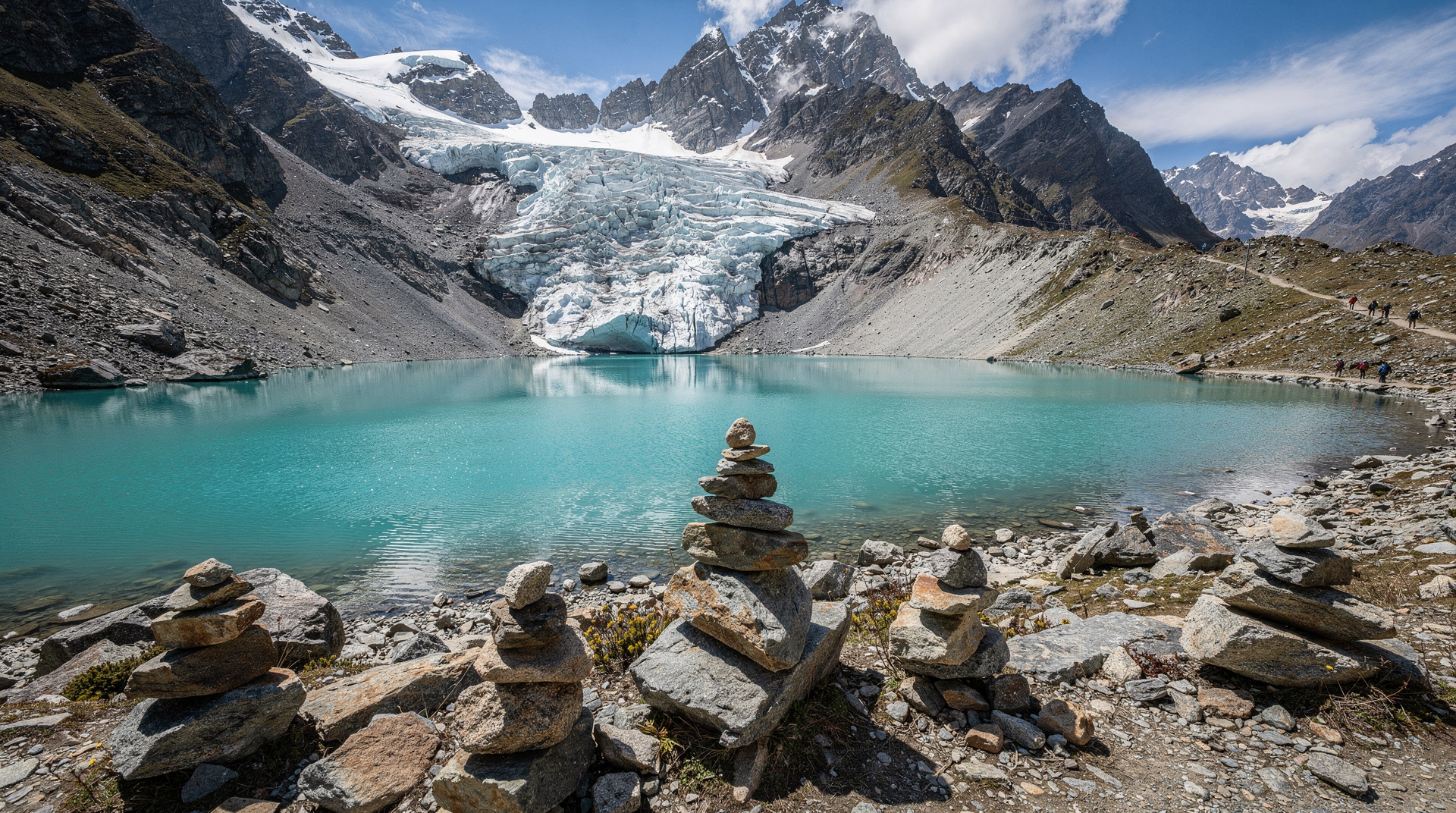
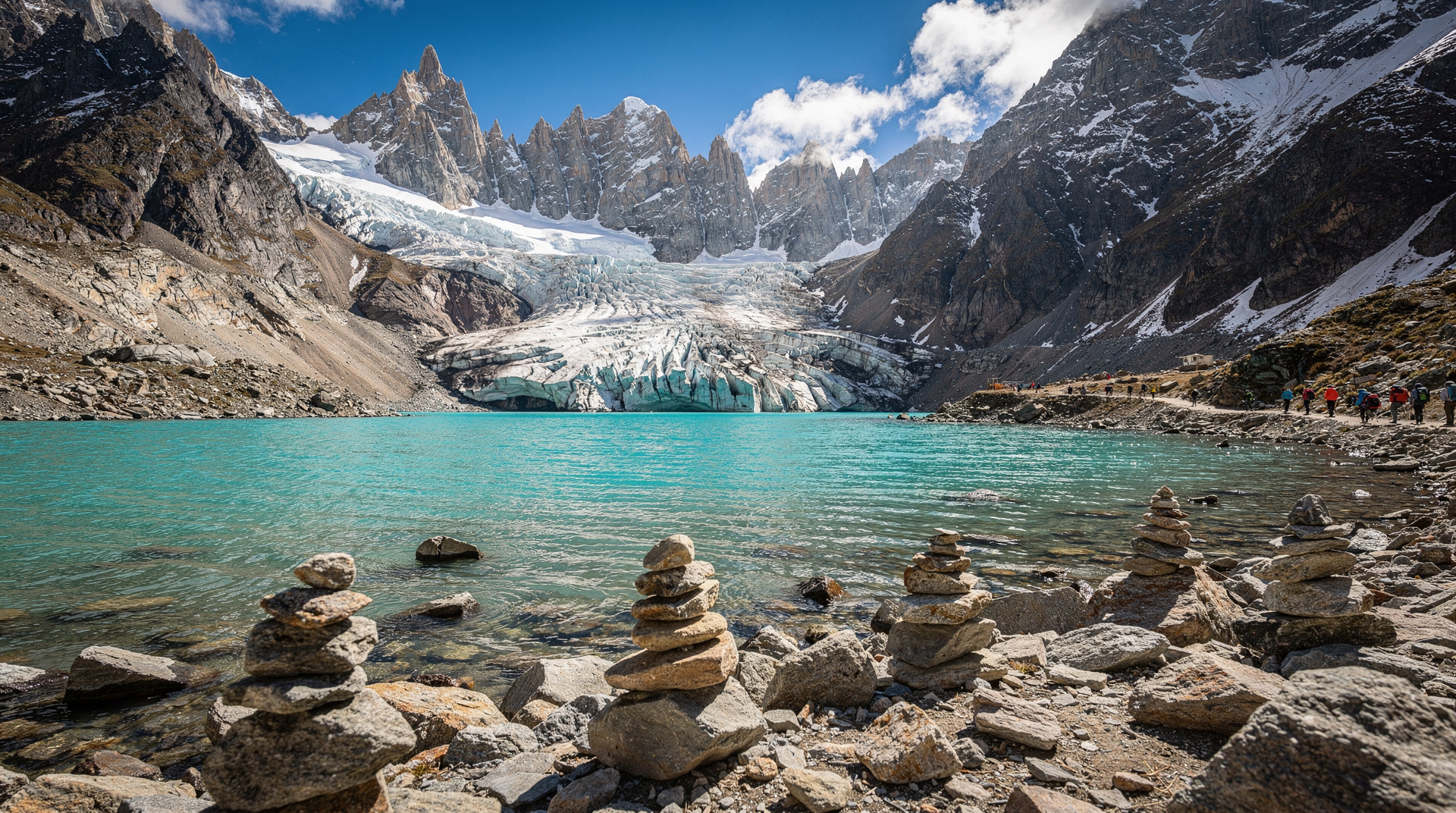
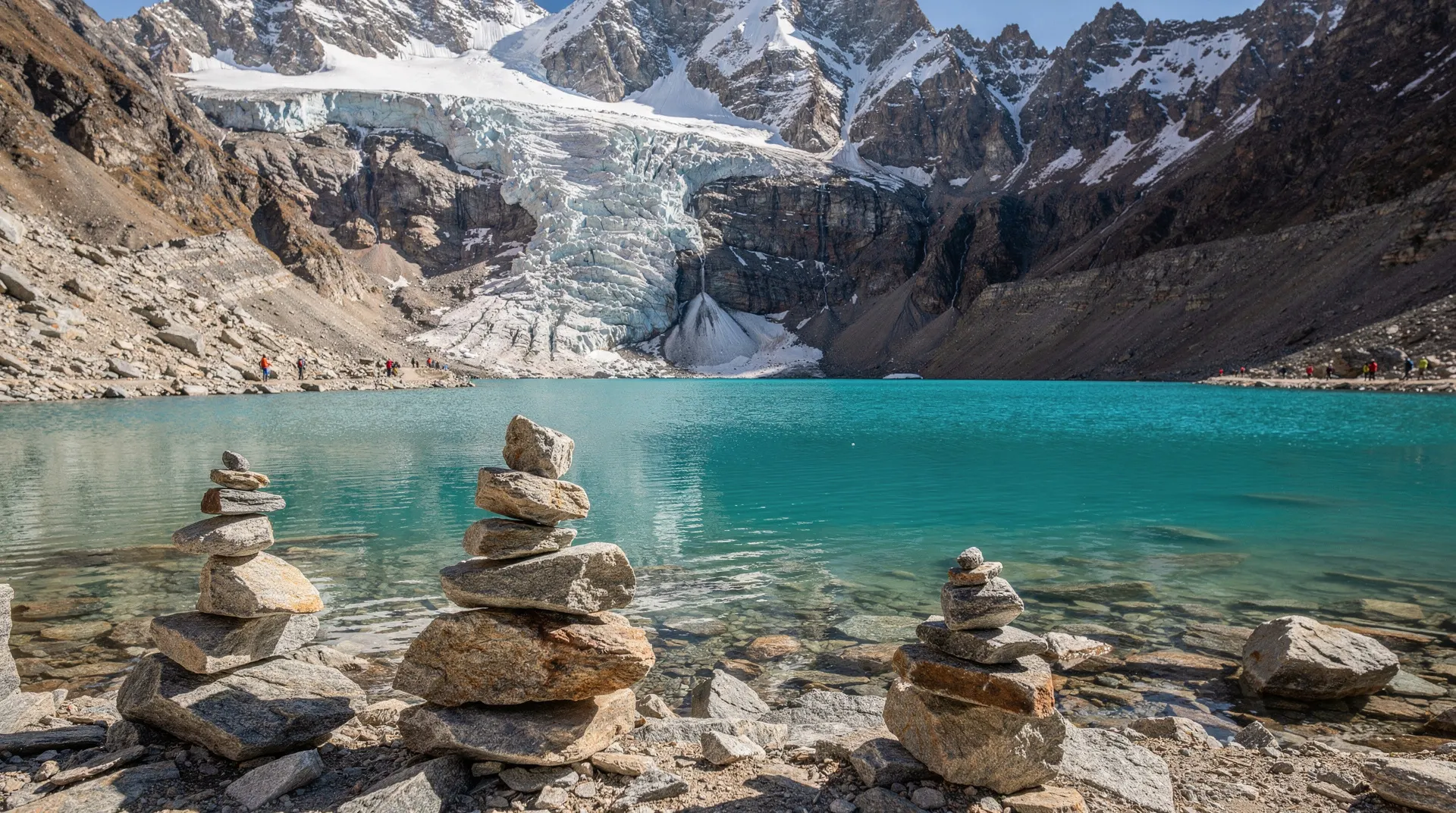
Laguna Humantay sits at approximately 4,200 m at the foot of the Salkantay glacier complex. The lake’s striking turquoise colour comes from glacial flour — extremely fine rock particles ground off the mountain by glacier movement and suspended in the meltwater. This gives the water an opaque, vivid appearance that cameras struggle to reproduce faithfully.
The lake is also a sacred site in Andean cosmology — one of the apus, or mountain spirits. The Quechua communities in this area maintain spiritual practices connected to the lake and the peaks above it. A good guide will explain this context, which gives the experience a dimension beyond the visual. Many visitors leave small offerings of flowers or coca leaves at the stone altars near the lake’s shore — this is a local practice observed by travellers who wish to participate respectfully.
How the day unfolds
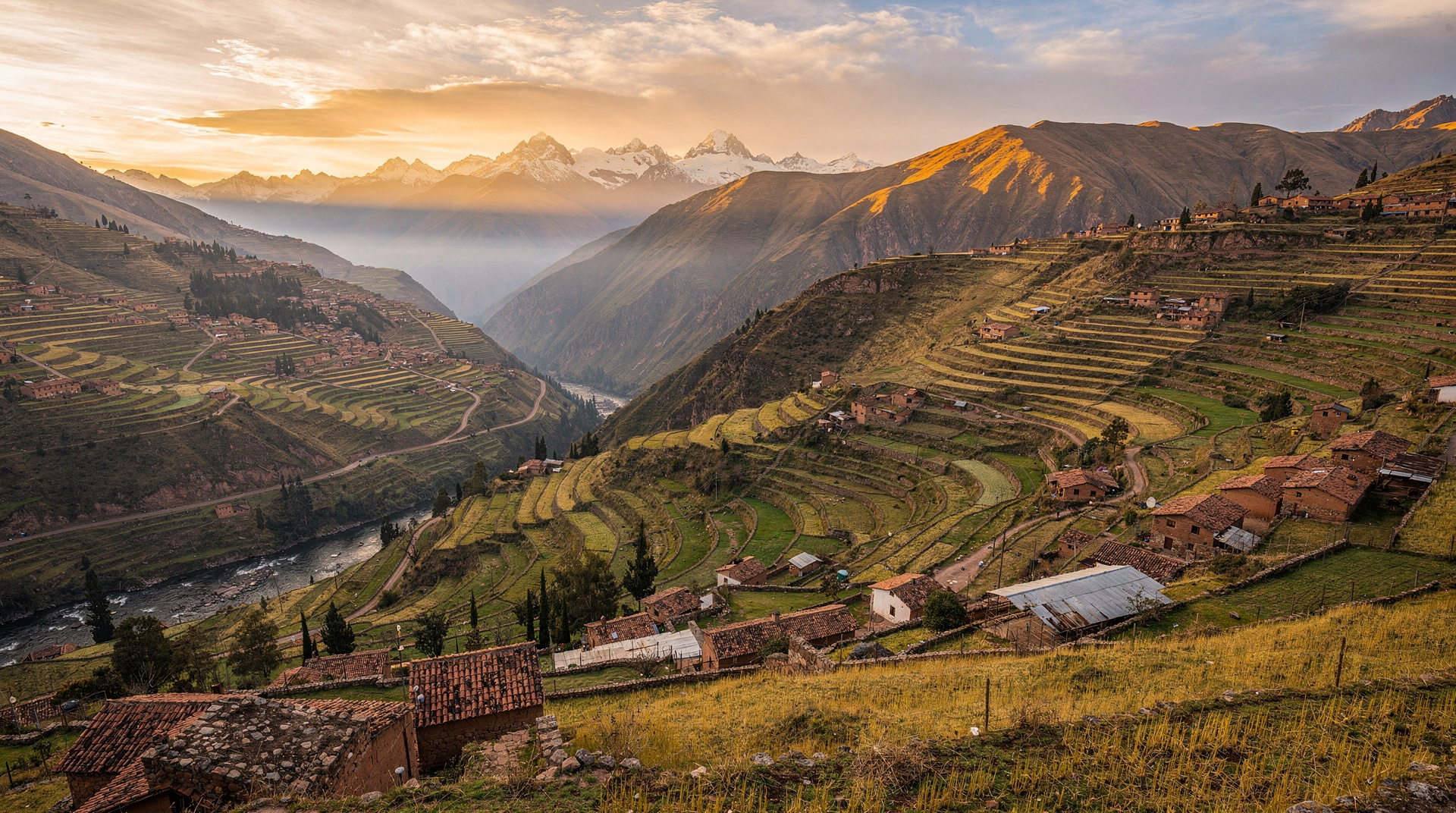
Hotel pickups in Cusco start at 4:30–5:30 am. The drive south-west from Cusco towards Mollepata takes around three hours through increasingly dramatic Andean scenery, climbing to the Soraypampa base camp at 3,860 m. Here you typically have a breakfast stop (included with most full tour packages) and collect any hired equipment.
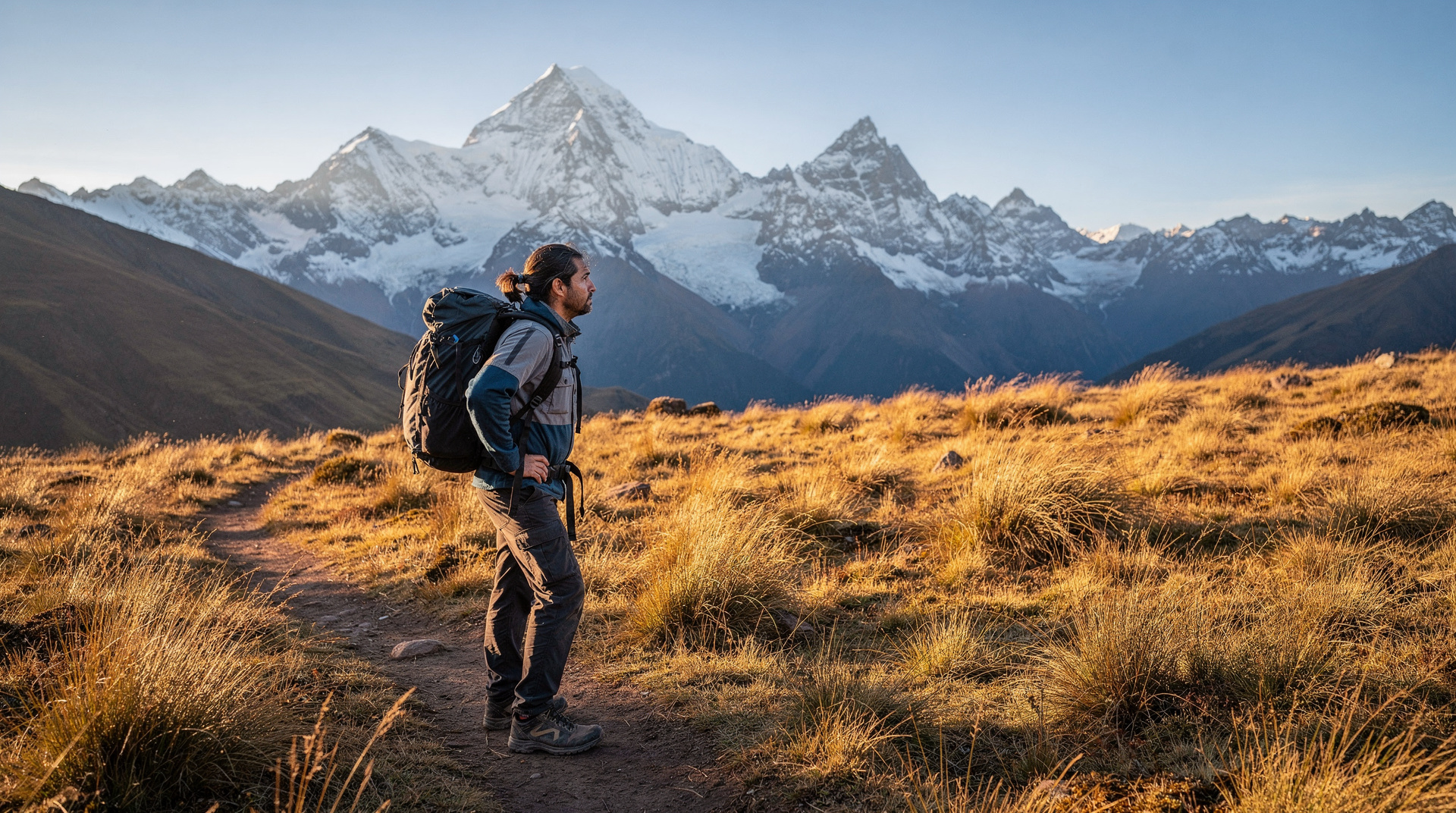
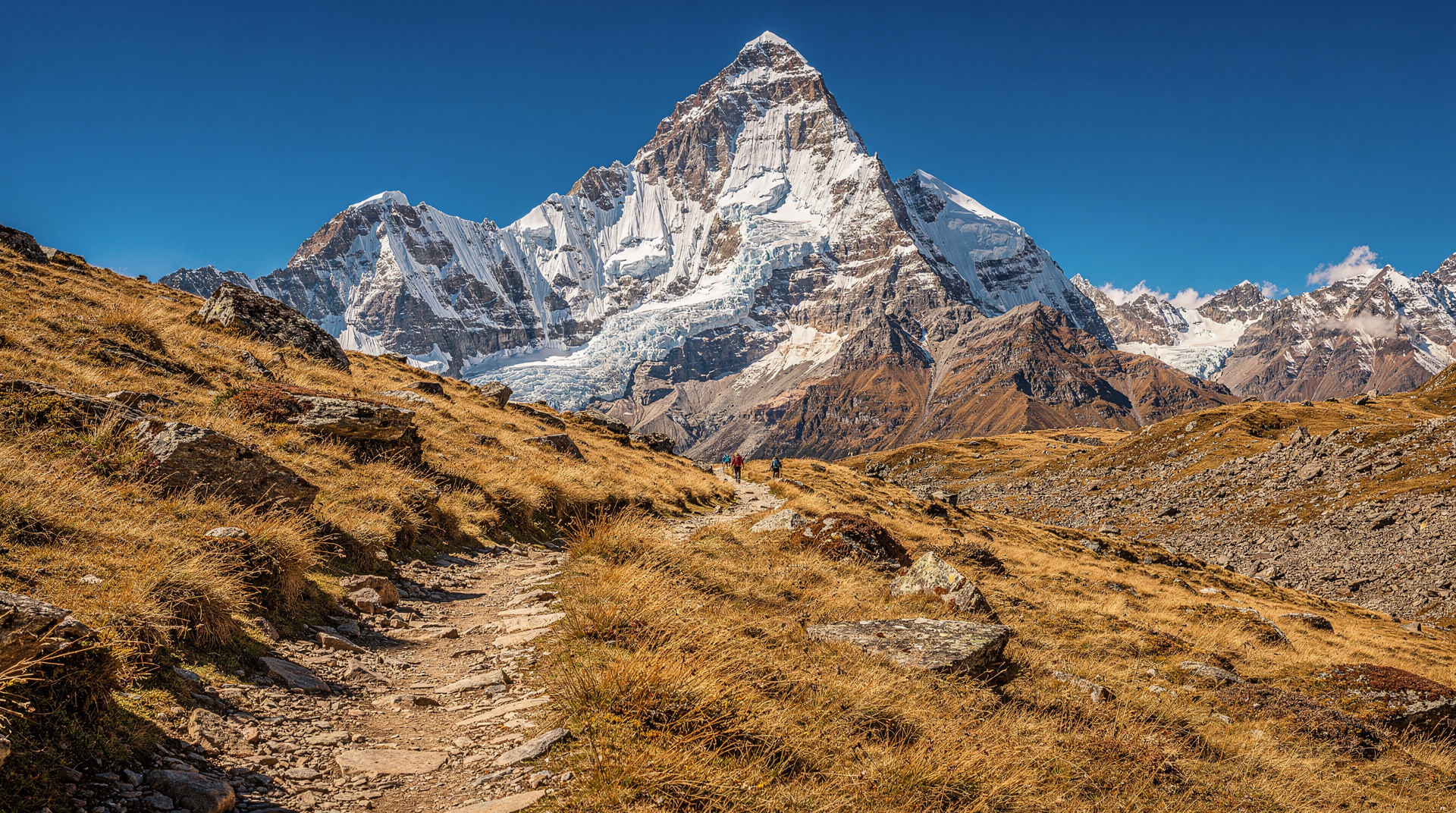
The hike from Soraypampa to Humantay Lake gains roughly 340 m over approximately 3 km. The trail is steep in its upper section, with stone steps in some places. At altitude, even fit travellers should pace themselves — the last 20 minutes of ascent have the steepest gradient and the thinnest air. Allow 60–90 minutes for the ascent; the return is faster.
The lake viewpoint offers 360-degree views: the turquoise lake directly below, the Humantay and Salkantay peaks above, and the broader Salkantay valley behind you. Most tours allow 45–60 minutes at the top. If you have the 5-day Salkantay trek in mind, this day trip gives you a useful preview of what Day 1 and Day 2 terrain looks like.
Return to Cusco typically arrives between 4:00 and 6:00 pm.
What is and is not included
Book the full Humantay Lake guided day trip — this includes hotel pickup and return transport from Cusco, a licensed bilingual guide for the hike, community entrance fee, and (with most operators) breakfast at the base camp and a packed lunch or lunch at a local restaurant.
Not included in most packages: horse hire at the base camp (S/30–50 one way, useful for the final steep section), personal trekking poles (rent in Cusco for S/20–30 per day — strongly recommended), tips for the guide, and travel insurance.
The Soraypampa base camp: what to expect on arrival
The Soraypampa base camp area (3,860 m) is a broad flat plain at the foot of the Humantay and Salkantay peaks. A cluster of simple family-run restaurants and small shops operates here, serving breakfast and lunch to tour groups and selling basic supplies (water, snacks, altitude medication). The landscape is striking: the Salkantay glacier is visible directly above to the north, the surrounding peaks are steep and snow-dusted in the dry season, and the plateau has a clarity of light that is characteristic of high altitude.
Most full guided day trips include a breakfast stop at one of the Soraypampa establishments — typically soup, bread, eggs, fruit and hot drinks. Eating well here before the hike matters: at 3,860 m, altitude suppresses appetite but your body needs fuel for the 340 m climb ahead. Drink at least 500 ml of water before starting the hike.
The horse handlers operate from the car park and along the lower section of the trail. If you intend to hire a horse, negotiate and confirm the arrangement at the car park rather than on the trail — prices are more transparent and competition between handlers keeps costs reasonable. Horses take you to approximately 100 m below the lake viewpoint; the final approach is on foot regardless. On the descent, horses are also available if your knees are struggling.
The base camp area also has the small community entrance fee checkpoint (S/10–20). This is collected by Maras or Mollepata community representatives and goes directly to local infrastructure maintenance. It is separate from any entrance fee included in your tour package; confirm with your guide whether it is pre-paid or paid on the day.
Comparing the guided tour to the hike-only product
The hike-only option provides the transport and trailhead access without a dedicated guide. It is typically S/30–60 per person cheaper than the full guided tour. This format suits independent travellers who are comfortable at altitude, have hiking experience, and do not require cultural context from a guide.
The genuine advantage of the guided tour over the hike-only option at Humantay Lake is the cultural and geological interpretation. The geological story of the glacial lake, the significance of the Salkantay peak in Andean cosmology, and the current state of the glaciers (retreating significantly due to climate change — a fact that gives the visit a layer of urgency most travellers do not expect) are all better experienced with a knowledgeable guide than without. For first-time visitors to the region, guided is the right call.
Who this tour suits
The Humantay Lake day trip is one of the better options for visitors who want a significant high-altitude experience but are not ready for the full Rainbow Mountain commitment at 5,200 m. At 4,200 m it is still demanding — two days’ acclimatisation at Cusco is the minimum — but it is 1,000 m lower than Vinicunca and the hike is shorter. It works well as a day trip mid-week during a five to seven day Cusco itinerary, between acclimatisation days and the Machu Picchu visit.
It also functions as an excellent pre-cursor to the Salkantay trek: travellers planning to do the five-day Salkantay route often book Humantay Lake on Day 3 of their Cusco stay as a fitness and acclimatisation gauge. If you are struggling at Humantay, you should reconsider Day 2 of the Salkantay (4,630 m pass).
Families with older children (12 and above, generally fit) can do this trip. See the Cusco with kids guide for age-specific considerations.
The spiritual dimension of the site
Humantay Lake is not simply a scenic destination — it is an active sacred site in Andean cosmology. The Quechua communities of the Soraypampa and Mollepata area maintain a relationship with the lake and the peaks above it as apus (mountain spirits) that predates the Inca period. The Salkantay massif is one of the most revered apus in the entire Andean world: in the Quechua spiritual geography, it is a male peak, paired with the female Humantay, and both are considered to govern the local climate, agriculture and the wellbeing of the communities in their shadow.
The small stone cairns and altar platforms near the lake’s shore are sites of active ritual use. During Inti Raymi season (June) and around the festival of Cruz Velacuy (early May), local community members perform offerings — flowers, coca leaves, chicha, ritual items — at the lakeshore. If you visit during these periods, you may encounter a community ritual in progress. A respectful guide will explain what is happening and indicate whether observers are welcome to watch from a distance.
Visitors are generally welcome to leave their own small coca leaf offering at the altar stones — this is a widely practised gesture of respect and gratitude among respectful travellers. Ask your guide for guidance on doing this appropriately. The offering is to the apu, not a tourist performance; approaching it with sincerity is the relevant criterion.
What to do if you start feeling unwell on the ascent
Altitude sickness symptoms — headache, nausea, dizziness, shortness of breath beyond what is explained by exertion — can develop quickly during the Humantay Lake ascent, particularly in the final third of the climb. The correct response is simple and non-negotiable: stop and rest for 5–10 minutes. If symptoms persist or worsen, descend. Do not push through nausea or dizziness at 4,200 m on the assumption it will pass with effort — it frequently will not, and it can escalate to more serious altitude sickness (HACE or HAPE) in susceptible individuals.
Your guide has seen this before. Tell them immediately if you feel ill — they carry basic altitude medication in most cases (ibuprofen, anti-nausea tablets) and know the safest descent route. Descending 200–300 m reliably reduces altitude sickness symptoms in the majority of cases. The horse handlers at the base camp also serve as evacuation assistance for anyone who cannot walk down.
Having travel insurance that covers mountain rescue and medical evacuation is not an optional extra for this trip — it is essential.
It is worth being specific about what “descend” means in practice on this trail: even 100–150 m of elevation loss back towards the base camp typically produces noticeable relief within 15–20 minutes. There is no shame in turning back before the viewpoint — a meaningful share of visitors each season do exactly this, rest at the base camp, and still consider the day worthwhile for the drive and the base camp scenery alone. Guides are used to managing this outcome calmly, and a good operator will not pressure a struggling client to continue.
Altitude: the essential checklist
Minimum acclimatisation before attempting this: two full days at Cusco (3,400 m), ideally including one low-intensity walk or half-day tour. Three days is better. On the day of the hike: drink at least 2–3 litres of water throughout, eat a light breakfast (altitude suppresses appetite but your body needs fuel), wear warm layers (the lake sits in an exposed alpine bowl that is cold even in dry season), and use sun protection — UV exposure at 4,200 m is severe.
The acclimatisation plan gives a day-by-day Cusco sequence that slots the Humantay Lake trip at the optimal point. The altitude sickness guide explains when to turn back and what to do in an emergency.
Honest pros and cons
Pros: One of the most visually spectacular sites accessible on a day trip from Cusco. Significantly quieter than Rainbow Mountain in peak season. Cultural and spiritual context adds depth beyond pure scenery. Suitable altitude for visitors who are acclimatised but not yet ready for 5,200 m. Works as a Salkantay trek preview. Horse option available for the final steep section.
Cons: 4:30–5:30 am departure is early. Three-hour drive each way. The upper section of the hike is genuinely steep at altitude. Weather can close in quickly — clouds cover the lake on most afternoons. No bail-out for weather without losing the day. Peak season (July–August) sees meaningful crowds at the lake viewpoint between 9 am and noon — the earlier you arrive, the better.
Comparing Humantay Lake to Rainbow Mountain
| Humantay Lake | Rainbow Mountain (Vinicunca) | |
|---|---|---|
| Altitude | 4,200 m | 5,200 m |
| Hike time | 1–1.5 hrs each way | 1.5–2.5 hrs each way |
| Crowds | Moderate, thinner than Vinicunca | Heavy, 1,000+/day peak season |
| Departure | 4:30–5:30 am | 3:00–4:30 am |
| Right for | Building altitude confidence before bigger trips | Travellers already acclimatised 3+ days |
Many visitors use Humantay Lake as a deliberate stepping stone: if the ascent here feels manageable after two acclimatisation days, Rainbow Mountain or the Salkantay Pass are realistic next steps later in the trip. If Humantay already feels hard, it is a legitimate signal to choose Palccoyo over Vinicunca instead.
What to eat and drink on the day
Breakfast at the Soraypampa base camp restaurants is simple but effective — soup, bread, eggs, fruit and coca tea, usually included with the guided tour. Coca tea specifically is worth drinking here regardless of your general view of it: it has a mild vasodilatory effect that many travellers find genuinely helps with the breathlessness of the final ascent.
Bring your own snacks for the hike itself (dried fruit, nuts, energy bars) since nothing is sold on the trail between the base camp and the lake. On return to the base camp, a hot bowl of soup before the three-hour drive back to Cusco is worth the extra 15–20 minutes if your schedule allows it — arriving back in Cusco hungry and cold at 6 pm is a common and avoidable low point of an otherwise excellent day.
Seasonal notes
The dry season (May–September) offers the best chance of clear skies and good visibility of the glacier above the lake. June through August is peak season: more visitors but better weather. The dry season guide covers the trade-offs across all Cusco activities. Rainy season (November–March) brings fewer visitors but muddy trails and cloud cover; the lake is passable with proper waterproofs and boots.
Pricing reference (2026)
Full guided day trip (pickup, transport, guide, breakfast, lunch): S/120–200 ($35–58) per person. Hike-only (transport, no guide): S/80–130 ($23–37). Horse hire at trailhead: S/30–50 ($9–15) one way. Community entrance fee: S/10–20 ($3–6).
Verdict
The Humantay Lake guided day trip is one of the most consistently rewarding day trips from Cusco for travellers who want high-altitude mountain scenery without committing to Rainbow Mountain’s 5,200 m summit. The combination of the extraordinary lake colour, the glacial cirque setting, and the spiritual significance of the site makes this a richer experience than the logistics suggest. Book the full guided version — the cultural context justifies the extra cost. Acclimatise for at least two days first. See the Humantay Lake day trip guide for the full logistics breakdown.