Inti Raymi in Cusco — a diary from inside the Festival of the Sun
The festival that takes over a city
I will say upfront: the week of Inti Raymi in Cusco is not quiet, affordable, or easy to navigate spontaneously. If you go during the festival period without planning several months ahead, you will find accommodation at three times the usual price, restaurants with hour-long queues, and the city’s streets so full of visitors that moving through the historic centre at pace becomes genuinely difficult.
I’ll also say: it was one of the most remarkable things I’ve witnessed anywhere. The qualification and the endorsement are both true.
Inti Raymi — the Festival of the Sun — falls on 24 June each year, the winter solstice in the Southern Hemisphere. It was the most important ceremony of the Inca calendar: a celebration of the sun god Inti, a renewal of the solar cycle, and the occasion for elaborate ritual, sacrifice, music, and communal celebration. The Spanish colonial authorities suppressed it in 1535. It was revived in the 20th century as a cultural performance, first staged in modern form in 1944, based on the accounts of the 16th-century Inca historian Garcilaso de la Vega.
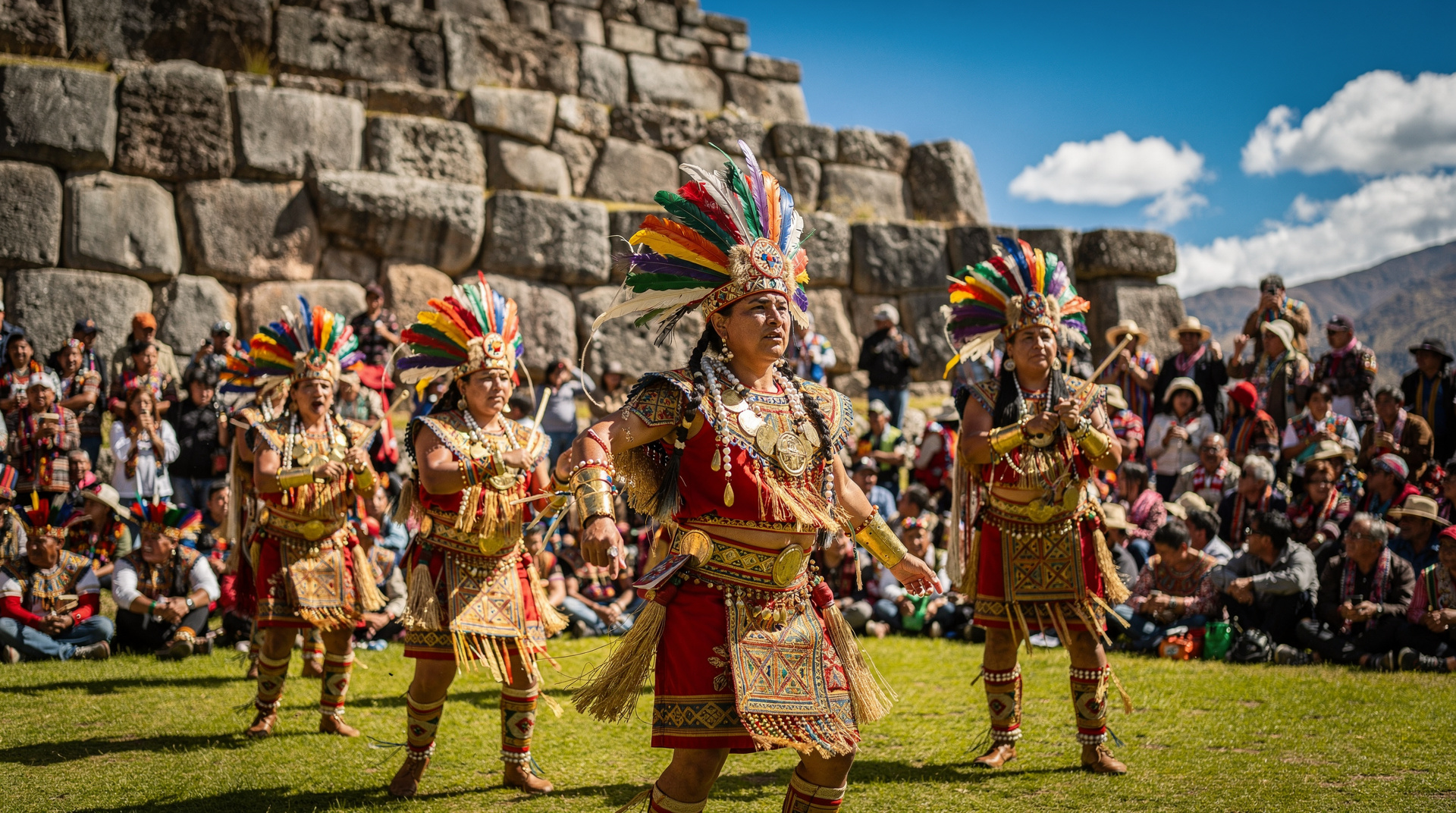
The modern event is theatrical — a scripted re-enactment with hundreds of performers, costume, choreography, and staged dialogue in Quechua. But to describe it as merely theatrical is to miss something. In Cusco, at the Inca sites where the original ceremonies took place, with the Andean mountains framing everything, the performance crosses into something more resonant.
| When | 24 June every year (winter solstice, Southern Hemisphere) |
| Where | Qorikancha → Plaza de Armas → Sacsayhuamán |
| Duration | Full day; main Sacsayhuamán performance ~2 hours from 2 pm |
| Sacsayhuamán seating | Book months ahead; free hillside viewing also possible |
| Accommodation | Book by January; prices run 2–4x standard rates in June |
The three stages of 24 June
The festival unfolds across three locations through the day.
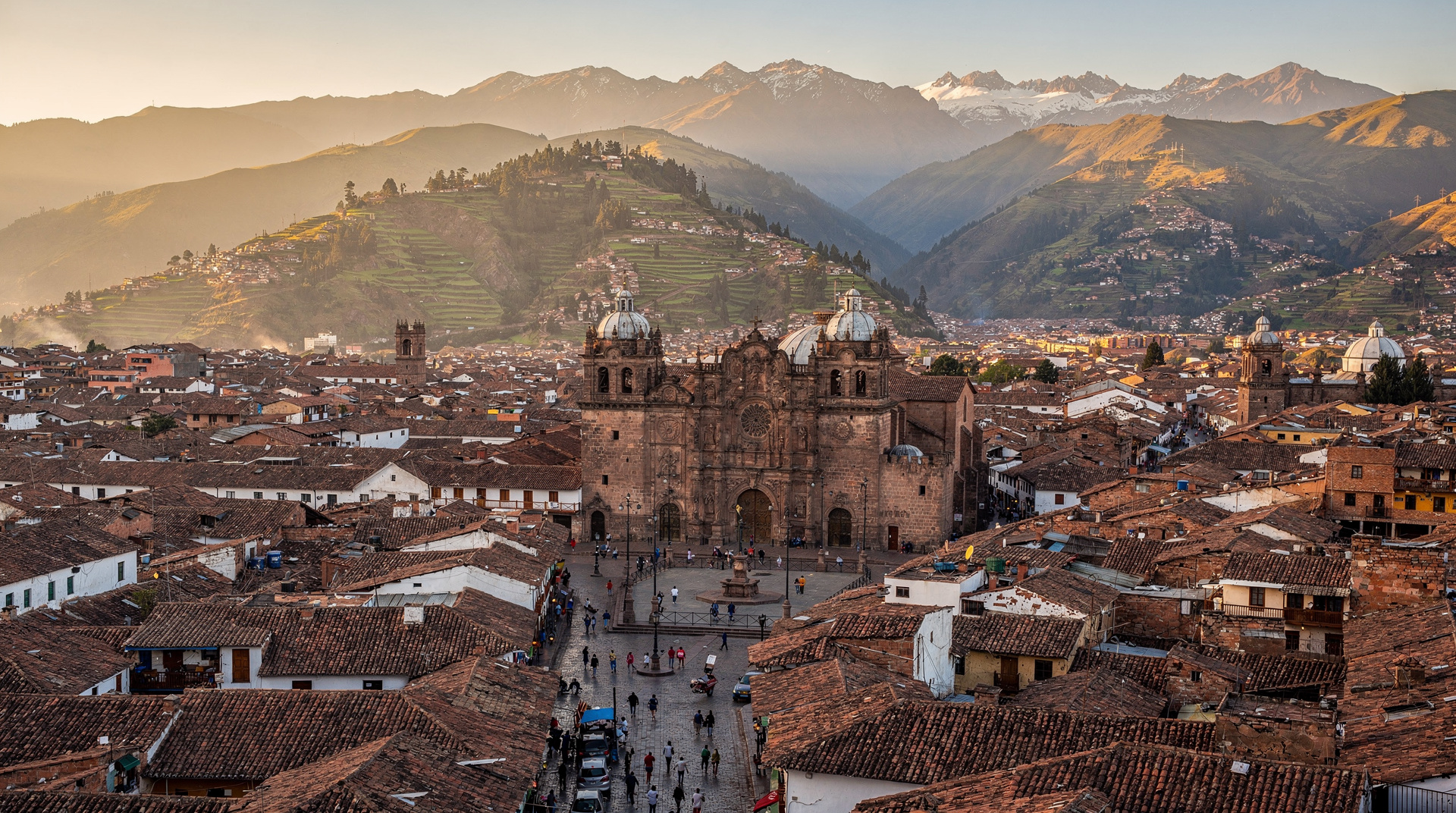
Morning: Qorikancha. The day begins at the Qorikancha — the Temple of the Sun, in the historic centre of Cusco, built on the most sacred site of the Inca capital and now partially enclosed within the Santo Domingo church. The morning ceremony re-enacts the Sapa Inca’s supplication to Inti, with performers in elaborate costumes representing the Inca, the high priest, and the court. The Qorikancha stage is the most intimate of the three — the gold-walled inner courtyards, the colonial church looming over Inca stonework. Entry requires a ticket; the surrounding streets fill with spectators who watch from outside the walls.
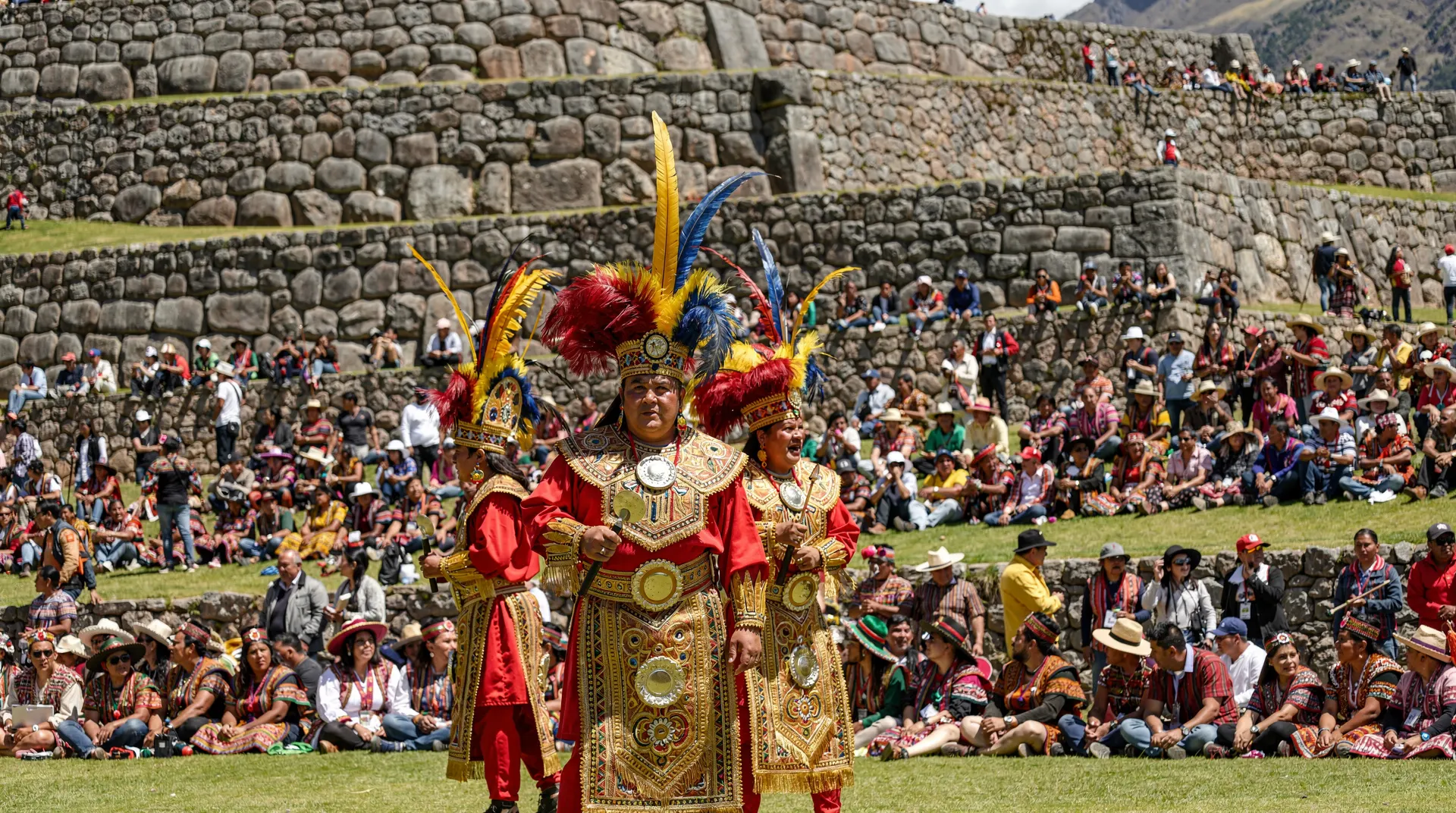
I arrived at 7:30 am and found a position near the church entrance. The ceremony began around 9 am — the arrival of the principal performers in palanquins, carried on the shoulders of elaborately costumed attendants, to the sound of drums and pututos (conch-shell horns). The Quechua dialogue was amplified. The crowd was dense but orderly. The gold and crimson of the costumes against the dark Inca stone was startling.
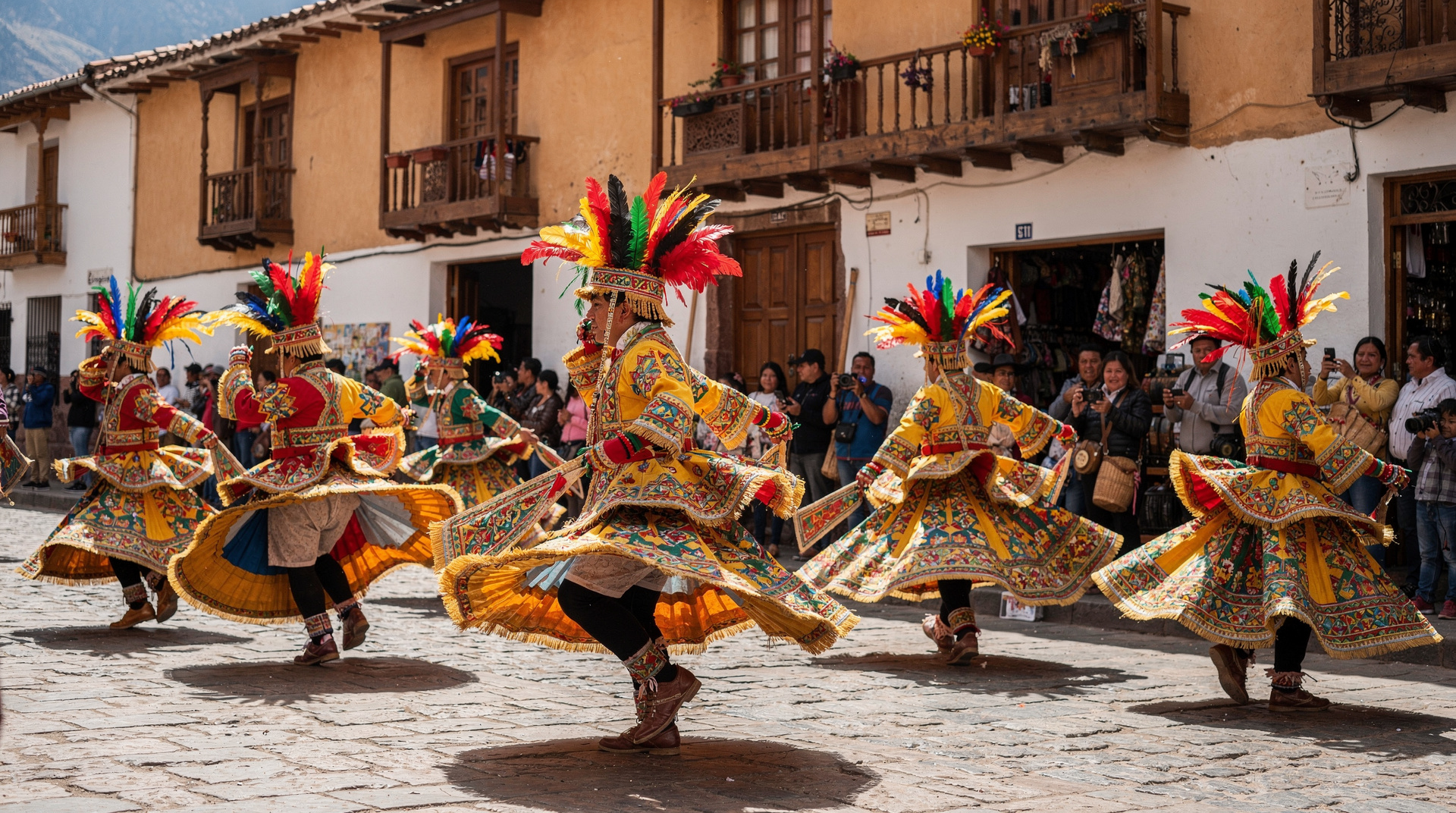
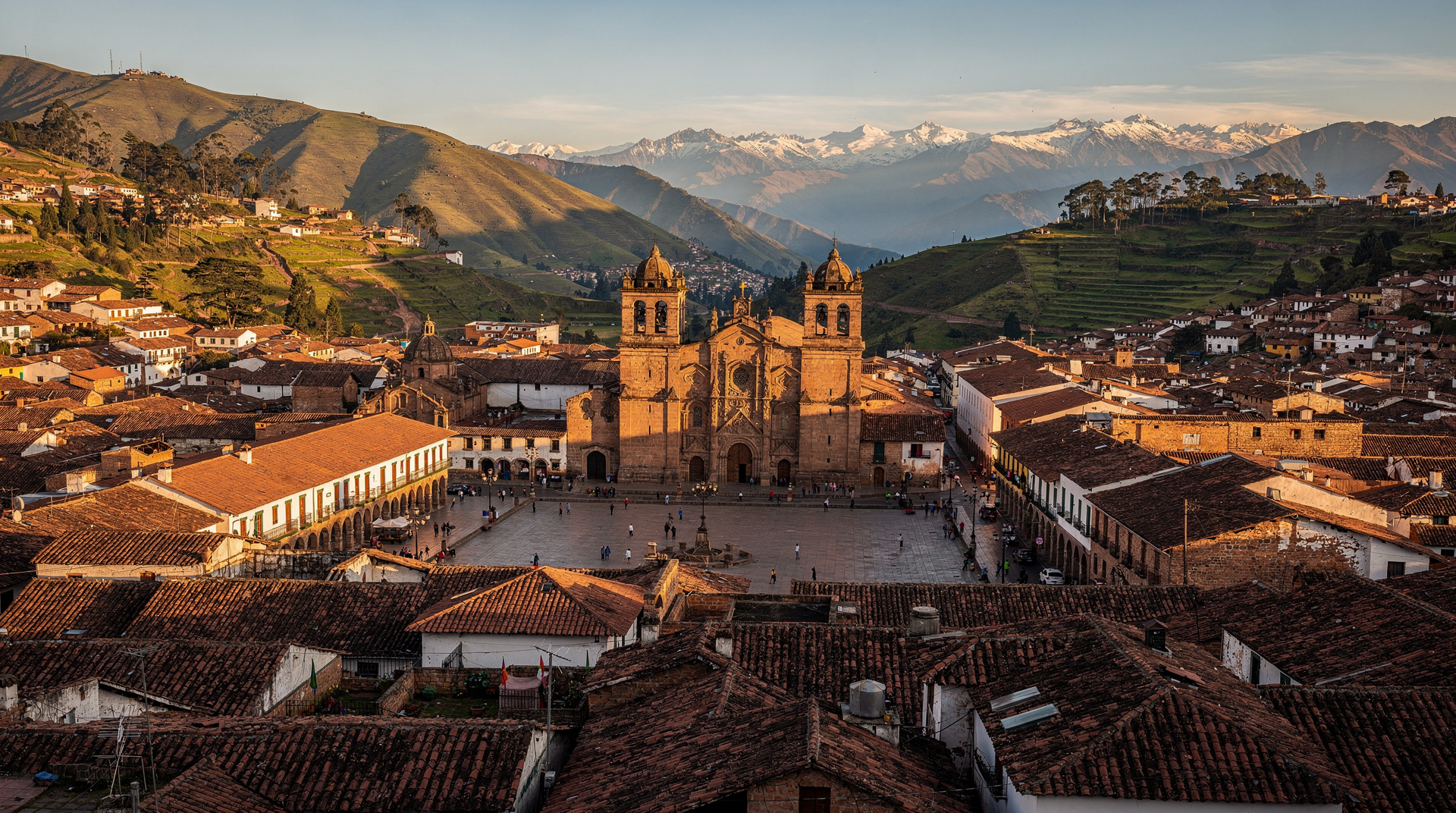
Midday: Plaza de Armas. A procession carries the performers from Qorikancha through the historic centre to the Plaza de Armas. The streets along the route fill completely — I position myself on Av. Sol an hour early and still found only a secondary view, watching over the heads of those in front. The Plaza de Armas ceremony is brief, maybe 30 minutes, before the procession continues up toward Sacsayhuaman.
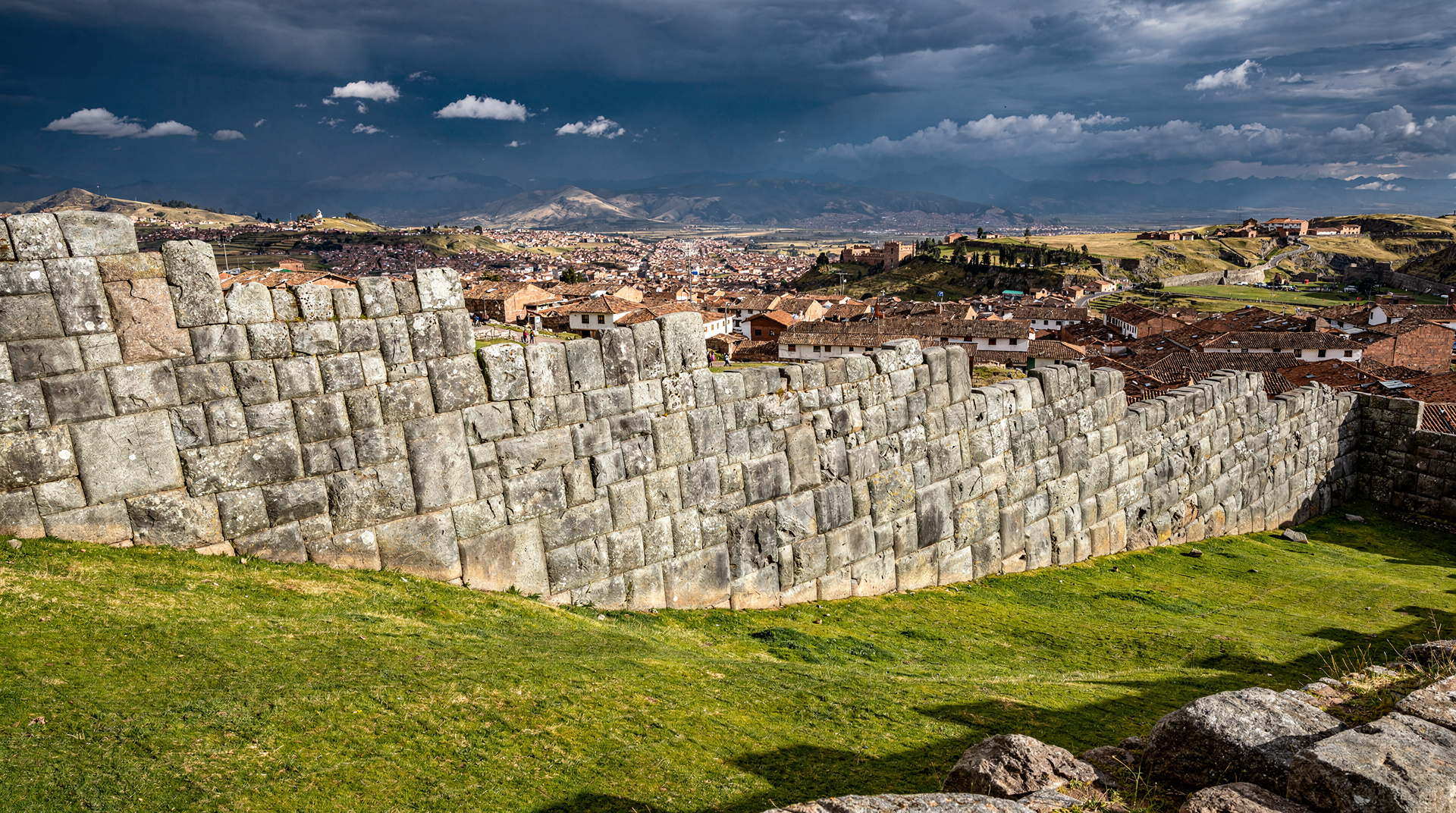
Afternoon: Sacsayhuamán. This is the main event. The fortress of Sacsayhuamán — the great Inca complex of zigzag walls on the hill above Cusco — is the finale venue, and the capacity of its main plaza accommodates thousands. Ticketed seating around the performance area must be booked months ahead (I’d bought mine in January; by April the better sections were sold out). The surrounding hillsides, where spectators can watch for free, are equally crowded.
The performance runs for approximately two hours from around 2 pm. The scale is extraordinary: hundreds of performers, the main plaza as stage, the Inca walls as backdrop, and the panorama of Cusco spread below to the south. The ritual drama — the Sapa Inca’s dialogue with the sun, the symbolic sacrifice, the communal ceremony of renewal — is delivered with considerable theatrical craft, and the physical setting amplifies it beyond anything that could be reproduced in a stadium or conventional theatre.
Book a Cusco city half-day tour that includes Sacsayhuamán during the non-Inti Raymi period to experience the fortress without the June crowds — and to understand the site’s physical layout before you attempt to navigate it during the festival.
The crowd reality
I need to be honest about scale. The week of 20–27 June is the single most visited week in the Cusco calendar. The city’s accommodation is at maximum occupancy; prices for the period are 2–4 times standard rates. Restaurants require reservations days ahead. The routes between the three ceremony sites are choked. The buses from Cusco up to Sacsayhuamán run continuously but queuing takes time.
If this were a festival that was less impressive, I’d say the logistics don’t justify it. Because it’s Inti Raymi at Sacsayhuamán, the logistics do justify it — but only if you’ve planned properly. My planning: booked accommodation in San Blas in January (S/180/night for a private room that normally cost S/110), bought the Sacsayhuamán seated ticket online in February (S/60 for a Category C seat; Category A seating closer to the performance was S/150 and sold out), and planned the day’s movement by understanding the three-stage structure.
What I would do differently
I’d arrive in Cusco two days before the 24th, not one. The city fills progressively from the 20th onward, and arriving on the 22nd meant I had 48 hours to acclimatise both to the altitude and to the festival atmosphere before the main day.
I’d skip the Plaza de Armas stage entirely and position myself at Sacsayhuamán from noon. The midday ceremony is the least significant of the three stages and the most chaotic in terms of crowd management. The time saved can be used to find a good position at the fortress.
And I’d eat before leaving the hotel on the morning of the 24th, because finding restaurant food at reasonable speed in Cusco on Inti Raymi day is genuinely difficult.
Free viewing versus paid seating
You do not need a ticket to experience Inti Raymi. The hillsides surrounding Sacsayhuamán’s main plaza are open to anyone and fill up from mid-morning, offering a wide, elevated view of the whole performance for free — this is genuinely how most Cusqueños watch it. What you lose is proximity: the ticketed seating puts you close enough to see performers’ expressions and costume detail, while the free hillside gives you the panorama but from further back.
If budget is tight, arrive at the hillside by 10 am, bring a cushion and sun protection, and you will still see the entire spectacle. If you want the closer view, book the Category C or B seating rather than A — the price difference for a noticeably better sightline than the hillside is smaller than the jump to Category A.
San Blas as a festival base
I mentioned booking accommodation in San Blas in January, and I’d repeat that choice. The neighbourhood sits on the route between the Plaza de Armas and Sacsayhuamán, meaning the walk up to the fortress on festival morning is short and largely avoids the most congested stretch of Av. Sol. It is also quieter at night than the streets immediately around the Plaza, which matters when the whole city is awake and celebrating until late.
Filling the quieter days around the festival
The festival gives you one big day, and the rest of the trip needs shaping around it. I used the days before the 24th for slow, low-effort outings while my body adjusted to the altitude. A walk through the lanes of San Blas, with a guided walking tour of the city centre and San Blas, was an easy way to learn the streets I would later need to cross on festival morning. The historic centre of Cusco is compact, and knowing its layout in advance makes the procession route far less confusing.
Food is part of the festival week too. The San Pedro market is a good place to eat simply before the crowds peak, and the San Pedro market food guide helps you choose what to try. If you prefer to learn what you are eating, a Peruvian cooking class that begins with a market visit fits neatly into a rest day. For wider choices, see the best restaurants in Cusco and the guide to Peruvian food.
After the 24th, the city empties slowly and the Sacred Valley becomes a calmer place to recover. The Sacred Valley complete guide and the Cusco altitude versus Sacred Valley guide explain why many travellers sleep lower after a long festival day. If Machu Picchu is next on your list, the Machu Picchu complete guide and the Cusco trip planning guide help you fit it around the festival crowds, and the Boleto Turístico explained covers the sites you can visit on the quieter days. My first time in Cusco and week in Cusco diaries show how other days of a trip can look.
Before you go: reading up and preparing
I enjoyed the day far more because I had read about it first. The Inti Raymi festival guide sets out the practical side of the event, and this diary is only the personal account that sits beside it. If the ceremony’s setting interests you, the Sacsayhuamán guide explains the fortress itself, and the Qorikancha guide covers the temple where the morning ceremony begins.
Knowing a little of the wider story helps the performance make sense. The Inca empire guide for travellers gives the background to why the sun mattered so much, and the Quechua culture guide helps you appreciate why hearing the dialogue in Quechua, even without understanding it, is part of the experience.
Altitude deserves respect on a festival day that keeps you outdoors for many hours. I would read the Cusco acclimatization plan and the altitude sickness guide before arriving, because a headache on the morning of the 24th is a poor way to spend a ticket you bought months earlier. Our packing guide for Cusco is also worth a look: a day on an exposed hillside asks for sun protection and warm layers in the same bag.
The days around the 24th
The festival doesn’t reduce to a single day. In the days before and after Inti Raymi, Cusco has a different atmosphere — busier, more festive, with street markets, live music in the plazas, and a density of visitors from across Peru and Latin America as well as internationally. The Quechua-speaking communities from the surrounding mountains come to Cusco for the festival period, and the city’s population swells noticeably.
The Cusco festivals calendar guide covers the full annual calendar — Inti Raymi is the biggest event, but Corpus Christi (which falls in June or early July, sometimes overlapping with Inti Raymi preparations) is also significant; the Corpus Christi guide covers it in detail. The best time to visit Cusco guide gives honest advice on the full picture of when to come and what the trade-offs are.
The conclusion I came to, watching the condors glide over the final ceremony at Sacsayhuamán as the late afternoon sun hit the old walls: the Inca built their rituals for places like this. The festival, for all its theatrical construction, connects something to the landscape in a way that is hard to articulate but entirely real.