Colca Canyon 2-day tour from Arequipa: tour review
Arequipa: 2-Day Classic Colca Canyon Tour
The condor tour that rewards the extra day
The Colca Canyon is one of the deepest canyons on earth and home to one of the largest wild populations of Andean condors in Peru. The condors alone — with wingspans of up to 3.2 metres, rising on thermals past eye level at Cruz del Condor — justify the journey from Arequipa. The question is whether to spend one day or two, and the honest answer is that the two-day format is so clearly superior for condor sightings, canyon experience, and physical manageability that the one-day version should only be considered if the schedule genuinely allows nothing else. This review covers both options honestly.
| Where | Colca Valley, 3–4.5 hrs from Arequipa |
| Cost | S/200–350 (~$58–100) 2-day, incl. accommodation |
| Best for | Condor sightings, canyon villages, no fitness needed |
| Altitude | Patapampa Pass 4,910 m; canyon rim 3,200–3,600 m |
| Best time | June–August for reliable condor sightings |
| Booking | Book from Arequipa after 2 days acclimatising there |
What the 2-day tour involves
Day 1 begins with an early morning departure from Arequipa, typically 7:30–8:30 am. The road climbs from Arequipa’s 2,335 m to the Patapampa Pass at 4,910 m — a stretch of altiplano where vicuñas graze and Andean geese paddle in high-altitude pools. Most operators make a stop at the pass for the view and for acclimatisation awareness. The descent to Chivay (3,635 m) takes the remainder of the morning.
The first afternoon typically covers the village circuit of the Colca Valley: Yanque (Inca baths and colonial church), Maca, Achoma, and other traditional villages with terraced agricultural systems dating to pre-Inca cultures. The valley is one of the most continuously terraced agricultural landscapes in the world. Evening in Chivay includes the thermal baths (Baños Termales, approximately S/15 admission), which are a welcome altitude remedy after a day of vehicle travel.
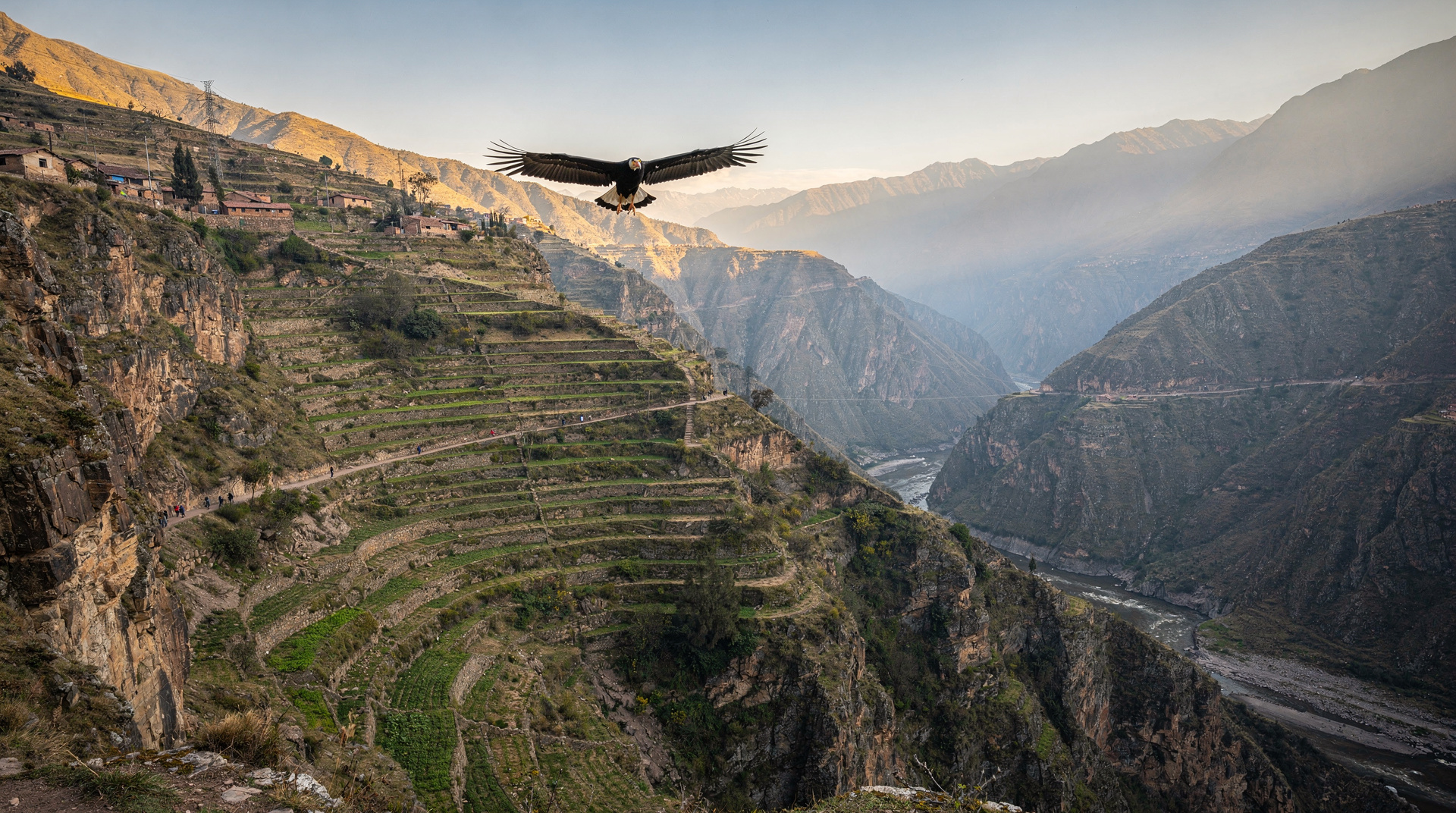
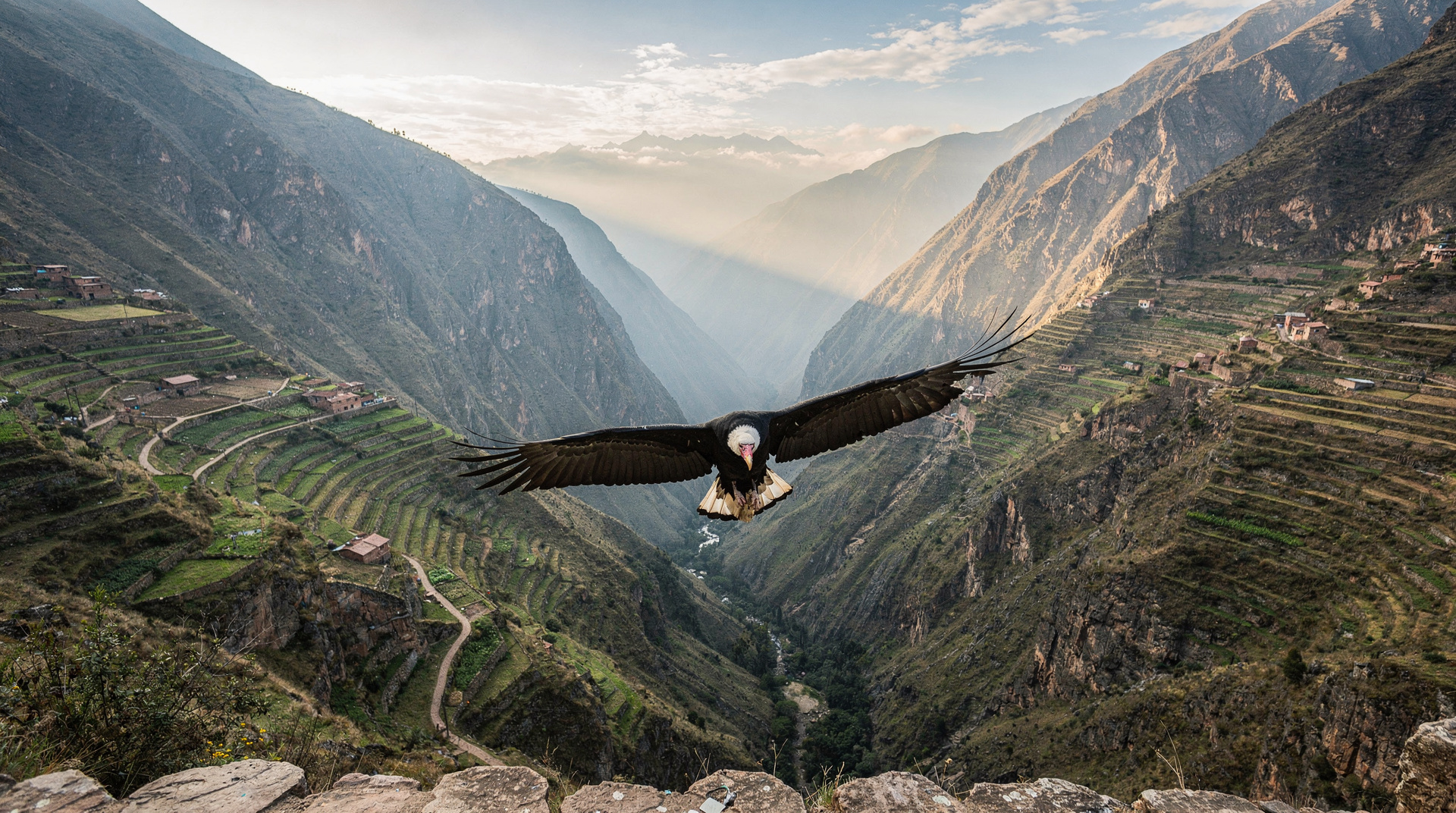
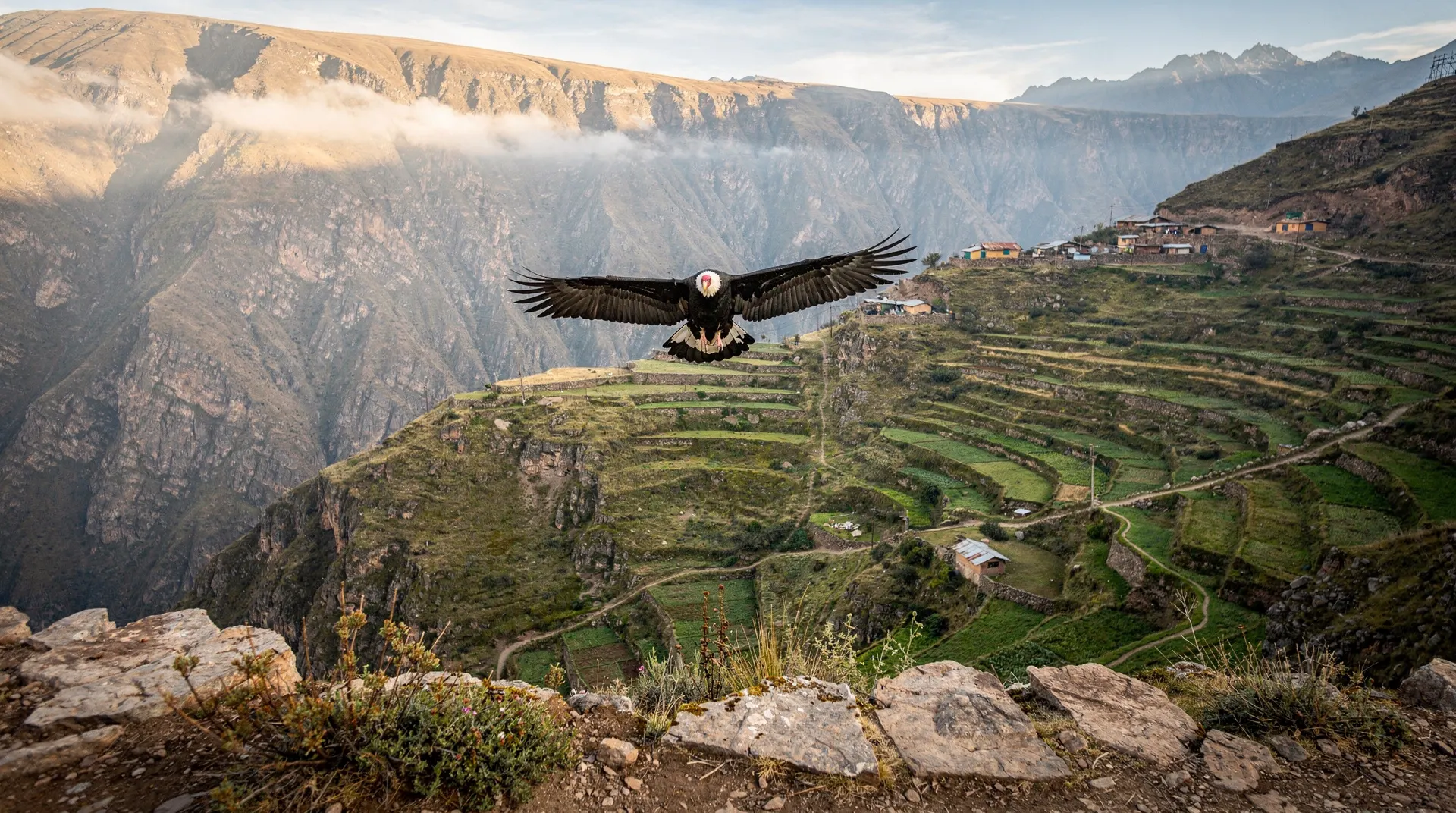
Day 2 begins very early — departures from Chivay at 6:00–7:00 am to reach Cruz del Condor by 8:30 am. Cruz del Condor sits at approximately 3,230 m on the canyon rim directly above the deepest section of the gorge. The condors nest on the canyon walls below the viewpoint and rise on morning thermals, passing at eye level or above. Sightings of six to twelve condors simultaneously are normal on good mornings; peak season (June–August) consistently produces the best sightings.
A good guide at Cruz del Condor identifies individual birds by their markings, explains the thermals and the condor’s extraordinary metabolic efficiency (they can soar for hours without flapping), and situates the condors within Andean cosmology — the condor as messenger between the human and spiritual worlds is a persistent and sincere belief across Quechua and Aymara cultures.
Return to Arequipa is typically late afternoon, arriving around 4:00–6:00 pm.
What is included
Book the 2-day Colca Canyon tour from Arequipa — standard inclusions: hotel pickup from Arequipa, transport both ways, overnight accommodation in Chivay (standard room, typically ensuite), licensed bilingual guide, all vehicle-based canyon viewpoints, and entrance fees to the main sites. Most operators include breakfast and dinner on Day 1 and breakfast on Day 2.
Not included: Chivay thermal baths (separate admission, S/15–25), lunch on both days unless specified, Chivay artisan market purchases, and tips for the guide and driver.
The one-day alternative: why it is less satisfying
The Colca Canyon full-day tour from Arequipa attempts the same circuit — Patapampa Pass, Chivay, Cruz del Condor, and return — in approximately 12–14 hours. The mathematics are unfavourable: 7–9 hours of driving for roughly 4–5 hours at the canyon, with Cruz del Condor typically reached between 10:00 am and noon — after the best condor window has already closed.
The one-day tour is not a bad option in absolute terms — it delivers the Cruz del Condor experience and the canyon views — but most travellers who do it wish they had opted for two days. The overnight in Chivay turns the Patapampa altiplano crossing from a transit into a feature, allows a proper afternoon in the village circuit, and repositions you for the 8:30 am condor window that the day trip cannot reach.
Choose the one-day tour only if: you are in Arequipa for a single day, the 2-day schedule is genuinely impossible to fit in, or you are specifically visiting the canyon without a strong condor focus.
| 1-day tour | 2-day tour | |
|---|---|---|
| Total driving | 7–9 hrs | 3–4 hrs each way, split over 2 days |
| Cruz del Condor arrival | 10:00 am–noon (past prime window) | 8:30 am (prime window) |
| Overnight in Chivay | No | Yes, incl. thermal baths |
| Village circuit time | Rushed or skipped | Full afternoon |
| Typical price | S/90–160 (~$26–46) | S/200–350 (~$58–100) |
Cruz del Condor: understanding what you are watching
The Andean condor (Vultur gryphus) is the largest flying bird in the world by combined wingspan and weight. An adult male reaches a wingspan of 3.2 m and weighs up to 15 kg. Despite this mass, condors can soar for hours without a single wingbeat by exploiting thermal air currents rising from sun-heated ground and canyon walls. The condors at Cruz del Condor are using the particular geometry of this section of the Colca gorge — where the canyon is at its narrowest and deepest, creating powerful updrafts as morning sun heats the north-facing canyon wall — as a reliable thermal elevator from their roost sites lower in the canyon.
A good naturalist guide at Cruz del Condor identifies individual birds by their immature versus adult plumage (adults have distinctive white neck ruffles; immatures are uniformly dark), tracks them through the sky as they spiral on the thermal, and situates the condor within its deep significance in Andean cosmology — the condor is the messenger between the human and divine worlds in Quechua spiritual belief, and its appearance at important community moments (harvest, funeral, festival) is considered significant. This context transforms the sighting from wildlife spectacle to cultural encounter.
On good mornings in the dry season, you may observe condors passing at eye level within 10–15 metres of the viewpoint railing. The physical sensation of a 3.2 m wingspan passing at face height — the displacement of air, the detail of the feathers, the eye contact — is one of those experiences that does not reduce well to photographs. Come prepared to simply watch rather than to photograph.
Altitude reality
The Patapampa Pass at 4,910 m is crossed on both tours. Arequipa at 2,335 m provides minimal acclimatisation preparation for a sudden 4,910 m exposure. Most passengers on this tour experience short-term altitude symptoms crossing the pass — headache, nausea, mild dizziness — even those who have been at altitude elsewhere. The protocol: move slowly, drink water, use the coca tea provided by most operators at the pass stop, and do not panic. Symptoms reduce as you descend to Chivay.
If you are coming from Cusco (3,400 m) via bus and arriving in Arequipa for the first time, you may actually be better acclimatised than travellers arriving in Arequipa directly from Lima at sea level. See the altitude sickness guide for the full context.
The canyon villages: what to look for beyond the condors
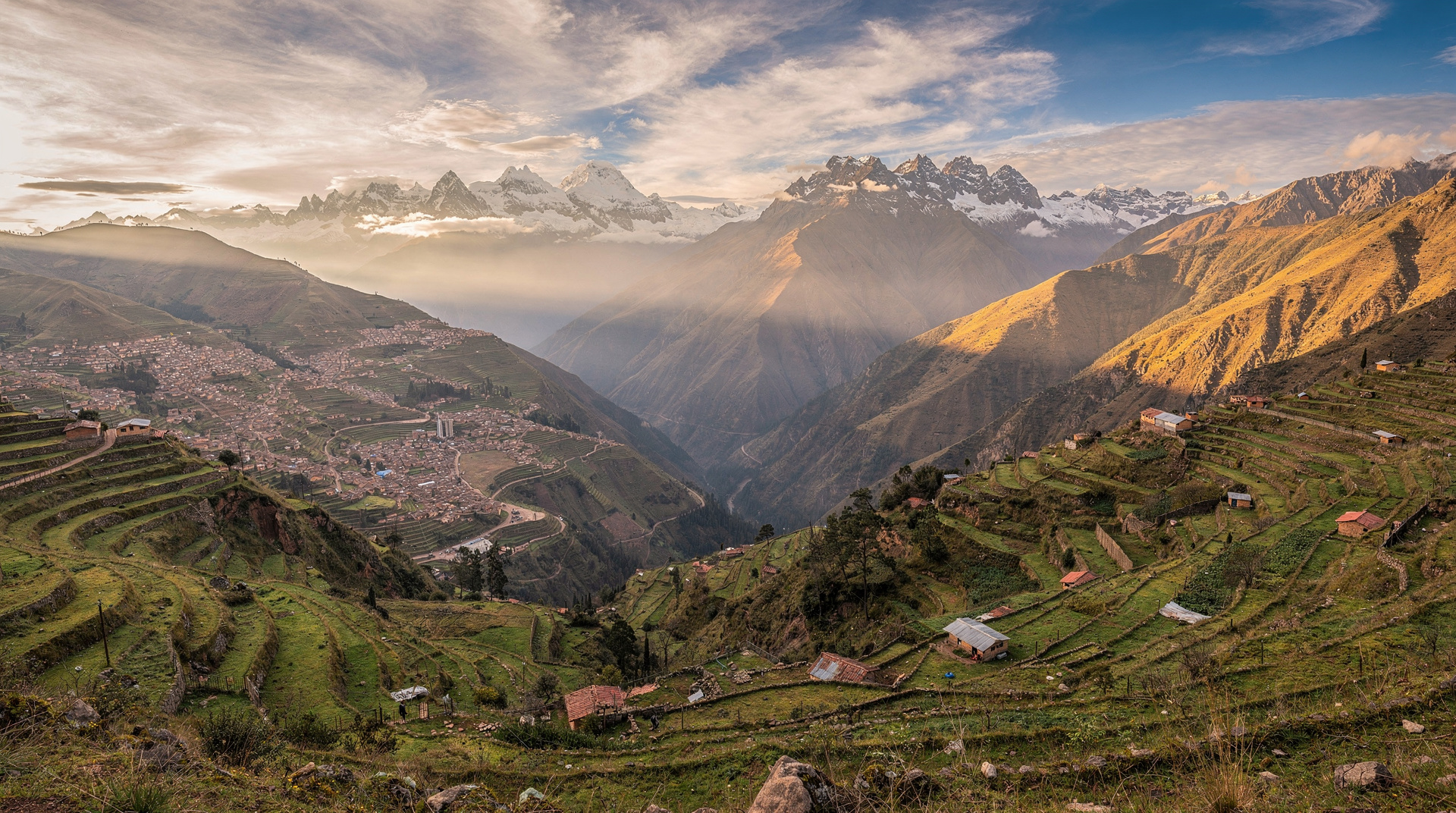
The Colca Valley was densely settled by the pre-Inca Collagua and Cabana cultures, and their terracing system — covering the canyon walls in agricultural platforms — remains in active agricultural use today. The valley has fourteen villages, each with a colonial church built over earlier structures, and each maintaining distinct traditions including some of the most elaborate traditional costumes in the Andean world. Women in Yanque and Chivay wear embroidered wool skirts and distinctive headdresses (montera) for festivals and market days; if you visit on a Sunday, the market at Chivay is particularly good.
The route that most 2-day tours follow after arriving in Chivay stops at several villages: Yanque (thermal baths of Inca origin, colonial church, colonial fountains), Maca (built on ancient Collagua foundations, with a church whose art interior survived the 2001 earthquake better than the exterior), Pinchollo (a quieter village with terraced hillsides on both canyon walls visible from the road), and Cabanaconde, the last village accessible by road before the deepest part of the canyon. Cabanaconde is also the departure point for multi-day canyon treks descending to the floor and back up via the oasis at Sangalle.
A good guide will have knowledge of local community history and relationships rather than simply reading from a script at each stop. Ask your operator whether their guides are from the Colca Valley or Arequipa-based — local guides typically have significantly more specific knowledge of the villages and their current life.
Who this tour suits
The 2-day Colca Canyon tour suits any traveller with a southern Peru circuit that includes Arequipa — which should be virtually everyone, because Arequipa is one of the most beautiful cities in Peru and worth two to three days in its own right before or after the canyon. The tour requires no significant physical fitness for the vehicle-based circuit. Travellers who want to descend into the canyon on foot should look at 3–4 day trekking formats that include the Cabanaconde loop.
Families with children manage the tour comfortably — condors at eye level are genuinely dramatic for children, and the village circuit is engaging. Altitude awareness is important for parents; keep children hydrated and watch for headache symptoms on the Patapampa crossing.
Honest pros and cons
Pros: Cruz del Condor on a clear morning with a dozen condors rising at eye level is one of the great wildlife moments in South America. The canyon’s scale — 3,270 m at maximum depth — is genuinely staggering from the rim viewpoints. The terraced agricultural villages have been farmed continuously for over 1,000 years. Chivay thermal baths are an excellent altitude remedy. 2-day format allows a proper early morning condor arrival.
Cons: Significant driving time each day (3–4 hours each way). The Patapampa Pass is at a serious altitude that can cause discomfort even in fit, acclimatised visitors. Chivay accommodation quality varies — budget options can be very basic. Vehicle-based circuit does not involve the canyon floor; descending requires a 3–4 day trekking option. In July–August peak season, Cruz del Condor viewpoint is crowded during prime sighting hours.
Acclimatising in Arequipa before you go
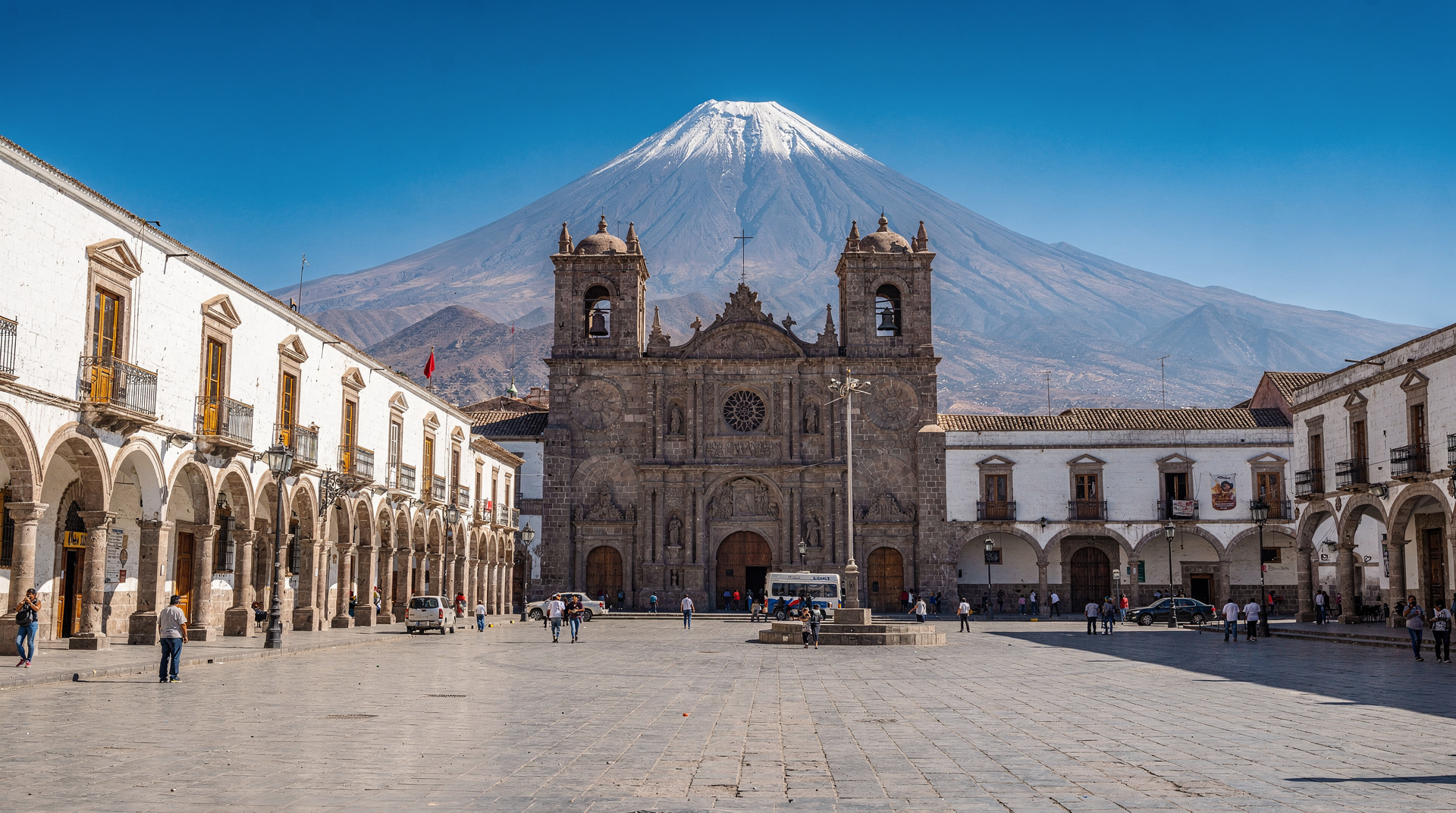
Arequipa sits at 2,335 m, which is not high enough to prepare you for the 4,910 m Patapampa Pass crossing. Two full days walking the city — the Plaza de Armas, the Santa Catalina Monastery, the Yanahuara viewpoint — do not simulate altitude exposure the way time in Cusco at 3,400 m does. If your itinerary runs Cusco first and Arequipa second, you arrive at the Colca tour already partly acclimatised and the pass crossing is noticeably easier.
If Arequipa is your first stop in Peru, build in an extra rest day before the tour and take the pass crossing seriously: move slowly at the Patapampa stop, sip the coca tea most operators offer, and tell your guide immediately if you feel unwell. The altitude sickness guide covers the warning signs that mean you should descend rather than push on.
Chivay: more than a stopover
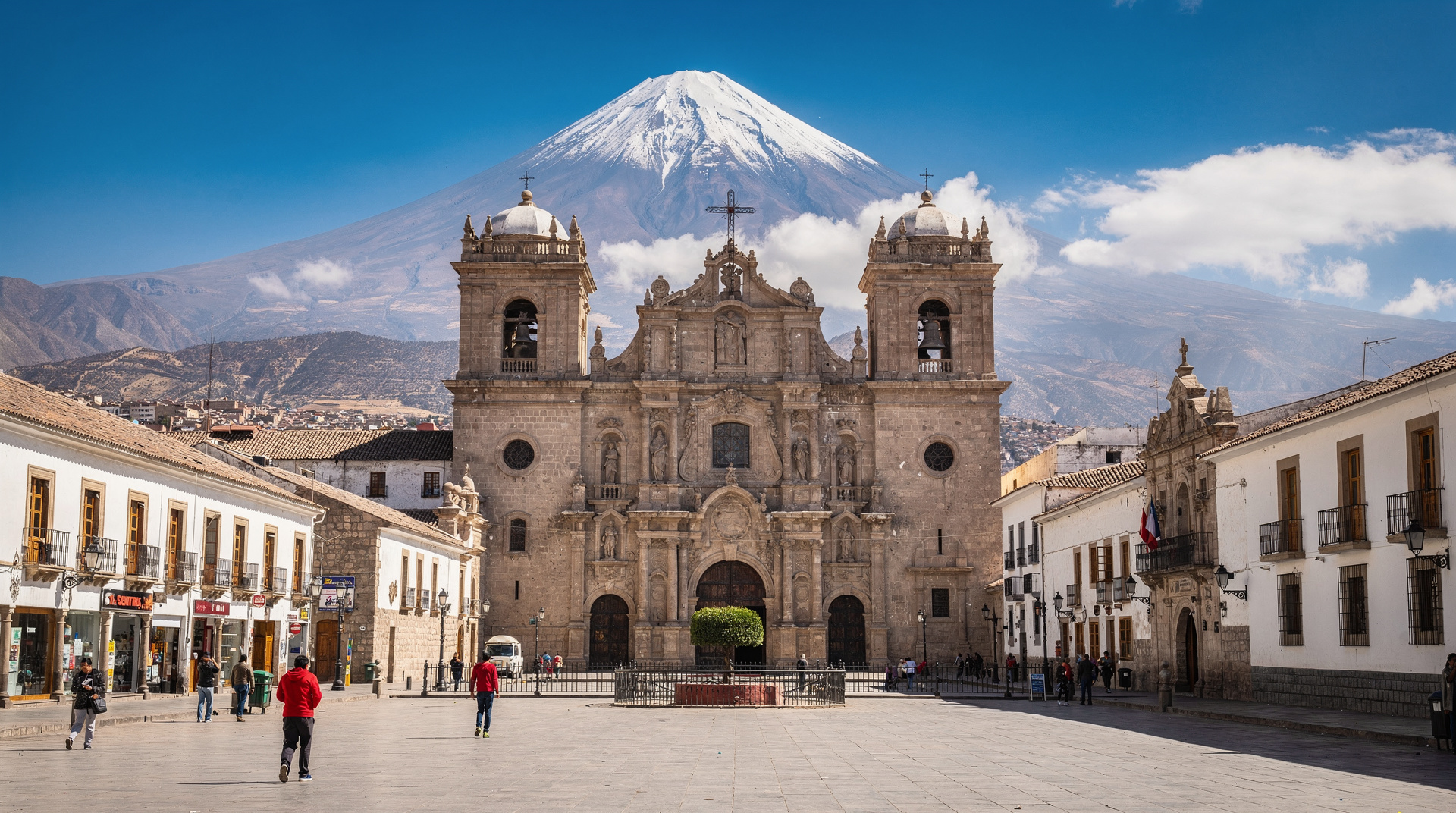
Chivay itself deserves a slower look than most itineraries give it. The town’s Sunday market draws sellers from villages throughout the valley, and the main plaza’s colonial church has an interior that survived the 2001 earthquake better than many others in the region. The thermal baths complex (Baños Termales La Calera, approximately S/15 admission) sits a short taxi ride from the plaza in a striking canyon-edge setting, with several pools at different temperatures fed by natural hot springs.
Arriving after the village circuit on Day 1, before dinner, is the standard sequence — the heat is genuinely restorative after a day at altitude, and the setting at dusk, with steam rising against the canyon walls, is one of the quieter highlights of the trip that rarely makes it into trip reports focused entirely on the condors.
Visiting the canyon as part of the southern Peru circuit
The Colca Canyon fits most naturally into the southern Peru circuit as a two-to-three day Arequipa extension between Cusco and Puno or between Lima and Cusco. The 2-week southern Peru grand tour itinerary shows how Arequipa, Colca, and the Lake Titicaca circuit combine with Cusco and Machu Picchu across fourteen days. The Cusco to Arequipa transport guide covers bus and flight options between the two cities.
Pricing reference (2026)
2-day Colca Canyon tour (transport, accommodation, guide, entrances, some meals): S/200–350 ($58–100) per person. 1-day full-day tour: S/90–160 ($26–46). Premium small-group 2-day: S/350–600 ($100–175). Chivay thermal baths: S/15–25 ($4–7).
Verdict
The 2-day Colca Canyon tour is the right format for the overwhelming majority of visitors. The condor sighting is the centrepiece, and the 2-day format gives you the only reliable window for it. The canyon itself — its terraced walls, the living agricultural traditions in its villages, and the sheer spatial drama of the gorge — is more than a condor backdrop; it is a significant destination in its own right. Allow two full days in Arequipa for the city before the tour. The condors guide and the southern Peru grand tour itinerary complete the planning picture.